
 Download PDF
Market Overview
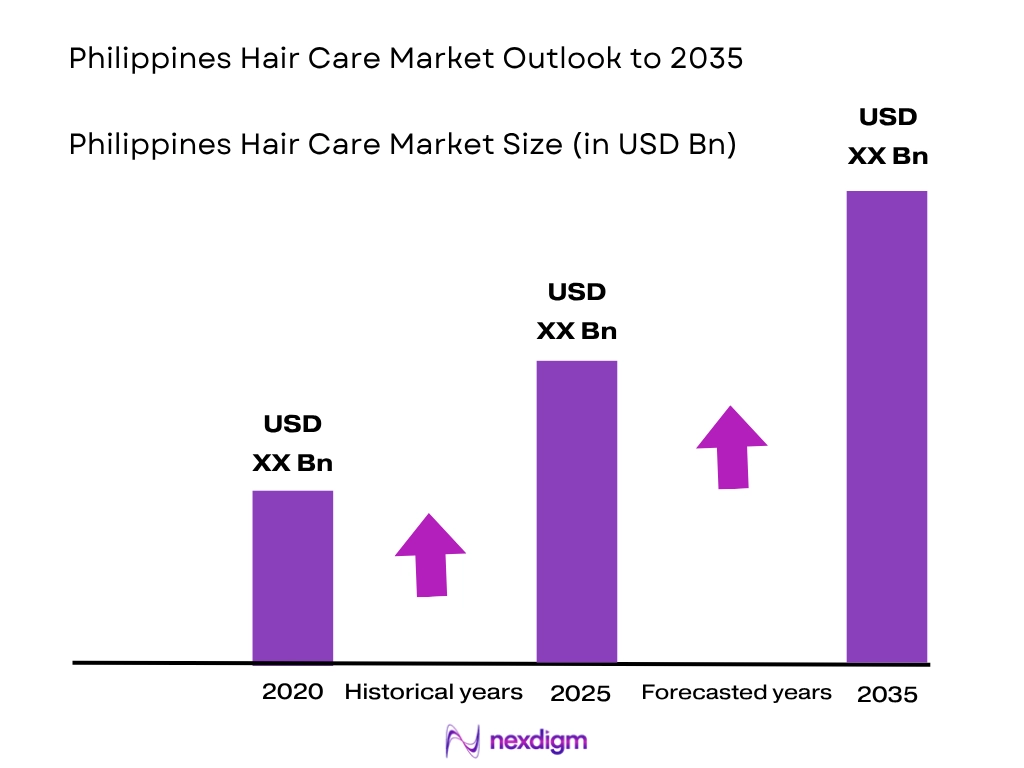
The Philippines Hair Care Market is valued at USD ~ billion, based on a five-year historical analysis, and is projected to expand at a 3.60% CAGR for the 2026-2035 forecast period, aligned with the published 2026-2034 CAGR outlook. Growth is supported by higher beauty awareness, urban grooming routines, social-media-led product discovery, and rising income capacity, with GNI per capita increasing from USD ~ in 2023 to USD ~ in 2024.
Metro Manila, Cebu, Davao, Iloilo, Cagayan de Oro and other urban centers dominate the Philippines Hair Care Market because they concentrate modern trade stores, salons, drugstores, e-commerce delivery density and premium beauty consumers. The country’s population reached 112,729,484 in 2024, while Manila, Cebu City and Davao City remain among the largest urban areas; this supports higher shampoo, conditioner, treatment, colorant and professional hair care consumption.
Market Segmentation
By Product Category
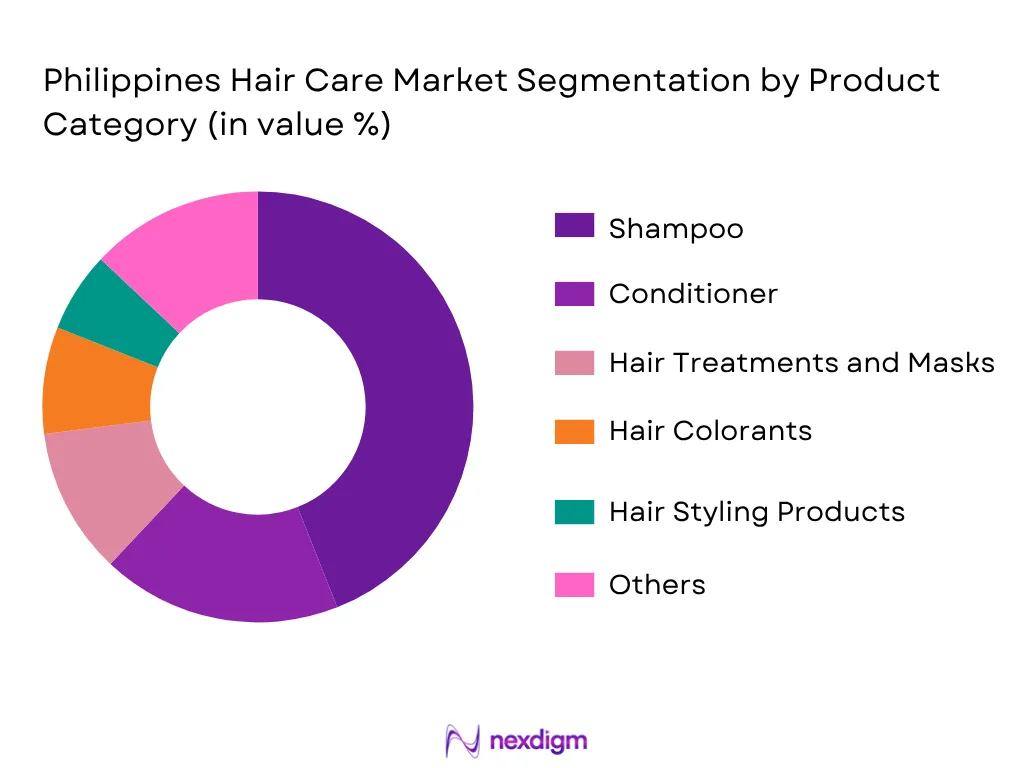
The Philippines Hair Care Market is segmented by product category into shampoo, conditioner, hair treatments and masks, hair colorants, hair styling products, hair oil and serum, hair loss and scalp care, and professional salon hair care. Shampoo dominates the market because it is the highest-frequency-use category in a tropical, humid and high-commute environment where consumers wash hair frequently due to sweat, oiliness and pollution exposure. Its dominance is reinforced by sachet availability, strong mass-market brands, sari-sari store penetration and routine household repurchasing. Conditioner and treatment products are gaining importance as consumers with rebonded, colored, chemically treated and frizz-prone hair build multi-step routines. However, shampoo remains the traffic-driving product because it is used across income groups, age groups and regions, from Metro Manila supermarkets to barangay-level traditional trade outlets.
By Distribution Channel
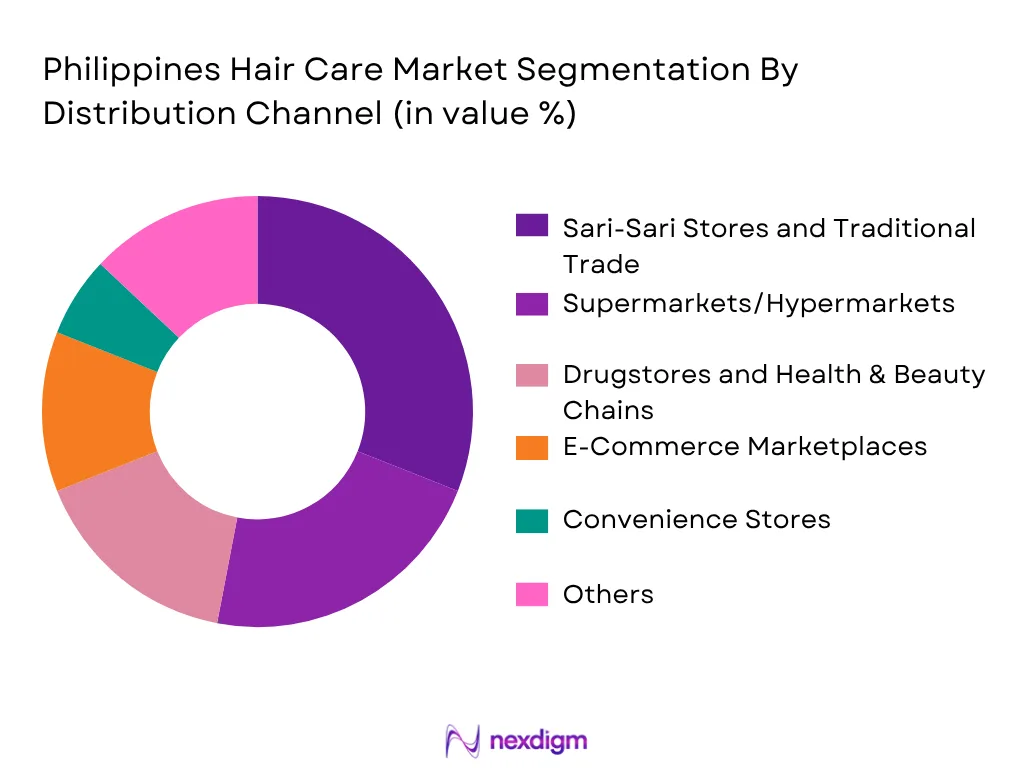
The Philippines Hair Care Market is segmented by distribution channel into supermarkets and hypermarkets, drugstores and health & beauty chains, sari-sari stores, convenience stores, salons and barbershops, e-commerce marketplaces, social commerce platforms, and brand-owned direct-to-consumer channels. Sari-sari stores and traditional trade dominate in volume because sachets and small packs match daily-cash purchasing behavior, especially among mass consumers and provincial households. Supermarkets and drugstores remain important for bottles, family packs, conditioners, hair colorants and treatment products, while salons influence premium and professional product adoption. E-commerce marketplaces and TikTok-led social commerce are growing rapidly because beauty and personal care is shifting toward live-selling, influencer reviews, bundled promotions and cross-border assortment. Still, offline proximity remains decisive because shampoo and conditioner are replenishment-led categories with frequent low-ticket purchases.
Competitive Landscape
The Philippines Hair Care Market is led by multinational FMCG and beauty companies with deep shampoo, conditioner and treatment portfolios, while local natural and herbal brands compete in ingredient-led niches. Unilever, Procter & Gamble, Colgate-Palmolive, L’Oréal and Splash Corporation have broad relevance through mass retail reach, strong brand recall, sachet formats, anti-dandruff propositions, salon-inspired claims and channel-specific pricing. Key players cited in public market coverage include Unilever Philippines, Procter & Gamble Philippines, L’Oréal Philippines, Colgate-Palmolive Philippines, Beautéderm, Human Nature and Zenutrients.
| Company | Establishment Year | Headquarters | Key Hair Care Brands | Core Category Strength | Philippines Channel Strength | Sachet/Small Pack Strength | Premium/Professional Exposure | Market Positioning |
| Unilever Philippines | 1927 local presence | Taguig, Philippines | ~ | ~ | ~ | ~ | ~ | ~ |
| Procter & Gamble Philippines | 1935 local presence | Taguig, Philippines | ~ | ~ | ~ | ~ | ~ | ~ |
| Colgate-Palmolive Philippines | 1926 global parent | New York, USA | ~ | ~ | ~ | ~ | ~ | ~ |
| L’Oréal Philippines | 1909 global parent | Clichy, France | ~ | ~ | ~ | ~ | ~ | ~ |
| Splash Corporation | 1985 | Taguig, Philippines | ~ | ~ | ~ | ~ | ~ | ~ |
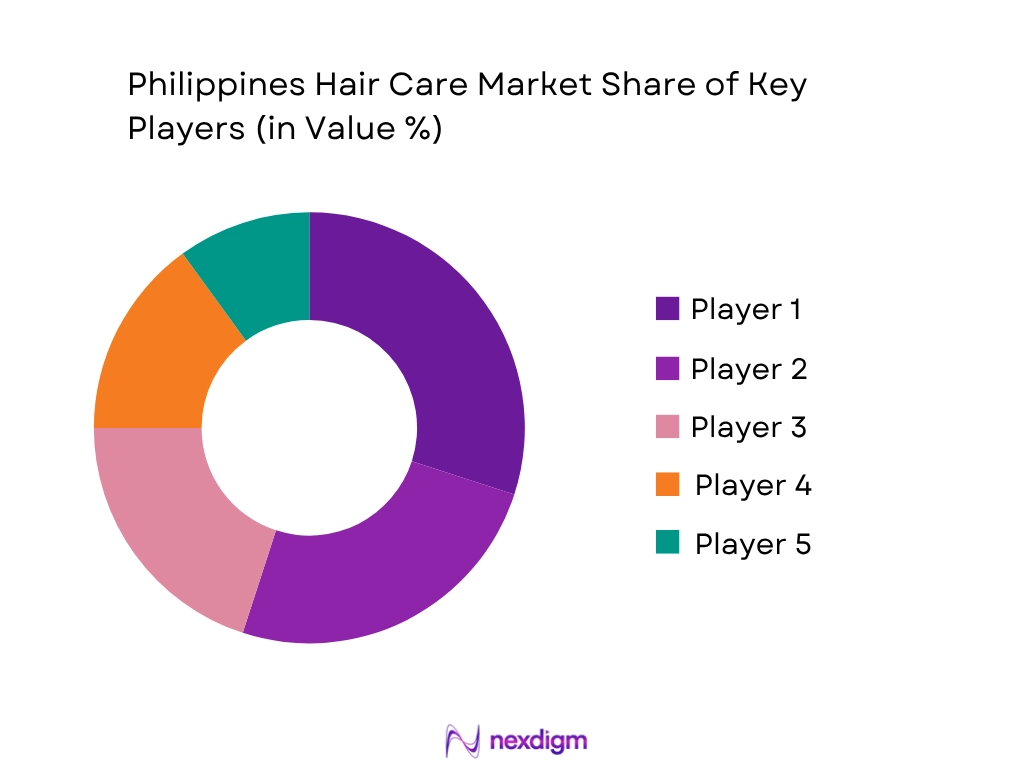
Philippines Hair Care Market Analysis
Growth Drivers
Urban Beauty Routines
Urban beauty routines are a core growth driver for the Philippines Hair Care Market because large city populations support higher-frequency grooming, stronger exposure to beauty retail, wider salon access, and faster adoption of conditioners, masks, serums, anti-dandruff shampoos and hair-fall products. The Philippines had 115,843,670 people in 2024, while its urban population reached 56,316,242 people, creating a large city-based consumer base for daily-use hair care and multi-step hair routines. The World Bank also reported USD 461.62 billion in current GDP and USD 3,984.8 GDP per capita in 2024, indicating a sizeable consumption economy where personal grooming categories can expand alongside income and employment. PSA’s national development indicators show unemployment declined to 3.8 in 2024, compared with 4.4 in 2023, supporting household participation in non-food discretionary categories such as beauty and personal care. The digital layer further strengthens urban hair care demand: PSA’s digital economy data reported 10.27 million digital-economy workers in 2024 and 10.39 million in 2025, while PSA’s ICT household survey found that 36.7 of internet users aged 10 and above purchased goods or services online in 2024. For hair care, this supports discovery-led purchases through marketplaces, online bundles and official stores, especially for products positioned around frizz, damage repair, hair fall, scalp care and salon-like results at home. Urban beauty routines are therefore not only driven by population concentration but also by formal employment, digital buying behavior, modern retail access, delivery infrastructure and social-media-influenced grooming habits in Metro Manila, Cebu, Davao and other urban centers.
Humidity-Led Frizz Control
Humidity-led frizz control is a market-specific growth driver because the Philippines’ climate directly shapes hair care needs, especially for smoothening shampoos, conditioners, keratin treatments, leave-in creams, serums, masks and anti-frizz styling products. PAGASA states that the Philippines has high relative humidity because of high temperature and surrounding bodies of water, with average monthly relative humidity moving from 71 in March to 85 in September; this creates high sensible temperature across the archipelago and supports consumer need for products addressing frizz, sweat, oiliness, scalp discomfort and hair manageability. The Philippines also had 115,843,670 people in 2024, giving humidity-related hair concerns a broad national consumer base rather than a niche urban-only use case. The country’s 56,316,242 urban residents are particularly relevant because commuting, pollution exposure, heat and dense working environments intensify demand for hair products promising smoothness, freshness and lasting control. World Bank data shows individuals using the internet reached 67 in 2024, while PSA’s ICT survey recorded 36.7 of internet users aged 10 and above purchasing goods or services online in 2024; this gives anti-frizz, keratin and smoothening brands a scalable online education channel for explaining product routines. Hair care brands can link humid-weather needs with accessible formats such as sachet conditioners, trial-size masks and leave-in products, while premium brands can position salon-inspired anti-frizz care for consumers with rebonded, colored or chemically treated hair. In this market, humidity is not a generic environmental factor; it is an everyday functional reason for consumers to add conditioning, repairing and styling products beyond basic shampoo.
Market Challenges
Sachet Waste
Sachet waste is a structural challenge for the Philippines Hair Care Market because shampoo, conditioner and treatment sachets are deeply aligned with tingi-style low-unit purchases, yet they contribute to plastic leakage and regulatory scrutiny. The Climate Change Commission reported that the Philippines discards approximately 2.7 million tons of plastics annually, citing UN Development Programme and World Bank statistics, while DENR data placed total solid waste generation at 61,000 metric tons daily, with up to 24 composed of plastic, mostly from consumer-goods packaging, cutlery and shopping bags. The issue is directly relevant to hair care because sachets are widely used for shampoo and conditioner access through sari-sari stores, making packaging sustainability a business and compliance concern rather than only an environmental issue. DENR also reported through the Philippine News Agency that registered businesses diverted 124,986 tons of plastic packaging from an unaudited footprint of 624,547 tons in the first year of Extended Producer Responsibility implementation. The EPR framework targets plastic footprint recovery at 40 for 2024, 50 for 2025 and 60 for 2026, which places increasing obligations on FMCG and beauty companies that use flexible packaging. For hair care brands, this creates pressure to redesign pack architecture, expand refill formats, improve collection partnerships, support recovery programs and reduce dependence on single-use sachets without losing mass-market affordability. The challenge is especially difficult because sachets remain commercially important for daily-use shampoo penetration, but the regulatory and reputational cost of plastic-intensive growth is rising.
Price Sensitivity
Price sensitivity remains a major challenge for the Philippines Hair Care Market because a large consumer base purchases shampoo and conditioner frequently but often prioritizes affordability, small packs and promotional bundles. World Bank data shows GDP per capita at USD 3,984.8 in 2024 and population at 115,843,670, meaning the market is large but still strongly mass-oriented in everyday personal care. PSA reported annual average inflation of 3.2 in 2024, down from 6.0 in 2023, while food inflation remained higher at 4.5 in 2024, compared with 8.0 in 2023. Since food and household essentials compete for wallet share, hair care products outside basic shampoo—such as conditioners, masks, serums, scalp-care tonics and salon-grade treatments—must justify added value through visible benefits, pack affordability and promotions. PSA also reported that annual average inflation in Areas Outside NCR stood at 3.4 in 2024, while NCR recorded 2.6; this matters because provincial consumers often rely more heavily on sachets and neighborhood stores. Employment conditions support spending but do not eliminate price pressure: PSA’s 2024 indicators show unemployment at 3.8, and its February 2026 labor-force update recorded a labor-force participation rate of 63.8, indicating broad workforce participation but continuing sensitivity to household budget allocation. Hair care companies therefore face a two-speed market: urban consumers may trade up to keratin, anti-frizz and scalp-care formats, while mass consumers remain highly responsive to sachets, multipacks, free grams, bundle promotions and trusted low-ticket brands. The challenge is to premiumize without losing the affordability architecture that underpins category penetration.
Opportunities
Scalp Care
Scalp care is a strong opportunity in the Philippines Hair Care Market because the country’s hot and humid environment supports consumer needs around oiliness, dandruff, itch, sweat, odor control and scalp freshness. PAGASA records average monthly relative humidity from 71 in March to 85 in September, and notes that high temperature combined with high humidity creates high sensible temperature throughout the country. This makes scalp-focused shampoo, anti-dandruff care, cooling menthol formulas, anti-oil products and lightweight conditioners relevant for daily-use routines. The opportunity is also supported by scale: World Bank data records a 2024 population of 115,843,670 and an urban population of 56,316,242, giving brands a large addressable base across city and provincial markets. Internet access adds a consumer-education route for scalp care, with World Bank reporting individuals using the internet at 67 in 2024 and PSA reporting that 36.7 of internet users aged 10 and above purchased goods or services online in 2024. For hair care companies, scalp care can be positioned as a functional upgrade from ordinary shampoo rather than a discretionary beauty add-on. Products can target dandruff prevention, sweat-control cleansing, barrier-friendly scalp care, hair-fall-linked scalp nutrition and post-commute freshness. Current macro and climate conditions support the category because consumers face frequent washing occasions, warm-weather exposure, urban pollution and online access to product education. The opportunity is strongest for brands that can combine mass affordability with dermatology-style claims, credible actives, sachet or small-bottle entry points, and e-commerce bundles for repeat usage.
Anti-Pollution Hair Care
Anti-pollution hair care presents a future-facing opportunity in the Philippines Hair Care Market because dense urban living, commute exposure and air-quality concerns create a practical need for cleansing, detox, scalp protection and barrier-repair products. DENR-EMB data reported through the Philippine News Agency shows Metro Manila PM2.5 at 16.86 ug/ncm in 2024, while nationwide PM2.5 levels stood at 16 ug/ncm, below the national allowable limit of 25 ug/ncm. DENR-EMB also stated that 22 out of 34 highly urbanized and major cities met national air-quality guideline values in 2024. Although air quality improved, the presence of measurable particulate exposure in major cities still gives hair care brands a clear basis for anti-pollution claims focused on removing dust, smoke, sweat and urban residue from hair and scalp. The opportunity is reinforced by the Philippines’ urban population of 56,316,242 in 2024 and total population of 115,843,670, creating a sizeable base of daily commuters, students, office workers and service-sector employees exposed to outdoor environments. Digital buying behavior also supports product introduction: PSA recorded 36.7 of internet users aged 10 and above purchasing goods or services online in 2024, while smartphones were used by 66.6 of online buyers for purchases. Anti-pollution hair care can therefore be launched through social commerce content explaining visible urban-hair problems such as dullness, scalp buildup, odor, greasiness and frizz. The best opportunity lies in lightweight shampoos, micellar cleansers, scalp scrubs, detox conditioners and leave-in protective products positioned for Metro Manila, Cebu, Davao and other dense city markets.
Future Outlook
The Philippines Hair Care Market is expected to grow steadily as consumers move from single-product shampoo usage toward complete regimens involving conditioners, masks, serums, scalp care and hair-fall solutions. The forecasted CAGR for 2026-2035 is 3.60%, aligned with the published forecast CAGR for 2026-2034, with the market expected to reach USD ~ billion by 2034. Growth will be supported by premiumization, salon-inspired home care, online beauty discovery and climate-adaptive formulas for humidity, frizz, oiliness and scalp discomfort. The mass segment will remain volume-led due to sachet affordability, while masstige and premium hair care will gain traction among urban Gen Z and millennial consumers. E-commerce and TikTok Shop will increasingly shape product launches and trial generation, as beauty and personal care becomes a major online category in the Philippines. Regulation will also affect product innovation. The FDA Philippines requires cosmetic establishments with Certificates of Product Notification to maintain Product Information Files, while ASEAN Cosmetic Directive updates continue to define ingredient, labeling and safety requirements for cosmetic products. This will raise the importance of compliance, traceability, claims substantiation and counterfeit-product monitoring across offline and online channels.
Major Players
- Unilever Philippines
- Procter & Gamble Philippines
- Colgate-Palmolive Philippines
- L’Oréal Philippines
- Splash Corporation
- Johnson & Johnson Philippines
- Shiseido Philippines
- Kao Corporation
- Henkel Philippines
- Human Nature
- Zenutrients
- Beautéderm Corporation
- Mandom Philippines
- Revlon Philippines
- Davines Philippines
Key Target Audience
- Hair care product manufacturers
- Beauty and personal care brand owners
- FMCG companies entering hair care
- Salon chains and professional hair care distributors
- Supermarket, hypermarket and drugstore chains
- E-commerce and social commerce platforms
- Investments and venture capitalist firms
- Government and regulatory bodies: Food and Drug Administration Philippines, Department of Trade and Industry, Bureau of Customs, Department of Health
Research Methodology
Step 1: Identification of Key Variables
The initial phase involves constructing an ecosystem map for the Philippines Hair Care Market, covering brand owners, importers, contract manufacturers, distributors, salons, retailers, online marketplaces and regulators. Variables include product category, pack size, channel mix, price tier, hair concern, city-level demand and professional channel influence.
Step 2: Market Analysis and Construction
The second phase compiles historical market data from public market intelligence sources, retail indicators, company portfolios and channel-level observations. Market construction uses a top-down approach from published market size and a bottom-up build through SKU pricing, category mix, pack formats, channel availability and brand presence.
Step 3: Hypothesis Validation and Expert Consultation
Market hypotheses are validated through interviews with distributors, salon operators, retail buyers, beauty category managers and independent brand owners. These discussions test assumptions on sachet demand, conditioner attachment, scalp-care uptake, price elasticity, e-commerce promotions and professional hair care conversion.
Step 4: Research Synthesis and Final Output
The final phase triangulates desk research, trade checks, company mapping and expert inputs to produce a validated market view. Segment shares, competitive positioning and future outlook are refined using product availability, channel penetration, claims analysis, pricing bands and observed consumer purchasing behavior.

- Executive Summary
- Research Methodology (Market Definitions and Assumptions, Hair Care Category Taxonomy, Abbreviations, Top-Down Market Sizing Approach, Bottom-Up SKU and Channel Build-Up, Retail Audit Approach, E-Commerce Scraping Approach, Salon and Professional Channel Interviews, Distributor and Sari-Sari Store Checks, Primary Research with Consumers and Stylists, Limitations and Forecast Assumptions)

- Definition and Scope
- Market Genesis and Evolution
- Timeline of Major Hair Care Players
- Business Cycle and Category Seasonality
- Consumer Hair Care Routine Mapping
- Supply Chain and Value Chain Analysis
- Route-to-Market Structure
- Import Dependency and Local Manufacturing Footprint
- Role of Sachet Economy and Tingi Culture
- Role of Social Commerce and Beauty Influencers

- Growth Drivers (Urban Beauty Routines, Humidity-Led Frizz Control, Rising Middle-Class Spend, Influencer-Led Product Discovery, Men’s Grooming, Treated Hair Maintenance)
- Market Challenges (Sachet Waste, Price Sensitivity, Counterfeit Risk, Ingredient Compliance, Imported Raw Material Cost, Brand Switching, Grey Market Imports)
- Opportunities (Scalp Care, Anti-Pollution Hair Care, Men’s Hair Care, Curly Hair, Refill Models, Salon Retailing, Premium Sachets, Local Botanicals)
- Trends (Keratin Smoothening, Rebonded Hair Maintenance, Anti-Hair Fall, Clean Beauty, Live Selling, K-Beauty Influence, Gender-Neutral Styling, Climate-Adaptive Formulations)
- Government Regulation and Compliance (FDA Philippines, Certificate of Product Notification, Product Information File, ASEAN Cosmetic Directive, Labeling, Ingredient Restrictions, Claims Substantiation, Import Permits)
- SWOT Analysis (Brand Equity, Sachet Reach, Salon Influence, E-Commerce Acceleration, Pack Waste, Price Elasticity, Premiumization, Rural Penetration)
- Stakeholder Ecosystem (Brand Owners, Contract Manufacturers, Ingredient Suppliers, Importers, Distributors, Modern Trade, Sari-Sari Stores, Drugstores, Salons, E-Commerce Platforms, Influencers, Regulators)
- Porter’s Five Forces Analysis (Retailer Bargaining Power, Supplier Dependence, Substitution by DIY Remedies, Competitive Intensity, New Indie Brand Entry)
- Competition Ecosystem (MNC Dominance, Local Challenger Brands, Professional Salon Brands, Natural Hair Care Brands, Marketplace-Native Brands)
- Pricing and Pack Architecture Analysis (Sachet Price Ladder, Bottle ml Pricing, Bundle Discounts, Salon Pack Economics, Promotional Depth, Marketplace Flash Sale Pricing)
- Channel Margin Analysis (Traditional Trade Margin, Modern Trade Listing Fees, Drugstore Shelf Fees, Salon Retail Mark-Up, Marketplace Commission, Live-Selling Affiliate Fees)

- By Value (2020-2025)
- By Volume (2020-2025)
- By Average Selling Price (2020-2025)
- By Per Capita Hair Care Spend (2020-2025)

- By Product Category (In Value %)
Shampoo
Conditioner
Hair Treatment and Hair Mask
Hair Styling Products
Hair Colorants
Hair Oil and Serum
Hair Loss and Scalp Care Products
Professional Salon Hair Care - By Hair Concern (In Value %)
Anti-Dandruff and Scalp Flakes
Hair Fall Control and Strengthening
Frizz Control and Smoothening
Damage Repair and Keratin Care
Dryness and Moisture Replenishment
Color Protection
Anti-Pollution and Sweat/Oil Control
Curl Definition and Textured Hair Care - By Format and Pack Size (In Value %)
Single-Use Sachets
Small Bottles
Standard Bottles
Family-Size Bottles
Refill Packs and Pouches
Salon Bulk Packs
Travel and Trial Packs - By Price Positioning (In Value %)
Mass
Popular Premium
Masstige
Premium
Professional/Luxury Salon
Natural/Organic Premium - By Distribution Channel (In Value %)
Supermarkets and Hypermarkets
Drugstores and Health & Beauty Chains
Sari-Sari Stores
Convenience Stores
Department Stores
Direct Selling and Multi-Level Beauty Networks
Salons and Barbershops
E-Commerce Marketplaces
Brand D2C Websites - By End User (In Value %)
Female Consumers
Male Consumers
Gen Z Consumers
Millennial Consumers
Family and Household Buyers
Salon Professionals
Barbershop Users
Consumers with Treated or Colored Hair - By Ingredient and Claim Type (In Value %)
Keratin
Coconut Oil and Aloe Vera
Argan Oil and Moroccan Oil
Collagen and Biotin
Micellar and Lightweight Formulas
Sulfate-Free and Silicone-Free
Herbal, Natural and Organic
Anti-Dandruff Actives
Cooling Menthol and Oil-Control Formulas - By Region (In Value %)
National Capital Region
Rest of Luzon
Visayas
Mindanao
Urban Tier-1 Cities
Provincial and Rural Barangays

- Market Share of Major Players (By Value, Volume, Product Category, Channel, Price Tier)
- Cross Comparison Parameters (Company Overview, Philippines Hair Care Brand Portfolio, Shampoo and Conditioner SKU Breadth, Sachet and Bottle Pack Architecture, Hair Concern Coverage, Average Price per ml/g, Traditional Trade and Sari-Sari Store Reach, Drugstore and Modern Trade Presence, Shopee/Lazada/TikTok Shop Visibility, Salon and Professional Channel Network, Local Manufacturing/Import Model, Ingredient and Claim Strategy, Promotional Intensity, Influencer and Social Commerce Strategy, Recent Product Launches, Strengths, Weaknesses, Revenue Contribution, Distribution Partners, Retail Touchpoints, Unique Value Proposition)
- SWOT Analysis of Major Players (Brand Equity, Channel Depth, Price Ladder, Innovation Capability, Local Relevance, Online Ratings, Salon Credibility, Regulatory Readiness)
- Pricing Analysis by Key SKUs (Sachet SKUs, Standard Shampoo Bottles, Conditioner Bottles, Hair Masks, Serums, Hair Color Kits, Anti-Dandruff SKUs, Professional Salon Packs)
- Promotional and Digital Shelf Analysis (Marketplace Ranking, Flash Sale Participation, Bundle Discounting, Influencer Mentions, Live-Selling Offers, Consumer Ratings, Review Sentiment)
- Detailed Profiles of Major Companies
Unilever Philippines
Procter & Gamble Philippines
Colgate-Palmolive Philippines
L’Oréal Philippines
Splash Corporation
Johnson & Johnson Philippines
Shiseido Philippines
Kao Corporation
Henkel Philippines
Human Nature
Zenutrients
Beautéderm Corporation
Mandom Philippines
Revlon Philippines
Davines Philippines

- Demand and Utilization Analysis (Shampoo Frequency, Conditioner Attachment Rate, Treatment Usage, Styling Usage, Hair Color Usage)
- Consumer Cohort Analysis (Gen Z, Millennials, Working Women, Male Grooming Users, Mothers, Salon-Treated Hair Users)
- Purchase Journey Analysis (Awareness, Trial, Repeat, Trade-Up, Switching, Bundle Purchase, Subscription/Restock)
- Needs, Desires and Pain-Point Analysis (Frizz, Hair Fall, Dandruff, Dryness, Damage, Oiliness, Split Ends, Heat Damage)
- Decision-Making Process (Price, Scent, Brand Trust, Ingredient Claim, Influencer Review, Salon Recommendation, Promotion, Pack Size)
- Retail Basket Analysis (Shampoo-Conditioner Pairing, Hair Mask Add-On, Serum Add-On, Hair Color Add-On, Bundled Value Packs)
- Salon and Professional End-User Analysis (Treatment Services, Product Backbar Usage, Retail Take-Home Sales, Stylist Influence, Rebonding and Keratin Treatment Demand)
- Rural and Provincial Consumer Analysis (Sari-Sari Accessibility, Sachet Affordability, Brand Recall, Low-Unit-Price Purchase Behavior)

- By Value (2026-2035)
- By Volume (2026-2035)
- By Average Selling Price (2026-2035)
- By Per Capita Hair Care Spend (2026-2035)
- By Retail and Professional Hair Care Split (2026-2035)


 Request a Sample
 Ask for Customization
 Get a Quote
 Enquire Now