
 Download PDF
Market Overview
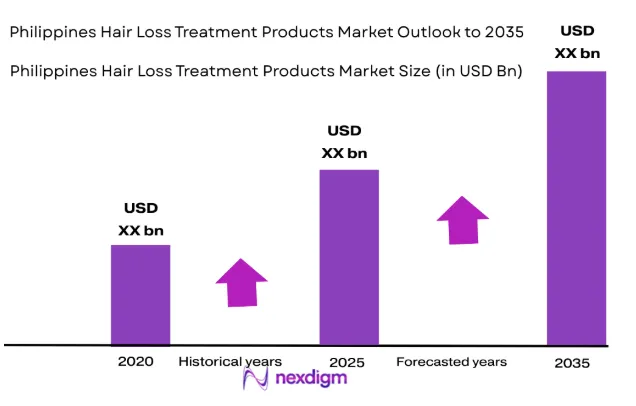
The Philippines Hair Loss Treatment Products market is valued at USD ~billion, based on a comprehensive analysis of historical data. The market growth is primarily driven by increasing consumer awareness about hair loss solutions and the rising prevalence of hair-related issues among both men and women. This market is significantly influenced by advancements in product technologies, especially in topical treatments, hair restoration devices, and oral medications. A notable surge in demand for non-invasive treatments and natural products is propelling growth in 2024. Additionally, high disposable incomes and urbanization are driving the market forward, with many consumers willing to spend more on premium treatments.
In the Philippines, major metropolitan areas such as Metro Manila, Cebu City, and Davao City dominate the market. These cities are characterized by high population densities and urban living, where consumer spending on personal care products is growing at a rapid pace. The urbanization trend in the Philippines has led to a surge in the demand for hair loss treatments, particularly in these densely populated regions. Additionally, Metro Manila leads the way due to its established healthcare infrastructure and strong presence of global and local hair care brands, making it the largest contributor to the market.
Market Segmentation
By Product Type
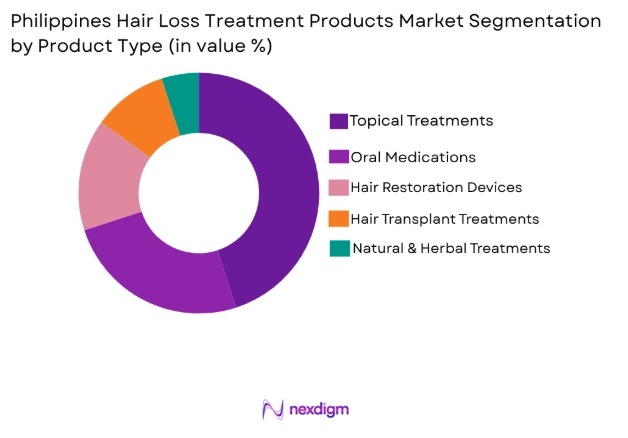
The Philippines Hair Loss Treatment Products market is segmented into various product types, including topical products, oral medications, hair restoration devices, hair transplant treatments, and natural & herbal treatments. Topical products dominate this segment due to their accessibility and effectiveness in treating early stages of hair loss. They are typically over-the-counter solutions that consumers can easily purchase without a prescription. Brands like Regaine and Kerastase offer top-rated topical solutions that help in reducing hair thinning and stimulating hair growth. This dominance is driven by consumer trust in well-established brands and their ongoing effectiveness in clinical studies. The ease of use and relatively low cost compared to other treatment options further enhance the popularity of topical products in the Philippines.
By Distribution Channel Type
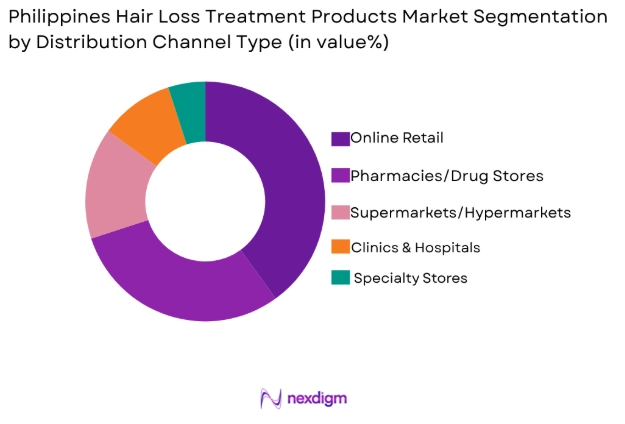
The market for hair loss treatment products in the Philippines is also segmented by distribution channel, which includes online retail, pharmacies/drug stores, supermarkets/hypermarkets, clinics & hospitals, and specialty stores. Online retail is gaining dominance in the Philippines market due to the increasing trend of e-commerce and online shopping. The convenience of purchasing hair treatment products through digital platforms is appealing to consumers, especially in metropolitan areas. The availability of various brands and the ease of comparing product prices online also contribute to the growing market share of online retail. Pharmacies and drugstores remain strong contenders in the market due to their widespread availability and established presence, offering consumers easy access to over-the-counter hair care products.
Competitive Landscape
The Philippines Hair Loss Treatment Products market is dominated by a mix of international giants and regional players. These include global companies such as L’Oréal and Johnson & Johnson, along with local players that are capitalizing on the rising demand for both non-invasive and herbal treatments. The presence of large international brands offers consumers a broad selection of trusted products, and their extensive distribution networks ensure widespread availability. Local companies, on the other hand, are increasingly focusing on affordability and tailored solutions to cater to Filipino consumers. This competitive landscape has created a diverse and dynamic market environment.
| Company | Establishment Year | Headquarters | Product Type | Distribution Channels | Revenue (USD) | Market Focus |
| P&G Philippines | 1946 | Makati City, Philippines | ~ | ~ | ~ | ~ |
| Johnson & Johnson Philippines | 1956 | Makati City, Philippines | ~ | ~ | ~ | ~ |
| L’Oréal Philippines | 1994 | Taguig City, Philippines | ~ | ~ | ~ | ~ |
| Regaine | 1988 | New York, USA | ~ | ~ | ~ | ~ |
| Kerastase Philippines | 1964 | Taguig City, Philippines | ~ | ~ | ~ | ~ |
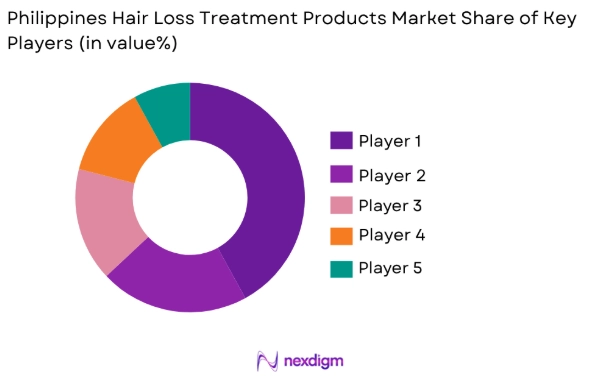
Philippines Hair Loss Treatment Products Market Analysis
Growth Drivers
Increasing Awareness About Hair Loss Solutions
The growing awareness about hair loss solutions in the Philippines is fueled by increasing health consciousness and the rise of digital media, which has significantly broadened consumer knowledge. The country has seen a rapid increase in internet penetration, reaching approximately 78% in 2023, with over 85 million internet users. This growth in digital accessibility has facilitated easier access to information about hair loss causes and treatments. The Philippines’ healthcare sector is also evolving, with higher investments in dermatology and wellness. As of 2023, the Department of Health reported a steady increase in skin and hair treatment consultations, reflecting growing interest in hair loss solutions across urban and rural populations.
Rising Disposable Income and Spending on Personal Care
The Philippines is experiencing an increase in disposable income, which is further boosting the market for personal care products, including hair loss treatments. According to the World Bank, the country’s GDP per capita rose from USD 3,538 in 2022 to USD 3,804 in 2023, indicating an improvement in the average income of Filipino households. This increase in income allows more consumers to invest in quality personal care and wellness products. Additionally, the Philippines’ retail industry, which includes personal care products, has expanded significantly due to rising consumer purchasing power. The strong economic recovery post-pandemic has led to a consumer shift towards premium and specialized products, including hair loss treatments.
Market Challenges
High Costs of Treatments
Despite the growing demand for hair loss treatments, one of the key challenges in the Philippines market is the high cost associated with advanced treatments, especially non-invasive procedures and hair restoration devices. The average cost of hair transplant surgeries in the Philippines ranges between PHP 50,000 to PHP 150,000, depending on the complexity and clinic. For many consumers, especially in lower-income groups, these treatments can be prohibitive. The cost disparity between basic topical treatments and high-end hair restoration procedures further limits access to these treatments. This cost-related challenge has been highlighted by the Philippine Statistics Authority, which notes that 17.6% of Filipino households earn below the minimum wage threshold, affecting their ability to afford such treatments.
Regulatory Challenges and Approval Processes
The hair loss treatment products market in the Philippines faces significant regulatory hurdles, which complicate product approvals and distribution. The Philippine Food and Drug Administration (FDA) plays a crucial role in regulating the sale of medical and cosmetic products. However, the approval process can take months due to stringent safety and efficacy testing requirements. For instance, the FDA’s review process for new drug formulations can take 6-12 months before approval. Additionally, the lack of clear guidelines for the approval of new ingredients in natural hair loss treatments has led to a backlog of pending product submissions. These regulatory challenges slow the market entry of new products and limit competition.
Market Opportunities
Growing Demand for Natural & Herbal Products
The growing demand for natural and herbal hair loss treatments is a key opportunity for market expansion. Filipinos are increasingly seeking natural alternatives to synthetic products, driven by rising concerns over chemical-based ingredients and side effects. The Philippine herbal medicine market is seeing increased consumer interest, with the market for herbal medicines growing by approximately 10% annually since 2020, according to the Department of Health. Herbal and natural hair loss products, such as those containing ginseng and biotin, have gained popularity due to their perceived safety and effectiveness. Additionally, the government’s promotion of traditional medicine as part of the country’s national health agenda further strengthens the demand for herbal hair loss treatments.
Surge in Cosmetic Surgery and Non-Invasive Procedures
The rise of cosmetic surgery and non-invasive procedures is opening up new avenues for growth in the Philippines’ hair loss treatment market. The popularity of non-invasive treatments such as laser hair restoration and PRP (Platelet-Rich Plasma) therapy is increasing, with a growth rate of around 15% annually. The Philippine Society of Dermatologic Surgery Inc. reports a steady increase in consultations for non-surgical hair restoration treatments, with clinics in Metro Manila seeing a significant uptick in demand. In 2023, the number of clinics offering such services grew by 12%, reflecting a surge in consumer preference for quick, effective, and minimally invasive solutions. This trend is supported by advancements in technology, making these treatments more affordable and accessible to a wider audience.
Future Outlook
Over the next five years, the Philippines Hair Loss Treatment Products market is expected to witness significant growth, primarily driven by the increasing urbanization, growing disposable incomes, and heightened consumer awareness about hair loss treatments. Technological advancements in hair restoration devices and the rising trend of non-invasive procedures will play a significant role in shaping the market. Moreover, consumer preference for natural and herbal treatments will likely create new opportunities for product innovation, which will further stimulate the market. As the healthcare infrastructure continues to improve, more individuals are expected to seek effective hair loss treatments, fueling long-term market expansion.
Major Players
- P&G Philippines
- Johnson & Johnson Philippines
- L’Oréal Philippines
- Regaine
- Kerastase Philippines
- Shiseido Philippines
- HairMax
- Philips
- Revivogen
- Alpecin
- Viviscal
- Nutrafol
- DHT Blocker
- Herbal Essences
- Theradome
Key Target Audience
- Investments and Venture Capitalist Firms
- Government and Regulatory Bodies
- Pharmaceutical Companies
- Cosmetic Product Manufacturers
- Healthcare Providers
- Hair Treatment Centers
- Retailers and Distributors of Beauty Products
- Clinics Specializing in Dermatology and Hair Restoration
Research Methodology
Step 1: Identification of Key Variables
In this phase, an ecosystem map will be constructed to identify and define all key stakeholders and variables impacting the Philippines Hair Loss Treatment Products market. This step will include secondary research, industry reports, and proprietary data to highlight crucial market drivers and constraints.
Step 2: Market Analysis and Construction
This phase involves analyzing historical data on market size, penetration, and growth patterns for different segments within the hair loss treatment market. We will also assess consumer preferences, pricing models, and regional variations in demand.
Step 3: Hypothesis Validation and Expert Consultation
In this phase, market hypotheses will be validated through in-depth interviews with industry experts and company executives. This will provide deeper insights into market dynamics, key consumer trends, and emerging opportunities in hair treatment products.
Step 4: Research Synthesis and Final Output
In this final step, data from primary and secondary sources will be synthesized to provide a comprehensive report. This will include detailed profiles of market leaders, product segmentation, and revenue projections. Expert feedback will be incorporated to ensure data accuracy and reliability.

- Executive Summary
- Research Methodology (Market Definitions and Assumptions, Abbreviations, Market Sizing Approach, Consolidated Research Approach, Understanding Market Potential Through In-Depth Industry Interviews, Primary Research Approach, Limitations and Future Conclusions)

- Definition and Scope
- Overview Genesis
- Timeline of Major Players
- Business Cycle
- Supply Chain and Value Chain Analysis

- Growth Drivers
Increasing Awareness About Hair Loss Solutions
Rising Disposable Income and Spending on Personal Care - Market Challenges
High Costs of Treatments
Regulatory Challenges and Approval Processes - Opportunities
Growing Demand for Natural & Herbal Products
Surge in Cosmetic Surgery and Non-Invasive Procedures - Trends
Adoption of Advanced Hair Restoration Technologies
Personalized Hair Loss Solutions - Government Regulations
Regulatory Bodies & Approval Process for Hair Treatment Products
Standards for Import and Sales of Hair Loss Products - SWOT Analysis
- Stakeholder Ecosystem
- Porter’s Five Forces
- Competition Ecosystem

- By Value, 2020-2025
- By Volume, 2020-2025
- By Average Price, 2020-2025

- By Product Type, (In Value %)
Topical Products
Oral Medications
Hair Restoration Devices
Hair Transplant Treatments
Natural & Herbal Treatments - By Gender, (In Value %)
Male
Female - By Distribution Channel, (In Value %)
Online Retail
Pharmacies/Drug Stores
Supermarkets/Hypermarkets
Clinics & Hospitals
Specialty Stores - By Application, (In Value %)
Alopecia Areata
Male Pattern Baldness
Female Pattern Hair Loss
Postpartum Hair Loss
General Thinning - By Region, (In Value %)
Luzon
Visayas
Mindanao

- Market Share of Major Players on the Basis of Value/Volume, 2024
- Market Share of Major Players by Product Type, 2024
- Cross Comparison Parameters (Company Overview, Business Strategies, Recent Developments, Strength, Weakness, Organizational Structure, Revenues, Revenues by Product Type, Number of Touchpoints, Distribution Channels, Number of Dealers and Distributors, Margins, Production Plant, Capacity, Unique Value Offering and others)
- SWOT Analysis of Major Players
- Pricing Analysis by SKUs for Major Players in the Philippines Hair
- Loss Treatment Products Market
- Detailed Profiles of Major Companies
P&G Philippines
Johnson & Johnson Philippines
L’Oreal Philippines
Regaine
Kerastase Philippines
Shiseido Philippines
HairMax
Philips
Revivogen
Alpecin
Viviscal
Nutrafol
DHT Blocker
Herbal Essences
Theradome

- Market Demand and Utilization
- Consumer Behavior and Buying Trends
- Regulatory and Compliance Requirements
- Needs, Desires, and Pain Point Analysis
- Decision-Making Process

- By Value, 2025-2035
- By Volume, 2025-2035
- By Average Price, 2025-2035


 Request a Sample
 Ask for Customization
 Get a Quote
 Enquire Now