

 Download PDF
Market Overview
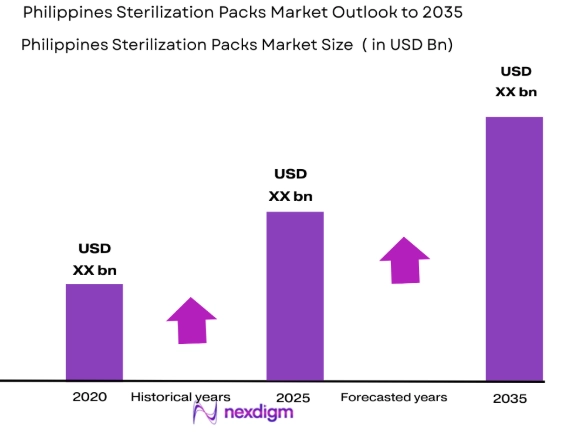
The Philippines hand sanitizers market demonstrates steady commercial activity, with a total market size valued at approximately USD ~ billion based on a recent historical assessment. This valuation is supported by retail audit data, pharmaceutical distribution reports, and corporate disclosures from key FMCG players. Growth is driven by sustained hygiene awareness, institutional procurement from healthcare and corporate sectors, and continued demand across urban households, ensuring consistent consumption volumes and stable pricing structures.
Metro Manila, Cebu, and Davao emerge as dominant consumption hubs due to dense population clusters, advanced retail infrastructure, and higher institutional demand from hospitals, offices, and commercial establishments. These urban centers benefit from strong distribution networks, including pharmacies, supermarkets, and e-commerce platforms, enabling rapid product availability. Additionally, higher disposable incomes and stricter hygiene protocols in these cities contribute to sustained product uptake compared to rural regions.
Market Segmentation
By Product Type
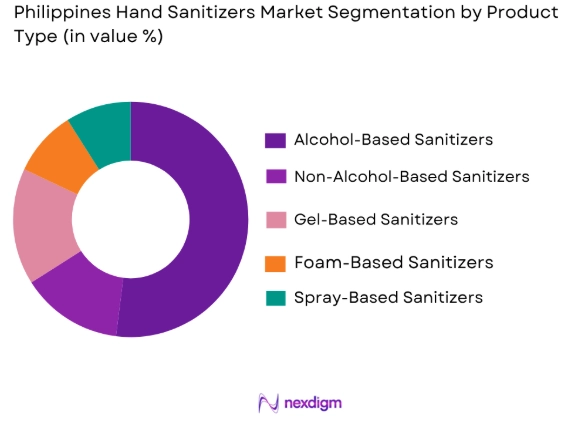
Philippines Hand Sanitizers market is segmented by product type into alcohol-based sanitizers, non-alcohol-based sanitizers, gel-based sanitizers, foam-based sanitizers, and spray-based sanitizers. Recently, alcohol-based sanitizers have a dominant market share due to factors such as strong consumer trust in efficacy, regulatory endorsement by health authorities, widespread availability, and compatibility with institutional hygiene protocols. Their proven ability to eliminate a broad spectrum of pathogens has made them the preferred choice across healthcare facilities, offices, and households, supported by aggressive marketing and consistent supply chains.
By End User
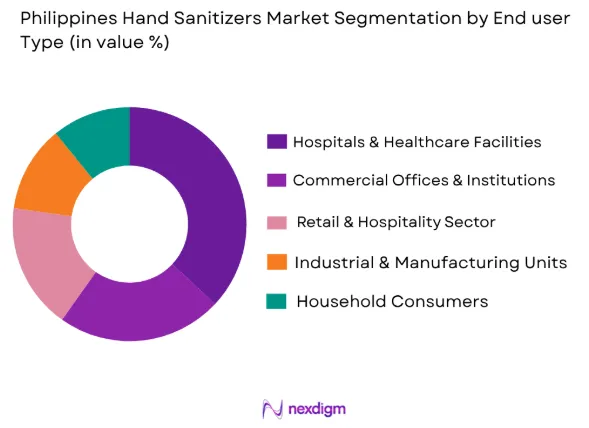
Philippines Hand Sanitizers market is segmented by end user into hospitals & healthcare facilities, commercial offices & institutions, retail & hospitality sector, industrial & manufacturing units, and household consumers. Recently, hospitals & healthcare facilities have a dominant market share due to factors such as mandatory hygiene compliance, high-frequency usage requirements, bulk procurement practices, and strict infection control standards. Continuous consumption in clinical environments ensures consistent demand, reinforced by government regulations and accreditation requirements that mandate sanitizer availability across patient care and operational areas.
Competitive Landscape
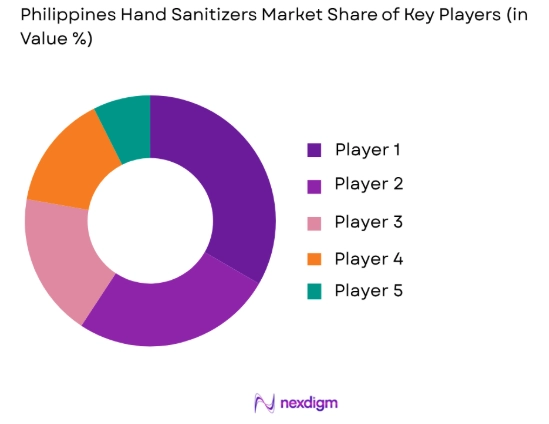
The Philippines hand sanitizers market is moderately consolidated, with a mix of multinational FMCG corporations and strong domestic manufacturers competing across pricing tiers and distribution channels. Large players leverage brand equity, extensive retail networks, and product innovation, while local firms compete through affordability and regional penetration. Competitive intensity is driven by product differentiation, formulation innovation, and expansion into institutional contracts.
| Company Name | Establishment Year | Headquarters | Technology Focus | Market Reach | Key Products | Revenue | Distribution Strength |
| Unilab Inc. | 1945 | Philippines | ~ | ~ | ~ | ~ | ~ |
| San Miguel Corporation | 1890 | Philippines | ~ | ~ | ~ | ~ | ~ |
| Splash Corporation | 1985 | Philippines | ~ | ~ | ~ | ~ | ~ |
| Procter & Gamble Philippines | 1837 | USA | ~ | ~ | ~ | ~ | ~ |
| Unilever Philippines | 1927 | UK/Netherlands | ~ | ~ | ~ | ~ | ~ |
Philippines Hand Sanitizers Market Analysis
Growth Drivers
Sustained Institutional Hygiene Compliance Across Healthcare and Corporate Sectors
The Philippines hand sanitizers market is significantly driven by institutional demand arising from healthcare facilities, corporate offices, and public infrastructure where hygiene protocols are strictly enforced and continuously monitored. Hospitals, clinics, and diagnostic centers maintain mandatory sanitation standards, ensuring consistent procurement of sanitizers in bulk quantities for both staff and patient use. Corporate offices, particularly in urban regions, have institutionalized hygiene practices that include sanitizer stations, contributing to recurring consumption cycles. Government regulations and occupational safety guidelines further reinforce sanitizer usage in workplaces, driving steady demand. Educational institutions and transportation hubs also contribute to consumption through policy-driven hygiene mandates. The normalization of sanitizer use as a daily necessity rather than a discretionary product ensures long-term market stability. Procurement contracts and supplier agreements with large organizations create predictable revenue streams for manufacturers. Furthermore, the integration of sanitization protocols into facility management services supports consistent replenishment cycles. This structural demand from institutional buyers provides resilience against fluctuations in consumer-driven demand, making it a foundational growth driver for the market.
Rising Consumer Awareness and Behavioral Shift Toward Preventive Healthcare Practices
Increasing awareness regarding personal hygiene and infection prevention has fundamentally altered consumer behavior in the Philippines, contributing significantly to the expansion of the hand sanitizers market. Consumers now perceive sanitizers as essential daily-use products, driven by heightened understanding of disease transmission and public health messaging. Urban households demonstrate frequent usage patterns, with multiple product formats catering to portability and convenience. Retail visibility through supermarkets, pharmacies, and digital platforms has enhanced accessibility, further reinforcing consumption habits. Marketing campaigns emphasizing germ protection and skin-friendly formulations have strengthened product adoption across demographic segments. The influence of social norms and workplace hygiene expectations also encourages routine sanitizer usage. Younger populations, particularly in metropolitan areas, exhibit strong preference for branded and premium variants, supporting market value growth. Additionally, the integration of sanitizers into personal care routines, alongside soaps and disinfectants, has expanded their role beyond emergency use. This behavioral shift ensures sustained baseline demand independent of episodic health crises, positioning consumer awareness as a long-term growth catalyst.
Market Challenges
Price Sensitivity Among Mass Market Consumers Limiting Premium Product Penetration
One of the key challenges in the Philippines hand sanitizers market is the high level of price sensitivity among consumers, particularly in lower-income segments where affordability plays a critical role in purchasing decisions. While premium products offer enhanced formulations, moisturizing benefits, and brand assurance, their adoption remains limited due to cost considerations. Consumers often opt for lower-priced alternatives, including generic or locally manufactured products, which can constrain revenue growth for established brands. This price-driven behavior affects margins and limits the scalability of high-value product segments. Retailers also prioritize stocking fast-moving, low-cost items to cater to mass demand, reducing shelf space for premium offerings. Economic fluctuations and inflationary pressures further exacerbate sensitivity to pricing, influencing purchasing frequency and brand switching. Additionally, institutional buyers often negotiate bulk procurement contracts based on cost efficiency, further intensifying pricing pressure. The presence of unorganized players offering cheaper products contributes to competitive pricing dynamics. As a result, companies face challenges in balancing quality, branding, and affordability while maintaining profitability in a price-conscious market environment.
Regulatory Compliance and Quality Assurance Constraints in a Fragmented Market Structure
The Philippines hand sanitizers market faces challenges related to regulatory compliance and quality assurance, particularly due to the presence of numerous small-scale manufacturers operating with varying standards. Ensuring adherence to guidelines set by regulatory authorities requires significant investment in testing, certification, and documentation processes. Smaller players often struggle to meet these requirements, leading to inconsistencies in product quality across the market. This variability can erode consumer trust and create reputational risks for the industry as a whole. Enforcement of regulations across diverse distribution channels, including informal retail outlets, remains complex and resource-intensive. Imported products must also comply with local standards, adding another layer of regulatory scrutiny. Delays in product approvals and licensing can hinder time-to-market for new formulations. Additionally, counterfeit or substandard products entering the supply chain pose safety concerns and distort competitive dynamics. Established companies must invest heavily in compliance and monitoring systems to differentiate themselves. These regulatory and quality-related challenges create operational complexities and increase costs for market participants.
Opportunities
Expansion of Eco-Friendly and Skin-Sensitive Formulations Catering to Evolving Consumer Preferences
The Philippines hand sanitizers market presents significant opportunities through the development of eco-friendly and skin-sensitive formulations that align with changing consumer expectations. Increasing awareness of environmental sustainability and skin health has created demand for products that minimize chemical harshness while maintaining efficacy. Consumers are actively seeking alcohol formulations with added moisturizers, herbal extracts, and dermatologically tested ingredients. This trend allows manufacturers to differentiate their offerings and target premium segments willing to pay for added benefits. Sustainable packaging solutions, such as recyclable materials and refill systems, further enhance brand appeal. Retailers are also prioritizing products with clear labeling and eco-friendly credentials, supporting market visibility. Innovation in formulation technology enables companies to balance effectiveness with gentleness, addressing concerns related to frequent use. Partnerships with dermatologists and certification bodies can strengthen consumer trust and brand positioning. Additionally, export opportunities for specialized formulations can expand revenue streams. This shift toward value-added products creates avenues for margin expansion and long-term brand loyalty.
Growth of Digital and E-Commerce Distribution Channels Enhancing Market Accessibility
The rapid expansion of digital and e-commerce platforms in the Philippines offers substantial growth opportunities for the hand sanitizers market by improving product accessibility and consumer reach. Online marketplaces enable manufacturers to directly connect with consumers, bypassing traditional distribution constraints and reducing dependency on physical retail networks. This channel supports a wide variety of product offerings, including niche and premium variants that may not be available in brick-and-mortar stores. Digital marketing strategies, including targeted advertising and influencer collaborations, enhance brand visibility and consumer engagement. Subscription models and bulk purchase options further drive repeat purchases and customer retention. Logistics advancements and last-mile delivery improvements ensure timely product availability across urban and semi-urban areas. E-commerce platforms also provide valuable consumer data, enabling companies to refine product strategies and pricing models. Small and medium-sized enterprises can leverage these platforms to compete with established players, increasing market dynamism. The integration of digital payment systems and mobile commerce further accelerates adoption. Overall, the growth of online distribution channels represents a transformative opportunity for expanding market penetration and enhancing consumer convenience.
Future Outlook
The Philippines hand sanitizers market is expected to maintain steady growth over the next five years, supported by sustained hygiene awareness and institutional demand. Technological advancements in formulation and dispensing systems will drive product innovation. Regulatory frameworks will continue to ensure quality and safety compliance, strengthening consumer confidence. Demand will expand across both urban and semi-urban regions, supported by retail and digital channel growth.
Major Players
- Unilab Inc.
- San Miguel Corporation
- Splash Corporation
- Green Cross Inc.
- Procter & Gamble Philippines
- Unilever Philippines
- Colgate-Palmolive Philippines
- Lamoiyan Corporation
- Belo Essentials
- Ever Bilena Cosmetics Inc.
- NutriAsia Inc.
- Hygienix Philippines
- Personal Collection Direct Selling Inc.
- Watsons Philippines
- SM Retail Inc.
Key Target Audience
- Pharmaceutical manufacturers
- FMCG companies
- Retail chain operators
- E-commerce platform providers
- Hospital procurement departments
- Corporate facility management firms
- Investments and venture capitalist firms
- Government and regulatory bodies
Research Methodology
Step 1: Identification of Key Variables
Key variables such as product types, distribution channels, pricing trends, and end-user demand patterns were identified through secondary research. Industry reports, company filings, and regulatory databases were analyzed to establish baseline parameters.
Step 2: Market Analysis and Construction
Market sizing was conducted using a bottom-up approach, integrating sales data from retail audits and institutional procurement records. Data triangulation ensured consistency across multiple sources.
Step 3: Hypothesis Validation and Expert Consultation
Findings were validated through consultations with industry experts, distributors, and healthcare procurement specialists. Insights were refined based on practical market dynamics and operational realities.
Step 4: Research Synthesis and Final Output
All data points were synthesized into structured insights, ensuring alignment with market trends and economic indicators. Final outputs were reviewed for accuracy, consistency, and analytical rigor.

- Executive Summary
- Research Methodology (Definitions, Scope, Industry Assumptions, Market Sizing Approach, Primary & Secondary Research Framework, Data Collection & Verification Protocol, Analytic Models & Forecast Methodology, Limitations & Research Validity Checks)

- Market Definition and Scope
- Value Chain & Stakeholder Ecosystem
- Regulatory / Certification Landscape
- Sector Dynamics Affecting Demand
- Strategic Initiatives & Infrastructure Growth

- Growth Drivers
Rising hygiene awareness and infection control measures post-pandemic
Expansion of healthcare infrastructure and institutional demand
Increasing consumer preference for convenient and portable hygiene products - Market Challenges
Price sensitivity in mass consumer segments
Regulatory compliance and quality standard enforcement issues
Market saturation and intense competition among brands - Market Opportunities
Innovation in organic and skin-friendly sanitizer formulations
Growth in touchless and smart dispensing technologies
Expansion into rural and underserved markets - Trends
Shift toward eco-friendly and sustainable packaging solutions
Integration of moisturizing and skincare ingredients in sanitizers
Increasing adoption of automated dispensing systems in public spaces - Government Regulations
- SWOT Analysis of Key Competitors
- Porter’s Five Forces

- By Market Value, 2020-2025
- By Installed Units, 2020-2025
- By Average System Price, 2020-2025
- By System Complexity Tier, 2020-2025

- By Product Type (In Value%)
Alcohol-Based Hand Sanitizers
Non-Alcohol-Based Hand Sanitizers
Gel-Based Sanitizers
Foam-Based Sanitizers
Spray-Based Sanitizers - By Platform Type (In Value%)
Portable Personal Use Sanitizers
Wall-Mounted Dispenser Systems
Touchless Automatic Dispensers
Tabletop Sanitizer Units
Industrial Bulk Sanitizer Systems - By Product Type (In Value%)
Gel-Based Hand Sanitizers
Liquid Hand Sanitizers
Foam-Based Hand Sanitizers
Spray-Based Hand Sanitizers
Sanitizing Wipes & Hand Rub Formats - By End User Segment (In Value%)
Hospitals & Healthcare Facilities
Commercial Offices & Institutions
Retail & Hospitality Sector
Industrial & Manufacturing Units
Household Consumers - By Procurement Channel (In Value%)
Direct Manufacturer Sales
Pharmaceutical Retail Chains
Supermarkets & Hypermarkets
Online E-commerce Platforms
Institutional Bulk Procurement Contracts

- Market Share Analysis
- Cross Comparison Parameters (Product Portfolio Diversity, Pricing Strategy, Distribution Network Strength, Brand Recognition, Innovation Capability, Product Quality Standards, Packaging Innovation, Retail Penetration, Online Presence, Institutional Sales Strength, Supply Chain Efficiency, Marketing & Promotion Strategy, Customer Loyalty, Regulatory Compliance, Sustainability Initiatives)
- SWOT Analysis of Key Competitors
- Pricing & Procurement Analysis
- Key Players
Unilab Inc.
San Miguel Corporation
Splash Corporation
Green Cross Inc.
Procter & Gamble Philippines
Unilever Philippines
Colgate-Palmolive Philippines
Lamoiyan Corporation
Belo Essentials
Ever Bilena Cosmetics Inc.
NutriAsia Inc.
Hygienix Philippines
Personal Collection Direct Selling Inc.
Watsons Philippines
SM Retail Inc.

- Healthcare sector dominance in bulk sanitizer consumption
- Growing demand from corporate offices and educational institutions
- Rising household penetration due to hygiene awareness campaigns
- Increased usage across retail and hospitality environments

- By Market Value, 2026-2035
- By Installed Units, 2026-2035
- By Average System Price, 2026-2035
- By System Complexity Tier, 2026-2035


 Request a Sample
 Ask for Customization
 Get a Quote
 Enquire Now