
 Download PDF
Market Overview
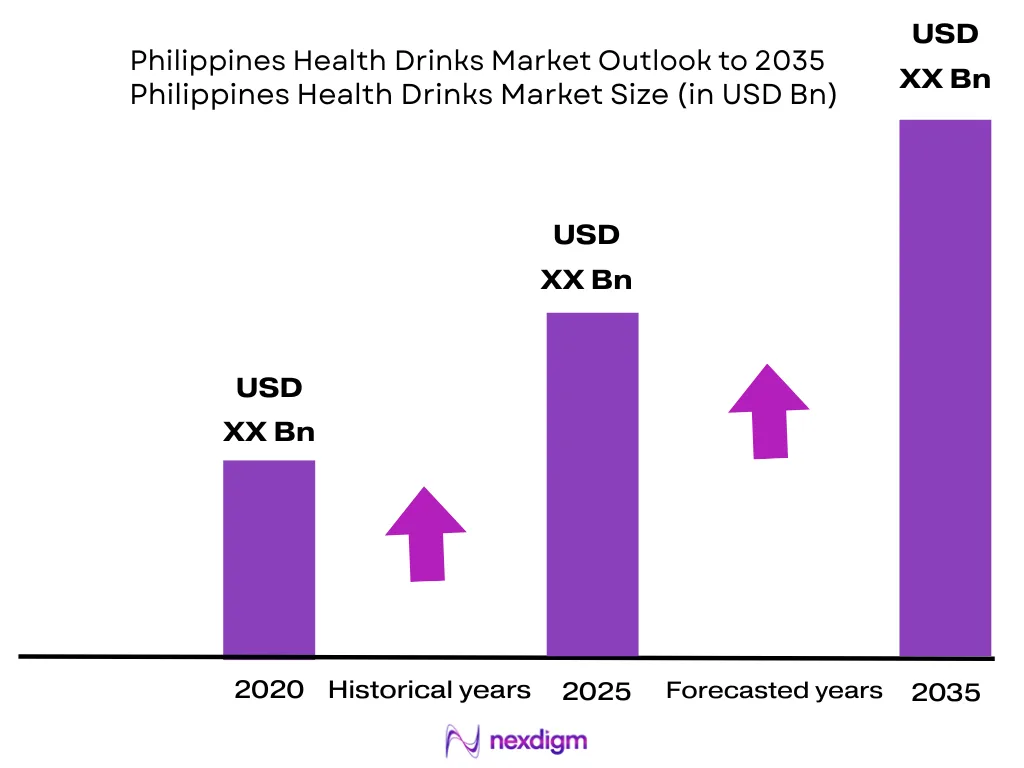
The Philippines Health Drinks Market is valued at USD ~ billion, based on triangulation of functional beverages, energy drinks, powdered nutrition drinks, isotonic beverages, probiotic drinks, fortified juices and dairy-based wellness drinks. Energy drinks form a major anchor, with the Philippines energy drinks market valued at USD ~ million, while the wider soft drinks market reached USD ~ billion. The market is driven by convenience, hot-climate hydration, youth consumption and low-sugar functional beverage demand. Metro Manila, CALABARZON, Central Luzon, Central Visayas and Davao dominate the Philippines Health Drinks Market due to population density, BPO employment, convenience stores, modern grocery, sari-sari store networks, gyms and distributor access. The Philippines population reached around 114 million after standing above 112 million, while GNI per capita reached USD 4,470, supporting branded nutrition drinks, isotonic beverages and single-serve energy drinks in urban and peri-urban clusters.
Market Segmentation
By Product Type
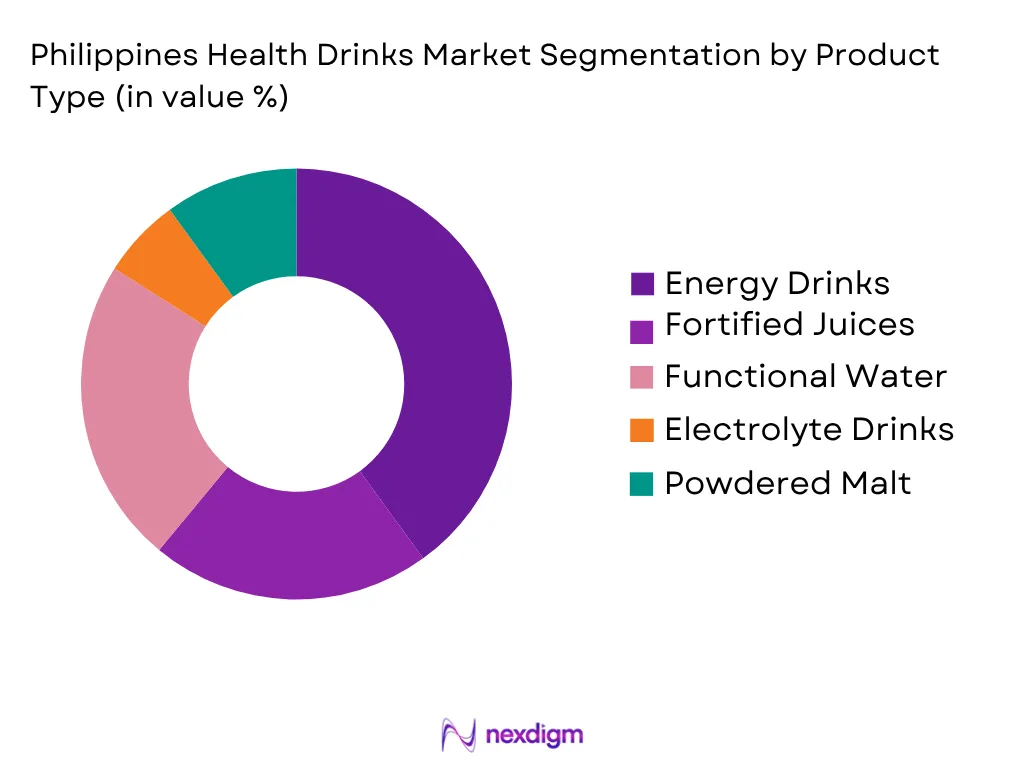
Philippines Health Drinks Market is segmented by product type into energy drinks, isotonic and sports drinks, powdered malt and chocolate nutrition drinks, probiotic drinks, fortified juices, dairy-based health drinks, functional water and plant-based functional beverages. Energy drinks hold the dominant market share under this segmentation due to deep penetration in convenience stores, sari-sari stores, petrol stations, transport hubs, campuses and BPO-heavy urban centers. Brands such as Cobra, Sting, Red Bull, Monster and other PET/can energy formats benefit from student usage, night-shift consumption, commuter demand and affordability-led single-serve packs. Isotonic beverages remain important because of tropical climate and sports usage, while powdered nutrition drinks remain strong in household consumption. However, energy drinks are more frequently linked with impulse purchase, chilled availability and on-the-go use.
By Distribution Channel
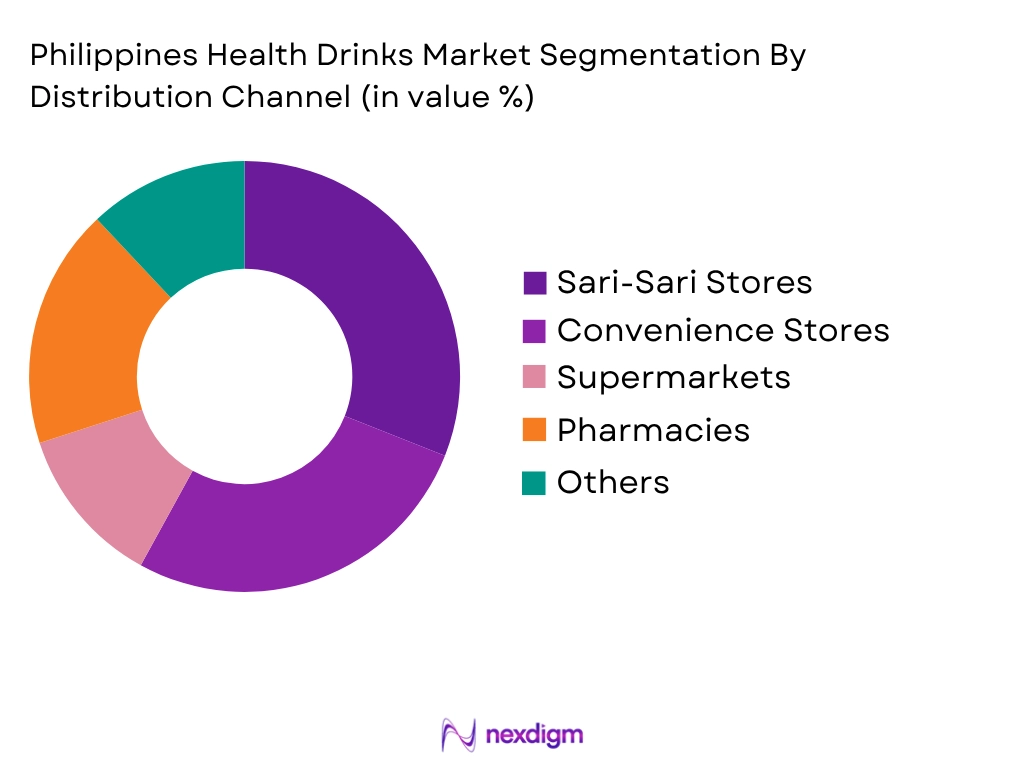
Philippines Health Drinks Market is segmented by distribution channel into sari-sari stores, supermarkets and hypermarkets, convenience stores, wet markets and wholesale hubs, pharmacies and health stores, e-commerce, gyms and foodservice. Sari-sari stores dominate the distribution channel because they are embedded in daily neighborhood purchasing and support sachets, single-serve PET bottles, powdered nutrition drinks, juice packs, small probiotic bottles and affordable energy drinks. Their relevance is higher in provincial and peri-urban areas where consumers purchase frequently in small quantities rather than through large weekly grocery baskets. Modern trade supports multipacks, imported wellness drinks and premium functional beverages, while convenience stores are critical for chilled energy drinks and isotonic beverages. Sari-sari stores remain central because they connect beverage companies with daily, low-ticket, high-frequency consumption.
Competitive Landscape
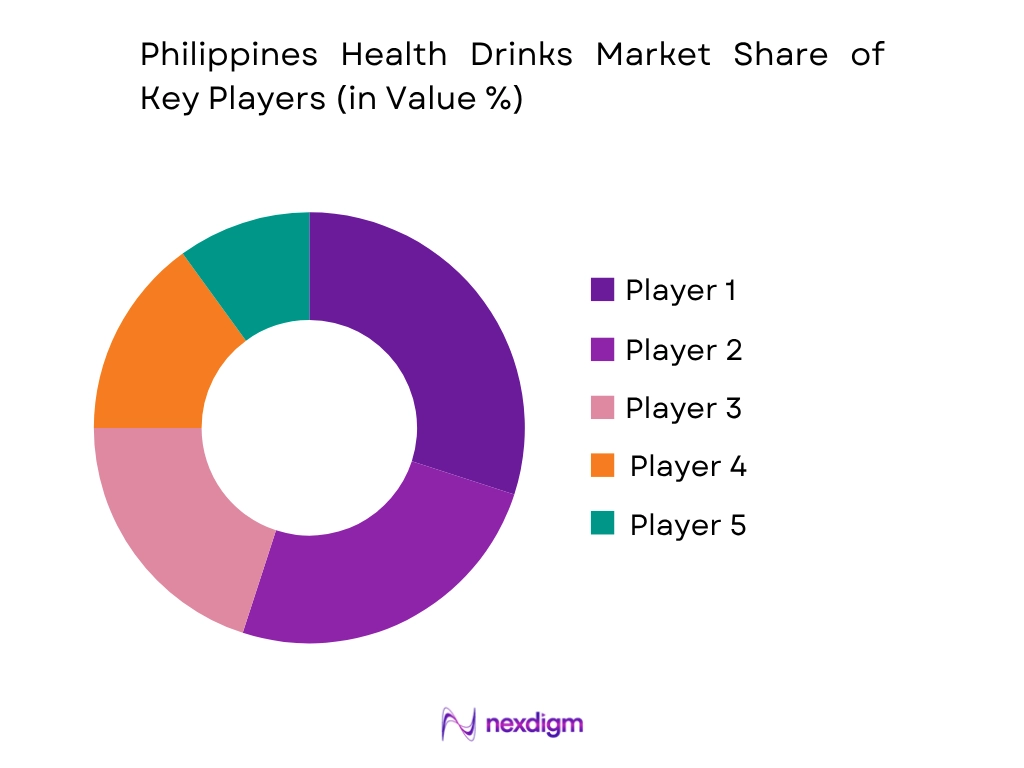
The Philippines Health Drinks Market is dominated by a mix of local conglomerates, multinational beverage companies, probiotic specialists, dairy players and sports hydration brands. Universal Robina Corporation, Nestlé Philippines, PepsiCo Philippines, Otsuka Pharmaceutical and Yakult Philippines have strong influence because they operate across high-frequency categories such as energy drinks, powdered nutrition, isotonic hydration and probiotic beverages. Competition is shaped by sari-sari reach, convenience-store cooler presence, affordability, FDA compliance, sweetened beverage tax exposure, sachet strength and brand trust.
| Company | Establishment Year | Headquarters | Key Health Drinks Portfolio | Functional Positioning | Core Channel Strength | Pack Format Strength | Regulatory/Compliance Strength | Philippines Competitive Advantage |
| Universal Robina Corporation | 1954 | Quezon City, Philippines | ~ | ~ | ~ | ~ | ~ | ~ |
| Nestlé Philippines | 1911 | Makati, Philippines | ~ | ~ | ~ | ~ | ~ | ~ |
| PepsiCo Philippines | 1965 | Purchase, USA / Philippines operations | ~ | ~ | ~ | ~ | ~ | ~ |
| Otsuka Pharmaceutical Philippines | 1921 | Tokyo, Japan | ~ | ~ | ~ | ~ | ~ | ~ |
| Yakult Philippines | 1935 | Tokyo, Japan / Philippines operations | ~ | ~ | ~ | ~ | ~ | ~ |
Philippines Health Drinks Market Analysis
Growth Drivers
Large Consumer Base and Household Consumption Depth Support Affordable Functional Nutrition
Philippines Health Drinks Market is supported by a large consumer base for powdered malt drinks, isotonic beverages, probiotic drinks, fortified juices, dairy-based drinks and energy drinks. The Philippine Statistics Authority declared the official population count at 112.73 million people, after an increase of 3.69 million people from the 2020 census count of 109.04 million. The World Bank records Philippines GDP at USD 461.62 billion and GDP per capita at USD 3,984.8, supporting branded but affordability-led beverage consumption. BSP data shows household final consumption expenditure at PHP 20,140,904 million, reinforcing the importance of high-frequency consumer categories such as sachet nutrition, PET energy drinks and single-serve hydration beverages.
Employment, BPO and Commuter-Led Consumption Create Demand for Energy and Hydration Drinks
Philippines Health Drinks Market benefits from a large working population that supports demand for energy drinks, isotonic beverages, functional water, RTD tea, probiotic drinks and powdered nutrition consumed during work, commute and study occasions. The Philippine Statistics Authority reported 48.84 million employed Filipinos out of a labor force of 50.79 million, creating a wide addressable base for workplace, factory, campus and transport-linked beverage consumption. The IT-BPM industry also reached 1.82 million full-time employees, after adding 120,000 direct jobs, supporting night-shift and office-led demand for alertness and functional hydration drinks. For health drinks, these numbers support PET energy drinks, electrolyte beverages, probiotic multipacks and convenience-store chilled products in Metro Manila, Cebu, Clark, Iloilo, Davao and other BPO clusters.
Market Challenges
Food and Beverage Inflation Pressures Pack Sizes and Down-Trading Behavior
Philippines Health Drinks Market faces affordability pressure because health drinks compete inside the same grocery basket as food and non-alcoholic beverages. PSA reported that food and non-alcoholic beverages contributed 1.7 percentage points to annual average inflation, while the group accounted for 51.6 of the contribution to annual average inflation. PSA also reported food inflation at 3.5 in December 2024, compared with 5.5 in December 2023, and annual average food inflation at 4.5. This matters for the Philippines Health Drinks Market because households may shift from premium protein RTDs, functional water and imported wellness beverages toward sachets, powdered malt drinks, small probiotic bottles, low-unit PET drinks and sari-sari store purchases.
Sweetened Beverage Tax and FDA Compliance Increase Reformulation and Launch Complexity
Philippines Health Drinks Market faces regulatory pressure because many energy drinks, juice drinks, powdered mixes, RTD tea and flavored dairy drinks contain sweeteners and require careful tax and label compliance. The Bureau of Internal Revenue’s implementing rules impose excise tax on sweetened beverages produced or manufactured and consumed in the Philippines, while manufacturers must declare brand name and volume in official records. The sweetened beverage tax framework also applies different tax treatment by sweetener type, including caloric sweeteners, non-caloric sweeteners and high-fructose corn syrup-based beverages. FDA requirements add another layer, since food businesses must secure product registration and comply with food safety, labeling and nutrition-claim requirements before commercial distribution. This increases reformulation, registration and documentation burden for new health-drink launches.
Market Opportunities
Sari-Sari, Digital and Urban Retail Channels Can Scale Affordable Functional Drinks
Philippines Health Drinks Market has an opportunity to scale affordable functional beverages through sari-sari stores, convenience chains, online grocery, marketplaces and mobile-first product discovery. PSA and DICT reported that households with internet connection increased to 48.8, while NCR recorded 79.3 internet users among individuals aged 10 years and over. NBS-style mobile commerce is especially relevant because the Philippines has a large consumer base of 112.73 million people and high-frequency retail behavior through neighborhood stores. The opportunity is strongest for sachet malt drinks, electrolyte sticks, probiotic multipacks, PET energy drinks and fortified juice packs, because brands can use digital campaigns for discovery while relying on sari-sari stores, convenience stores and wholesalers for physical last-mile availability.
Tourism and Foodservice Recovery Supports On-the-Go Hydration, Probiotics and Functional Beverages
Philippines Health Drinks Market has an opportunity in travel, tourism and foodservice channels because visitors, hotels, transport terminals, beach destinations, cafés and convenience stores create repeated beverage occasions. The Philippines recorded 5.95 million international visitor arrivals, compared with 5.44 million visitor arrivals in the previous year, according to congressional tourism performance data based on official tourism statistics. PSA also reported that tourism contributed to the economy through Tourism Direct Gross Value Added, with the tourism statistics program tracking the sector’s contribution at current prices. For health-drink players, these flows support isotonic drinks, bottled functional water, probiotic drinks, fortified juices, coconut water and low-sugar RTD tea across airports, hotels, resorts, convenience stores, foodservice outlets and tourist-heavy retail corridors.
Future Outlook
The Philippines Health Drinks Market is forecasted to grow at a CAGR of around 6.4% during 2026-2035, aligned with the Philippines non-alcoholic drink growth outlook and supported by demand for functional beverages, energy drinks, fruit juices and healthier ready-to-drink products. Over the next phase, the market is expected to grow through energy drinks, isotonic hydration, powdered functional nutrition, probiotics, fortified juices, dairy-based health drinks and reduced-sugar beverages. Growth will remain highly dependent on affordability, sachet formats, PET bottles, sari-sari distribution, convenience store cooler presence and regional wholesale networks.
The market will also be shaped by sweetened beverage tax exposure and consumer preference for lower-sugar drinks. Brands with reduced-sugar energy drinks, low-sugar RTD tea, no-added-sugar juices, probiotic multipacks and functional water will be better placed in urban channels. However, mass-market growth will still depend on low-unit-price formats and familiar flavors. Metro Manila, CALABARZON, Central Luzon, Cebu and Davao will remain priority clusters for product launches because they combine population density, modern retail, universities, convenience chains, BPO employment and fitness centers. Provincial growth will depend on sari-sari stores, wholesalers and affordable sachet or single-serve packs.
Major Players
- Nestlé Philippines
- Universal Robina Corporation
- The Coca-Cola Company Philippines
- PepsiCo Philippines
- Otsuka Pharmaceutical Philippines
- Yakult Philippines
- Del Monte Philippines
- San Miguel Corporation
- Monde Nissin Corporation
- Century Pacific Food
- Asia Brewery
- Red Bull Philippines
- Monster Energy Philippines
- Rebisco Group
- Tipco / Imported Wellness Beverage Brands
Key Target Audience
- Health drink manufacturers and brand owners
- Beverage importers and distributors
- Sari-sari store aggregators and traditional trade wholesalers
- Supermarket, hypermarket and convenience retail chains
- Pharmacy, health store and wellness retail operators
- Gyms, sports clubs, schools, canteens and foodservice operators
- Investments and venture capitalist firms
- Government and regulatory bodies (Food and Drug Administration Philippines, Department of Health, Bureau of Internal Revenue, Department of Trade and Industry, Philippine Statistics Authority, Bureau of Customs)
Research Methodology
Step 1: Identification of Key Variables
The initial phase involves constructing an ecosystem map of the Philippines Health Drinks Market, covering manufacturers, importers, distributors, wholesalers, sari-sari stores, supermarkets, convenience chains, pharmacies, gyms, schools, foodservice operators and regulators. Key variables include product type, sugar profile, pack format, channel type, affordability band, regional penetration, cooling requirement and FDA registration status.
Step 2: Market Analysis and Construction
In this phase, historical data is compiled across energy drinks, isotonic drinks, powdered malt nutrition, probiotic drinks, fortified juices, dairy-based health drinks and functional water. Top-to-bottom analysis uses beverage category benchmarks and country-level consumption indicators, while bottom-to-top validation uses SKU mapping, store checks, channel allocation and distributor-level movement assumptions.
Step 3: Hypothesis Validation and Expert Consultation
Market hypotheses are validated through CATIs with beverage distributors, supermarket category managers, sari-sari wholesale traders, convenience-store buyers, pharmacy buyers, gym retailers and foodservice operators. These consultations provide inputs on sell-through, pack preferences, regional demand, cooler availability, sachet movement, low-sugar adoption and functional claim acceptance.
Step 4: Research Synthesis and Final Output
The final phase integrates secondary research, primary interviews, SKU benchmarking, regulatory review and channel-level triangulation. Direct engagement with manufacturers and distributors helps validate product segmentation, competitive positioning and route-to-market assumptions. The final output provides market size, segmentation, competitive landscape, future outlook and strategic recommendations for the Philippines Health Drinks Market.

- Executive Summary
- Research Methodology (Market Definitions and Assumptions, Health Drinks Inclusion and Exclusion Criteria, Abbreviations, Top-to-Bottom Market Sizing, Bottom-to-Top SKU Build-Up, Sari-Sari Store and Modern Trade Audit, Wet Market and Wholesale Channel Checks, Convenience Store Cooler Mapping, Pharmacy and Gym Channel Validation, E-Commerce Grocery Tracking, FDA and Excise Tax Review, Primary Research Approach, Limitations and Future Conclusions)

- Definition and Scope
- Overview Genesis
- Health Drinks Category Boundary
- Timeline of Major Players
- Business Cycle

- Growth Drivers (Young Population, Urbanization, BPO and Night-Shift Workforce, Hot-Climate Hydration, Sari-Sari Store Reach, Powdered Nutrition Habit, Sports and Fitness Adoption, Probiotic Drink Familiarity)
- Market Challenges (Inflation Pressure, Sugar-Sweetened Beverage Tax, Import Dependency, Cold Chain Gaps, FDA Registration, Counterfeit Risk, Low Purchasing Power)
- Opportunities (Low-Sugar Reformulation, Sachet Functional Nutrition, Coconut Water, Probiotic Expansion, BPO Workforce Hydration, Protein RTD, Senior Nutrition, E-Commerce Multipacks)
- Market Trends (PET Energy Drinks, Isotonic Hydration, Powdered Sachets, Probiotic Multipacks, Coconut Water, Low-Sugar RTD Tea, E-Commerce Bundles, Local Fruit Wellness)
- SWOT Analysis
- PESTLE Analysis
- Porter’s Five Forces Analysis

- By Value (2020-2026)
- By Volume (2020-2026)
- By Average Selling Price (2020-2026)

- By Product Type (In Value %)
Energy Drinks
Isotonic and Sports Drinks
Powdered Malt and Chocolate Nutrition Drinks
Probiotic Drinks
Fortified Juices and Juice Drinks - By Packaging Format (In Value %)
PET Bottles
Cans
Tetra Packs and Cartons
Sachets and Powder Sticks
Small Probiotic Bottles
Pouches - By Distribution Channel (In Value %)
Sari-Sari Stores
Supermarkets and Hypermarkets
Convenience Stores
Wet Markets and Wholesale Hubs
Pharmacies and Health Stores
- By Region (In Value %)
Metro Manila
CALABARZON and Central Luzon
Central Visayas
Western Visayas
Davao Region and Northern Mindanao

- Market Share of Major Players on the Basis of Value and Volume
- Cross Comparison Parameters (Functional Product Portfolio Breadth, Sari-Sari Store Penetration, Sachet and Small-Pack Strength, FDA Registration Capability, Sweetened Beverage Tax Exposure, Cold-Chain Distribution Strength, Convenience Store Cooler Presence, Local Manufacturing and Co-Packing Capability)
- SWOT Analysis of Major Players
- Pricing Analysis Basis SKUs for Major Players
- Detailed Profiles of Major Companies
Nestlé Philippines
Universal Robina Corporation
The Coca-Cola Company Philippines
PepsiCo Philippines
Otsuka Pharmaceutical Philippines
Yakult Philippines
Del Monte Philippines
San Miguel Corporation
Monde Nissin Corporation
Century Pacific Food
Asia Brewery
Red Bull Philippines
Monster Energy Philippines
Rebisco Group
Tipco / Imported Wellness Beverage Brands

- Students and Young Adults
- Office Workers and BPO Employees
- Drivers, Riders and Commuters
- Children and Families
- Factory and Outdoor Workers

- By Value (2026-2035)
- By Volume (2026-2035)
- By Average Selling Price (2026-2035)


 Request a Sample
 Ask for Customization
 Get a Quote
 Enquire Now