
 Download PDF
 Download PDF
Market Overview
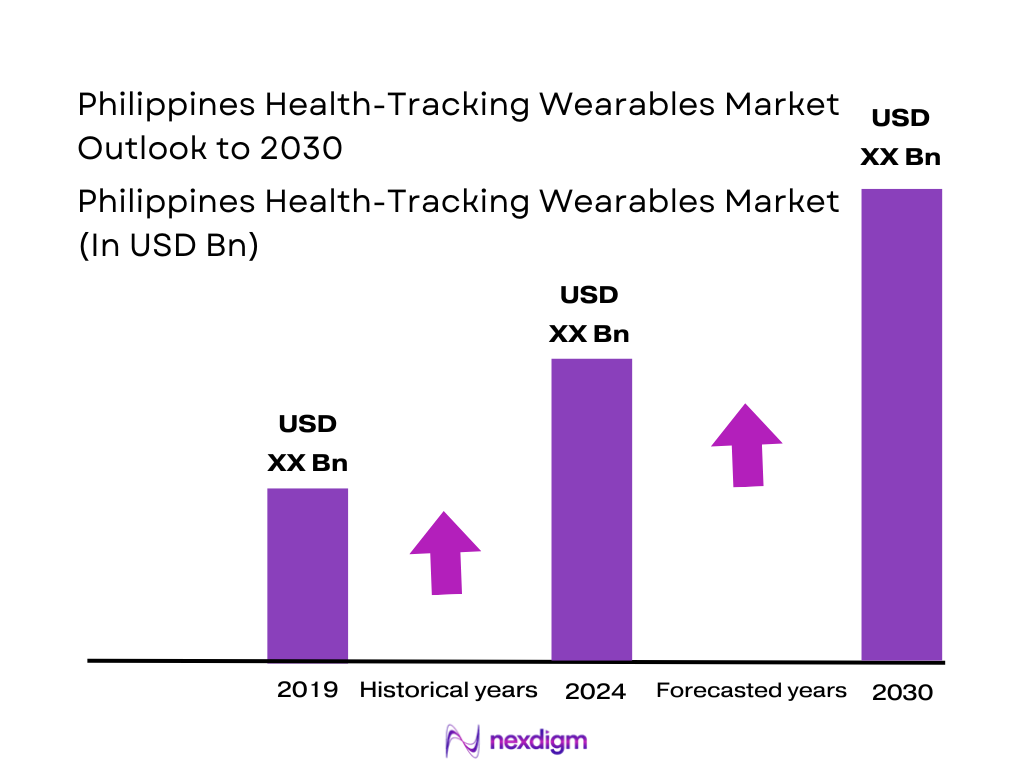
The Philippines health-tracking wearables market is valued at roughly USD ~ billion, based on a five-year historical analysis of wearable AI, wearable technology and wearable medical devices demand in the country. The market has expanded from around USD ~ billion in the preceding period, supported by strong smartphone uptake and a services-heavy economy where services contribute over 60% of GDP. Rising health consciousness and a sports and fitness market of about USD ~ billion further reinforce demand for devices that track steps, heart rate, sleep and training loads.
Health-tracking wearables demand is concentrated in Metro Manila and the broader Mega Manila corridor, where services contribute more than 80% of regional GDP and much of the country’s electronics trade flows through Manila’s ports and airports. Higher disposable incomes, dense smartphone penetration and a strong base of gyms, private hospitals and premium retail drive early adoption in these urban clusters. Secondary demand hubs are emerging in Central Luzon, Calabarzon, Cebu and Davao, where fitness chains, BPO hubs and tech-savvy youth populations provide fertile ground for smartwatch and fitness band ecosystems to scale.
Market Segmentation
By Device Category
The Philippines health-tracking wearables market is segmented by device category into smartwatches with health-tracking features, fitness bands and activity trackers, health-enabled hearables, smart rings and screen-less wearables, and medical-grade patches, straps and biosensors. Smartwatches currently hold a dominant share due to their positioning as all-in-one lifestyle and health companions. Wrist-worn devices already account for hundreds of thousands of quarterly shipments in the Philippines, with strong growth in Huawei, Apple, Samsung, Xiaomi and other Android-centric brands. Telco bundles, app ecosystems, built-in payments and social/fitness challenges make smartwatches the default upgrade from basic bands, allowing brands to deepen monetization through premium sensors, coaching subscriptions and cross-device ecosystems.

By End-User Cohort
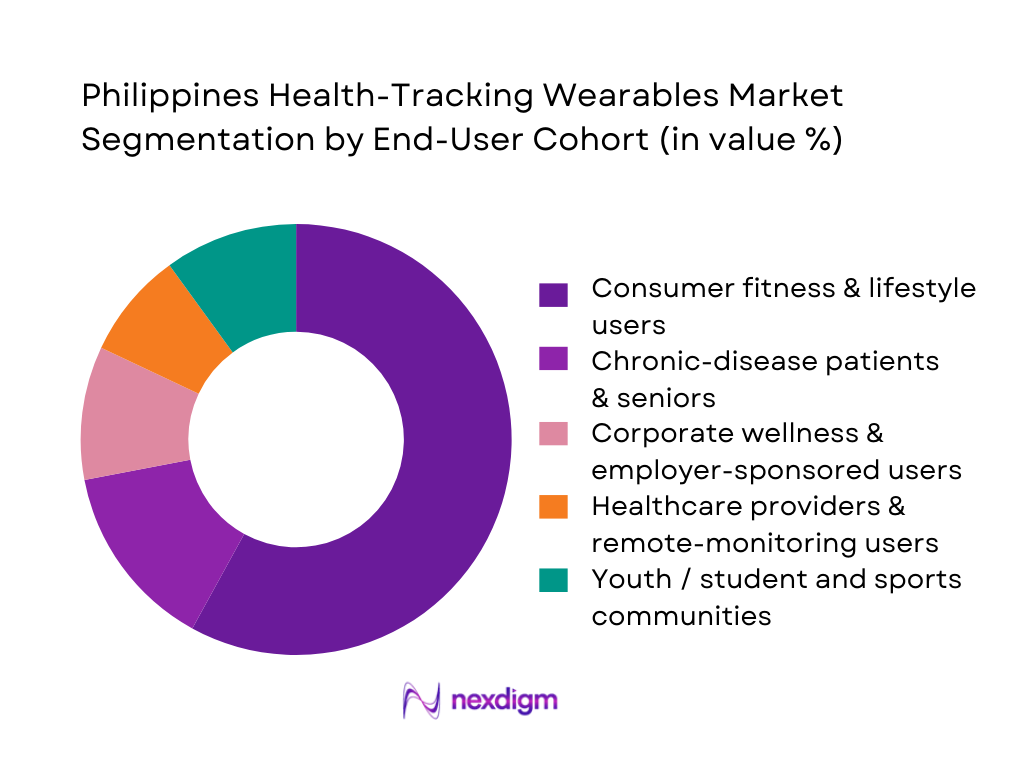
The Philippines health-tracking wearables market is segmented by end-user cohort into consumer fitness and lifestyle users, chronic-disease patients and seniors, corporate wellness and employer-sponsored users, healthcare providers and remote-monitoring users, and youth/student and sports communities. Consumer fitness and lifestyle users dominate market share, supported by over ~ million smartphone users and a fast-growing fitness and sports equipment market valued at USD ~ billion. This broad base is driven by weight-management goals, body-image and wellness culture, social media-influenced fitness trends and the proliferation of gyms and boutique studios across urban centres. For these users, health-tracking wearables are positioned as affordable, aspirational gadgets that turn daily activity into trackable, shareable metrics rather than as purely clinical tools.
Competitive Landscape
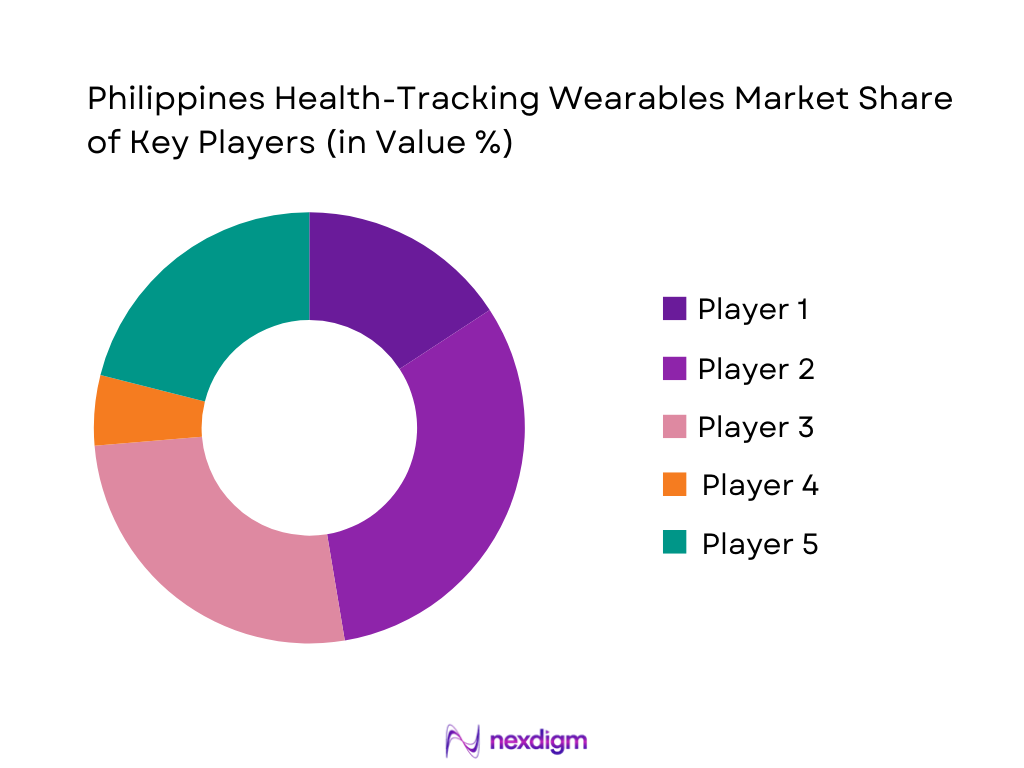
The Philippines health-tracking wearables market is led by global consumer-electronics and health-tech brands such as Apple, Samsung, Huawei, Garmin and Google’s Fitbit, complemented by fast-growing Chinese ecosystem players like Xiaomi and Oppo. IDC’s shipment data shows wrist-worn devices (watches and bands) are the core battleground, with Huawei and other Android-aligned brands registering strong unit growth in recent quarters. Competition is intensifying around battery life, sensor accuracy (heart, SpO₂, sleep, stress), AI-powered insights and bundling with telco plans, while medical-grade vendors focus on partnerships with hospitals and insurers to embed wearables into remote-monitoring pathways.
| Company | Establishment Year | Headquarters | Key Health-Tracking Devices in PH | Primary Biometrics Tracked | Core Target Segments in Philippines | Go-to-Market Channels in Philippines | Notable Ecosystem / Healthcare Partnerships* |
| Apple | 1976 | Cupertino, USA | ~ | ~ | ~ | ~ | ~ |
| Samsung | 1969 | Suwon, South Korea | ~ | ~ | ~ | ~ | ~ |
| Huawei | 1987 | Shenzhen, China | ~ | ~ | ~ | ~ | ~ |
| Fitbit (Google) | 2007 (Fitbit) | San Francisco, USA | ~ | ~ | ~ | ~ | ~ |
| Garmin | 1989 | Olathe, USA | ~ | ~ | ~ | ~ | ~ |
Philippines Health-Tracking Wearables Market Analysis
Growth Drivers
Rising Lifestyle Disease Burden and Prevention Focus
The Philippines has a large at-risk adult base for health-tracking wearables, with ~ adults in the 20–79 age group. In this cohort, an estimated ~ adults are living with diabetes in the country, creating strong demand for continuous monitoring of glucose, activity and heart health. Overall population stands at ~ people, while life expectancy is 70 years, highlighting growing longevity with chronic disease. National policy documents emphasise noncommunicable diseases as dominant causes of death, aligning health-tracking wearables with government prevention and early-detection priorities.
Fitness, Sports, Body-Image and Wellness Culture Across Age Groups
A young, connected population underpins lifestyle and fitness wearables in the Philippines. Total population is ~, with 84% of people using the internet in the country, enabling always-on connectivity for app-linked devices. In January 2024, there were ~ million internet users in the Philippines, supporting streaming fitness content, step-challenges and social workouts. A 2024 policy brief on digitalisation notes that government views digital platforms as critical for job creation and inclusive growth, which extends to digital wellness ecosystems that blend gamified fitness, nutrition tracking and mental-health apps, all integrated with smartwatches and fitness bands.
Challenges
Affordability, ASPs and Income Inequality Across Regions
Despite robust demand drivers, affordability constrains mass adoption of health-tracking wearables. GDP per capita in the Philippines is USD ~, well below high-income markets where premium smartwatches dominate. The national poverty headcount at USD ~ a day (PPP) is ~% of the population, indicating millions with limited discretionary spending for non-essential electronics. A World Bank broadband assessment notes that fixed broadband charges consume 11% of per-capita gross national income in the country, roughly double the ASEAN average. When connectivity itself is relatively expensive, households prioritise smartphones over secondary devices, keeping health-tracking wearables concentrated in higher-income urban users unless OEMs and telcos create aggressive instalment or bundled-service offers.
Data Privacy, Cybersecurity and Consumer Trust Concerns
Health-tracking wearables generate highly sensitive data on heart rate, sleep and location, intersecting with a tightening privacy regime in the Philippines. The National Privacy Commission (NPC) reported conducting more than 670 compliance checks, privacy sweeps and on-site visits in 2023 to enforce personal data protection. The same framework mandates Annual Security Incident Reports for organisations handling personal data, including digital-health and fitness platforms. With 84% of Filipinos using the internet, any high-profile breach involving wearable data could erode trust in continuous monitoring and cloud-synced health records. Vendors must therefore design consent flows, retention policies and breach-notification processes aligned with the Data Privacy Act and NPC guidance, or risk regulatory sanctions and consumer hesitation to share health metrics.
Opportunities
Remote Patient Monitoring for Chronic Diseases via Wearables
Health-tracking wearables can close critical gaps in chronic-disease management in the Philippines. Diabetes alone affects ~ adults in the country, while national objectives for health emphasise noncommunicable diseases as a core priority. Hospital-access studies show that regions such as Caraga, Mimaropa and Zamboanga have relatively fewer hospitals and lower two-hour access to essential surgery, underscoring geographic inequities in specialty care. Telemedicine program data report ~ teleconsultations over a one-year period in the DOH service, demonstrating proof-of-concept but also leaving substantial headroom versus the ~-million population. Continuous monitoring of heart rate, activity, sleep and glucose through wearables can feed into remote patient- monitoring dashboards, enabling earlier interventions, reducing hospital congestion and supporting Universal Health Care roll-out in remote municipalities.
Corporate Wellness, Productivity and Benefits Programs
The Philippines’ services-led economy and large outsourcing base create strong corporate wellness potential for health-tracking wearables. The BPO industry employs about ~ million full-time workers across more than 800 companies nationwide, many operating in high-stress, sedentary roles that benefit from structured wellness programs. A 2024 World Bank snapshot reports national unemployment at 2.2% of the labour force, highlighting a sizable employed base that employers seek to retain and keep productive. Internet usage covering 84% of the population and widespread smartphone penetration make step-count challenges, sleep-tracking incentives and heart-rate-based coaching easily deployable via wearables. Firms can tie reduced absenteeism and improved health indicators to insurance-premium negotiations, positioning wearables as part of broader human-capital and ESG strategies rather than pure gadgets.
Future Outlook
Over the next several years, the Philippines health-tracking wearables market is projected to expand strongly as health awareness, digital connectivity and AI-powered analytics converge. Regional studies suggest Southeast Asia wearable technology revenues reached around USD ~ billion recently, with double-digit growth expected through the next decade, and the Philippines is poised to capture an outsized share of incremental demand due to its young, mobile-first population. As wearable medical devices in the country are forecast to grow at mid- to high-teens annual rates, health-tracking wearables that straddle consumer wellness and clinical monitoring are expected to deliver one of the most attractive growth pools in the wider digital-health ecosystem.
Major Players
- Apple
- Samsung Electronics
- Huawei
- Xiaomi
- Oppo
- Realme
- Fitbit
- Garmin
- Amazfit
- WHOOP
- Polar
- Honor
- Omron Healthcare
- Abbott
Key Target Audience
- Global and regional wearable device OEMs
- Consumer electronics retailers and e-commerce marketplaces
- Telecom operators and digital service providers
- Hospitals, private hospital chains and specialty clinics
- Health insurers and HMOs
- Fitness chains, gym operators and sports clubs
- Government and regulatory bodies
- Investment and venture capital firms
Research Methodology
Step 1: Identification of Key Variables
The initial phase involves constructing a detailed ecosystem map for the Philippines health-tracking wearables market, covering device OEMs, telcos, retailers, hospitals, HMOs, fitness chains, fintechs and health-tech platforms. Extensive desk research using syndicated reports, IDC shipment trackers, government data and academic studies is conducted to understand device categories, pricing bands, user cohorts and regulatory constraints. The goal is to identify the core variables that drive demand, such as smartphone penetration, disposable income, health-spend levels and digital-health policy.
Step 2: Market Analysis and Construction
In this stage, historical regional and global wearable market data is compiled and filtered down to the Philippines using country-level shipment, revenue and usage indicators. Data points from wearable technology, wearable AI and wearable medical devices studies are normalized and blended to construct a health-tracking wearables view. The analysis assesses device penetration by urban cluster, price band and channel, while also benchmarking against the Philippines sports and fitness and broader digital-economy metrics to validate the plausibility of the revenue pool.
Step 3: Hypothesis Validation and Expert Consultation
Preliminary hypotheses on market size, CAGR, leading segments and adoption barriers are tested through structured interviews and online discussions with industry stakeholders. These include product managers from device brands, category heads at large retailers, digital-health entrepreneurs, hospital CIOs, HMO medical directors and corporate HR/benefits heads. Their feedback provides ground-level insights on ASP trends, attach rates with smartphones, real-world usage of health features and the readiness of healthcare institutions to integrate wearables into care pathways, thereby refining and calibrating the model.
Step 4: Research Synthesis and Final Output
The final phase integrates quantitative estimates from the bottom-up (shipments, ASPs, active-user bases) and top-down (share of ASEAN wearable technology and wearable medical devices flowing to the Philippines) approaches. This synthesis is overlaid with scenario analysis reflecting different trajectories for digital-health policy, insurer engagement and consumer spending power. The end output is a structured view of the Philippines health-tracking wearables market size, segmentation, growth outlook and competitive dynamics, along with strategic recommendations for OEMs, telcos, healthcare providers and investors.

- Executive Summary
- Research Methodology (Philippines-focused health-tracking wearables device and service definitions, inclusion–exclusion criteria, data sources, sample frame, modeling logic and validation)

- Definition, Scope and Device Categories
- Evolution of Health-Tracking Wearables in the Philippines
- Role of Wearables in Consumer Wellness, Fitness and Digital Health Delivery
- Positioning Versus Smartphones, Medical Devices and Traditional Fitness Equipment
- Business Cycle: Product Launch, Adoption, Replacement and Upgrade Behaviour

- Growth Drivers
Rising Lifestyle Disease Burden and Prevention Focus
Fitness, Sports, Body-Image and Wellness Culture Across Age Groups
Telco, Device and Platform Bundling Strategies
Social Media, Influencer and Community-Led Fitness Engagement - Challenges
Affordability, ASPs and Income Inequality Across Regions
Data Privacy, Cybersecurity and Consumer Trust Concerns
Fragmented Interoperability with Local Health IT Systems
Drop-Off in Long-Term Usage and Device Abandonment - Opportunities
Remote Patient Monitoring for Chronic Diseases via Wearables
Corporate Wellness, Productivity and Benefits Programs
Insurance and HMO Partnerships with Incentive-Based Health Programs
Expansion into Kids, Teens, Women’s Health and Senior-Care Wearables - Trends
AI-Powered Health Insights, Coaching and Risk Scoring
Transition from Step Counting to Holistic Health-Score Platforms
Hybrid Smartwatches, Fashion Collaborations and Designer Partnerships
Embedded Payments, Access Control and Identity via Wearables - Regulatory and Compliance Landscape
Medical Device Classification and Local FDA Requirements for Health Wearables
Data Privacy Act, Cross-Border Data Flows and Consent Management
Emerging Reimbursement and Coding Norms for Remote Monitoring - Stakeholder Ecosystem Mapping
Device OEMs and Component Suppliers
Telcos, ISPs and Cloud Providers
Hospitals, Clinics, HMOs and Insurers
Fitness Chains, Gyms, Digital Fitness Apps and Influencers
Retailers, E-commerce Platforms and Fintech Partners - Competitive Landscape Overview
- Porter’s Five Forces Analysis
- Market-Level SWOT Analysis

- By Value, 2019-2024
- By Volume, 2019-2024
- Installed Base of Active Health-Tracking Wearables, 2019-2024
- Average Selling Price and Price-Band Mix, 2019-2024
- Contribution of Hardware, Subscriptions and Value-Added Services, 2019-2024

- By Device Category (in Value %)
Smartwatches with Health-Tracking Features
Fitness Bands and Activity Trackers
Smart Rings and Screenless Wearables
Hearables with Health / Fitness Monitoring
Features
Medical-Grade Patches, Chest Straps and Specialty Health Wearables - By Biometric and Health Use Case (in Value %)
Activity, Steps, Distance and Calorie Tracking
Heart Rate, Heart Rate Variability and ECG-Enabled Devices
Sleep Staging, Recovery and Stress / Mental Wellbeing Tracking
Blood Oxygen, Respiratory Rate, Blood Pressure and Temperature
Women’s Health, Fertility and Maternal Monitoring Wearables - By Connectivity and Ecosystem Integration (in Value %)
Smartphone-Tethered Bluetooth Devices
LTE / eSIM-Enabled Standalone Wearables
Wi-Fi Enabled and Cloud-Synced Devices
Multi-Device Ecosystem Bundles - By End-User Cohort (in Value %)
Gen Z and Young Professionals
Middle-Aged Working Adults and Parents
Seniors and Chronic Disease Patients
Athletes, Fitness Enthusiasts and Sports Communities
Corporate Wellness and Enterprise-Funded Users - By Price Band (in Value %)
Entry-Level Mass Devices
Mid-Priced Mass Premium Devices
Premium and Flagship Devices
Medical-Grade and Clinical Wearables - By Purchase Channel (in Value %)
Consumer Electronics Retailers and Gadget Chains
Operator-Telco Stores and Bundled Contracts
E-commerce Marketplaces and Brand.com Stores
Gyms, Fitness Studios and Health Clubs
Hospital, Clinic and HMO / Insurance Channels - By Region (in Value %)
Metro Manila and Mega Manila
Luzon
Visayas
Mindanao

- Market Share of Major Players by Value and Volume
Market Share by Device Category and Price Band
Market Share by Channel – Offline Retail, E-commerce, Telcos, Healthcare - Cross Comparison Parameters (Device and Biometric Portfolio Depth in the Philippines, Average Selling Price, Price-Band Coverage and Financing / Instalment Options, Local App Engagement, Retention and Community / Challenge Features, Partnerships with Telcos, Retailers, Fitness Chains and Healthcare Providers, Regulatory and Clinical Validation Status for Health / Medical Use Cases, Integration with Philippine Digital Health Platforms, EMRs and Telehealth, Localization, Customer Support, Warranty and Service Centre Coverage)
- SWOT Analysis of Major Players in the Philippines
- Pricing and Pack-Size Analysis by Major Brands and Key SKUs
- Feature, Sensor and Battery-Life Comparison Across Leading Models
- Detailed Profiles of Major Companies
Apple
Samsung Electronics
Fitbit
Garmin
Huawei
Xiaomi
Oppo
Realme
Amazfit
WHOOP
Polar
Honor
Omron Healthcare
Abbott

- Consumer Fitness & Lifestyle Users
- Patients and Care-Managed Cohorts
- Corporate Wellness and Workplace Programmes
- Healthcare Providers, Hospitals and Clinics
- HMOs, Insurers and Financial Institutions

- By Value, 2025-2030
- By Volume, 2025-2030
- Installed Base of Active Health-Tracking Wearables, 2025-2030
- Average Selling Price and Price-Band Mix, 2025-2030
- Contribution of Hardware, Subscriptions and Value-Added Services, 2025-2030


 Request a Sample
 Ask for Customization
 Get a Quote
 Enquire Now