

 Download PDF
 Download PDF
Market Overview
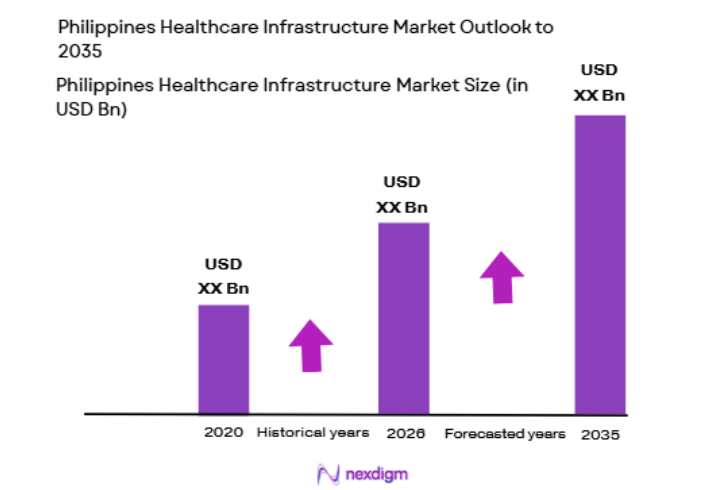
Based on a recent historical assessment, the Vietnam Healthcare Infrastructure Market is valued at approximately USD ~ billion, driven by rapid improvements in healthcare infrastructure and increased healthcare spending. The market is expected to grow steadily due to government investments in hospital construction, expansion of healthcare facilities, and the introduction of new medical technologies. Furthermore, the rise in both private healthcare sector expansion and the growing demand for high-quality healthcare services contribute significantly to the market’s growth.
Cities such as Ho Chi Minh City, Hanoi, and Da Nang dominate the market due to their well-established healthcare systems, advanced medical facilities, and concentration of healthcare professionals. Ho Chi Minh City and Hanoi lead in healthcare infrastructure, offering specialized medical care, research, and treatment centers. These cities’ dominance is primarily driven by government efforts, increased foreign investments, and partnerships with international medical institutions, resulting in advanced healthcare services and technology adoption.
Market Segmentation
By Service Type
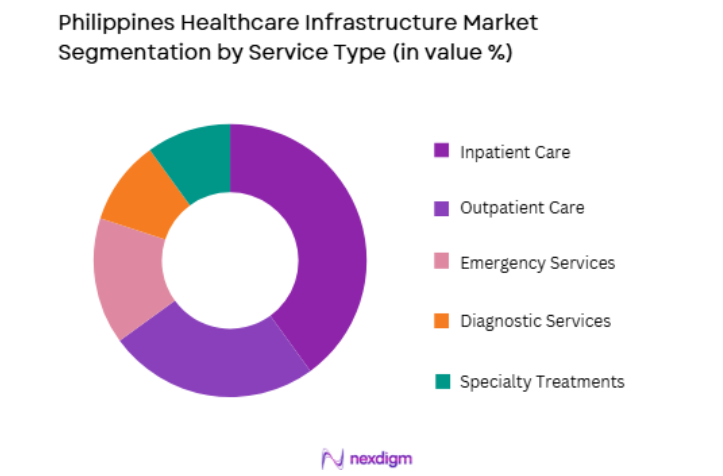
Vietnam Healthcare Infrastructure market is segmented by service type into inpatient care, outpatient care, emergency services, diagnostic services, and specialty treatments. Recently, inpatient care has a dominant market share due to the increasing demand for long-term treatments, surgeries, and rehabilitation services. The rise in chronic diseases, aging populations, and the increased preference for medical services in well-equipped hospitals contribute to the growth of this segment. With a focus on enhancing healthcare infrastructure, the government has prioritized the development of large hospitals and specialized centers, further driving the expansion of inpatient care.
By Hospital Type
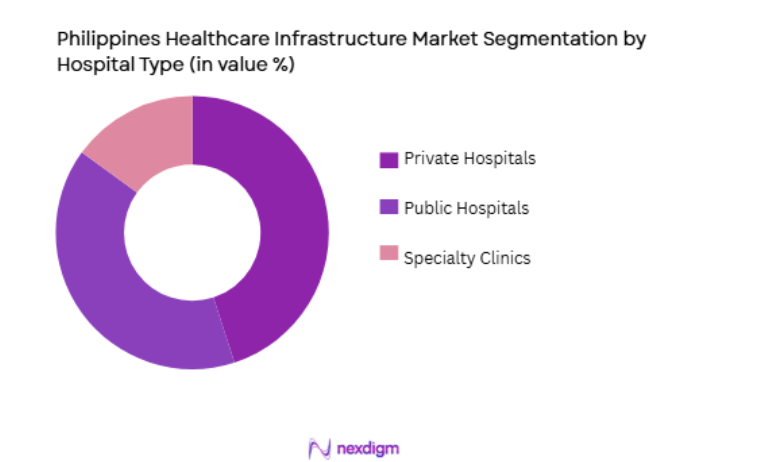
Vietnam Healthcare Infrastructure market is segmented by hospital type into public hospitals, private hospitals, and specialty clinics. Recently, private hospitals have a dominant market share due to the growing number of affluent patients who seek higher quality care, shorter waiting times, and specialized services. The rise in disposable incomes, coupled with an increasing number of wealthy individuals seeking healthcare outside government-run hospitals, has contributed to the growth of this segment. Private healthcare facilities are also expanding in key urban areas, catering to both domestic and international patients.
Competitive Landscape
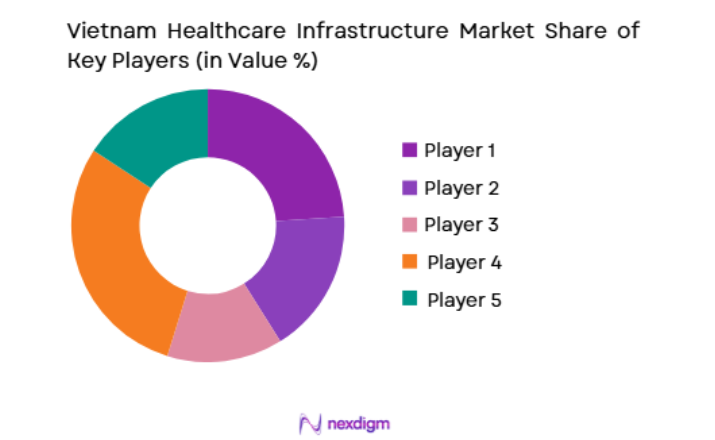
The Vietnam Healthcare Infrastructure Market is highly competitive, with a growing number of both domestic and international players. The government continues to drive market growth by investing in healthcare projects, while private sector involvement is also increasing due to rising demand for quality healthcare services. Consolidation is expected as key players expand their offerings to cater to various segments, including private hospitals, specialty clinics, and diagnostic services. International collaborations and partnerships with foreign medical institutions play a significant role in the development and modernization of the market.
| Company Name | Establishment Year | Headquarters | Technology Focus | Market Reach | Key Products | Revenue | Market-Specific Parameter |
| Vinmec Healthcare | 2012 | Hanoi | ~ | ~ | ~ | ~ | ~ |
| FV Hospital | 1997 | Ho Chi Minh City | ~ | ~ | ~ | ~ | ~ |
| Medlatec | 1996 | Hanoi | ~ | ~ | ~ | ~ | ~ |
| Hoan My Medical | 2000 | Ho Chi Minh City | ~ | ~ | ~ | ~ | ~ |
| Hanoi Medical University | 1902 | Hanoi | ~ | ~ | ~ | ~ | ~ |
Vietnam Healthcare Infrastructure Market Analysis
Growth Drivers
Government Investments in Healthcare Infrastructure
Government investments in healthcare infrastructure have been a major growth driver for the Vietnam Healthcare Infrastructure Market. Over the years, the government has allocated substantial resources to build and upgrade hospitals, clinics, and diagnostic centers. This has led to the establishment of numerous medical facilities across the country, particularly in urban areas, to cater to growing patient demand. Additionally, the government has been involved in creating favorable policies and providing subsidies for private players, further promoting the development of a robust healthcare infrastructure. The government’s commitment to improving the healthcare system through budgetary allocations and long-term development plans continues to enhance the accessibility and quality of healthcare services in Vietnam.
Growing Demand for Specialized Healthcare Services
The growing demand for specialized healthcare services is another key driver of the Vietnam Healthcare Infrastructure Market. With the aging population and increasing incidence of chronic diseases such as diabetes, hypertension, and cardiovascular conditions, the need for specialized medical treatment has surged. Patients are increasingly seeking advanced medical procedures, diagnostic tests, and specialized surgeries in well-equipped hospitals and clinics. As a result, healthcare providers are investing in state-of-the-art medical technology and building specialty treatment centers to cater to these needs. This trend has spurred the construction of specialized hospitals for cardiac care, cancer treatment, orthopedics, and cosmetic surgeries, all contributing to the market’s expansion.
Market Challenges
Lack of Skilled Healthcare Workforce
One of the primary challenges facing the Vietnam Healthcare Infrastructure Market is the shortage of skilled healthcare professionals. While Vietnam has made significant strides in improving its healthcare facilities, there is still a gap in the availability of highly trained medical professionals, including specialists, surgeons, and nurses. This shortage is exacerbated by the growing demand for specialized treatments and the increasing complexity of medical procedures. The shortage of skilled labor poses a challenge to the efficient operation of healthcare facilities and impacts the overall quality of care. To address this challenge, there is a need for further investment in medical education and training programs to equip the workforce with the necessary skills and expertise.
Inequitable Healthcare Access
Inequitable access to healthcare remains a significant challenge in Vietnam, with rural areas facing difficulties in accessing quality medical services. While urban areas such as Ho Chi Minh City and Hanoi have advanced healthcare infrastructure, many rural regions still lack adequate facilities and healthcare professionals. The disparity in healthcare access between urban and rural areas poses a barrier to the overall development of the healthcare system. To bridge this gap, the government and private players must invest in extending healthcare services to underserved areas, ensuring equitable access to quality healthcare for all populations.
Opportunities
Technological Advancements in Healthcare
Technological advancements in healthcare present a significant opportunity for the Vietnam Healthcare Infrastructure Market. The integration of cutting-edge technologies such as telemedicine, artificial intelligence (AI), and robotic surgery into healthcare facilities is revolutionizing patient care. These technologies improve diagnostic accuracy, enhance treatment precision, and streamline healthcare operations, resulting in better outcomes and reduced costs. The adoption of digital health tools, including electronic health records (EHRs) and telehealth platforms, further facilitates patient engagement and accessibility. As Vietnam continues to modernize its healthcare system, the integration of these technologies will drive significant growth in the market.
Expansion of Private Healthcare Sector
The expansion of the private healthcare sector offers a key opportunity for growth in the Vietnam Healthcare Infrastructure Market. With rising income levels and an increasing number of patients seeking higher-quality care, private hospitals and clinics are experiencing rapid growth. The private healthcare sector is also benefiting from investments by foreign healthcare providers, who are establishing partnerships with local players to improve service offerings. The demand for private healthcare is expected to continue increasing, particularly in metropolitan areas, driven by patient preference for shorter waiting times, better facilities, and more personalized care. As a result, private healthcare facilities are likely to play a crucial role in the ongoing development of Vietnam’s healthcare infrastructure.
Future Outlook
The future outlook for the Vietnam Healthcare Infrastructure Market remains positive, with sustained growth driven by government investments, technological advancements, and increasing demand for specialized services. The expansion of the private healthcare sector and the integration of digital health tools will further contribute to the market’s growth, ensuring more accessible and efficient healthcare services. As the country continues to modernize its healthcare infrastructure and overcome challenges such as workforce shortages and healthcare access inequities, Vietnam is well-positioned to become a leading healthcare destination in the region.
Major Players
- Vinmec Healthcare
- FV Hospital
- Medlatec
- Hoan My Medical Corporation
- Hanoi Medical University
- Phyathai Hospitals
- Raffles Medical Group
- Aetna Healthcare
- Sun Life Vietnam
- Global Healthcare Vietnam
- Docter Raksa
- Hoa Sen Healthcare
- TechMed
- 108 Military Hospital
- Bach Mai Hospital
Key Target Audience
- Investments and venture capitalist firms
- Government and regulatory bodies
- Healthcare providers
- Medical tourism agencies
- Medical device manufacturers
- Pharmaceutical companies
- Insurance companies
- Healthcare IT providers
Research Methodology
Step 1: Identification of Key Variables
Key market variables such as healthcare access, medical tourism trends, government policies, and technological advancements were identified to assess the market’s growth drivers and challenges.
Step 2: Market Analysis and Construction
Market analysis was conducted by examining healthcare demand, medical tourism patterns, patient preferences, and government healthcare policies in Vietnam.
Step 3: Hypothesis Validation and Expert Consultation
Assumptions were validated through consultations with healthcare providers, digital health experts, and government officials to confirm emerging trends and market dynamics.
Step 4: Research Synthesis and Final Output
Data was synthesized from primary and secondary sources to provide a comprehensive view of the Vietnam Healthcare Infrastructure Market, integrating expert insights, market data, and government initiatives.

- Executive Summary
- Research Methodology (Definitions, Scope, Industry Assumptions, Market Sizing Approach, Primary & Secondary Research Framework, Data Collection & Verification Protocol, Analytic Models & Forecast Methodology, Limitations & Research Validity Checks)

- Market Definition and Scope
- Value Chain & Stakeholder Ecosystem
- Regulatory / Certification Landscape
- Sector Dynamics Affecting Demand

- Growth Drivers
Government Investments in Healthcare Infrastructure
Growing Demand for Advanced Medical Equipment
Rising Prevalence of Chronic Diseases - Market Challenges
High Capital Investment for Advanced Healthcare Systems
Regulatory Barriers and Certification Requirements
Shortage of Skilled Healthcare Professionals - Market Opportunities
Expansion of Telemedicine and Remote Healthcare Solutions
Growing Adoption of AI and Big Data in Healthcare
Partnerships Between Government and Private Sector - Trends
Increase in Adoption of Telemedicine
Shift Towards Preventive Healthcare - Government Regulations
- SWOT Analysis
- Porter’s Five Forces

- By Market Value, 2020-2025
- By Installed Units, 2020-2025
- By Average System Price, 2020-2025
- By System Complexity Tier, 2020-2025

- By System Type (In Value%)
Medical Imaging Systems
Patient Monitoring Systems
Laboratory Equipment
Healthcare IT Solutions
Hospital Furniture and Equipment - By Platform Type (In Value%)
Cloud-Based Platforms
Web-Based Platforms
Integrated Platforms
Mobile Healthcare Solutions
On-premise Solutions - By Fitment Type (In Value%)
Stand-Alone Solutions
Integrated Solutions
Modular Systems
Cloud-Based Solutions - By End User Segment (In Value%)
Hospitals
Diagnostic Centers
Private Healthcare Providers

- Market Share Analysis
- Cross Comparison Parameters (System Type, Platform Type, End User Segment, Fitment Type, Procurement Channel, Service Delivery Model, Technological Advancements, Market Penetration, Healthcare Infrastructure Quality, Patient Experience)
- SWOT Analysis of Key Competitors
- Pricing & Procurement Analysis
- Key Players
Philippine General Hospital
St. Luke’s Medical Center
The Medical City
Makati Medical Center
Asian Hospital and Medical Center
Manila Doctors Hospital
Fe Del Mundo Medical Center
University of Santo Tomas Hospital
Chinese General Hospital
Our Lady of Lourdes Hospital
Heart Center Philippines
Baguio General Hospital
San Juan de Dios Educational Foundation
Southern Philippines Medical Center
Philippine Heart Center

- Increasing Demand for Advanced Diagnostic and Imaging Equipment
- Government Focus on Expanding Healthcare Access
- Private Healthcare Providers Leading Technological Advancements
- Rising Healthcare Awareness Among the Population

- Forecast Market Value, 2026-2035
- Forecast Installed Units, 2026-2035
- Price Forecast by System Tier, 2026-2035
- Future Demand by Platform, 2026-2035


 Request a Sample
 Ask for Customization
 Get a Quote
 Enquire Now