
 Download PDF
Market Overview
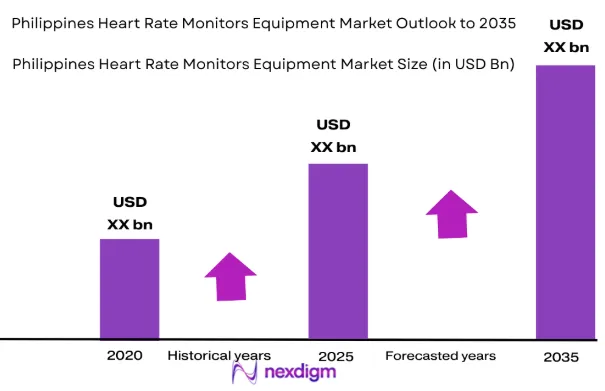
The Philippines Heart Rate Monitors Equipment Market is valued at approximately USD ~ billion, with consistent growth driven by rising health awareness, the increasing adoption of fitness technologies, and advancements in wearable devices. The demand for heart rate monitoring equipment is expanding as more individuals turn to fitness trackers and smartwatches to monitor their health and fitness levels. The market is also benefitting from increased integration with health apps and telemedicine solutions, which further boost its adoption across various demographics.
Metro Manila, Cebu, and Davao are the primary cities dominating the Philippines Heart Rate Monitors Equipment Market due to their larger populations and higher income levels. Metro Manila, in particular, leads as a key hub due to the concentration of health-conscious consumers, sports enthusiasts, and a growing middle-class population with the disposable income to spend on wearables. Urban areas with better access to tech infrastructure and fitness trends continue to drive the market’s expansion.
Market Segmentation
By Product Type
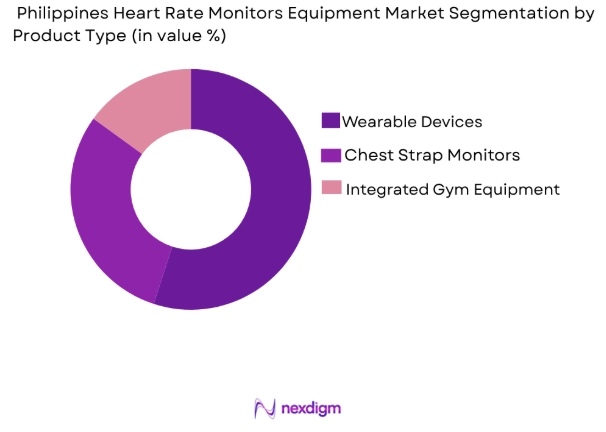
The Philippines Heart Rate Monitors Equipment Market is segmented by product type into wearable devices, chest strap monitors, and integrated gym equipment. Among these, wearable devices, including smartwatches and fitness bands, dominate the market share due to their increasing adoption for everyday health monitoring. Their growing popularity stems from the integration of advanced features such as heart rate tracking, sleep monitoring, and connectivity to fitness apps. Leading brands such as Garmin, Fitbit, and Apple have fueled this trend with their innovative, multifunctional products designed for both fitness enthusiasts and general health-conscious consumers. These devices offer ease of use and continuous heart rate monitoring, making them ideal for urban dwellers seeking to enhance their lifestyle with health-tracking technologies.
By End User Type
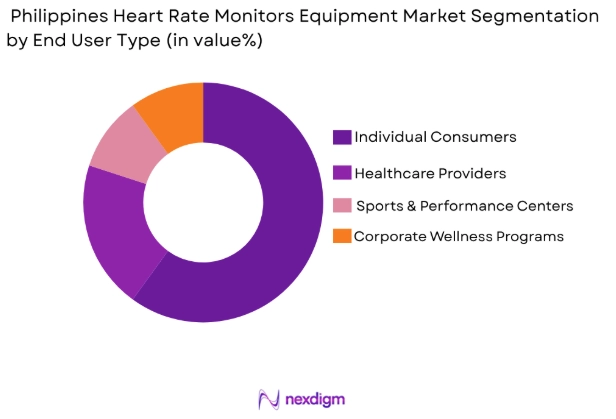
The market is also segmented by end user, with individual consumers, healthcare providers, sports and performance centers, and corporate wellness programs being the main categories. Individual consumers, especially those in urban areas, dominate the market share. The growing trend of personal health monitoring, coupled with the availability of affordable, user-friendly wearables, has led to their widespread adoption among fitness enthusiasts and health-conscious individuals. Healthcare providers have also embraced heart rate monitors for clinical use, but the largest share of the market remains with individual consumers, driven by the rising awareness of health and fitness across all age groups in the Philippines.
Competitive Landscape
The Philippines Heart Rate Monitors Equipment Market is dominated by a few key players that lead the industry through innovation, branding, and market penetration. These include global brands such as Garmin, Fitbit, Apple, and local distributors, as well as players like Xiaomi, which cater to a larger consumer base due to their affordable pricing strategies. The competition is mainly driven by technological advancements, with companies continually improving sensor accuracy, battery life, and app integrations.
| Company | Establishment Year | Headquarters | Revenue (2024) | Product Portfolio | Distribution Channels | R&D Investment |
| Garmin | 1989 | USA | ~ | ~ | ~ | ~ |
| Fitbit | 2007 | USA | ~ | ~ | ~ | ~ |
| Apple Inc. | 1976 | USA | ~ | ~ | ~ | ~ |
| Xiaomi | 2010 | China | ~ | ~ | ~ | ~ |
| Polar | 1977 | Finland | ~ | ~ | ~ | ~ |
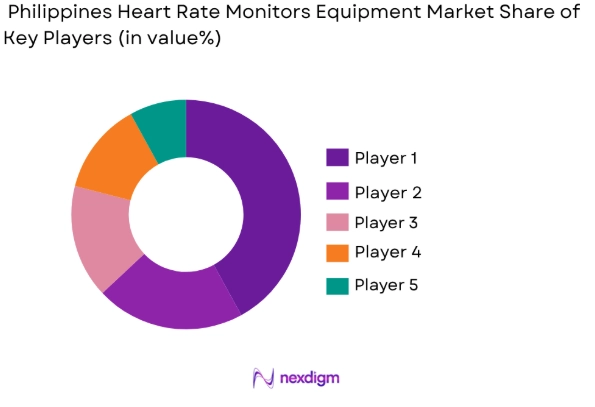
Philippines Heart Rate Monitors Equipment Market Analysis
Growth Drivers
Rising Fitness & Health Awareness
The Philippines has seen a notable increase in health-conscious consumers, driven by rising healthcare costs and a shift toward preventive healthcare. According to the World Bank, healthcare expenditure in the Philippines has risen by approximately 6.5% annually between 2022-2024. This has created a shift in consumer behavior, where more individuals are becoming aware of the importance of maintaining healthy lifestyles. The demand for fitness trackers and heart rate monitors has surged as people actively engage in fitness programs and use wearables for health monitoring. This trend is further supported by the Philippine government’s initiatives promoting fitness, such as the National Fitness and Sports Development Act. These efforts have led to a surge in awareness surrounding cardiovascular health, leading to increased adoption of heart rate monitoring devices.
Growth in Wearables Adoption
Wearables, especially heart rate monitors, have experienced significant growth in the Philippines, largely due to rising disposable incomes and increasing interest in health and fitness technology. According to the Philippine Statistics Authority, the country’s GDP growth rate in 2024 is expected to be 6.3%, which indicates a steady rise in income levels and consumer purchasing power. As incomes rise, there is greater disposable income available to invest in health technologies, including fitness trackers and smartwatches. Additionally, the widespread availability of these devices through e-commerce platforms such as Lazada and Shopee, which saw a 21% increase in digital transactions in 2024, has further accelerated the adoption of wearables in the Philippines.
Market Challenges
Price Sensitivity in Mass Market
Price sensitivity remains one of the primary challenges in the Philippines Heart Rate Monitors Equipment Market. The average income level in the Philippines, as reported by the Philippine Statistics Authority, remains low compared to global standards, with the average annual income for Filipino workers at around PHP 207,000 in 2024. This lower income level restricts access to higher-priced fitness devices, making affordability a critical factor. Additionally, despite growing interest in health technology, many consumers still prioritize essential needs, such as food and housing, over non-essential products like wearables. The price range of high-end wearables, which can exceed PHP 15,000, may not be accessible to the majority of the population, limiting the market’s reach.
Accuracy Perception & Trust Barriers
A significant challenge for the Philippines Heart Rate Monitors Equipment Market is consumer skepticism around the accuracy and reliability of wearable devices. According to a study conducted by the Philippine Food and Drug Administration (FDA) in 2023, many Filipinos have expressed concerns about the reliability of health data provided by wearable devices. While wearables are popular for fitness tracking, consumers often question the accuracy of heart rate and other biometric data, especially in lower-cost devices. The FDA’s report indicates that about 30% of users cited concerns about data inconsistency across devices, leading to a hesitation in the wider adoption of heart rate monitors for medical purposes. This is a major barrier to the growth of the market.
Opportunities
Bundled Health Services
Bundled health services are becoming a key opportunity in the Philippines Heart Rate Monitors Equipment Market. A growing trend in the Philippines is the partnership between health insurers and wearable tech manufacturers, which allows consumers to access health monitoring devices as part of their healthcare packages. The Philippine Health Insurance Corporation (PhilHealth) has made efforts to integrate digital health solutions into its services, which includes promoting fitness and wellness programs. In 2024, PhilHealth’s budget allocation for preventive health programs is expected to grow by 7%, which is likely to foster more collaborations between tech companies and health service providers. This initiative opens opportunities for fitness and health tracking devices to be bundled with insurance policies, giving consumers access to affordable health monitoring devices as part of their wellness coverage.
Corporate Wellness Partnerships
The corporate wellness sector in the Philippines has seen significant growth, with more companies providing health and fitness benefits to employees. A recent report from the Department of Labor and Employment (DOLE) highlighted that 45% of large companies in the Philippines introduced wellness programs in 2023, a number expected to rise in the coming years. These programs often include health monitoring equipment, such as heart rate monitors, to encourage employees to track their fitness progress and reduce healthcare costs in the long run. The push for corporate wellness programs is expected to continue as companies seek to improve employee productivity and reduce absenteeism caused by health-related issues. This growth in corporate wellness partnerships presents a significant market opportunity for heart rate monitor manufacturers.
Future Outlook
Over the next five years, the Philippines Heart Rate Monitors Equipment Market is expected to show significant growth. The rise in health-conscious individuals, combined with technological advancements in wearables, will continue to drive the market. In addition, increased government focus on healthcare awareness and expanding telemedicine infrastructure is expected to provide further opportunities for growth. As the adoption of smart fitness devices increases, the market will also see continued advancements in the integration of heart rate monitors with other health-related apps, creating a more connected health ecosystem for users.
Major Players
- Garmin
- Fitbit
- Apple Inc.
- Xiaomi
- Polar
- Suunto
- Huawei
- TomTom
- Withings
- COROS
- Whoop
- Zepp Health
- Mio Global
- Samsung Electronics
- Local Distributors & OEM Importers
Key Target Audience
- Fitness Enthusiasts
- Athletes and Sports Teams
- Individual Consumers
- Healthcare Providers
- Insurance Providers
- Corporate Wellness Program Managers
- Fitness Equipment Retailers
- Government and Regulatory Bodies
Research Methodology
Step 1: Identification of Key Variables
The initial phase involves constructing an ecosystem map encompassing all major stakeholders within the Philippines Heart Rate Monitors Equipment Market. This step is underpinned by extensive desk research, utilizing a combination of secondary and proprietary databases to gather comprehensive industry-level information. The primary objective is to identify and define the critical variables that influence market dynamics.
Step 2: Market Analysis and Construction
In this phase, we will compile and analyze historical data pertaining to the Philippines Heart Rate Monitors Equipment Market. This includes assessing market penetration, the ratio of wearable devices to chest straps, and resultant revenue generation. Furthermore, an evaluation of consumer preferences will be conducted to ensure the reliability and accuracy of the revenue estimates.
Step 3: Hypothesis Validation and Expert Consultation
Market hypotheses will be developed and validated through expert interviews with industry practitioners representing a diverse array of companies. These consultations will provide valuable operational and financial insights, which will be instrumental in refining and corroborating the market data.
Step 4: Research Synthesis and Final Output
The final phase involves direct engagement with manufacturers to acquire detailed insights into product segments, sales performance, consumer preferences, and other pertinent factors. This interaction will complement the statistics derived from the bottom-up approach, ensuring a comprehensive, accurate, and validated analysis of the Philippines Heart Rate Monitors Equipment Market.

- Executive Summary
- Research Methodology (Market Definition & Scope Clarification Data Acquisition Framework, Secondary, Estimation & Forecasting Models Validation Methods, Assumptions & Constraints)

- Product Definition & Categorization
- Market Genesis & Evolution
- Market Value Chain & Service Chain
- Consumer Adoption Lifecycle
- Regulatory & Compliance Environment

- Growth Driver
Rising Fitness & Health Awareness
Growth in Wearables Adoption - Market Challenges
Price Sensitivity in Mass Market
Accuracy Perception & Trust Barriers - Market Opportunities
Bundled Health Services
Corporate Wellness Partnerships - Market Trends
Shift Toward Smart Wearables
Feature Convergence
- Swot Analysis
- Porter’s Five Forces

- By Value, 2020-2025
- By Volume, 2020-2025
- By Average Selling Price, 2020-2025
- By Penetration Rate, 2020-2025
- By Replacement Rate, 2020-2025

- By Product Type (In Value % )
Wearable Devices
Chest Strap Monitors
Integrated Gym Equipment - By End User (In Value % )
Individual Consumers
Healthcare Providers
Sports & Performance Centers
Corporate Wellness Programs - By Distribution Channel (In Value % )
Offline Retail
E‑Commerce Platforms
Direct OEM Sales (B2B Contracts)
Pharmacy & Medical Device Stores
Sports Goods & Fitness Retailers - By Technology (In Value %)
Optical Heart Rate
Electrical Heart Rate
Hybrid Sensor Platforms
Bluetooth vs Ant+ Connectivity
App + Cloud Integration Capabilities - By Price Tier (In Value %)
Entry Level
Mid-Tier
Premium
Enterprise/Professional

- Market Share of Major Players by Value/Volume
- Cross Comparison Parameters (Company Overview, Product Portfolio Depth, Distribution Footprint, Annual Revenues & Growth Rates, R&D Investment & Innovation Index, Pricing Strategy & ASP Trends, Service & Aftersales Network, Integration Capabilities)
- SWOT Analysis of Major Players
- Pricing Analysis Basis Product Categories for Major Players
- Detailed Profiles of Major Companies
Garmin
Fitbit
Apple Inc.
Xiaomi
Polar
Suunto
Huawei
TomTom
Withings
COROS
Whoop
Zepp Health
Mio Global
Samsung Electronics
Local Distributors & OEM Importers

- Adoption Patterns & Purchase Drivers
- Feature Prioritization
- Price Sensitivity & Willingness to Pay
- Replacement & Upgrade Cycles
- Brand Affinity & Aftersales Expectations

- By Value,2026-2035
- By Volume,2026 -2035
- By Average Selling Price, 2026-2035
- By Penetration Rate, 2026-2035
- By Replacement Rate, 2026-2035


 Request a Sample
 Ask for Customization
 Get a Quote
 Enquire Now