
 Download PDF
Market Overview
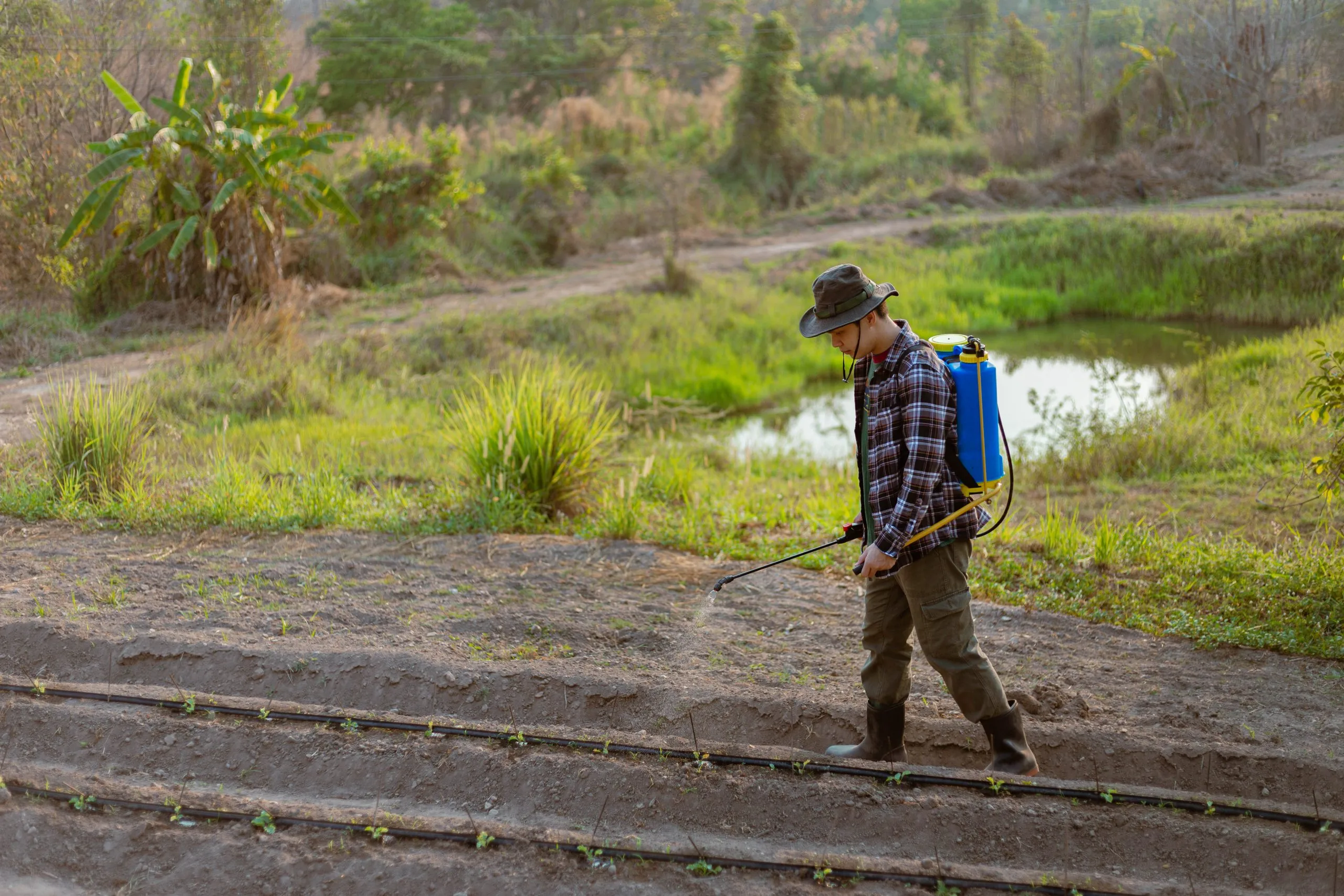
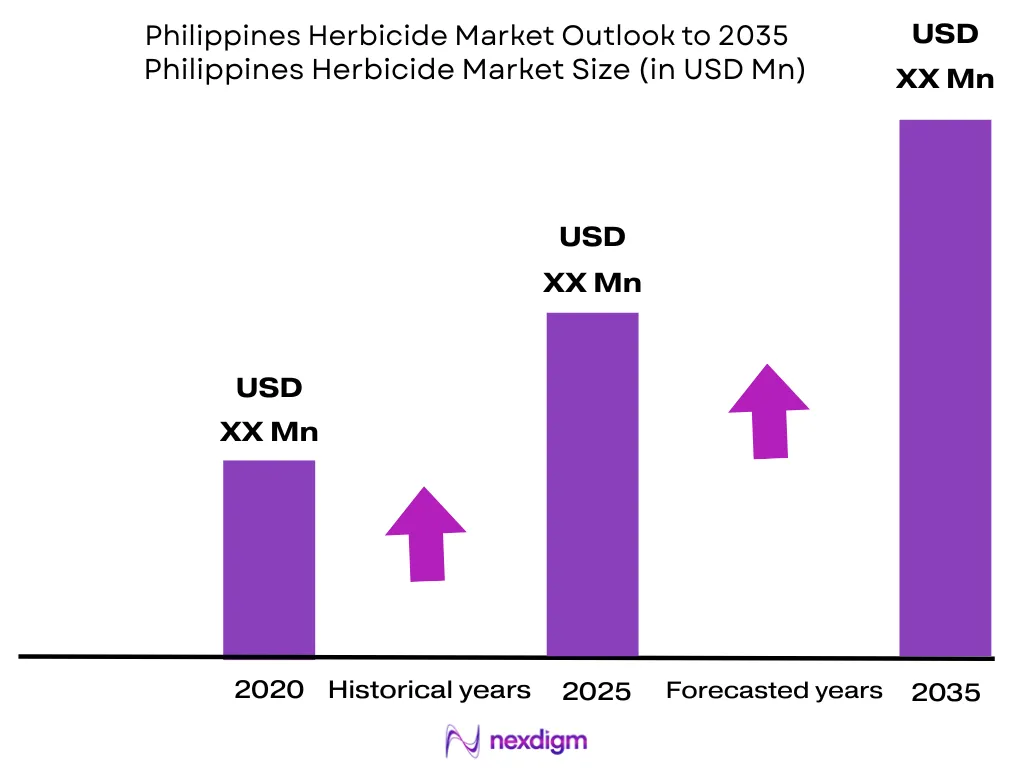
The Philippines Herbicide Market is valued at USD ~ million, based on the latest published crop protection products benchmark for herbicides. The market is driven by weed control in rice, corn, sugarcane, banana, pineapple and non-crop areas. Crop production reached 80.41 million metric tons in the latest base year, compared with 85.65 million metric tons in the preceding base year, supporting recurring herbicide use across seasonal and plantation crops. The market is dominated by Central Luzon, Cagayan Valley, Western Visayas, Northern Mindanao and Davao Region because these regions combine rice, corn, sugarcane, banana and pineapple farming. Central Luzon and Cagayan Valley are key rice and corn zones; Western Visayas is important for sugarcane; Northern Mindanao and Davao Region support plantation-crop herbicide demand. Agriculture remains macro-relevant, with the Philippines’ GNI per capita reaching USD 4,470 in the latest base year.
Market Segmentation
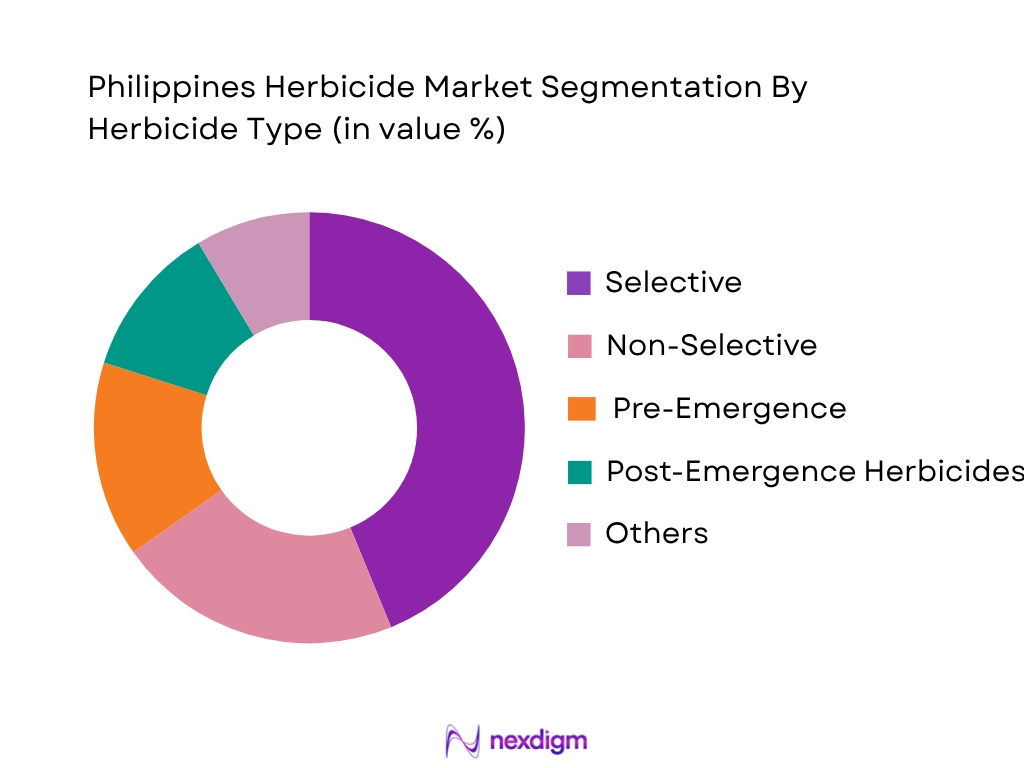
By Herbicide Type
Philippines Herbicide Market is segmented by herbicide type into non-selective herbicides, selective herbicides, pre-emergence herbicides, post-emergence herbicides, residual herbicides and bio-based or low-residue herbicides. Recently, non-selective herbicides have a dominant market share in the Philippines under the herbicide type segmentation. This is due to broad-spectrum use in banana plantations, sugarcane blocks, coconut farms, farm boundaries, irrigation canals, field preparation, roadsides and non-crop vegetation control. Glyphosate and glufosinate-based products remain heavily used because farmers and plantation operators need fast, flexible weed suppression across mixed weed populations. Selective herbicides are important in rice and corn, but they are more crop-specific and application-timing dependent. Pre-emergence and post-emergence herbicides are also important in direct-seeded rice and corn programs, but non-selective products retain broader utility across both agricultural and non-agricultural applications.
By Crop Application
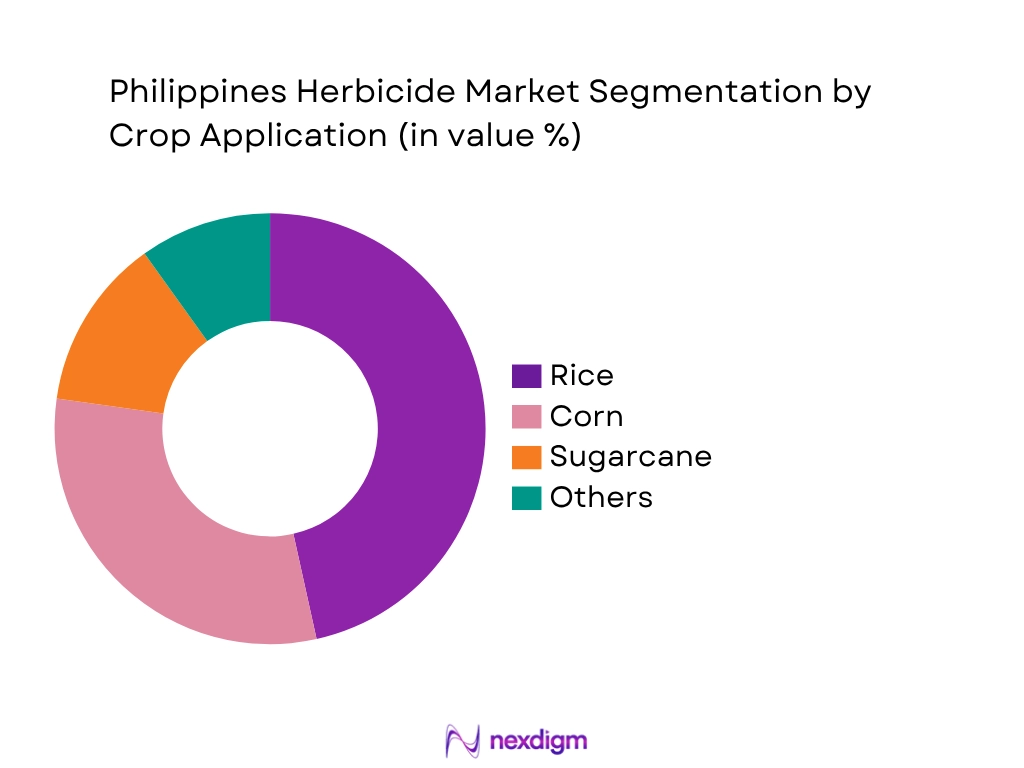
Philippines Herbicide Market is segmented by crop application into rice, corn, sugarcane, banana, coconut, pineapple, vegetables and non-crop areas. Recently, rice has a dominant market share in the Philippines under the crop application segmentation. This is because rice is the country’s most politically and economically sensitive staple crop, and rice farmers face recurring weed pressure from grasses, sedges and broadleaf weeds in direct-seeded and transplanted systems. Herbicide adoption is supported by the need to reduce manual weeding, manage early-season weed competition and protect yields across irrigated and rainfed palay areas. Corn follows as another major field-crop segment, particularly in Cagayan Valley, SOCCSKSARGEN and Northern Mindanao. Plantation crops such as banana, pineapple and sugarcane create institutional and bulk herbicide demand, but rice remains the largest recurring use case due to cropping frequency and national food-security relevance.
Competitive Landscape
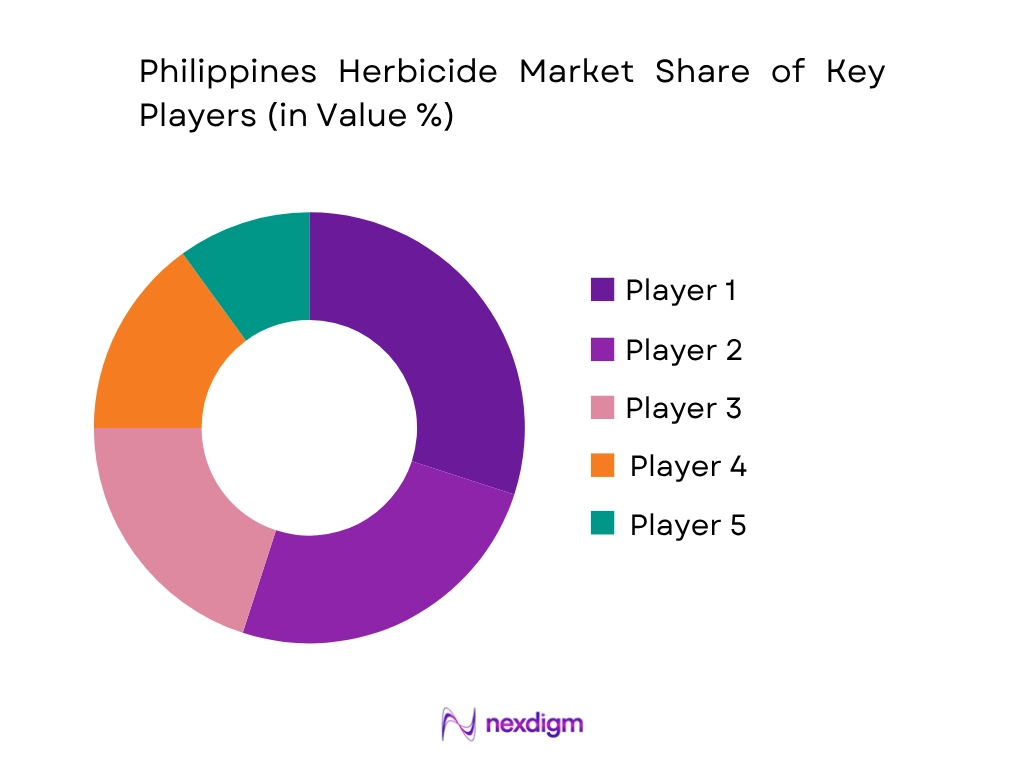
The Philippines Herbicide Market is led by multinational crop-protection companies, generic herbicide suppliers, local importers, formulators and agrochemical distributors. Competition is shaped by Fertilizer and Pesticide Authority registration, crop-specific labels, active ingredient breadth, provincial dealer access, plantation relationships, sachet and small-pack capability, and technical support to farmers. FPA maintains registered pesticide product resources and pesticide product registration services, making regulatory clearance a key barrier for commercial participation.
| Company | Establishment Year | Headquarters | Key Herbicide Focus | Philippines Route to Market | Crop Focus | Channel Strength | Regulatory / Stewardship Strength | Market-Specific Positioning |
| Bayer CropScience Philippines | 2002 | Leverkusen, Germany | ~ | ~ | ~ | ~ | ~ | ~ |
| Syngenta Philippines | 2000 | Basel, Switzerland | ~ | ~ | ~ | ~ | ~ | ~ |
| BASF Philippines Agricultural Solutions | 1865 | Ludwigshafen, Germany | ~ | ~ | ~ | ~ | ~ | ~ |
| Corteva Agriscience Philippines | 2019 | Indianapolis, United States | ~ | ~ | ~ | ~ | ~ | ~ |
| UPL Philippines | 1969 | Mumbai, India | ~ | ~ | ~ | ~ | ~ | ~ |
Philippines Herbicide Market Analysis
Growth Drivers
Rice and Corn Cultivation Sustain Recurring Herbicide Demand
Philippines Herbicide Market is supported by large recurring rice and corn cultivation cycles, where weed pressure directly affects field productivity and farm operations. PSA recorded 19.09 million metric tons of palay production in 2024, with Central Luzon producing 3.48 million metric tons, Cagayan Valley producing 2.92 million metric tons, and Ilocos Region producing 1.97 million metric tons. Corn also remains a major herbicide-use crop, with PSA’s standing-crop update estimating 2.64 million metric tons of corn production for January-March 2024. These figures support demand for pre-emergence, post-emergence and selective herbicides used against grasses, sedges and broadleaf weeds. The macro base also supports input purchasing capacity, with World Bank reporting Philippines GDP at USD 461.62 billion and GDP per capita at USD 3,984.8 in 2024.
Plantation Crop Base Drives Non-Selective and Residual Herbicide Use
Philippines Herbicide Market is driven by plantation and industrial crop systems, especially sugarcane, banana, pineapple, coconut and other perennial crops where inter-row weed control, field-border maintenance and plantation-road vegetation management require recurring herbicide application. PSA reported total crops production of 80.41 million metric tons in 2024, demonstrating the scale of crop activity requiring farm input systems. The same PSA release identified sugarcane and palay as major contributors to crop-output movement, reinforcing the importance of herbicides in large cultivated systems. FPA’s registered-product listing also shows herbicide registrations for pineapple, including products targeting annual and perennial grasses and broadleaves, with registration validity extending to 2027 and 2028. World Bank reports the Philippines’ GNI per capita at USD 4,470 in 2024, supporting a farm economy with rising commercial input use.
Market Challenges
Climate-Linked Crop Volatility Impacts Herbicide Planning
Philippines Herbicide Market faces a challenge from crop-output volatility because herbicide demand is closely linked to planted area, crop establishment, rainfall timing and seasonal weed pressure. PSA recorded annual crop production at 80.41 million metric tons in 2024, compared with 85.83 million metric tons in the preceding base year, showing a lower production environment for farmers and input suppliers. Palay output reached 19.09 million metric tons in 2024, while the first quarter of 2026 recorded 4.40 million metric tons, indicating continued variability in staple-crop production windows. This affects herbicide distributors because stocking must match planting calendars, weed-emergence timing and farmer liquidity. World Bank reported Philippines GDP at USD 461.62 billion in 2024, but agriculture remains weather-sensitive within the broader economy.
Regulatory Compliance and Registered Product Control Raise Entry Barriers
Philippines Herbicide Market faces compliance challenges because pesticide commercialization depends on FPA registration, label clearance, product validity and permitted crop-use claims. FPA’s registered-product database lists registered pesticide products as of April 30, 2026, separate pesticide products for drone use as of April 30, 2026, and registered fertilizer products as of May 31, 2026. The same FPA listing includes herbicide products for pineapple with registration expiry dates in 2025, 2027 and 2028, showing that suppliers must continuously manage registration status and crop-specific claims. This creates barriers for new entrants, generic importers and repackers that lack regulatory capability. Macroeconomic demand remains relevant, with World Bank reporting GDP per capita at USD 3,984.8 in 2024, but product access still depends on compliance rather than demand alone.
Market Opportunities
Crop-Specific Herbicide Programs for Rice-Producing Regions
Philippines Herbicide Market has an opportunity in rice-specific herbicide programs because palay production remains concentrated in regions with large recurring demand for weed control. PSA recorded national palay production of 19.09 million metric tons in 2024. Central Luzon produced 3.48 million metric tons, Cagayan Valley produced 2.92 million metric tons, and Ilocos Region produced 1.97 million metric tons, creating strong regional targets for selective herbicides, pre-emergence applications and post-emergence rescue sprays. PSA also reported palay yield at 4.11 metric tons per hectare in 2024, with Central Luzon at 5.17 metric tons per hectare, Ilocos Region at 4.81 metric tons per hectare, and Cagayan Valley at 4.67 metric tons per hectare. Suppliers can use these current production bases to build rice weed-control bundles, applicator training and dealer stocking programs.
Drone-Compatible and Professional Application Channels
Philippines Herbicide Market has an opportunity in professional application channels because pesticide application is moving toward documented, service-based and technology-enabled models. FPA maintains a separate registered-product category for pesticide products under drone use as of April 30, 2026, indicating formal regulatory recognition of drone-linked pesticide applications. Its database also lists pesticide product registration details with company names, crops, pests or weeds, use category, expiry date and registration status, supporting a more structured route for herbicide suppliers targeting drone service providers and commercial farms. The opportunity is strongest in rice, corn, sugarcane, banana and pineapple areas where labor availability, field size and spray timing matter. World Bank reports that the Philippines had GDP of USD 461.62 billion and GNI per capita of USD 4,470 in 2024, supporting professionalization of farm input services.
Future Outlook
The Philippines Herbicide Market is expected to register a forecasted CAGR of 5.36% during 2026-2035, using the latest crop protection products benchmark for herbicide segment growth as the planning anchor. Herbicides are reported as the largest crop-protection product segment in the Philippines, with the published benchmark placing the herbicide segment at USD 523.32 million in the latest base year. Over the next decade, growth will be led by rice herbicide programs, corn weed control, plantation-crop weed suppression and the gradual professionalization of spraying practices. Direct-seeded rice, hybrid corn and plantation crops will remain core demand areas because these systems require predictable weed control during specific crop windows. The market will also shift toward registered products, residue-conscious application, drone-compatible formulations and farmer training. FPA’s registration framework and listed pesticide resources indicate that manufacturers and importers must maintain compliance across product registration, labeling, handling and distribution. Regional demand will remain strongest in Central Luzon, Cagayan Valley, Western Visayas, Northern Mindanao, Davao Region and SOCCSKSARGEN. These areas combine rice plains, corn belts, sugarcane areas, banana plantations, pineapple farms and coconut-growing zones, making them essential for crop-specific herbicide commercialization.
Major Players
- Bayer CropScience Philippines
- Syngenta Philippines
- BASF Philippines Agricultural Solutions
- Corteva Agriscience Philippines
- FMC Philippines
- UPL Philippines
- ADAMA Philippines
- Nufarm Philippines
- Sumitomo Chemical Philippines
- Arysta LifeScience / UPL Legacy Portfolio
- Zagro Philippines
- Jardine Distribution Inc.
- Leads Agricultural Products Corporation
- Dragon Agricultural Chemicals Corporation
- Belman Laboratories
Key Target Audience
- Herbicide manufacturers and crop protection companies
- Agrochemical importers and formulators
- Provincial agrochemical distributors and dealer networks
- Rice, corn and sugarcane input suppliers
- Plantation companies and commercial farm operators
- Agricultural drone spraying and farm-service providers
- Investments and venture capitalist firms
- Government and regulatory bodies
Research Methodology
Step 1: Identification of Key Variables
The initial phase involves constructing an ecosystem map for the Philippines Herbicide Market, covering manufacturers, importers, local formulators, agro-dealers, cooperatives, rice farmers, corn growers, plantation operators and regulatory agencies. Key variables include registered herbicide products, active ingredient mix, crop application, treated acreage, pack-size usage, farmer adoption and regional crop concentration.
Step 2: Market Analysis and Construction
In this phase, historical and current data are compiled from crop production statistics, FPA registration resources, company portfolios, import-linked indicators, dealer audits and crop-specific usage benchmarks. The market model evaluates herbicide consumption by rice, corn, sugarcane, banana, pineapple, vegetables, coconut and non-crop applications to structure the revenue estimate.
Step 3: Hypothesis Validation and Expert Consultation
Market hypotheses are validated through computer-assisted telephone interviews with agrochemical distributors, plantation procurement teams, rice agronomists, corn input suppliers, cooperatives and farm-service operators. These consultations help verify herbicide usage patterns, active ingredient preference, dealer stocking behavior, seasonality, credit dependence, product registration barriers and regional channel depth.
Step 4: Research Synthesis and Final Output
The final phase synthesizes secondary research, expert validation, registered-product mapping, segmentation modeling and competitive benchmarking. The output includes market size, forecast CAGR, segmentation, company positioning, demand clusters, target audience mapping and future outlook for business professionals evaluating the Philippines Herbicide Market.

- Executive Summary
- Research Methodology (Market Definitions and Assumptions, Herbicide Classification, Active Ingredient Mapping, Crop-Wise Sizing, Top-Down Validation, Bottom-Up Validation, Dealer Interviews, Farm Input Audit, Limitations and Forecast Assumptions)

- Definition and Scope
- Market Genesis and Evolution
- Timeline of Regulatory Developments and Major Suppliers
- Business Cycle
- Supply Chain and Value Chain Analysis

- Growth Drivers (Rice Area, Corn Demand, Sugarcane Blocks, Banana Exports, Farm Labor Shortage, Mechanized Spraying, Food Security Programs)
- Market Challenges (Regulatory Delays, Counterfeit Products, Dealer Credit Risk, Smallholder Affordability, Weed Resistance, Environmental Concerns)
- Opportunities (Rice Herbicide Innovation, Bio-Herbicides, Plantation Programs, Drone-Compatible Herbicides, Cooperative Bundling, Stewardship Services)
- Trends (Glyphosate Stewardship, Rice Pre-Emergence Use, Drone Spraying, Sachetization, Generic Competition, Integrated Weed Management)
- SWOT Analysis
- Porter’s Five Forces Analysis
- PESTLE Analysis

- By Value (2020-2025)
- By Volume (2020-2025)
- By Average Selling Price (2020-2025)

- By Herbicide Type (In Value %)
Selective Herbicides
Non-Selective Herbicides
Pre-Emergence Herbicides
Post-Emergence Herbicides
Residual Herbicides - By Crop Application (In Value %)
Rice Herbicides
Corn Herbicides
Sugarcane Herbicides
Banana Plantation Herbicides
Coconut Herbicides - By End User (In Value %)
Commercial Crop Farms
Plantation Companies
Farmer Cooperatives and Associations
Agro-Service Providers
Government and LGU Programs - By Region (In Value %)
Central Luzon
Cagayan Valley
Western Visayas
Northern Mindanao
Davao Region

- Market Share of Major Players by Value and Volume (Active Ingredient, Crop Application, Formulation, Region, Channel)
- Cross Comparison Parameters (FPA-Registered Herbicide Portfolio, Rice and Corn Crop Coverage, Glyphosate and Glufosinate Strength, Plantation Channel Access, Agro-Dealer Network Depth, Sachet and Small-Pack Capability, Local Formulation or Repacking Capacity, Stewardship and Farmer Training Support)
- SWOT Analysis of Major Players
- Detailed Profiles of Major Companies
Bayer CropScience Philippines
Syngenta Philippines
BASF Philippines Agricultural Solutions
Corteva Agriscience Philippines
FMC Philippines
UPL Philippines
ADAMA Philippines
Nufarm Philippines
Sumitomo Chemical Philippines
Arysta LifeScience / UPL Legacy Portfolio
Zagro Philippines
Jardine Distribution Inc.
Leads Agricultural Products Corporation
Dragon Agricultural Chemicals Corporation
Belman Laboratories

- Market Demand
- Purchasing Power and Budget Allocation
- Regulatory and Compliance Requirements
- Needs, Desires and Pain Point Analysis
- Decision-Making Process

- By Value (2026-2035)
- By Volume (2026-2035)
- By Average Selling Price (2026-2035)


 Request a Sample
 Ask for Customization
 Get a Quote
 Enquire Now