
 Download PDF
Market Overview
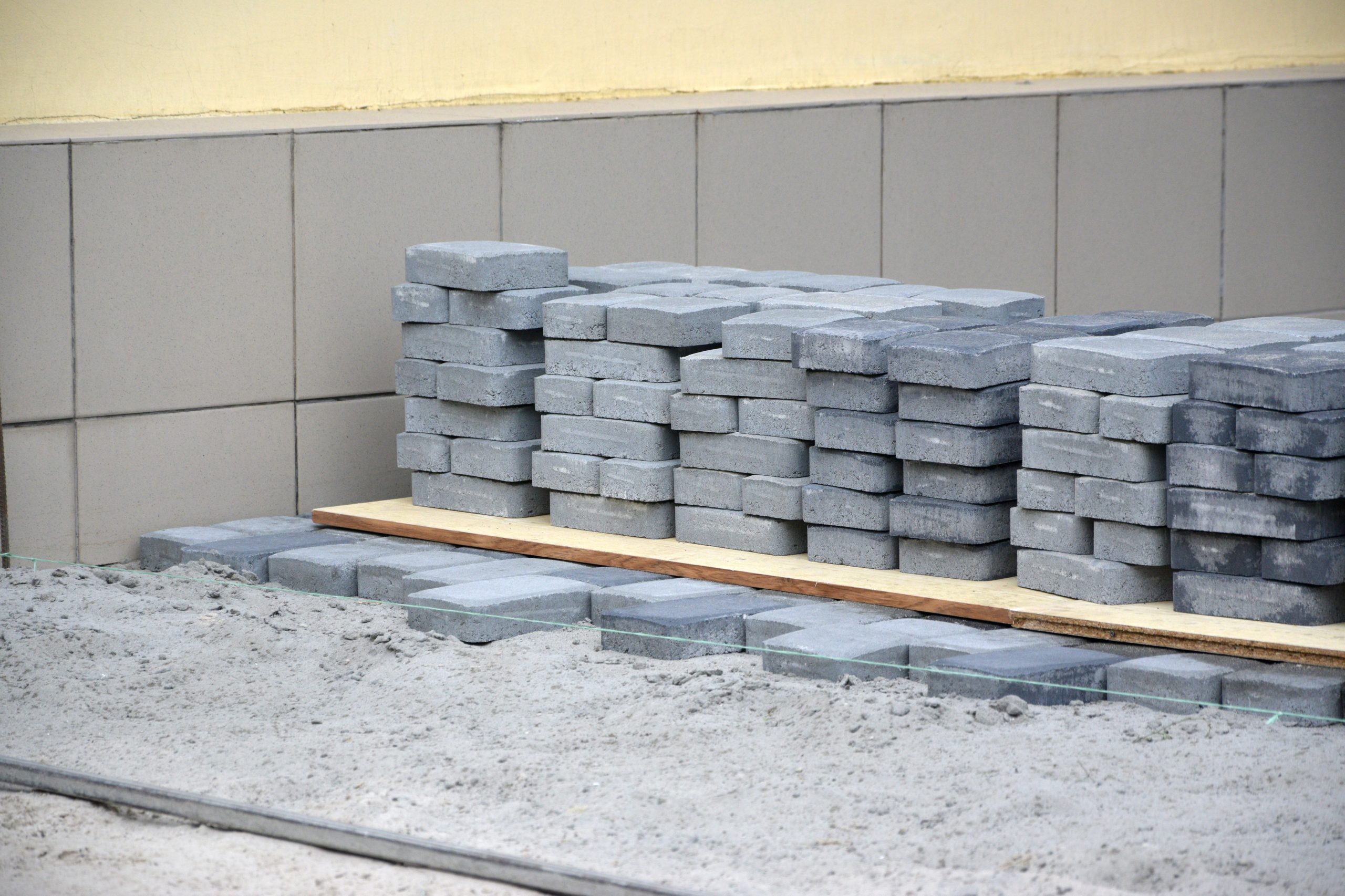
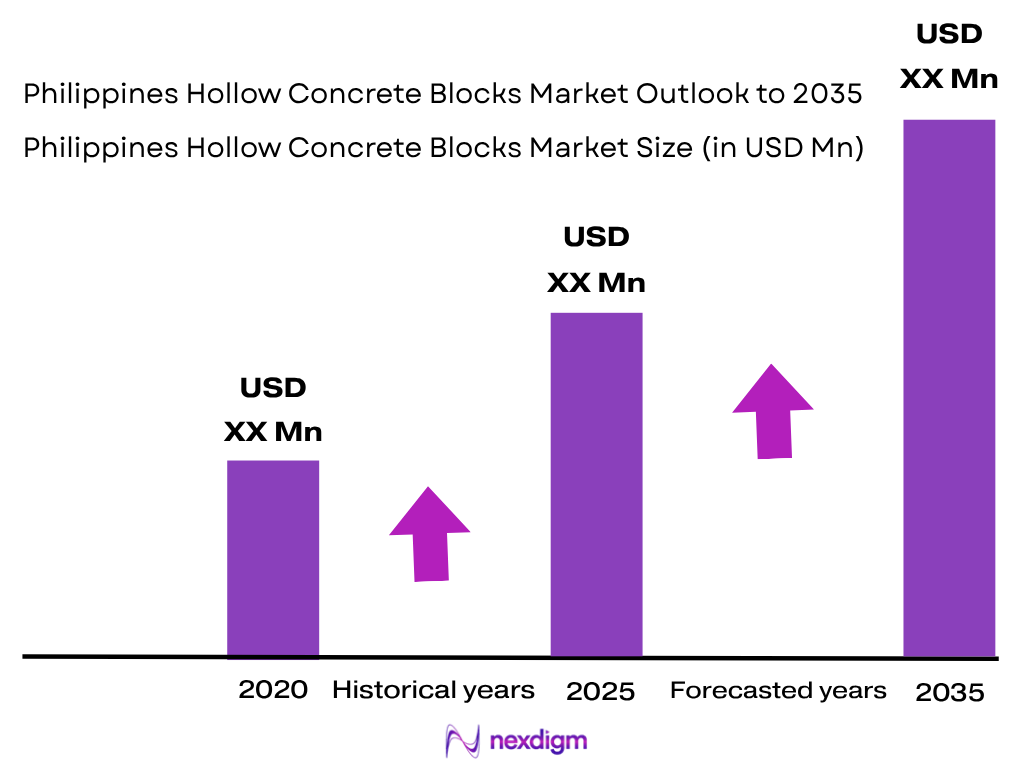
The Philippines Hollow Concrete Blocks Market is valued at approximately USD ~ billion, based on historical market assessment. Demand is supported by the country’s large residential construction base, with approved residential constructions increasing from 112,399 to 116,427, while associated residential floor area expanded from 18.13 million square meters to 19.75 million square meters. Hollow concrete blocks remain extensively applicable to single-detached houses, subdivisions, partitions, perimeter walls and commercial buildings.
Metro Manila, CALABARZON and Central Luzon are major demand centers for the Philippines Hollow Concrete Blocks Market due to concentrated residential development, commercial construction, industrial estates and extensive manufacturer networks. Nationwide approved constructions increased from 171,268 to 180,341, while approved construction floor area rose from 41.47 million to 42.84 million square meters. Large CHB manufacturers maintain production facilities across Rizal, Cavite, Pampanga, Metro Manila, Laguna and Bulacan, reinforcing Luzon’s supply-chain concentration.
Market Segmentation
By Product Type
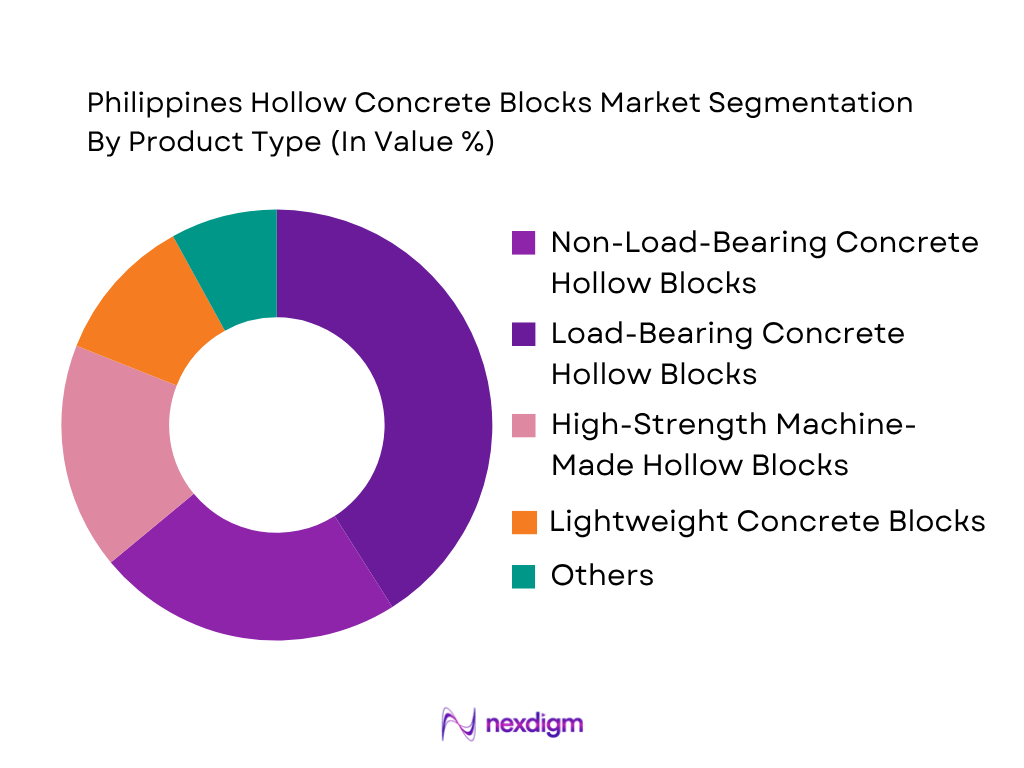
The Philippines Hollow Concrete Blocks Market is segmented into non-load-bearing concrete hollow blocks, load-bearing concrete hollow blocks, high-strength machine-made blocks, lightweight concrete blocks and specialty/interlocking masonry units. Non-load-bearing concrete hollow blocks hold a dominant position because residential construction represents the largest number of approved building projects and CHBs are extensively used for partitions, reinforced-concrete-frame infill, boundary walls and other non-structural masonry applications. Philippine standards specifically distinguish non-load-bearing masonry under PNS ASTM C129 from load-bearing units governed by PNS ASTM C90. Mandatory certification has also increased the importance of standardized manufacturing and verifiable product performance. The segment benefits from an extensive network of local block producers and hardware distributors supplying common thicknesses. However, higher-strength machine-made products are becoming strategically important as developers and contractors increasingly require consistent compressive strength, dimensional accuracy and formal product certification rather than relying on highly variable manually manufactured CHBs.
By Application
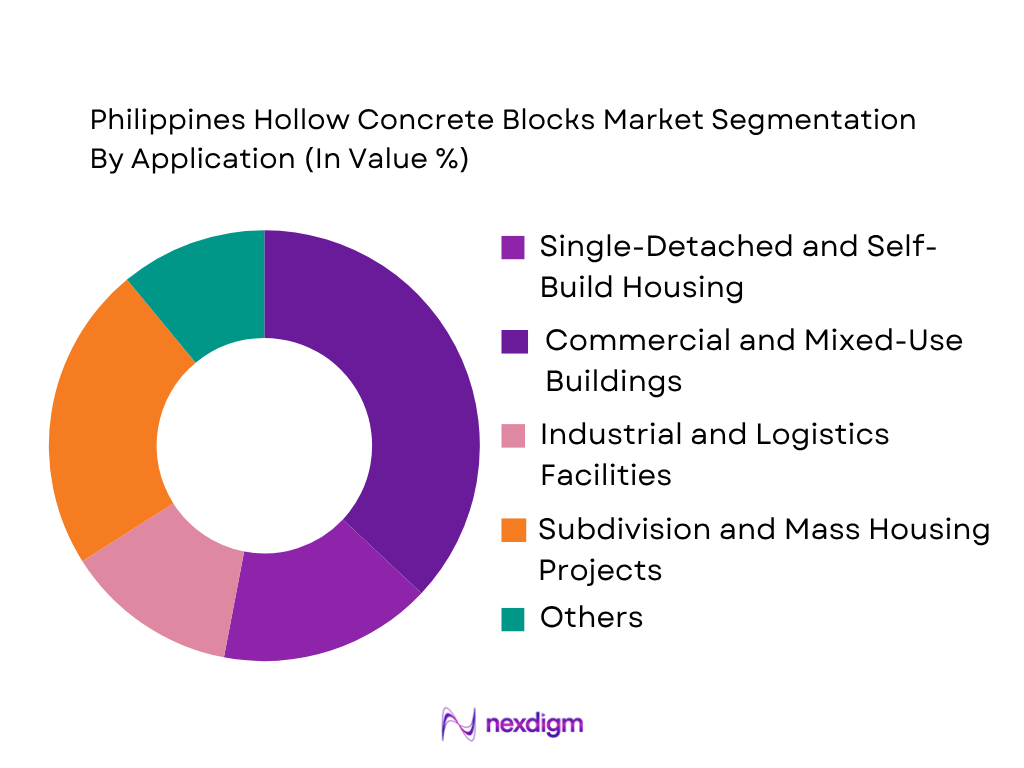
The Philippines Hollow Concrete Blocks Market is segmented into single-detached and self-build housing, subdivision and mass housing, commercial buildings, industrial and warehouse facilities, and institutional and infrastructure buildings. Single-detached and self-build housing represents the dominant application because residential buildings account for the largest number of approved construction projects in the Philippines. The country recorded 116,427 residential constructions in 2024, covering approximately 19.75 million square meters, compared with 112,399 constructions covering 18.13 million square meters in 2023. Single-family construction is particularly compatible with CHB masonry because conventional reinforced-concrete frames combined with concrete block infill remain widely used throughout Philippine cities and provinces. CHBs can be sourced through local manufacturers and hardware dealers, while masons are familiar with installation and reinforcement practices. Subdivision developers also generate substantial demand for standardized machine-made CHBs because repetitive house designs create opportunities for volume procurement, consistent block dimensions and centralized material specifications.
Competitive Landscape
The Philippines Hollow Concrete Blocks Market remains fragmented, combining established industrial manufacturers with numerous provincial and small-scale block producers. Large suppliers differentiate themselves through automated production, higher compressive-strength products, PNS/ASTM compliance, multiple CHB thicknesses, testing capability and regional distribution. Allied Concrete Products, Starcrete Manufacturing and Jackbilt represent established concrete-product manufacturers, while companies such as EZBlock are introducing lightweight alternatives. Mandatory product certification increasingly favors suppliers capable of demonstrating consistent manufacturing quality.
| Company | Establishment Year | Headquarters / Main Base | CHB / Masonry Range | Load-Bearing Capability | Size Range | Manufacturing Positioning | Standards / Quality Focus | Geographic Supply Capability |
| Allied Concrete Products, Inc. | 1960 | Quezon City | ~ | ~ | ~ | ~ | ~ | ~ |
| Jackbilt Corporation | 1948 | Makati / Pampanga | ~ | ~ | ~ | ~ | ~ | ~ |
| Starcrete Manufacturing Corporation | 2010 | Rizal | ~ | ~ | ~ | ~ | ~ | ~ |
| EZBlock Corporation | 2020 | Pasig City | ~ | ~ | ~ | ~ | ~ | ~ |
| Pacific Concrete Products, Inc. | Established Operator | Metro Manila | ~ | ~
|
~ | ~ | ~ | ~ |
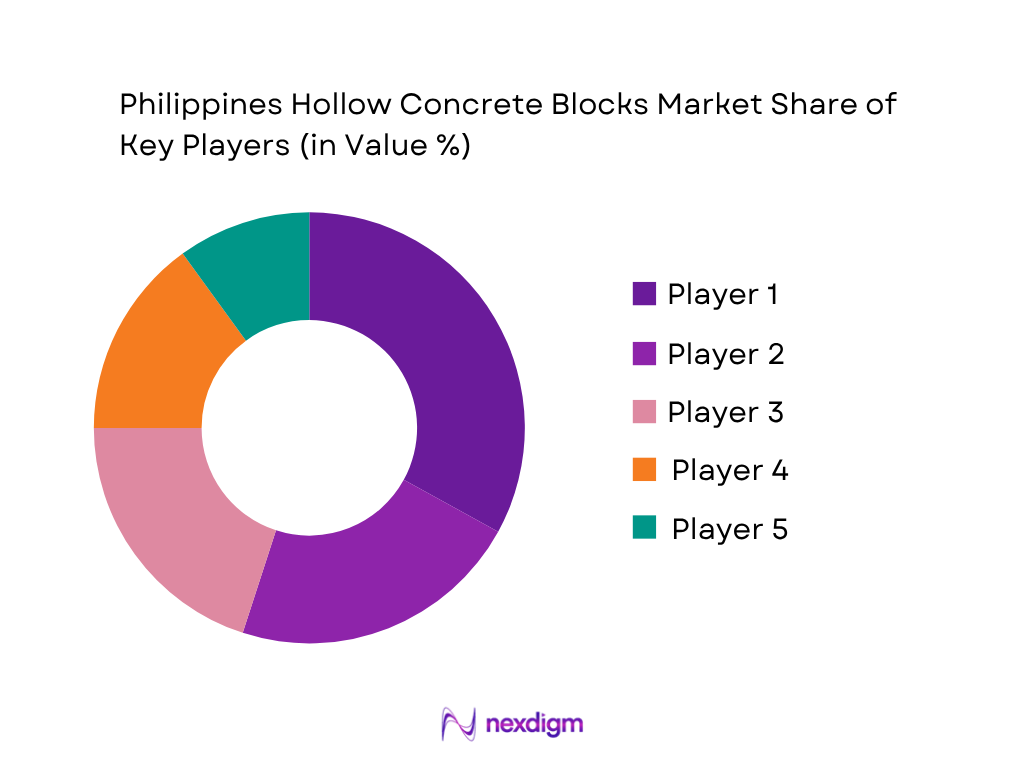
Philippines Hollow Concrete Blocks Market Analysis
Growth Drivers
Residential Construction and Single-Detached Housing Supporting CHB Consumption
Residential construction remains a core driver of the Philippines Hollow Concrete Blocks Market because CHBs are extensively used for exterior walls, reinforced-concrete-frame infill, internal partitions, perimeter walls and house extensions. The Philippines recorded 116,427 residential constructions in 2024, compared with 112,399 in 2023, while associated residential floor area increased from 18,131,455 square meters to 19,748,190 square meters. Single-type houses were particularly important, accounting for 97,490 approved constructions in 2024, demonstrating the scale of the housing format most closely associated with conventional CHB masonry. Total approved construction activity reached 180,341 projects in 2024 and increased further to 181,832 projects in 2025, maintaining a large addressable construction base. The supporting macroeconomic environment included Philippine GDP of USD 461.62 billion in 2024 and GDP per capita of USD 3,984.8. These indicators strengthen CHB demand because decentralized housing construction relies on materials that can be produced regionally, transported through hardware and dealer networks, and installed by the country’s established masonry workforce using conventional reinforced-concrete construction practices.
Commercial, Industrial and Provincial Construction Expanding CHB Applications
Expansion of non-residential and provincial construction is broadening the Philippines Hollow Concrete Blocks Market beyond traditional single-family housing. The country recorded 39,238 approved non-residential constructions in 2024, compared with 35,772 in 2023, while these projects represented 22,380,982 square meters of floor area. Commercial buildings accounted for 27,053 approved projects, creating requirements for partitions, external infill, service areas and perimeter structures. Geographic construction activity also demonstrates substantial provincial demand: CALABARZON recorded 41,471 constructions, Central Luzon registered 22,824, and Central Visayas recorded 19,585 during 2024. Formal construction activity is supported by 2,512 construction establishments, including 1,091 establishments principally engaged in building construction. The national economy generated USD 461.62 billion in GDP during 2024, while gross fixed capital formation remained an important component of domestic expansion. These conditions support CHB manufacturers because commercial buildings, factories, warehouses and provincial developments require durable masonry products. Regional construction also creates opportunities for localized block plants capable of supplying contractors without moving heavy CHBs over unnecessarily long distances.
Market Challenges
Fragmented Production and Mandatory CHB Quality Compliance Increasing Manufacturing Requirements
Quality consistency remains a major challenge for the Philippines Hollow Concrete Blocks Market because the industry combines industrial manufacturers with numerous small and localized producers using different batching, molding, compaction and curing practices. This issue has become more significant as non-load-bearing concrete masonry units entered mandatory product-certification coverage on 4 July 2024. Applicable Philippine standards distinguish load-bearing units under PNS ASTM C90 and non-load-bearing units under PNS ASTM C129, while PNS ASTM C140/C140M establishes sampling and testing procedures. Manufacturers must therefore control compressive performance, dimensions, absorption and physical characteristics while maintaining production documentation. Compliance is particularly important given the scale of end-use construction: 180,341 approved constructions were recorded nationally in 2024, including 116,427 residential and 39,238 non-residential projects. The Philippines also generated USD 461.62 billion in GDP in 2024, illustrating the economic scale within which construction-product regulation operates. Smaller CHB producers relying on manual proportioning, inconsistent aggregates or inadequate curing consequently face greater difficulty delivering repeatable performance, while formal manufacturers must sustain laboratory testing, process control and product traceability across large production volumes.
Heavy Material Logistics and Regional Construction Dispersion Creating Distribution Constraints
Concrete hollow blocks are bulky, comparatively heavy construction materials that can suffer edge damage and breakage during loading, transportation, unloading and repeated site handling. This creates a particular challenge in the Philippines because construction demand is distributed across numerous islands, provinces and urban centers rather than concentrated within one metropolitan market. CALABARZON alone recorded 41,471 approved constructions in 2024, while Central Luzon recorded 22,824 and Central Visayas registered 19,585. Nationally, approved construction activity reached 180,341 projects covering 42,837,581 square meters during 2024 and increased to 181,832 projects covering 45,236,312 square meters in 2025. The economy generated USD 461.62 billion in GDP during 2024, with GDP per capita of USD 3,984.8. This geographically dispersed construction base creates substantial delivery requirements for CHB manufacturers. Because blocks occupy considerable truck space relative to their individual construction function, long-distance distribution can reduce operational efficiency. Manufacturers consequently require regional plants, provincial dealer networks, coordinated truck dispatch and suitable palletization to supply projects while controlling handling damage and maintaining product availability.
Market Opportunities
PNS-Compliant Machine-Made and High-Strength CHBs Creating Formalization Opportunities
The transition toward formally compliant concrete masonry creates a significant future opportunity for manufacturers of machine-made, hydraulic-pressed and higher-strength CHBs. Mandatory certification coverage for non-load-bearing concrete masonry units took effect on 4 July 2024, increasing the importance of standardized manufacturing, documented testing and consistent product characteristics. The opportunity is supported by a substantial existing construction base rather than future projections: the Philippines recorded 180,341 approved constructions covering 42,837,581 square meters in 2024, including 116,427 residential buildings and 39,238 non-residential buildings. Construction activity remained substantial in 2025 at 181,832 approved projects and 45,236,312 square meters. Philippine GDP stood at USD 461.62 billion in 2024, while GDP per capita reached USD 3,984.8. Automated batching, vibro-compression, hydraulic pressing and controlled curing can enable manufacturers to supply blocks with greater dimensional and compressive consistency than variable manual production. As developers, contractors and government-linked projects increasingly require certification documentation, suppliers capable of demonstrating compliance with recognized load-bearing, non-load-bearing and testing standards can expand their position across housing, commercial and institutional construction.
Provincial Housing and Non-Residential Development Supporting Regional CHB Capacity Expansion
Regional construction activity creates a future opportunity for CHB manufacturers to establish automated production capacity and dealer networks closer to provincial demand centers. Current statistics demonstrate that construction is already geographically diversified: CALABARZON registered 41,471 approved constructions in 2024, Central Luzon recorded 22,824, and Central Visayas recorded 19,585. National residential construction totaled 116,427 projects covering 19,748,190 square meters, while non-residential construction reached 39,238 projects covering 22,380,982 square meters. Alteration and repair activity added another 13,997 projects, providing an additional masonry-demand channel outside entirely new construction. The formal construction industry contained 2,512 establishments, including 1,091 building-construction establishments, indicating an extensive contractor ecosystem that regional block suppliers can serve. This activity is supported by a national economy producing USD 461.62 billion in GDP during 2024. Regional automated plants can capitalize on these conditions by reducing transport distances, improving availability of certified blocks and supplying standardized 4-inch, 6-inch and 8-inch masonry products to subdivisions, commercial buildings, warehouses, renovations and provincial infrastructure-related developments.
Future Outlook
The Philippines Hollow Concrete Blocks Market is forecast to expand at approximately ~% CAGR during 2026–2035, supported by housing development, urban expansion, commercial construction, industrial facilities and infrastructure-related building activity. Conventional CHBs will remain important, although the composition of demand is expected to shift toward certified, machine-manufactured and higher-performance products. Mandatory conformity requirements are expected to support gradual formalization of the supply base. Contractors and developers are likely to place greater emphasis on compressive strength, dimensional tolerances, testing documentation and consistent batch quality.
Major Players
- Starcrete Manufacturing Corporation
- Allied Concrete Products, Inc.
- Jackbilt Corporation
- Pacific Concrete Products, Inc.
- KEAN Solid Blocks & Aggregates Industries Corporation
- 668 Orion Concrete Products Corporation
- EZBlock Corporation
- Espino Hollowblocks
- Don Terio Construction Blocks
- Global Hardware and Building Supplies, Inc.
- Daesung CNT Corporation
- Mindanao Asiana Industries Corporation
- Ching Concrete Products
- Harden Concrete Products
- MJK-A Concrete Products
Key Target Audience
- Concrete Hollow Block Manufacturers
- Cement, Aggregate and Construction Material Manufacturers
- Residential and Subdivision Developers
- General Contractors and Masonry Contractors
- Hardware Stores and Building Material Distributors
- Industrial, Commercial and Infrastructure Developers
- Investments and Venture Capitalist Firms
- Government and Regulatory Bodies (Department of Trade and Industry – Bureau of Philippine Standards, Department of Public Works and Highways, Department of Human Settlements and Urban Development, National Housing Authority)
Research Methodology
Step 1: Identification of Key Variables
The initial phase involves constructing an ecosystem map encompassing cement and aggregate suppliers, CHB manufacturers, block-making equipment providers, hardware dealers, contractors, housing developers and regulatory bodies within the Philippines Hollow Concrete Blocks Market. Key variables include production capacity, block dimensions, compressive strength, manufacturing method, certification status, geographic coverage and end-use construction demand.
Step 2: Market Analysis and Construction
Historical market information is compiled and assessed using top-down and bottom-up methodologies. Construction permits, residential floor area, commercial and industrial construction, regional building activity and manufacturer production capabilities are analyzed. Demand is mapped across conventional CHB, load-bearing blocks, machine-made products and emerging lightweight masonry alternatives.
Step 3: Hypothesis Validation and Expert Consultation
Market hypotheses are validated through computer-assisted telephone interviews with CHB manufacturers, cement and aggregate suppliers, hardware distributors, developers, contractors and masonry specialists. Discussions examine plant utilization, product dimensions, strength requirements, certification, regional distribution, contractor purchasing criteria and the transition from manually molded blocks toward machine-manufactured products.
Step 4: Research Synthesis and Final Output
The final stage triangulates primary interviews, supplier-level information, construction indicators and regulatory data. Bottom-up manufacturer output is reconciled with application-level demand from residential, commercial, industrial and institutional construction. The resulting analysis establishes market segmentation, competitive positioning, product trends, growth drivers, challenges and the long-term outlook for the Philippines Hollow Concrete Blocks Market.

- Executive Summary
- Research Methodology (Market Definitions and Assumptions, Concrete Hollow Block Classification, PNS ASTM C90 Load-Bearing Unit Mapping, PNS ASTM C129 Non-Load-Bearing Unit Mapping, CHB Size and Thickness Mapping, Compressive Strength Classification, Cement-Sand-Aggregate Mix Assessment, Machine-Made versus Manual CHB Assessment, Local Manufacturer Mapping, Provincial Production Cluster Mapping, Installed Block Production Capacity Assessment, Construction Demand Mapping, Residential Building Permit Assessment, Infrastructure Pipeline Assessment, Top-Down Market Sizing, Bottom-Up Manufacturer Assessment, Demand-Side Assessment, Supply-Side Assessment, Contractor and Dealer Interviews, Data Triangulation, Forecasting Framework)

- Definition and Scope
- Philippines Concrete Hollow Block Industry Evolution and Development of Load-Bearing CHB, Non-Load-Bearing CHB, Machine-Made Blocks, Hydraulic-Pressed Blocks, Lightweight Blocks, Interlocking Blocks and Specialty Concrete Masonry Units
- Concrete Hollow Block Industry Value Chain Analysis
- Concrete Hollow Block Supply Chain Analysis
- Formal versus Informal CHB Manufacturing Ecosystem

- Growth Drivers (Residential Construction, Single-Detached Housing Development, Subdivision Expansion, Urban Population Growth, DPWH Infrastructure Construction, Commercial Building Development, Industrial and Warehouse Construction, Provincial Urbanization, Renovation and Home Extension Activity)
- Market Challenges (Fragmented Small-Scale CHB Manufacturing, Inconsistent Compressive Strength, Cement Input Exposure, Sand and Aggregate Quality Variability, Manual Production Practices, Product Certification Compliance, Heavy Product Transportation, Breakage During Handling, Contractor Price Sensitivity, Competition from AAC and Lightweight Wall Systems)
- Market Opportunities (PNS-Compliant Machine-Made CHB, High-Strength Load-Bearing Blocks, Automated Hydraulic Block Production, Lightweight Concrete Blocks, Interlocking Masonry Systems, Affordable Housing Projects, Provincial Construction Growth, Industrial and Logistics Facilities, Disaster-Resilient Masonry Products, Low-Carbon and Recycled-Aggregate Blocks)
- Market Trends (Transition from Manual to Machine-Made CHB, Hydraulic Press Adoption, Higher Compressive Strength Requirements, PNS ASTM Compliance, Factory Quality Testing, Lightweight Block Adoption, Interlocking Block Systems, Automated Batching, Recycled Aggregate Utilization, Project-Specific Block Designs)
- Government Regulations and Standards (PNS ASTM C90 Load-Bearing Concrete Masonry Units, PNS ASTM C129 Non-Load-Bearing Concrete Masonry Units, PNS ASTM C140/C140M Sampling and Testing, DTI-BPS Mandatory Product Certification, DAO 22-03 Technical Regulation, DPWH Standard Specifications, National Building Code Requirements, Product Marking Requirements, Dimensional Tolerance Requirements, Compressive Strength Requirements) BPS S&C Portal
- SWOT Analysis
- Porter’s Five Forces Analysis
- PESTLE Analysis
- Stakeholder Ecosystem

- By Market Value (2020-2025)
- By Concrete Hollow Block Production Volume (2020-2025)
- By Concrete Hollow Block Consumption Volume (2020-2025)
- By Number of Concrete Hollow Blocks Sold (2020-2025)
- By Load-Bearing CHB Volume (2020-2025)
- By Non-Load-Bearing CHB Volume (2020-2025)

- By Product Type (In Value %)
Load-Bearing Concrete Hollow Blocks
Non-Load-Bearing Concrete Hollow Blocks
High-Strength Machine-Made Hollow Blocks
Lightweight Concrete Blocks
Interlocking Concrete Blocks
Insulated Concrete Blocks
Specialty Concrete Masonry Units - By Block Size and Thickness (In Value %)
3-Inch Hollow Blocks
4-Inch Hollow Blocks
5-Inch Hollow Blocks
6-Inch Hollow Blocks
8-Inch Hollow Blocks
10-Inch Hollow Blocks
Project-Specific Dimensions - By Compressive Performance (In Value %)
Standard Non-Load-Bearing CHB
Higher-Strength Non-Load-Bearing CHB
Load-Bearing CHB
High-Compression Structural CHB
Project-Specified Performance Blocks - By Application (In Value %)
Single-Detached and Self-Build Housing
Subdivision and Mass Housing Projects
Condominium and Apartment Buildings
Commercial Buildings
Industrial and Warehouse Facilities
Institutional Buildings
Infrastructure and Government Buildings
Renovation and Building Extension - By Customer Type (In Value %)
Individual Home Builders
Residential Developers
General Contractors
Masonry Contractors
Commercial Developers
Industrial and Logistics Developers
Government Infrastructure Contractors
Hardware Stores and Building Material Dealers - By Manufacturing Method (In Value %)
Manual Molded CHB
Semi-Automatic Machine-Made CHB
Hydraulic-Pressed CHB
Fully Automated Vibro-Pressed CHB
Cellular and Lightweight Block Manufacturing

- Market Share of Major Players (By CHB Sales Value, Production Volume, Installed Manufacturing Capacity, Number of Plants, Load-Bearing Block Capacity, Non-Load-Bearing Block Capacity, Regional Coverage, Contractor and Developer Portfolio)
- Cross Comparison Parameters (Annual Concrete Hollow Block Production Capacity, 3-Inch-to-10-Inch Product Size Range, Load-Bearing and Non-Load-Bearing Product Capability, Compressive Strength and High-Compression Block Range, Automated and Hydraulic Block Manufacturing Capability, PNS-ASTM Product Compliance and Quality Testing, Luzon-Visayas-Mindanao Distribution and Delivery Coverage, Residential-Commercial-Industrial Project Supply Portfolio)
- SWOT Analysis of Major Players
- Detailed Profiles of Major Companies
Starcrete Manufacturing Corporation Starcrete Manufacturing
Allied Concrete Products, Inc. Allied Concrete Products, Inc.
Jackbilt Corporation Jackbilt
Pacific Concrete Products, Inc. LinkedIn
KEAN Solid Blocks & Aggregates Industries Corporation Kean Solid Blocks
668 Orion Concrete Products Corporation 668 Orion Concrete Products Corp.
EZBlock Corporation EZ Block
Espino Hollowblocks Home | Espino Hollowblocks
Don Terio Construction Blocks Donterio
Global Hardware and Building Supplies, Inc. Office Global Hardware
Daesung CNT Corporation Daesung CNT7
Mindanao Asiana Industries Corporation Mindanao Asiana
Ching Concrete Products Philippine Companies
Harden Concrete Products Philippine Companies
MJK-A Concrete Products Philippine Companies

- Residential Developer Requirement Assessment
- Individual Home Builder Requirement Assessment
- General Contractor Procurement Assessment
- Masonry Contractor Requirement Assessment
- Industrial and Warehouse Developer Assessment

- By Market Value (2026-2035)
- By Concrete Hollow Block Production Volume (2026-2035)
- By Concrete Hollow Block Consumption Volume (2026-2035)
- By Number of Concrete Hollow Blocks Sold (2026-2035)
- By Load-Bearing CHB Volume (2026-2035)
- By Non-Load-Bearing CHB Volume (2026-2035)


 Request a Sample
 Ask for Customization
 Get a Quote
 Enquire Now
