

 Download PDF
Market Overview
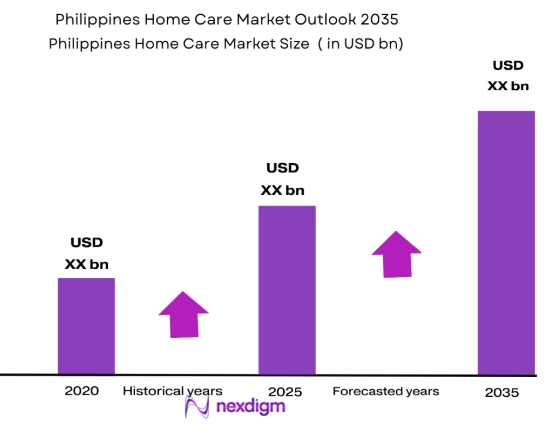
The Philippines home care market is valued at approximately USD ~ billion, as of recent data. This market has seen steady growth, driven by a combination of increasing urbanization, rising disposable incomes, and growing health awareness. The demand for home care products is further supported by consumer preferences shifting towards more sustainable and eco-friendly alternatives. The Philippines’ market is also buoyed by the proliferation of e-commerce, where online sales platforms are increasingly becoming popular for the purchase of home care products, providing wider accessibility.
In the Philippines, Metro Manila leads the home care market, driven by its large population, high urbanization, and significant consumer purchasing power. The metro area accounts for a substantial portion of both home care product consumption and the expansion of retail channels, particularly e-commerce. Other regions, like Luzon and Cebu, follow suit, benefiting from increasing urban development and consumer adoption of modern home care solutions. These areas also have growing retail infrastructure that supports the increasing demand for diverse home care products.
Market Segmentation
By Product Type
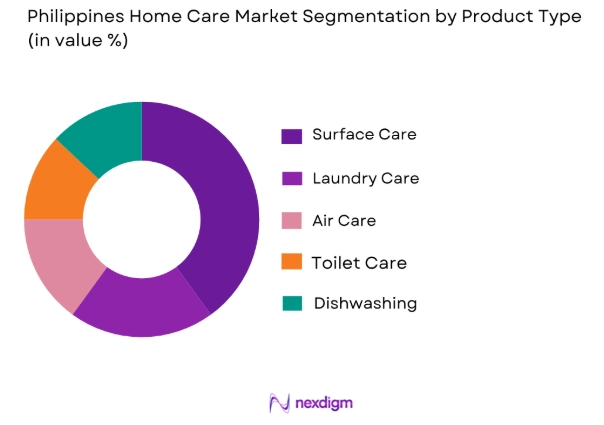
The Philippines home care market is segmented by product type into laundry care, surface care, dishwashing, toilet care, air care, and other home care products. Within this segment, laundry care dominates the market, as it is an essential household need. The widespread consumption of laundry detergents, fabric softeners, and other laundry products is driven by the country’s humid climate, which accelerates the need for frequent washing. Leading global brands such as Procter & Gamble and Unilever have successfully established strong consumer loyalty in this segment, providing both value and premium products that cater to various consumer preferences. This segment’s dominance can also be attributed to the marketing strategies, wide product availability, and increasing preference for eco-friendly, biodegradable options, which further enhance its growth.
By Distribution Channel
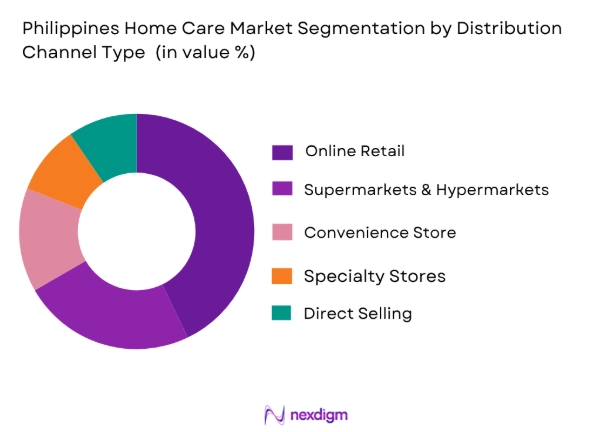
The home care market in the Philippines is also segmented by distribution channel into supermarkets & hypermarkets, online retail, convenience stores, specialty stores, and direct selling. Among these, supermarkets and hypermarkets lead in market share, primarily due to their widespread presence and the ease with which consumers can access home care products. Supermarkets and hypermarkets offer a vast range of products under one roof, ensuring convenience for consumers. The influence of key players such as SM Supermalls and Puregold has contributed significantly to the dominance of this distribution channel. Additionally, the expansion of e-commerce platforms such as Lazada and Shopee has accelerated online retail growth, catering to consumers who prefer shopping from home.
Competitive Landscape
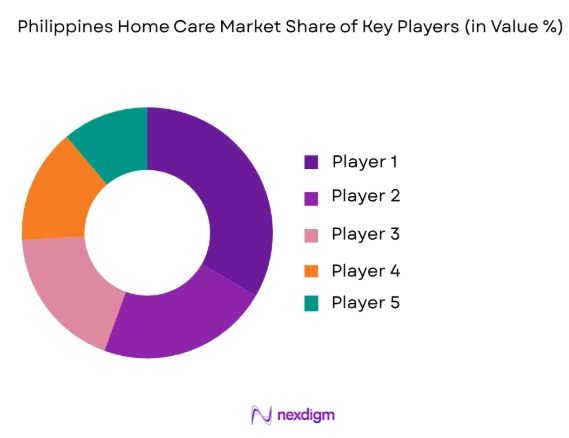
The home care market in the Philippines is competitive, with both local and international players vying for market share. Major players include multinational companies like Procter & Gamble, Unilever, Reckitt Benckiser, and Henkel. These companies dominate the market due to their strong brand recognition, expansive distribution networks, and continuous innovation in product offerings. The presence of local players such as Splash Corporation and Kimberly-Clark also adds to the competition, as they focus on affordability and localized consumer needs.
| Company | Year of Establishment | Headquarters | Product Portfolio | Brand Equity | Distribution Reach | Sustainability Practices |
| Procter & Gamble | 1837 | Cincinnati, USA | ~ | ~ | ~ | ~ |
| Unilever | 1930 | London, UK | ~ | ~ | ~ | ~ |
| Reckitt Benckiser | 1819 | Slough, UK | ~ | ~ | ~ | ~ |
| Henkel | 1876 | Düsseldorf, Germany | ~ | ~ | ~ | ~ |
| Splash Corporation | 1985 | Parañaque, Philippines | ~ | ~ | ~ | ~ |
Philippines Home Care Market Analysis
Growth Drivers
Household Income Growth Rate
As the Philippine economy continues to grow, household incomes are on the rise. This boosts consumer purchasing power, allowing more families to afford home care products. Higher disposable income is directly linked to increased demand for premium home care products, as consumers are willing to spend on improving their living conditions, cleanliness, and overall home environment. This trend presents opportunities for brands to introduce new, innovative, and higher-quality home care products to cater to a more affluent consumer base.
Urbanization Rate
The rapid urbanization in the Philippines leads to an increasing demand for home care products. As more people move to cities, smaller living spaces require more efficient and convenient home care solutions. Urban households often seek products that simplify daily chores, offer time-saving benefits, and align with modern lifestyles. As urban centers expand, the need for cleaning, organizing, and maintaining these homes fuels the market growth for home care items.
Market Challenges
Regulatory Complexity
The Philippine home care market faces challenges due to complex regulations surrounding product formulation, labeling, and safety standards. Regulatory bodies require compliance with local laws on chemical usage and sustainability. Companies may need to navigate lengthy approval processes, which can delay product launches or increase operational costs. Additionally, brands must ensure their products adhere to environmental and health regulations, adding to the complexity of market entry and expansion.
Rising Raw Material Costs
The increasing prices of raw materials used in manufacturing home care products, such as chemicals, packaging, and essential oils, present a significant challenge to the industry. Manufacturers must find ways to mitigate the impact of rising production costs while maintaining product quality and competitive pricing. This challenge can force companies to either pass on the costs to consumers, which may reduce demand, or absorb the costs, which could harm profitability.
Opportunities
E-commerce Growth
The surge in e-commerce adoption offers a significant growth opportunity for the Philippines home care market. Consumers are increasingly shopping online for convenience, especially as the country continues to embrace digital platforms. E-commerce allows brands to reach a wider audience across urban and rural areas, offering direct-to-consumer options. Additionally, online platforms offer tailored marketing strategies, personalized recommendations, and easy access to home care products, which are driving market expansion.
Health-Conscious Consumer Segment:
With a growing emphasis on health and hygiene, especially in the wake of the COVID-19 pandemic, there is a rising demand for home care products that promote cleanliness and safety. Consumers are becoming more health-conscious and are seeking products with non-toxic ingredients, antimicrobial properties, and sustainable packaging. This shift presents an opportunity for brands to capitalize on the growing awareness of health and hygiene by offering specialized products that meet these new consumer preferences.
Future Outlook
Over the next five years, the Philippines home care market is poised for continued growth, driven by factors such as urbanization, rising income levels, and increasing consumer focus on health and hygiene. The ongoing shift towards sustainability and eco-friendly products will further fuel the demand for natural and organic alternatives. The growth of e-commerce will continue to play a significant role, with online shopping becoming an increasingly popular channel for purchasing home care products. With more players focusing on product innovation and consumer-centric strategies, the market is expected to evolve rapidly to meet changing consumer preferences and environmental concerns.
Major Players
- Procter & Gamble
- Unilever
- Reckitt Benckiser
- Henkel
- Splash Corporation
- Kimberly-Clark
- Colgate-Palmolive
- SC Johnson Professional
- Kao Corporation
- Clorox
- Lion Corporation
- Church & Dwight Co.
- Pigeon Corporation
- Amway Philippines
- Johnson & Johnson
Key Target Audience
- Investments and venture capitalist firms
- Government and regulatory bodies
- Major Retail Chains
- Online Retailers
- Distributors of Consumer Goods
- Home Care Product Manufacturers
- E-commerce Platforms
- Manufacturers of Sustainable Products
Research Methodology
Step 1: Identification of Key Variables
The first step involves mapping out the home care ecosystem in the Philippines. This is done by analyzing key market drivers, including consumer preferences, regulatory factors, and economic trends. Secondary research using a combination of industry reports and proprietary data sources forms the basis for identifying critical market variables. The aim is to identify the factors influencing demand and supply dynamics.
Step 2: Market Analysis and Construction
In this phase, historical market data is analyzed, including consumer behavior, product consumption rates, and sales performance across different distribution channels. This analysis helps to establish a comprehensive understanding of the market landscape, from which revenue forecasts are generated.
Step 3: Hypothesis Validation and Expert Consultation
Market hypotheses are validated through interviews with industry experts and stakeholders in the home care market. This includes consultations with key decision-makers from leading companies, retailers, and regulatory bodies. These discussions provide insights into current market trends, challenges, and future prospects, which are then used to refine the market estimates.
Step 4: Research Synthesis and Final Output
The final phase involves synthesizing the data collected from both primary and secondary sources. Detailed interviews with major market players and distributors are conducted to corroborate findings from the earlier steps. The information gathered is then integrated to create a comprehensive and validated report on the home care market in the Philippines.

- Executive Summary
- Research Methodology (Market Definitions and Scope of Home Care Services, Product Categorization Framework, Data Utilization Approach, Primary Interviews with Key Industry Stakeholders, Bottom-Up Consumer Demand Modelling, Top-Down Market Validation, Assumptions on Regulatory Frameworks, Consumption Trends, and Data Triangulation Techniques, TAM/SAM/SOM Modelling Framework Based on Household Penetration and Product Consumption)

- Definition and Scope
- Evolution of Home Care Ecosystem in the Philippines
- Timeline of Regulatory Reforms
- Consumer Behavior Analysis
- Value Chain Analysis
- Stakeholder Ecosystem

- Growth Drivers
Household Income Growth Rate
Urbanization Rate
Product Premiumization Trend
Increase in Health & Hygiene Awareness
Rising E-commerce Adoption - Market Challenges
Regulatory Complexity
Rising Raw Material Costs
Competition from Unbranded Products
Environmental Impact Concerns - Opportunities
E-commerce Growth
Health-Conscious Consumer Segment
Sustainability Initiatives
Product Innovation and Premiumization
Rural Market Penetration - Market Trends
Natural & Organic Products Adoption
Smart Home Integration
Sustainability in Packaging
Increased Focus on Hygiene and Disinfection Products - Government Regulations
- SWOT Analysis
- Porter’s Five Forces
- Environmental Sustainability Impact
- Supply Chain Integration Impact

- By Value, 2020-2025
- By Volume, 2020-2025
- By Average Spend per Household, 2020-2025

- By Product Type (in Value %)
Laundry Care
Surface Care
Dishwashing
Toilet Care
Air Care
Other Home Care Products - By Distribution Channel (in Value %)
Supermarkets & Hypermarkets
Online Retail
Convenience Stores
Specialty Stores
Direct Selling - By End User Demographics (in Value %)
Urban Consumers
Rural Consumers
Middle-Class Households
Affluent Households - By Region (in Value %)
Metro Manila
Luzon
Visayas
Mindanao - By Consumer Type (in Value %)
Households
Institutional Users

- Market Share of Major Players
- By Value
- By Product Category
- TAM Coverage Ratio
- Cross Comparison Parameters (Product Range, Average Price Points, Sustainability Practices, Distribution Reach, Consumer Loyalty Programs, Brand Equity)
SWOT Analysis of Major Players
Pricing Benchmarking - Detailed Profiles of Major Companies
Procter & Gamble Philippines
Unilever Philippines
SC Johnson Professional Philippines
Reckitt Benckiser Philippines
Henkel Philippines
Colgate-Palmolive Philippines
Kao Corporation Philippines
S. C. Johnson & Son, Inc.
Luxe Asia
Herbal Essences Philippines

- Consumer Behavior & Buying Patterns
- Price Sensitivity & Brand Loyalty
- Seasonality in Home Care Product Consumption
- Pain Point Analysis
- Decision-Making Criteria
- End User TAM Analysis

- By Value, 2026-2035
- By Volume, 2026-2035
- By Average Spend per Household, 2026-2035


 Request a Sample
 Ask for Customization
 Get a Quote
 Enquire Now