
 Download PDF
Market Overview
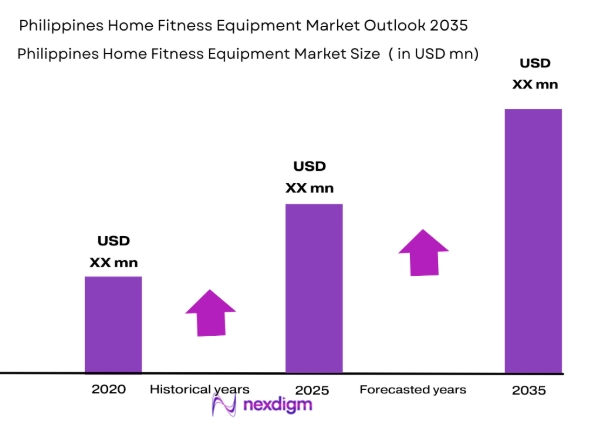
The Philippines home fitness equipment market is estimated to be valued at approximately USD ~ million in 2025. This growth is primarily driven by an increasing interest in health and fitness, further propelled by the pandemic’s impact on consumer habits. As gyms were forced to close, many Filipinos turned to home fitness solutions for their physical activity needs. Additionally, improving economic conditions and rising disposable incomes, particularly in urban areas like Metro Manila, are enabling more consumers to invest in home fitness equipment. With growing health awareness and an expanding middle class, the market is expected to continue growing through 2030.
Metro Manila is the leading region in the Philippines for home fitness equipment sales, driven by its large population and high-income households. Other urban centers, such as Cebu and Davao, are also emerging as significant markets for fitness equipment due to increased disposable incomes and rising health-consciousness among residents. The market is supported by the rise of e-commerce platforms, which have made fitness equipment accessible to a broader demographic, including consumers in more remote areas. The increasing demand for fitness solutions in cities, coupled with the technological adoption of smart fitness products, positions the Philippines as a growing market for home fitness solutions.
Market Segmentation
By Product Type
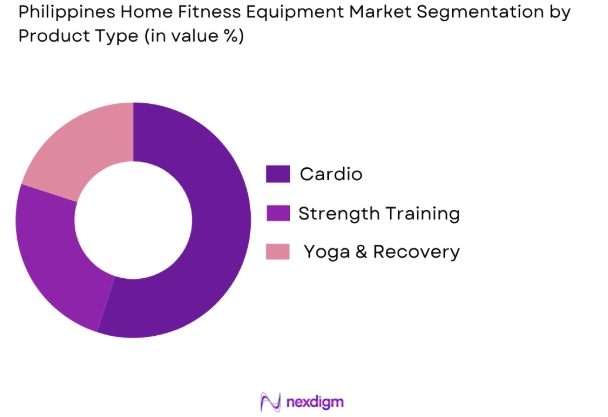
The Philippines home fitness equipment market is segmented into cardio equipment, strength training equipment, and yoga & recovery products. The cardio equipment segment holds the largest market share, driven by the widespread popularity of treadmills, exercise bikes, and ellipticals. These products offer consumers an easy way to stay fit at home, making them ideal for people with busy lifestyles. Additionally, the rise of connected and smart fitness devices, which sync with fitness apps to provide personalized training sessions, has further boosted the demand for cardio equipment. Consumers are increasingly drawn to products that provide a full-body workout in a limited space, such as foldable treadmills and stationary bikes.
By Technology Integration
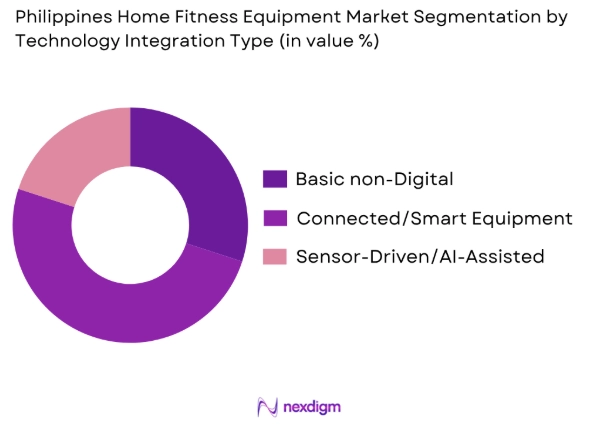
The market is segmented by technology integration into basic non-digital equipment, connected/smart fitness equipment, and sensor-driven/AI-assisted devices. The connected/smart equipment segment dominates, driven by the increasing demand for interactive and personalized workout experiences. Products like smart treadmills and exercise bikes that sync with mobile apps and offer access to virtual fitness classes are gaining traction. With an increasing number of consumers seeking digital fitness experiences, this segment is projected to continue expanding, particularly among younger, tech-savvy consumers. The integration of sensors and AI technology further enhances the appeal of these products, providing real-time feedback and tracking.
Competitive Landscape
The Philippines home fitness equipment market is competitive, with a mix of international and local brands. Leading global players such as NordicTrack, Technogym, and Life Fitness dominate the market due to their strong brand presence and high-quality offerings. Local brands, including Decathlon Philippines and GymMaster, have carved out a significant share by offering more affordable alternatives. The rise of e-commerce platforms like Lazada and Shopee has further democratized access to fitness equipment, allowing both established and new players to reach a wider audience.
| Company | Establishment Year | Headquarters | Product Portfolio | Technology Integration | Pricing Strategy | Distribution Network |
| NordicTrack | 1975 | United States | ~ | ~ | ~ | ~ |
| Technogym | 1983 | Italy | ~ | ~ | ~ | ~ |
| Life Fitness | 1977 | United States | ~ | ~ | ~ | ~ |
| Decathlon Philippines | 1999 | Philippines | ~ | ~ | ~ | ~ |
| GymMaster Philippines | 2015 | Philippines | ~ | ~ | ~ | ~ |
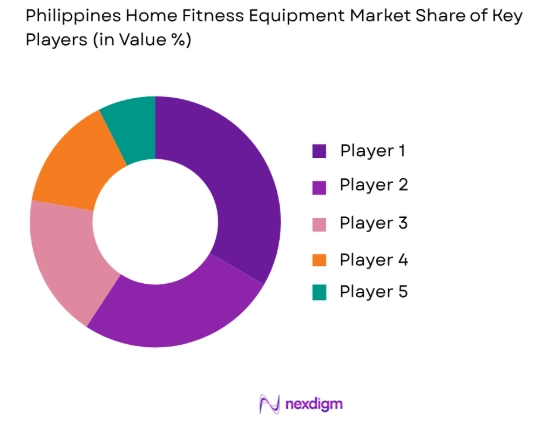
Philippines Home Fitness Equipment Market Analysis
Growth Drivers
Rising Health Awareness & Lifestyle Shift
Health awareness has been growing significantly in the Philippines, particularly in the context of rising lifestyle diseases. According to the Philippine Statistics Authority, non-communicable diseases (NCDs), such as heart disease and diabetes, are among the leading causes of death in the country. This has led to a strong emphasis on health and wellness, with more Filipinos becoming proactive about their physical health. The Department of Health’s health promotion initiatives have led to a surge in fitness-related activities, including the purchase of fitness equipment. Moreover, as urbanization continues, more people are turning to home fitness solutions as part of a broader lifestyle shift toward healthier living.
Urbanization & Affluence Growth
The Philippines is experiencing rapid urbanization, especially in Metro Manila, which is fueling demand for home fitness equipment. The World Bank estimates that the urban population in the Philippines will grow by 2.5 million annually over the next few years. This growth is accompanied by increasing affluence, with the country’s GDP per capita projected to exceed USD 3,700 by 2025. These factors are driving demand for home fitness equipment, as urban dwellers seek space-efficient solutions to maintain their health and well-being within the convenience of their homes. Urban middle-class households with disposable income are increasingly investing in home fitness solutions.
Challenges
High Cost of Fitness Equipment
The cost of fitness equipment remains a significant barrier to market penetration in the Philippines. While there is a growing interest in fitness, many high-quality fitness machines are out of reach for a large portion of the population due to high import duties and logistics costs. The Philippine government’s imposition of an additional 5% VAT on imported fitness equipment has further exacerbated these costs. As of 2023, fitness equipment such as smart treadmills and exercise bikes can cost upwards of PHP 40,000, which is a large expense relative to the average Filipino monthly income of around PHP 20,000.
Logistical and Distribution Challenges
Logistical inefficiencies continue to hinder the availability and distribution of fitness equipment in the Philippines, particularly in remote areas outside Metro Manila. The Philippines’ geographical location makes transportation of large fitness equipment expensive and time-consuming, especially to islands and rural areas. In 2022, the World Bank reported that the country’s logistics performance index was ranked relatively low compared to other Southeast Asian nations. These challenges, combined with the difficulty of accessing reliable shipping services, create delays and increased costs for consumers and businesses alike.
Opportunities
OEM Partnerships with Fitness Apps
There is a growing opportunity for Original Equipment Manufacturers (OEMs) in the Philippines to partner with fitness app developers to offer more connected and integrated fitness solutions. The Philippines has seen a marked increase in smartphone penetration, with approximately 80 million smartphone users in 2023, according to the National Telecommunications Commission. This provides a strong foundation for companies to integrate their fitness equipment with mobile apps that offer personalized workouts, virtual classes, and progress tracking. Collaborations with popular fitness apps like Peloton or Zwift would help increase product appeal and accessibility among tech-savvy consumers.
Local Assembly and Value Chain Localization
With the increasing demand for home fitness products, there is a growing opportunity for local assembly and value chain localization in the Philippines. As logistics and supply chain disruptions continue to affect the cost and availability of imported goods, assembling fitness equipment locally could significantly reduce costs and improve supply chain efficiency. The Philippine government, through the Board of Investments, is encouraging the local manufacturing of consumer products with tax incentives and subsidies. In 2023, the Department of Trade and Industry reported a 12% increase in manufacturing activities, signaling a conducive environment for local assembly of fitness equipment.
Future Outlook
The home fitness equipment market in the Philippines is expected to see continuous growth through 2030. With increasing consumer interest in health and fitness, coupled with the rise of connected fitness solutions, the demand for smart, interactive fitness products will continue to grow. Government initiatives aimed at promoting physical health and wellness will further drive demand, especially as the country’s urban population becomes more aware of the importance of maintaining an active lifestyle. The continued growth of e-commerce platforms will make fitness products more accessible, facilitating broader consumer engagement with the market.
Major Players
- Icon Health & Fitness / NordicTrack
- Life Fitness / Precor
- Johnson Health Tech
- Technogym
- ProForm
- Decathlon Philippines
- BougeRV
- Jumia Fitness
- GymMaster Philippines
- Capital Sports
- XTERRA Fitness
- Sunny Health & Fitness Schwinn Fitness
- Body Solid
- Hammer Strength
- Reebok Fitness
Key Target Audience
- Investments and venture capitalist firms
- Government and regulatory bodies (e.g., Department of Health, Philippines)
- Fitness equipment retailers
- Corporate wellness programs
- Large fitness chains and gyms
- Fitness equipment distributors
- E-commerce platforms
- Fitness tech companies
Research Methodology
Step 1: Identification of Key Variables
This phase involves identifying the primary drivers of market growth in the Philippines, such as increasing health awareness, urbanization, and the rise of e-commerce platforms. A comprehensive ecosystem map will be constructed to identify key variables that affect market dynamics.
Step 2: Market Analysis and Construction
In this phase, we will collect and analyze data regarding product categories, consumer preferences, and market penetration in the Philippines home fitness equipment market. Historical data will be used to build accurate market size estimates.
Step 3: Hypothesis Validation and Expert Consultation
Expert consultations will be conducted with fitness equipment manufacturers, distributors, and retailers in the Philippines. These insights will help validate hypotheses developed during the research process, ensuring accuracy in market forecasting.
Step 4: Research Synthesis and Final Output
The final report will integrate insights from expert interviews, industry reports, and consumer surveys to provide a detailed market analysis. This comprehensive approach ensures the report is accurate and reflective of current market conditions.

- Executive Summary
- Research Methodology (Market Definitions and Standard Terminology, Assumptions and Base Year, Data Collection Framework, Primary vs. Secondary Data Matrix, Sampling Approach, Market Estimation & Sizing Models, Quality Assurance & Validation, Limitations and Areas for Future Enhancement)

- Definition and Scope
- Overview Genesis and Industry Context
- Market Maturity and Adoption Curve
- Product & Service Value Chain
- Distribution Channel Architecture
- Consumer Adoption Life Cycle

- Growth Drivers
Rising Health Awareness & Lifestyle Shift
Urbanization & Affluence Growth
Increasing Gym Closures During Pandemic and Shift to Home Fitness
Fitness Ecosystem Adoption - Challenges
High Cost of Fitness Equipment
Limited Consumer Awareness and Education
Logistical and Distribution Challenges
Economic Instability and Low Disposable Income - Opportunities
OEM Partnerships with Fitness Apps
Local Assembly and Value Chain Localization
Expansion of Financing & Rental Models - Market Trends
Connected Fitness Subscription Bundling
Fitness Data Analytics and Performance Tracking
Lease & Rental Channels Growth - Government Regulations
- SWOT Analysis of Key Competitors
- Porter’s Five Forces

- By Value, 2020-2025
- By Units Sold, 2020-2025
- By Average Selling Price, 2020-2025

- By Product Type (In Value %)
Cardio
Strength Training
Yoga & Recovery - By Technology Integration (In Value %)
Basic non‑Digital
Connected / Smart
Sensor‑Driven / AI‑Assisted Feedback - By Price Tier (In Value %)
Economy / Value Tier
Mid‑Tier
Premium / Pro‑Level - By Distribution Channel (In Value %)
Specialty Fitness Stores
General Sports Stores
Online Marketplaces
Superstores / General Merchandisers
Direct OEM Sales & B2B Channels - By End User (In Value %)
Individual Consumers
Household Buyers
Corporate Wellness Programs
Fitness Coaches & Trainers - By Geography (In Value %)
Luzon
Visayas
Mindanao

- Market Share by Value / Units
- Best Practice Benchmarking
- Cross‑Comparison Parameters (Company Overview, Product Portfolio Breadth, Technology Integration Level, Retail Channel Presence, Geographic Footprint, Pricing Strategy and Tier Positioning After‑Sales & Service Network, Brand Equity / Consumer Preference Scores)
- SWOT Analysis of Major Players
- Pricing Analysis for Key Competitors in the Market
- Company Profiles of Major Competitors
Icon Health & Fitness / NordicTrack
Life Fitness / Precor
Johnson Health Tech
Technogym
ProForm
Decathlon Philippines
BougeRV
Jumia Fitness
GymMaster Philippines
Capital Sports
XTERRA Fitness
Sunny Health & Fitness Schwinn Fitness
Body Solid
Hammer Strength

- Personal fitness equipment for self-use
- Family-driven fitness equipment investments
- Employee health initiatives and benefits
- Professional trainers using fitness equipment
- High-income consumers investing in luxury

- By Value, 2026-2035
- By Units Sold, 2026-2035
- By Average Selling Price, 2026-2035


 Request a Sample
 Ask for Customization
 Get a Quote
 Enquire Now