
 Download PDF
Market Overview
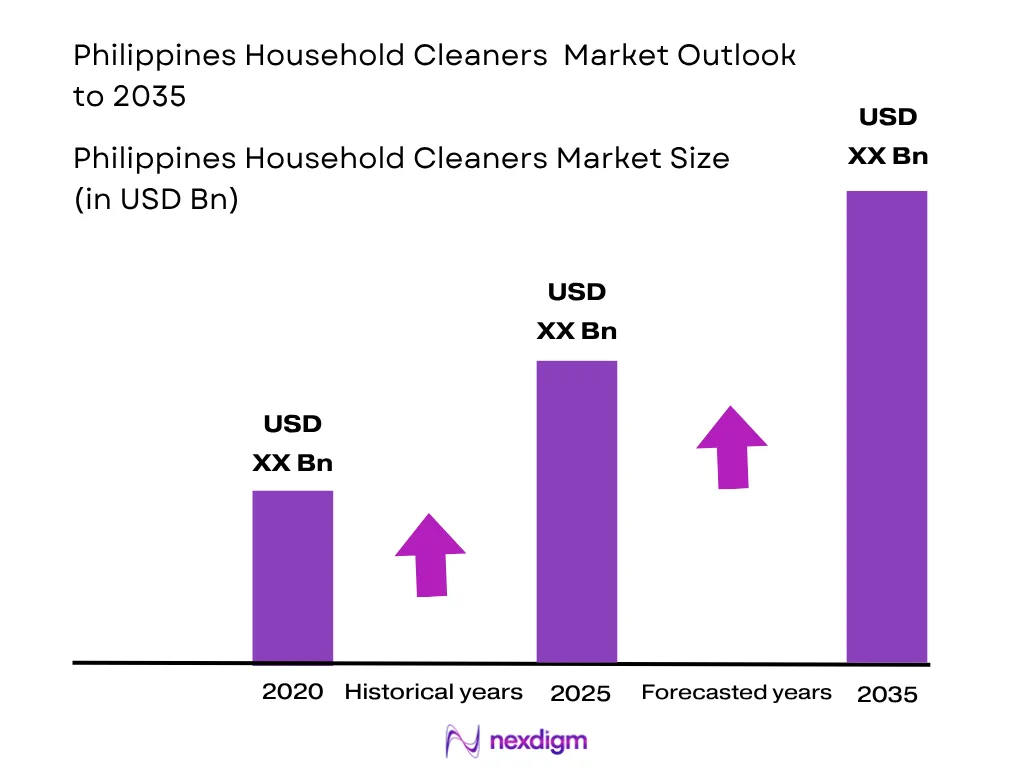
The Philippines Household Cleaners Market is valued at USD ~ billion in 2025, with growth driven by increasing urbanization and a heightened focus on hygiene and cleanliness. Rising disposable income levels have fostered higher spending on home care products, including cleaning agents. Major contributing factors to market growth also include consumer awareness about the importance of sanitation, amplified by health concerns, as well as the expansion of modern retail channels across the country. Brands such as Procter & Gamble and Unilever are playing a significant role in shaping this landscape.
Key cities that dominate the Philippines Household Cleaners Market include Metro Manila, Cebu, and Davao. These urban centers exhibit high consumer demand due to greater disposable income, a more diverse population, and a concentration of retail channels. Metro Manila, in particular, drives a significant portion of sales as it houses a large percentage of the country’s middle to upper-class families. These areas also benefit from superior access to modern retail outlets and online sales platforms, enabling easier access to a wide variety of household cleaning products.
Market Segmentation
By Product Type
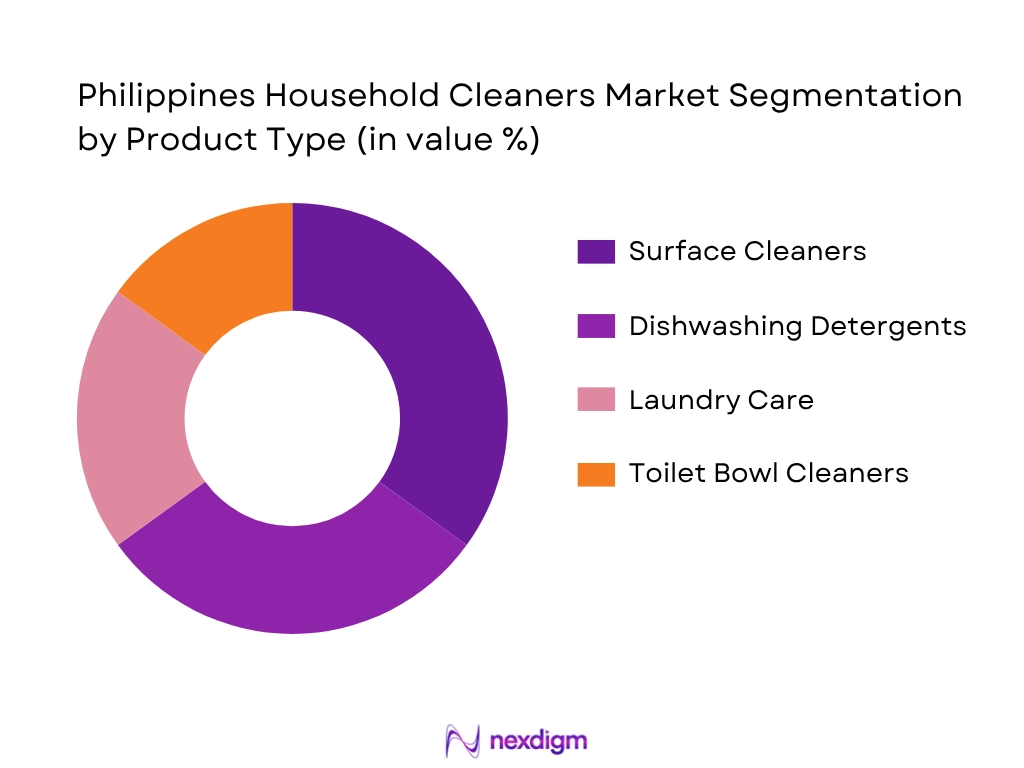
The Philippines Household Cleaners Market is primarily segmented by product type, with major categories including surface cleaners, dishwashing detergents, laundry care, and toilet bowl cleaners. Surface cleaners dominate the market due to their wide application across kitchens, bathrooms, and other home surfaces. This segment is driven by a combination of brand loyalty from dominant players like Procter & Gamble, and consumers’ increasing awareness about sanitation, which encourages regular use of surface disinfectants for health and hygiene purposes.
By Packaging Type
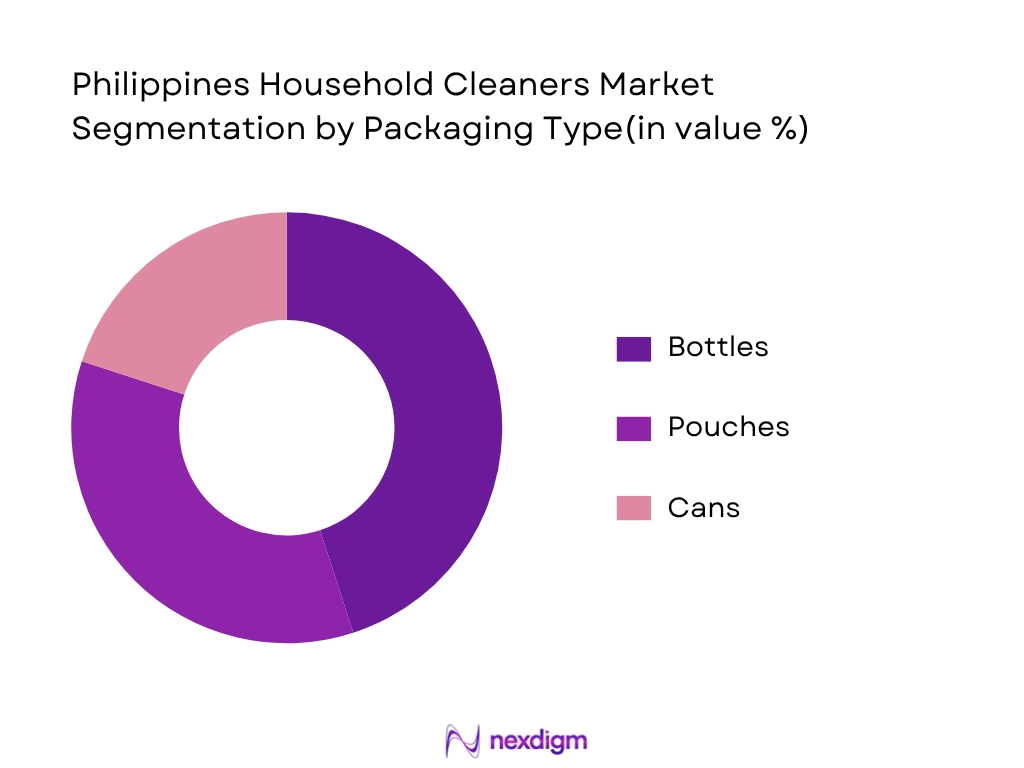
The packaging type segmentation in the Philippines Household Cleaners Market includes bottles, pouches, and cans. Bottles dominate this segment due to their convenience, ease of use, and larger storage capacity, which appeals to both households and commercial establishments. The presence of globally recognized brands like Unilever and SC Johnson in bottle packaging has further propelled the segment’s growth. In addition, the trend towards eco-friendly packaging solutions is also contributing to the sustained dominance of bottles, particularly for liquid products.
Competitive Landscape
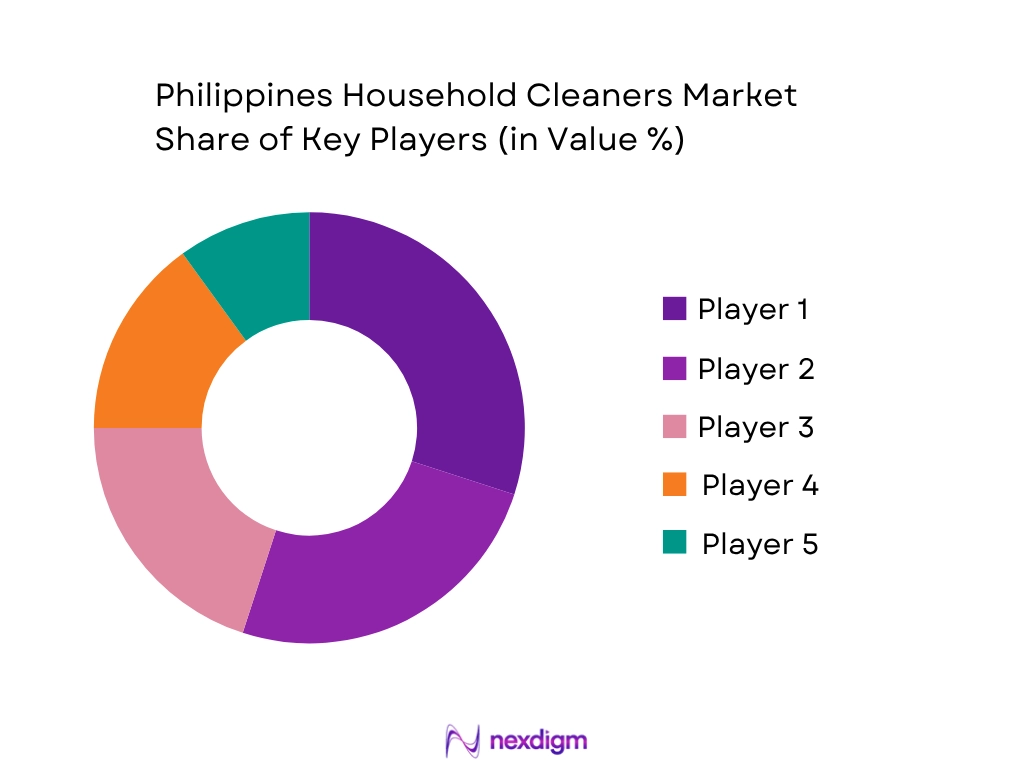
The Philippines Household Cleaners Market is competitive, with several key global players establishing their presence. Companies such as Procter & Gamble, Unilever, and Reckitt Benckiser lead the market with strong brand recognition and extensive distribution channels. These companies have established themselves through diversified product lines that cater to both the mass market and premium segments. Additionally, they have made significant advancements in sustainable packaging and product formulations, addressing the growing consumer demand for environmentally friendly options.
| Company Name | Establishment Year | Headquarters | Product Categories | Market Presence | Sustainability Initiatives | Revenue (USD) |
| Procter & Gamble | 1837 | Cincinnati, USA | ~ | ~ | ~ | ~ |
| Unilever | 1929 | London, UK | ~ | ~ | ~ | ~ |
| Reckitt Benckiser | 1819 | Slough, UK | ~ | ~ | ~ | ~ |
| SC Johnson | 1886 | Racine, USA | ~ | ~ | ~ | ~ |
| Henkel | 1876 | Düsseldorf, Germany | ~ | ~ | ~ | ~ |
Philippines Household Cleaners Market Analysis
Growth Drivers
Increasing Hygiene & Sanitation Awareness
Household hygiene and sanitation awareness in the Philippines has risen markedly, supported by government and public health data. According to preliminary results of the 2024 Annual Poverty Indicators Survey by the Philippine Statistics Authority, 84.7% of families had access to at least a basic sanitation service, up from 84.0% previously, indicating improving hygiene infrastructure and behavior. Access to basic drinking water services among families was reported at 97.5% in 2024, up from 96.3% in 2022, reflecting broader improvements in household sanitation fundamentals. Regular access to improved water sources and sanitation services correlates with increased demand for hygiene products, as households with secure basic utilities are more likely to invest in ancillary hygiene and cleaning solutions to maintain these standards. Urban centers such as the National Capital Region reported 85.5% access to safely managed drinking water services, the highest nationwide, which supports elevated consumer awareness and willingness to purchase household cleaning products that maintain sanitation standards at home. This growing baseline hygiene behavior strengthens the market for surface cleaners, disinfectants, and other hygiene‑related household cleaners.
Urban Household Growth
Urbanization is a key driver of household cleaner demand due to denser living conditions and greater retail access. World Bank data shows that the urban population in the Philippines reached 56,316,242 in 2024, a sustained rise from around 55.4 million in 2023, indicating steady migration towards cities. Urban households typically adopt modern hygiene practices and have greater disposable income for convenience products compared to rural counterparts. As of 2024, approximately 48.61% of the total population lived in urban areas, reflecting a longer trend of urban concentration that supports demand for household cleaning products which are used more frequently in urban households with smaller homes and higher cleaning needs. Urban residents also have greater exposure to formal retail outlets and e‑commerce channels, improving product accessibility. The correlation between urban percentage increases and household cleaners’ adoption is supported by national demographic shifts, where the urban share has climbed significantly over recent years. This urban growth, combined with a population of over 115 million, creates a structural demand base for household cleaning products.
Market Restraints
Price Sensitivity & Substitution to DIY Solutions
Price sensitivity remains a restraint on the Philippine household cleaners market, particularly among lower‑income households. The Philippines’ GDP per capita was reported at USD 3,984.80 in 2024, which underscores income constraints that can limit discretionary spending on branded cleaning products. In environments with tight budgets, many consumers opt for homemade or traditional cleaning mixtures, such as vinegar and baking soda solutions, because of familiarity and cost savings. These DIY practices are often influenced by fluctuations in food and utilities prices, which consume larger portions of household income in lower‑ and middle‑income brackets. World Bank data shows inflation was 3.2% in 2024, still exerting pressure on household purchasing decisions although moderate, and combined with moderate GDP per capita, can amplify price‑sensitive behavior. Furthermore, consumer spending surveys indicate that households with incomes below the national average often prioritize essential foods and utilities over branded hygiene products. Such substitution behavior reduces frequency and volume of purchases in the cleaner segment despite overall hygiene awareness. The pressure on discretionary income can also slow adoption of premium or eco‑friendly cleaning products, which typically command higher price points.
Raw Material Cost Volatility
Household cleaner production relies on key chemical inputs such as surfactants, solvents, and packaging materials like plastics and polymers. Global commodity markets have exhibited price volatility due to supply chain disruptions and fluctuating energy costs, which directly impact raw material prices. For instance, petrochemical feedstock prices—which underpin many cleaning product ingredients have moved widely due to energy market instability. Such volatility can squeeze manufacturer margins or lead to increased retail prices, at a time when consumer sensitivity to cost is high. In the Philippines, import dependency for many chemical inputs amplifies exposure to global price swings, given that local production capacity for these inputs is limited. The logistics cost component, including shipping rates, remains elevated compared to pre‑pandemic norms, further adding to cost pressures on producers. These supply chain and input cost pressures are evidenced in broader manufacturing PMI variances and affect pricing strategies, inventory costs, and profitability in the cleaning products industry. The consequence is either reduced profit margins for manufacturers or price increases for consumers, which can dampen market growth if not mitigated through supply chain efficiencies or strategic sourcing.
Opportunities
Eco‑Certified Products & Natural Cleaners
There is growing consumer interest in eco‑certified and natural cleaning products as sustainability becomes a purchasing consideration. Although direct market sales data for eco‑certified cleaners in the Philippines is limited from public macro sources, related consumer behavior trends are visible in broader environmental service uptake. Participation in waste reduction and sustainable utility practices has been increasing; for example, access to improved sanitation services rose to 84.7% in 2024, supporting a general environment of higher health and sustainability expectations within households. In parallel, a global trend toward green products documented by environmental consumption studies indicates increasing receptivity to products that are perceived as safer and less toxic. Given that Philippine consumers have a strong preference for products that are both effective and safer for home use, especially in homes with children and multi‑generational living arrangements, eco‑certified cleansers present a clear opportunity. Retailers and manufacturers can leverage sustainability credentials, such as biodegradable formulations and reduced chemical load, to differentiate offerings. Demand for plant‑based cleaners has also increased as part of a broader lifestyle trend that aligns with environmental priorities, which is supported by overall improved access to basic utilities and a health‑conscious consumer base focused on long‑term wellness outcomes.
Direct to Consumer Brand Models
The rise of digital commerce and direct‑to‑consumer (D2C) channels presents an opportunity to bypass traditional retail and reach consumers more efficiently. In the Philippines, internet penetration and mobile connectivity have increased access to online shopping platforms. While exact national statistics on e‑commerce adoption in 2024 vary by source, general trends indicate continued expansion of digital retailing, including for household goods. The accelerating move to online marketplaces allows smaller or niche cleaner brands to build customer relationships, offer subscription models, and tailor product assortments based on data‑driven insights, which is particularly valuable in price‑sensitive markets. D2C models can provide cost advantages and direct feedback loops for product innovation. Additionally, digital platforms support targeted marketing strategies, enabling brands to communicate product benefits such as eco certifications directly to engaged consumers. As urban populations continue to grow, digital logistics networks improve delivery coverage even in peri‑urban areas, expanding the reach for D2C brands. The combination of rising online retail adoption and efficient last‑mile delivery infrastructure opens an opportunity for emerging cleaner brands to scale quickly without the heavy investment required for widespread physical retail presence.
Future Outlook
Over the next decade, the Philippines Household Cleaners Market is expected to experience steady growth, with factors such as rising disposable income, an expanding middle class, and increasing hygiene awareness driving market demand. The growing influence of e-commerce, coupled with a shift toward more sustainable and eco-friendly products, is expected to create new opportunities in the market. As urbanization continues, especially in Metro Manila and other major cities, the demand for household cleaning products will expand, further driving market dynamics.
Major Players
- Procter & Gamble
- Unilever
- Reckitt Benckiser
- SC Johnson
- Henkel
- Colgate-Palmolive
- Kao Corporation
- Amway
- Lixil Corporation
- Johnson Diversey
- Kimberly-Clark Corporation
- Godrej Consumer Products Ltd.
- Hennen Enterprises
- Earth Care
- Fabcon Philippines
Key Target Audience
- Investments and Venture Capitalist Firms
- Government and Regulatory Bodies (Department of Trade and Industry [DTI], Bureau of Customs, Department of Environment and Natural Resources [DENR])
- Major Retail Chains (Supermarket Chains, Online Retailers)
- Importers and Distributors of Household Cleaners
- Manufacturers of Household Products
- Packaging Companies
- Large-Scale Commercial Consumers (Hotels, Hospitals, Cleaning Agencies)
- Sustainability Advocacy Groups
Research Methodology
Step 1: Identification of Key Variables
The first phase includes identifying all major stakeholders and data points that influence the Philippines Household Cleaners Market, such as consumer preferences, price sensitivity, and brand dominance. Secondary research is complemented by proprietary data from industry sources to develop a comprehensive understanding of market dynamics.
Step 2: Market Analysis and Construction
Historical data is analyzed to identify key growth trends, penetration rates, and distribution models within the market. This includes looking at retail channels, consumer buying patterns, and average pricing for cleaning products.
Step 3: Hypothesis Validation and Expert Consultation
We validate the hypotheses formed through consultations with industry experts and stakeholders. This phase includes insights from distributors, retailers, and key manufacturers to verify assumptions and adjust the projections accordingly.
Step 4: Research Synthesis and Final Output
The final phase synthesizes data from experts, consumer surveys, and historical research to compile a report that accurately forecasts market trends. This includes a deep dive into the competitive landscape and the influence of global players on local markets.

- Executive Summary
- Research Methodology (Market Definitions & Assumptions, Market Sizing Logic by Value & Volume, SKU Analytics Approach, Consolidated Primary + Secondary Research Approach, Qualitative Interviews with Category Managers / Distributors, Consumer Purchase Journey Mapping, Forecasting Methodology, Limitation and Confidence Intervals)

- Market Definition and Scope
- Market Genesis and Continuum of Adoption
- Regulatory, Safety & Compliance Framework
- Household Cleaners Value Chain and Supply Chain Mechanics
- Macro Drivers
- Market Consumption Patterns and Purchase Dynamics
- Import‑Export Landscape (Trade Balance for Cleaning Products, Export Flows)

- Growth Drivers (Increasing Hygiene & Sanitation Awareness, Urban Household Growth, Time‑Saving & Multi‑Function Products, Digital Shopping Penetration)
- Market Restraints(Price Sensitivity & Substitution to DIY Solutions, Raw Material Cost Volatility, Regulatory Constraints on Chemical Use)
- Emerging Opportunities (Eco‑Certified Products & Natural Cleaners, Direct‑to‑Consumer Brand Models, Private Label Penetration)
- Market Trends(Sustainability & Biodegradable Packaging, Demand for Antimicrobial and Health‑Focused Cleaners, Omni‑channel Retailing)
- Regulatory and Sustainability Landscape (Disinfection guidance, active-ingredient logic, household chemical safety, Green Label relevance, packaging and waste implications)
- Value Chain and Stakeholder Ecosystem (Principals, contract manufacturers, importers, distributors, key accounts, e-grocery, marketplaces, end households)
- Porter’s Five Forces (Supplier power, retailer leverage, substitute threat, entry barriers, rivalry intensity)
- Competition Ecosystem (Global majors, local eco brands, price challengers, private label, specialist challengers)

- By Value (2020-2025)
- By Volume (2020-2025)
- By Average Selling Price (2020-2025)
- By Retail Channel Contribution (2020-2025)

- By Product Category (In Value%)
Laundry Cleaners (Powder, Liquid, Pods)
Surface Cleaners (Kitchen, Bathroom, Multi‑Surface)
Dishwashing Cleaners (Manual & Machine)
Toilet Bowl & Sanitation Cleaners
Specialty / Niche Cleaners (Glass, Wood, Upholstery) - By Formulation Type (In Value%)
Chemical / Conventional
Eco‑friendly / Biodegradable
Natural / Plant‑Derived
Antimicrobial / Disinfectant - By Distribution Channel (In Value%)
Supermarkets & Hypermarkets (Coverage Density)
Traditional Trade (Sari‑Sari Stores)
E‑commerce / Online Marketplaces
Modern Retail (Specialty Home Care Stores)
Institutional & Bulk Channels - By Region (In Value%)
Luzon
Visayas
Mindanao
NCR vs Key Urban Centers - By Housing Type (In Value%)
HDB 1–3 Room Flats
HDB 4–5 Room Flats
Executive and Multi-Generation Flats
Private Condominiums and Apartments
Landed Homes - By Price Tier / Consumer Segment (In Value%)
Mass/Value Tier
Mid‑Tier
Premium
Eco-Premium and Specialist

- Share Analysis by Key Players(In Value/Volume, By Product Type, Distribution Channel)
- Cross‑Comparison Parameters (Market Relevant KPIs)(Company Overview, Brand Portfolio Depth, Retail Coverage, SKU Counts, Price Tier Strategy, Distribution Footprint, Eco / Green Credentials, Digital Sales Penetration, Advertising & Trade Spend)
- SWOT Analysis of Major Players (Brand trust, category depth, innovation speed, regulatory exposure, private-label vulnerability, sustainability credibility)
- Pricing Matrix Across Competitive SKUs(Trigger sprays, disinfecting wipes, toilet bowl cleaners, glass cleaners, dish liquids, dishwasher pods, floor cleaners, refill packs)
- Product Claim Benchmarking (Disinfects, sanitizes, kills 99.9%, grease-cutting, streak-free, plant-based, fragrance-free, biodegradable, septic-safe, pet-safe positioning)
- Retail Shelf and Digital Shelf Benchmarking (Shelf facings, pack sizes, ratings, review count, search rank, subscription availability, bundle strategy)
- Detailed Profiles of 15 Market Players:
The Procter & Gamble Company
Unilever PLC
Colgate‑Palmolive Company
Henkel AG & Co. KGaA
Reckitt Benckiser Group plc
SC Johnson & Son, Inc.
The Clorox Company
Kao Corporation
Seventh Generation, Inc.
Ecover
Method Products PBC
Megachem Industries
Wipro Enterprises (Household Care)
Fabcon Philippines
EarthHero Cleaners

- Consumer Profile by Household Structure (Singles, couples, families with children, multi-generational households, helper-supported households)
- Cleaning Mission Analysis (Laundry, dish care, kitchen degreasing, bathroom sanitisation, toilet care, floor care)
- Purchase Decision Hierarchy (Efficacy, germ-kill assurance, fragrance, safety, eco credentials, value-for-money)
- Purchase Frequency, Basket Size and Stock-Up Behaviour (Planned stock-up, top-up buying, emergency replenishment, promo pull-forward)
- Channel Preference and Conversion Triggers (Modern trade, e-grocery, marketplaces, pharmacy/beauty, direct selling)
- Promotion Mechanics and Loyalty Drivers (Hi-low discounting, multibuy, voucher stacking, bundle conversion, rating/review influence)

- By Value (2026-2035)
- By Volume (2026-2035)
- By Average Selling Price (2026-2035)
- By Per Household Spend (2026-2035)


 Request a Sample
 Ask for Customization
 Get a Quote
 Enquire Now