

 Download PDF
Market Overview
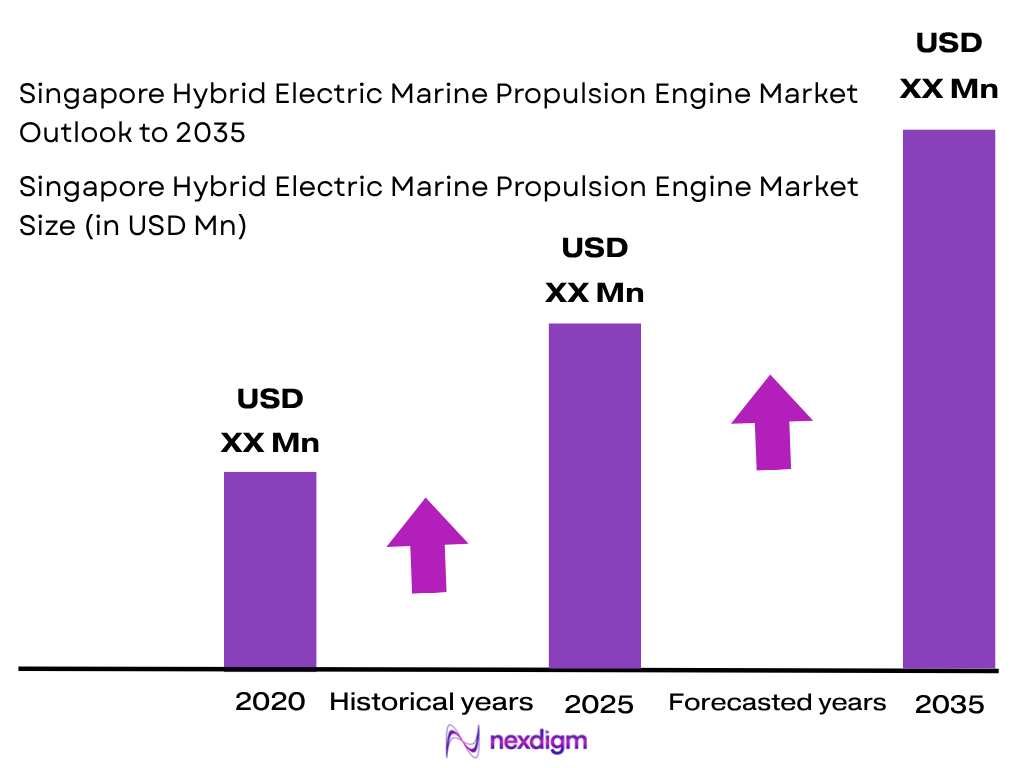
The Philippines Hybrid Electric Marine Propulsion Engine market is valued at ~USD 42.8 million, based on a five-year historical analysis, with market expansion supported by increasing marine fuel costs, vessel modernization requirements, and growing adoption of low-emission propulsion technologies. The market is driven by rising demand for hybrid systems across passenger ferries, tourism vessels, fishing boats, and government marine fleets. The transition from conventional diesel propulsion toward hybrid-electric solutions is further supported by maritime decarbonization initiatives and improvements in battery energy storage technologies.
The Philippines Hybrid Electric Marine Propulsion Engine market is concentrated in major maritime hubs including Manila, Cebu, Batangas, Subic, and Davao due to their high vessel activity, port infrastructure, shipbuilding capabilities, and commercial marine operations. Manila dominates due to its extensive passenger ferry networks, government maritime activities, and access to marine equipment suppliers. Cebu and Batangas demonstrate strong adoption potential because of their tourism vessel operations, inter-island transportation demand, and established shipyard ecosystems supporting marine propulsion upgrades.
Market Segmentation
By Vessel Type
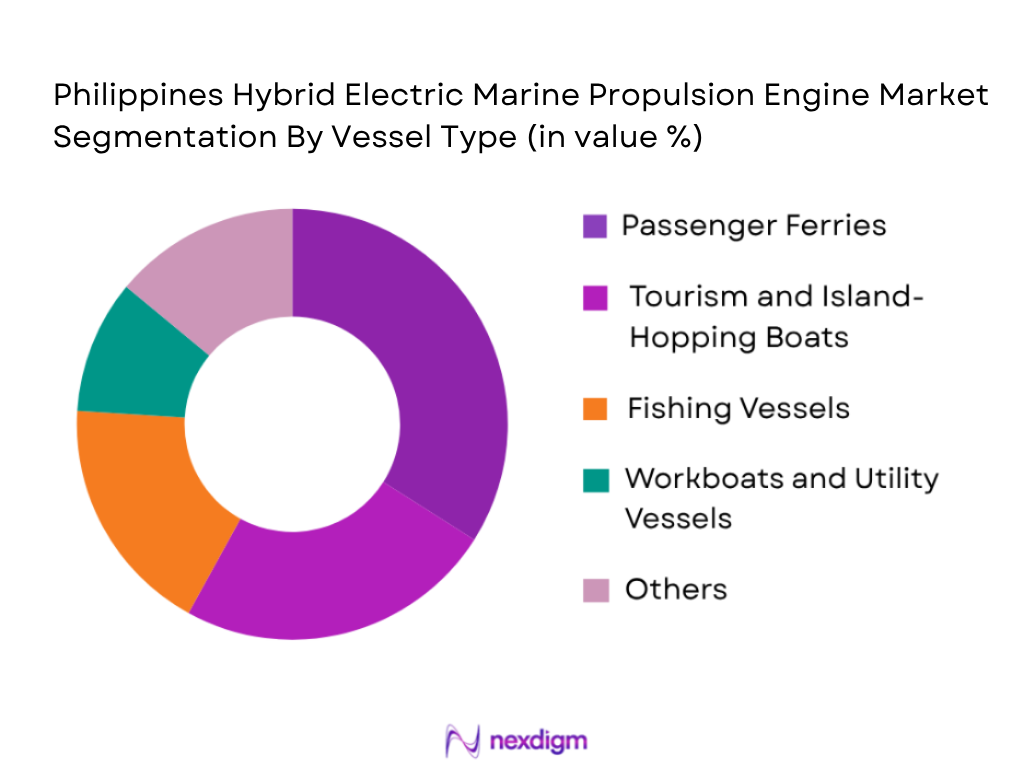
The Philippines Hybrid Electric Marine Propulsion Engine market is segmented into passenger ferries, tourism and island-hopping boats, fishing vessels, cargo and utility vessels, workboats, government vessels, and recreational boats. Passenger ferries account for the dominant share of the Philippines Hybrid Electric Marine Propulsion Engine market due to the country’s extensive island connectivity requirements and high dependence on maritime passenger transportation. Ferry operators are increasingly evaluating hybrid propulsion systems to reduce fuel consumption, improve operational efficiency, and comply with evolving environmental requirements. The large number of aging vessels operating on inter-island routes creates significant retrofit opportunities for hybrid-electric conversion. Tourism vessels also represent an important adoption segment because operators are increasingly seeking quieter and cleaner propulsion solutions to enhance passenger experience and support sustainable tourism initiatives.
By Propulsion Configuration
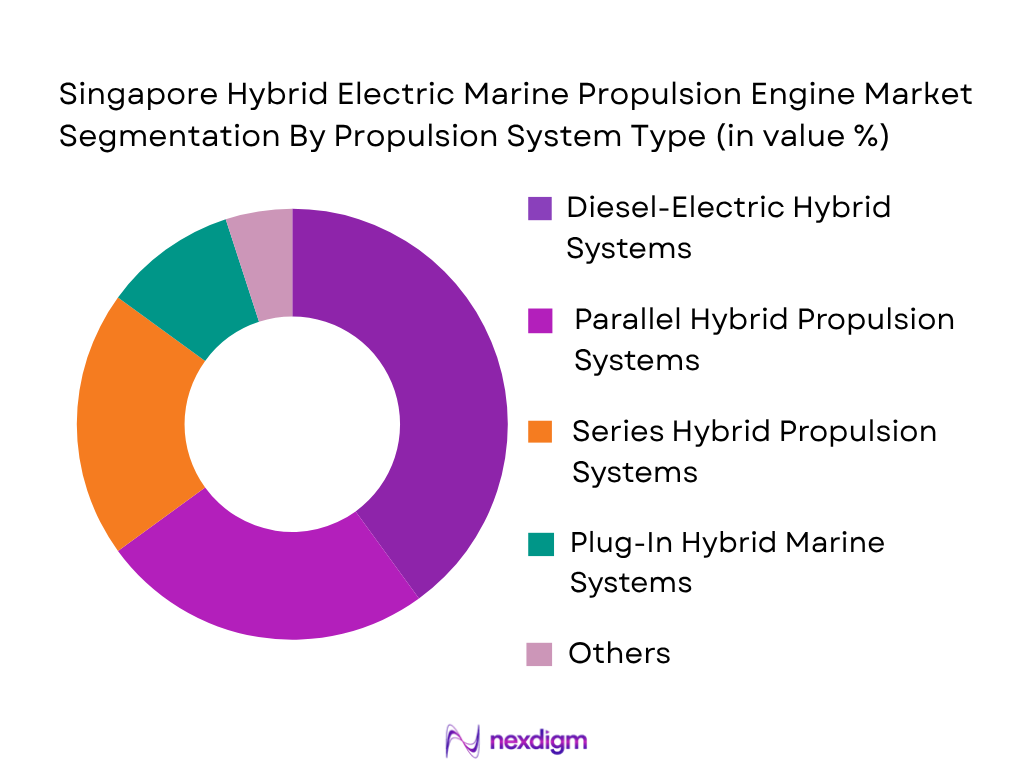
The Philippines Hybrid Electric Marine Propulsion Engine market is segmented into parallel hybrid propulsion systems, serial hybrid propulsion systems, plug-in hybrid systems, diesel-electric hybrid systems, and series-parallel hybrid configurations. Parallel hybrid propulsion systems hold a leading position due to their suitability for commercial vessels requiring both conventional engine reliability and electric assistance. These systems enable vessel operators to optimize fuel consumption during low-speed operations, docking, and maneuvering activities while maintaining diesel engine availability for longer journeys. The technology is preferred among operators transitioning gradually toward electrification because it requires comparatively lower operational changes. Serial hybrid systems are gaining adoption in vessels with variable operating cycles, particularly tourism boats and small commercial vessels, where electric propulsion efficiency provides greater benefits.
Competitive Landscape
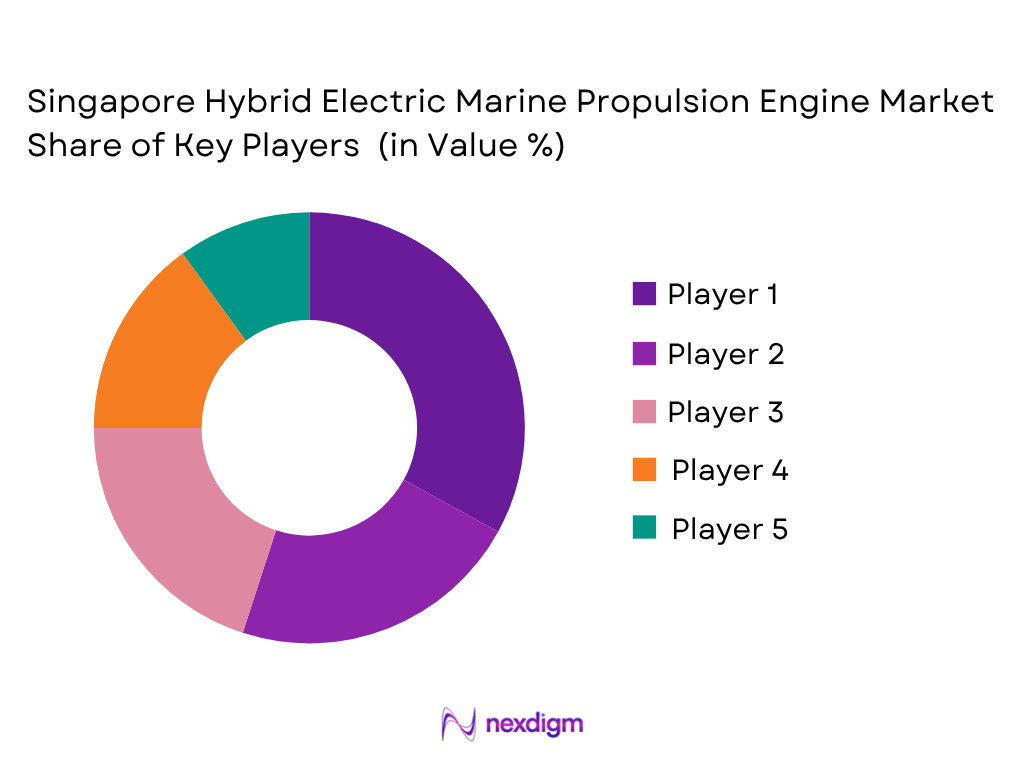
The Philippines Hybrid Electric Marine Propulsion Engine market is characterized by the presence of global marine propulsion manufacturers, battery technology providers, and marine electrification specialists. Leading companies compete through propulsion efficiency, battery integration capability, vessel compatibility, service network strength, and hybrid system customization.
| Company | Establishment Year | Headquarters | Hybrid Marine Propulsion Solutions | Battery & Energy Storage Capability | Vessel Application Focus | Marine Electrification Expertise | Philippines Market Relevance | Key Competitive Strength |
| ABB | 1988 | Zurich, Switzerland | ~ | ~ | ~ | ~ | ~ | ~ |
| Wärtsilä | 1834 | Helsinki, Finland | ~ | ~ | ~ | ~ | ~ | ~ |
| Volvo Penta | 1907 | Gothenburg, Sweden | ~ | ~ | ~ | ~ | ~ | ~ |
| Siemens Energy | 1847 | Munich, Germany | ~ | ~ | ~ | ~ | ~ | ~ |
| Yanmar Holdings | 1912 | Osaka, Japan | ~ | ~ | ~ | ~ | ~ | ~ |
| MAN Energy Solutions | 1758 | Augsburg, Germany | ~ | ~ | ~ | ~ | ~ | ~ |
Philippines Hybrid Electric Marine Propulsion Engine Market Analysis
Growth Drivers
Government Maritime Modernization Programs
The Philippines Hybrid Electric Marine Propulsion Engine market is supported by ongoing maritime modernization initiatives aimed at improving vessel efficiency, safety, and connectivity across the archipelago. The country operates one of the world’s largest domestic maritime transportation networks, with the Philippine Statistics Authority reporting more than 7,600 islands requiring extensive inter-island mobility infrastructure. The Department of Transportation’s Maritime Industry Authority (MARINA) has continued implementing fleet modernization and ship upgrading initiatives focused on improving vessel standards and operational efficiency. The Philippine economy recorded GDP growth of 5.6 trillion Philippine pesos in nominal terms, according to the Philippine Statistics Authority, reflecting increased investment capacity across transportation infrastructure. The World Bank reported that the Philippines had a population exceeding 115 million, creating sustained demand for passenger mobility and logistics connectivity. These economic and demographic conditions are encouraging ferry operators, shipbuilders, and government agencies to evaluate hybrid-electric propulsion technologies that can improve fuel efficiency and reduce emissions from marine transportation. The modernization of aging domestic vessels, particularly passenger ferries and utility boats, creates demand for hybrid propulsion retrofits and advanced marine power management systems.
Increasing Fuel Cost Pressure on Vessel Operators
Fuel expenditure remains a major operational concern for Philippine marine operators because domestic passenger vessels, fishing boats, and commercial craft rely heavily on conventional diesel propulsion. The Energy Information Administration reported continued volatility in global petroleum markets, with crude oil prices remaining above USD 70 per barrel during periods of 2024, affecting transportation fuel expenses globally. According to the Department of Energy Philippines, petroleum products continue to represent a significant component of the country’s energy consumption structure, with transport being one of the largest petroleum-consuming sectors. The International Energy Agency reported that global oil demand remained above 100 million barrels per day, maintaining pressure on fuel-dependent industries. The Philippines’ maritime geography increases fuel sensitivity because many routes require continuous vessel operations across remote islands. Hybrid electric marine propulsion systems provide operators with the ability to optimize engine utilization through electric assistance during low-speed operations, docking, and maneuvering. The combination of rising operational efficiency requirements, fuel consumption reduction objectives, and increasing environmental compliance pressure is encouraging commercial vessel owners to explore hybrid propulsion adoption.
Market Challenges
High Initial Hybrid System Investment
The Philippines Hybrid Electric Marine Propulsion Engine market faces adoption barriers due to the higher technical complexity and investment requirements associated with integrating electric motors, battery systems, power electronics, and energy management platforms into marine vessels. Many domestic vessel operators, particularly small ferry and fishing boat owners, operate under limited capital availability. The World Bank reported that small and medium enterprises remain an important contributor to employment in the Philippines, accounting for a substantial portion of registered businesses, indicating that many marine operators operate within financially constrained environments. The Bangko Sentral ng Pilipinas reported continued efforts to expand access to financing, but credit accessibility remains a challenge for capital-intensive technology upgrades. Hybrid propulsion adoption requires vessel owners to evaluate long-term operational benefits against upfront modernization requirements. Additionally, many existing Philippine vessels were designed around conventional diesel propulsion systems, requiring engineering modifications for hybrid integration. The absence of widespread local hybrid marine manufacturing increases dependence on imported components such as batteries, electric motors, and control systems, further increasing technology adoption complexity. These factors can delay investment decisions among smaller operators despite increasing interest in sustainable maritime solutions.
Limited Marine Charging Infrastructure
Limited availability of dedicated marine charging infrastructure remains a significant challenge for hybrid electric propulsion adoption in the Philippines due to the country’s geographically distributed island network. The Department of Energy Philippines reported continued expansion of renewable energy capacity, but electricity accessibility and infrastructure reliability remain uneven across remote island regions. The World Bank highlighted that approximately 95% of the Philippine population had access to electricity, while geographically isolated areas continue requiring infrastructure improvement. Hybrid marine vessels require reliable charging points, suitable grid connections, and maintenance facilities to achieve maximum operational benefits. Many smaller ports and island terminals currently lack specialized charging infrastructure designed for marine batteries, creating operational limitations for fully electric and plug-in hybrid vessels. The Philippine Ports Authority manages numerous commercial ports nationwide, but infrastructure development remains focused primarily on transportation capacity rather than widespread marine electrification facilities. The absence of standardized charging networks, limited technical support availability, and uneven energy infrastructure development create challenges for operators considering large-scale hybrid propulsion deployment.
Market Opportunities
Electrification of Passenger Ferry Networks
The electrification of passenger ferry networks represents a major opportunity for the Philippines Hybrid Electric Marine Propulsion Engine market due to the country’s dependence on maritime transportation for passenger movement. The Philippine Statistics Authority reported a population exceeding 115 million, creating continuous demand for affordable and reliable inter-island transportation. The Department of Transportation has continued developing maritime connectivity programs to improve transportation access across islands, increasing the requirement for efficient vessel operations. Passenger ferries represent a suitable application for hybrid propulsion because many routes involve repetitive operating cycles, frequent docking, and predictable travel patterns where electric assistance can improve efficiency. The Philippine Ports Authority manages hundreds of ports supporting domestic passenger and cargo movement, creating potential locations for future marine electrification infrastructure. Growing emphasis on reducing transportation emissions is also encouraging operators to consider cleaner propulsion alternatives. Hybrid propulsion solutions can support gradual fleet transition by allowing existing vessels to incorporate electric technologies without requiring complete replacement of diesel systems. The combination of high maritime dependence, extensive ferry operations, and modernization requirements creates significant opportunities for hybrid propulsion suppliers and marine technology providers.
Hybrid Retrofit Market Expansion
The hybrid retrofit market presents a significant opportunity as many Philippine vessels currently operate with conventional propulsion systems requiring efficiency improvements and modernization. The Maritime Industry Authority has continued implementing vessel safety improvement and modernization programs aimed at upgrading domestic shipping standards. The Philippines has one of the largest domestic shipping fleets in Southeast Asia, creating a broad base of existing vessels that can potentially be upgraded with hybrid propulsion technology. The Asian Development Bank has supported transportation infrastructure development in the Philippines, highlighting the importance of improving sustainable mobility systems. Retrofit solutions allow operators to extend vessel operating life while integrating electric motors, battery storage, and digital energy management technologies. This approach is particularly relevant for passenger ferries, tourism boats, fishing vessels, and government service vessels that may not immediately transition to fully electric platforms. The increasing availability of marine battery technologies and improvements in power management systems are enabling more practical retrofit applications. As operators focus on reducing fuel dependency and improving environmental performance, hybrid retrofit solutions are expected to become an important pathway for marine electrification adoption in the Philippines.
Future Outlook
Over the next decade, the Philippines Hybrid Electric Marine Propulsion Engine market is expected to demonstrate strong growth driven by increasing maritime sustainability initiatives, rising fuel prices, technological improvements in marine batteries, and expanding demand for efficient vessel operations. The adoption of hybrid propulsion systems is expected to accelerate across passenger transportation, tourism vessels, and government fleets as operators focus on reducing operational costs and environmental impact. Future market development will be influenced by charging infrastructure expansion, availability of financing solutions, vessel retrofit programs, and partnerships between shipyards, propulsion manufacturers, and government agencies.
Major Players
- ABB
- Volvo Penta
- Wärtsilä
- Siemens Energy
- Yanmar Holdings
- MAN Energy Solutions
- Cummins Inc.
- Caterpillar Marine
- Corvus Energy
- Torqeedo
- Danfoss
- Kongsberg Maritime
- CATL
- Echandia
- Suzuki Motor Corporation
Key Target Audience
- Shipbuilding and marine engineering companies
- Passenger ferry operators and maritime transportation companies
- Tourism vessel operators and island-hopping businesses
- Fishing fleet owners and aquaculture operators
- Marine propulsion system manufacturers and suppliers
- Investments and venture capitalist firms
- Government and regulatory bodies (Philippine Maritime Industry Authority, Department of Transportation Philippines, Philippine Ports Authority, Department of Energy Philippines)
- Port operators and marine infrastructure developers
Research Methodology
Step 1: Identification of Key Variables
The initial phase involves developing an ecosystem map covering vessel operators, propulsion manufacturers, shipyards, battery suppliers, government agencies, and maritime infrastructure providers within the Philippines Hybrid Electric Marine Propulsion Engine market. Extensive secondary research is conducted using industry databases, maritime publications, regulatory documents, and proprietary sources to identify critical market variables affecting adoption.
Step 2: Market Analysis and Construction
This phase involves compiling historical market information related to hybrid propulsion installations, vessel fleet modernization, technology adoption, and marine electrification investments. Market sizing is developed through analysis of vessel deployment patterns, propulsion system pricing, installation volumes, and demand across commercial, tourism, fishing, and government marine segments.
Step 3: Hypothesis Validation and Expert Consultation
Market assumptions are validated through discussions with marine industry stakeholders including vessel operators, shipbuilders, propulsion suppliers, and technology providers. Computer-assisted interviews and expert consultations provide operational insights related to purchasing decisions, technology preferences, investment barriers, and future adoption trends.
Step 4: Research Synthesis and Final Output
The final stage involves integrating primary and secondary findings to develop a comprehensive market assessment. Direct interactions with industry participants are used to validate vessel applications, competitive positioning, pricing structures, and technology trends, ensuring accuracy and reliability of market conclusions.

- Executive Summary
- Research Methodology (Market Definition and Scope, Hybrid Electric Marine Propulsion Engine Classification, Market Boundary Conditions, Research Framework, Market Sizing Methodology, Top-Down Market Assessment, Bottom-Up Market Assessment, Demand-Side Market Evaluation, Supply-Side Market Evaluation, Primary Interviews with Shipbuilders, Boat Operators, Marine Engine Suppliers and Port Authorities, Secondary Research Framework, Data Validation and Triangulation, Forecasting Model, Market Assumptions, Research Limitations)

- Definition and Scope
- Market Evolution and Development Timeline of Hybrid Electric
- Marine Propulsion Systems in the Philippines
- Marine Electrification Ecosystem Overview
- Philippines Maritime Industry Landscape
- Hybrid Electric Marine Propulsion Engine Technology Overview
- Stakeholder Ecosystem Analysis

- Market Growth Drivers (Government Maritime Modernization Programs, Increasing Fuel Cost Pressure on Vessel Operators, Demand for Low-Emission Marine Transportation, Growth of Island Tourism Activities, Rising Adoption of Renewable Energy Integration, Expansion of Electric Mobility Ecosystem, International Maritime Decarbonization Commitments)
- Market Challenges (High Initial Hybrid System Investment, Limited Marine Charging Infrastructure, Battery Replacement Cost, Technical Skill Gap for Hybrid Marine Maintenance, Limited Local Manufacturing Capability, Import Dependence for Advanced Components)
- Market Opportunities (Electrification of Passenger Ferry Networks, Hybrid Retrofit Market Expansion, Sustainable Tourism Vessel Development, Green Port Initiatives, Battery Technology Advancement, Renewable Energy-Powered Marine Charging Infrastructure)
- Market Trends (Transition Toward Zero-Emission Small Vessels, Increasing Marine Battery Adoption, Smart Energy Management Systems, Digital Vessel Monitoring Platforms, Hybrid Propulsion Integration in Tourism Boats, Modular Marine Electrification Solutions)
- Government Regulations and Industry Standards (Philippine Maritime Industry Authority Regulations, Green Shipping Policies, Environmental Compliance Requirements, Vessel Emission Standards, Maritime Safety Regulations, Battery Transportation Regulations, Renewable Energy Policies)
- SWOT Analysis
- Porter’s Five Forces Analysis
- PESTLE Analysis

- By Market Value (2020-2025)
- By Installed Propulsion Capacity (2020-2025)
- By Engine Unit Deployment (2020-2025)
- By Vessel Conversion and New Installation Demand (2020-2025)
- By Average System Cost (2020-2025)

- By Vessel Type (In Value %)
Passenger Ferries
Fast Craft and High-Speed Passenger Vessels
Tourism and Island-Hopping Boats
Fishing Vessels and Small Commercial Boats
Cargo and Utility Vessels
Workboats and Service Vessels
Government and Patrol Vessels
Recreational Boats and Yachts - By Power Rating (In Value %)
Below 50 kW Hybrid Marine Propulsion Systems
50 kW–250 kW Hybrid Marine Propulsion Systems
250 kW–500 kW Hybrid Marine Propulsion Systems
Above 500 kW Hybrid Marine Propulsion Systems - By Battery Technology (In Value %)
Lithium-Ion Battery Systems
Lithium Iron Phosphate (LFP) Battery Systems
Nickel-Based Marine Battery Systems
Solid-State Battery Technology
Advanced Marine Energy Storage Systems - By Application (In Value %)
Commercial Marine Transportation
Tourism and Leisure Marine Operations
Fishing and Aquaculture Operations
Government and Defense Marine Applications
Private Recreational Marine Applications - By Installation Type (In Value %)
New Vessel Construction
Vessel Retrofit and Repowering
Fleet Modernization Programs - By Distribution Channel (In Value %)
Direct OEM Sales
Marine System Integrators
Shipyards and Boat Builders
Authorized Marine Equipment Dealers
Aftermarket Marine Service Providers

- Market Share of Major Players (By Revenue, Installed Capacity, Vessel Segment, Propulsion Configuration, Technology Type)
- Cross Comparison Parameters (Hybrid Propulsion System Portfolio, Marine Vessel Compatibility Range, Installed Hybrid Propulsion Capacity, Battery Technology Integration Capability, Energy Management System Capability, Marine Retrofit Expertise, Regional Service Network Strength, Hybrid System Efficiency Performance)
- Pricing Benchmark Analysis (By System Capacity, Vessel Type, Hybrid Configuration, Battery Integration Level)
- SWOT Analysis of Major Players
- Detailed Profiles of Major Companies
ABB
Siemens Energy
Volvo Penta
Yanmar Holdings
MAN Energy Solutions
Cummins Inc.
CATL
Corvus Energy
Torqeedo
Danfoss
Echandia
Kongsberg Maritime
Wärtsilä
Suzuki Motor Corporation
Honda Motor Co.

- Vessel Operator Adoption Assessment
- Commercial Vessel Economics Analysis
- Passenger Ferry Operator Analysis
- Fishing Vessel Operator Analysis
- Tourism Boat Operator Analysis
- Purchasing Decision Analysis
- Adoption Barrier Analysis

- By Market Value (2026-2035)
- By Installed Propulsion Capacity (2026-2035)
- By Engine Unit Deployment (2026-2035)
- By Vessel Conversion and New Installation Demand (2026-2035)
- By Average System Cost (2026-2035)


 Request a Sample
 Ask for Customization
 Get a Quote
 Enquire Now