
 Download PDF
Market Overview
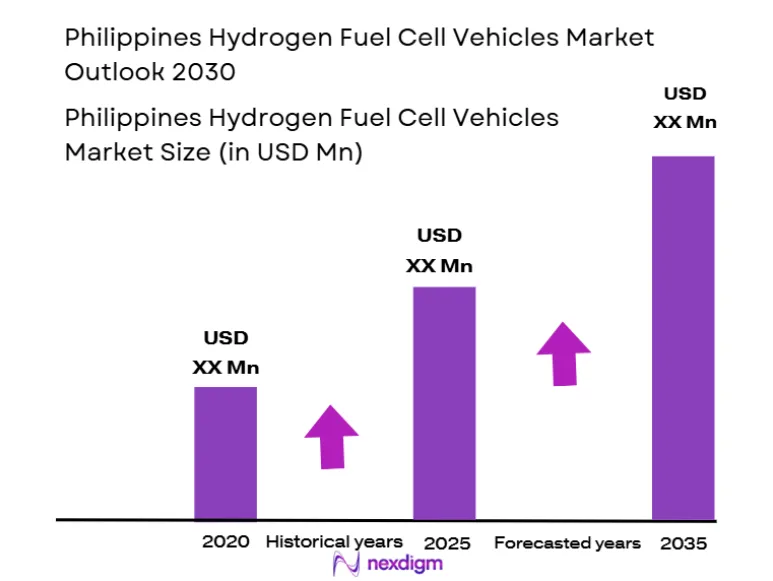
The Philippines hydrogen fuel cell vehicles market is anticipated to see significant growth, driven by rising environmental concerns and a shift towards sustainable mobility solutions. The market is expected to be valued at approximately USD ~ million in 2024. The adoption of hydrogen fuel cell technology is bolstered by government incentives, initiatives to reduce carbon emissions, and increasing investments in infrastructure. The market is primarily driven by the automotive and transportation sectors, with additional support from the energy sector. The demand for cleaner technologies, coupled with advancements in fuel cell efficiency and affordability, further stimulates market growth.
The Philippines remains a strong contender in the Southeast Asian region due to its strategic location and government support for green transportation. Major cities, including Manila and Cebu, are leading the transition towards hydrogen fuel cell vehicles, owing to high urbanization rates and increasing pollution concerns. These cities are focusing on improving the hydrogen refueling infrastructure, which is expected to be pivotal for the wider adoption of hydrogen fuel cell vehicles. Urban centers’ emphasis on sustainable transportation solutions and cleaner air is contributing to the development and dominance of the market in these regions.
Market Segmentation
By Product Type
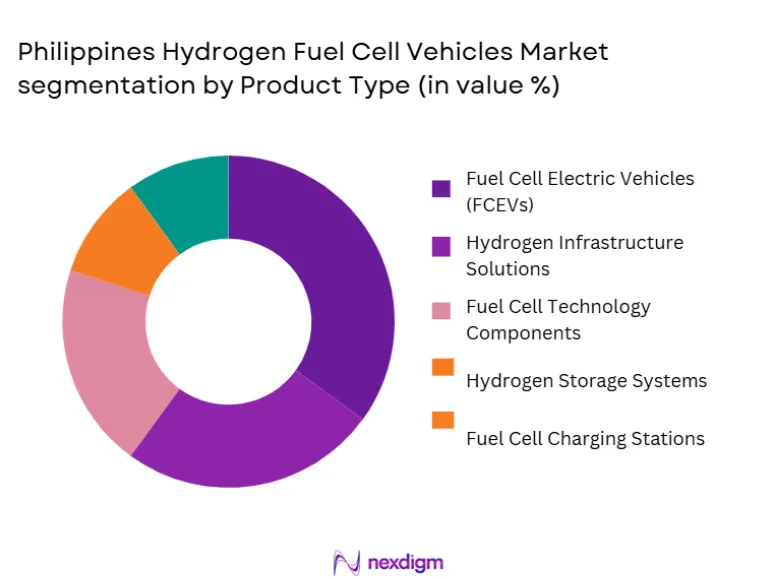
The Philippines hydrogen fuel cell vehicles market is segmented by product type into fuel cell electric vehicles (FCEVs), hydrogen infrastructure solutions, fuel cell technology components, hydrogen storage systems, and fuel cell charging stations. Recently, fuel cell electric vehicles have dominated the market due to factors such as increasing consumer demand for zero-emission vehicles, favorable government policies, and advancements in hydrogen fuel cell technology. The adoption of fuel cell electric vehicles is further propelled by their potential to offer long-range travel options and shorter refueling times compared to traditional battery electric vehicles.
By Platform Type
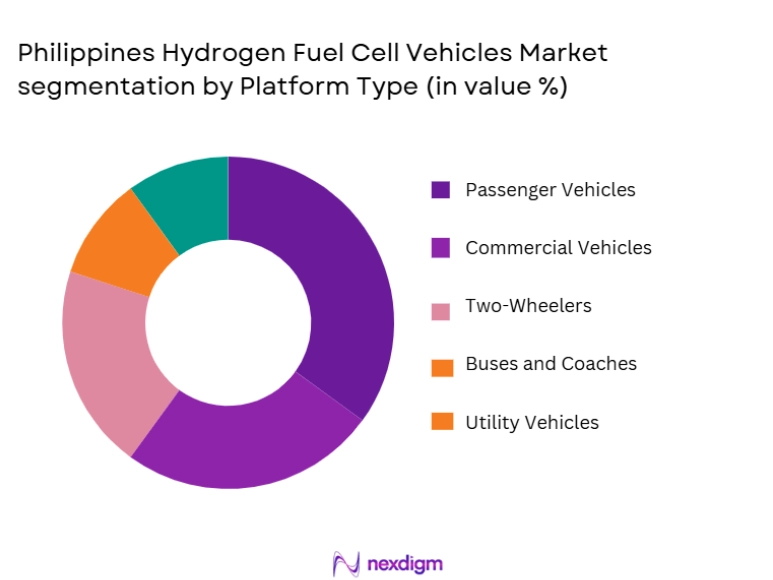
The market is segmented by platform type into passenger vehicles, commercial vehicles, two-wheelers, buses and coaches, and utility vehicles. Among these, passenger vehicles have a dominant market share, driven by increasing consumer interest in sustainable transport options. As urban populations grow and environmental concerns intensify, consumers are prioritizing clean and efficient transportation solutions, which positions fuel cell passenger vehicles as a top choice. Furthermore, advancements in fuel cell technology, coupled with government incentives, are contributing to the rising popularity of hydrogen-powered passenger vehicles in the Philippines.
Competitive Landscape
The competitive landscape in the Philippines hydrogen fuel cell vehicles market is moderately consolidated, with a few key players dominating the sector. These companies are continuously focusing on innovation, fuel cell technology development, and the expansion of hydrogen refueling infrastructure. The influence of global automotive manufacturers, alongside local companies, plays a significant role in shaping the market dynamics. The market is characterized by strategic collaborations between the automotive and energy sectors, further enhancing the market’s growth.
| Company Name | Establishment Year | Headquarters | Technology Focus | Market Reach | Key Products | Revenue | Hydrogen Infrastructure Development |
| Toyota Motor Corporation | 1937 | Japan | ~ | ~
|
~
|
~
|
~
|
| Honda Motor Co., Ltd. | 1948 | Japan | ~
|
~
|
~
|
~
|
~
|
| Hyundai Motor Company | 1967 | South Korea | ~
|
~
|
~
|
~
|
~
|
| Ballard Power Systems | 1979 | Canada | ~
|
~
|
~
|
~
|
~
|
| Plug Power Inc. | 1997 | USA | ~
~
|
~
|
~
|
~
|
~
|
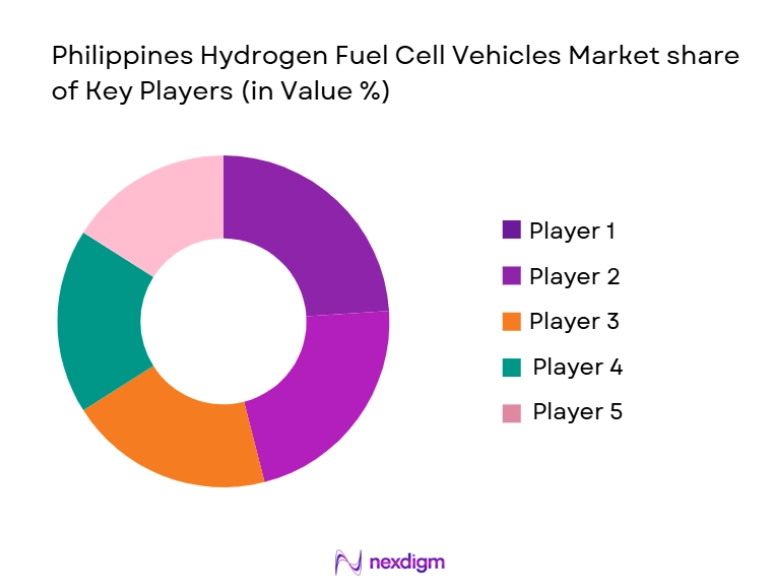
Philippines Hydrogen Fuel Cell Vehicles Market Analysis
Growth Drivers
Government Initiatives and Regulations
Government support is a key driver for the growth of hydrogen fuel cell vehicles in the Philippines. With the government’s focus on reducing carbon emissions, policies are being enacted to promote cleaner and more sustainable transportation solutions. These initiatives include tax incentives, subsidies for hydrogen infrastructure, and the introduction of green vehicle standards that encourage the adoption of alternative fuel vehicles. Such regulations are pushing both consumers and businesses toward hydrogen fuel cell vehicles, accelerating market penetration and increasing consumer confidence in this clean technology. Additionally, the Philippine government has been collaborating with private players to expand hydrogen refueling stations, further driving adoption in key metropolitan areas.
Technological Advancements in Hydrogen Fuel Cells
Another significant driver of growth is the continuous advancements in hydrogen fuel cell technology, making the vehicles more efficient and affordable. Innovations in fuel cell stack designs, improved hydrogen storage systems, and faster refueling capabilities are addressing previous concerns associated with hydrogen fuel cell vehicles. As fuel cell technology improves, the range and performance of these vehicles continue to match that of traditional combustion engine vehicles, making them a viable alternative. Moreover, reductions in the cost of producing hydrogen fuel cells, due to advancements in manufacturing processes, have made these vehicles more accessible to a broader audience, driving adoption across the Philippines.
Market Challenges
High Initial Investment Costs
One of the main challenges faced by the hydrogen fuel cell vehicle market is the high initial investment cost. Fuel cell vehicles and the infrastructure required to support them, such as hydrogen refueling stations, require significant capital investment. Although the long-term benefits, such as reduced fuel costs and lower maintenance, may outweigh the initial expenditure, the high upfront cost remains a barrier for many consumers and businesses. Without sufficient government subsidies or private sector investments, the widespread adoption of hydrogen fuel cell vehicles will be slow. This challenge limits the growth potential of the market and makes it less attractive to price-sensitive consumers.
Limited Hydrogen Refueling Infrastructure
The lack of a comprehensive hydrogen refueling infrastructure is another significant challenge for the Philippines market. Although the government is working to expand hydrogen refueling stations, the current network remains insufficient to support large-scale adoption of fuel cell vehicles. Consumers are hesitant to invest in hydrogen fuel cell vehicles due to the lack of refueling stations, limiting the vehicles’ accessibility and reducing their overall market appeal. Inadequate refueling infrastructure also poses challenges for logistics and commercial fleets, which require frequent refueling to remain operational.
Opportunities
Expansion of Hydrogen Infrastructure
The ongoing efforts to expand hydrogen refueling infrastructure present a significant opportunity for the market. With government-backed projects aimed at increasing the number of hydrogen refueling stations, particularly in urban areas, the adoption of hydrogen fuel cell vehicles is expected to accelerate. This expansion will not only help mitigate one of the primary challenges but will also encourage greater consumer confidence in the technology. The development of refueling infrastructure will allow fuel cell vehicles to become a more feasible option for both individual consumers and commercial fleets, driving the overall growth of the market.
Private Sector Investment in Hydrogen Solutions
Another opportunity for market growth lies in the private sector’s investment in hydrogen solutions. Companies in the automotive and energy sectors are increasingly focusing on hydrogen fuel cell technology, creating new opportunities for joint ventures, collaborations, and partnerships. These collaborations will enable the development of more efficient, cost-effective fuel cell vehicles and infrastructure solutions. Moreover, as hydrogen becomes an increasingly viable energy source, it is expected that private companies will invest more heavily in production technologies, reducing costs and expanding the accessibility of hydrogen-powered vehicles.
Future Outlook
The Philippines hydrogen fuel cell vehicles market is expected to experience steady growth over the next five years, driven by advancements in technology, growing environmental concerns, and government support. The market will likely see increased adoption in urban areas, where air quality issues and traffic congestion are most prominent. Additionally, the expansion of hydrogen refueling infrastructure, combined with evolving regulatory frameworks, will foster further market development. With continued innovation, the Philippines is poised to become a key player in Southeast Asia’s green mobility transition.
Major Players
- Toyota Motor Corporation
- Honda Motor Co., Ltd.
- Hyundai Motor Company
- Ballard Power Systems
- Plug Power Inc.
- Daimler AG
- Ford Motor Company
- Nissan Motor Co., Ltd.
- Volvo Group
- BMW Group
- General Motors
- Fisker Automotive
- Rivian Automotive
- Nikola Corporation
- Tesla, Inc.
Key Target Audience
- Investments and venture capitalist firms
- Government and regulatory bodies
- Automotive manufacturers
- Hydrogen fuel cell manufacturers
- Public transport operators
- Logistics and freight companies
- Hydrogen infrastructure developers
- Renewable energy companies
Research Methodology
Step 1: Identification of Key Variables
The first step involves identifying the critical variables influencing the market, such as government policies, technological advancements, consumer behavior, and market demand.
Step 2: Market Analysis and Construction
This step entails conducting detailed market analysis through primary and secondary research to construct the market size, trends, and forecasts.
Step 3: Hypothesis Validation and Expert Consultation
Industry experts and stakeholders are consulted to validate hypotheses and provide real-world insights that support the findings.
Step 4: Research Synthesis and Final Output
The final step involves synthesizing the collected data, generating actionable insights, and preparing the market report with validated information.

- Executive Summary
- Research Methodology (Definitions, Scope, Industry Assumptions, Market Sizing Approach, Primary & Secondary Research Framework, Data Collection & Verification Protocol, Analytic Models & Forecast Methodology, Limitations & Research Validity Checks)

- Market Definition and Scope
- Value Chain & Stakeholder Ecosystem
- Regulatory / Certification Landscape
- Sector Dynamics Affecting Demand
- Strategic Initiatives & Infrastructure Growth

- Growth Drivers
Government Initiatives & Support
Rise in Environmental Awareness
Advancements in Hydrogen Fuel Cell Technology
Reduction in Fuel Cell Costs
Infrastructure Expansion for Hydrogen Stations - Market Challenges
High Initial Investment Costs
Limited Hydrogen Fueling Infrastructure
Regulatory and Certification Barriers
Competition from Battery Electric Vehicles (BEVs)
Hydrogen Production and Storage Limitations - Market Opportunities
Collaborations between Automotive and Energy Sectors
Advances in Hydrogen Storage Solutions
Government Subsidies for Hydrogen Fuel Cell Vehicles - Trends
Growing Adoption of Clean Energy Technologies
Integration of Hydrogen Fuel Cells with Renewable Energy
Focus on Urban Mobility Solutions - Government Regulations
Regulations on Vehicle Emissions
Safety Standards for Hydrogen Storage Systems
Incentive Programs for Clean Vehicle Adoption

- By Market Value 2019-2025
- By Installed Units 2019-2025
- By Average System Price 2019-2025
- By System Complexity Tier 2019-2025

- By System Type (In Value%)
Fuel Cell Electric Vehicles (FCEVs)
Hydrogen Infrastructure Solutions
Fuel Cell Technology Components
Hydrogen Storage Systems
Fuel Cell Charging Stations - By Platform Type (In Value%)
Passenger Vehicles
Commercial Vehicles
Two-Wheelers
Buses and Coaches
Utility Vehicles - By Fitment Type (In Value%)
OEM (Original Equipment Manufacturer)
Aftermarket Solutions
Integrated Systems
Hybrid Systems
Fuel Cell Modifications - By EndUser Segment (In Value%)
Public Transport Sector
Logistics & Freight
Private Consumers
Government & Municipalities
Commercial Fleet Operators - By Procurement Channel (In Value%)
Direct Sales
Online Sales
Dealership Networks
Government Tenders
Partnerships & Collaborations

- Market Share Analysis
- CrossComparison Parameters (System Efficiency, Hydrogen Production Cost, Vehicle Range, Hydrogen Storage Solutions, Infrastructure Availability)
- SWOT Analysis of Key Competitors
- Pricing & Procurement Analysis
- Porter’s Five Forces
- Key Players
Toyota Motor Corporation
Honda Motor Co., Ltd.
Hyundai Motor Company
Ballard Power Systems
Plug Power Inc.
Toyota Tsusho Corporation
PowerCell Sweden AB
Nissan Motor Co., Ltd.
BMW Group
Ford Motor Company
General Motors
Daimler AG
Volvo Group
Rivian Automotive
Nikola Corporation

- Increased Adoption in Public Transport
- Private Sector’s Shift Towards Cleaner Mobility
- Rise in Logistics Sector Investments
- Government’s Role in Urban Transport Solutions

- Forecast Market Value 2026-2030
- Forecast Installed Units 2026-2030
- Price Forecast by System Tier 2026-2030
- Future Demand by Platform 2026-2030


 Request a Sample
 Ask for Customization
 Get a Quote
 Enquire Now