
 Download PDF
Market Overview
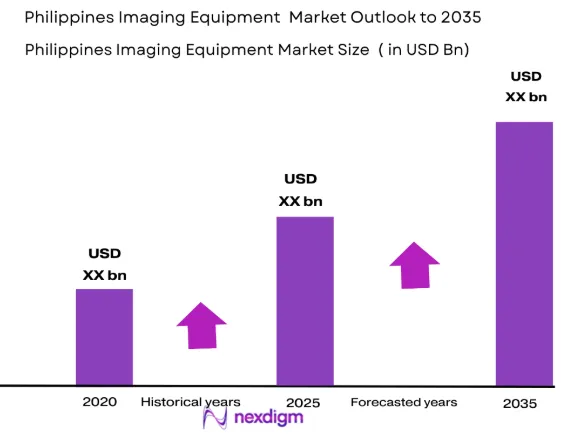
The market for imaging equipment in the Philippines has seen steady growth, with an estimated market size of USD ~ billion, driven by increasing healthcare demands and the need for diagnostic accuracy. Factors such as technological advancements, government initiatives to improve healthcare accessibility, and rising awareness of early disease detection continue to fuel market expansion. The adoption of imaging technologies such as X-ray, MRI, and CT scanners is expected to remain a major contributor to growth.
The Philippines’ urban areas, especially Metro Manila and Cebu, dominate the market due to higher healthcare infrastructure investments and access to advanced medical technologies. Hospitals and diagnostic centers in these regions lead the adoption of imaging equipment, benefiting from both government subsidies and private sector investments. The growth is also attributed to the country’s improving healthcare policies and the increased demand for medical imaging in diagnostics.
Market Segmentation
By Product Type
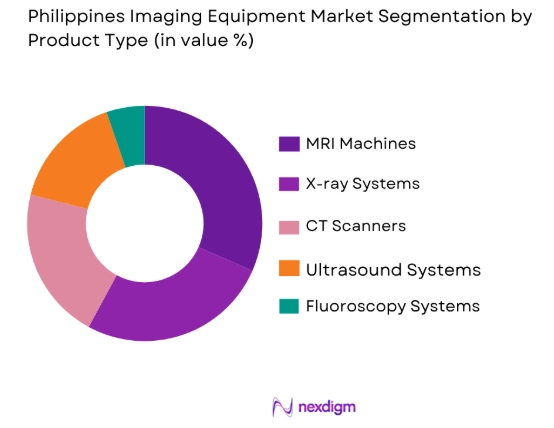
The imaging equipment market in the Philippines is segmented by product type into X-ray systems, MRI machines, CT scanners, ultrasound systems, and fluoroscopy systems. Recently, MRI machines have a dominant market share, as they are increasingly used for detecting soft tissue and neurological disorders. This growth is attributed to the rising incidence of lifestyle diseases and the government’s support for enhancing medical infrastructure. Hospitals in urban areas are major consumers of MRI equipment due to the need for precise and non-invasive diagnostic tools, along with the expanding private healthcare sector offering specialized imaging services.
By End-User Segment
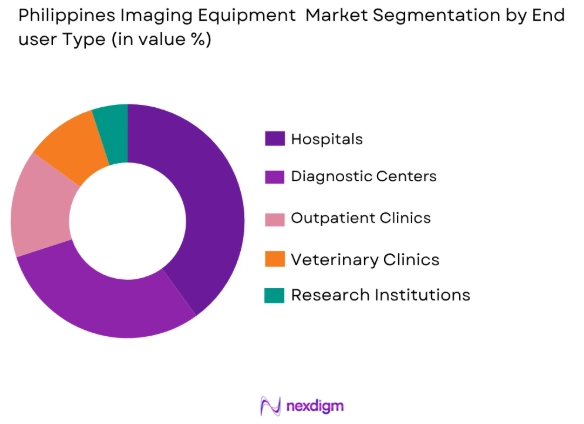
The market for imaging equipment in the Philippines is divided into hospitals, diagnostic centers, outpatient clinics, veterinary clinics, and research institutions into end user type. Hospitals dominate the market share, particularly due to the increasing demand for advanced imaging technologies for diagnosis, treatment planning, and medical research. Furthermore, with the rise in hospital construction and upgrades across the country, hospitals are investing significantly in diagnostic equipment to enhance patient care and meet international healthcare standards.
Competitive Landscape
The competitive landscape of the Philippines imaging equipment market is concentrated, with several global and local players contributing to the market share. Major players are increasingly forming partnerships and acquiring smaller local firms to expand their reach and enhance product offerings. Market consolidation is expected to continue as companies focus on innovation and technological advancements to stay ahead of competition. The dominance of global brands like Siemens and Philips has made them key players in shaping the market’s future growth trajectory.
| Company Name | Establishment Year | Headquarters | Technology Focus | Market Reach | Key Products | Revenue | Market-Specific Parameter |
| Siemens Healthineers | 1847 | Germany | ~ | ~ | ~ | ~ | ~ |
| GE Healthcare | 1892 | USA | ~ | ~ | ~ | ~ | ~ |
| Philips Healthcare | 1891 | Netherlands | ~ | ~ | ~ | ~ | ~ |
| Canon Medical Systems | 1937 | Japan | ~ | ~ | ~ | ~ | ~ |
| Fujifilm Holdings | 1934 | Japan | ~ | ~ | ~ | ~ | ~ |
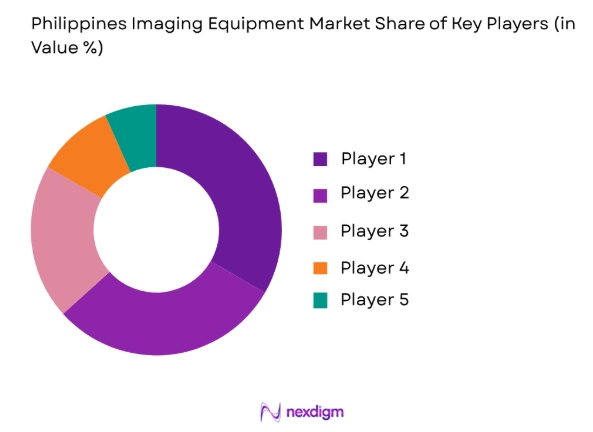
Philippines Imaging Equipment Market Analysis
Growth Drivers
Increasing Healthcare Investment
The Philippines has significantly increased its healthcare budget in recent years, enhancing access to high-quality medical services. With government support for healthcare infrastructure, hospitals are investing in advanced imaging technologies to meet growing patient needs and improve diagnostic capabilities. This boost in public funding allows the healthcare sector to purchase modern imaging equipment and meet international medical standards. The government’s focus on expanding healthcare accessibility, especially in rural areas, is also pushing the demand for diagnostic imaging in underserved regions. As a result, this has positively impacted the imaging equipment market by fostering increased adoption in both urban and rural healthcare facilities.
Technological Advancements in Imaging
Technological advancements in medical imaging are one of the key drivers of the market’s growth. New technologies such as portable ultrasound devices and AI-assisted diagnostic tools are improving diagnostic accuracy and reducing the cost of medical imaging. Furthermore, innovations like 3D imaging and MRI machines with better resolution are attracting healthcare providers to upgrade their existing equipment. These advancements make imaging technologies more accessible, efficient, and reliable for medical professionals, encouraging adoption. As the cost of these technologies continues to decrease, their adoption rate is expected to rise, further driving the growth of the imaging equipment market in the Philippines.
Market Challenges
High Initial Cost of Imaging Equipment
Despite the growing demand for medical imaging devices in the Philippines, the high initial cost of acquiring and maintaining advanced imaging equipment remains a significant barrier. Hospitals, particularly those in rural areas, often struggle to afford expensive imaging technologies such as MRI machines and CT scanners. This high capital expenditure makes it challenging for smaller healthcare providers and government-run facilities to adopt these advanced systems. Additionally, maintenance costs, which require skilled technicians and regular updates, add to the financial burden on healthcare organizations, limiting their ability to fully utilize the available technology and offer top-quality services.
Regulatory and Approval Delays
The lengthy process for obtaining regulatory approvals for medical equipment in the Philippines can delay the availability and adoption of advanced imaging technologies. The approval process for medical devices can take several months, which results in lost time for healthcare providers looking to upgrade their facilities or expand their services. Furthermore, strict regulations and the need for equipment certifications make it difficult for smaller players to enter the market or compete with established global brands. The regulatory landscape for medical devices in the Philippines requires constant adaptation to global standards, and slow bureaucratic processes often hinder market expansion.
Opportunities
Expansion in Rural Healthcare Centers
One of the most promising opportunities in the Philippines imaging equipment market is the expansion of diagnostic imaging solutions into rural healthcare centers. With the government’s push to improve healthcare access in remote areas, there is an increasing demand for mobile and portable imaging systems such as ultrasound and X-ray devices. These devices provide affordable diagnostic solutions for rural healthcare providers, allowing them to offer quality services without significant infrastructure investments. This growing demand presents an opportunity for companies to develop and market affordable imaging systems specifically tailored to rural clinics and outpatient centers.
Growing Demand for AI-Driven Imaging Solutions
Another significant opportunity is the rise of AI-assisted imaging solutions, which offer enhanced diagnostic accuracy and workflow efficiency. AI-powered tools can help healthcare professionals interpret medical images more quickly and accurately, providing better patient outcomes. As the Philippines healthcare sector embraces digital transformation, there is a growing need for imaging solutions that incorporate AI technologies. This trend presents a considerable opportunity for companies that focus on AI-powered imaging tools to expand their market share and offer innovative solutions that meet the evolving needs of healthcare providers in the region.
Future Outlook
The imaging equipment market in the Philippines is expected to grow steadily over the next five years, driven by technological advancements and increased government support for healthcare infrastructure. The adoption of AI-driven imaging solutions and the rise of mobile and portable imaging systems will play a key role in meeting the growing demand for medical diagnostics in both urban and rural areas. Regulatory reforms aimed at improving healthcare access will further boost market growth, with strong demand from both public and private sectors. The market is also likely to witness new product innovations, further improving the quality and accessibility of imaging technologies.
Major Players
- Siemens Healthineers
- GE Healthcare
- Philips Healthcare
- Canon Medical Systems
- Fujifilm Holdings
- Toshiba Medical Systems
- Samsung Medison
- Mindray Medical International
- Hitachi Medical Systems
- Carestream Health
- Hologic Inc.
- Nikon Corporation
- Medtronic
- Esaote
- Agfa Healthcare
Key Target Audience
- Investments and venture capitalist firms
- Government and regulatory bodies
- Healthcare providers and hospitals
- Diagnostic imagingcenters
- Private healthcare networks
- Veterinary clinics
- Technology integrators
- Large public health organizations
Research Methodology
Step 1: Identification of Key Variables
The first step involves identifying the key market variables such as product types, end-user segments, and technological innovations. This helps in understanding the scope of the market.
Step 2: Market Analysis and Construction
In this step, the market is analyzed using secondary research data and various analytic tools to construct a comprehensive understanding of the market’s size, growth trends, and competitive landscape.
Step 3: Hypothesis Validation and Expert Consultation
Experts and industry leaders are consulted to validate the findings and assumptions made in earlier steps, ensuring the robustness of the analysis.
Step 4: Research Synthesis and Final Output
The research findings are synthesized to create a final report, detailing market insights, growth drivers, challenges, opportunities, and recommendations for stakeholders.

- Executive Summary
- Research Methodology (Definitions, Scope, Industry Assumptions, Market Sizing Approach, Primary & Secondary Research Framework, Data Collection & Verification Protocol, Analytic Models & Forecast Methodology, Limitations & Research Validity Checks)

- Market Definition and Scope
- Value Chain & Stakeholder Ecosystem
- Regulatory / Certification Landscape
- Sector Dynamics Affecting Demand
- Strategic Initiatives & Infrastructure Growth

- Growth Drivers
Increasing Healthcare Expenditure
Technological Advancements in Imaging - Market Challenges
High Initial Cost of Imaging Equipment
Regulatory and Approval Delays - Market Opportunities
Expansion in Rural Healthcare Centers
Growing Demand for AI-Driven Imaging Solutions - Government Regulations
- SWOT Analysis of Key Competitors
- Porter’s Five Forces

- By Market Value, 2020-2025
- By Installed Units, 2020-2025
- By Average System Price, 2020-2025
- By System Complexity Tier, 2020-2025

- By Product Type (In Value%)
X-ray Systems
CT Scanners
MRI Machines
Ultrasound Devices
Fluoroscopy Systems - By Platform Type (In Value%)
Fixed Imaging Systems
Mobile Imaging Systems
Portable Imaging Systems
Hybrid Imaging Systems
Modular Imaging Systems - By Fitment Type (In Value%)
Hospital-based Systems
Outpatient Clinic-based Systems
Veterinary Systems
Point-of-care Systems
Mobile Diagnostic Systems - By End User Segment (In Value%)
Hospitals
Diagnostic Centers
Research Institutions
Veterinary Clinics
Mobile Health Providers - By Procurement Channel (In Value%)
Direct Procurement
Government Tenders
Private Sector Procurement
Third-party Distributors
Online Bidding Platforms

- Market Share Analysis
- Cross Comparison Parameters (System Type, Platform Type, Procurement Channel, End User Segment, Fitment Type)
- SWOT Analysis of Key Competitors
- Pricing & Procurement Analysis
- Porter’s Five Forces
Key Players
Siemens Healthineers
GE Healthcare
Philips Healthcare
Canon Medical Systems
Fujifilm Holdings
Samsung Medison
Mindray Medical International
Hitachi Medical Systems
Toshiba Medical Systems
Carestream Health
Hologic Inc.
Nikon Corporation
Medtronic
Esaote
Agfa Healthcare

- Hospitals Increasing Demand for Advanced Imaging
- Veterinary Clinics Seeking Portable Imaging Solutions
- Government Initiatives Supporting Diagnostic Imaging Expansion
- Mobile Health Providers’ Rising Adoption of Imaging Systems

- Forecast Market Value, 2026-2035
- Forecast Installed Units, 2026-2035
- Price Forecast by System Tier, 2026-2035
- Future Demand by Platform, 2026-2035


 Request a Sample
 Ask for Customization
 Get a Quote
 Enquire Now