

 Download PDF
 Download PDF
Market Overview
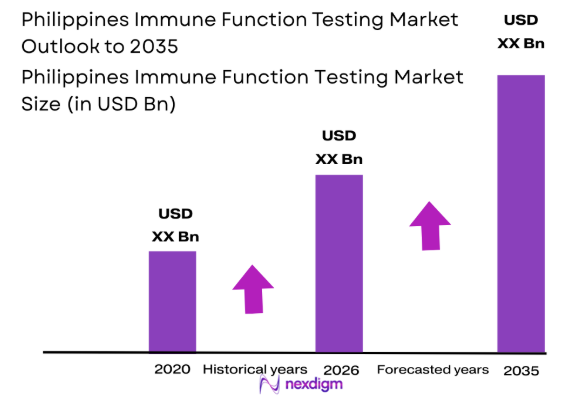
The Philippines immune function testing market is valued based on recent assessments, with the market size being USD ~ billion, reflecting a steady demand for diagnostic solutions in the country. The market’s growth is driven by increasing healthcare investments and rising awareness about immune system health. Moreover, advancements in technology such as the development of non-invasive testing methods and improved diagnostic tools play a key role in market expansion. Government initiatives to improve healthcare infrastructure and access also contribute to the growth of immune function testing.
The demand for immune function testing is concentrated in urban centers such as Metro Manila, Cebu, and Davao, where healthcare facilities are upgrading their diagnostic capabilities. These cities dominate the market due to high population density and better healthcare infrastructure, making advanced testing services more accessible. In addition, local government support and increasing private sector investments in health technology are driving the adoption of these tests. As a result, these regions are expected to continue leading the market in both demand and technological advancements.
Market Segmentation
By Product Type
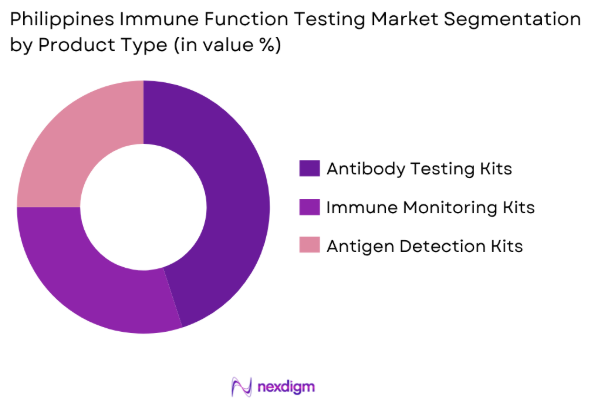
The Philippines immune function testing market is segmented by product type into immune monitoring kits, antigen detection kits, and antibody testing kits. Recently, antibody testing kits have a dominant market share due to factors such as increased public health awareness, the surge in infectious diseases, and the need for diagnostic tools in managing health crises like COVID-19. Their convenience and ease of use in both clinical and at-home settings have contributed to their popularity and market dominance.
By Platform Type
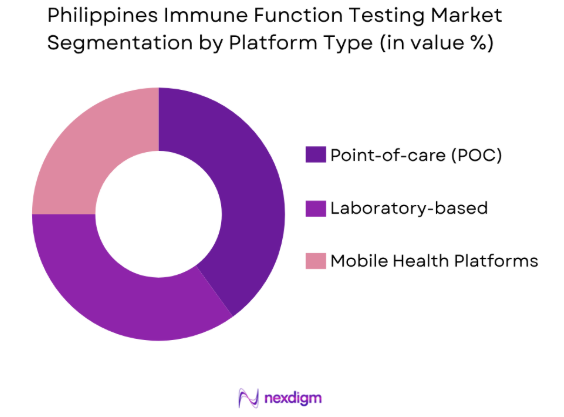
The Philippines Immune Function Testing market is segmented into laboratory-based platforms, point-of-care (POC) platforms, and mobile health platforms. POC platforms are seeing increased adoption due to their quick, reliable results and ease of use, particularly in remote or underserved areas. Their ability to deliver results within minutes has made them an essential tool for healthcare providers, leading to their significant market share in immune function testing.
Competitive Landscape
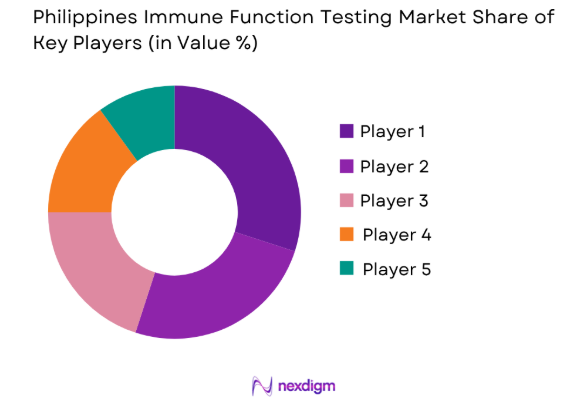
The competitive landscape of the Philippines immune function testing market is highly dynamic, with numerous international and local players vying for market share. The market is seeing consolidation as large players acquire smaller, innovative companies to expand their product portfolios and improve technological capabilities. The presence of multinational corporations like Abbott Laboratories and Thermo Fisher Scientific is strengthening the competitive intensity, with these companies leading innovation in diagnostic testing solutions.
| Company Name | Establishment Year | Headquarters | Technology Focus | Market Reach | Key Products | Revenue | Additional Market-Specific Parameter |
| Abbott Laboratories | 1888 | Chicago, USA | ~ | ~ | ~ | ~ | ~ |
| Thermo Fisher Scientific | 1956 | Waltham, USA | ~ | ~ | ~ | ~ | ~ |
| Siemens Healthineers | 1847 | Erlangen, Germany | ~ | ~ | ~ | ~ | ~ |
| Bio-Rad Laboratories | 1952 | Hercules, USA | ~ | ~ | ~ | ~ | ~ |
| Roche Diagnostics | 1896 | Basel, Switzerland | ~ | ~ | ~ | ~ | ~ |
Philippines Immune Function Testing Market Analysis
Growth Drivers
Technological Advancements
The development of advanced technologies like non-invasive immune function tests and multiplex assays has significantly driven growth in the immune function testing market. These innovations have improved accessibility, accuracy, and cost-effectiveness, benefiting both healthcare providers and patients. As the market continues to mature, further advancements in testing platforms are expected to reduce costs and enhance precision, opening up additional opportunities for expansion in both urban and rural areas. This technological progress aligns with the increasing demand for personalized healthcare solutions, providing more tailored diagnostic options for patients. As these technologies evolve, they will continue to play a key role in transforming the immune function testing landscape.
Government Initiatives
Government-led initiatives to improve healthcare accessibility and quality have been crucial in driving market growth. Programs targeting chronic disease prevention and management, such as those for diabetes and cardiovascular disorders, frequently incorporate immune function testing as a standard diagnostic tool. Additionally, increased government funding for healthcare infrastructure projects has made advanced diagnostic equipment more accessible to hospitals and diagnostic centers across the Philippines. These efforts are expected to further stimulate market growth, as both the public and private sectors continue to invest in healthcare technology and infrastructure. Such initiatives are helping expand the reach and adoption of immune function testing in both urban and rural areas.
Market Challenges
Regulatory Barriers
Regulatory challenges continue to hinder the growth of the immune function testing market, especially concerning the approval process for new technologies. Stringent clinical validation, safety assessments, and product certification requirements often delay the introduction of innovative products. These regulatory delays extend timelines and increase costs for companies, slowing overall market growth. Moreover, the lack of harmonized regulations across regions complicates the entry of international firms, particularly those offering novel testing platforms. The inconsistent regulatory landscape presents additional barriers for companies seeking to expand into new markets, further limiting the pace of innovation and market adoption of advanced immune function testing technologies.
High Costs of Testing
Despite significant technological advancements, the cost of immune function testing remains a major barrier to widespread adoption, particularly in rural areas with limited healthcare access. The high upfront costs of diagnostic equipment and reagents, combined with ongoing maintenance and training expenses, make it challenging for smaller healthcare facilities to invest in advanced immune function testing systems. Additionally, limited insurance coverage for these diagnostic tests in some regions further compounds the issue, discouraging patients from seeking these services. As a result, the high costs not only hinder the accessibility of immune function testing but also slow overall market growth. For the market to expand, addressing these financial challenges will be essential to increasing adoption, particularly in underserved areas.
Opportunities
Rise in Chronic Disease Prevalence
The rising prevalence of chronic diseases like diabetes, cancer, and autoimmune disorders offers a substantial opportunity for the immune function testing market. As more individuals are diagnosed with chronic conditions, healthcare providers are turning to immune function testing to monitor patient health, personalize treatments, and predict disease progression. This increased demand for diagnostic solutions presents a strong growth opportunity for market players, particularly those offering innovative and cost-effective testing technologies. As chronic diseases continue to burden healthcare systems, the need for accurate, accessible diagnostic tools will expand, making immune function testing an integral part of patient care, especially for managing long-term conditions.
Expanding Healthcare Infrastructure
The expansion of healthcare infrastructure, especially in emerging urban areas, presents another opportunity for the immune function testing market. As more diagnostic centers, clinics, and hospitals are established, the demand for advanced diagnostic tools, including immune function testing, is expected to rise. Additionally, the growing adoption of telemedicine and mobile health technologies opens the door for remote immune function testing services. Market players that offer flexible, mobile testing solutions integrated with telehealth platforms are poised to capitalize on this trend. As healthcare accessibility improves and digital health tools become more prevalent, the demand for convenient and remote testing options will increase, driving market growth.
Future Outlook
The future outlook for the Philippines immune function testing market is promising, with continued growth expected over the next five years. Technological innovations, such as advancements in point-of-care testing and the adoption of digital health solutions, are anticipated to drive market expansion. Furthermore, supportive government policies aimed at improving healthcare access and infrastructure, combined with rising awareness of immune health, will contribute to a favorable market environment. As healthcare providers and patients alike prioritize faster, more reliable testing methods, the market will continue to evolve with new opportunities for growth.
Major Players
- Abbott Laboratories
- ThermoFisher Scientific
- Siemens Healthineers
- Bio-Rad Laboratories
- Roche Diagnostics
- Beckman Coulter
- PerkinElmer
- BioMerieux
- Luminex Corporation
- Grifols
- BD (Becton,Dickinsonand Company)
- Fujifilm Holdings
- Mindray
- Ortho Clinical Diagnostics
- Hologic
Key Target Audience
- Investments and venture capitalist firms
- Government and regulatory bodies
- Private healthcare providers
- Diagnostic laboratories
- Medical technology distributors
- Pharmaceutical companies
- Health insurance companies
- Health technology firms
Research Methodology
Step 1: Identification of Key Variables
We identify the key variables affecting the market, including technological trends, regulatory factors, and economic conditions, to guide our research process.
Step 2: Market Analysis and Construction
Market data is gathered from reliable sources, including primary research, market reports, and government publications, and is used to construct the market size, segmentation, and forecast models.
Step 3: Hypothesis Validation and Expert Consultation
We validate our initial hypotheses with experts in the field, conducting interviews and surveys with industry leaders, healthcare professionals, and market analysts to refine our findings.
Step 4: Research Synthesis and Final Output
We synthesize all collected data, applying analytical models to produce accurate, actionable insights, which form the basis of the final report.

- Executive Summary
- Research Methodology (Definitions, Scope, Industry Assumptions, Market Sizing Approach, Primary & Secondary Research Framework, Data Collection & Verification Protocol, Analytic Models & Forecast Methodology, Limitations & Research Validity Checks)

- Market Definition and Scope
- Value Chain & Stakeholder Ecosystem
- Regulatory / Certification Landscape
- Sector Dynamics Affecting Demand
- Strategic Initiatives & Infrastructure Growth

- Growth Drivers
Increased Health Awareness
Technological Advancements in Diagnostic Testing
Growing Government Initiatives in Healthcare - Market Challenges
Regulatory Barriers
High Costs of Immune Function Testing
Lack of Skilled Professionals - Market Opportunities
Rise in Chronic Disease Prevalence
Expansion of Diagnostic Testing Centers
Partnerships with International Healthcare Providers - Trends
Increase in Personalized Medicine
Growth of Home Testing Solutions
Technological Advancements in PCR Testing - Government Regulations
- SWOT Analysis of Key Competitors
- Porter’s Five Forces

- By Market Value, 2020-2025
- By Installed Units, 2020-2025
- By Average System Price, 2020-2025
- By System Complexity Tier, 2020-2025

- By System Type (In Value%)
Flow Cytometry Systems
Enzyme-Linked Immunosorbent Assay (ELISA) Systems
Luminex xMAP Technology
Polymerase Chain Reaction (PCR) Systems
Cell Culture Systems - By Platform Type (In Value%)
Laboratory-based Platforms
Point-of-care (POC) Platforms
Home Testing Kits
Mobile Health Platforms
Centralized Laboratory Platforms - By Fitment Type (In Value%)
Standalone Systems
Modular Systems
Integrated Systems
Portable Systems
Tabletop Systems - By End User Segment (In Value%)
Hospitals
Diagnostic Laboratories
Research Institutes
Homecare Providers
Government & Military Health Sectors - By Procurement Channel (In Value%)
Direct Procurement
Government Tenders
Private Sector Procurement
Online Bidding Platforms
Third-party Distributors

- Market Share Analysis
- Cross Comparison Parameters (System Type, Platform Type, Procurement Channel, End User Segment, Fitment Type, Technology Integration, Service Coverage, Regulatory Compliance, Data Security Features, Market Reach)
- SWOT Analysis of Key Competitors
- Pricing & Procurement Analysis
- Key Players
Philippine Diagnostics Inc.
Healthway Medical
Clinical Diagnostic Solutions
Thermo Fisher Scientific
Bio-Rad Laboratories
Abbott Laboratories
Roche Diagnostics
Siemens Healthineers
Johnson & Johnson
Medtronic
Becton Dickinson
Sysmex Corporation
BioMerieux
PerkinElmer
Ortho Clinical Diagnostics

- Demand from Urban Healthcare Facilities
- Need for Affordable Testing in Rural Areas
- Emerging Trends in Preventive Healthcare
- Role of Government Health Initiatives in Market Expansion

- Forecast Market Value, 2026-2035
- Forecast Installed Units, 2026-2035
- Price Forecast by System Tier, 2026-2035
- Future Demand by Platform, 2026-2035


 Request a Sample
 Ask for Customization
 Get a Quote
 Enquire Now