
 Download PDF
 Download PDF
Market Overview
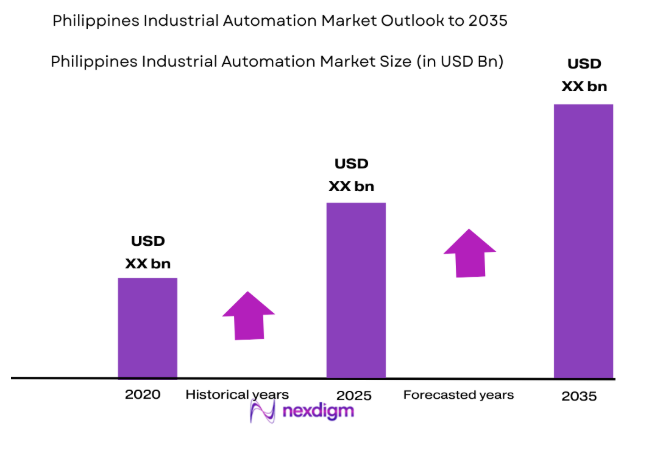
The Philippines industrial automation market is valued at USD ~ billion, driven primarily by the increasing demand for advanced manufacturing solutions, adoption of Industry 4.0, and government support for modernization initiatives. Automation technologies such as robotics, SCADA systems, and IoT-based platforms are gaining traction in various sectors, including manufacturing, automotive, and food processing, leading to significant growth in market value. Increased investments from both public and private sectors are further fueling the market expansion, particularly in automation systems that enhance operational efficiency and productivity.
The industrial automation market in the Philippines is largely driven by key cities such as Metro Manila, Cebu, and Davao, where major manufacturing hubs are located. These cities are benefiting from strong infrastructure development, proximity to key industries, and supportive government policies aimed at boosting industrial growth. Additionally, Metro Manila remains a dominant player due to its role as the country’s economic center, with significant contributions from sectors like electronics, automotive, and consumer goods manufacturing. This concentration of industries in urban centers drives the demand for industrial automation solutions.
Market Segmentation
By Product Type
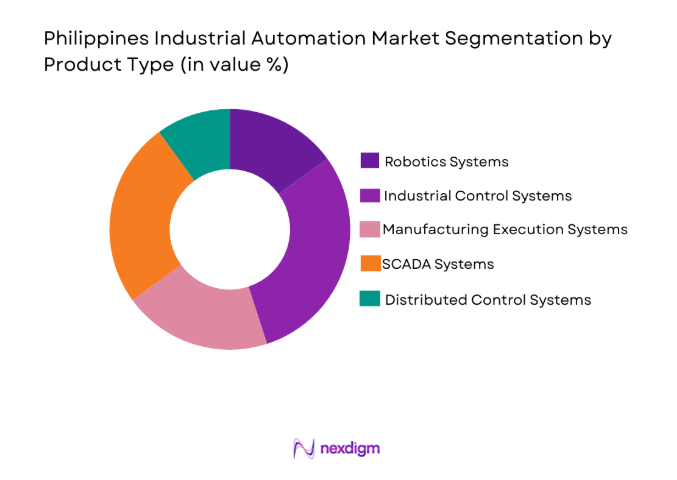
The Philippines industrial automation market is segmented by product type into robotics systems, industrial control systems, manufacturing execution systems, SCADA systems, and distributed control systems. Recently, industrial control systems have captured a dominant market share due to their critical role in regulating various manufacturing processes. Their widespread adoption across industries, such as automotive, electronics, and food processing, can be attributed to their ability to enhance efficiency and ensure smooth operations in complex production lines. The consistent need for reliability and precision in production environments has driven the demand for these systems.
By Platform Type
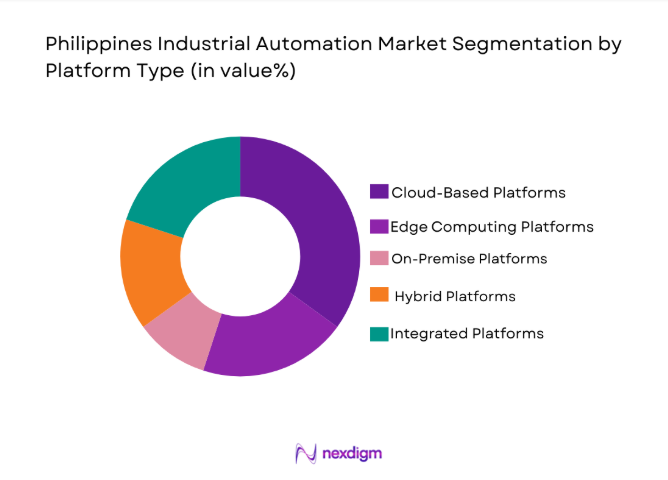
The market is also segmented by platform type into cloud-based platforms, edge computing platforms, on-premise platforms, hybrid platforms, and integrated platforms. Recently, cloud-based platforms have gained dominance due to their flexibility, scalability, and cost-effectiveness. The increasing adoption of cloud-based solutions is primarily driven by the need for remote monitoring, data storage, and real-time analytics, which cloud platforms efficiently support. Furthermore, the Philippines’ growing digital infrastructure and improved internet connectivity have made cloud solutions an attractive choice for manufacturing plants looking to upgrade their automation capabilities.
Competitive Landscape
The competitive landscape of the Philippines industrial automation market is characterized by a mix of multinational companies and local players. Major global companies are expanding their presence in the region, consolidating their position through strategic partnerships, acquisitions, and technological innovations. The local companies focus on providing tailored automation solutions that meet the specific needs of the Philippine industrial sector. Key players in the market are also collaborating with government bodies and industries to promote smart manufacturing and automation adoption across various sectors.
| Company Name | Establishment Year | Headquarters | Technology Focus | Market Reach | Key Products | Revenue | Additional Parameter |
| Siemens | 1847 | Germany | ~ | ~ | ~ | ~ | ~ |
| Mitsubishi Electric | 1921 | Japan | ~ | ~ | ~ | ~ | ~ |
| ABB | 1988 | Switzerland | ~ | ~ | ~ | ~ | ~ |
| Rockwell Automation | 1903 | USA | ~ | ~ | ~ | ~ | ~ |
| Honeywell | 1906 | USA | ~ | ~ | ~ | ~ | ~ |
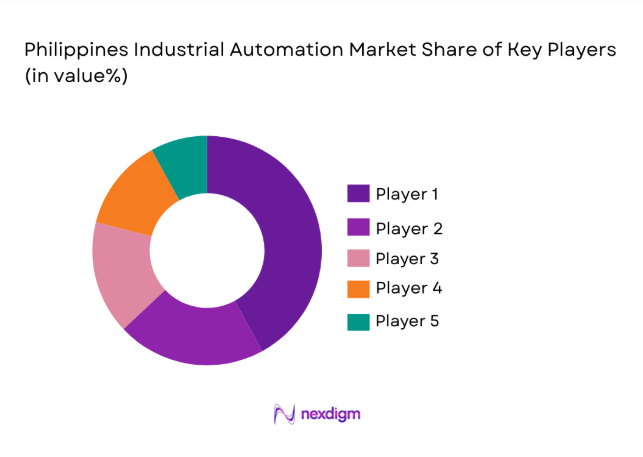
Philippines Industrial Automation Market Analysis
Growth Drivers
Technological Advancements
The rapid development of technologies like robotics, AI, and IoT is a major growth driver in the Philippines industrial automation market. These technologies are increasingly being adopted across various sectors, such as manufacturing, automotive, and food processing, to improve operational efficiency, reduce human error, and enhance production processes. With the integration of AI and IoT, automation solutions are becoming more intelligent, enabling real-time data analytics, predictive maintenance, and even self-optimizing systems. These advancements allow businesses to optimize operations, increase productivity, and improve product quality. As more industries embrace digital transformation, these technologies facilitate automation that delivers not only immediate efficiency gains but also long-term strategic advantages. The ongoing development in machine learning algorithms, AI, and IoT platforms has opened up new opportunities for automation, making it more affordable and scalable for businesses of all sizes. As industries across the Philippines continue to adopt smart technologies, the push for automation will remain strong, further accelerating the market’s growth.
Government Support for Industrial Modernization
The Philippine government’s efforts to promote Industry 4.0 and digital transformation have been pivotal in accelerating the adoption of industrial automation. The government has introduced several initiatives such as funding programs, tax incentives, and infrastructure improvements to support businesses in upgrading their manufacturing facilities with advanced automation solutions. These initiatives are particularly beneficial to sectors looking to modernize their outdated processes and increase competitiveness in the global market. In addition, the government’s investment in improving critical infrastructure, such as reliable electricity, internet connectivity, and logistics, facilitates smoother transitions to automation. Policies aimed at fostering innovation and developing digital skills among the workforce also contribute to this transformation. As the government continues to prioritize these objectives, more businesses will be encouraged to adopt automation technologies, further fueling the market’s expansion in the Philippines.
Market Challenges
High Initial Investment Costs
One of the key challenges in the Philippines industrial automation market is the high initial investment required to implement advanced automation solutions. Technologies such as robotics, SCADA systems, and AI-powered software come with significant upfront costs that can be prohibitive, especially for small and medium-sized enterprises (SMEs). While the long-term benefits, such as increased efficiency, reduced operational costs, and improved quality, are clear, the financial burden of initial setup costs, along with expenses related to employee training and system maintenance, makes automation adoption a challenge for many companies. Additionally, the perceived risk of investing in new technologies without a guaranteed return on investment can discourage businesses from making the switch to automation. This challenge becomes particularly acute for SMEs that lack access to the capital required for such investments, slowing down the overall adoption of automation across the market. Overcoming this challenge will require more affordable automation solutions, financing options, and clear value propositions to demonstrate the cost-effectiveness of automation over time.
Integration Complexity
Many manufacturers in the Philippines still rely on legacy systems, which creates a significant challenge when trying to integrate modern automation technologies. The process of upgrading or replacing old equipment to accommodate new automation systems can be time-consuming, expensive, and disruptive to daily operations. Legacy systems often lack the compatibility required to interface with modern automation platforms, requiring additional software development, system configuration, and specialized expertise. Furthermore, the lack of standardized protocols across various automation solutions makes integration more complex and less efficient. These integration difficulties can lead to extended downtimes, higher costs, and delays in achieving full operational benefits. The inability to easily integrate new automation technologies with existing infrastructure is a key barrier to the widespread adoption of industrial automation. Companies must find ways to bridge this gap, potentially through hybrid solutions, system upgrades, and training, to ensure smoother transitions and maximize the potential of automation.
Opportunities
Smart Manufacturing Expansion
The increasing shift toward smart manufacturing presents substantial growth opportunities for the Philippines industrial automation market. Industries are continuously seeking ways to optimize their production processes, reduce downtime, and improve overall product quality. The growing adoption of automation systems integrated with IoT, AI, and robotics provides an effective solution to these challenges. Smart factories, which leverage real-time data analytics, predictive maintenance, and automated workflows, are becoming the foundation for modern manufacturing operations. As industries transition toward Industry 4.0, the demand for interconnected systems that can monitor, analyze, and optimize manufacturing processes will grow. The expansion of smart manufacturing not only improves operational efficiency but also fosters flexibility, allowing businesses to quickly adapt to changing consumer demands. This trend is expected to continue over the coming years, creating a wealth of opportunities for automation companies to develop innovative solutions that meet the evolving needs of the manufacturing sector. As more businesses recognize the advantages of smart factories, the industrial automation market will see increased investments and rapid growth.
AI and Robotics Integration
The integration of artificial intelligence (AI) and robotics into industrial operations offers significant opportunities in the Philippines industrial automation market. Companies across industries such as automotive, electronics, and food processing are increasingly adopting AI-driven robotics to enhance productivity and reduce human intervention in repetitive tasks. The rise of collaborative robots (cobots), which work alongside human workers, is making automation more accessible and efficient. Cobots offer flexibility, easy deployment, and scalability, which makes them especially attractive to small and medium-sized enterprises that may not have the resources for large-scale automation. In addition, AI-powered robots can adapt to changing production conditions, learn from data, and continuously optimize their operations, leading to higher efficiency and reduced errors. The ability to use AI and robotics to create intelligent manufacturing systems capable of performing complex tasks is unlocking new possibilities for businesses. As AI and robotics technology becomes more affordable and advanced, its integration into various industries will drive further market growth and innovation.
Future Outlook
The Philippines industrial automation market is poised for substantial growth in the coming years, driven by continuous technological advancements, increased demand for smart manufacturing, and government support. With rising investments in infrastructure and automation technologies, the market is expected to expand across various sectors such as automotive, electronics, and food processing. The integration of AI, IoT, and robotics will continue to be a key driver of this growth, as industries strive for greater operational efficiency and productivity. Furthermore, the government’s push for digital transformation and modernization in industries will play a crucial role in shaping the future of industrial automation in the Philippines.
Major Players
- Siemens
- Mitsubishi Electric
- ABB
- Rockwell Automation
- Honeywell
- Emerson Electric
- Schneider Electric
- Bosch Rexroth
- Yokogawa Electric
- Omron Corporation
- Panasonic
- General Electric
- Festo
- Fanuc
- KUKA Robotics
Key Target Audience
- Investments and venture capitalist firms
- Government and regulatory bodies
- Industrial manufacturers
- System integrators and automation solution providers
- Automation technology developers
- End-user industries (e.g., automotive, electronics)
- Financial institutions and investors
Research Methodology
Step 1: Identification of Key Variables
Identify critical market variables, including technological advancements, market size, demand drivers, and regulatory factors, through secondary research and expert consultations.
Step 2: Market Analysis and Construction
Construct market models using both quantitative data and qualitative insights to assess market trends, growth drivers, and barriers.
Step 3: Hypothesis Validation and Expert Consultation
Validate the hypotheses with industry experts and stakeholders to ensure the market analysis accurately reflects the evolving landscape.
Step 4: Research Synthesis and Final Output
Synthesize the findings into a comprehensive report, highlighting key market insights, trends, and projections based on validated data.

- Executive Summary
- Research Methodology (Definitions, Scope, Industry Assumptions, Market Sizing Approach, Primary & Secondary Research Framework, Data Collection & Verification Protocol, Analytic Models & Forecast Methodology, Limitations & Research Validity Checks)

- Market Definition and Scope
- Value Chain & Stakeholder Ecosystem
- Regulatory / Certification Landscape
- Sector Dynamics Affecting Demand
- Strategic Initiatives & Infrastructure Growth

- Growth Drivers
Rising demand for production efficiency
Government support for industrial modernization
Technological advancements in automation systems - Market Challenges
High initial investment costs
Complexity of system integration
Skilled workforce shortage - Market Opportunities
Adoption of smart factories
Growing demand for predictive maintenance solutions
Integration of artificial intelligence in manufacturing systems - Trends
Increase in robotic process automation
Adoption of Internet of Things (IoT) in industrial systems - Government Regulations
- SWOT Analysis
- Porter’s Five Forces

- By Market Value, 2020-2025
- By Installed Units, 2020-2025
- By Average System Price, 2020-2025
- By System Complexity Tier, 2020-2025

- By System Type (In Value%)
Industrial Control Systems
Robotics Systems
Manufacturing Execution Systems
Distributed Control Systems
Supervisory Control and Data Acquisition Systems - By Platform Type (In Value%)
Cloud-Based Platforms
On-Premise Platforms
Edge Computing Platforms
Hybrid Platforms
Integrated Platforms - By Fitment Type (In Value%)
Retrofit Solutions
New Installation Solutions
Modular Solutions
Integrated Solutions - By End User Segment (In Value%)
Manufacturing Industry
Automotive Industry
Pharmaceutical Industry
Food and Beverage Industry

- Market Share Analysis
- Cross Comparison Parameters (System Type, Platform Type, End User Segment, Procurement Channel, Fitment Type, System Complexity Tier, Regulatory Compliance)
- SWOT Analysis of Key Competitors
- Pricing & Procurement Analysis
- Key Players
Siemens
Rockwell Automation
Mitsubishi Electric
Schneider Electric
ABB
Yokogawa Electric
Honeywell International
Emerson Electric
Panasonic
Bosch Rexroth
Omron Corporation
Festo
KUKA Robotics
Fanuc
GE Digital

- Increasing automation adoption in manufacturing
- Rising demand for robotics in automotive sector
- Growth of IoT-driven automation solutions
- Shift toward sustainable manufacturing practices

- Forecast Market Value, 2026-2035
- Forecast Installed Units, 2026-2035
- Price Forecast by System Tier, 2026-2035
- Future Demand by Platform, 2026-2035


 Request a Sample
 Ask for Customization
 Get a Quote
 Enquire Now