

 Download PDF
 Download PDF
Market Overview
The Philippines Industrial IoT market is valued at USD ~ billion, driven by the rapid adoption of connected technologies across industries such as manufacturing, automotive, and energy. The need for digital transformation in the industrial sector, along with the increasing demand for automation and data-driven decision-making, is driving the market’s growth. The availability of government incentives and rising infrastructure investments further fuel the market’s expansion.
The Philippines’ key cities, including Manila, Davao, and Cebu, are leading the way due to their high concentration of industrial activities, infrastructure development, and governmental support for digitalization. Manila, being the hub for manufacturing and technology, drives most of the market demand. Davao’s emphasis on sustainable practices and Cebu’s strong presence in the shipping and logistics sectors contribute to the country’s dominance in the Industrial IoT space.
Market Segmentation
By Product Type
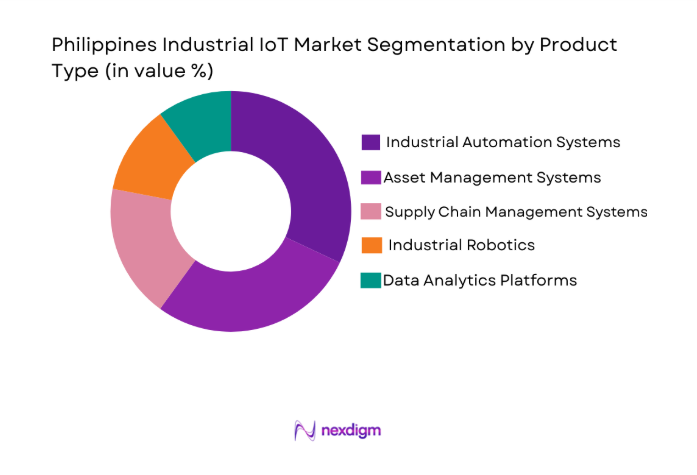
The Philippines Industrial IoT market is segmented by product type into several sub-segments. The industrial automation systems segment is currently dominating the market due to growing demand for automated production lines and factory optimization. Industrial automation systems enhance operational efficiency, reduce labor costs, and improve production speed, which makes them highly sought after by manufacturers. This demand is supported by advances in sensor technology and connectivity.
By Platform Type
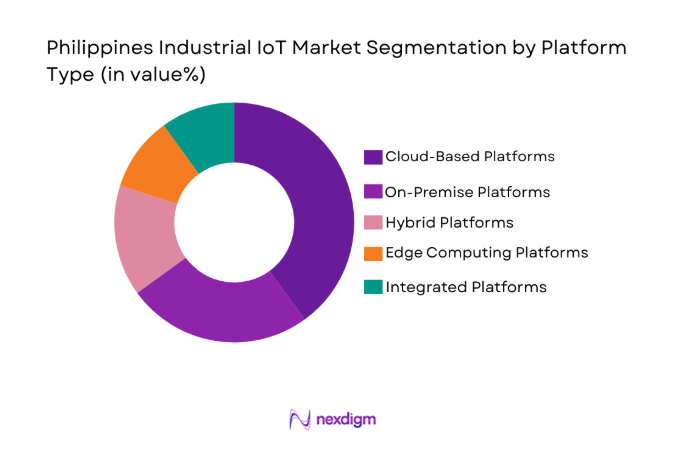
The market is segmented by platform type into cloud-based, on-premise, hybrid, edge computing, and integrated platforms. The cloud-based platform segment leads the market share due to the scalability, cost-effectiveness, and flexibility it offers to businesses. Cloud-based platforms support seamless data flow, real-time analytics, and remote monitoring, which significantly enhances operational capabilities. The rise in cloud adoption, driven by cost benefits and enhanced collaboration capabilities, contributes to its dominance.
Competitive Landscape
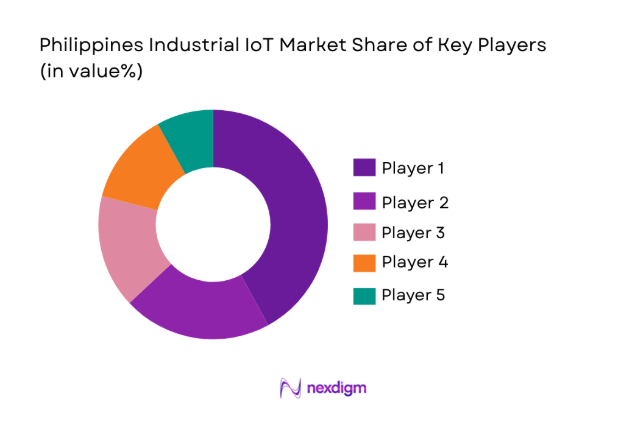
The Philippines Industrial IoT market is highly competitive with several global and local players influencing its direction. The increasing demand for connected solutions across various industries is fueling the consolidation of key players. Major companies are focusing on strategic partnerships, acquisitions, and technological advancements to maintain a competitive edge. The presence of large international firms and strong local market penetration continues to shape the market dynamics.
| Company Name | Establishment Year | Headquarters | Technology Focus | Market Reach | Key Products | Revenue (USD) | Additional Parameter |
| Siemens | 1847 | Germany | ~ | ~ | ~ | ~ | ~ |
| Schneider Electric | 1836 | France | ~ | ~ | ~ | ~ | ~ |
| ABB | 1988 | Switzerland | ~ | ~ | ~ | ~ | ~ |
| Honeywell | 1906 | USA | ~ | ~ | ~ | ~ | ~ |
| GE Digital | 2015 | USA | ~ | ~ | ~ | ~ | ~ |
Philippines Industrial IoT Market Analysis
Growth Drivers
Government Support for Digital Transformation
The Philippine government’s initiatives for digitalization and smart manufacturing have been pivotal in the growth of the Industrial IoT market. The government’s “Philippine Development Plan” includes measures to support smart city infrastructure, automation in manufacturing, and the digital transformation of industries. Government incentives such as tax breaks, subsidies, and grants for companies investing in digital technologies have accelerated the adoption of Industrial IoT solutions. These efforts align with the vision of a technologically advanced manufacturing sector, propelling the market forward. Additionally, the increase in public-private partnerships, particularly in technology-driven infrastructure projects, has created new opportunities for IoT solutions in industrial sectors. As the government drives the development of digital infrastructure and the proliferation of smart factories, these initiatives have fostered investment in IoT technologies and attracted global players. These measures have led to a surge in investment in digital technologies, making the Philippines a prominent player in the IoT industry in Southeast Asia. By facilitating the transition to Industry 4.0, the Philippines is positioning itself as a leader in the IoT-driven industrial revolution.
Adoption of Automation and Data Analytics
The growing focus on increasing operational efficiency and reducing costs has driven the adoption of automation systems and data analytics in the Philippines. As industries strive to optimize production, improve decision-making processes, and meet the growing demand for high-quality goods, Industrial IoT solutions that enable real-time data collection and analysis have become essential. Companies in manufacturing, energy, and logistics are increasingly integrating IoT technologies into their operations to gain insights into asset performance, enhance supply chain visibility, and reduce downtime. IoT solutions, powered by AI and machine learning, offer predictive maintenance, enabling businesses to forecast when machinery or equipment may fail, reducing unplanned downtime and costly repairs. The integration of AI and machine learning algorithms into IoT platforms has further fueled this growth, enabling smarter automation solutions and optimizing asset utilization. As industrial sectors continue to digitalize their operations, the demand for IoT-based automation solutions remains high, accelerating market growth and driving increased adoption of these technologies. In the Philippines, this trend has been significantly bolstered by the country’s focus on adopting “smart factory” models, enhancing its competitive edge in manufacturing and production.
Market Challenges
High Initial Investment and Integration Costs
Despite the benefits, a significant challenge for the growth of the Philippines Industrial IoT market is the high initial investment and integration costs. Small and medium-sized enterprises (SMEs) often face difficulties in adopting advanced IoT technologies due to the capital-intensive nature of such investments. The integration of IoT systems into existing infrastructure requires substantial funding, training, and potential disruptions to current operations. This high cost of adoption limits the market penetration of IoT solutions, especially in industries where budget constraints exist. Moreover, the complexity of integrating different IoT platforms and technologies within an organization adds to the challenge. The lack of standardization and the need for specialized equipment and software can increase the time and cost required for deployment. While large corporations can afford to invest in these advanced systems, the financial barrier remains a hindrance for smaller players, slowing the overall adoption rate across the industrial sector. In addition, companies face the challenge of upgrading legacy infrastructure, further increasing the financial burden of adopting cutting-edge technologies. This financial strain on businesses ultimately affects the speed at which the Philippines can fully transition to Industry 4.0, hindering the broader adoption of IoT solutions.
Lack of Skilled Workforce and Expertise
A notable challenge faced by the Philippines Industrial IoT market is the shortage of skilled professionals in data analytics, automation, and IoT system integration. The rapid pace of technological advancements in the Industrial IoT space requires continuous upskilling of the workforce to stay competitive. However, the Philippines faces a talent gap in the fields of AI, machine learning, and IoT system management. As industries increasingly embrace digital transformation, the demand for skilled professionals outpaces the supply, creating a critical shortage of qualified personnel to implement and manage IoT systems. Companies are finding it challenging to recruit and retain employees with the necessary expertise to handle complex IoT technologies, data analysis, and system integration. This shortage of skilled workers hinders the ability of businesses to fully leverage the benefits of IoT technologies. Furthermore, the demand for talent is increasing in other regions, adding to the competitive pressure for hiring skilled professionals in the Philippines. The gap between the fast-paced technological advancements in IoT and the available workforce limits the speed of IoT adoption and implementation across industries. Without addressing this skills shortage, the Philippines may struggle to realize its full potential in the rapidly growing Industrial IoT market.
Opportunities
Expanding Smart Manufacturing Solutions
One of the most promising opportunities for the Philippines Industrial IoT market is the expansion of smart manufacturing solutions. The Philippines has a strong manufacturing base, especially in electronics, automotive, and textiles. As companies in these sectors embrace digitalization, there is a growing demand for IoT-based solutions to enhance factory automation, improve productivity, and reduce operational costs. Smart manufacturing, which integrates IoT sensors, cloud platforms, and data analytics, is expected to revolutionize the manufacturing process in the country. The Philippine government’s support for smart manufacturing initiatives further propels this opportunity. Several government programs focus on facilitating Industry 4.0 transformation, providing financial incentives to businesses that adopt digital manufacturing technologies. Additionally, the integration of real-time monitoring systems, data-driven decision-making processes, and automated workflows will increase operational efficiency and production capacity. As more companies in the industrial sector realize the benefits of adopting smart technologies, the demand for IoT solutions in manufacturing will continue to increase, driving market growth. These developments open up significant growth opportunities for IoT solution providers in the manufacturing sector. As the manufacturing industry in the Philippines embraces automation and digitization, the smart manufacturing market is set to expand rapidly.
Rising Demand for Predictive Maintenance Solutions
Another key opportunity for the Philippines Industrial IoT market is the increasing demand for predictive maintenance solutions. As industries face growing pressure to minimize downtime and reduce maintenance costs, the adoption of predictive maintenance technologies has gained momentum. IoT-enabled sensors can monitor the health of industrial assets and predict when maintenance is required, reducing unexpected breakdowns and improving asset longevity. This solution is particularly relevant for industries such as energy, manufacturing, and oil and gas, where asset uptime is crucial. With predictive maintenance, businesses can avoid costly and disruptive equipment failures by proactively addressing maintenance issues before they arise. The IoT-enabled predictive maintenance model leverages data collected from sensors on equipment to identify patterns that signal potential failure. This solution allows industries to optimize maintenance schedules, reduce repair costs, and extend the life of their assets. As industries continue to prioritize cost-efficiency and operational continuity, the demand for predictive maintenance is expected to expand significantly in the coming years. The Philippines, with its growing industrial base, presents a large opportunity for IoT-based predictive maintenance solutions to help businesses enhance operational reliability and asset performance.
Future Outlook
The Philippines Industrial IoT market is poised for significant growth over the next five years, driven by technological advancements, increasing government support, and the growing need for digital transformation across various industries. Emerging trends, such as AI integration and smart manufacturing, will further accelerate the adoption of IoT solutions. The market will also benefit from advancements in cloud computing, edge computing, and data analytics platforms. As industries embrace automation and predictive maintenance, the Philippines is expected to emerge as a regional leader in Industrial IoT solutions, fostering innovation and enhancing industrial competitiveness.
Major Players
- Siemens
- Schneider Electric
- ABB
- Honeywell
- GE Digital
- Rockwell Automation
- Emerson Electric
- Mitsubishi Electric
- Bosch
- Intel
- Cisco
- Johnson Controls
- Huawei
- Digi International
- Parker Hannifin
Key Target Audience
- Investments and venture capitalist firms
- Government and regulatory bodies
- Large manufacturing corporations
- Industrial automation companies
- Technology providers for IoT solutions
- Energy sector stakeholders
- Logistics and transportation companies
Research Methodology
Step 1: Identification of Key Variables
Identify the key drivers and challenges in the market based on expert consultations and secondary research.
Step 2: Market Analysis and Construction
Analyze market trends, growth patterns, and competitive landscape through quantitative and qualitative methods.
Step 3: Hypothesis Validation and Expert Consultation
Validate initial hypotheses with expert consultations, industry interviews, and case studies to ensure accuracy.
Step 4: Research Synthesis and Final Output
Synthesize research findings into actionable insights and formulate the final market report based on the analysis.

- Executive Summary
- Research Methodology (Definitions, Scope, Industry Assumptions, Market Sizing Approach, Primary & Secondary Research Framework, Data Collection & Verification Protocol, Analytic Models & Forecast Methodology, Limitations & Research Validity Checks)

- Market Definition and Scope
- Value Chain & Stakeholder Ecosystem
- Regulatory / Certification Landscape
- Sector Dynamics Affecting Demand
- Strategic Initiatives & Infrastructure Growth

- Growth Drivers
Government Initiatives for Smart Manufacturing
Rising Demand for Automation & Control Systems
Technological Advancements in Data Analytics - Market Challenges
High Initial Investment Cost
Security Concerns & Cyber Threats
Interoperability Challenges - Market Opportunities
Integration of AI & Machine Learning
Adoption of Predictive Maintenance Systems
Growth of Smart Manufacturing Solutions - Trends
Increased Adoption of Edge Computing in Industrial Applications
Growing Focus on Industrial Data Security - Government Regulations
Data Privacy and Security Regulations
Standards for Industrial IoT Integration
Government Incentives for Smart Manufacturing - SWOT Analysis
Porter’s Five Forces

- By Market Value, 2020-2025
- By Installed Units, 2020-2025
- By Average System Price, 2020-2025
- By System Complexity Tier, 2020-2025

- By System Type (In Value%)
Asset Management Systems
Automation & Control Systems
Industrial Robotics
Supply Chain Management Systems
Data Analytics Platforms - By Platform Type (In Value%)
Cloud-Based Platforms
On-Premise Platforms
Hybrid Platforms
Edge Computing Platforms
Integrated Platforms - By Fitment Type (In Value%)
Standalone Systems
Integrated Systems
Modular Systems
Cloud-Based Systems - By End User Segment (In Value%)
Manufacturing
Oil & Gas
Energy & Utilities
Automotive
Food & Beverage

- Market Share Analysis
- Cross Comparison Parameters (System Type, Platform Type, End User Segment, Fitment Type, Procurement Channel, Material/Technology, Growth Drivers)
- SWOT Analysis of Key Competitors
- Pricing & Procurement Analysis
- Key Players
Siemens
Honeywell
Schneider Electric
ABB
GE Digital
Rockwell Automation
Emerson Electric
Mitsubishi Electric
Bosch
Intel
Cisco
Johnson Controls
Huawei
Digi International
Parker Hannifin

- Manufacturing Industry’s Emphasis on Automation
- Oil & Gas Industry’s Increasing Adoption of Predictive Maintenance
- Automotive Industry’s Drive Towards Digital Transformation
- Food & Beverage Industry’s Focus on Operational Efficiency

- Forecast Market Value, 2026-2035
- Forecast Installed Units, 2026-2035
- Price Forecast by System Tier, 2026-2035
- Future Demand by Platform, 2026-2035


 Request a Sample
 Ask for Customization
 Get a Quote
 Enquire Now