
 Download PDF
Market Overview
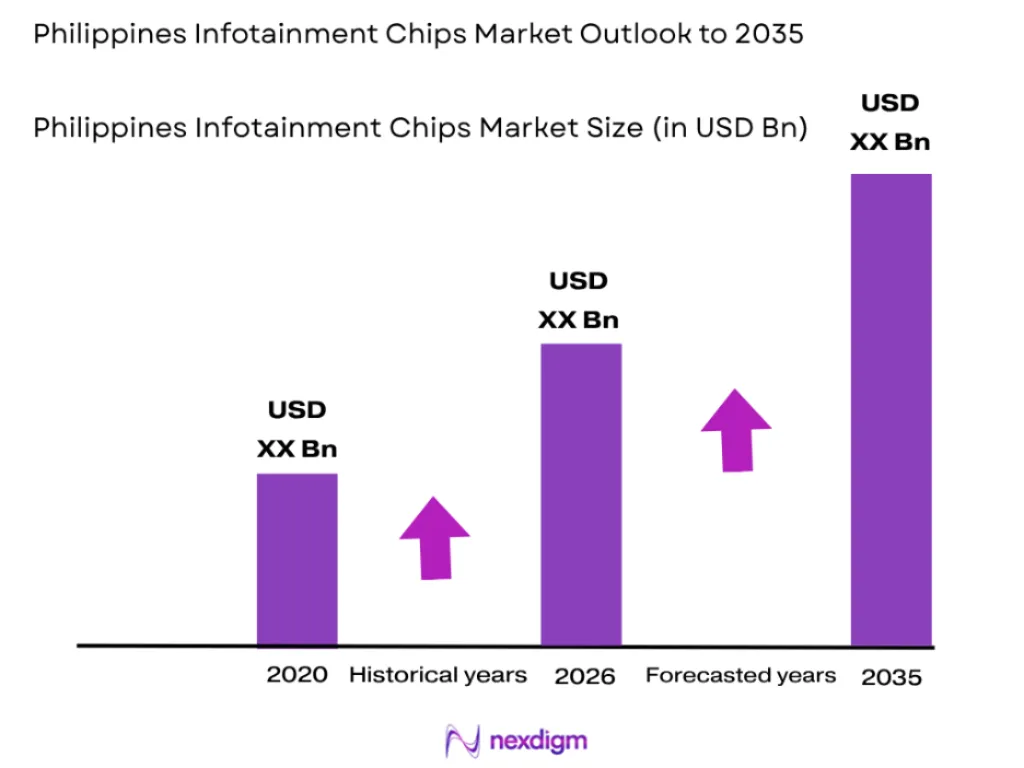
The Philippines infotainment systems market is expected to reach USD ~ billion by 2025, driven by the increasing adoption of advanced in-car technologies and the rising demand for connected and smart vehicles. This growth is supported by the expanding automotive industry and the increasing importance of digital features such as touchscreens, navigation, and voice-controlled systems. The shift towards premium vehicles with high-tech features and the integration of smartphones with vehicles also play a significant role in the expansion of the infotainment market.
Dominant cities in the Philippines, particularly Metro Manila, are the primary drivers of this market due to their high vehicle sales and the adoption of new automotive technologies. Additionally, the growing middle-class population, coupled with the increasing demand for enhanced in-car experiences, has led to higher penetration of infotainment systems in the automotive market. The key cities show a substantial market for infotainment systems due to rapid urbanization and the strong presence of international car manufacturers.
Market Segmentation
By Product Type
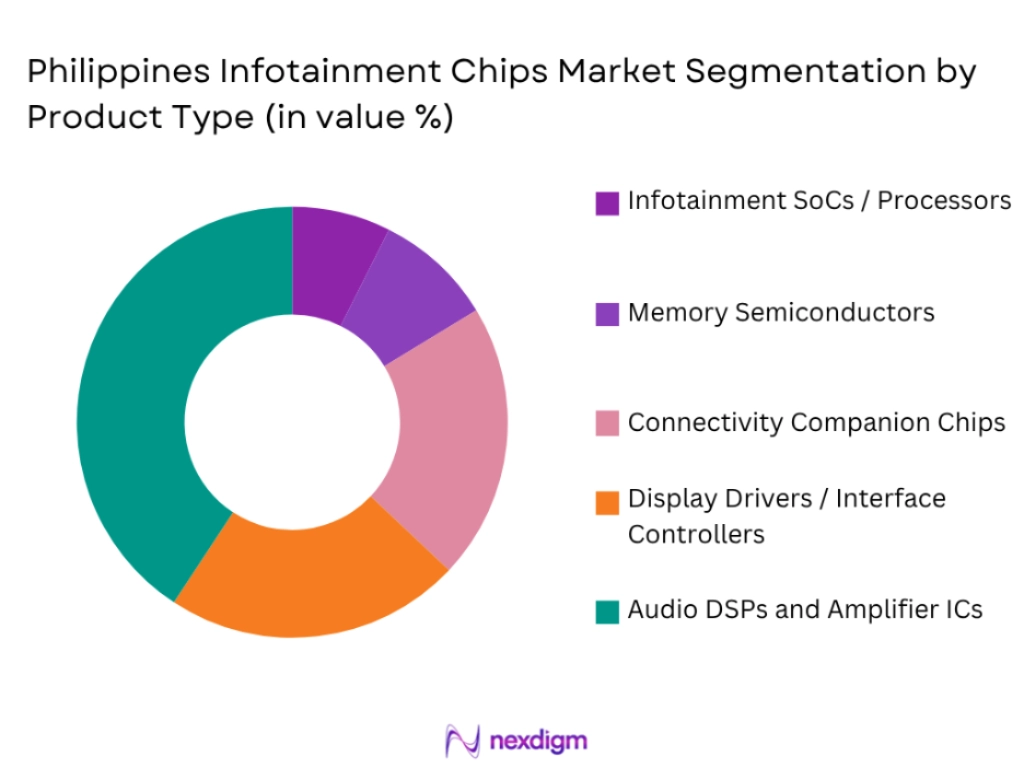
The Philippines infotainment systems market is segmented by product type into audio systems, video systems, and navigation systems. Recently, navigation systems have dominated the market due to their increasing integration with advanced GPS technologies and their importance in enhancing the driving experience. With the growing demand for safety and real-time information, navigation systems are becoming a key feature in modern vehicles, especially in urban areas like Metro Manila, where traffic conditions require effective routing solutions.
By Vehicle Type
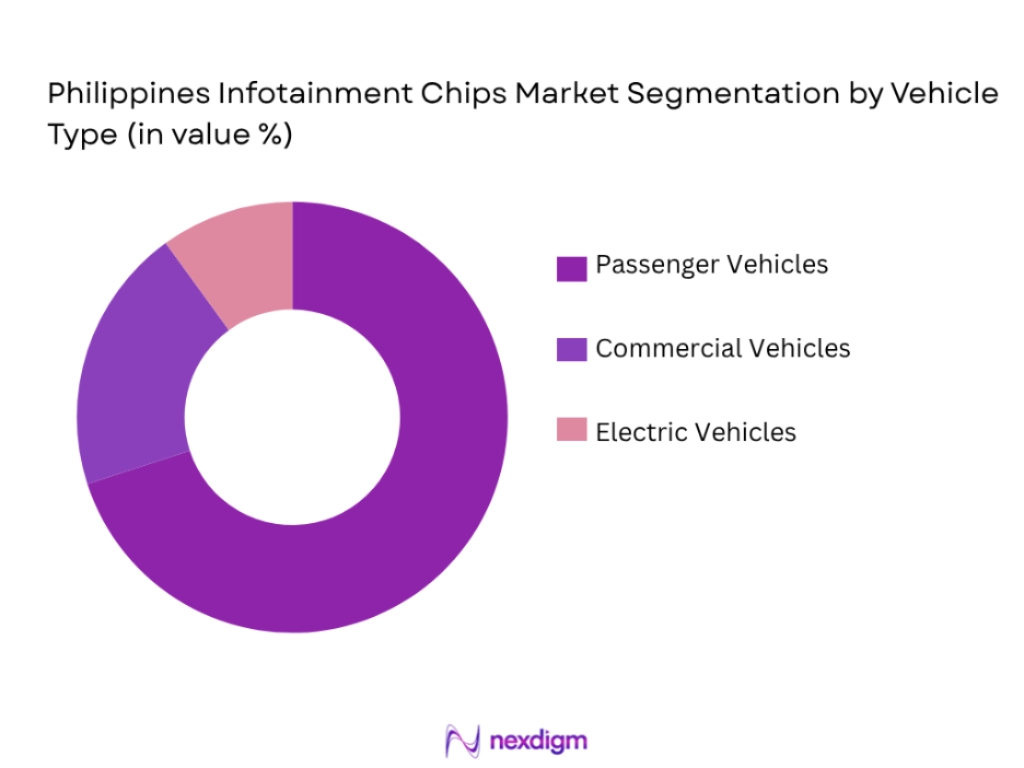
The market is also segmented by vehicle type into passenger vehicles, commercial vehicles, and electric vehicles. Recently, passenger vehicles have held the largest share of the market due to increasing disposable income, urbanization, and the growing preference for advanced in-car entertainment options. As the automotive sector grows in the Philippines, more consumers opt for vehicles with advanced infotainment systems, further driving the demand in the passenger vehicle segment.
Competitive Landscape
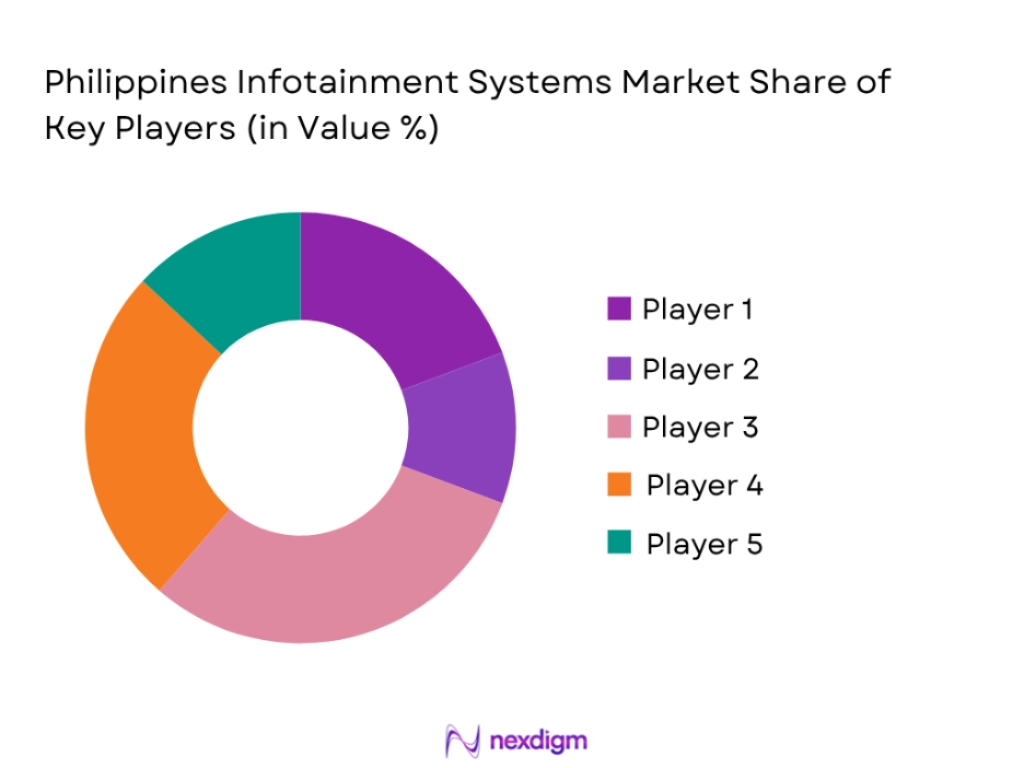
The competitive landscape of the Philippines infotainment systems market is characterized by a mix of global and regional players offering a variety of audio, video, and navigation solutions. Key players focus on delivering advanced technologies like voice recognition, smartphone integration, and touchscreens, which are becoming standard in modern vehicles. The competitive environment is marked by innovation, with companies continuously evolving to meet the growing demand for connected in-car experiences.
| Company Name | Establishment Year | Headquarters | Technology Focus | Market Reach | Key Products | Revenue (USD Billion) | Market-Specific Parameter |
| Pioneer Corporation | 1938 | Japan | ~ | ~ | ~ | ~ | ~ |
| Bosch Group | 1886 | Germany | ~ | ~ | ~ | ~ | ~ |
| Alpine Electronics | 1967 | Japan | ~ | ~ | ~ | ~ | ~ |
| Sony Corporation | 1946 | Japan | ~ | ~ | ~ | ~ | ~ |
| Harman International | 1980 | USA | ~ | ~ | ~ | ~ | ~ |
Philippines Infotainment Systems Market Analysis
Growth Drivers
Technological Advancements in Infotainment
The growing adoption of advanced technologies like voice control, touch screens, and real-time traffic updates is driving the growth of the Philippines infotainment systems market. Consumers are increasingly looking for connected car features, such as Apple CarPlay and Android Auto, which enable seamless integration between vehicles and mobile devices. These features improve the driving experience, making navigation, entertainment, and communication more accessible and user-friendly. As automakers continue to integrate new technologies, the demand for sophisticated infotainment systems in vehicles is expected to increase, especially in premium and mid-range vehicles. Additionally, the shift towards electric vehicles (EVs) is also contributing to the demand for advanced infotainment systems, as EVs often come with the latest technologies to enhance the driving experience.
Expansion of Automotive Industry and Consumer Demand
The expansion of the automotive industry in the Philippines, driven by an increase in vehicle sales, is significantly contributing to the growth of the infotainment systems market. As more vehicles are sold, the demand for enhanced in-car entertainment and information systems rises. Furthermore, the increasing disposable income of the Filipino middle class is leading to a higher preference for vehicles with advanced features. As the automotive industry continues to evolve, particularly with the introduction of connected vehicles, consumers in the Philippines are increasingly seeking cars equipped with sophisticated infotainment systems. Additionally, with the rise in demand for premium vehicles, which typically come with advanced infotainment solutions, the market is expected to expand further in the coming years.
Market Challenges
High Costs of Advanced Systems
One of the primary challenges facing the Philippines infotainment systems market is the high cost of advanced infotainment solutions. While premium vehicles equipped with the latest technology are in demand, the high cost of these systems often limits their adoption in the mass market. This barrier is especially evident in the commercial vehicle sector, where cost considerations take precedence over technological features. The affordability of infotainment systems is a key factor in determining their adoption, and the high upfront costs of advanced systems like touchscreens, voice recognition, and connectivity features could hinder widespread adoption in lower-end models or budget-conscious buyers.
Lack of Infrastructure for Advanced Features
The adoption of high-tech infotainment systems, such as those with real-time navigation, relies heavily on the availability of infrastructure like reliable internet connectivity and GPS systems. In some regions of the Philippines, especially rural areas, infrastructure gaps such as poor mobile data networks and limited GPS access can affect the full functionality of advanced infotainment systems. As a result, automakers face challenges in offering a consistent and reliable experience for users across different regions, limiting the market’s potential in these areas. Further investments in infrastructure are needed to ensure that the infotainment systems can function seamlessly in all parts of the country.
Opportunities
Growing Demand for Electric Vehicles (EVs)
The rise of electric vehicles (EVs) in the Philippines presents significant opportunities for the infotainment systems market. As more consumers opt for EVs, they are increasingly seeking cars equipped with cutting-edge infotainment systems that provide seamless connectivity, enhanced driver assistance, and energy management features. In EVs, infotainment systems are used to monitor energy consumption, provide real-time information about charging stations, and offer entertainment options during long trips. As the government introduces policies and incentives to promote the use of EVs, the demand for advanced infotainment systems in electric vehicles is expected to rise, offering growth prospects for the market.
Smartphone Integration and Connected Vehicles
With the increasing adoption of smartphones, consumers are demanding better integration between their mobile devices and in-car infotainment systems. The integration of Apple CarPlay and Android Auto into infotainment systems is becoming a standard feature in modern vehicles, allowing drivers to access apps, navigation, and music seamlessly from their smartphones. As the demand for connected vehicles increases, the infotainment systems market will benefit from the need for more sophisticated technologies that offer real-time updates, entertainment, and communication. The ongoing trend of connected cars, combined with the rise of smart technologies, presents a major growth opportunity for the Philippines infotainment systems market.
Future Outlook
The future of the Philippines infotainment systems market looks promising, with significant growth expected in the coming years. The increasing demand for connected and smart vehicles, along with advancements in infotainment technologies, will continue to drive market expansion. The government’s push for electric vehicles, along with growing consumer interest in sustainability, will further boost the adoption of advanced infotainment systems. Additionally, as more vehicles are sold with advanced connectivity features, the market will see an increase in demand for products that offer seamless integration with smartphones and other devices.
Major Players
- Qualcomm Technologies, Inc.
- NXP Semiconductors
- Broadcom Inc.
- Intel Corporation
- Texas Instruments
- Renesas Electronics Corporation
- STMicroelectronics
- Marvell Technology
- Infineon Technologies AG
- MediaTek Inc.
- Toshiba Corporation
- On Semiconductor
- Analog Devices
- NVIDIA Corporation
- Maxim Integrated
Key Target Audience
- Investments and venture capitalist firms
- Government and regulatory bodies
- Automotive manufacturers
- Automotive component suppliers
- Fleet management companies
- Car dealership networks
- Mobility service providers
Research Methodology
Step 1: Identification of Key Variables
Key variables such as vehicle sales trends, consumer preferences, technology adoption, and regulatory frameworks are identified through structured data collection. Both macroeconomic and industry-specific indicators are analyzed to understand market behavior.
Step 2: Market Analysis and Construction
Comprehensive datasets are compiled and structured to build a market model. This includes evaluating supply-demand dynamics, technological developments, and competitive positioning within the infotainment systems ecosystem.
Step 3: Hypothesis Validation and Expert Consultation
Initial findings are validated through consultations with industry experts, automotive professionals, and technology providers. This step ensures accuracy and alignment with real-world market conditions.
Step 4: Research Synthesis and Final Output
All validated insights are synthesized into a cohesive report. The final output presents detailed analysis, actionable insights, and strategic recommendations for stakeholders.

- Executive Summary
- Research Methodology (Definitions, Scope, Industry Assumptions, Market Sizing Approach, Primary & Secondary Research Framework, Data Collection & Verification Protocol, Analytic Models & Forecast Methodology, Limitations & Research Validity Checks)

- Market Definition and Scope
- Value Chain & Stakeholder Ecosystem
- Regulatory / Certification Landscape
- Sector Dynamics Affecting Demand

- Growth Drivers
Increasing Demand for In-Vehicle Connectivity
Technological Advancements in Infotainment Systems
Rising Popularity of Advanced Driver Assistance Systems (ADAS) - Market Challenges
High Manufacturing and Development Costs
Regulatory and Compliance Issues
Supply Chain Constraints and Chip Shortages - Market Opportunities
Integration of AI and Machine Learning in Infotainment Chips
Growth in Autonomous Vehicle Market
Expansion of 5G Technology in Automotive Systems - Trends
Rising Demand for Multi-Screen Infotainment Systems
Increasing Use of Touchscreen and Gesture-Based Controls - Government Regulations
- SWOT Analysis
- Porter’s Five Forces

- By Market Value, 2020-2025
- By Installed Units, 2020-2025
- By Average System Price, 2020-2025
- By System Complexity Tier, 2020-2025

- By System Type (In Value%)
Audio Chips
Video Chips
Control Chips
Display Chips
Connectivity Chips - By Platform Type (In Value%)
OEM Infotainment Systems
Aftermarket Infotainment Systems
Portable Devices
Smartphone-Based Systems - By Fitment Type (In Value%)
In-Vehicle Integrated Chips
Standalone Chips
Modular Chipsets
Cloud-Based Chips - By End User Segment (In Value%)
Automotive Manufacturers
Automotive Aftermarket
Consumer Electronics Manufacturers

- Market Share Analysis of Key Competitors
- Cross Comparison Parameters (Product Innovation, Pricing Strategy, Distribution Network, Regulatory Compliance, Technology Integration, After-Sales Support, Market Presence, User Interface Experience, Connectivity Features, OEM Partnerships, Software Integration Capability, Display Technology, Voice Assistant Integration, Cybersecurity Features, Update & Upgrade Capability)
- SWOT Analysis of Key Competitors
- Pricing & Procurement Analysis
- Key Players
Qualcomm Technologies, Inc.
NXP Semiconductors
Broadcom Inc.
Intel Corporation
Texas Instruments
Renesas Electronics Corporation
STMicroelectronics
Marvell Technology
Infineon Technologies AG
MediaTek Inc.
Toshiba Corporation
On Semiconductor
Analog Devices
NVIDIA Corporation
Maxim Integrated

- Growing Demand from the Automotive Industry
- Consumer Electronics Companies’ Adoption of Infotainment Systems
- Integration of Advanced Infotainment Chips into New Vehicle Models
- Rising Consumer Preference for Smart Vehicles

- Forecast Market Value, 2026-2035
- Forecast Installed Units, 2026-2035
- Price Forecast by System Tier, 2026-2035
- Future Demand by Platform, 2026-2035


 Request a Sample
 Ask for Customization
 Get a Quote
 Enquire Now