

 Download PDF
Market Overview
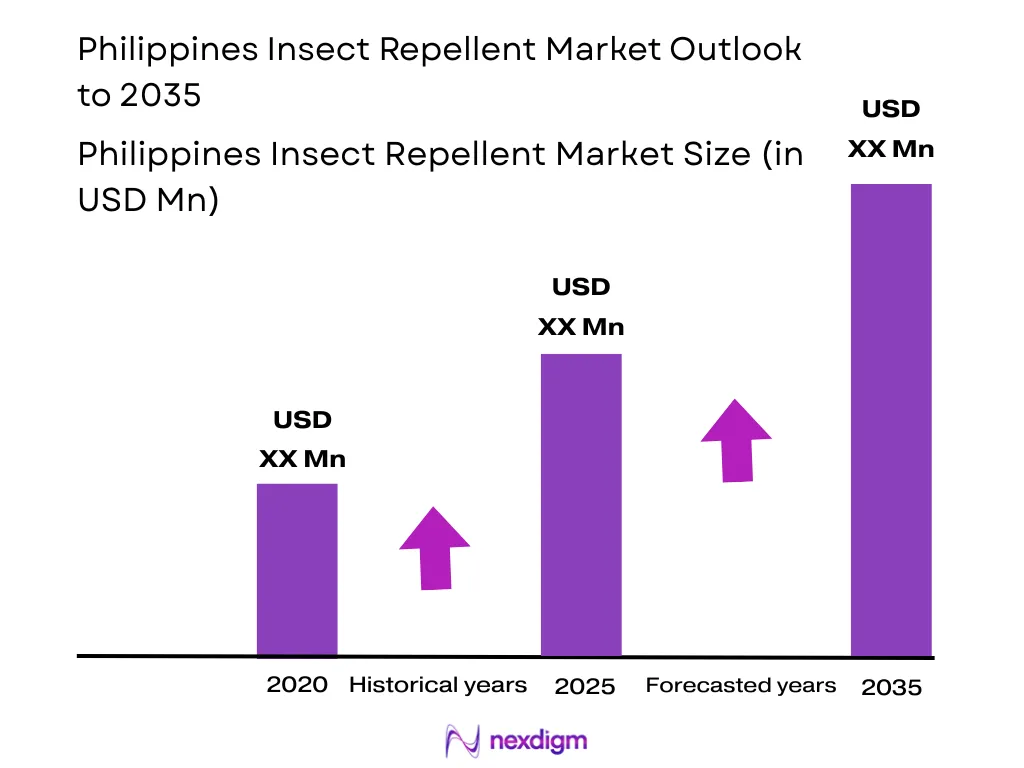
The Philippines insect repellent market has a significant role within broader pest control, driven by consistent domestic demand for mosquito and insect protection. According to industry data, the Philippines insect repellent import market continued reliance on external suppliers such as Indonesia, USA, China, India, and Germany in 2024, indicating continued high demand for repellents imported for local consumption. This import reliance persisted despite negative growth trends from 2020 to 2024, illustrating a resilient base of annual trade volume in repellent goods across categories including mosquito, bug, and fly repellents. This indicator reflects underlying consumer need for personal and household protection solutions in a tropical environment where vector exposure is constant. These imports and product flows provide a proxy for underlying market activity, showing that retailers and distributors maintain substantial stock and distribution networks to cater to persistent repellent needs. The nature of supply and trade flux underlines a market supported by consumption patterns linked to tropical climate exposure and health awareness campaigns enhancing product relevance in Filipino households and outdoor settings.
Within the Philippines, major urban and tourism centres dominate consumption and distribution of insect repellents due to scale of population, travel volume, and outdoor lifestyle. Metro Manila — comprised of Manila, Quezon City, and surrounding urban districts — is the most populous metropolitan area with over~million inhabitants, driving concentrated retail demand for repellents in both convenience retail and pharmacy channels. Large population clusters in Cebu City and Davao City also bolster retail penetration as these cities host major commercial hubs, tourism flows, and outdoor recreation that heighten seasonal insect exposure risks. The archipelagic geography — with thousands of inhabited islands — further supports frequent outdoor interaction for domestic and international tourism, enhancing appetite for protective products like sprays, vaporizers, and creams. The presence of high footfall travel destinations such as Boracay, Palawan, and Cebu contributes to seasonal demand spikes due to leisure traveller purchases in retail and online channels, where convenience and rapid access are key drivers.
Market Segmentation
By Insect Type
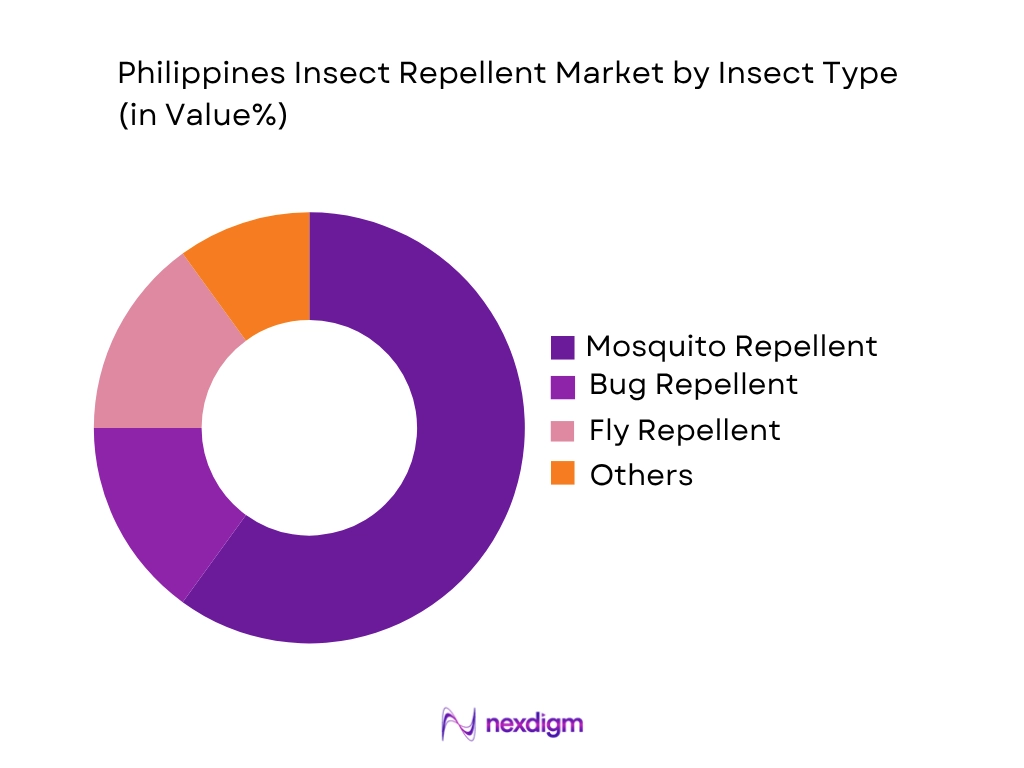
The Philippines insect repellent market segmented by insect type shows strong dominance of mosquito repellents. Due to the tropical climate and persistent prevalence of mosquito‑borne diseases such as dengue — with over 1,187 vector‑borne deaths reported in the country in 2023 — households and outdoor workers prioritize effective mosquito protection solutions. Mosquito repellents — including sprays, coils, vaporizer liquids, and wearable patches — remain essential for daily home use, travel, and outdoor activities. Government public health campaigns such as the Department of Health’s 4S strategy reinforce mosquito protection practices, elevating product demand even during seasonal dengue peaks. This sustained emphasis on mosquito‑specific repellents leads to large retail presence across convenience stores, supermarkets, pharmacies, and online platforms. Meanwhile, other insect segments such as fly or general bug repellents have lower share as consumers prioritize products addressing the most frequent vector threat — mosquitoes — especially in urban metros and high‑tourism regions where exposure risk is greatest.
By Product Format
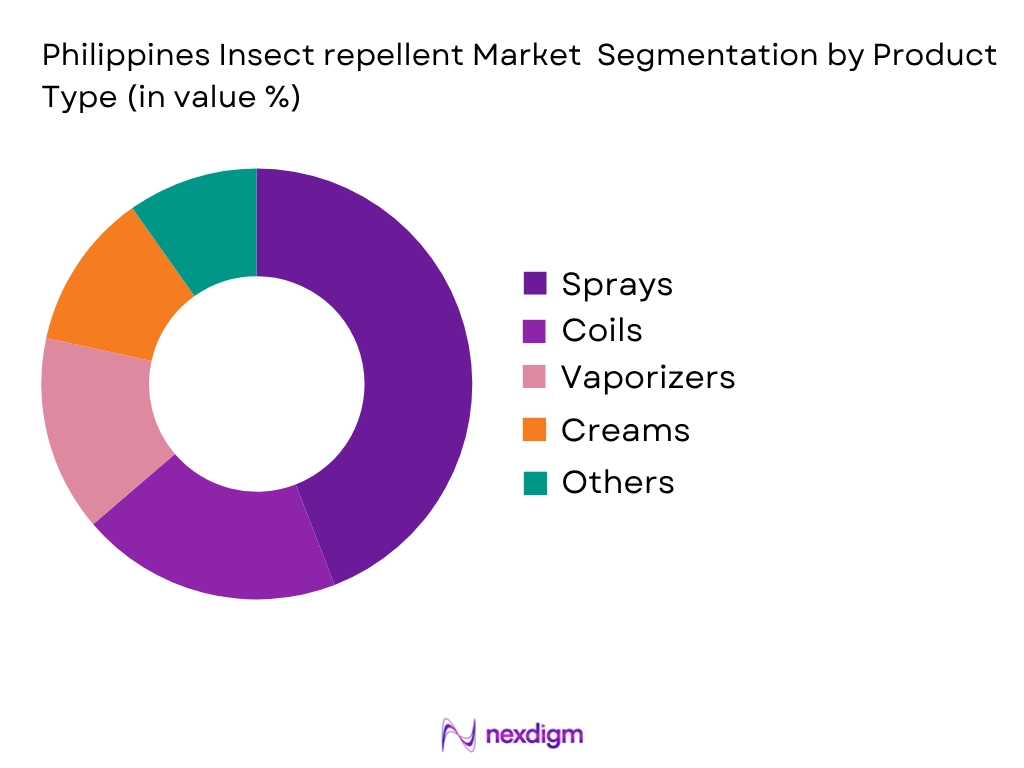
By product format, spray aerosols hold a leading position in the Philippines insect repellent market in 2024 due to their ease of application, widespread availability, and effectiveness in rapid surface coverage on skin and clothing. Sprays are commonly stocked in urban retail outlets and pharmacies, appealing to both household users and travellers seeking quick‑acting protection. Philippine consumers often combine spray use with other formats such as coils or vaporizer units for household ambient protection during nighttime or rainy season peak mosquito activity. Coils and mats offer low‑tech, low‑cost repellency solutions for extended indoor use. Vaporizers and handheld devices are increasingly adopted by urban households valuing smoke‑free alternatives. Creams and lotions cater to skin‑sensitive users or families with children. Combined, these product formats reflect diverse consumer preferences while spray aerosols remain dominant due to convenience and broad application contexts in both rural and urban portions of the country.
Competitive Landscape
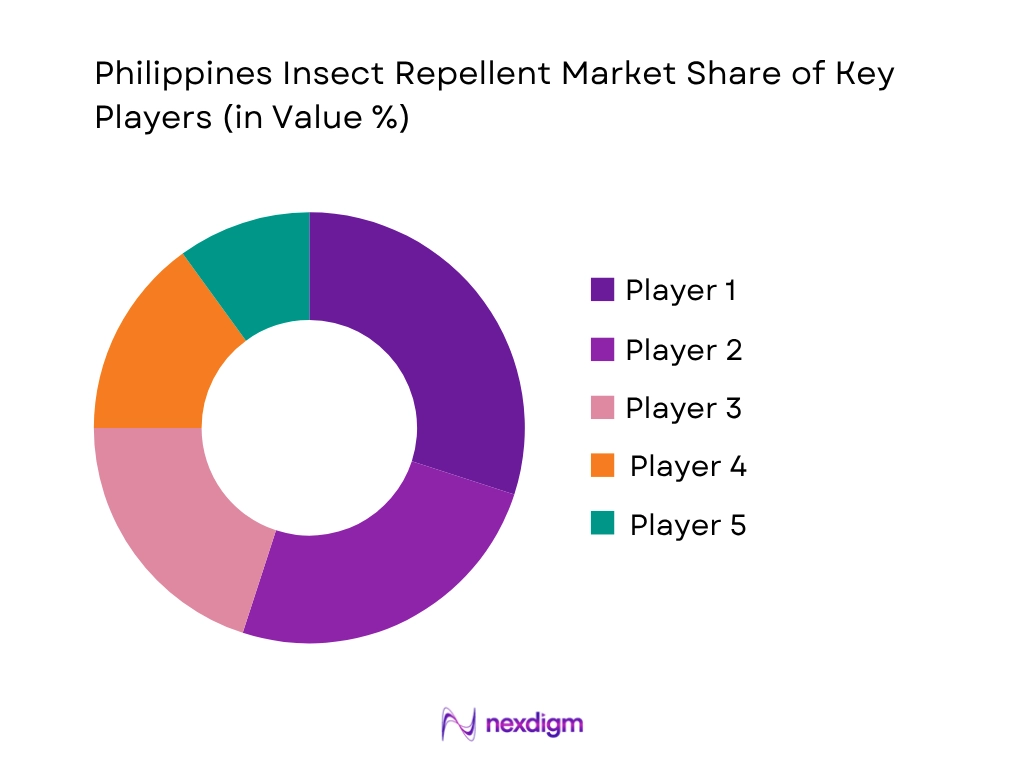
The Philippines insect repellent market remains competitive with several global and regional companies offering a range of protection products across channels. Global household and personal repellent leaders have established distribution via supermarkets, pharmacies, and online platforms. The competitive ecosystem is marked by established brands with broad portfolios, active ingredient diversification, retail penetration, and compliance with local regulatory standards.
| Company | Year Established | Headquarters | Product Portfolio Depth | Active Ingredient Range | Distribution Network | Regulatory Compliance | Innovation Capabilities |
| SC Johnson & Son Inc. | 1886 | USA | ~ | ~ | ~ | ~ | ~ |
| Reckitt Benckiser Group plc | 1812 | UK | ~ | ~ | ~ | ~ | ~ |
| Spectrum Brands Holdings, Inc. | 1906 | USA | ~ | ~ | ~ | ~ | ~ |
| Godrej Consumer Products Ltd. | 1897 | India | ~ | ~ | ~ | ~ | ~ |
| Herbal Armor (All
Terrain) |
1998 | USA | ~ | ~ | ~ | ~ | ~ |
Philippines Insect Repellent Market Analysis
Growth Driver
Tropical Climate and Vector‑Borne Disease Prevalence Driving Consistent Demand
The Philippines’ tropical climate strongly influences demand for insect repellent products, as vector‑borne diseases remain a public health priority with frequent seasonal transmission challenges. The country’s average annual temperature is approximately 27.6 degrees Celsius, coupled with high humidity, creating an environment where mosquitoes and other vectors proliferate throughout the year and especially following monsoon rainfall. According to the World Health Organization, the Philippines reported a total of 458,698 dengue cases with 1,187 deaths in the latest reporting period, demonstrating a sustained incidence of dengue that elevates public health focus on personal protection measures. These disease burden figures are disseminated through government agencies, underscoring public awareness campaigns for protective behaviours that frequently include use of repellents. Additionally, the Department of Health’s vector control initiatives emphasise household and community prevention, which in practical terms drives consumer consideration of repellents in daily routines, especially in high‑risk regions. As frequent exposure to vector activity remains a visible reality for residents in urban, peri‑urban, and rural settings, the insect repellent category benefits from climate‑linked disease patterns and consistent demand for protective applications at home, work, and outdoor recreation settings.
Population Scale, Urban Density, and Outdoor Lifestyle Patterns Enhancing Product Reach
Population and urban living patterns in the Philippines create broad consumer touchpoints for insect repellent products across retail, pharmacy, and e‑commerce channels. The country’s total population was reported as 113,723,000, with major urban centres such as Metro Manila housing over 13,480,000 residents, which concentrates household and outdoor engagement where insect exposure is encountered. These dense urban populations frequently visit open markets, public parks, plazas, coastal leisure zones, and transport terminals — environments where mosquitoes and biting insects are commonly encountered in the morning and evening. Moreover, international visitor arrivals reached 8,260,000, showing continued travel influx that increases demand for repellent products in travel retail and tourist‑oriented outposts. High retail accessibility, evidenced by more than 18,000 registered retail pharmacies and large supermarket chains, facilitates wide distribution of sprays, coils, creams, and wearable formats. This expansive population base and physical mobility patterns enhance visibility and availability of protective products, with retailers incorporating repellents into essential goods aisles alongside sunscreens and hygiene products. Urban density, mass transit use, and frequent outdoor social activities position insect repellents as a standard purchase for residents and visitors alike, reinforcing demand beyond conflict seasons and into routine household stocking behaviour.
Challenges
Seasonal Vector Peaks Straining Supply Chains and Retail Inventory Planning
A pronounced challenge for the insect repellent market in the Philippines is managing seasonal variation in demand driven by climatic and vector behaviour patterns that complicate supply chain planning and inventory deployment. The Philippines experiences pronounced wet and dry seasons, with rainfall patterns such as the average annual precipitation of around 2,348 millimetres promoting increased mosquito breeding in the rainy months and transitional periods. Retailers and distributors must forecast significantly higher uptake of coils, sprays, and other repellents during and after rainy spikes, placing pressure on logistics networks to allocate stock across island geographies with diverse demand timing. These climatic demand oscillations create intermittent surges that can result in either overstocks or shortages depending on forecasting accuracy. The distributed archipelagic nature of the country compounds the challenge, with product shipments required to traverse maritime, air, and land logistics channels to reach remote provinces and islands. The logistics requirement for stable temperature and humidity control in transit also raises cost variables for aerosol and liquid formulations. Synchronising procurement cycles with volatile demand — absent precise, real‑time vector activity data — places operational stress on manufacturers, importers, and retailers balancing shelf availability against perishable inventory and distribution cost structures.
Regulatory Compliance Demands and Import Dependency Affecting Category Accessibility
Regulatory compliance constraints and an import‑dependent supply profile present strategic challenges for the insect repellent sector, influencing product entry, certification timelines, and distribution ease. The Philippines relies significantly on imported active ingredients and finished repellent products, with customs data reflecting large import flows from countries such as China, USA, India, and Indonesia for mosquito, bug, and general repellent goods. This reliance exposes distributors to currency fluctuations and trade procedural requirements that can delay product onboarding to retail shelves. At the same time, the Bureau of Customs and the Department of Trade and Industry impose strict classification and reporting requirements for health and protection products, including insect repellents, that must align with Philippine National Standards and labeling requirements governed by the Bureau of Philippine Standards. Navigating these regulatory pathways, particularly for novel formulations or botanical active ingredients, requires extensive documentation and compliance review, slowing time to market for innovative products. Additionally, repellent goods must clear port entry inspections under quarantine and safety protocols, adding time and cost variables for supply partners. These compliance and import dependencies shape product availability and category breadth, particularly for emerging brands seeking rapid distribution across retail and digital channels.
Opportunities
Rising Public Health Awareness Supporting Household Protection Adoption
The ongoing public health emphasis on mosquito‑borne disease mitigation in the Philippines creates an opportunity for the insect repellent category to deepen relevance among households, schools, and community organisations. Government reports show significant disease burden with hundreds of thousands of dengue cases reported each cycle, prompting health advisories recommending protective behaviour, which often includes the use of repellents alongside environmental management and source reduction. Public awareness campaigns by the Department of Health stress the use of “protective clothing and repellents” as part of integrated community engagement, reinforcing household consideration of repellents as a component of everyday health routines. Schools, workplaces, and local government units increasingly include protective education sessions, where insect repellents are positioned as essential safety tools in high‑risk regions. This alignment between public health messaging and consumer behaviour enhances category legitimacy and encourages repeat purchase patterns beyond peak seasons. In addition, access to health communication channels and community programs provides product visibility in settings where consumer trust is anchored to health outcomes. With heightened attention to vector prevention at both household and institutional levels, the insect repellent market is positioned to benefit from sustained behavioural reinforcement on protective product usage.
High Digital Connectivity Enhancing E‑Commerce Distribution Access
The Philippines’ strong digital infrastructure unlocks opportunities for insect repellent brands to expand reach through online channels, particularly as consumers increasingly prefer digital purchase convenience for everyday health and protection products. The country currently has a reported internet user count exceeding 83,000,000, with nearly 60,000,000 users active on mobile internet platforms. This extensive digital engagement supports robust e‑commerce ecosystems where consumers can access a wider range of repellent products, including niche formats like wearable patches, botanically formulated lotions, and device‑based repellents. Online marketplaces and pharmacy delivery apps enable rapid browsing, comparative shopping, and doorstep delivery, reducing friction in access for consumers in urban and provincial regions alike. Digital platforms also facilitate targeted communication about product efficacy, safety instructions, and application tips — areas where consumers seek authoritative guidance given health risk concerns. The high volume of internet and mobile usage positions digital channels as primary growth vectors for repellent distribution, complementing traditional retail. Strategic partnerships with e‑commerce aggregators and pharmacy delivery services can further amplify product availability across diverse geographic points, accelerating category penetration and aligning with contemporary consumer purchase behaviour norms.
Future Outlook
The Philippines insect repellent market is expected to evolve significantly over the coming decade as consumer health awareness rises, vector‑borne disease concerns persist, and product innovation accelerates. Ongoing public health education and government initiatives — such as enhanced dengue prevention and control programs — will continue to reinforce the adoption of personal protection products. Urbanization trends, coupled with high population density in cities such as Manila, Cebu, and Davao, will keep demand elevated across retail and digital platforms. The integration of repellents with natural and skin‑friendly ingredient profiles is likely to expand consumer choice and adoption, while advancements in wearable and device‑integrated solutions may broaden market appeal across lifestyle segments. Continued investments in distribution infrastructure and partnerships with local retailers will enhance accessibility in both metro and regional areas, consolidating long‑term growth prospects for the market.
Major Players
- SC Johnson & Son Inc.
- Reckitt Benckiser Group plc
- Spectrum Brands Holdings, Inc.
- Godrej Consumer Products Ltd.
- Herbal Armor / All Terrain Company
- Bayer AG (Consumer Health)
- BASF SE
- EcoSMART Technologies
- Murphy’s Naturals
- Thermacell Corporation
- Enesis Group
- Klenzo Biotech Pvt. Ltd.
- Local Philippine Repellent Brands
- Outdoor & Specialty OEM Providers
- Natural & Botanical Product Manufacturers
Key Target Audience
- Household Consumer Goods Retailers
- Hotel and Resort Procurement Departments
- Outdoor & Adventure Travel Agencies
- Department of Health and Public Health Agencies
- Investments and Venture Capitalist Firms
- Import/Distribution Channel Partners
- Tourism and Hospitality Associations
- Retail Chain Category Management Teams
Research Methodology
Step 1: Identification of Key Variables
The initial phase mapped crucial market drivers, including vector disease prevalence, retail channels, active ingredient types, and consumer behavior. Secondary data from trade sources, import statistics, and public health records established baseline indicators of market flows and import dependence.
Step 2: Market Analysis and Construction
Historical import volumes, product categories, and distribution details were aggregated to estimate market composition. Consumption proxies were derived from trade data and segment adoption patterns across repellent types, forming the basis for value and volume modeling.
Step 3: Hypothesis Validation and Expert Consultation
Hypotheses regarding market preference shifts, ingredient trends, and channel performance were validated through interviews with distributors, retail category managers, and trade professionals in the Philippines insect repellent space, adding operational insights.
Step 4: Research Synthesis and Final Output
Final synthesis integrated verified secondary data with expert insights to produce a comprehensive view of current market structure, segmentation performance, competitive dynamics, and future outlook, ensuring a reliable and actionable industry assessment for business professionals.

- Executive Summary
- Research Methodology (Market Definitions and Assumptions, Insect Repellent Categorization Standards, Data Sourcing Framework, Value and Volume Estimation Methodology, Primary Research Protocol – Trade Panels & Expert Interviews, Secondary Data Validation, Forecasting Model – Bottom‑Up & Delphi Approach, Limitations and Confidence Integrity)

- Definition and Scope of Insect Repellent Goods
- Overview Genesis
- Lifecycle & Purchasing Behaviour Flux
- Supply Chain Mapping and Value Chain Analysis

- Growth Drivers
Climate‑Driven Demand (Tropical Vector Exposure)
Rising Consumer Health & Protection Awareness (Daily Use Adoption)
Outdoor Tourism and Recreational Exposure (Domestic & Foreign Travelers) - Market Challenges
Regulatory & Registration Complexity (Bureau of Food & Drugs)
Pricing Competition and Raw Material Sourcing Pressures - Opportunities
Increasing Adoption of Natural/Botanical Protection Products
Channel Expansion via Digital and Omni‑Retail Models - Market Trends
Integrated Protection Solutions (Repellent + UV/Anti‑Bacterial Formats)
Wearable & Smart Protection Devices (IoT Routes) - Government Regulation and Policy Framework (Labeling Standards, Pesticide Approvals)
Bureau of Food and Drugs (BFAD) Safety Compliance
Department of Agriculture (Pesticide Oversight) - SWOT Analysis (Philippines Market Context)
- Value Chain Stakeholder Mapping (Distributors, Retail, Logistics)
- Porter’s Five Forces Matrix (Supplier, Buyer, Substitutes, Entry Barriers)
- Competition Ecosystem (Fragmentation and Brand Dynamics)

- By Market Value (2020-2026)
- By Sales Volume (2020-2026)
- By Average Selling Price (ASP) and Distribution Channel (2020-2026)

- By Product Format
Aerosol Sprays
Roll‑Ons and Creams
Lotions
Wipes and Patches
Coils
- By Active Ingredient Category (In Value %)
DEET‑Based Actives
Picaridin‑Based Actives
Botanical/Natural Actives
IR3535
Novel Protection Chemistry
- By Distribution Channel (In Value %)
Modern Trade
Traditional Trade
Pharmacy
E‑Commerce/Digital Platforms
Specialty Outdoor and Travel Retailers
- By End‑Use Application (In Value %)
Residential Household Use
Commercial & Institutional Procurement
Healthcare & Clinics)
Outdoor Activities & Tourists
Industrial / Pest Control Services - By Geographic Region (In Value %)
Luzon
Visayas Region
Mindanao Region
Urban Metro Cities Sub‑Segments
Rural & Peri‑Urban Districts

- Major Players Market Position (Value & Volume Standing)
- Cross‑Comparison Parameters (Company Overview, Product Portfolio Breadth, Active Ingredient Footprint, Distribution Network, Regulatory Approvals, Innovation Pipeline, Brand Equity Score, Retail Touchpoint Density)
- SWOT Profiles of Key Competitors
- Pricing & SKU Architecture Benchmarking
- Detailed Company Profiles of Major Participants
SC Johnson & Son Inc.
Reckitt Benckiser Group plc
Spectrum Brands Holdings, Inc.
Godrej Consumer Products Ltd.
Herbal Armor / All Terrain Company
Dabur International Ltd.
Bayer AG (Consumer Health Divisions)
BASF SE (Active Ingredient Affiliate)
EcoSMART Technologies
Murphy’s Naturals
Thermacell Corporation
Enesis Group
Klenzo Biotech Pvt. Ltd.
Local Philippine Repellent Brands
Outdoor & Specialty OEM Providers

- Household Purchase Patterns and Repellent Penetration
- Price Sensitivity and Spending Metrics
- Consumer Preferences by Format and Ingredient Type
- Pain Points and Unmet Protection Needs
- Decision‑Making, Brand Loyalty and Switching Behavior

- By Market Value (2026-2035)
- By Sales Volume Potential (2026-2035)
- By Pricing and Channel Mix Trajectory (2026-2035)


 Request a Sample
 Ask for Customization
 Get a Quote
 Enquire Now