

 Download PDF
Market Overview
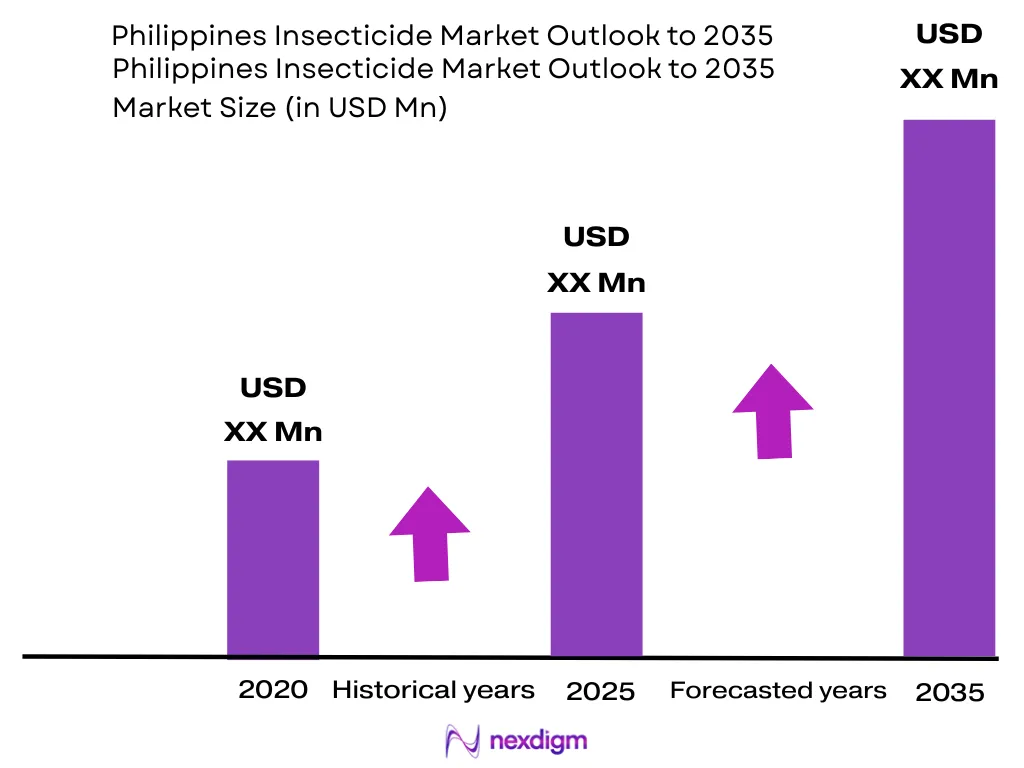
The Philippines insecticide market forms a significant segment of the country’s broader pesticide industry. According to industry data, the Philippines pesticide market was valued at approximately USD ~ million in 2024, compared to nearly USD ~ million in 2023, with insecticides accounting for the largest share of crop protection chemical demand due to widespread cultivation of rice, corn, bananas, coconuts, and vegetables. Demand is primarily driven by increasing pest infestations, climate-related crop losses, and the need to improve agricultural productivity across more than 9 million hectares of agricultural land.
Market Segmentation
By Product Category
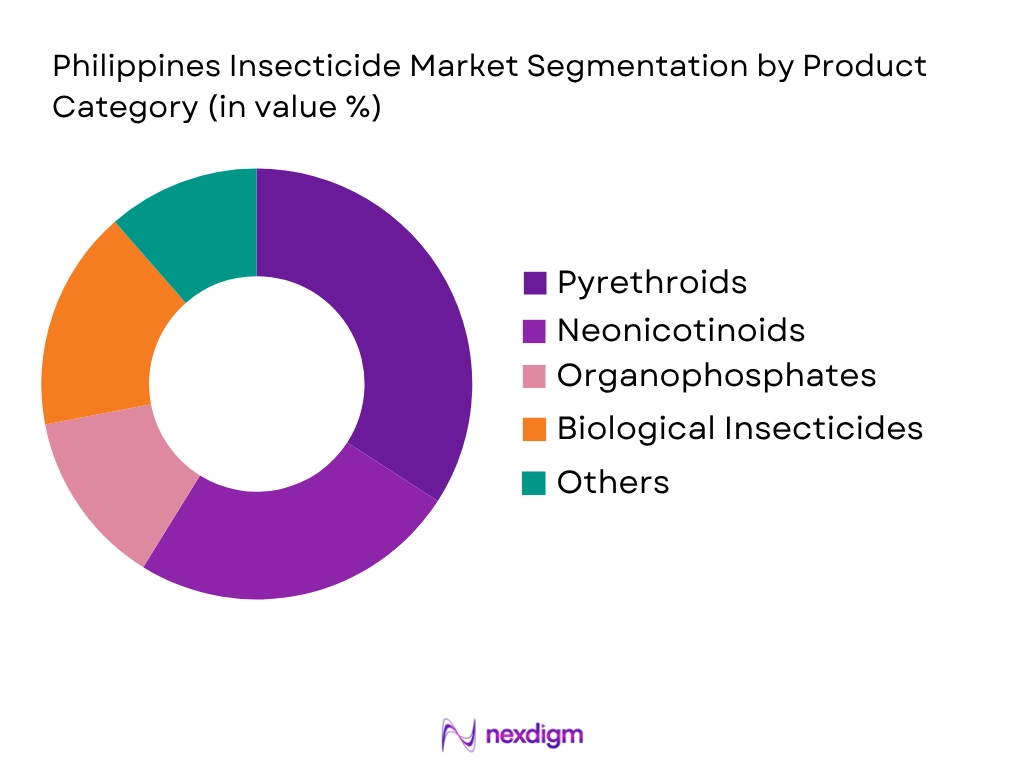
The Philippines insecticide market is segmented into pyrethroids, neonicotinoids, organophosphates, biological insecticides, and others. Recently, pyrethroids have maintained a dominant market share due to their broad-spectrum efficacy, relatively low application rates, and suitability across major crops such as rice, corn, vegetables, and fruit plantations. Products based on lambda-cyhalothrin, cypermethrin, and deltamethrin are widely adopted because they provide rapid knockdown effects against chewing and sucking pests. Strong brand recognition among multinational agrochemical companies, extensive dealer networks, and compatibility with integrated pest management programs further reinforce their dominance. Additionally, the affordability of pyrethroid-based formulations compared with many advanced biological alternatives has encouraged widespread adoption among both commercial growers and smallholder farmers, supporting their leadership position within the product type segment.
By Crop Type
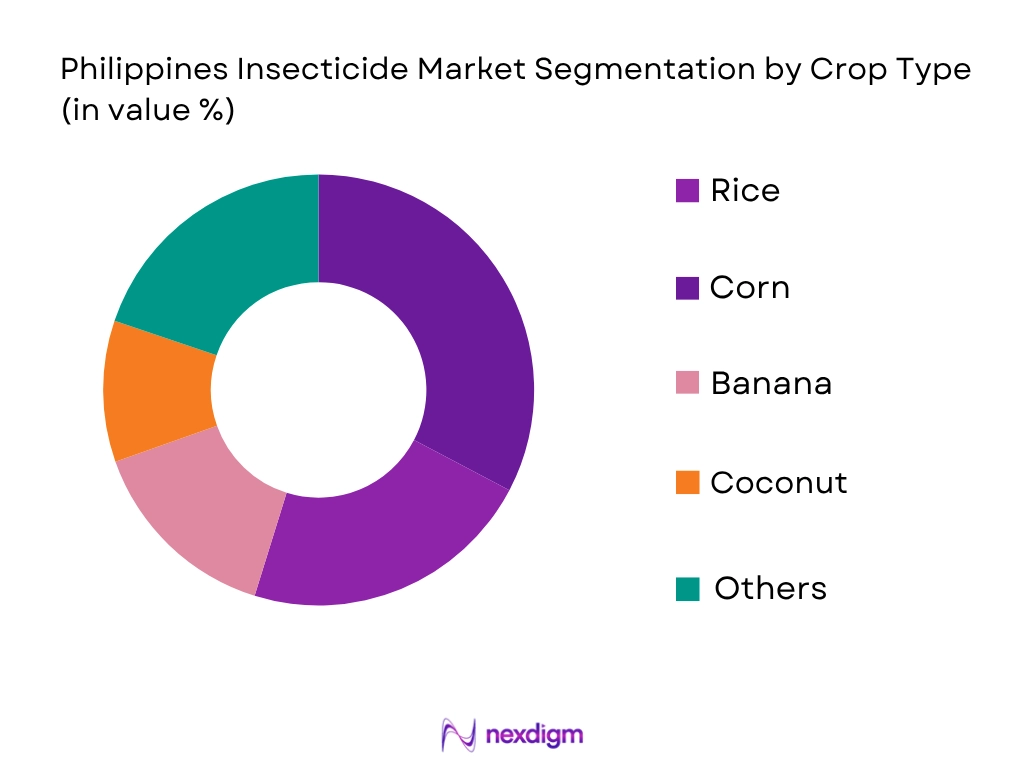
The Philippines insecticide market is segmented by crop type into rice, corn, banana, coconut, and others. Rice currently dominates the market because it remains the country’s most extensively cultivated crop and is central to national food security initiatives. Rice farms regularly face pest challenges including brown planthoppers, stem borers, leaf folders, and rice bugs, requiring multiple insecticide applications throughout growing cycles. Government-supported agricultural productivity programs and farmer subsidies have also facilitated insecticide adoption within rice-producing provinces. Furthermore, the high economic importance of maintaining rice yields encourages growers to invest in effective crop protection solutions. Large cultivated acreage, recurring pest outbreaks, and the necessity of safeguarding harvest volumes collectively contribute to rice maintaining the leading share within the crop type segmentation of the Philippines insecticide market.
Competitive Landscape
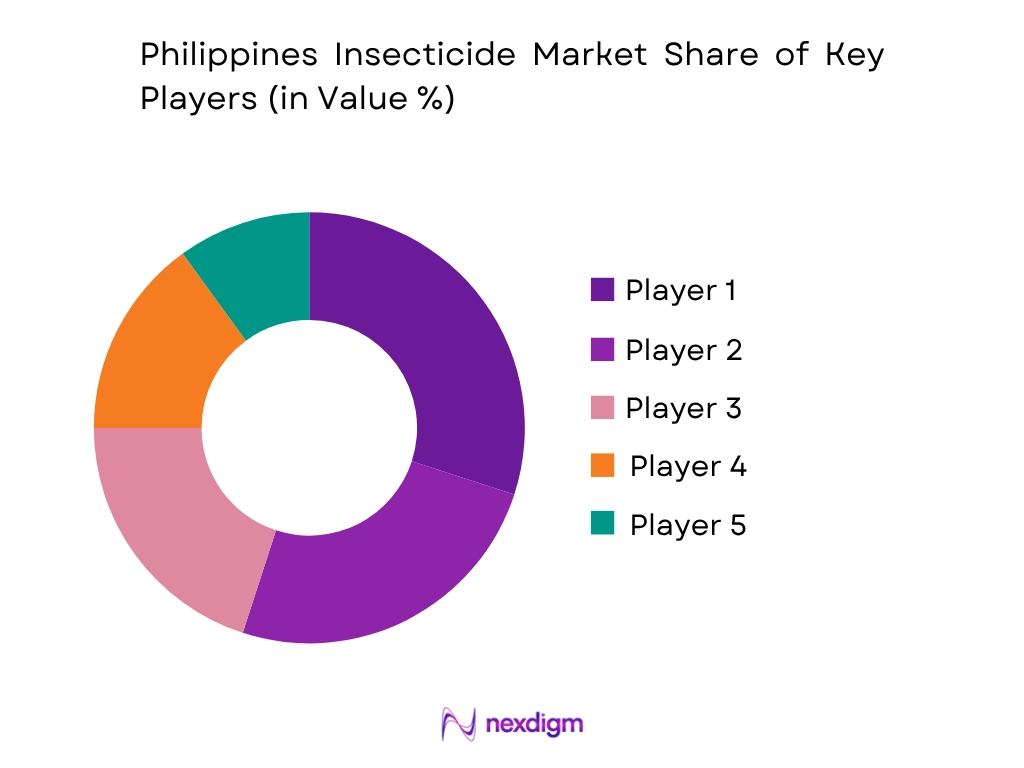
The Philippines insecticide market is characterized by the presence of multinational crop protection companies alongside regional distributors and local agrochemical suppliers. Market competition is primarily driven by product efficacy, active ingredient portfolios, dealer reach, registration strength, pricing competitiveness, and technical support capabilities. Global players dominate premium insecticide categories, while local firms compete through extensive distribution networks and cost-effective offerings.
| Company | Establishment Year | Headquarters | Key Insecticide Brands | Active Ingredient Portfolio | Biological Solutions | Distribution Reach | Crop Coverage | Regulatory Portfolio |
| Bayer Crop Science | 1863 | ~ | ~ | ~ | ~ | ~ | ~ | ~ |
| Syngenta | 2000 | ~ | ~ | ~ | ~ | ~ | ~ | ~ |
| BASF | 1865 | ~ | ~ | ~ | ~ | ~ | ~ | ~ |
| FMC Corporation | 1883 | ~ | ~ | ~ | ~ | ~ | ~ | ~ |
| Corteva Agriscience | 2019 | ~ | ~ | ~ | ~ | ~ | ~ | ~ |
Philippines Insecticide Market Analysis
Growth Drivers
Expansion of Rice and Corn Cultivation
The Philippines insecticide market is strongly supported by the country’s large agricultural sector, particularly rice and corn cultivation. According to the Philippine Statistics Authority (PSA), paddy rice production reached 19.30 million metric tons in 2024, while corn production exceeded 8.10 million metric tons, making these crops the largest consumers of insecticides due to recurring infestations from stem borers, planthoppers, armyworms, and leaf folders. The Food and Agriculture Organization reports that agricultural land in the Philippines remains above 12 million hectares, supporting intensive crop protection activities. The World Bank notes that the Philippine economy achieved a GNI per capita of USD 4,470 in 2024, improving farmers’ purchasing power and enabling greater adoption of modern crop protection products. Increasing pressure to improve yields from limited arable land encourages the use of insecticides across commercial and smallholder farms. Rice-producing provinces such as Isabela, Nueva Ecija, Pangasinan, and Cagayan remain major demand centers because pest outbreaks can significantly affect harvest volumes. These agricultural fundamentals continue to strengthen insecticide consumption across the country.
Increasing Pest and Climate-Related Crop Threats
Climate variability is increasing insect pressure across Philippine agriculture, creating sustained demand for insecticide products. The Philippines had a population of 112.7 million in 2024, increasing pressure on domestic food production systems and crop productivity. The country experiences frequent typhoons, flooding events, and changing temperature patterns that contribute to the spread of insect pests across rice, corn, coconut, sugarcane, and vegetable farms. According to the Philippine Atmospheric, Geophysical and Astronomical Services Administration (PAGASA), the Philippines experiences around 20 tropical cyclones annually, creating favorable conditions for secondary pest infestations following weather disturbances. The World Bank identifies agriculture as a critical sector requiring resilience investments due to climate exposure. Increasing occurrences of fall armyworm infestations in corn-growing regions and brown planthopper outbreaks in rice-producing areas have encouraged farmers to increase crop protection spending. As crop losses directly affect food availability and farmer incomes, insecticides remain an essential tool for maintaining agricultural output and reducing pest-related damage across major producing provinces.
Market Challenges
Dependence on Imported Active Ingredients
A major challenge for the Philippines insecticide market is the dependence on imported active ingredients and formulated products. The country relies heavily on imports from China, India, Japan, and other Asian suppliers for key insecticide compounds such as imidacloprid, lambda-cyhalothrin, chlorantraniliprole, and thiamethoxam. According to the Philippine Statistics Authority, agriculture contributes approximately PHP 1.9 trillion to the economy, yet domestic agrochemical manufacturing remains limited. Exchange-rate fluctuations directly impact import costs and inventory management for distributors and retailers. The Philippines imported goods worth more than USD 137 billion in recent trade statistics, reflecting broad dependence on imported industrial inputs. Delays in international shipping, supply chain disruptions, and geopolitical tensions can affect product availability during peak planting seasons. These constraints create challenges for distributors attempting to maintain consistent insecticide supplies, particularly in remote agricultural regions. Farmers may face shortages of critical crop protection products during severe pest outbreaks, impacting productivity and crop management practices across major farming provinces.
Pest Resistance Development
The increasing development of insect resistance presents a significant challenge for the Philippines insecticide market. Repeated use of the same active ingredients across large crop areas has contributed to resistance among key pest species, particularly rice stem borers, brown planthoppers, and fall armyworms. The country’s agricultural land base of more than 12 million hectares creates extensive exposure of pests to chemical treatments. Resistance development reduces product effectiveness, forcing farmers to rotate chemistries or adopt higher-cost solutions. The International Rice Research Institute (IRRI), headquartered in the Philippines, has highlighted the importance of resistance management strategies for rice pests across Southeast Asia. As farmers seek to maintain crop yields, improper application practices and overreliance on certain chemical classes can accelerate resistance development. This challenge increases demand for integrated pest management programs, biological controls, and newer insecticide formulations, while simultaneously creating uncertainty for traditional insecticide suppliers operating within the Philippine market.
Market Opportunities
Growth of Biological and Bio-Based Insecticides
The increasing focus on sustainable agriculture presents substantial opportunities for biological and bio-based insecticides in the Philippines. The country maintains over 12 million hectares of agricultural land and supports diverse export-oriented crops including bananas, pineapples, coconuts, and vegetables. Export markets increasingly require compliance with maximum residue limits and environmentally responsible production practices. The Philippines is recognized as one of the world’s major banana exporters, creating strong demand for crop protection products with lower environmental impact. Biological insecticides derived from microbial agents, botanical extracts, and natural predators align with government initiatives promoting sustainable farming. Rising consumer awareness regarding food safety and environmental stewardship is encouraging adoption of lower-residue crop protection technologies. As integrated pest management programs expand, biological products are increasingly being incorporated alongside conventional insecticides. This creates opportunities for manufacturers offering innovative biological formulations tailored to tropical crop production systems and export agriculture requirements.
Precision Agriculture and Digital Farming Adoption
The growing adoption of digital agriculture technologies presents a major opportunity for the Philippines insecticide market. The country’s population exceeded 112.7 million in 2024, increasing the need for efficient food production systems. According to the World Bank, the Philippines has created 11.7 million new jobs over the past two decades, supporting broader technology adoption across economic sectors. Precision agriculture technologies such as drone spraying, remote sensing, GPS-guided applications, and digital pest monitoring systems are becoming increasingly relevant for commercial farms and plantations. These technologies improve insecticide application efficiency, reduce wastage, and support targeted pest management strategies. Government and international development programs are also encouraging digital transformation within agriculture. Enhanced connectivity and mobile technology penetration create opportunities for agrochemical companies to integrate insecticide sales with digital advisory services, pest forecasting tools, and precision application solutions. These developments support more effective crop protection while helping farmers optimize resource utilization and improve agricultural productivity.
Future Outlook
The Philippines insecticide market is expected to witness steady expansion during the forecast period, supported by rising food demand, increasing pest pressure resulting from climate variability, and continued modernization of farming practices. Growing adoption of precision agriculture technologies, drone-based spraying, and integrated pest management programs is likely to reshape application practices. The increasing focus on biological crop protection products and residue-compliant export agriculture will create additional opportunities for manufacturers. Furthermore, government initiatives aimed at improving food security and agricultural productivity are expected to sustain long-term demand for advanced insecticide solutions.
Major Players
- Syngenta Philippines
- Bayer Crop Science Philippines
- BASF Philippines
- Corteva Agriscience Philippines
- FMC Corporation
- UPL Limited
- ADAMA Agricultural Solutions
- Sumitomo Chemical
- Nufarm Limited
- Nissan Chemical Corporation
- Philagro South East Asia
- Arysta LifeScience
- Rainbow Agro
- Atlas Fertilizer Corporation
- Davao Agricultural Ventures Corporation
Key Target Audience
- Insecticide Manufacturers
- Agrochemical Importers and Distributors
- Commercial Plantation Operators
- Rice and Corn Producer Associations
- Horticulture and Vegetable Producers
- Agricultural Cooperatives
- Investments and Venture Capitalist Firms
- Government and Regulatory Bodies
Research Methodology
Step 1: Identification of Key Variables
The research process begins with mapping the complete Philippines insecticide ecosystem, including manufacturers, distributors, regulators, plantation operators, commercial farms, and smallholder farmers. Extensive secondary research is conducted to identify key variables influencing demand, including crop acreage, pest incidence, import trends, active ingredient registrations, and agricultural production levels.
Step 2: Market Analysis and Construction
Historical market data is compiled through government publications, trade databases, agricultural statistics, company reports, and industry associations. Market revenues are analyzed across product types, crop categories, and application segments. Import volumes, consumption trends, and distribution structures are evaluated to construct accurate market estimates.
Step 3: Hypothesis Validation and Expert Consultation
Market assumptions are validated through interviews with agrochemical distributors, agricultural consultants, plantation operators, crop protection specialists, and regulatory stakeholders. These discussions provide practical insights into purchasing behavior, pest management trends, product preferences, and future growth opportunities.
Step 4: Research Synthesis and Final Output
The final stage involves integrating primary and secondary findings through data triangulation. Market forecasts are developed using crop production outlooks, regulatory developments, pest infestation trends, technological advancements, and industry investment patterns, ensuring a comprehensive and reliable assessment of the Philippines insecticide market.

- Executive Summary
- Research Methodology (Market Definitions and Assumptions, Abbreviations, Market Sizing Approach, Top-Down and Bottom-Up Analysis, Primary Research Framework, Industry Expert Interviews, Data Triangulation Methodology, Limitations and Forecasting Assumptions)

- Definition and Scope
- Market Evolution and Industry Genesis
- Timeline of Insecticide Industry Development
- Agricultural Value Chain Analysis
- Insecticide Supply Chain Assessment

- Growth Drivers (Expansion of Rice and Corn Cultivation, Rising Fall Armyworm Incidence, Increasing Banana and Coconut Pest Infestations, Government Food Security Programs, Growth in Commercial Agriculture)
- Market Challenges (Counterfeit Agrochemical Products, Import Dependence on Active Ingredients, Pest Resistance Development, Climate-Driven Pest Outbreaks, Farmer Awareness Gaps)
- Opportunities (Biological and Bio-Based Insecticides, Precision Agriculture Adoption, Drone-Based Crop Protection, Integrated Pest Management Programs, Expansion of High-Value Horticulture Crops)
- Market Trends (Shift Toward Low-Residue Insecticides, Increasing Use of Combination Formulations, Digital Agrochemical Distribution Platforms, Sustainable Crop Protection Solutions, Smart Farming Technologies)
- Government Regulation (Fertilizer and Pesticide Authority Registration Framework, Pesticide Import Licensing Requirements, Maximum Residue Limits Compliance, Environmental Safety Regulations, Good Agricultural Practices Standards)
- SWOT Analysis
- Stakeholder Ecosystem
- Porter’s Five Forces
- Competition Ecosystem
- PESTLE Analysis

- By Market Value (2020-2025)
- By Volume Consumption (2020-2025)
- By Average Selling Price (2020-2025)

- By Product Category (In Value %)
Pyrethroids
Neonicotinoids
Organophosphates
Carbamates
Biological Insecticides
Others - By Crop Type (In Value %)
Rice
Corn
Banana
Coconut
Sugarcane
Fruits & Vegetables
Others - By Formulation Type (In Value %)
Liquid Formulations
Wettable Powders
Granules
Suspension Concentrates
Emulsifiable Concentrates - By Application Method (In Value %)
Foliar Spray
Seed Treatment
Soil Treatment
Trunk Injection
Aerial Application
Others - By End User (In Value %)
Commercial Farms
Plantation Operators
Smallholder Farmers
Government Agricultural Programs
Horticulture Farms
Others

- Market Share of Major Players (Market Share by Value, Volume, Active Ingredient Portfolio, Crop Coverage, Distribution Reach, Regional Presence)
- Cross Comparison Parameters (Product Portfolio Strength, Active Ingredient Portfolio, Local Registration Portfolio, Distribution Network Reach, Dealer Coverage, Crop-Specific Solutions, Biological Product Portfolio, Regulatory Compliance Strength)
- SWOT Analysis of Major Players
- Pricing Analysis Basis SKUs (Imidacloprid, Thiamethoxam, Lambda-Cyhalothrin, Chlorantraniliprole, Cypermethrin, Deltamethrin, Emamectin Benzoate, Abamectin, Bifenthrin, Spinosad)
- Detailed Profiles of Major Companies
Syngenta Philippines
Bayer Crop Science Philippines
BASF Philippines
Corteva Agriscience Philippines
FMC Philippines
UPL Philippines
ADAMA Philippines
Sumitomo Chemical Philippines
Nufarm Philippines
Nissan Chemical Corporation
Philagro South East Asia
Arysta LifeScience
Rainbow Agro Philippines
Davao Agricultural Ventures Corporation
Atlas Fertilizer Corporation

- Crop Protection Demand Assessment
- Agrochemical Purchasing Power Analysis
- Insecticide Utilization Rates by Crop
- Farmer Pain Points and Adoption Barriers
- Product Selection Decision-Making Framework
- Brand Awareness and Loyalty Assessment
- Pest Management Practices
- Distribution and Accessibility Assessment

- By Market Value (2026-2035)
- By Volume (2026-2035)
- By Average Selling Price (2026-2035)


 Request a Sample
 Ask for Customization
 Get a Quote
 Enquire Now