
 Download PDF
Market Overview
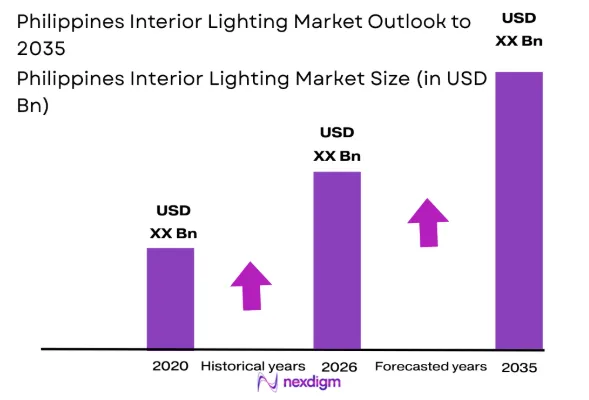
The Philippines Interior Lighting market is projected to reach approximately USD ~ billion, driven by the increasing adoption of energy-efficient lighting solutions such as LEDs and the rising demand for smart lighting systems. The market is experiencing robust growth due to factors such as growing urbanization, infrastructure development, and heightened awareness regarding energy conservation. Consumer preference for sustainable products and the government’s push for green technologies further fuel market expansion. Technological advancements in lighting systems, particularly with IoT integration, are contributing to the market’s continued momentum.
The dominant regions driving this market include Metro Manila, Cebu, and Davao, where rapid urbanization, increased disposable income, and commercial developments are encouraging demand for advanced lighting systems. These cities are also key hubs for real estate projects and retail spaces, which require modern and energy-efficient lighting solutions. Government support for eco-friendly initiatives, coupled with infrastructure development in these urban areas, has further cemented their position as dominant contributors to the lighting market’s growth in the Philippines.
Market Segmentation
By Product Type
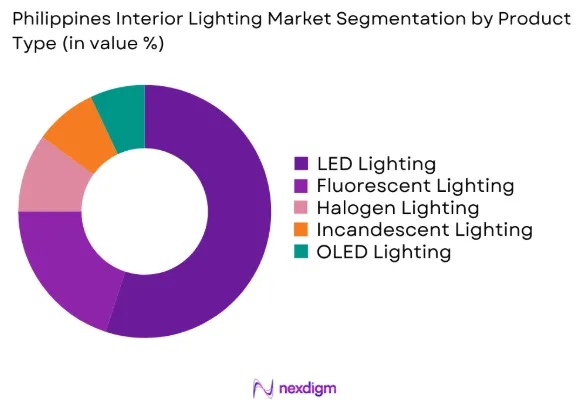
The Philippines interior lighting market is segmented by product type into LED lighting, fluorescent lighting, halogen lighting, incandescent lighting, and OLED lighting. Recently, LED lighting has taken the lead due to its low energy consumption, longer lifespan, and decreasing manufacturing costs. The widespread use of LED lighting in residential, commercial, and automotive sectors has positioned this sub-segment as the market leader. Energy efficiency, coupled with government incentives, has spurred further adoption, making LED the most preferred choice.
By End-User Segment
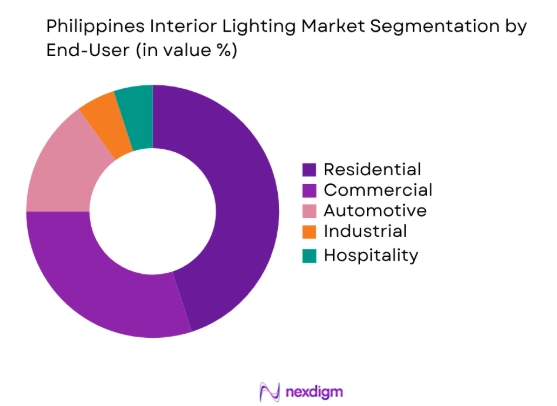
The Philippines interior lighting market is segmented by end-user segment into residential, commercial, automotive, industrial, and hospitality. Recently, the residential segment has dominated the market due to rising urbanization, increasing disposable income, and the demand for smart homes. As more Filipinos opt for energy-efficient and technologically advanced lighting systems, the residential segment’s growth is being supported by a shift towards home automation and smart lighting solutions that offer convenience and energy savings.
Competitive Landscape
The competitive landscape of the Philippines interior lighting market is characterized by the dominance of major global players as well as local companies that have steadily increased their presence. These companies continuously innovate their product offerings, focusing on advanced lighting technologies such as LED and smart lighting. The market has also seen consolidation, with key players seeking to expand their market share by offering integrated lighting solutions for both residential and commercial needs.
| Company Name | Establishment Year | Headquarters | Technology Focus | Market Reach | Key Products | Revenue | Additional Parameter |
| Philips Lighting | 1891 | Netherlands | ~ | ~ | ~ | ~ | ~ |
| General Electric | 1892 | USA | ~ | ~ | ~ | ~ | ~ |
| Osram | 1906 | Germany | ~ | ~ | ~ | ~ | ~ |
| Acuity Brands | 2001 | USA | ~ | ~ | ~ | ~ | ~ |
| Cree Inc. | 1987 | USA | ~ | ~ | ~ | ~ | ~ |
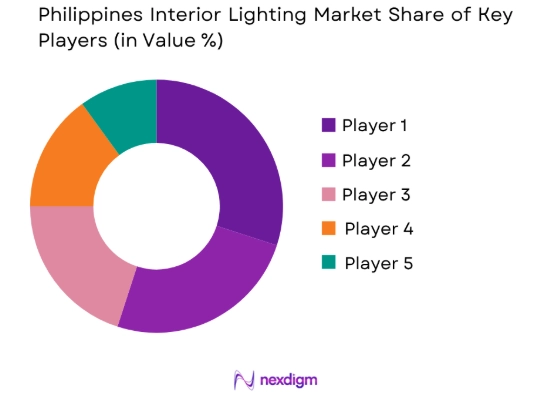
Philippines Interior Lighting Market Analysis
Growth Drivers
Increasing Demand for Energy-efficient Solutions
The demand for energy-efficient lighting solutions is one of the key growth drivers in the Philippines interior lighting market. As consumers and businesses look to reduce electricity consumption and long-term costs, energy-efficient technologies, particularly LEDs, have become the preferred choice. The rising focus on sustainability, coupled with government policies that incentivize the adoption of energy-saving products, has fueled this shift. Additionally, the continued increase in energy prices and the growing awareness of environmental impact have led to a more widespread acceptance of energy-efficient lighting. The market is expected to continue growing as more industries and households embrace energy-efficient lighting to meet both financial and environmental goals.
Technological Advancements in Smart Lighting
The growing adoption of smart home technologies in the Philippines is a significant driver for the interior lighting market. Smart lighting systems, which integrate with home automation platforms, provide consumers with greater control over their lighting through mobile apps, voice commands, and automation. This shift toward smart lighting is fueled by increased smartphone penetration, allowing consumers to manage their lighting systems remotely. Technological innovations and the rising demand for connected devices are accelerating this trend, making smart lighting an attractive option for homeowners. As more consumers prioritize convenience, energy efficiency, and customization in their living spaces, the smart lighting market is expected to expand, driving the overall growth of the interior lighting sector.
Market Challenges
High Initial Cost of Advanced Lighting Systems
A major challenge for the Philippines interior lighting market is the high initial cost of advanced lighting systems, especially LEDs and OLEDs. While these technologies offer long-term energy savings, their upfront costs are significantly higher than traditional options like incandescent or fluorescent bulbs. This price disparity creates a barrier to adoption, particularly for consumers in lower-income and rural areas, despite the long-term cost benefits. Although technological advancements and increased production are gradually lowering prices, the initial investment remains a key obstacle for widespread adoption in price-sensitive segments. The higher cost of advanced lighting systems continues to limit their accessibility to certain consumer groups, hindering faster market growth.
Supply Chain Constraints
Another significant challenge for the Philippines interior lighting market is the disruption of global supply chains, particularly following the COVID-19 pandemic. Shortages of raw materials and delays in manufacturing and shipping have reduced the availability of critical components for lighting production. These disruptions not only drive up production costs but also lead to longer lead times for product delivery. As a result, companies are struggling to meet consumer demand promptly, which negatively impacts market growth. The ongoing instability in global supply chains is expected to continue affecting the market’s ability to deliver products on time, hindering overall growth and delaying the adoption of advanced lighting solutions.
Opportunities
Expansion of Smart Lighting Solutions
The rise of smart home technologies offers a significant growth opportunity for the interior lighting market in the Philippines. As more consumers embrace connected homes, the demand for lighting systems that can be controlled remotely via smartphones or integrated into home automation platforms is increasing. Smart lighting systems provide benefits such as energy efficiency, convenience, and improved security, making them a popular choice among homeowners. With the expanding market for smart home devices, the need for advanced lighting systems is expected to grow. This presents an opportunity for companies to innovate and offer smart lighting solutions that meet consumer demands for automation and efficiency, driving further market expansion.
Government Support for Energy-efficient Solutions
The Philippine government is actively promoting sustainability through policies that encourage the adoption of energy-efficient products. Initiatives such as tax rebates, incentives for energy-saving technologies, and programs supporting eco-friendly solutions are accelerating the adoption of LED lighting and other energy-efficient systems. These government efforts provide companies in the interior lighting market with opportunities to increase product adoption. Additionally, the Philippines’ growing commitment to renewable energy and energy efficiency aligns with broader market trends, fostering favorable conditions for sustained growth. As these policies continue to support green technologies, the interior lighting market is expected to benefit from increased demand for energy-efficient products and solutions.
Future Outlook
The Philippines interior lighting market is poised for significant growth over the next five years, driven by advancements in smart lighting technology, increasing demand for energy-efficient solutions, and supportive government policies. The growing adoption of smart home systems will continue to influence the demand for connected lighting solutions, while energy efficiency will remain a key focus. Additionally, the ongoing urbanization and development of infrastructure in the Philippines will create further demand for modern, sustainable lighting systems in both residential and commercial sectors.
Major Players
- Philips Lighting
- General Electric
- Osram
- Acuity Brands
- Cree Inc.
- Signify
- ZumtobelGroup
- Schneider Electric
- Havells India
- Eaton Corporation
- Legrand
- Panasonic Corporation
- Honeywell International
- Lutron Electronics
- DelixiElectric
Key Target Audience
- Investments and venture capitalist firms
- Government and regulatory bodies
- Real estate developers
- Retailers and distributors of lighting products
- Residential consumers
- Commercial enterprises
- Automotive manufacturers
- Lighting solution providers
Research Methodology
Step 1: Identification of Key Variables
The first step involved identifying the key variables driving the interior lighting market, including technological innovations, consumer preferences, and government policies.
Step 2: Market Analysis and Construction
Comprehensive market analysis was conducted to identify the market size, growth trends, and segmentation by system type, platform type, and end-user segments.
Step 3: Hypothesis Validation and Expert Consultation
We validated our hypotheses through consultations with industry experts, manufacturers, and key stakeholders to ensure accurate data collection and insights.
Step 4: Research Synthesis and Final Output
The final output synthesized all findings into a comprehensive report, providing insights into the market’s current and future outlook based on expert interviews, industry trends, and market dynamics.

- Executive Summary
- Research Methodology (Definitions, Scope, Industry Assumptions, Market Sizing Approach, Primary & Secondary Research Framework, Data Collection & Verification Protocol, Analytic Models & Forecast Methodology, Limitations & Research Validity Checks)

- Market Definition and Scope
- Value Chain & Stakeholder Ecosystem
- Regulatory / Certification Landscape
- Sector Dynamics Affecting Demand
- Strategic Initiatives & Infrastructure Growth

- Growth Drivers
Increasing Demand for Energy-efficient Solutions
Rise in Smart Home Integration
Automotive Industry’s Demand for Custom Lighting - Market Challenges
High Initial Cost of Advanced Lighting Systems
Supply Chain Constraints
Technological Integration Issues - Market Opportunities
Growth of the Smart Home Market
Government Incentives for Energy-efficient Products
Rising Disposable Income and Urbanization - Trends
Shift Toward Smart Lighting Solutions
Rising Preference for Sustainable Lighting Products
Integration of IoT in Lighting Systems - Government Regulations
- SWOT Analysis of Key Competitors
- Porter’s Five Forces

- By Market Value 2020-2025
- By Installed Units 2020-2025
- By Average System Price 2020-2025
- By System Complexity Tier 2020-2025

- By System Type (In Value%)
LED Lighting
Fluorescent Lighting
Halogen Lighting
Incandescent Lighting
OLED Lighting - By Platform Type (In Value%)
Automotive Interior
Residential Lighting
Commercial Lighting
Aerospace Interior Lighting
Retail & Hospitality Lighting - By Fitment Type (In Value%)
On-premise Solutions
Cloud-based Solutions
Modular Solutions
Integrated Solutions
Customizable Solutions - By End User Segment (In Value%)
Automotive Manufacturers
Residential Consumers
Commercial Enterprises
Hospitality Providers
Aerospace Industry - By Procurement Channel (In Value%)
Direct Procurement
Online Retail Platforms
Third-party Distributors
Government Tenders
Private Sector Procurement

- Market Share Analysis
- Cross Comparison Parameters (System Type, Platform Type, Procurement Channel, End User Segment, Fitment Type, Market Share, Pricing Strategy, Technological Integration, Product Lifespan, Consumer Preferences)
- SWOT Analysis of Key Competitors
- Pricing & Procurement Analysis
- Key Players
Philips Lighting
General Electric
Osram
Acuity Brands
Cree Inc.
Signify
Zumtobel Group
Schneider Electric
Havells India
Eaton Corporation
Legrand
Panasonic Corporation
Honeywell International
Lutron Electronics
Delixi Electric

- Automotive Industry’s Demand for Advanced Lighting Solutions
- Residential Sector Shift Towards Smart Lighting
- Commercial Enterprises Adopting Sustainable Practices
- Aerospace Industry Demand for Custom Lighting Solutions

- Forecast Market Value, 2026-2035
- Forecast Installed Units, 2026-2035
- Price Forecast by System Tier, 2026-2035
- Future Demand by Platform, 2026-2035


 Request a Sample
 Ask for Customization
 Get a Quote
 Enquire Now