
 Download PDF
Market Overview
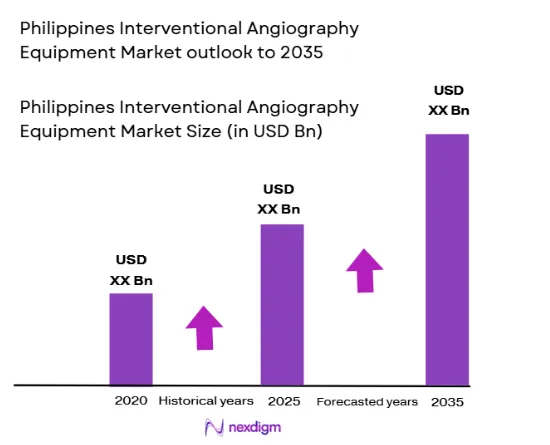
The Philippines Interventional Angiography Equipment Market has seen steady growth in recent years, with the market size reaching approximately USD ~ billion based on a recent historical assessment. The demand is driven by increasing cases of cardiovascular diseases and a shift towards minimally invasive procedures, which utilize interventional angiography technologies. Furthermore, advancements in imaging systems and the growing healthcare infrastructure in the country have contributed significantly to the market’s expansion. The market is expected to continue its upward trajectory, as both public and private healthcare sectors invest in advanced diagnostic and treatment technologies to meet rising demands.
The market is primarily driven by key metropolitan areas like Metro Manila, Cebu, and Davao. These regions have strong healthcare infrastructures and are the primary hubs for healthcare investments, both from the government and private enterprises. Metro Manila, being the capital, leads in the adoption of advanced medical technologies due to its higher concentration of hospitals, clinics, and specialized healthcare centers. Additionally, these areas are seeing a rise in medical tourism, which further strengthens the demand for interventional angiography systems, as international patients seek high-quality, affordable treatments in the Philippines.
Market Segmentation
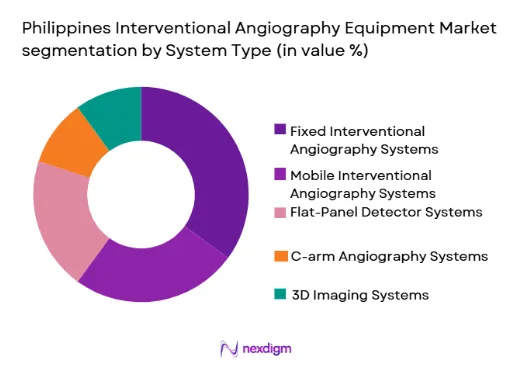
By System Type:
The Philippines Interventional Angiography Equipment market is segmented by system type into Fixed Interventional Angiography Systems, Mobile Interventional Angiography Systems, Flat-Panel Detector Systems, C-arm Angiography Systems, and 3D Imaging Systems. Recently, the Fixed Interventional Angiography Systems sub-segment has a dominant market share due to factors such as demand patterns, brand presence, infrastructure availability, and consumer preference. Fixed systems are widely used in large hospitals and diagnostic centers due to their high reliability, performance, and capacity to handle complex procedures. The fixed installation ensures stability, consistent imaging quality, and reduced maintenance, making them the preferred choice for most healthcare providers in the Philippines.
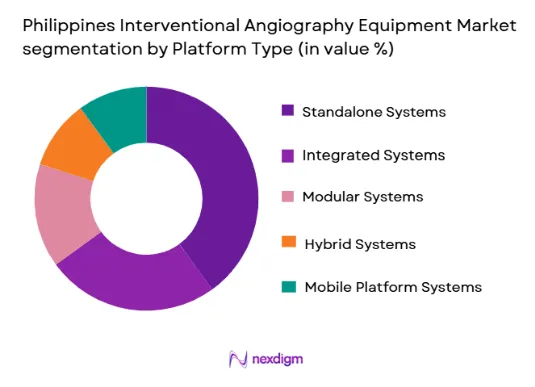
By Platform Type:
The Philippines Interventional Angiography Equipment market is segmented by platform type into Standalone Systems, Integrated Systems, Modular Systems, Hybrid Systems, and Mobile Platform Systems. Standalone Systems have a dominant market share due to factors like flexibility, cost-effectiveness, and ease of integration into existing healthcare settings. These systems are widely adopted in smaller clinics, outpatient care centers, and diagnostic imaging centers, where budget constraints are a key factor. Standalone systems offer a more affordable option compared to integrated systems and can be upgraded to incorporate advanced features as per demand, making them an attractive choice in the Philippines’ evolving healthcare environment.
Competitive Landscape
The competitive landscape of the Philippines Interventional Angiography Equipment market is characterized by a mix of global leaders and local players, with ongoing consolidation through strategic acquisitions and partnerships. Major players are focusing on technological advancements such as AI integration and mobile systems to enhance the capabilities of their products. The influence of established brands like GE Healthcare and Siemens Healthineers dominates the market, driving both innovation and competition. These players’ strong research and development activities, along with their extensive distribution networks, ensure their continued leadership in the market.
| Company Name | Establishment Year | Headquarters | Technology Focus | Market Reach | Key Products | Revenue (USD Billion) | Additional Parameter |
| GE Healthcare | 1892 | Chicago, USA | ~ | ~ | ~ | ~ | ~ |
| Siemens Healthineers | 1847 | Erlangen, Germany | ~ | ~ | ~ | ~ | ~ |
| Philips Healthcare | 1891 | Amsterdam, NL | ~ | ~ | ~ | ~ | ~ |
| Canon Medical Systems | 1933 | Tokyo, Japan | ~ | ~ | ~ | ~ | ~ |
| Medtronic | 1949 | Minneapolis, USA | ~ | ~ | ~ | ~ | ~ |
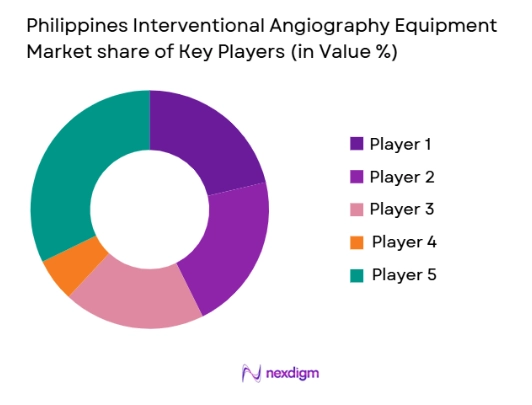
Philippines Interventional Angiography Equipment Market Analysis
Growth Drivers
Rising Cardiovascular Diseases:
Cardiovascular diseases have emerged as a leading cause of morbidity and mortality in the Philippines, significantly driving the demand for interventional angiography systems. The increasing prevalence of heart-related diseases, coupled with an aging population, has amplified the need for accurate diagnostic tools and minimally invasive treatments. This demand has prompted healthcare institutions to invest heavily in advanced interventional angiography technologies to offer better services to patients. Moreover, the shift towards minimally invasive surgeries, where interventional angiography plays a crucial role, is enhancing the demand for such systems. Public and private healthcare sectors are increasingly focusing on expanding diagnostic and treatment facilities, and this trend is expected to drive market growth in the coming years. Hospitals and clinics are opting for more advanced, efficient systems to improve patient outcomes and minimize recovery times, further driving the market. Consequently, the growth in cardiovascular diseases remains a critical factor in shaping the future of the market in the Philippines.
Technological Advancements in Imaging Systems:
Technological advancements in interventional angiography systems, such as the integration of AI, 3D imaging, and enhanced resolution, are playing a key role in market growth. These innovations improve the accuracy and efficiency of diagnostic procedures, making them essential for treating complex cases. Moreover, the introduction of mobile and portable angiography systems offers greater flexibility for healthcare providers, making these systems suitable for a variety of healthcare settings. The advancement of hybrid systems, which combine angiography with other imaging modalities, has also contributed to the growth of the market by offering comprehensive solutions for both diagnosis and treatment. These innovations are meeting the demand for precise, real-time imaging, allowing for better decision-making and enhanced patient care. The technological developments in interventional angiography are fostering adoption across a wide range of healthcare institutions, from large hospitals to outpatient care centers.
Market Challenges
High Cost of Advanced Systems:
The high cost of advanced interventional angiography systems remains a significant challenge for many healthcare providers in the Philippines, especially smaller hospitals and clinics with limited budgets. The initial capital investment, maintenance, and upgrade costs associated with these systems make it difficult for healthcare facilities in rural and underserved regions to adopt advanced technology. Although the long-term benefits of these systems, such as improved diagnostic accuracy and reduced patient recovery time, are recognized, the upfront costs continue to limit their widespread adoption. The high cost also affects the affordability of treatments, making it challenging for patients to access these services, further hindering market growth. Healthcare providers are often forced to prioritize more cost-effective solutions, which may result in suboptimal patient care. As a result, the cost barriers represent a major challenge to the growth of the market in the Philippines.
Limited Skilled Workforce:
A lack of adequately trained professionals who can operate advanced interventional angiography systems is another key challenge faced by the Philippines healthcare sector. While the demand for these technologies continues to rise, there is a shortage of skilled radiologists, cardiologists, and medical technicians capable of operating complex angiography systems effectively. This skills gap limits the efficiency and effectiveness of diagnostic procedures, which could result in misdiagnoses or suboptimal treatment outcomes. Additionally, the need for continuous training to keep up with technological advancements adds an extra layer of complexity for healthcare providers. Medical institutions are struggling to provide the necessary training programs to develop the required skillsets for operating cutting-edge angiography systems. Consequently, this challenge negatively impacts the market’s growth and adoption rate.
Opportunities
Expansion of Healthcare Facilities in Rural Areas:
There is a growing opportunity in the Philippines for expanding healthcare facilities in rural and underserved regions, which will increase the demand for interventional angiography systems. Currently, the majority of advanced healthcare technologies are concentrated in major metropolitan areas, leaving rural areas with limited access to state-of-the-art medical equipment. Government initiatives and private sector investments in healthcare infrastructure are expected to drive the development of new healthcare facilities in these regions. These efforts aim to improve access to advanced diagnostic tools, including angiography systems, for patients in remote areas. The expansion of healthcare services to rural regions will also encourage competition, potentially driving down prices and increasing accessibility. As these areas gain access to advanced medical technologies, the demand for interventional angiography equipment will surge, offering significant opportunities for market growth in these regions.
Adoption of Mobile and Portable Systems:
The adoption of mobile and portable interventional angiography systems presents another opportunity for market growth in the Philippines. Mobile angiography units are particularly beneficial in emergency care settings, where quick diagnosis and treatment are critical. The ability to move the equipment within healthcare facilities or to remote locations is expected to increase their adoption. Moreover, mobile systems offer more affordable alternatives to fixed units, making them attractive to smaller hospitals and diagnostic centers. The ability to offer angiography services at point-of-care settings, such as ambulances or emergency rooms, further enhances the demand for mobile angiography solutions. As healthcare institutions aim to improve accessibility and efficiency, mobile angiography systems are poised to become a significant growth driver in the market.
Future Outlook
The future of the Philippines Interventional Angiography Equipment Market is promising, with several growth drivers expected to shape the market in the next five years. Technological advancements in imaging systems, such as AI-powered diagnostic tools and portable angiography solutions, will likely drive demand. Additionally, regulatory support for expanding healthcare access and addressing cardiovascular diseases will continue to spur growth. Furthermore, increasing healthcare infrastructure investments in rural and underserved areas will open up new market opportunities, leading to broader adoption of angiography equipment. The market is expected to grow steadily, driven by these demand-side factors and ongoing technological developments.
Major Players
- GE Healthcare
- Siemens Healthineers
- Philips Healthcare
- Canon Medical Systems
- Medtronic
- Hitachi Medical Corporation
- Carestream Health
- Hologic Inc.
- Fujifilm Holdings Corporation
- Toshiba Medical Systems
- Samsung Medison
- Agfa-Gevaert
- Elekta AB
- Zonare Medical Systems
- Shimadzu Corporation
Key Target Audience
- Investments and venture capitalist firms
- Government and regulatory bodies
- Healthcare providers and hospital networks
- Cardiologists and radiologists
- Medical device distributors
- Technology integrators
- Healthcare infrastructure developers
- Equipment procurement officers
Research Methodology
Step 1: Identification of Key Variables
In this step, key variables influencing the interventional angiography equipment market, such as technological trends, economic conditions, and healthcare infrastructure, are identified and defined.
Step 2: Market Analysis and Construction
This step involves conducting a detailed analysis of the market, using both primary and secondary data, to construct a comprehensive market model.
Step 3: Hypothesis Validation and Expert Consultation
Expert consultation is carried out to validate hypotheses and insights, ensuring the accuracy and relevance of market findings.
Step 4: Research Synthesis and Final Output
The final research output is synthesized from the data, providing actionable insights and detailed market forecasts.

- Executive Summary
- Research Methodology (Definitions, Scope, Industry Assumptions, Market Sizing Approach, Primary & Secondary Research Framework, Data Collection & Verification Protocol, Analytic Models & Forecast Methodology, Limitations & Research Validity Checks)

- Market Definition and Scope
- Value Chain & Stakeholder Ecosystem
- Regulatory / Certification Landscape
- Sector Dynamics Affecting Demand
- Strategic Initiatives & Infrastructure Growth

- Growth Drivers
Increase in cardiovascular diseases
Rising demand for minimally invasive surgeries
Technological advancements in imaging systems
Growing healthcare infrastructure investments
Increasing geriatric population - Market Challenges
High cost of advanced interventional angiography systems
Lack of trained professionals
Stringent regulatory requirements
Limited healthcare access in rural areas
Complexity of system integration - Market Opportunities
Expansion of healthcare facilities in underserved regions
Emerging demand for hybrid operating rooms
Advancements in AI-driven interventional systems - Trends
Growth of digital angiography
Integration of AI and machine learning in interventional procedures
Rising adoption of mobile and portable angiography systems
Increased focus on radiation dose reduction technologies
Development of 3D imaging systems for precision procedures - Government Regulations & Defense Policy
Stringent certification and quality standards
Increased government funding for healthcare technology
Regulatory frameworks governing the import and sale of angiography systems - SWOT Analysis
- Stakeholder and Ecosystem Analysis
- Porter’s Five Forces Analysis
- Competition Intensity and Ecosystem Mapping

- By Market Value, 2020-2025
- By Installed Units, 2020-2025
- By Average System Price, 2020-2025
- By System Complexity Tier, 2020-2025

- By System Type (In Value%)
Fixed Interventional Angiography Systems
Mobile Interventional Angiography Systems
Flat-Panel Detector Systems
C-arm Angiography Systems
3D Imaging Systems - By Platform Type (In Value%)
Standalone Systems
Integrated Systems
Modular Systems
Hybrid Systems
Mobile Platform Systems - By Fitment Type (In Value%)
Wall-mounted Systems
Ceiling-mounted Systems
Floor-mounted Systems
Portable Systems
Modular Fitment Systems - By EndUser Segment (In Value%)
Hospitals
Clinics
Diagnostic Centers
Ambulatory Surgical Centers
Research and Academic Institutes - By Procurement Channel (In Value%)
Direct Sales
Distributors
Online Retail
Hospitals and Healthcare Organizations
Government Procurement - By Material / Technology (In Value%)
X-ray Technology
CT Imaging Technology
MRI Imaging Technology
Flat Panel Detectors
3D Imaging Technology

- Market structure and competitive positioning
- Market share snapshot of major players
- CrossComparison Parameters (Market Share, Technological Innovation, Product Portfolio, Brand Recognition, Customer Service, Regulatory Compliance, Price, Distribution Channels, R&D Investment, Strategic Partnerships)
- SWOT Analysis of Key Players
- Pricing & Procurement Analysis
- Key Players
GE Healthcare
Siemens Healthineers
Philips Healthcare
Canon Medical Systems
Shimadzu Corporation
Medtronic
Hitachi Medical Corporation
Carestream Health
Hologic Inc.
Fujifilm Holdings Corporation
Toshiba Medical Systems
Samsung Medison
Agfa-Gevaert
Elekta AB
Zonare Medical Systems

- Increase in the number of hospitals adopting advanced imaging systems
- Growing demand from diagnostic centers for precise imaging
- Shift toward ambulatory surgical centers due to cost-effectiveness
- Rising healthcare investments in research institutions

- Forecast Market Value, 2026-2035
- Forecast Installed Units, 2026-2035
- Price Forecast by System Tier, 2026-2035
- Future Demand by Platform, 2026-2035


 Request a Sample
 Ask for Customization
 Get a Quote
 Enquire Now