

 Download PDF
Market Overview
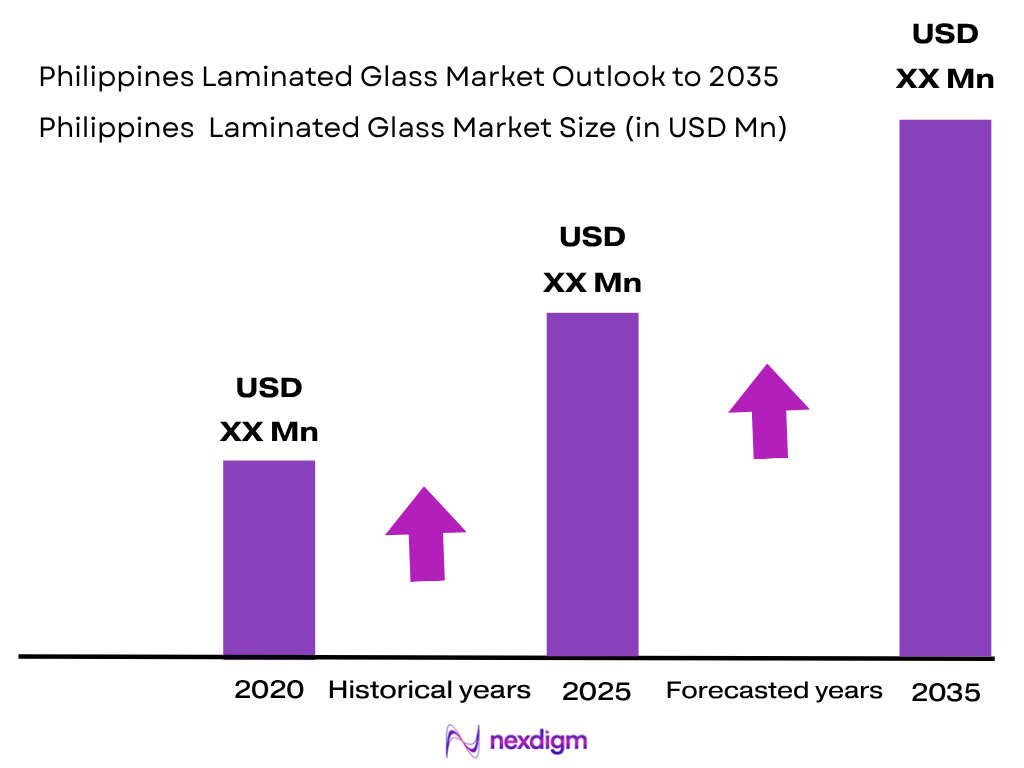
The Philippines laminated glass market is valued at ~USD XX million in 2024 and is projected to grow at a CAGR of ~XX% during 2026-2035, supported by increasing adoption in high-rise buildings, commercial infrastructure, automotive applications, and safety glazing solutions. The market growth is driven by rising construction activity, demand for hurricane-resistant glazing, and increasing preference for energy-efficient building materials. According to the Philippine Statistics Authority, the construction sector contributed PHP XX trillion to economic activity, reflecting continued demand for advanced architectural materials.
The Philippines laminated glass market is concentrated across Metro Manila, Cebu, and Davao due to their strong construction activity, commercial development, and infrastructure expansion. Metro Manila remains the primary demand center because of high-rise residential towers, business districts, airports, and premium commercial projects. Cebu is supported by tourism infrastructure and mixed-use developments, while Davao benefits from urban expansion and regional infrastructure investments. The Philippine construction industry recorded continued growth supported by public infrastructure programs and private real estate investments, increasing demand for safety and performance-oriented glazing solutions.
Market Segmentation
By Application Type
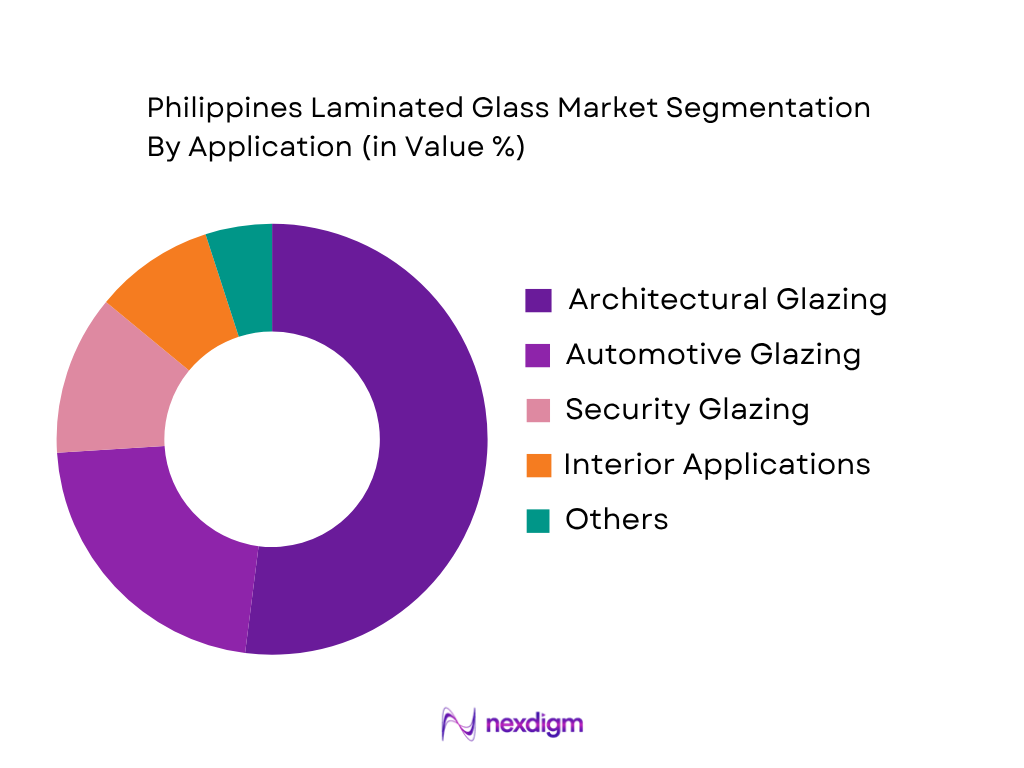
The Philippines laminated glass market is segmented by application type into architectural glazing, automotive glazing, security glazing, interior applications, and specialty applications. Architectural glazing dominates the market due to extensive usage in high-rise buildings, commercial towers, hotels, shopping centers, and facade systems. The increasing requirement for safety glass in earthquake-prone and typhoon-exposed regions supports adoption of laminated glass over conventional glazing solutions. Commercial developers and architects increasingly specify laminated glass for curtain walls, skylights, partitions, and exterior facades because of its enhanced safety, acoustic insulation, and solar-control properties.
By Interlayer Type
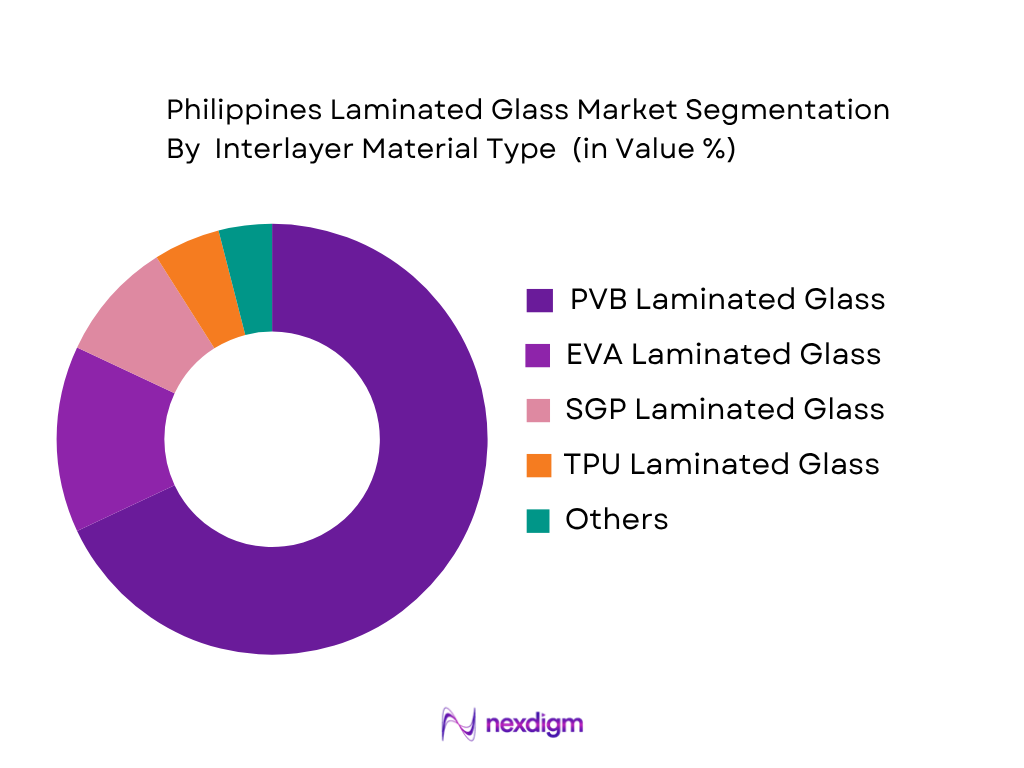
The Philippines laminated glass market is segmented by interlayer type into PVB, EVA, SGP, TPU, and specialty interlayers. PVB-based laminated glass holds the dominant position due to its extensive application in automotive windshields, architectural safety glass, and commercial building projects. PVB provides strong adhesion, impact resistance, sound reduction capability, and UV protection, making it suitable for tropical climatic conditions. The widespread availability of PVB-based products through global suppliers and local processors has strengthened its adoption across construction and transportation sectors.
Competitive Landscape
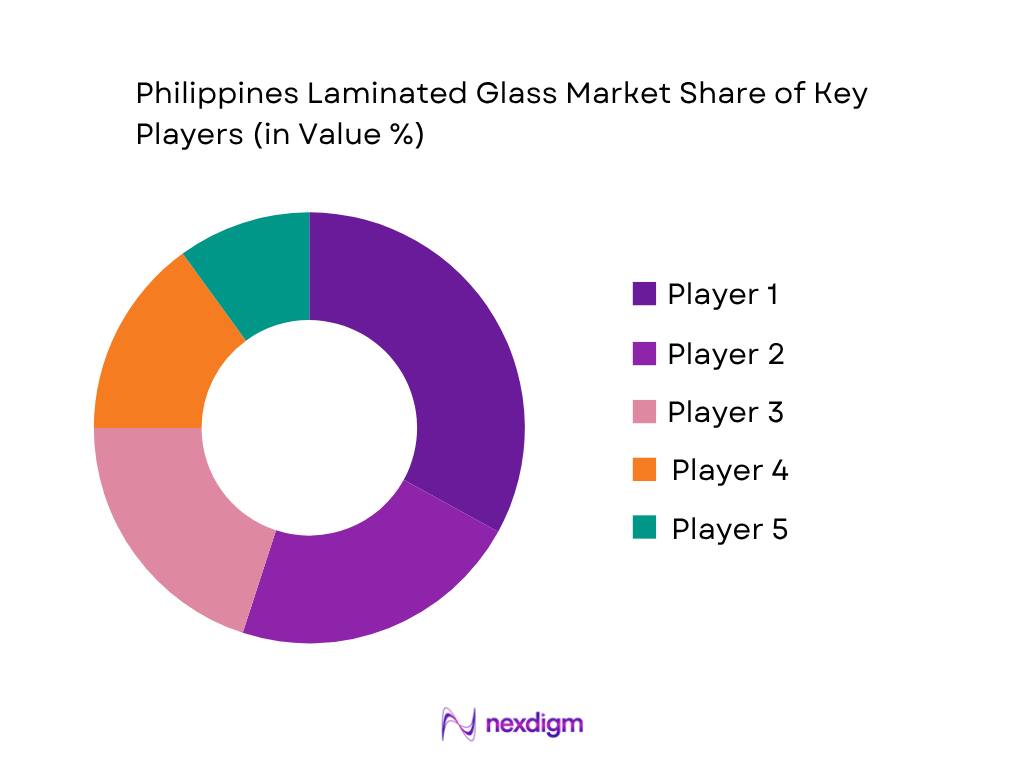
The Philippines laminated glass market is characterized by the presence of international glass manufacturers, regional suppliers, and domestic processors. Competition is driven by product quality, fabrication capabilities, project execution expertise, distribution network, and ability to provide customized glazing solutions. Major companies compete across architectural glass, automotive glazing, safety glass, solar-control glass, and specialty laminated glass applications.
| Company | Establishment Year | Headquarters | Product Portfolio | Key Applications | Manufacturing Capability | Distribution Network | Technology Focus |
| AGC Glass | 1907 | Japan | ~ | ~ | ~ | ~ | ~ |
| Saint-Gobain | 1665 | France | ~ | ~ | ~ | ~ | ~ |
| Guardian Glass | 1932 | USA | ~ | ~ | ~ | ~ | ~ |
| Taiwan Glass | 1964 | Taiwan | ~ | ~ | ~ | ~ | ~ |
| Republic Glass | 1954 | Philippines | ~ | ~ | ~ | ~ | ~ |
Philippines Laminated Glass Market Analysis
Growth Drivers
Rapid Urbanization and High-Rise Construction Development
The expansion of urban centers in the Philippines is strengthening demand for laminated glass solutions, particularly in Metro Manila, Cebu, and Davao where high-rise residential, commercial, and mixed-use developments are increasing. The Philippine Statistics Authority recorded a national population of more than 112 million people, creating continued pressure for vertical urban development and efficient land utilization. The Philippine construction industry remains a significant contributor to economic activity, supported by private real estate projects and public infrastructure programs. High-rise buildings increasingly require laminated glass for safety, acoustic performance, and improved occupant protection against external impacts. The Department of Human Settlements and Urban Development continues to support housing and urban development initiatives, increasing the need for durable construction materials. Laminated glass adoption is further supported by the country’s exposure to typhoons and earthquakes, where safety glazing reduces injury risks during structural damage. Developers in major business districts such as Makati, Bonifacio Global City, and Ortigas are increasingly incorporating advanced facade systems, curtain walls, and energy-efficient glazing solutions to meet modern building requirements and enhance building performance.
Increasing Safety Glazing Requirements and Infrastructure Development Programs
The rising focus on building safety standards and infrastructure modernization is increasing demand for laminated glass across commercial buildings, transportation facilities, and public infrastructure projects. The Philippines Department of Public Works and Highways continues to implement large-scale infrastructure programs covering roads, airports, government facilities, and urban transport systems, creating demand for durable architectural materials. The country recorded continued infrastructure spending expansion, with government infrastructure allocations exceeding PHP 1 trillion in recent national budgets. Laminated glass is increasingly preferred in airports, terminals, commercial towers, and institutional buildings because it maintains structural integrity after impact and provides enhanced protection compared with conventional glazing. The Philippines’ geographic exposure to more than 20 tropical cyclones annually, according to national weather monitoring agencies, increases the requirement for resilient building materials. Safety glazing solutions are also gaining importance in automotive applications as vehicle production and assembly activities expand. The increasing adoption of modern building codes, green construction practices, and improved safety specifications is encouraging architects and developers to specify laminated glass for facades, windows, partitions, and protective glazing applications.
Market Challenges
Dependence on Imported Float Glass and Specialty Interlayers
The Philippines laminated glass market faces supply chain challenges due to dependence on imported float glass, PVB films, EVA materials, and other specialty interlayers required for advanced laminated glass production. Domestic availability of high-performance glass inputs remains limited, requiring manufacturers and processors to rely on international supply networks. According to Philippine trade statistics, glass and glass product imports continue to represent an important component of construction material supply, reflecting limited domestic production capability for specialized glass categories. The manufacturing ecosystem is affected by fluctuations in global shipping conditions, foreign exchange movements, and availability of specialty materials. Advanced laminated glass applications such as acoustic glazing, security glass, and solar-control glass require specific interlayers that are generally sourced from international suppliers. This dependency increases lead times for customized projects and creates challenges for local fabricators managing large-scale construction schedules. The Philippines’ island geography further increases logistics complexity because imported materials and processed glass products must be distributed across Luzon, Visayas, and Mindanao. These factors create operational challenges for manufacturers seeking to expand laminated glass processing capacity locally.
High Processing Investment Requirements and Complex Installation Requirements
Laminated glass production requires significant investment in specialized equipment including autoclaves, clean-room facilities, cutting systems, edge processing machinery, and quality testing equipment. Local manufacturers face challenges in expanding capacity because advanced processing technologies require technical expertise and continuous investment. The energy-intensive nature of glass processing also creates operational pressure due to electricity consumption requirements. The Philippines experienced continued industrial electricity demand growth as manufacturing and construction activities expanded, increasing the importance of energy efficiency in glass processing operations. Large laminated glass panels used in curtain walls and premium facades require specialized transportation, handling equipment, and installation expertise. Improper handling can result in damage, increasing project costs and installation complexity. Building certification requirements, including safety compliance and performance testing, also increase the technical requirements for manufacturers and contractors. Competition from tempered glass products remains strong because tempered glass offers lower-cost safety applications in several construction segments. As a result, laminated glass suppliers must differentiate through advanced performance characteristics such as acoustic insulation, solar control, security protection, and architectural customization.
Market Opportunities
Expansion of Green Building Glass Solutions
The increasing focus on sustainable construction and energy-efficient buildings creates opportunities for advanced laminated glass solutions in the Philippines. Green building adoption is expanding as developers seek materials that improve thermal performance, reduce energy consumption, and enhance occupant comfort. The Philippine Green Building Code and sustainability initiatives encourage the integration of efficient building materials, supporting demand for solar-control laminated glass and low-emissivity glazing systems. The country’s commercial construction sector continues to expand in major urban areas, with office buildings, hotels, and mixed-use developments increasingly incorporating energy-efficient facades. The Philippines recorded continued growth in electricity consumption, with the energy sector highlighting the importance of improving building efficiency and reducing cooling requirements. Laminated glass with solar-control coatings can support reduced heat gain in tropical climates while maintaining daylight transmission. Developers of premium commercial properties in Metro Manila and Cebu are increasingly adopting advanced glazing systems to achieve sustainability certifications and improve building value. This creates opportunities for manufacturers offering high-performance laminated glass products designed for green buildings, modern facades, and energy-efficient architectural applications.
Growth of Premium Architectural Facades and Advanced Glass Applications
The expansion of premium real estate developments, hospitality projects, and infrastructure modernization is creating opportunities for high-performance laminated glass applications. The Philippines continues to attract investment in commercial centers, tourism infrastructure, and mixed-use developments, particularly in Metro Manila, Cebu, and emerging urban areas. The Department of Tourism reported continued recovery and expansion of tourism activity, supporting demand for hotels, resorts, airports, and hospitality-related construction projects requiring premium architectural glazing. Laminated glass is increasingly used in curtain walls, skylights, glass balustrades, and acoustic partitions due to its safety and aesthetic advantages. Urban density in major cities is also increasing demand for acoustic laminated glass solutions to address noise concerns in residential and commercial environments. Government infrastructure projects, including transportation facilities and public buildings, provide additional opportunities for security and safety glazing applications. The development of local glass processing capabilities can further support customization of advanced laminated glass products. Growing demand for smart buildings, sustainable materials, and premium architectural designs creates opportunities for suppliers offering specialized laminated glass solutions for future construction projects.
Future Outlook
The Philippines laminated glass market is expected to experience steady expansion during the forecast period, supported by infrastructure development, urbanization, high-rise construction, and increasing demand for safety-oriented building materials. Growth will be supported by the adoption of energy-efficient glazing systems, advanced facade technologies, and sustainable construction practices. Increasing investment in commercial real estate, hospitality infrastructure, and transportation projects will create additional demand for laminated glass solutions.
Major Players
- AGC Glass
- Saint-Gobain
- Guardian Glass
- Taiwan Glass
- Republic Glass Holdings Corporation
- Asahi Glass
- Glass World Philippines
- Makati Glass
- Golden Glass Philippines
- Euroglass Philippines
- Glassline Industries
- Central Glass Philippines
- Cebu Glass and Aluminum Supply
- Sika Philippines
- Eastman Chemical Company
Key Target Audience
- Architectural Glass Manufacturers
- Real Estate Developers and Construction Companies
- Automotive Glass Manufacturers
- Facade Engineering and Installation Companies
- Glass Processing and Fabrication Companies
- Investments and Venture Capitalist Firms
- Government and Regulatory Bodies (Department of Public Works and Highways, Department of Trade and Industry, Philippine Economic Zone Authority)
- Building Material Distributors and Industrial Suppliers
Research Methodology
Step 1: Identification of Key Variables
The initial phase involves developing a comprehensive ecosystem map covering laminated glass manufacturers, processors, suppliers, construction companies, automotive users, and regulatory stakeholders. Secondary research is conducted to identify major market variables including construction activity, glass import dependency, application demand, and technology adoption patterns.
Step 2: Market Analysis and Construction
This phase includes analysis of historical demand patterns, consumption volume, application-wise adoption, supply chain structure, and end-user requirements. Market sizing is developed using a combination of bottom-up production assessment and top-down industry validation approaches.
Step 3: Hypothesis Validation and Expert Consultation
Market assumptions are validated through discussions with industry participants including glass processors, construction companies, automotive suppliers, and technical experts. These consultations provide operational insights regarding product demand, competitive positioning, and market dynamics.
Step 4: Research Synthesis and Final Output
The final stage combines primary and secondary research findings to create a validated market assessment. Data from manufacturers, distributors, construction stakeholders, and industry databases is analyzed to ensure accurate market forecasting and strategic insights.

- Executive Summary
- Research Methodology (Market Definition and Scope, Philippines Laminated Glass Market Classification, Architectural Glass Demand Assessment, Safety Glazing Requirement Mapping, Automotive Laminated Glass Consumption Assessment, Building Facade Glass Demand Analysis, Domestic Glass Processing Capacity Assessment, Float Glass and Interlayer Import Dependency Analysis, PVB EVA SGP and Specialty Interlayer Material Assessment, Glass Fabrication and Lamination Technology Mapping, Construction Project Pipeline Assessment, End-Use Application Demand Mapping, Primary Industry Interviews, Bottom-Up Market Sizing, Top-Down Market Validation, Trade Flow Analysis, Pricing Assessment, Data Triangulation, Forecasting Framework)

- Definition and Scope
- Philippines Laminated Glass Industry Evolution
- Philippines Laminated Glass Value Chain Analysis
- Philippines Laminated Glass Supply Chain Analysis

- Growth Drivers (Rapid Urbanization and High-Rise Construction Development, Expansion of Metro Manila Real Estate Projects, Increasing Safety Glazing Requirements, Growth of Commercial Building Construction, Infrastructure Development Programs, Rising Demand for Energy-Efficient Building Glass, Expansion of Hospitality Infrastructure, Increasing Adoption of Modern Facade Systems, Typhoon-Resistant Building Requirements, Replacement of Conventional Glass with Safety Laminated Glass)
- Market Challenges (Dependence on Imported Float Glass and Specialty Interlayers, Limited Domestic Laminated Glass Manufacturing Capacity, High Processing Equipment Investment Requirements, Energy-Intensive Glass Processing Operations, Raw Material Supply Chain Dependency, Complex Building Compliance Requirements, Competition from Tempered Glass Products, Skilled Workforce Requirement, Transportation Challenges for Large Glass Panels, Fragmented Fabrication and Installation Ecosystem)
- Market Opportunities (Expansion of Green Building Glass Solutions, Growth of Premium Architectural Facades, Increasing Solar Control Laminated Glass Demand, Acoustic Glass Adoption in Urban Areas, Security Glass Applications in Government Infrastructure, Smart Laminated Glass Integration, Local Glass Processing Expansion, Sustainable Construction Material Demand, Advanced Automotive Glass Applications, High-Performance Glass Demand in Premium Developments)
- Market Trends (Energy-Efficient Laminated Glass Adoption, Solar Control Coated Glass Integration, Acoustic Glazing Growth, Safety Glass Usage in High-Rise Buildings, Smart Glass Technology Adoption, Sustainable Building Material Preference, Digital Glass Processing Technologies, Customized Architectural Glass Solutions, Advanced Interlayer Development, Premium Facade Design Trends)
Government Regulations (Philippine Building Code Safety Glazing Requirements, Department of Public Works and Highways Construction Standards, National Building Regulations, Green Building Certification Requirements, Fire Safety Code Compliance, Occupational Safety Standards, Automotive Safety Glass Regulations, Product Quality Standards, Import Compliance Requirements) - SWOT Analysis
- Porter’s Five Forces Analysis
- PESTLE Analysis
- Stakeholder Ecosystem
- Competition Ecosystem

- By Market Value (2020-2025)
- By Laminated Glass Consumption Volume (2020-2025)
- By Architectural Laminated Glass Consumption Volume (2020-2025)
- By Automotive Laminated Glass Consumption Volume (2020-2025)
- By Safety and Security Laminated Glass Consumption Volume (2020-2025)

- By Product Type (In Value %)
Clear Laminated Glass
Tinted Laminated Glass
Reflective Laminated Glass
Solar Control Laminated Glass
Acoustic Laminated Glass
Security and Safety Laminated Glass
Decorative Laminated Glass
Smart Laminated Glass - By Interlayer Type (In Value %)
Polyvinyl Butyral (PVB) Laminated Glass
Ethylene Vinyl Acetate (EVA) Laminated Glass
SentryGlas Plus (SGP) Laminated Glass
Thermoplastic Polyurethane (TPU) Laminated Glass
Ionoplast Interlayer Laminated Glass
Acoustic PVB Laminated Glass
Colored and Decorative Interlayer Laminated Glass - By Application (In Value %)
Building Facades and Curtain Walls
High-Rise Residential Buildings
Commercial Offices and Retail Developments
Hotels and Hospitality Projects
Airport and Transportation Infrastructure
Automotive Windshields
Marine and Specialty Vehicles
Security and Institutional Buildings
Interior Glass Partitions
Balustrades and Skylights - By End-Use Industry (In Value %)
Commercial Real Estate
Hospitality and Tourism Infrastructure
Automotive Manufacturing
Transportation Infrastructure
Government and Public Buildings
Industrial Facilities
Retail and Shopping Centers
Healthcare Infrastructure
Educational Buildings - By Glass Thickness (In Value %)
Thin Laminated Glass
Standard Laminated Glass
Medium Thickness Laminated Glass
Heavy-Duty Laminated Glass
Multi-Layer Security Laminated Glass

- Market Share of Major Players (By Philippines Revenue, Laminated Glass Sales Volume, Architectural Glass Sales Volume, Automotive Glass Sales Volume, Product Category, Interlayer Type, End-Use Industry, Manufacturing and Distribution Footprint, Project Execution Capability)
- Cross Comparison Parameters (Philippines Laminated Glass Revenue, Architectural and Automotive Glass Portfolio Breadth, PVB EVA and SGP Interlayer Capability, High-Rise Facade and Curtain Wall Project Experience, Safety Security and Acoustic Glass Capability, Local Glass Processing and Fabrication Capacity, Construction and Automotive Customer Network, Technical Support and Installation Service Capability)
- SWOT Analysis of Major Players
- Detailed Profiles of Major Companies
AGC Glass Philippines
Saint-Gobain Philippines
Guardian Glass Philippines
Taiwan Glass Philippines
Republic Glass Holdings Corporation
Glass World Philippines
Philippine Glass Processing Specialists
Asahi Glass Philippines
Makati Glass
Golden Glass Philippines
Euroglass Philippines
Cebu Glass and Aluminum Supply
Glassline Industries
Hollow Block and Glass Supply Companies
Central Glass Philippines

- Real Estate Developer Laminated Glass Procurement Assessment
- High-Rise Residential Developer Safety Glass Requirement Analysis
- Commercial Building Facade Glass Requirement Assessment
- Hospitality Sector Architectural Glass Demand Analysis
- Automotive Manufacturer Windshield Glass Procurement Assessment
- Infrastructure Contractor Laminated Glass Requirement Analysis
- Airport and Transportation Facility Glass Requirement Assessment

- By Market Value (2026-2035)
- By Laminated Glass Consumption Volume (2026-2035)
- By Architectural Laminated Glass Consumption Volume (2026-2035)
- By Automotive Laminated Glass Consumption Volume (2026-2035)
- By Safety and Security Laminated Glass Consumption Volume (2026-2035)


 Request a Sample
 Ask for Customization
 Get a Quote
 Enquire Now