

 Download PDF
 Download PDF
Market Overview
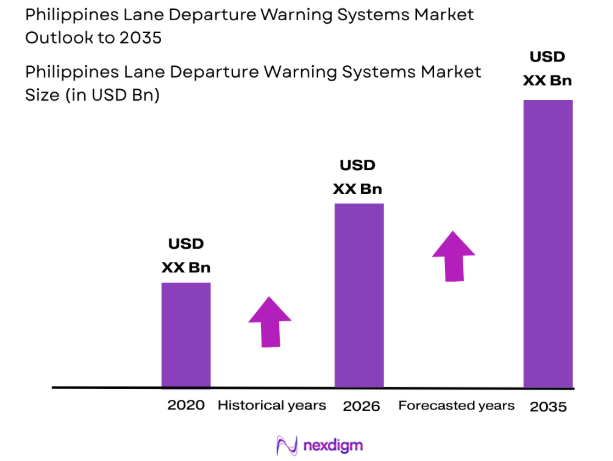
The Philippines Lane Departure Warning Systems market is estimated to reach USD ~ billion based on a recent historical assessment, driven by increasing integration of advanced driver assistance systems in passenger vehicles and rising road safety awareness. Growth is supported by the expansion of automotive imports equipped with embedded safety technologies and evolving consumer preference for intelligent driving systems. Automakers are incorporating lane departure warning systems into mid-range and premium vehicles to enhance safety and comply with global automotive standards.
Metro Manila, Cebu, and Davao dominate adoption due to dense traffic conditions, increasing vehicle ownership, and stronger consumer purchasing power. These urban regions experience frequent congestion and long driving hours, making lane departure warning systems valuable for preventing unintended lane drift and reducing accidents. Additionally, the presence of major automotive dealerships, service infrastructure, and access to imported vehicles equipped with advanced safety features supports higher adoption rates across these metropolitan areas.
Market Segmentation
By Product Type
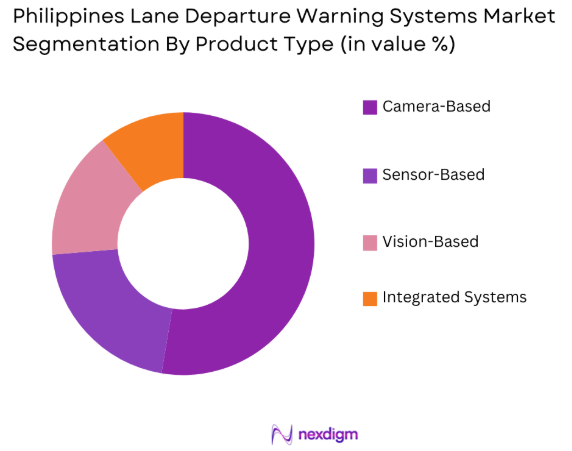
The Philippines Lane Departure Warning Systems market is segmented by product type into camera-based systems, sensor-based systems, vision-based systems, and integrated systems. Recently, camera-based systems have a dominant market share due to their cost-effectiveness, accuracy in lane detection, and ease of integration with other driver assistance technologies. These systems are widely adopted across mid-range vehicles and perform efficiently in structured urban road environments. Automakers prefer camera-based systems due to their scalability and compatibility with advanced safety features, enabling broader deployment across different vehicle segments in the Philippines.
By Vehicle Type
The Philippines Lane Departure Warning Systems market is segmented by vehicle type into passenger vehicles, light commercial vehicles, and heavy commercial vehicles. Recently, passenger vehicles have a dominant market share due to increasing demand for safety features and comfort enhancements in daily commuting. Rising disposable income and consumer awareness have led to higher adoption of advanced driver assistance systems in this segment. Passenger vehicles also benefit from faster technology integration cycles and greater availability of imported models equipped with lane departure warning systems, reinforcing their leading position in the market.
Competitive Landscape
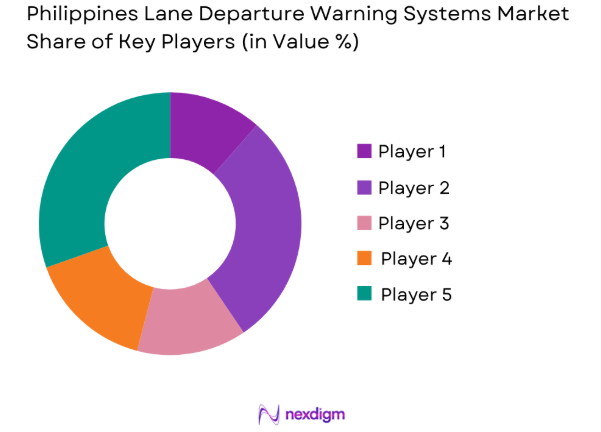
The Philippines Lane Departure Warning Systems market is moderately consolidated, with global automotive technology providers dominating through strong partnerships with OEMs. Major players focus on enhancing sensor accuracy, improving system reliability, and integrating lane departure warning systems with broader driver assistance platforms. The competitive environment is shaped by continuous innovation, cost optimization, and expansion strategies targeting emerging Southeast Asian markets. Companies are also investing in localized solutions to address infrastructure variability and improve system performance in diverse driving conditions.
| Company Name | Establishment Year | Headquarters | Technology Focus | Market Reach | Key Products | Revenue (USD Billion) | Market-Specific Parameter |
| Bosch | 1886 | Germany | ~ | ~ | ~ | ~ | ~ |
| Continental AG | 1871 | Germany | ~ | ~ | ~ | ~ | ~ |
| Denso Corporation | 1949 | Japan | ~ | ~ | ~ | ~ | ~ |
| ZF Friedrichshafen | 1915 | Germany | ~ | ~ | ~ | ~ | ~ |
| Aptiv | 1994 | Ireland | ~ | ~ | ~ | ~ | ~ |
Philippines Lane Departure Warning Systems Market Analysis
Growth Drivers
Increasing Integration of ADAS in Imported and Domestic Vehicles
The Philippines automotive market is witnessing a steady increase in the adoption of advanced driver assistance systems, including lane departure warning systems, due to rising imports of technologically equipped vehicles. Consumers are becoming more aware of safety technologies and are actively seeking vehicles that provide enhanced protection and driving assistance. Automakers are responding by integrating lane departure warning systems into newer models, particularly in mid-range and premium segments. The availability of financing options has made these vehicles more accessible to a broader population. Additionally, global automotive safety trends are influencing local manufacturers and importers to adopt these technologies. As urban driving conditions become more complex, the demand for intelligent safety systems continues to grow. Technological advancements have also reduced the cost of components, enabling wider adoption. The increasing presence of international automotive brands further accelerates market penetration. This trend is expected to sustain long-term growth in the market.
Rising Road Safety Awareness and Regulatory Alignmenz
Road safety concerns in the Philippines are driving the adoption of lane departure warning systems as part of broader vehicle safety improvements. Increasing accident rates and traffic congestion have highlighted the need for technologies that assist drivers in maintaining lane discipline and avoiding collisions. Government agencies are gradually aligning vehicle safety regulations with international standards, encouraging the adoption of advanced safety features. Public awareness campaigns and insurance incentives are also promoting the importance of vehicle safety systems. Automakers are leveraging these trends by offering lane departure warning systems as standard or optional features in newer models. The growing emphasis on reducing road fatalities is influencing both consumers and policymakers. Additionally, fleet operators are beginning to recognize the benefits of these systems in improving driver performance and reducing accident-related costs. As awareness continues to increase, demand for lane departure warning systems is expected to rise steadily.
Market Challenges
Limited Road Infrastructure Standardization and Lane Marking Quality
One of the major challenges for the Philippines Lane Departure Warning Systems market is the inconsistency in road infrastructure and lane marking quality across different regions. Lane departure warning systems rely heavily on clear and visible lane markings to function effectively, and inconsistent road conditions can reduce system accuracy. In many areas, faded markings, uneven roads, and poorly maintained highways limit the effectiveness of these systems. Urban areas may have better infrastructure, but variability still exists, particularly in suburban and rural regions. These limitations can lead to reduced consumer confidence in system reliability. Automotive manufacturers must adapt technologies to function in diverse conditions, which increases development complexity and cost. Additionally, drivers may not fully trust or utilize these systems if performance is inconsistent. Improving road infrastructure and standardization is essential for maximizing system effectiveness. Addressing this challenge is critical for broader adoption.
High Cost and Limited Penetration in Budget Vehicle Segments
The high cost of lane departure warning systems remains a significant barrier to widespread adoption in the Philippines automotive market. These systems require advanced cameras, sensors, and processing units, which increase the overall vehicle cost. As a result, they are primarily available in mid-range and premium vehicles, limiting accessibility for price-sensitive consumers. Entry-level vehicle buyers often prioritize affordability over advanced safety features, reducing demand in this segment. Maintenance and repair costs for these systems can also be higher due to their complexity. Automotive manufacturers face challenges in reducing costs while maintaining system performance and reliability. Limited awareness among certain consumer groups further restricts adoption. Additionally, economic factors such as inflation and financing constraints can influence purchasing decisions. Expanding affordability and improving cost efficiency are necessary to overcome this barrier and increase market penetration.
Opportunities
Expansion of Mid-Segment Vehicles with Embedded Safety Features
The growing demand for mid-segment vehicles in the Philippines presents a strong opportunity for lane departure warning system adoption. Consumers are increasingly seeking vehicles that offer a balance between affordability and advanced safety features. Automakers are responding by integrating lane departure warning systems into mid-tier models as part of bundled driver assistance packages. This approach enhances the value proposition of vehicles and differentiates brands in a competitive market. Advances in manufacturing and component standardization are gradually reducing system costs, making integration more feasible. Financing options and promotional strategies are further supporting adoption among middle-income consumers. As competition intensifies, manufacturers are focusing on offering enhanced safety features to attract buyers. The expansion of this segment is expected to significantly contribute to market growth. Increasing awareness of safety benefits will further strengthen demand. This trend represents a key growth avenue for the market.
Integration with Advanced Driver Assistance and Semi-Autonomous Systems
The evolution of advanced driver assistance systems and semi-autonomous driving technologies creates significant opportunities for lane departure warning systems in the Philippines. These systems serve as foundational components for higher-level automation, enabling features such as lane keeping assist and highway driving support. As connectivity and vehicle intelligence improve, lane departure warning systems are becoming more sophisticated and integrated with other safety technologies. Collaboration between automotive manufacturers and technology providers is accelerating innovation in this space. Government initiatives promoting smart mobility and intelligent transportation systems are also contributing to market development. The increasing adoption of connected vehicles is expected to enhance system performance and user experience. As the automotive industry moves toward automation, the role of lane departure warning systems will expand. This integration will drive long-term growth and technological advancement in the market.
Future Outlook
The Philippines Lane Departure Warning Systems market is expected to grow steadily over the next five years, supported by increasing adoption of advanced safety technologies and rising consumer awareness. Technological advancements and cost reductions will enhance accessibility across vehicle segments. Regulatory developments aligned with global standards will further encourage adoption. Integration with broader driver assistance systems will strengthen functionality and demand, positioning the market for sustained growth.
Major Players
- Bosch
- Continental AG
- Denso Corporation
- ZF Friedrichshafen
- Aptiv
- Valeo
- Magna International
- Hyundai Mobis
- Hitachi Astemo
- Autoliv
- Veoneer
- Mobileye
- Panasonic Automotive
- NXP Semiconductors
- Infineon Technologies
Key Target Audience
- Investments and venture capitalist firms
- Government and regulatory bodies
- Automotive OEMs
- Automotive component manufacturers
- Vehicle importers and distributors
- Fleet operators
- Automotive technology providers
Research Methodology
Step 1: Identification of Key Variables
Key variables including automotive demand trends, safety regulations, technology adoption rates, and infrastructure conditions were identified to establish the analytical foundation of the market.
Step 2: Market Analysis and Construction
The market was segmented by product type and vehicle category, followed by evaluation of demand drivers, competitive dynamics, and technology integration across segments.
Step 3: Hypothesis Validation and Expert Consultation
Industry experts, automotive engineers, and stakeholders were consulted to validate assumptions and ensure alignment with real-world developments and technological trends.
Step 4: Research Synthesis and Final Output
Findings were synthesized into a structured report providing actionable insights, validated data points, and a comprehensive outlook for stakeholders.

- Executive Summary
- Research Methodology (Definitions, Scope, Industry Assumptions, Market Sizing Approach, Primary & Secondary Research Framework, Data Collection & Verification Protocol, Analytic Models & Forecast Methodology, Limitations & Research Validity Checks)

- Market Definition and Scope
- Value Chain & Stakeholder Ecosystem
- Regulatory / Certification Landscape
- Sector Dynamics Affecting Demand

- Growth Drivers
Increasing Demand for Vehicle Safety Technologies
Government Regulations Promoting Road Safety
Rising Adoption of Advanced Driver Assistance Systems - Market Challenges
High Cost of Advanced Safety Systems
Limited Awareness Among Consumers
Technical Limitations in Poor Road Conditions - Market Opportunities
Expansion in Autonomous Driving Technologies
Growing Demand for Connected Vehicles
Integration with Smart Mobility Solutions - Trends
Adoption of AI-based Driver Assistance Systems
Integration of Multi-sensor Technologies - Government Regulations
- SWOT Analysis
- Porter’s Five Forces

- By Market Value, 2020-2025
- By Installed Units, 2020-2025
- By Average System Price, 2020-2025
- By System Complexity Tier, 2020-2025

- By System Type (In Value%)
Camera-based Lane Departure Warning Systems
Sensor-based Lane Departure Warning Systems
Vision-based Lane Departure Warning Systems
AI-enabled Lane Departure Warning Systems
Integrated ADAS Lane Departure Warning Systems - By Platform Type (In Value%)
Passenger Vehicles
Commercial Vehicles
Electric Vehicles
Luxury Vehicles - By Fitment Type (In Value%)
OEM Fitment
Aftermarket Fitment
Integrated Systems
Modular Systems - By End User Segment (In Value%)
Private Vehicle Owners
Fleet Operators
Logistics and Transport Companies

- Market Share Analysis
- Cross Comparison Parameters (System Type, Platform Type, Procurement Channel, End User Segment, Fitment Type, Sensor Technology, System Accuracy)
- SWOT Analysis of Key Competitors
- Pricing & Procurement Analysis
- Key Players
Bosch
Continental AG
Denso Corporation
ZF Friedrichshafen
Valeo
Aptiv
Magna International
Hyundai Mobis
Autoliv
Mobileye
Hitachi Astemo
Nidec Corporation
Hella GmbH
Texas Instruments
Infineon Technologies

- Rising Demand from Private Vehicle Owners
- Fleet Operators Focusing on Safety Enhancements
- Growth in Logistics and Transportation Sector
- Increasing Adoption in Premium Vehicle Segment

- Forecast Market Value, 2026-2035
- Forecast Installed Units, 2026-2035
- Price Forecast by System Tier, 2026-2035
- Future Demand by Platform, 2026-2035


 Request a Sample
 Ask for Customization
 Get a Quote
 Enquire Now