

 Download PDF
Market Overview
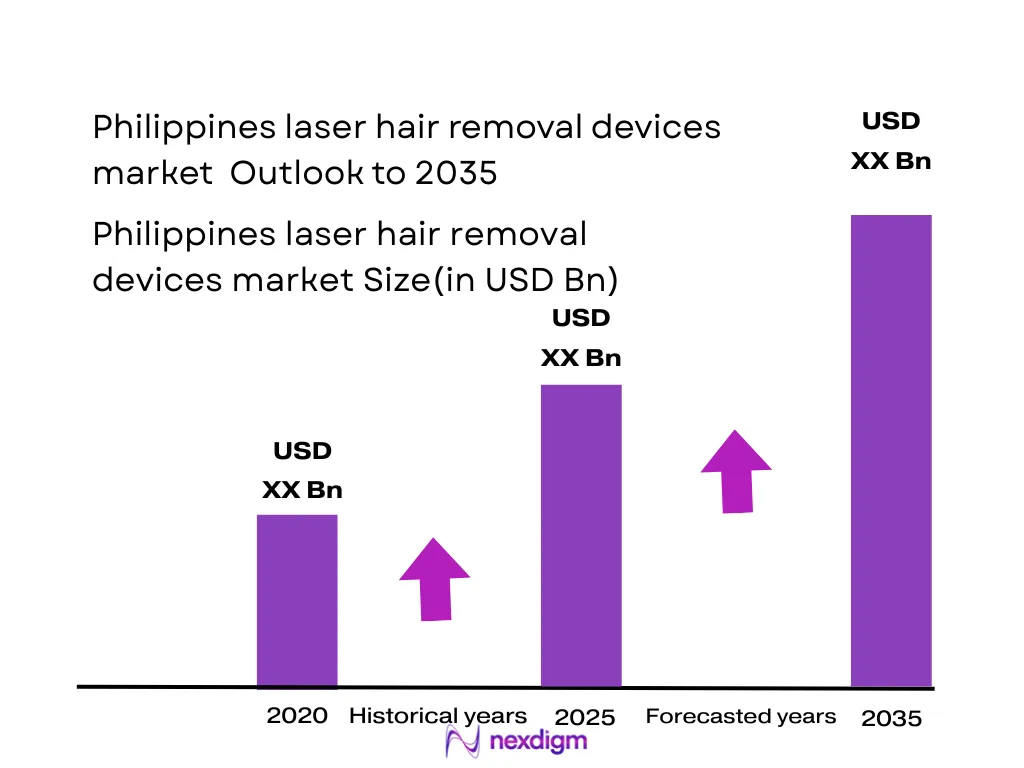
The Philippines laser hair removal devices market is valued at USD ~ million, driven by the growing adoption of laser-based cosmetic procedures for hair removal, particularly in urban areas. The expansion of dermatological clinics and the increasing availability of affordable at-home devices are key contributors. Additionally, the growing awareness of the benefits of laser hair removal over traditional methods like waxing or shaving further propels market growth. The availability of diverse laser technologies (Diode, IPL, Nd:YAG) has increased accessibility across different consumer segments.
Metro Manila, Cebu, and Davao dominate the Philippine laser hair removal devices market. These urban centers have a higher concentration of dermatology clinics and cosmetic surgery centers, owing to the larger, more affluent populations with disposable income for beauty treatments. Metro Manila, in particular, remains the central hub for aesthetic technologies, driven by both local and international investments in health and beauty infrastructure. Additionally, Cebu and Davao are witnessing growth due to expanding middle-class demographics and an increasing awareness of cosmetic procedures.
Market Segmentation
By Technology
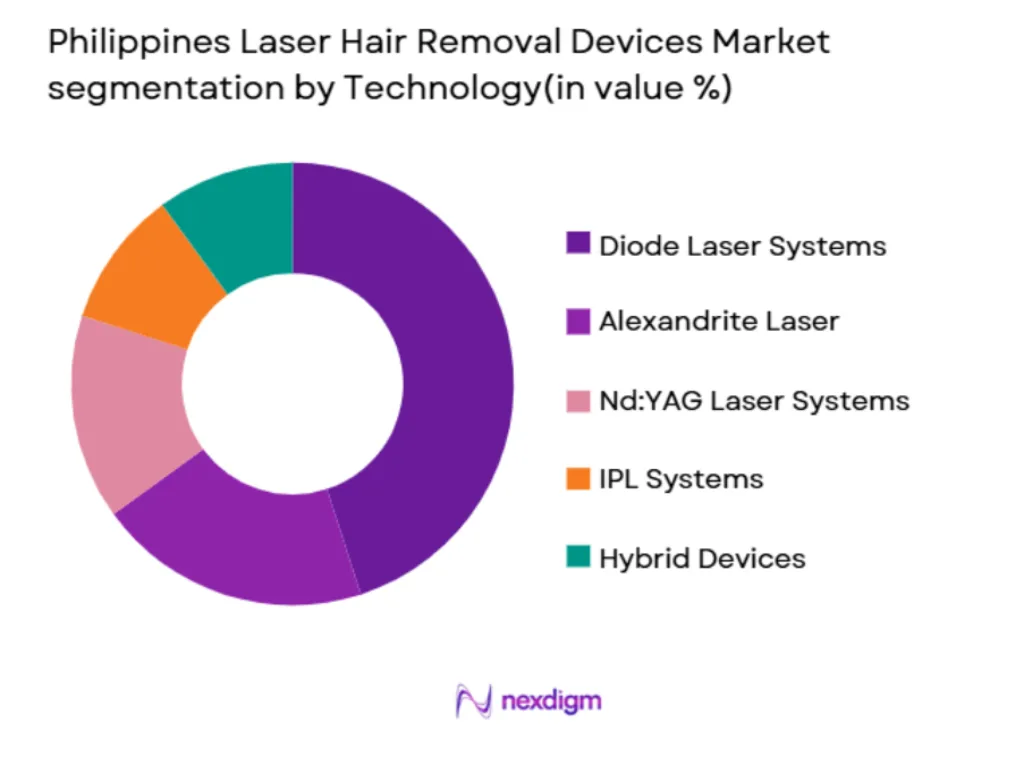
The Philippines laser hair removal market is segmented by technology type into Diode Laser Systems, Alexandrite Laser Platforms, Nd:YAG Laser Systems, IPL Systems, and Hybrid Devices. Among these, Diode Laser Systems hold the largest market share due to their versatility and effectiveness on a wide range of skin types, particularly for darker skin tones. Diode lasers are also more cost-effective than Alexandrite and Nd:YAG systems, making them popular in both high-end clinics and affordable beauty chains. Their ability to treat a larger treatment area quickly and with fewer sessions has led to their dominance in the market.
By End User
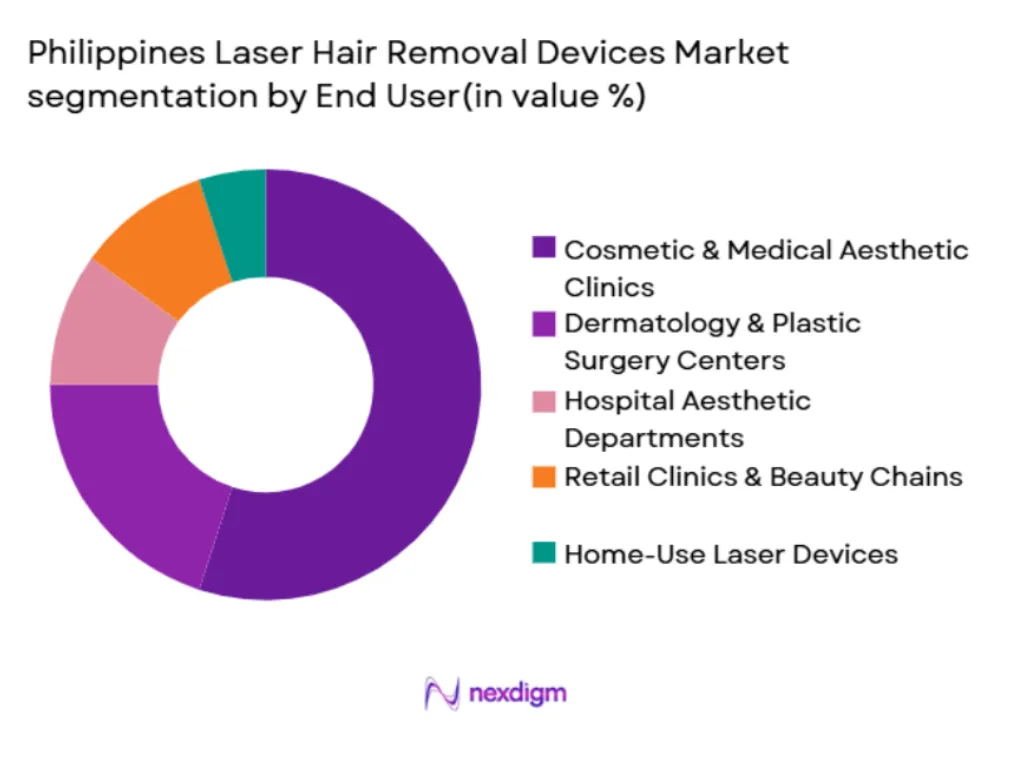
The market is segmented by end user into Cosmetic & Medical Aesthetic Clinics, Dermatology & Plastic Surgery Centers, Hospital Aesthetic Departments, Retail Clinics & Beauty Chains, and Home-Use Laser Devices. Cosmetic & Medical Aesthetic Clinics dominate this segment due to their specialized service offerings, which are more advanced and personalized compared to retail clinics. These clinics provide high-quality, long-term hair removal solutions that attract a significant number of affluent customers who are willing to invest in professional treatments.
Competitive Landscape
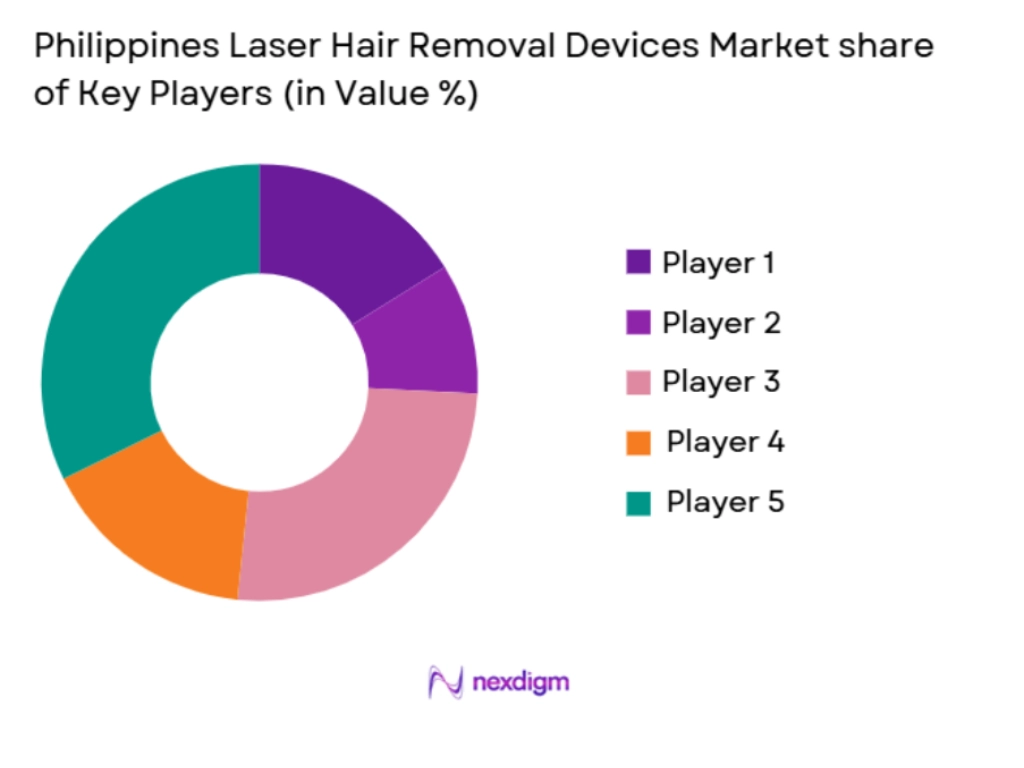
The Philippines laser hair removal market is competitive, with a mix of established global players and emerging local brands. Major players include Cynosure, Candela, Lumenis, Fotona, and Alma Lasers. These companies have a strong foothold in the market due to their advanced technologies, brand recognition, and extensive distribution networks. The market is characterized by technological advancements, particularly in diode and IPL laser systems, offering faster, safer, and more cost-effective treatments. Local clinics and beauty chains increasingly partner with these companies to provide cutting-edge services to a growing customer base.
| Company Name | Establishment Year | Headquarters | Technology Portfolio | Service Offerings | Market Positioning | Distribution Channels | Revenue Mix |
| Cynosure | 1991 | USA | ~ | ~ | ~ | ~ | ~ |
| Candela | 2002 | USA | ~ | ~ | ~ | ~ | ~ |
| Lumenis | 1966 | Israel | ~ | ~ | ~ | ~ | ~ |
| Fotona | 1964 | Slovenia | ~ | ~ | ~ | ~ | ~ |
| Alma Lasers | 1999 | Israel | ~ | ~ | ~ | ~ | ~ |
Philippines Laser Hair Removal Devices Market Analysis
Growth Drivers
Rising Aesthetic Clinic Infrastructure (Device Installed Base Growth)
The Philippines has seen significant growth in the number of aesthetic clinics, which directly influences the demand for laser hair removal devices. According to the Philippine Statistics Authority (PSA), there was a steady rise in the number of beauty and wellness establishments in the past few years. As of 2022, the beauty and wellness industry in the Philippines generated approximately PHP 80 billion, with an annual growth rate of around 10%. This increase in the number of establishments, combined with the rising number of medical and cosmetic treatments offered, creates an expanding market for laser equipment. With over 500 aesthetic clinics operating in Metro Manila alone, the installed base of laser devices has increased significantly, supporting further demand for advanced hair removal technology. This development is backed by the Philippines’ growing urban population and increasing middle-class incomes, which together foster the demand for non-invasive cosmetic procedures like laser hair removal.
Increased Disposable Income & Beauty Spend per Capita
The Philippines’ economic growth and rising disposable incomes have positively impacted the beauty and personal care market, including laser hair removal services. According to the World Bank, the Philippine GDP per capita reached USD 4,145 in 2022, marking steady growth in the past few years. The increasing disposable income, especially in urban areas, has led to a rise in consumer spending on beauty and wellness services. Beauty expenditures per capita have also been rising; in 2022, spending on personal care and cosmetics in Metro Manila was approximately PHP 40 billion, with a substantial share allocated to aesthetic treatments. As the middle class expands, the demand for aesthetic procedures, including laser hair removal, is expected to continue growing, making it more accessible to a wider range of consumers. This shift in consumer behavior further fuels the market’s growth.
Market Restraints
High Upfront Device Capital Expenditure (Device ASP vs. Clinic ROI)
The high capital expenditure required for laser hair removal equipment remains a significant barrier to market growth. The average price of a professional laser hair removal machine ranges from PHP 1 million to PHP 3 million, depending on the technology, which is a substantial upfront investment for small or medium-sized clinics. According to the Philippine Economic Zone Authority (PEZA), only around 30% of aesthetic clinics in the Philippines have the financial capacity to purchase these high-end devices outright. Many clinics face difficulties in justifying the return on investment (ROI) from these devices, as they need substantial patient volume and treatment frequency to recoup the costs. This challenge is amplified by the competitive pricing pressures in the beauty industry. Although high-end machines promise long-term service life, the initial financial burden remains a considerable restraint to broader adoption.
Regulatory Barriers & Laser Safety Compliance Costs
Regulatory barriers and safety compliance requirements for laser hair removal devices present a challenge to the Philippine market. The Philippine Food and Drug Administration (FDA) regulates all medical devices, including laser hair removal machines, which must meet stringent safety standards before they can be legally sold and used in clinical settings. The costs associated with obtaining these certifications can be high, especially for smaller manufacturers and distributors. In 2023, the FDA imposed stricter guidelines on the importation and sale of aesthetic devices, which has increased the regulatory burden on suppliers. Additionally, the requirement for clinics to train certified technicians for safe laser operation adds to operational costs. These factors contribute to the relatively slow adoption of laser devices in smaller, independent beauty clinics across the country.
Market Opportunities
Expansion of Med‑Spa Chains & Franchised Clinics
The expansion of medical spa chains and franchised clinics in the Philippines presents significant market opportunities for laser hair removal devices. In 2023, the Department of Trade and Industry (DTI) reported that franchise-based businesses in the beauty sector saw a growth of 15% year-over-year, driven by the rise of med-spas offering advanced cosmetic treatments. These med-spas often provide a range of non-invasive treatments, with laser hair removal being a cornerstone service. As more med-spa chains establish themselves in major cities and even regional areas, the demand for high-quality laser devices will continue to rise. The Philippine beauty and wellness sector is expected to attract increasing investments, given its relatively untapped potential in smaller cities. With the market shift towards more personalized, luxury beauty experiences, this trend presents an opportunity for both local and international device manufacturers to expand their footprint in the market.
Technological Convergence (AI, Contact Sensors, Integrated Cooling)
Technological advancements, particularly the convergence of artificial intelligence (AI), contact sensors, and integrated cooling in laser hair removal devices, are opening new opportunities in the market. Devices equipped with AI can automatically adjust treatment parameters based on the skin type, hair color, and treatment area, improving both efficacy and safety. These technologies are already becoming more accessible, as more manufacturers are introducing AI-driven laser devices at mid-range price points, which are now available in the Philippine market. Additionally, integrated cooling systems that minimize patient discomfort during treatments are expected to increase consumer satisfaction and drive demand. As these technologies become standard in the industry, both clinics and home users will benefit from more efficient, pain-free treatments. The adoption of such advanced technologies in the Philippines will continue to rise, supporting market growth in the coming years.
Future Outlook
Over the next few years, the Philippines laser hair removal market is set to experience significant growth. This growth is attributed to increasing disposable income, rising consumer awareness about aesthetic treatments, and the expanding presence of both high-end and affordable clinics. Technological advancements in laser devices, including the introduction of faster, less painful, and more effective treatments, will further accelerate demand. The adoption of hybrid devices that combine multiple technologies is also expected to grow in the coming years, providing patients with more tailored solutions.
Major Players
- Cynosure
- Candela
- Lumenis
- Fotona
- Alma Lasers
- Cutera
- InMode
- Solta Medical
- SharpLight Technologies
- DEKA
- El.En.
- Philips
- Tria Beauty
- Aesthetic Group
- Laserscope
Key Target Audience
- Investments and Venture Capitalist Firms
- Government and Regulatory Bodies (Department of Health – Philippines, Philippine Food and Drug Administration)
- Cosmetic and Aesthetic Clinic Owners
- Dermatology and Plastic Surgery Centers
- Retail Clinics and Beauty Chains
- Home-Use Laser Device Consumers
- OEMs and Manufacturers of Laser Equipment
- Medical Equipment Distributors
Research Methodology
Step 1: Identification of Key Variables
The initial phase involves constructing a comprehensive ecosystem map of the key stakeholders in the Philippines laser hair removal market. Extensive desk research will be conducted using secondary sources such as industry reports, news articles, and proprietary databases to gather market insights. This step focuses on identifying and defining critical variables, including technological adoption rates, clinic penetration, and consumer behavior patterns.
Step 2: Market Analysis and Construction
This step involves compiling and analyzing historical data related to the market’s technological trends, service penetration, and revenue generation. The market’s dynamics, including device pricing, consumer segmentation, and the ratio of treatment types, will be assessed to provide accurate estimates of market size and growth.
Step 3: Hypothesis Validation and Expert Consultation
Market hypotheses will be developed and validated by conducting interviews with industry experts, including dermatologists, clinic owners, and device manufacturers. These consultations will help validate assumptions, refine market projections, and provide real-world insights into the market’s challenges and opportunities.
Step 4: Research Synthesis and Final Output
The final phase involves direct engagement with major device manufacturers, clinics, and distribution networks to gather data on their product offerings, market share, and growth plans. These insights will complement the bottom-up market estimation model and ensure the final report’s accuracy and comprehensiveness.

- Executive Summary
- Research Framework (Research Assumptions & Terminology, Market Sizing & Estimation Methodology, Primary & Secondary Data Validation Approach, Device Usage Intensity Model, Value Chain Mapping Approach, Forecasting Model and Forecast Confidence Intervals, Limitations and Bias Controls)

- Definition and Market Architecture
- Market Genesis and Innovation Timeline
- Device Technology Classification (Alexandrite, Diode, Nd:YAG, IPL Hybrid)
- Therapeutic vs. Cosmetic Adoption Paradigms
- Distribution Channel Matrix (Clinics, Retail, ECommerce)

- Growth Drivers
Rising Aesthetic Clinic Infrastructure (Device Installed Base Growth)
Increased Disposable Income & Beauty Spend per Capita
Urban Female Consumer Penetration Rate (% of Target Demographic)
Awareness of Permanent Hair Reduction Solutions (Consumer Intent Score) - Market Restraints
High Upfront Device Capital Expenditure (Device ASP vs. Clinic ROI)
Regulatory Barriers & Laser Safety Compliance Costs
Skill Gaps in Laser Technicians (Credentialing Density) - Market Opportunities
Expansion of Med‑Spa Chains & Franchised Clinics
Technological Convergence (AI, Contact Sensors, Integrated Cooling)
Tier II & Tier III City Penetration - Market Trends
Shift from IPL to Diode & Hybrid Laser Platforms
Increasing Adoption of Multi‑Applicator Devices
Subscription‑Based Device Procurement Models - Regulatory Landscape
Philippine FDA (BFAD) Approvals & Safety Standards
Clinical Protocol Standardization
Import Tariffs and Device Certification Requirements

- Market Size by Revenue, 2020-2025
- Market Size by Units Sold, 2020-2025
- Device ASP Analysis, 2020-2035
- Market Share by Device Category, 2020-2025

- By Technology (In Value %)
Diode Laser Systems (Energy Output & Wavelength Portfolio)
Alexandrite Laser Platforms (High‑Speed Hair Removal Solutions)
Nd:YAG Laser Systems (Skin Type Versatility)
Intense Pulsed Light (IPL) Platforms
Multi‑Modal / Hybrid Laser Devices - By End User (In Value %)
Cosmetic & Medical Aesthetic Clinics
Dermatology & Plastic Surgery Centers
Hospital Aesthetic Departments
Retail Clinics & Beauty Chains
Home‑Use Laser Devices - By Sales Channel (In Value %)
Commercial Distributors & OEM Partnerships
Direct Manufacturer Sales (Channel Efficiency Index)
E‑Commerce & Digital Marketplaces
Leasing & Managed Services (OPEX Models)
Third‑Party Procurement Aggregators - By Price Tier (In Value %)
Premium Professional Systems
Mid‑Range Laser Platforms
Entry‑Level / Cost‑Effective Devices - By Geographic Spread (In Value %)
Luzon (Metro Manila, CALABARZON, Central Luzon)
Visayas (Cebu, Iloilo, Western Visayas)
Mindanao (Davao, Northern Mindanao)

- Market Share Analysis (by Revenue & Volume)
By Device Technology Segment
By Sales Channel Footprint
By Clinic Tier Penetration - Cross‑Comparison Parameters
Company Profile Matrix, Product Portfolio Breadth & Depth (Technology Platforms), Research & Development Investment Intensity, Installed Base & Velocity (Units Sold), Service Network Strength & SLA Metrics, Revenue Mix (% Device Sales / Services / Consumables), Brand Value & Clinical Endorsements, Pricing Strategy & Competitive Positioning
- Competitive Benchmarks — Market Players
Cynosure Inc.
Candela Medical
Lumenis Ltd.
Alma Lasers
Fotona d.o.o.
Cutera Inc.
Solta Medical
DEKA (Luxea)
InMode Ltd.
SharpLight Technologies
El.En. S.p.A.
Soprano Titanium
Iluminage Beauty
Tria Beauty - Pricing Landscape
ASP Matrix by Technology & Channel
Discounting & Bundle Pricing Strategies
Clinic Treatment Economics (Cost per Treatment)
Pricing Sensitivity & Elasticity by Consumer Cohorts

- Demand & Consumption Analysis
Device Uptake by Clinic Scale (% Small / Medium / Large Clinic Penetration)
Consumer Willingness‑to‑Pay & Repeat Treatment Frequency
Technology Preference by Demographic Segment - Value Chain and Cost Structure
Import Duty, Logistics & Inventory Holding Costs
Clinic Operational Costs (Per Treatment Economics)
Consumables & Warranty Service Cost Contribution - Supply Chain Analysis
Device Importers & Authorized Distributors
Spare Parts & AfterSales Service Network
Lead Time & Supply Risk Assessment

- Market Revenue Outlook, 2026-2035
- Device Shipment & Replacement Forecast, 2026-2035
- ASP and Market Value Chain Projections, 2026-2035
- Forecast by Technology Segment and End User, 2026-2035


 Request a Sample
 Ask for Customization
 Get a Quote
 Enquire Now