

 Download PDF
 Download PDF
Market Overview
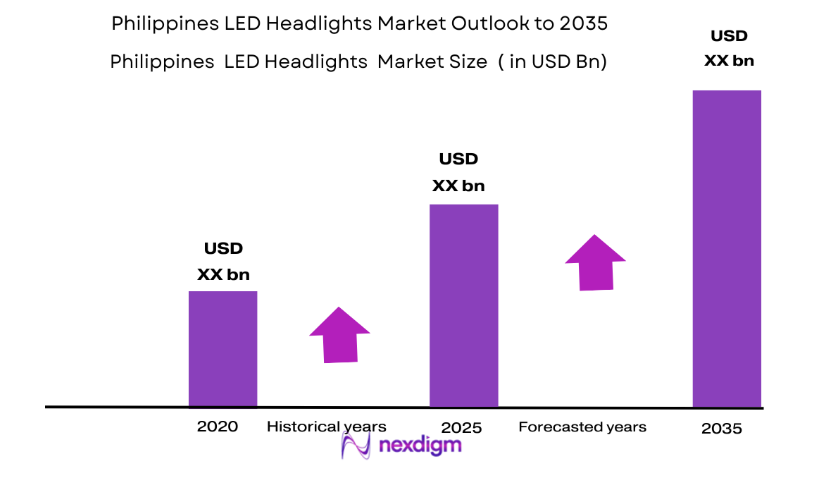
The Philippines LED Headlights Market has experienced robust growth, driven by the increasing adoption of energy-efficient automotive lighting technologies and the rise in vehicle production across the country. Based on a recent historical assessment, the market size for LED headlights is valued at approximately USD ~ billion, with demand spurred by government regulations promoting vehicle safety standards and environmental consciousness. Technological advancements in LED lighting and the shift toward energy-efficient vehicles further support this market’s expansion.
The Philippines LED Headlights Market sees dominance in urban areas such as Metro Manila, where the demand for modern, energy-efficient automotive technologies is highest. Factors contributing to this dominance include increased vehicle ownership, a growing middle class, and the expansion of infrastructure projects. The demand for LED headlights in these regions is also influenced by local government initiatives promoting vehicle safety and environmental sustainability, making them key hubs for the growth of this market.
Market Segmentation
By Product Type:
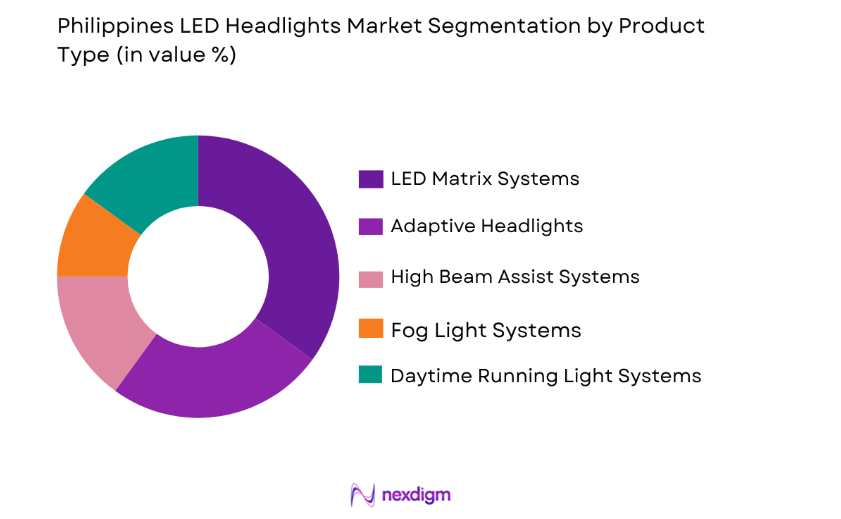
Philippines LED Headlights Market is segmented by product type into several sub-segments. Recently, the LED Matrix Systems sub-segment has gained dominant market share due to factors such as demand for high-performance lighting, improved driver safety, and consumer preference for advanced features. LED matrix headlights, which offer adaptive lighting for different driving conditions, have become popular among both OEM manufacturers and consumers seeking premium vehicle options. Additionally, these systems are favored for their energy efficiency and superior illumination, which align with growing demand for sustainable automotive technologies.
By Platform Type:
Philippines LED Headlights Market is segmented by platform type into various sub-segments. Recently, the Passenger Vehicles sub-segment has dominated the market share due to the increasing adoption of advanced automotive lighting systems in personal cars. The rising middle class, along with the growing preference for premium and energy-efficient vehicles, has fueled demand for LED headlights in this category. Moreover, automakers are increasingly integrating LED lighting into new vehicle models to meet regulatory standards and consumer expectations for safety, aesthetic appeal, and fuel efficiency. As the market for passenger vehicles continues to expand, particularly in urban areas, LED headlights are becoming an essential feature, further boosting their adoption and market dominance in this sub-segment.

Competitive Landscape
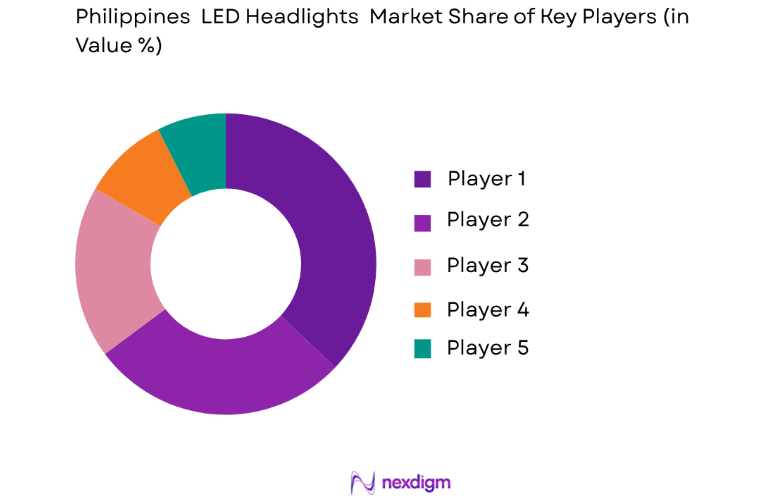
The competitive landscape of the Philippines LED Headlights Market is characterized by a mix of established international players and local manufacturers, with key players driving innovation and expanding their market reach. The market has witnessed a trend of consolidation, with major automotive companies integrating advanced lighting technologies into their vehicle portfolios. The influence of market leaders is particularly strong in urban centers, where technological adoption rates are higher, and the demand for premium lighting systems continues to grow.
| Company Name | Establishment Year | Headquarters | Technology Focus | Market Reach | Key Products | Revenue (USD) | Key Product Applications |
| Philips Lighting | 1891 | Netherlands | ~ | ~ | ~ | ~ | ~ |
| Osram Opto Semiconductors | 1919 | Germany | ~ | ~ | ~ | ~ | ~ |
| Valeo | 1923 | France | ~ | ~ | ~ | ~ | ~ |
| Koito Manufacturing | 1915 | Japan | ~ | ~ | ~ | ~ | ~ |
| HELLA | 1899 | Germany | ~ | ~ | ~ | ~ | ~ |
Philippines LED Headlights Market Analysis
Growth Drivers
Technological Advancements in LED Lighting:
Technological advancements in LED lighting have played a crucial role in driving the growth of the Philippines LED headlights market. The evolution of LED technology has significantly enhanced the efficiency, longevity, and performance of automotive lighting systems. LEDs now provide brighter, more energy-efficient lighting compared to traditional halogen or xenon headlights, making them the preferred choice for both OEM manufacturers and aftermarket customers. The continuous development of adaptive and matrix lighting systems, which offer dynamic beam control and enhanced visibility, has further spurred demand. As consumer preference shifts towards advanced, sustainable automotive technologies, the adoption of LED headlights is expected to increase, driving market growth. Furthermore, the integration of these systems with other vehicle technologies, such as autonomous driving systems and advanced driver-assistance systems (ADAS), has created new opportunities for innovation, contributing to market expansion. This trend is expected to continue as vehicle manufacturers invest in cutting-edge lighting solutions to meet the growing demand for safety and performance in modern vehicles.
Government Regulations and Incentives:
Government regulations and incentives for energy-efficient automotive technologies have also been a key growth driver for the Philippines LED headlights market. The Philippine government has introduced regulations that encourage the adoption of energy-efficient lighting systems in vehicles to reduce environmental impact and enhance road safety. Policies such as mandatory vehicle safety features and environmental standards have created a favorable environment for the growth of the LED lighting sector. Additionally, the growing emphasis on reducing carbon emissions and improving fuel efficiency has pushed vehicle manufacturers to adopt more sustainable technologies, such as LED headlights, which are more energy-efficient compared to conventional lighting systems. Government incentives, including tax rebates and grants for companies investing in green technologies, have further incentivized the transition to LED systems. These regulatory initiatives are expected to continue supporting the growth of the LED headlights market in the Philippines, driving demand for innovative and energy-efficient lighting solutions in the automotive sector.
Market Challenges
High Initial Cost of LED Systems:
Despite the growing adoption of LED headlights in the Philippines, the high initial cost of LED systems remains a significant market challenge. While LEDs offer long-term benefits in terms of energy efficiency and durability, their upfront cost is considerably higher compared to traditional halogen or xenon headlights. This price disparity makes it difficult for some consumers, particularly in price-sensitive markets, to justify the investment in LED lighting solutions. Although the cost of LED technology has been decreasing over the years, the price point for high-performance systems like LED matrix and adaptive headlights remains a barrier to broader adoption. This challenge is particularly prominent in the aftermarket sector, where customers may be less willing to invest in premium lighting technologies due to the higher cost of replacement parts and installation. Overcoming this cost challenge will be critical for expanding the reach of LED headlights, especially in developing regions of the Philippines where price sensitivity is higher.
Limited Infrastructure for Advanced Lighting Systems:
The adoption of advanced lighting systems in the Philippines is also hindered by the limited infrastructure to support the widespread use of LED headlights. While urban centers like Metro Manila have seen significant upgrades in road infrastructure, many rural and suburban areas still lack the necessary infrastructure to fully utilize advanced lighting technologies. LED matrix and adaptive headlights require sophisticated road conditions to perform optimally, such as well-lit and well-maintained roadways that allow for dynamic beam adjustments. Inadequate road infrastructure and lighting conditions limit the effectiveness of these advanced systems, particularly in less-developed regions. This challenge is further compounded by the slow pace of infrastructure development in certain areas of the country. To ensure the successful integration of advanced LED headlights, there is a need for greater investment in road and lighting infrastructure across the country.
Opportunities
Rising Demand for Electric Vehicles:
The rising demand for electric vehicles (EVs) presents a significant opportunity for the Philippines LED headlights market. As more consumers and businesses opt for electric vehicles due to environmental concerns and the availability of government incentives, the demand for energy-efficient automotive lighting systems like LEDs is expected to increase. EVs, by their nature, require energy-efficient components to maximize their driving range and reduce energy consumption, making LED headlights an ideal fit. Furthermore, as automakers continue to launch new electric models in the Philippines, they are incorporating advanced lighting technologies to differentiate their products in the competitive EV market. This trend is expected to drive the adoption of LED headlights, especially in the growing EV sector. The integration of LED lighting into electric vehicle design not only enhances energy efficiency but also aligns with consumer expectations for sustainable and innovative automotive technologies. This shift towards electric mobility presents a lucrative opportunity for companies involved in the production and supply of LED headlights.
Integration with Autonomous Vehicles:
The integration of LED headlights with autonomous vehicles is another key opportunity for the Philippines LED headlights market. As the automotive industry moves toward autonomous driving technologies, the need for advanced lighting systems that can adapt to changing road conditions and driving environments becomes increasingly important. LED matrix and adaptive headlights, which offer features like dynamic beam control and improved visibility, are well-suited for autonomous vehicles. These vehicles require precise lighting to navigate complex road conditions, and LED headlights can provide the necessary visibility for safe operation. As autonomous vehicles are gradually introduced in the Philippines, the demand for compatible lighting systems will grow, creating new market opportunities for LED lighting manufacturers. This trend also aligns with the broader push for smart cities and autonomous vehicle infrastructure, which will further drive the need for innovative lighting solutions.
Future Outlook
The future outlook for the Philippines LED headlights market is promising, with expected growth driven by ongoing technological advancements and increasing demand for energy-efficient lighting solutions. Over the next five years, the market is likely to see significant technological developments in LED lighting, particularly in the areas of smart headlights and integration with autonomous driving systems. Regulatory support from the government, including incentives for energy-efficient technologies, will continue to encourage the adoption of LED headlights in both the OEM and aftermarket sectors. Demand-side factors, such as the rise of electric vehicles and the growing preference for advanced automotive technologies, will further fuel market expansion. As infrastructure improves and consumer awareness grows, the adoption of LED headlights is set to rise, making the market a key player in the broader automotive lighting sector.
Major Players
- Philips Lighting
- OsramOptoSemiconductors
- Valeo
- Koito Manufacturing
- HELLA
- Toyota Boshoku
- Magneti Marelli
- Stanley Electric
- Lumileds
- LGInnotek
- Hyundai Mobis
- Continental AG
- Aptiv PLC
- Nexon Engineering
- Seoul Semiconductor
Key Target Audience
- Investments and venture capitalist firms
- Government and regulatory bodies
- OEM vehicle manufacturers
- Automotive lighting manufacturers
- Electric vehicle manufacturers
- Aftermarket automotive retailers
- Fleet operators
- Automotivecomponentsuppliers
Research Methodology
Step 1: Identification of Key Variables
This step involves identifying the critical market variables that influence the LED headlights market, such as consumer demand, technological advancements, and regulatory policies.
Step 2: Market Analysis and Construction
Market analysis and construction consist of gathering secondary data, reviewing industry reports, and evaluating trends that affect the growth and structure of the LED headlights market.
Step 3: Hypothesis Validation and Expert Consultation
In this step, hypotheses about market trends are validated by consulting industry experts, including key players in the automotive lighting sector, to ensure the accuracy of predictions.
Step 4: Research Synthesis and Final Output
The final output synthesizes the data collected from various sources, ensuring that all findings are relevant and actionable for stakeholders in the Philippines LED headlights market.

- Executive Summary
- Research Methodology (Definitions, Scope, Industry Assumptions, Market Sizing Approach, Primary & Secondary Research Framework, Data Collection & Verification Protocol, Analytic Models & Forecast Methodology, Limitations & Research Validity Checks)

- Market Definition and Scope
- Value Chain & Stakeholder Ecosystem
- Regulatory / Certification Landscape
- Sector Dynamics Affecting Demand

- Growth Drivers
Technological Advancements in LED Lighting
Increasing Vehicle Production and Sales
Government Regulations for Vehicle Safety - Market Challenges
High Initial Cost of LED Systems
Lack of Standardized Regulations
Limited Awareness in Emerging Markets - Market Opportunities
Rising Demand for Energy-Efficient Lighting
Growth in Electric Vehicle Market
Potential for Integration with Autonomous Vehicles - Trends
Integration of AI for Smart Headlights
Shift Towards Energy-Efficient Automotive Lighting
Increased Adoption of Adaptive Headlight Systems - Government Regulations
- SWOT Analysis of Key Competitors

- By Market Value, 2020-2025
- By Installed Units, 2020-2025
- By Average System Price, 2020-2025
- By System Complexity Tier, 2020-2025

- By System Type (In Value%)
LED Matrix Systems
Adaptive Headlights
High Beam Assist Systems
Fog Light Systems
Daytime Running Light Systems - By Platform Type (In Value%)
Passenger Vehicles
Commercial Vehicles
Electric Vehicles
Two-Wheelers
Off-Road Vehicles - By Fitment Type (In Value%)
OEM Fitment
Aftermarket Fitment
Integrated Fitment
Modular Fitment
Custom Fitment - By EndUser Segment (In Value%)
OEM Manufacturers
Aftermarket Retailers
Automotive Service Providers
Government & Municipalities

- Market Share Analysis
- CrossComparison Parameters (System Type, Platform Type, EndUser Segment, Procurement Channel, Fitment Type)
- SWOT Analysis of Key Competitors
- Pricing & Procurement Analysis
- Porter’s Five Forces
- Key Players
Philips Lighting
Osram Opto Semiconductors
Valeo
HELLA
Koito Manufacturing
Toyota Boshoku
Magneti Marelli
Stanley Electric
Lumileds
LG Innotek
Hyundai Mobis
Continental AG
Aptiv PLC
Nexon Engineering
Seoul Semiconductor

- OEMs’ Investment in Advanced Lighting Technologies
- Aftermarket Demand for Custom Lighting Solutions
- Fleet Operators’ Adoption of Energy-efficient Systems
- Governmental Influence on Vehicle Safety Standards

- Forecast Market Value, 2026-2035
- Forecast Installed Units, 2026-2035
- Price Forecast by System Tier, 2026-2035
- Future Demand by Platform, 2026-2035


 Request a Sample
 Ask for Customization
 Get a Quote
 Enquire Now