

 Download PDF
Market Overview
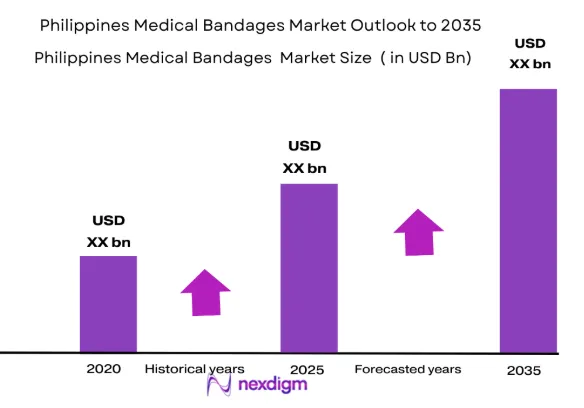
The Philippines medical bandages market has experienced notable growth, driven by the increasing demand for healthcare services, the growing awareness of wound care, and advancements in medical technology. In recent years, the market’s size has surged to an estimated USD ~ billion, primarily due to the expanding healthcare infrastructure, which includes both public and private hospitals, and the increasing number of healthcare institutions focused on wound care management. Furthermore, the growth is spurred by the rise in road accidents, sports injuries, and chronic conditions such as diabetes, which require regular wound care solutions. This expansion has been complemented by the introduction of more advanced medical bandages, including those incorporating smart technologies, which are further boosting market growth.
The dominant regions for medical bandage consumption in the Philippines include Metro Manila, Cebu, and Davao. These areas have a high concentration of healthcare facilities, including hospitals and specialized clinics, which drives demand for medical bandages. Additionally, Metro Manila, as the capital region, accounts for the largest share of healthcare expenditure in the country. The healthcare market is heavily influenced by government initiatives to enhance medical infrastructure and improve access to healthcare services in both urban and rural areas. The shift toward more modern healthcare practices and the expansion of private healthcare networks are further contributing to the demand for advanced medical bandage products in these cities.
Market Segmentation
By Product Type
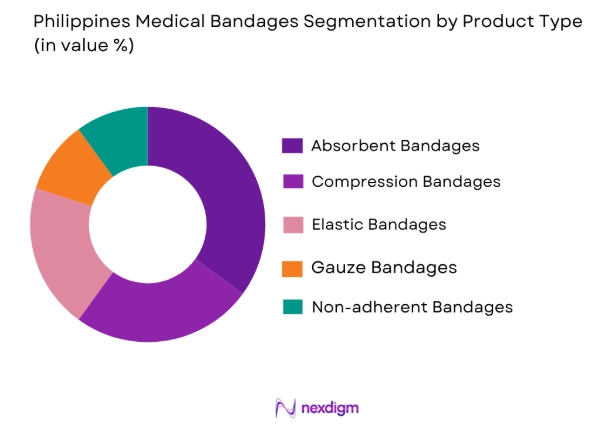
The Philippines medical bandages market is segmented by product type into absorbent bandages, compression bandages, elastic bandages, gauze bandages, and non-adherent bandages. Recently, absorbent bandages have dominated the market share, as they are essential for treating a variety of wounds, particularly in cases of heavy exudate. The demand for absorbent bandages is driven by their effectiveness in wound healing, as they help in maintaining a moist environment for faster recovery. This sub-segment benefits from the increasing number of chronic wound cases, including diabetic ulcers, and the growing awareness among healthcare professionals about the advantages of using high-quality absorbent bandages for optimal patient outcomes.
By End-User Segment
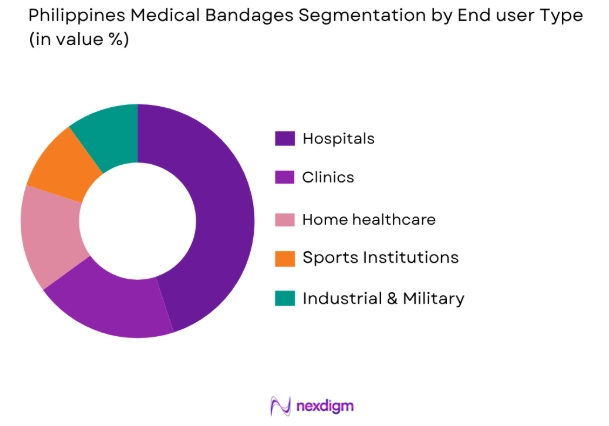
The market for medical bandages in the Philippines is also segmented by end-user, with hospitals, clinics, home healthcare, sports institutions, and industrial & military sectors. Hospitals have the largest share of the market due to their significant demand for a wide range of medical bandages for both inpatient and outpatient care. Hospitals require bandages for surgical procedures, wound care management, and emergency treatments. Furthermore, the growing healthcare infrastructure, especially in urban centers, has made hospitals the primary consumers of medical bandages, as they are equipped with advanced wound care units and have a higher volume of patients requiring bandage products. The increasing number of surgeries and accident-related injuries further drives the demand for medical bandages in hospitals.
Competitive Landscape
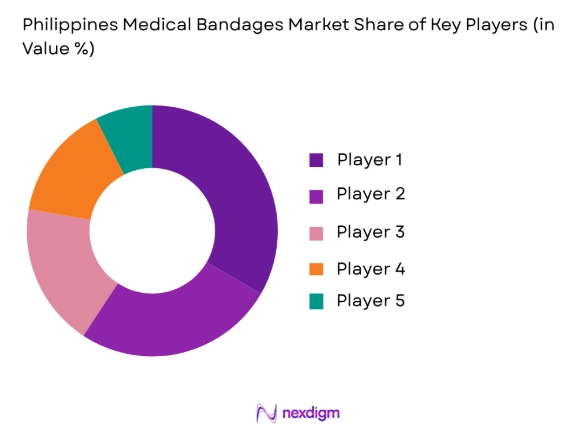
The competitive landscape of the medical bandages market in the Philippines is marked by a mix of both international and local players. Major global companies like 3M, Johnson & Johnson, and Medtronic dominate the market with a diverse portfolio of medical products. These companies benefit from extensive distribution networks and a strong brand presence, which provide them with a competitive edge. Meanwhile, local players are also contributing to market growth, offering cost-effective alternatives to cater to the diverse needs of the local healthcare system. The market has seen consolidation, with major players acquiring smaller companies to expand their market share and product offerings, particularly in wound care and advanced bandage technologies.
| Company Name | Establishment Year | Headquarters | Technology Focus | Market Reach | Key Products | Revenue (USD) | Additional Parameter |
| 3M | 1902 | USA | ~ | ~ | ~ | ~ | ~ |
| Johnson & Johnson | 1886 | USA | ~ | ~ | ~ | ~ | ~ |
| Medtronic | 1949 | Ireland | ~ | ~ | ~ | ~ | ~ |
| HARTMANN Group | 1818 | Germany | ~ | ~ | ~ | ~ | ~ |
| BSN Medical | 2003 | Germany | ~ | ~ | ~ | ~ | ~ |
Philippines Medical Bandages Market Analysis
Growth Drivers
Increasing Incidences of Chronic Wounds
In the Philippines there is a significant burden of chronic wounds driven by underlying non‑communicable diseases such as diabetes and peripheral vascular conditions. According to industry sources, around 1.5 million chronic wound cases are reported annually, a figure that correlates with the rising prevalence of diabetes which affects over 4 million Filipinos and contributes to complications like diabetic foot ulcers that frequently require medical bandages for wound management. This high absolute number of chronic wound cases increases recurring demand for advanced and standard medical bandages across clinical and home‑care settings, supporting sustained market consumption.
Rising Healthcare Expenditure
National health spending in the Philippines has been increasing, reflecting greater resource allocation towards healthcare services and products that include wound care supplies such as bandages. Data from the World Bank and WHO Global Health Expenditure Database indicates that the current health expenditure per capita in the Philippines has been rising year‑on‑year, representing greater absolute healthcare spending power of the population and systems. Additionally, total health spending reached approximately ₱1.56 trillion in 2024, with a substantial share coming from household out‑of‑pocket payments, indicating willingness to spend on essential medical products including bandages when required. Greater per capita expenditure and total health outlays support higher consumption of medical bandages across formal care providers and self‑care segments.
Challenges
Cost of Advanced Medical Bandages
Advanced medical bandages, such as hydrocolloid, antimicrobial, or specialized compression types, tend to have higher unit production costs and retail prices compared to basic gauze or adhesive strips. In a market where out‑of‑pocket health expenditure accounted for nearly ₱615 billion of total healthcare costs in 2024, many patients and care providers are sensitive to the absolute cost of supplies that are not subsidized. High direct costs for advanced bandage formats can deter uptake, especially in lower‑income segments where basic wound care approaches are preferred due to financial constraints. This cost sensitivity remains a barrier to broader adoption of higher‑performance bandage products despite clinical advantages.
Limited Awareness in Rural Areas
Access to comprehensive wound care education and quality medical products remains uneven across urban and rural regions in the Philippines. Spatial analyses of healthcare services highlight disparities in facility access and health resource distribution, with rural areas frequently experiencing lower availability of advanced care options. These inequities in accessibility correlate with lower public awareness of when to seek advanced wound care and appropriate bandage selection — a dynamic that limits demand growth for specialized bandages outside urban centers, where healthcare professionals and product availability are concentrated.
Opportunities
Rising Geriatric Population
Demographic trends in the Philippines show an increasing share of older adults, a cohort that typically has greater vulnerability to wounds, pressure injuries, and circulation‑related skin breakdown requiring bandage solutions. While exact 2024 statistics on the older population are variable, population data consistently indicate growth in those aged 60 and above. This expanding absolute number of potential medical bandage consumers forms a base for increased demand for geriatric wound care products. As these demographic shifts continue, healthcare and caregiving systems will likely integrate bandage usage more extensively for age‑related wound management.
Expansion of E‑commerce for Healthcare Products
Digital and e‑commerce channels in the Philippines have grown substantially over recent years, providing new avenues for consumers to access medical supplies directly. While specific numerical e‑commerce healthcare figures for 2024 are limited in public macroeconomic sources, national digital commerce trends show increased online purchasing behavior for health and personal care products. Increased internet penetration and smartphone usage translate into larger absolute numbers of consumers willing to buy medical bandages online, particularly urban and semi‑urban populations seeking convenience and a wider product assortment than what is available through traditional retail channels.
Future Outlook
The future of the medical bandages market in the Philippines is expected to experience steady growth, driven by advancements in healthcare technology, regulatory support, and increasing consumer demand for more effective wound care solutions. Over the next five years, the market is poised for innovation, with smart and advanced bandages gaining traction. Technological developments, including the integration of sensors and antimicrobial properties in bandages, are anticipated to revolutionize the wound care landscape. Additionally, government initiatives to improve healthcare infrastructure and accessibility are likely to drive demand, especially in rural areas. The market’s growth will also be influenced by the rising number of surgeries, chronic diseases, and aging populations, further propelling the need for advanced bandage products.
Major Players
- 3M
- Johnson & Johnson
- Medtronic
- HARTMANN Group
- BSN Medical
- Kimberly-Clark
- Smith & Nephew
- ConvaTec
- Mölnlycke Health Care
- B. Braun Melsungen
- Derma Sciences
- Medline Industries
- KCI Medical
- Paul Hartmann AG
- Molnlycke Health Care
Key Target Audience
- Investments and venture capitalist firms
- Government and regulatory bodies
- Healthcare providers
- Private hospitals
- Wound care specialists
- Pharmaceutical companies
- Retail healthcare suppliers
- Insurance companies
Research Methodology
Step 1: Identification of Key Variables
The first step involves identifying the primary factors that influence the market dynamics. This includes factors such as demographics, healthcare trends, technological advancements, and regulatory environments.
Step 2: Market Analysis and Construction
In this step, data from secondary and primary sources are used to analyze the market size, growth rate, and other relevant factors. A robust framework is established to construct a detailed market profile.
Step 3: Hypothesis Validation and Expert Consultation
Market assumptions and hypotheses are validated through consultations with industry experts, including professionals from medical institutions, regulatory bodies, and product manufacturers.
Step 4: Research Synthesis and Final Output
All gathered data is synthesized into a comprehensive report that includes actionable insights, market projections, and a thorough analysis of the competitive landscape.

- Executive Summary
- Research Methodology (Market Definitions and Scope of Medical Bandages, Assumptions for Bandage Classifications, Bandage Market Sizing Approach, Top‑Down & Bottom‑Up Validation, Primary Research Framework with Clinicians and Procurement Leads, Data Triangulation and Forecasting Assumptions, Limitations and Future Projections)

- Market Definition and Scope
- Value Chain & Stakeholder Ecosystem
- Regulatory / Certification Landscape
- Sector Dynamics Affecting Demand
- Strategic Initiatives & Infrastructure Growth

- Growth Drivers
Increasing Incidences of Chronic Wounds
Rising Healthcare Expenditure
Growth in Sports and Physical Activities - Market Challenges
Cost of Advanced Medical Bandages
Limited Awareness in Rural Areas
Regulatory Hurdles for Medical Products - Market Opportunities
Rising Geriatric Population
Expansion of E-commerce for Healthcare Products
Technological Innovations in Wound Care - Trends
Adoption of Smart Bandages
Focus on Sustainable and Eco-friendly Materials
Integration of Bandages with Healing Technologies - Government Regulations
- SWOT Analysis of Key Competitors
- Porter’s Five Forces

- By Revenue, 2020-2025
- By Volume, 2020-2025
- By Average Price per Unit, 2020-2025

- By Product Type (In Value%)
Absorbent Bandages
Compression Bandages
Elastic Bandages
Gauze Bandages
Non-Adherent Bandages - By End User Segment (In Value%)
Hospitals
Clinics
Home Healthcare
Sports Institutions
Industrial & Military - By Platform Type (In Value%)
Traditional Medical Bandages
Advanced Medical Bandages
Wound Care Bandages
Sports Bandages
Surgical Bandages - By Fitment Type (In Value%)
Self-Adhesive Bandages
Non-Adhesive Bandages
Wraparound Bandages
Compression Bandages
Strapping Bandages - By Procurement Channel (In Value%)
Direct Sales
Distributors & Wholesalers
Online Retail
Medical Suppliers
Government & Public Health Purchases

- Market Share Analysis
- Cross Comparison Parameters (Product Quality, Price Sensitivity, Brand Loyalty, , Regulators, Certifications Held,Innovation & R&D Investments, Partnerships and Institutional Agreements, Marketing and Brand Penetration, Quality & Performance Benchmarks, Cost Structures and Margin Profiles, Sales Volume Trajectories, Customer Satisfaction and Retention Metrics, Channel Penetration Strength)
- SWOT Analysis of Key Competitors
- Pricing & Procurement Analysis
- Key Players
3M Company
Smith & Nephew Plc
Johnson & Johnson Services, Inc.
ConvaTec Group Plc
Cardinal Health, Inc.
BSN Medical (Essity)
Mundipharma International Ltd.
B. Braun Melsungen AG
Urgo Medical
Medline Industries, Inc.
Dynarex Corporation
Beiersdorf AG
Molnlycke Health Care AB
Coloplast A/S
Primex Iceland

- Hospitals’ Demand for Advanced Bandages
- Growth of Home Healthcare Markets
- Increasing Usage in Sports and Fitness
- Industrial Use of Bandages for Safety

- By Market Size by Revenue, 2026-2035
- By Market Size by Volume, 2026-2035
- By Market Size by Average Price per Unit, 2026-2035


 Request a Sample
 Ask for Customization
 Get a Quote
 Enquire Now