

 Download PDF
 Download PDF
Market Overview
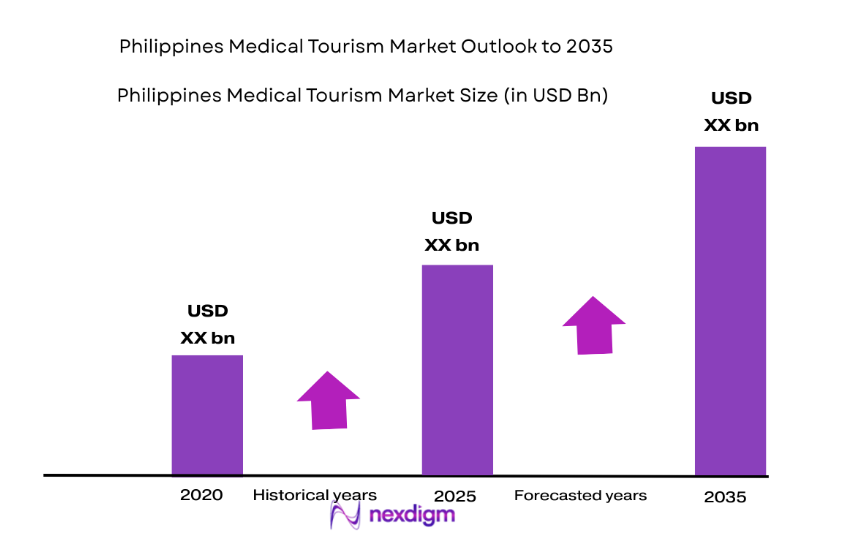
The Philippines medical tourism market is driven by significant investments in healthcare infrastructure, attracting international patients seeking high-quality yet affordable treatment options. With medical tourism expected to reach a valuation of USD ~ billion based on a recent historical assessment, the country’s strong medical capabilities, cost-effective procedures, and welcoming tourist facilities make it a growing hub for patients worldwide. The demand is largely spurred by favorable treatment pricing and the availability of specialized medical services, which continue to draw medical travelers.
Dominating countries contributing to the Philippines’ medical tourism market include the United States, Japan, and the Middle East, with the Philippines attracting a significant volume of patients due to its advanced medical capabilities and cost-effectiveness. Manila, Cebu, and Davao have emerged as key centers, offering state-of-the-art healthcare facilities and services, supported by the government’s medical tourism programs and strategic marketing. These areas have enhanced the country’s competitiveness, positioning it as a leading destination for elective surgeries, dental care, and wellness treatments.
Market Segmentation
By Product Type
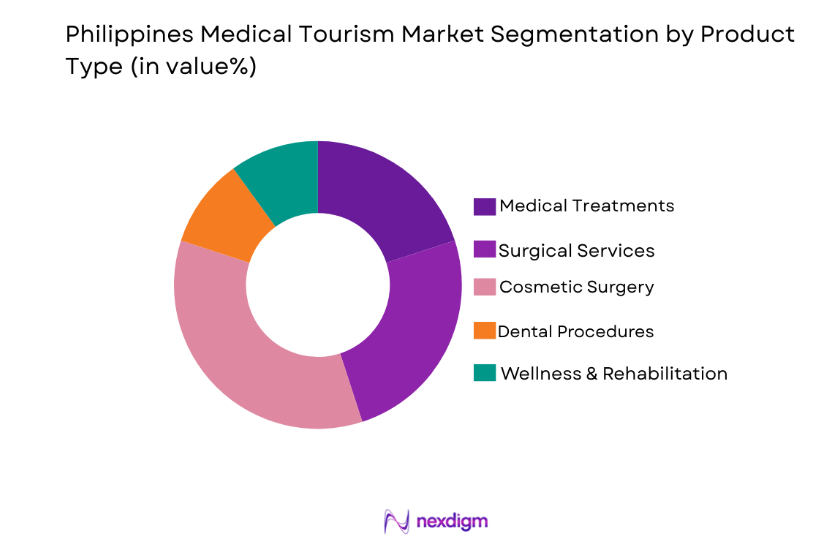
Philippines medical tourism market is segmented by product type into medical treatments, surgical services, cosmetic surgery, dental procedures, and wellness & rehabilitation services. Recently, the cosmetic surgery sub-segment has a dominant market share due to factors such as growing interest in aesthetic treatments, international brand recognition, and an increasing number of patients seeking cosmetic procedures such as facelifts, breast augmentation, and liposuction. With a higher number of qualified surgeons, combined with lower procedure costs compared to countries like the United States, cosmetic surgery in the Philippines has seen steady growth in both inbound and domestic markets.
By Platform Type
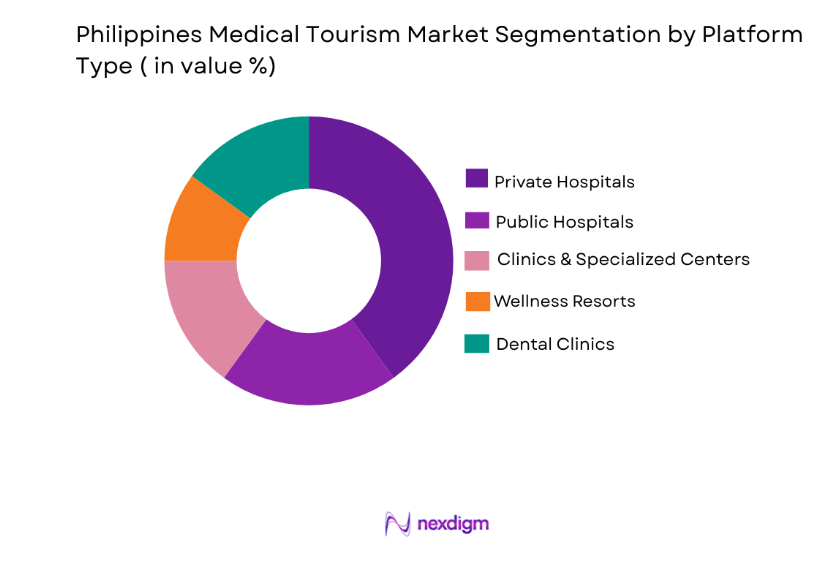
Philippines medical tourism market is segmented by platform type into private hospitals, public hospitals, clinics & specialized centers, wellness resorts, and dental clinics. Recently, the private hospitals sub-segment has a dominant market share due to factors such as the availability of advanced medical technologies, personalized services, and a strong reputation for quality care. Private hospitals in the Philippines often have international accreditations, which instills confidence in foreign patients. These hospitals also cater to medical tourists by offering comprehensive packages, including accommodation and transport services, further enhancing their appeal. The growing number of internationally certified private hospitals positions this sub-segment as the dominant player in the market.
Competitive Landscape
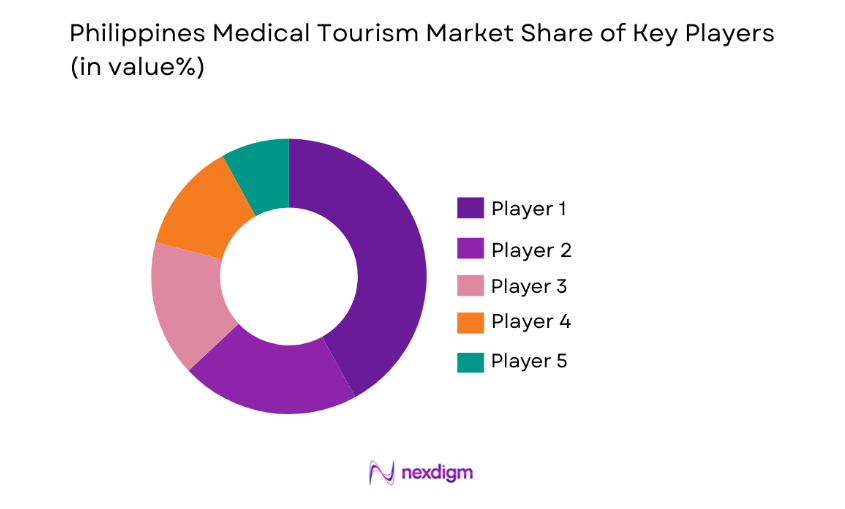
The competitive landscape of the Philippines medical tourism market is marked by increasing consolidation, with major players expanding their services to enhance their international market reach. Leading hospitals and clinics in the country are focusing on diversifying their offerings, while also promoting affordable packages for medical tourists. The presence of renowned healthcare providers, state-of-the-art facilities, and competitive pricing continue to influence the market. Major players in this space have established strong networks with international hospitals, medical tourism agencies, and airlines to cater to the growing medical traveler demographic.
| Company Name | Establishment Year | Headquarters | Technology Focus | Market Reach | Key Products | Revenue (USD) | Additional Market-Specific Parameter |
| The Medical City | 1967 | Manila, Philippines | ~ | ~ | ~ | ~ | ~ |
| St. Luke’s Medical Center | 1903 | Quezon City, Philippines | ~ | ~ | ~ | ~ | ~ |
| Makati Medical Center | 1969 | Makati, Philippines | ~ | ~ | ~ | ~ | ~ |
| Asian Hospital | 2002 | Muntinlupa, Philippines | ~ | ~ | ~ | ~ | ~ |
| Manila Doctors Hospital | 1956 | Manila, Philippines | ~ | ~ | ~ | ~ | ~ |
Philippines Medical Tourism Market Analysis
Growth Drivers
Government Investment in Medical Tourism Infrastructure
The Philippine government has recognized medical tourism as a key sector for economic growth, which has led to significant investment in healthcare infrastructure, including world-class hospitals, modern medical equipment, and comprehensive medical tourism facilities. Government-backed initiatives, such as tax incentives for medical centers and healthcare providers, and marketing campaigns to attract international patients, have further fueled the growth of the market. These initiatives help raise awareness of the country’s capabilities in providing quality, cost-effective medical services to international patients. Moreover, this support is driving the expansion of medical tourism in key regions like Manila and Cebu, positioning the Philippines as a leading destination for health tourism in Southeast Asia.
Technological Advancements in Healthcare
Another critical growth driver for the Philippines medical tourism market is the rapid advancement of medical technology. Hospitals and clinics in the Philippines have increasingly adopted cutting-edge technologies such as robotic surgery, telemedicine, and AI-driven diagnostic tools to enhance their service offerings. These technological innovations improve patient outcomes, reduce recovery times, and provide cost savings for medical tourists. With rising demand for advanced treatments at affordable prices, international patients are drawn to the Philippines for both elective surgeries and specialized procedures like fertility treatments and cosmetic surgery. The increasing availability of state-of-the-art medical services is solidifying the country’s status as a medical tourism hub.
Market Challenges
Regulatory Barriers to Medical Tourism
Despite the Philippines’ growing reputation as a medical tourism destination, regulatory barriers remain a challenge for many healthcare providers. The lack of clear regulations regarding medical tourism and licensing requirements for foreign patients can create confusion for both healthcare providers and patients. Additionally, the absence of standardized accreditation for medical institutions can raise concerns about the quality and safety of treatment options for international patients. While efforts are underway to streamline regulations and establish a clearer framework for medical tourism, these barriers still pose challenges for the industry. Without clear guidelines, the country may face difficulties in capitalizing on the growing global demand for medical services.
Concerns Over Healthcare Quality Standards
Although the Philippines offers cost-effective medical treatments, there are concerns about the consistency and quality of care in certain facilities. While leading hospitals and medical centers provide world-class healthcare services, some smaller clinics and medical establishments may lack the required infrastructure, medical certifications, or highly qualified healthcare professionals. The absence of internationally recognized accreditation standards can lead to skepticism among international patients, potentially affecting their decision to travel to the Philippines for treatment. Ensuring all healthcare providers meet stringent quality and safety standards is crucial for the Philippines to maintain its competitiveness in the global medical tourism market.
Opportunities
Expansion of Wellness and Preventative Care
As the global demand for holistic and wellness treatments increases, the Philippines has a unique opportunity to tap into this growing sector. The country’s rich natural resources, alongside its established reputation for providing affordable medical services, position it well for the development of wellness tourism offerings, such as spas, detox programs, and wellness retreats. These services cater to the increasing number of health-conscious individuals seeking preventive care and holistic treatment options. By leveraging its strong tourism infrastructure and skilled workforce, the Philippines can further enhance its market appeal to international tourists looking for wellness and preventive care services.
Collaborations with International Health Insurers
Another promising opportunity for the Philippines medical tourism market lies in collaborations with international health insurers. With healthcare costs rising globally, many insurers are looking to partner with foreign medical providers to offer patients affordable treatment options. The Philippines, with its competitive pricing and high-quality healthcare services, is well-positioned to attract these partnerships. By establishing more formal relationships with health insurers, the country could provide medical tourists with better access to affordable treatment packages and medical coverage. These collaborations would not only help boost the number of international patients but also encourage repeat visits from health insurance members, further contributing to the market’s growth.
Future Outlook
The future outlook for the Philippines medical tourism market looks positive, with continued growth driven by advancements in healthcare technology, government initiatives, and increasing demand for affordable yet high-quality medical services. Over the next five years, the market is expected to witness expansion in key cities like Manila, Cebu, and Davao as hospitals continue to enhance their facilities and services to cater to international patients. Furthermore, advancements in telemedicine, robotics, and AI will bolster the country’s attractiveness as a medical tourism hub. With an increasing focus on wellness tourism and preventive healthcare, the Philippines is set to capitalize on these opportunities, ensuring sustainable growth for the market.
Major Players
- The Medical City
- St. Luke’s Medical Center
- Makati Medical Center
- Asian Hospital
- Manila Doctors Hospital
- Healthway Medical
- Philippine General Hospital
- Davao Doctors Hospital
- Asian Eye Institute
- St. Theresa’s Hospital
- Cardinal Santos Medical Center
- Cebu Doctors’ University Hospital
- Chong Hua Hospital
- Lourdes Hospital
- Medical Tourism Philippines
Key Target Audience
- Investments and venture capitalist firms
- Government and regulatory bodies
- Private hospitals and healthcare providers
- Medical tourism agencies
- Pharmaceutical companies
- Insurance companies
- Tourists seeking medical treatment
Research Methodology
Step 1: Identification of Key Variables
In this step, we identify the key market drivers, challenges, and opportunities specific to the Philippines medical tourism market by conducting both primary and secondary research.
Step 2: Market Analysis and Construction
This phase involves analyzing the available market data and constructing a detailed market model based on historical data, trends, and expert opinions from stakeholders within the medical tourism and healthcare sectors.
Step 3: Hypothesis Validation and Expert Consultation
The insights gathered in the initial research are validated through consultations with experts in the healthcare and tourism industries to ensure the accuracy and relevance of the findings.
Step 4: Research Synthesis and Final Output
Finally, the research findings are synthesized into a comprehensive market report that addresses all the identified factors, providing actionable insights and recommendations for stakeholders in the Philippines medical tourism market.

- Executive Summary
- Research Methodology (Definitions, Scope, Industry Assumptions, Market Sizing Approach, Primary & Secondary Research Framework, Data Collection & Verification Protocol, Analytic Models & Forecast Methodology, Limitations & Research Validity Checks)

- Market Definition and Scope
- Value Chain & Stakeholder Ecosystem
- Regulatory / Certification Landscape
- Sector Dynamics Affecting Demand

- Growth Drivers
Rising Healthcare Costs in Developed Countries
Increasing Number of Health Conscious Tourists
Government Support for Medical Tourism - Market Challenges
Regulatory Barriers and Licensing Issues
High Cost of Specialized Medical Services
Concerns Over Healthcare Quality and Standards - Market Opportunities
Expansion in Non-invasive Treatments
Collaborations Between Hospitals and Travel Agencies
Rising Demand for Cosmetic and Wellness Treatments - Trends
Increasing Use of Telemedicine
Growth in Wellness Tourism - Government Regulations
Healthcare Certification Standards
Medical Tourism Promotion Programs
Tourism Visa Regulations for Medical Tourists - SWOT Analysis
- Porter’s Five Forces

- By Market Value, 2020-2025
- By Installed Units, 2020-2025
- By Average System Price, 2020-2025
- By System Complexity Tier, 2020-2025

- By System Type (In Value%)
Medical Treatment
Surgical Services
Cosmetic Surgery
Dental Procedures
Wellness & Rehabilitation - By Platform Type (In Value%)
Private Hospitals
Public Hospitals
Clinics & Specialized Centers
Wellness Resorts
Dental Clinics - By Fitment Type (In Value%)
On-premise Solutions
Telemedicine & Remote Care
Medical Tourism Packages
Integrated Solutions
Hybrid Solutions - By End User Segment (In Value%)
International Patients
Domestic Patients
Corporate Clients

- Market Share Analysis
- Cross Comparison Parameters (Service Type, Platform Type, End User Segment, Location, Quality of Services, Customer Satisfaction, Price)
- SWOT Analysis of Key Competitors
- Pricing & Procurement Analysis
- Key Players
Maxicare
Healthway Medical
The Medical City
St. Luke’s Medical Center
Asian Hospital and Medical Center
Makati Medical Center
Manila Doctors Hospital
Philippine General Hospital
International Medical Center
Clinic Soho
Aesthetics Philippines
Rizal Medical Center
Asian Hospital
Viva Wellness Center
Medical Travel Philippines

- Increasing Medical Awareness Among Filipinos
- Rise in International Medical Tourists from Neighboring Countries
- Growth of Medical Tourism in the Philippines’ Secondary Cities
- Increase in Corporate Healthcare Travel Packages

- Forecast Market Value, 2026-2035
- Forecast Installed Units, 2026-2035
- Price Forecast by System Tier, 2026-2035
- Future Demand by Platform, 2026-2035


 Request a Sample
 Ask for Customization
 Get a Quote
 Enquire Now