
 Download PDF
Market Overview
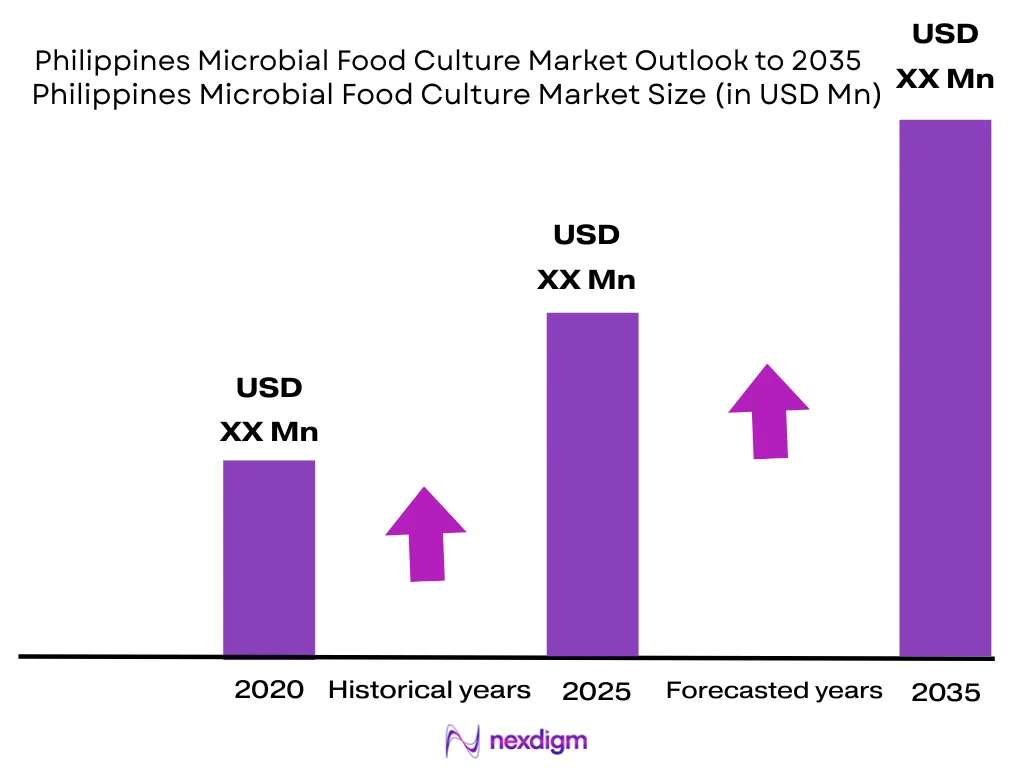
The Philippines Microbial Food Culture Market is valued at approximately USD ~ million and is forecast to expand at a CAGR of % during 2026–2035. Demand is supported by a population of 112,729,484, including 62.22 million urban residents, and national output growth moving from 5.5% to 5.6%. Yoghurt, bread, bagoong, patis, buro, vinegar, nata de coco, probiotic beverages, and plant-based foods create recurring demand for standardized microbial cultures. Metro Manila, CALABARZON, Central Luzon, Cebu, Davao, Cagayan de Oro, Iloilo, and General Santos dominate the Philippines Microbial Food Culture Market because they concentrate food factories, ports, cold storage, laboratories, dairy processors, bakeries, and seafood manufacturers. CALABARZON houses 16,933,234 residents, the National Capital Region 14,001,751, and Central Luzon 12,989,074. These regions provide dense consumer markets and stronger technical, import, manufacturing, and inter-island distribution infrastructure.
Market Segmentation
By Culture Type
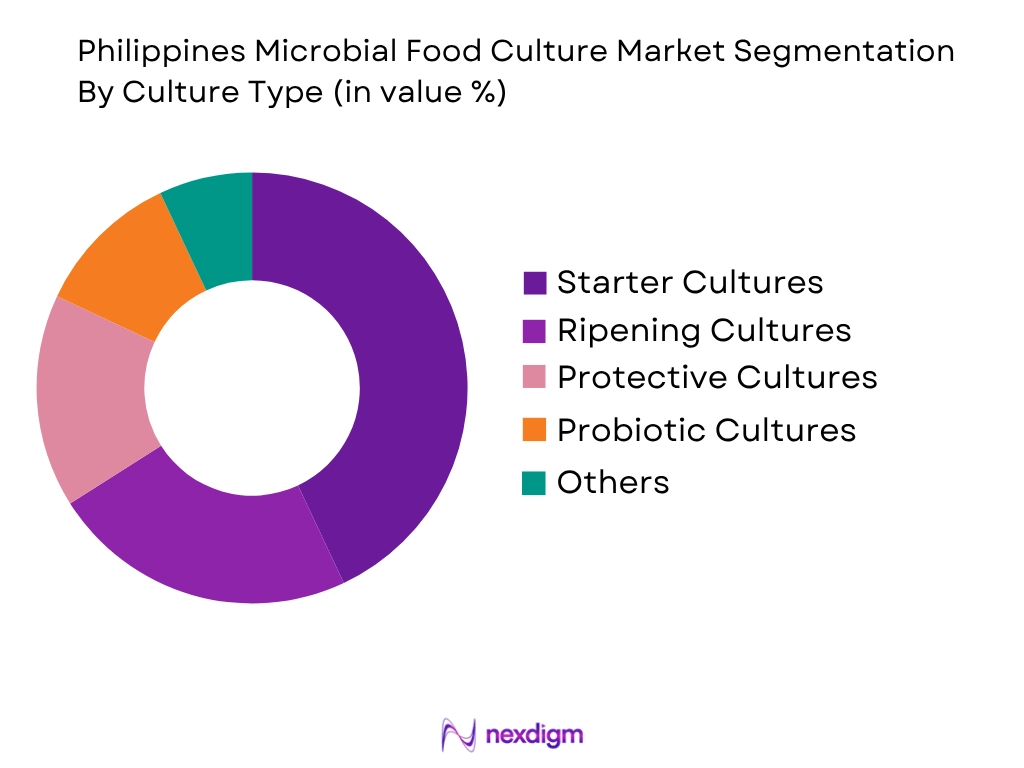
The Philippines Microbial Food Culture Market is segmented into starter cultures, probiotic cultures, protective cultures, adjunct and ripening cultures, customized mixed cultures, indigenous microbial cultures, and acetic-fermentation cultures. Starter cultures hold the dominant position because they initiate controlled fermentation in yoghurt, cultured milk, bread, sourdough, fermented rice products, vegetables, fish, and selected beverages. Defined cultures enable processors to standardize acidity, fermentation time, flavour, and texture while limiting variability associated with spontaneous fermentation. Direct-vat cultures are particularly relevant to organized dairy and beverage processors because they reduce mother-culture handling and contamination exposure. Probiotic cultures form an important specialist category for functional dairy and beverages. Indigenous cultures have strong development potential in bagoong, buro, tapuy, and coconut products, but commercial adoption requires strain isolation, safety assessment, pilot testing, and preservation systems. Acetic acid bacteria remain particularly relevant to coconut, cane, and fruit-vinegar production.
By Application
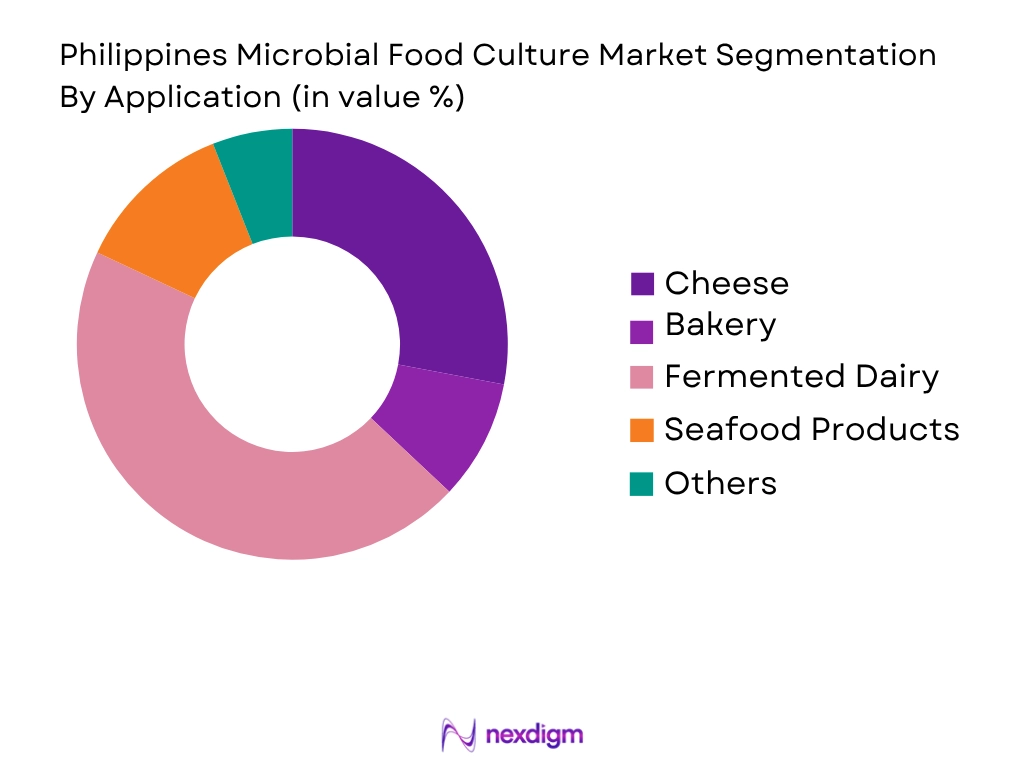
The Philippines Microbial Food Culture Market is segmented into fermented dairy, bakery, seafood products, rice and cereal foods, coconut products, condiments, fermented beverages, and functional foods. Fermented dairy holds the dominant commercial position because yoghurt, cultured milk drinks, probiotic beverages, and fresh cheese require culture dosing during every manufacturing batch. Cultures determine acidification, viscosity, gel formation, flavour, and post-acidification, making them essential industrial inputs. Bakery is another major application because yeast is used extensively in pan bread, pandesal, monay, buns, pastries, and frozen dough. Seafood, coconut, and rice fermentation represent highly market-specific opportunities. However, many bagoong, patis, buro, tapuy, tuba, and vinegar producers still depend on natural fermentation or carried-over starters. Defined microbial systems could improve process predictability and safety while preserving expected saltiness, aroma, acidity, umami, and regional sensory characteristics.
Competitive Landscape
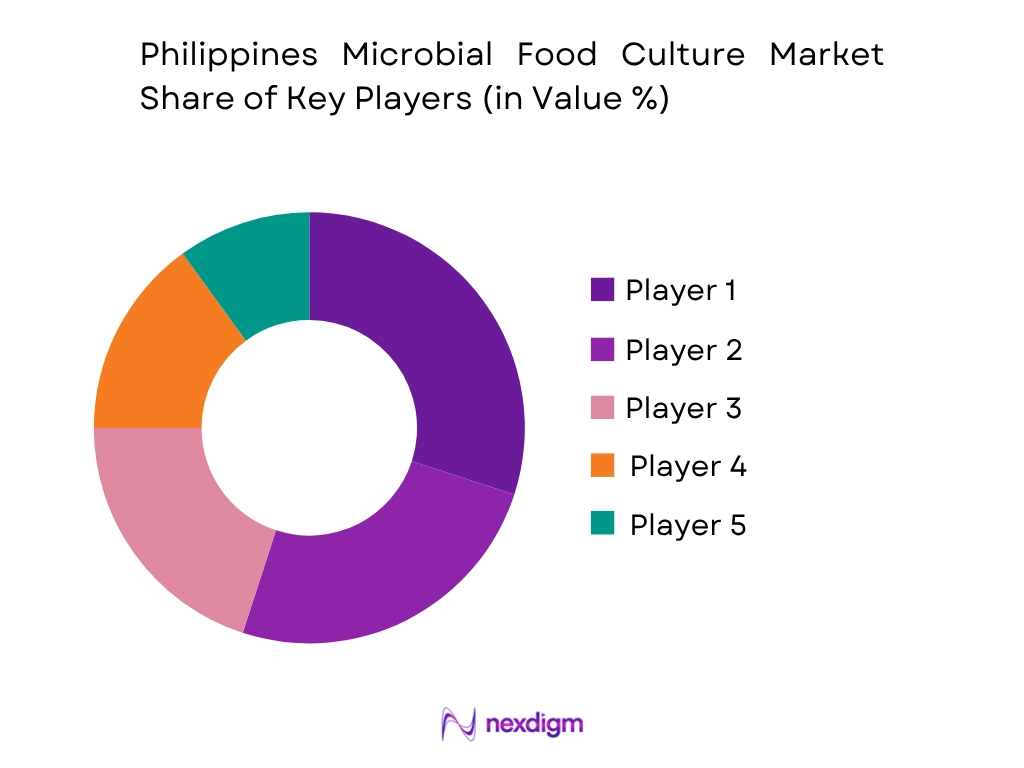
The Philippines Microbial Food Culture Market is led mainly by multinational bioscience and fermentation companies supplying through direct industrial accounts, regional teams, ingredient importers, and authorized distributors. Novonesis and IFF maintain broad fermented-dairy and probiotic portfolios, while Lallemand provides yeast and bacterial solutions across food applications. Lesaffre and Angel Yeast are strongly positioned in bakery fermentation. Competition depends on strain activity, tropical-distribution stability, application support, regulatory documentation, local inventory, and the ability to customize cultures for dairy, coconut, rice, seafood, and plant-based substrates.
| Company | Establishment Year | Headquarters | Core Culture Portfolio | Principal Applications | Product Formats | Philippines Route to Market | Technical Capability | Strategic Differentiation |
| Novonesis | 2024 as merged entity | Lyngby, Denmark | ~ | ~ | ~ | ~ | ~ | ~ |
| International Flavors & Fragrances | 1958 | New York, United States | ~ | ~ | ~ | ~ | ~ | ~ |
| Lallemand | 1915 | Montreal, Canada | ~ | ~ | ~ | ~ | ~ | ~ |
| Lesaffre | 1853 | Marcq-en-Barœul, France | ~ | ~ | ~ | ~ | ~ | ~ |
| Angel Yeast | 1986 | Yichang, China | ~ | ~ | ~ | ~ | ~ | ~ |
Philippines Microbial Food Culture Market Analysis
Growth Drivers
Urbanization and Commercial Demand for Standardized Fermented Foods
The Philippines’ expanding urban population is strengthening demand for standardized microbial cultures used in yoghurt, cultured milk, probiotic beverages, pandesal, sourdough, bagoong, patis, buro, vinegar, nata de coco, fermented soy products, and plant-based alternatives. The Philippine Statistics Authority recorded a national population of 112,729,484 people in 2024, including 62.22 million residents living in urban barangays. The urban population increased by 3.29 million people from the preceding census base, creating denser consumer markets around Metro Manila, CALABARZON, Central Luzon, Cebu, Davao, Iloilo, and Cagayan de Oro. CALABARZON contained 16.93 million residents, the National Capital Region had 14.00 million, and Central Luzon recorded 12.99 million, giving food manufacturers access to nearly 43.92 million consumers across the three largest regional markets. These concentrated populations support supermarkets, convenience stores, restaurants, hotels, institutional caterers, online grocery services, and central kitchens that require products with repeatable acidity, flavour, texture, and storage performance. Commercial microbial cultures are more suitable for these distribution systems than unmanaged fermentation because natural microbial populations can vary with raw-material quality, temperature, water conditions, sanitation, and seasonal changes. Yoghurt processors require lactic acid bacteria that establish predictable fermentation time, viscosity, gel formation, and post-acidification. Bakeries need yeast and sourdough systems capable of maintaining dough development and proofing across large production runs. Seafood processors require salt-tolerant microorganisms for controlled proteolysis and aroma formation in bagoong, patis, and buro. Coconut processors use acetic acid bacteria in vinegar and cellulose-producing bacteria in nata de coco. Macroeconomic conditions further support packaged-food demand. The Philippine economy expanded by 5.7 points in 2024, while World Bank reporting placed gross national income per person at USD 4,470. Household consumption, retail trade, foodservice, and manufacturing remained important contributors to economic activity. Urban consumers are also exposed to a wider range of functional and premium products, including drinking yoghurt, probiotic shots, low-sugar cultured dairy, fermented plant beverages, artisanal sourdough, and packaged regional delicacies. Longer distribution routes from centralized factories to multiple islands increase the need for cultures that provide stable acidity and texture throughout storage. Protective cultures can also support spoilage control when combined with heat treatment, hygiene, refrigeration, and suitable packaging. Urbanization therefore drives the Philippines microbial food culture market through consumer concentration, organized retail expansion, wider fermented-food variety, industrial production requirements, and the gradual replacement of variable back-slopping practices with defined microbial systems.
Industrial Food Processing and Diversification of Fermentation Applications
The expansion and diversification of Philippine food manufacturing are increasing the relevance of starter cultures, baker’s yeast, probiotics, protective cultures, acetic acid bacteria, and customized microbial blends. The Philippine economy recorded 5.7 points of growth in 2024, supported by domestic demand and manufacturing activity. Agricultural and fisheries production at constant prices reached PHP 1.73 trillion, providing a large substrate base that includes milk, fish, shrimp, coconut, rice, maize, sugarcane, fruits, vegetables, and legumes. Fisheries alone produced 4.05 million metric tons, creating extensive raw-material availability for fish sauce, shrimp paste, fermented fish-rice products, and other seafood applications. Total agricultural trade reached USD 27.22 billion, reflecting the scale of imports and exports associated with food ingredients, raw materials, processing inputs, and finished products. This industrial base supports microbial-culture demand because every locally manufactured batch of yoghurt, bread, vinegar, fermented beverage, or packaged traditional food requires controlled biological processing. Commercial dairy companies use thermophilic starter cultures to manage yoghurt acidification and texture, while bakeries depend on yeast for pan bread, pandesal, monay, buns, pastries, and frozen dough. Seafood fermentation involves more complex microbial requirements because cultures must tolerate salt, contribute proteolytic activity, create desirable aroma, and limit unwanted organisms. Coconut processors require different organisms for coconut vinegar, nata de coco, coconut-sap beverages, and plant-based cultured products. Industrialization also encourages processors to document pH, fermentation temperature, culture dosage, viable counts, and product-release criteria. A large manufacturer cannot rely on natural fermentation that produces different results from one tank or production site to another. Slow acidification can delay filling lines, occupy fermentation vessels, and increase contamination exposure. In bakery operations, inconsistent yeast activity can alter proofing time, loaf volume, crumb structure, and oven scheduling. In fish products, uncontrolled fermentation may produce variable aroma, texture, salt balance, or undesirable metabolites. Defined cultures allow production teams to establish standard operating procedures and compare fermentation performance across batches. The Philippines’ current manufacturing and agricultural structure also supports application-specific culture development. Central Luzon generated the largest regional contribution to agricultural and fisheries production, while Northern Mindanao and Davao also maintained substantial food-production bases. These regions can support dairy, coconut, fruit, cereal, and livestock fermentation applications beyond the major urban manufacturing corridors. Industrial development therefore strengthens the microbial food culture market through larger production batches, more demanding quality specifications, broader substrate availability, increased packaged-food output, and stronger incentives to convert fermentation into a measurable and controlled manufacturing process.
Market Challenges
Archipelagic Distribution, Import Dependence, and Culture Viability
The Philippines microbial food culture market faces a structural challenge because most proprietary starter, probiotic, protective, and ripening cultures are imported and must be distributed across an archipelago with multiple port, warehouse, and inter-island transfer stages. Living microbial preparations are sensitive to temperature, humidity, oxygen, handling time, and repeated freezing or thawing. Frozen concentrated cultures require uninterrupted low-temperature storage, while freeze-dried products remain vulnerable to prolonged heat and moisture exposure. The country’s 112,729,484 residents are distributed across Luzon, the Visayas, and Mindanao, with major processors located in Metro Manila, CALABARZON, Central Luzon, Cebu, Davao, Iloilo, Cagayan de Oro, and General Santos. A culture entering through a Luzon port may require additional sea or air transport before reaching processors in the Visayas or Mindanao. Every additional transfer increases exposure to customs delays, warehouse handling, power interruptions, and temperature excursions. The issue is particularly important for seafood, dairy, coconut, and beverage manufacturers that operate near raw-material production areas rather than near the principal import hubs. Philippine agricultural trade reached USD 27.22 billion in 2024, demonstrating the scale of the international supply system through which specialist cultures, ingredients, equipment, and packaging materials move. Fisheries production reached 4.05 million metric tons, but the geographical dispersion of fishing and aquaculture creates a fragmented processing network. A weakened culture can remain visually unchanged while losing enough activity to affect the finished product. In yoghurt, inadequate starter performance can create delayed acidification, weak gel structure, whey separation, or excessive souring during storage. In bakery products, reduced yeast activity can alter proofing time, loaf volume, and line capacity. In bagoong and patis, cultures must remain active under high salt conditions and contribute controlled protein breakdown without encouraging undesirable microorganisms. In vinegar, weak acetic cultures may extend conversion time or produce inconsistent acidity. Nata de coco production requires reliable cellulose-producing bacteria and controlled substrate conditions. Importers and distributors must therefore balance stock availability against the risk of holding cultures beyond their validated storage life. Excess inventory can lose viability, while insufficient inventory exposes manufacturers to freight delays and production interruptions. Cold-chain challenges also continue inside food factories. Staff must maintain calibrated freezers or cold rooms, monitor temperatures, rotate lots, minimize exposure during preparation, and follow precise inoculation procedures. Suppliers with regional stocks, insulated transport, temperature logging, smaller pack sizes, and emergency replacement capability will be better positioned. The market challenge is therefore not simply import dependence; it is maintaining biological activity through a complex national distribution chain and ensuring that processors have the infrastructure and procedures required to preserve culture performance until inoculation.
Limited Specialized Fermentation Skills and Fragmented Processor Capabilities
The Philippines has a large labour force, but microbial food culture applications require a relatively narrow combination of food microbiology, dairy science, seafood technology, fermentation engineering, biotechnology, quality assurance, and regulatory knowledge. The labour force reached 50.97 million people in May 2024 and increased to 52.32 million in May 2025, demonstrating substantial workforce availability. However, general employment growth does not directly supply the specialized expertise needed to select, preserve, dose, and troubleshoot microbial strains. Commercial yoghurt production requires staff who understand starter activity, milk heat treatment, incubation temperature, stabilizer interactions, contamination, viable counts, and post-acidification. Bakery applications require knowledge of yeast metabolism, flour variation, proofing, mechanical dough stress, freezing, and production scheduling. Seafood fermentation is more complex because microorganisms interact with salt concentration, protein breakdown, temperature, raw-fish quality, and histamine-producing organisms. Coconut vinegar and nata de coco require different controls involving acetic acid bacteria or cellulose-producing bacteria. Traditional products such as bagoong, patis, buro, tapuy, basi, and tuba may depend on mixed microbial communities rather than one defined organism, making industrial standardization technically difficult. Many regional processors operate at small or medium scale and may not employ dedicated microbiologists or fermentation specialists. Production managers may therefore handle cultures alongside sanitation, procurement, packaging, maintenance, and quality documentation. Incorrect storage, rehydration, inoculation, or fermentation-temperature control can reduce culture performance and lead businesses to conclude that commercial cultures are unsuitable. The problem is compounded by the country’s fragmented geography, since experienced technical personnel and laboratories are concentrated in Metro Manila, CALABARZON, Central Luzon, Cebu, and selected research centres. A processor operating in a coastal municipality or smaller island may have limited access to rapid microbiological testing or on-site troubleshooting. Regulatory compliance adds another layer of skill demand. Branded and prepackaged fermented foods require facility licensing, product registration, microbiological assessment, ingredient documentation, compliant labels, traceability, and production records. Probiotic products require strain-level documentation and evidence that viable organisms remain present through storage. Protective cultures require product-specific trials because their effectiveness depends on the food matrix, target spoilage organism, packaging, and temperature. Suppliers must consequently provide more than microbial preparations. They need to conduct pilot trials, prepare production protocols, train operators, interpret pH curves, investigate failed batches, and adapt cultures to local substrates. The opportunity to develop indigenous cultures also requires strain isolation, genetic identification, safety screening, preservation, pilot fermentation, and sensory validation. The workforce challenge therefore reflects uneven technical depth across the processor base rather than a shortage of workers. Market development will depend on local application laboratories, technical training, mobile support teams, shared pilot facilities, and partnerships that translate microbiological knowledge into repeatable industrial practice.
Market Opportunities
Indigenous Culture Development and Advanced Fermentation Technology
The Philippines has a substantial opportunity to develop commercial microbial cultures specifically suited to local seafood, coconut, rice, dairy, vegetable, and beverage applications. The country’s 112,729,484 residents, 4.05 million metric tons of fisheries production, and PHP 1.73 trillion in agricultural and fisheries output provide a broad base of substrates and consumption occasions. Traditional products such as bagoong, patis, buro, tapuy, basi, tuba, coconut vinegar, nata de coco, fermented vegetables, and local dairy products contain microorganisms that have adapted to Philippine raw materials, climate, salt levels, and processing methods. These organisms can be isolated and screened for desirable functions, including acidification, salt tolerance, proteolysis, aroma generation, acetic acid production, microbial cellulose formation, pathogen inhibition, and probiotic potential. Commercial development can preserve familiar sensory characteristics while reducing batch variability and processing uncertainty. Seafood cultures could be selected to support protein breakdown and umami development in bagoong and patis while controlling undesirable organisms. Rice and cereal cultures could improve fermentation consistency in tapuy and related beverages. Acetic acid bacteria could be optimized for coconut and cane vinegar, while cellulose-producing bacteria could improve nata de coco yield and structure. Lactic cultures could support coconut-based yoghurt alternatives and functional beverages. Advanced technology can strengthen both indigenous and imported cultures. Genome-based identification can confirm strain identity and screen for undesirable traits. Freeze-drying and cryoprotective systems can improve stability during inter-island distribution. Microencapsulation can protect probiotics from oxygen, acidity, and heat. Automated dosing and digital pH sensors can reduce operator error and identify abnormal fermentation before a complete batch is lost. Mobile monitoring tools are particularly relevant in an archipelagic market because technical specialists can review temperature and pH data remotely rather than travelling to every processing site. The country’s current economic environment supports these developments. Gross domestic product expanded by 5.7 points in 2024, while agricultural trade reached USD 27.22 billion, demonstrating continued activity across food production, imports, exports, and processing. The Bureau of Agriculture and Fisheries Standards had developed 394 Philippine National Standards covering agricultural and fishery products and processes, indicating an institutional foundation for product standardization and food safety. The strongest future opportunity lies in combining indigenous microbial resources with industrial culture-preservation technology, standardized dosing, application testing, and regulatory documentation. This would allow Philippine manufacturers to produce differentiated cultures rather than relying entirely on strains developed for European dairy or bakery products. Current population, fisheries, agricultural-output, standards-development, and economic indicators provide a practical basis for future market expansion without relying on speculative forecasts.
International Collaboration and ASEAN Fermentation Platform
International collaboration can accelerate the Philippines’ access to proprietary strains, probiotic documentation, protective-culture systems, fermentation equipment, freeze-drying technology, genomic tools, and industrial application expertise. The country’s agricultural trade reached USD 27.22 billion in 2024, demonstrating strong integration with international suppliers and export markets. The Philippines also produced 4.05 million metric tons of fisheries products and maintained a population of 112,729,484, giving international partners access to a large domestic market and diverse food-processing applications. Partnerships can connect global microbial-culture manufacturers with Philippine dairy companies, bakeries, seafood processors, coconut businesses, ingredient distributors, laboratories, and public technology institutions. International suppliers contribute strain libraries, phage-management systems, preservation technology, food-grade fermentation protocols, and global regulatory experience. Philippine partners contribute knowledge of high-salt seafood fermentation, tropical storage, coconut substrates, regional rice beverages, local sensory preferences, FDA requirements, and inter-island distribution. Collaboration can follow a staged localization model. The first stage can involve importing finished freeze-dried or frozen cultures and maintaining validated local inventory. The next stage can add smaller pack sizes, repacking, application trials, microbial testing, staff training, and technical support. More advanced stages can include local blending, pilot fermentation, indigenous strain banking, freeze-drying, and selected commercial culture production. Full culture manufacturing requires sterile fermentation vessels, strain-preservation systems, cell concentration, cryoprotection, drying, microbiological quality control, and contamination prevention, so gradual localization is more practical than immediate large-scale production. Regional collaboration can also support ASEAN commercialization. Cultures validated for coconut, rice, seafood, soy, tropical fruit, and high-temperature distribution may be relevant to Indonesia, Malaysia, Vietnam, Thailand, Singapore, and other Southeast Asian markets. Philippine processing hubs in Metro Manila, CALABARZON, Central Luzon, Cebu, and Davao could host regional application laboratories and culture inventories. International partnerships can address the specialized-skills constraint through technical exchanges, operator certification, laboratory training, joint pilot projects, and remote fermentation monitoring. The labour force increased from 50.97 million people in May 2024 to 52.32 million in May 2025, providing a substantial base from which specialist capabilities can be developed. Collaboration can also improve regulatory readiness by generating strain documentation, certificates of analysis, allergen information, microbiological data, and shelf-life evidence before commercial launch. The most differentiated model would combine global microbial technology with Philippine expertise in seafood, coconut, rice, bakery, and tropical fermented products. International collaboration therefore creates future growth through technology transfer, localized technical service, regional inventory, indigenous strain commercialization, workforce development, and ASEAN distribution rather than through simple import resale alone.
Future Outlook
The Philippines Microbial Food Culture Market is expected to expand during 2026–2035 as organized food companies adopt more standardized fermentation systems. Demand will develop across yoghurt, bakery, fish and seafood products, rice beverages, coconut foods, probiotics, plant-based alternatives, and packaged indigenous products. Starter cultures will remain the principal commercial category because they are repeatedly consumed during production. Direct-vat inoculation formats can reduce contamination risks, simplify dosing, and improve batch traceability. Freeze-dried cultures should be particularly relevant because they provide greater distribution flexibility than deeply frozen cultures across an archipelagic market. The dairy segment will continue to require cultures adapted to reconstituted milk, locally produced cow, buffalo, and goat milk, and dairy-coconut blends. A Philippine dairy-industry assessment reported that cattle generated 62% of domestic milk production, despite accounting for a smaller proportion of dairy animals. This illustrates the importance of dairy-cow processing while also leaving room for buffalo- and goat-milk cultures. Commercial culture use in traditional seafood fermentation could increase as processors seek stronger control over proteolysis, acidity, aroma, salt tolerance, and undesirable metabolite formation. Bagoong, patis, and buro producers require cultures capable of functioning in high-salt matrices without eliminating expected umami and fermented-seafood characteristics.
Major Players
- Novonesis
- International Flavors & Fragrances
- dsm-firmenich
- Lallemand
- Lesaffre
- Kerry Group
- Sacco System
- CSK Food Enrichment
- Biochem
- Angel Yeast
- AB Biotek
- LB Bulgaricum
- Biena
- Dalton Biotecnologie
- Mediterranea Biotecnologie
Key Target Audience
- Dairy, yoghurt, and cheese processors
- Industrial bakery and sourdough manufacturers
- Fish sauce, bagoong, and fermented-seafood producers
- Coconut, vinegar, and nata de coco manufacturers
- Food-ingredient importers and distributors
- Investments and venture capitalist firms
- Private-equity and strategic food-industry investors
- Government and regulatory bodies
Research Methodology
Step 1: Identification of Key Variables
The initial phase involves constructing an ecosystem map covering culture producers, importers, distributors, dairy companies, bakeries, seafood fermenters, coconut processors, laboratories, and regulators. Desk research defines variables including culture type, dosage, format, application, salt tolerance, processor scale, import dependency, inter-island logistics, and technical-service availability.
Step 2: Market Analysis and Construction
Historical information is compiled by culture type, microorganism, application, end-user size, supply origin, and island group. The bottom-up model evaluates processor output, fermentation frequency, culture dosage, and commercial-culture penetration. The top-down model reviews food-manufacturing activity, imports, distributor sales, dairy production, bakery activity, and traditional fermented-food output.
Step 3: Hypothesis Validation and Expert Consultation
Market hypotheses are validated through computer-assisted telephone interviews with culture suppliers, microbiologists, dairy technologists, seafood specialists, bakery experts, production managers, procurement teams, and regulatory professionals. These consultations examine culture selection, storage losses, fermentation failures, product qualification, switching behaviour, and technical-support requirements.
Step 4: Research Synthesis and Final Output
Supply-side and demand-side findings are triangulated to reconcile supplier shipments, distributor inventory, and processor consumption. Segment shares and forecasts are reviewed against batch frequency, culture dosage, product applications, import lead times, regulatory requirements, and expert feedback. The final output provides an internally consistent assessment of competition and opportunity.

- Executive Summary
- Research Methodology (Market Definitions and Assumptions, Product Inclusion and Exclusion Criteria, Abbreviations, Market Sizing Approach, Top-Down Analysis, Bottom-Up Analysis, Culture-Dosage Consumption Model, Dairy and Fermented-Food Output Assessment, Demand-Side Assessment, Supply-Side Assessment, Import-Based Supply Assessment, Primary Industry Interviews, Data Triangulation, Forecasting Framework, Scenario Analysis, Limitations and Future Conclusions)

- Definition and Scope
- Market Evolution and Industry Genesis
- Development of Commercial Food Fermentation in the Philippines
- Transition from Spontaneous Fermentation to Standardized Starter Cultures
- Role of Microbial Cultures in Philippine Food Manufacturing
- Evolution of Yoghurt, Cultured Milk and Probiotic Beverage Applications
- Commercial Development of Bagoong, Patis, Buro, Tapuy and Nata de Coco

- Growth Drivers (Large Consumer Base, Expansion of Packaged Yoghurt Production, Industrial Bakery Demand, Commercialization of Indigenous Fermented Foods, Seafood-Processing Activity, Coconut Product Development, Functional and Probiotic Food Demand, Modern Retail Expansion)
- Market Challenges (Dependence on Imported Proprietary Strains, Archipelagic Distribution Complexity, Electricity and Refrigeration Constraints, Culture Viability Loss, Limited Fermentation Skills, Fragmented Small-Processor Base, Raw-Material Variability and Traditional Process Standardization)
- Market Opportunities (Commercialization of Indigenous Strains, Standardized Buro and Bagoong Cultures, Nata de Coco Technology, Coconut and Rice Fermentation Systems, Protective Cultures for Seafood, Probiotic Traditional Foods, Local Culture Blending and Repacking, ASEAN Distribution Expansion)
- Market Trends (Direct-Vat Inoculation, Freeze-Dried Culture Adoption, Ambient-Stable Culture Systems, Multi-Strain Blends, Clean-Label Bioprotection, Indigenous Microbiome Screening, Probiotic Seafood Ferments, Fermented Plant Proteins, Digital Fermentation Monitoring and Small-Batch Culture Packs)
- SWOT Analysis
- Porter’s Five Forces Analysis
- PESTLE Analysis

- By Market Value (2020-2025)
- By Culture Consumption Volume (2020-2025)
- By Active Microbial Preparation Volume (2020-2025)

- By Culture Type (In Value %)
Starter Cultures
Probiotic Cultures
Protective and Biopreservation Cultures
Adjunct and Ripening Cultures
Aroma and Flavour Development Cultures
Customized Mixed Cultures - By Application (In Value %)
Fermented Dairy Products
Bakery and Sourdough Products
Fermented Fish and Seafood Products
Rice and Cereal-Based Fermented Foods
Coconut-Based Fermented Products - By Distribution Model (In Value %)
Direct Sales by Culture Manufacturers
Authorized Food-Ingredient Distributors
Food-Ingredient Importers
Dairy and Bakery Ingredient Distributors
Seafood and Seasoning Ingredient Suppliers
aboratory and Biotechnology Distributors - By Region (In Value %)
National Capital Region
CALABARZON
Central Luzon
Ilocos Region
Cagayan Valley
Bicol Region
Western Visayas

- Market Share of Major Players (By Value, Culture Volume, Application, Culture Type, Customer Segment and Distribution Model)
- Cross Comparison Parameters (Culture Portfolio Breadth, Microbial-Strain Library Depth, Philippine Indigenous-Food Application Coverage, Salt and Tropical-Temperature Tolerance, Local Technical-Support Capability, FDA Documentation Strength, Inter-Island Distribution and Inventory Reach, Product Innovation and Customization Capability)
- SWOT Analysis of Major Players
- Detailed Profiles of Major Companies
Novonesis
International Flavors & Fragrances
dsm-firmenich
Lallemand
Lesaffre
Kerry Group
Sacco System
CSK Food Enrichment
Biochem
Angel Yeast
AB Biotek
LB Bulgaricum
Biena
Dalton Biotecnologie
Mediterranea Biotecnologie

- Dairy Processor Analysis
- Bakery Manufacturer Analysis
- Fish and Seafood Fermenter Analysis
- Coconut Processor Analysis
- Rice and Cereal Fermenter Analysis
- Soy and Legume Processor Analysis

- By Market Value (2026-2035)
- By Culture Consumption Volume (2026-2035)
- By Active Microbial Preparation Volume (2026-2035)


 Request a Sample
 Ask for Customization
 Get a Quote
 Enquire Now