

 Download PDF
Market Overview
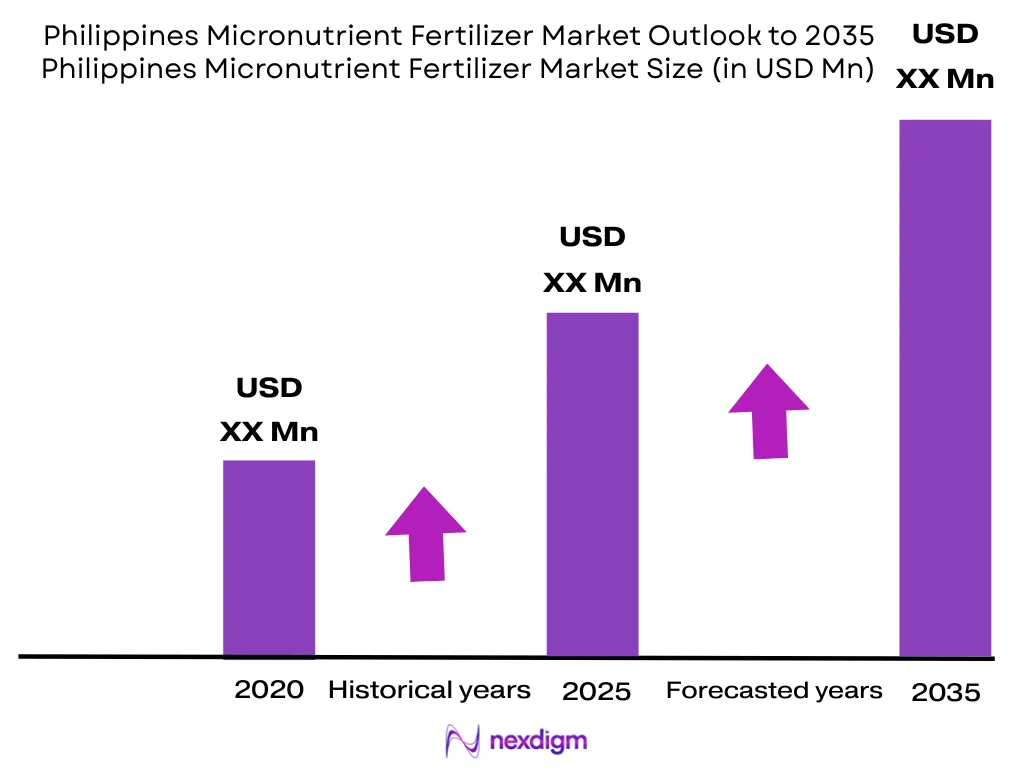
The Philippines Micronutrient Fertilizer Market is valued at approximately ~ USD Million, based on industry analysis of fertilizer consumption, micronutrient application rates, and agricultural input demand. The market recorded a value of ~ USD Million in the preceding period and expanded to ~ USD Million driven by increasing cultivation of rice, corn, banana, coconut, and high-value horticultural crops. Rising awareness regarding soil micronutrient deficiencies, coupled with government initiatives supporting agricultural productivity and balanced fertilization practices, continues to stimulate demand for zinc, boron, iron, and manganese-based fertilizers across commercial and smallholder farming operations.
Market Segmentation
By Nutrient Type
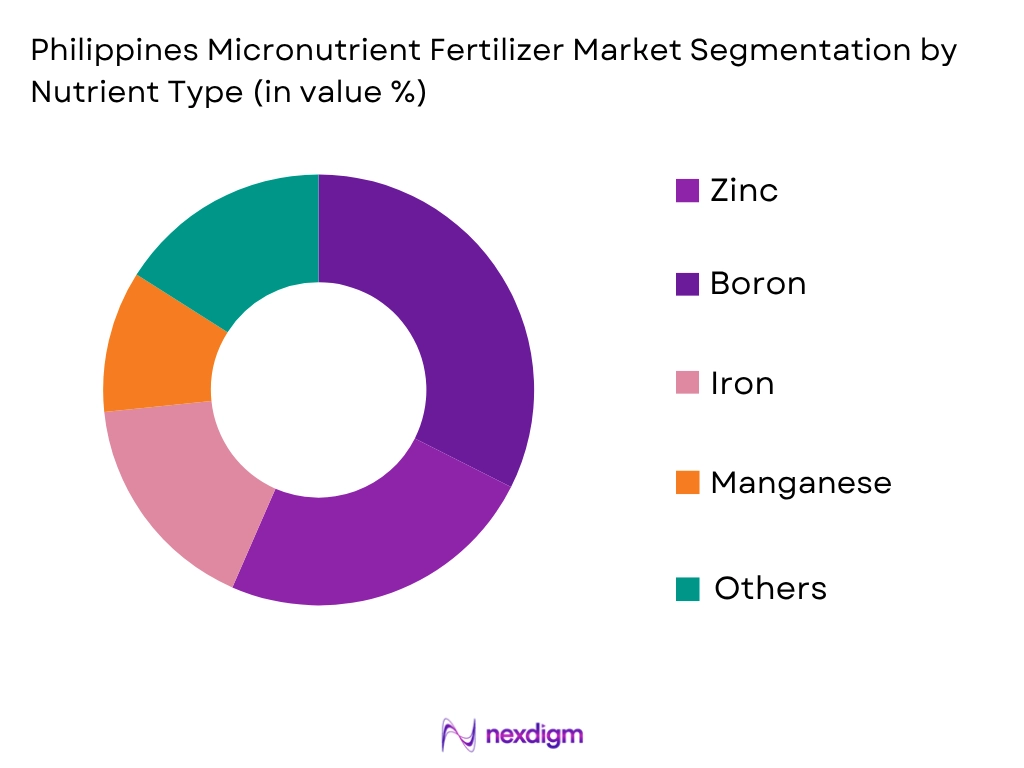
The Philippines Micronutrient Fertilizer Market is segmented into zinc, boron, iron, manganese, and other micronutrients. Recently, zinc fertilizers have held the dominant market share due to widespread zinc deficiency in paddy soils and their critical role in improving rice productivity. Zinc applications support root development, grain formation, and nutrient uptake efficiency, making them highly preferred among rice and corn growers. Government-supported soil fertility programs and increasing awareness regarding balanced fertilization have further strengthened the adoption of zinc-based products. Moreover, the country’s significant dependence on rice cultivation creates sustained demand for zinc nutrients, enabling this segment to maintain its leadership position within the overall micronutrient fertilizer market.
By Crop Type
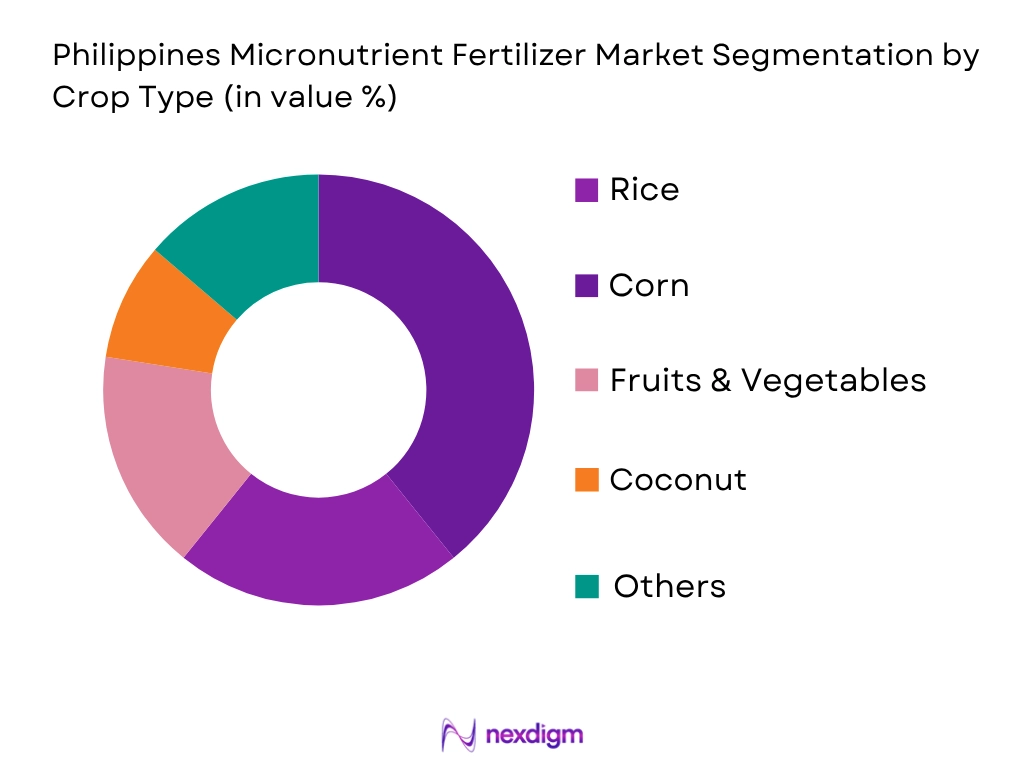
The Philippines Micronutrient Fertilizer Market is segmented by crop type into rice, corn, fruits & vegetables, coconut, and other crops. Rice cultivation currently dominates market demand due to its strategic importance in national food security and its extensive cultivation across agricultural regions. Continuous cropping cycles often deplete essential micronutrients from soils, increasing the requirement for zinc, boron, and iron supplementation. Farmers are increasingly adopting micronutrient-enriched fertilizers to improve yields, grain quality, and nutrient efficiency. Government support programs, fertilizer assistance initiatives, and growing awareness regarding nutrient management have reinforced the dominant position of the rice segment. The large cultivation area dedicated to rice ensures consistent consumption of micronutrient fertilizers compared to most other crop categories.
Competitive Landscape
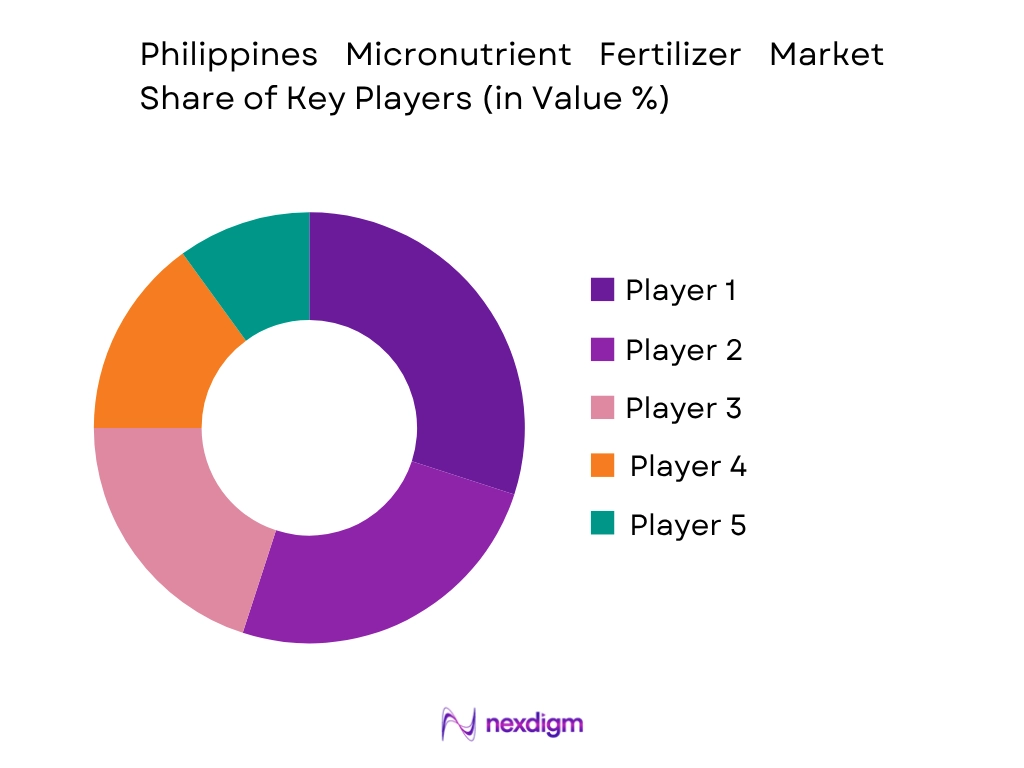
The Philippines Micronutrient Fertilizer Market is moderately consolidated, with both multinational fertilizer manufacturers and regional distributors actively competing. Global companies leverage strong product portfolios, advanced micronutrient formulations, and extensive technical support services, while domestic players focus on localized distribution and farmer engagement. Competition is increasingly centered around product innovation, crop-specific formulations, dealer network expansion, and agronomic advisory services.
| Company | Establishment Year | Headquarters | Product Portfolio | Micronutrient Focus | Technical Support | Distribution Network | Crop Focus | Presence |
| Yara International | 1905 | ~ | ~ | ~ | ~ | ~ | ~ | ~ |
| Haifa Group | 1966 | ~ | ~ | ~ | ~ | ~ | ~ | ~ |
| ICL Group | 1968 | ~ | ~ | ~ | ~ | ~ | ~ | ~ |
| Coromandel International | 1961 | ~ | ~ | ~ | ~ | ~ | ~ | ~ |
| Nutrien Ltd | 2018 | ~ | ~ | ~ | ~ | ~ | ~ | ~ |
Philippines Micronutrient Fertilizer Market Analysis
Growth Drivers
Rising Micronutrient Deficiency in Agricultural Soils
The increasing prevalence of micronutrient-deficient soils across major agricultural regions of the Philippines is a significant growth driver for the micronutrient fertilizer market. Zinc deficiency remains one of the most widespread soil fertility issues affecting rice-growing areas. Studies conducted in major rice-producing provinces identified zinc deficiency across sampled rice cultivation sites, while previous assessments estimated approximately 500,000 hectares of irrigated rice land to be affected by zinc-deficient soils. Additionally, deficiencies of boron, copper, and other micronutrients have been reported in several agricultural zones. Agriculture continues to play a crucial role in the Philippine economy, supported by a national population exceeding 112.7 million people, creating sustained pressure on domestic food production systems. Higher cropping intensity and continuous cultivation have accelerated nutrient mining from soils, increasing the need for micronutrient replenishment. The Philippines also remains one of Southeast Asia’s largest rice-consuming nations, making yield optimization a national priority. Rice is particularly sensitive to zinc deficiency, which can significantly reduce tillering, grain development, and overall productivity. Increasing awareness among farmers regarding balanced fertilization, combined with government-supported soil fertility initiatives, is encouraging the adoption of zinc, boron, manganese, and iron fertilizers. These agronomic realities continue to strengthen demand for micronutrient fertilizer applications across rice, corn, vegetables, coconut, and plantation crop cultivation.
Expansion of High-Value Crop Cultivation
The expansion of high-value agricultural crops in the Philippines is creating strong demand for micronutrient fertilizers. Fruits, vegetables, bananas, pineapples, coconuts, and export-oriented horticultural crops require balanced micronutrient nutrition to maintain productivity, quality, and export standards. The Philippines has a total land area of approximately 300,000 square kilometers spread across more than 7,600 islands, supporting diverse agro-climatic zones suitable for intensive cultivation. High-value crops are particularly sensitive to deficiencies of zinc, boron, manganese, copper, and iron. Micronutrients play a vital role in flowering, fruit setting, root development, sugar accumulation, and disease resistance. As farmers increasingly transition toward commercial and export-oriented agriculture, nutrient management practices are becoming more sophisticated. The Philippine economy generated a Gross National Income per capita of USD 4,470, reflecting improving agricultural commercialization and investment capacity among farming enterprises. Furthermore, government programs focused on improving food security and agricultural competitiveness have encouraged productivity-enhancing technologies, including specialized fertilizers. The cultivation of export crops requires compliance with international quality standards, further supporting micronutrient fertilizer adoption. The growing focus on maximizing yield per hectare from limited agricultural land resources is expected to sustain demand for crop-specific micronutrient formulations across the country’s commercial farming sector.
Market Challenges
Dependence on Imported Specialty Fertilizer Inputs
A major challenge for the Philippines micronutrient fertilizer market is its dependence on imported specialty fertilizer products and raw materials. Unlike major fertilizer-producing countries, the Philippines relies heavily on imports for many agricultural inputs, including specialty micronutrient formulations. This dependence exposes the market to supply chain disruptions, shipping constraints, currency fluctuations, and geopolitical uncertainties. The country’s archipelagic geography consists of approximately 7,641 islands, creating substantial logistical challenges for fertilizer distribution and inventory management. Transportation costs and supply bottlenecks can affect the timely availability of micronutrient products, particularly in remote agricultural provinces. In addition, micronutrient fertilizers often require specialized manufacturing processes and higher-quality raw materials than conventional NPK fertilizers. Many Philippine distributors therefore rely on imported zinc sulfate, boron compounds, chelated iron products, and other micronutrient formulations. Any disruption in international supply chains can affect availability across local markets. The challenge becomes more significant because modern crop nutrition programs increasingly depend on balanced micronutrient applications to maintain productivity. While demand is growing, the industry continues to face constraints related to import dependence, fragmented distribution channels, and uneven access to advanced fertilizer technologies across agricultural regions. These factors may slow market penetration, particularly among smallholder farmers operating in geographically isolated locations.
Limited Farmer Awareness and Soil Testing Adoption
Limited awareness regarding micronutrient deficiencies remains a significant barrier to market expansion. Although macronutrient fertilization is widely practiced, many smallholder farmers continue to prioritize nitrogen, phosphorus, and potassium applications while overlooking micronutrient requirements. Historical studies have shown widespread deficiencies of zinc and boron across agricultural soils, yet micronutrient application rates remain comparatively low in many farming communities. The Philippines has a population exceeding 112.7 million, with millions dependent directly or indirectly on agriculture for their livelihoods. A substantial portion of agricultural production is undertaken by smallholder farmers who often have limited access to advanced agronomic services, soil testing facilities, and precision nutrient management programs. Micronutrient deficiencies frequently exhibit symptoms that are difficult to distinguish from other crop stresses, including drought, disease, or macronutrient imbalance. As a result, many farmers may not recognize nutrient-related yield losses. Furthermore, soil testing infrastructure remains unevenly distributed across provinces, reducing the ability of growers to make data-driven fertilizer decisions. The lack of widespread technical knowledge regarding crop-specific micronutrient requirements can delay adoption despite clear agronomic benefits. Addressing this challenge will require expanded extension services, demonstration programs, farmer education initiatives, and greater accessibility to soil diagnostic technologies throughout the country’s agricultural regions.
Market Opportunities
Biofortification and Nutrient-Enriched Crop Programs
Biofortification initiatives are creating substantial opportunities for the Philippines micronutrient fertilizer market. Zinc deficiency is recognized as a significant nutritional concern, and research institutions have increasingly focused on developing zinc-enriched crop varieties and nutrient management programs. Specialized zinc fertilizer applications are being promoted not only for yield enhancement but also for improving nutritional quality in staple food crops. Research initiatives have led to the development of zinc-rich rice varieties, while ongoing studies continue to explore biofortification strategies that combine improved genetics with enhanced soil nutrient management. Evidence indicates that zinc-deficient agricultural soils are widespread across major rice-producing regions, creating a direct opportunity for micronutrient fertilizer suppliers. The Philippines’ large population of 112.7 million people and continued dependence on rice as a staple food strengthen the importance of nutrient-dense agricultural production systems. Enhanced micronutrient fertilization can improve both agricultural productivity and nutritional outcomes. Government agencies, agricultural universities, and development organizations are increasingly emphasizing sustainable nutrition-sensitive agriculture, creating favorable conditions for the adoption of zinc, boron, iron, and manganese fertilizer products. This alignment between food security objectives and crop nutrition management represents a long-term growth opportunity for market participants.
Precision Agriculture and Site-Specific Nutrient Management
The growing adoption of precision agriculture and site-specific nutrient management represents another major opportunity for the Philippines micronutrient fertilizer market. Agricultural productivity varies significantly across regions due to differences in soil composition, climate, and cropping systems. Consequently, farmers are increasingly seeking customized fertilizer solutions tailored to local soil conditions and crop requirements. Research conducted in the Philippines has demonstrated the value of site-specific nutrient management tools that calculate field-level fertilizer requirements based on crop needs and soil characteristics. These systems support more efficient use of nutrients while improving crop yields and reducing unnecessary fertilizer applications. The broader economic development of the Philippines, supported by the creation of 11.7 million new jobs and rising income levels, is improving access to agricultural technologies and advisory services. Enhanced digital connectivity is also facilitating the adoption of precision farming tools among commercial growers. Micronutrient fertilizers stand to benefit significantly from this trend because deficiencies often vary substantially across fields and regions. Precision application technologies enable farmers to address specific nutrient gaps with greater accuracy. As agricultural modernization accelerates, demand for customized zinc, boron, iron, copper, and manganese formulations is expected to increase. This shift toward data-driven nutrient management provides fertilizer manufacturers and distributors with opportunities to develop higher-value, crop-specific micronutrient solutions for Philippine agriculture.
Future Outlook
The Philippines Micronutrient Fertilizer Market is expected to witness sustained growth over the forecast period owing to increasing emphasis on food security, declining soil fertility, and rising adoption of balanced crop nutrition practices. Expanding commercial agriculture, growing exports of fruits and plantation crops, and increasing awareness among farmers regarding micronutrient deficiencies are expected to support demand. The market is also likely to benefit from advancements in precision agriculture, specialty fertilizer formulations, and government initiatives promoting agricultural productivity and sustainability.
Major Players
- Yara International
- Nutrien Ltd.
- ICL Group
- Haifa Group
- Coromandel International
- The Mosaic Company
- SQM
- COMPO Expert
- Van Iperen International
- Aries Agro Limited
- Trade Corporation International
- Koch Agronomic Services
- Wilbur-Ellis Agribusiness
- Helena Agri-Enterprises
- Atlas Fertilizer Corporation
Key Target Audience
- Fertilizer Manufacturers
- Micronutrient Blending Companies
- Agricultural Input Distributors
- Plantation Crop Producers
- Commercial Farming Enterprises
- Agricultural Cooperatives
- Investments and Venture Capitalist Firms
- Government and Regulatory Bodies
Research Methodology
Step 1: Identification of Key Variables
The initial phase involves constructing an ecosystem map covering fertilizer manufacturers, distributors, importers, agricultural cooperatives, government agencies, and end users within the Philippines Micronutrient Fertilizer Market. Extensive secondary research is conducted to identify critical variables influencing market growth, demand patterns, and competitive dynamics.
Step 2: Market Analysis and Construction
Historical market information is compiled and analyzed to assess fertilizer consumption trends, micronutrient adoption levels, crop-wise utilization patterns, and import dependency. Market revenues and volumes are estimated through a combination of supply-side and demand-side assessments.
Step 3: Hypothesis Validation and Expert Consultation
Market assumptions are validated through structured interviews with fertilizer manufacturers, distributors, agronomists, agricultural consultants, and industry experts. Insights gathered during these discussions are used to refine market estimates and understand evolving industry trends.
Step 4: Research Synthesis and Final Output
The final phase integrates findings from primary and secondary research sources. Data triangulation techniques are employed to validate market estimates, segment shares, competitive positioning, and future growth prospects, ensuring comprehensive and reliable market intelligence.

- Executive Summary
- Research Methodology (Market Definitions and Assumptions, Abbreviations, Market Sizing Framework, Bottom-Up Revenue Assessment, Top-Down Market Validation, Primary Industry Interviews, Secondary Research Sources, Demand-Supply Assessment, Data Triangulation Methodology, Limitations and Conclusions)

- Definition and Scope
- Market Ecosystem Structure
- Evolution of Micronutrient Fertilizer Adoption in Philippine Agriculture
- Agricultural Value Chain Analysis
- Fertilizer Supply Chain and Distribution Network

- Growth Drivers (Rice Productivity Enhancement, Soil Nutrient Deficiency Management, Food Security Initiatives, High-Value Crop Expansion, Precision Agriculture Adoption)
- Market Challenges (Import Dependence, Low Farmer Awareness, Fertilizer Price Volatility, Fragmented Land Holdings, Distribution Inefficiencies)
- Market Opportunities (Specialty Fertilizers, Plantation Crop Expansion, Sustainable Agriculture, Foliar Nutrition Solutions, Precision Farming Technologies)
- Market Trends (Chelated Micronutrient Adoption, Foliar Fertilizer Growth, Balanced Crop Nutrition, Climate-Resilient Farming, Digital Agriculture Platforms)
- Government Regulations (Fertilizer and Pesticide Authority Registration Framework, Department of Agriculture Fertilizer Programs, Philippine National Standards for Fertilizers, Import Licensing Requirements, Sustainable Agriculture Policies)
- SWOT Analysis
- Stakeholder Ecosystem
- PESTLE Analysis
- Porter’s Five Forces Analysis
- Competition Ecosystem

- By Market Value (2020-2025)
- By Volume Consumption (2020-2025)
- By Average Selling Price (2020-2025)

- By Nutrient Type (In Value %)
Zinc Fertilizers
Boron Fertilizers
Iron Fertilizers
Manganese Fertilizers
Copper Fertilizers
Molybdenum Fertilizers
Chelated Micronutrients
Others - By Crop Type (In Value %)
Rice
Corn
Coconut
Banana
Sugarcane
Fruits & Vegetables
Oil Palm
Others - By Form Type (In Value %)
Sulfate-Based Micronutrients
Chelated Micronutrients
Oxide-Based Micronutrients
EDTA-Based Formulations
DTPA-Based Formulations
Granular Micronutrients
Liquid Micronutrients - By Application Method (In Value %)
Soil Application
Foliar Spray
Fertigation
Seed Treatment
Hydroponic Application - By End User (In Value %)
Rice Producers
Corn Producers
Plantation Crop Growers
Horticulture Growers
Agricultural Cooperatives
Agri-Corporates
Government Agricultural Programs

- Market Share of Major Players (By Value, Volume, Product Portfolio, Crop Coverage, Provincial Presence)
- Cross Comparison Parameters (Company Overview, Product Portfolio, Micronutrient Product Range, Distribution Reach, Dealer Network Strength, Plantation Crop Focus, Manufacturing and Blending Capacity, Agricultural Technical Support Services)
- SWOT Analysis of Major Players
- Pricing Analysis by Product Category and Nutrient Content
- Detailed Profiles of Major Companies
Yara International
Nutrien Ltd.
The Mosaic Company
Haifa Group
ICL Group
Coromandel International
Aries Agro Limited
Trade Corporation International
Van Iperen International
COMPO Expert
Koch Agronomic Services
Wilbur-Ellis Agribusiness
Helena Agri-Enterprises
SQM
Atlas Fertilizer Corporation

- Demand Assessment by Crop Category
- Fertilizer Utilization Intensity Analysis
- Purchasing Behaviour and Procurement Channels
- Farmer Awareness and Adoption Analysis
- Nutrient Deficiency Assessment by Crop
- Pain Point Analysis
- Decision-Making Framework
- Distributor and Retailer Influence Analysis

- By Market Value (2026-2035)
- By Volume Consumption (2026-2035)
- By Average Selling Price (2026-2035)


 Request a Sample
 Ask for Customization
 Get a Quote
 Enquire Now