

 Download PDF
Market Overview
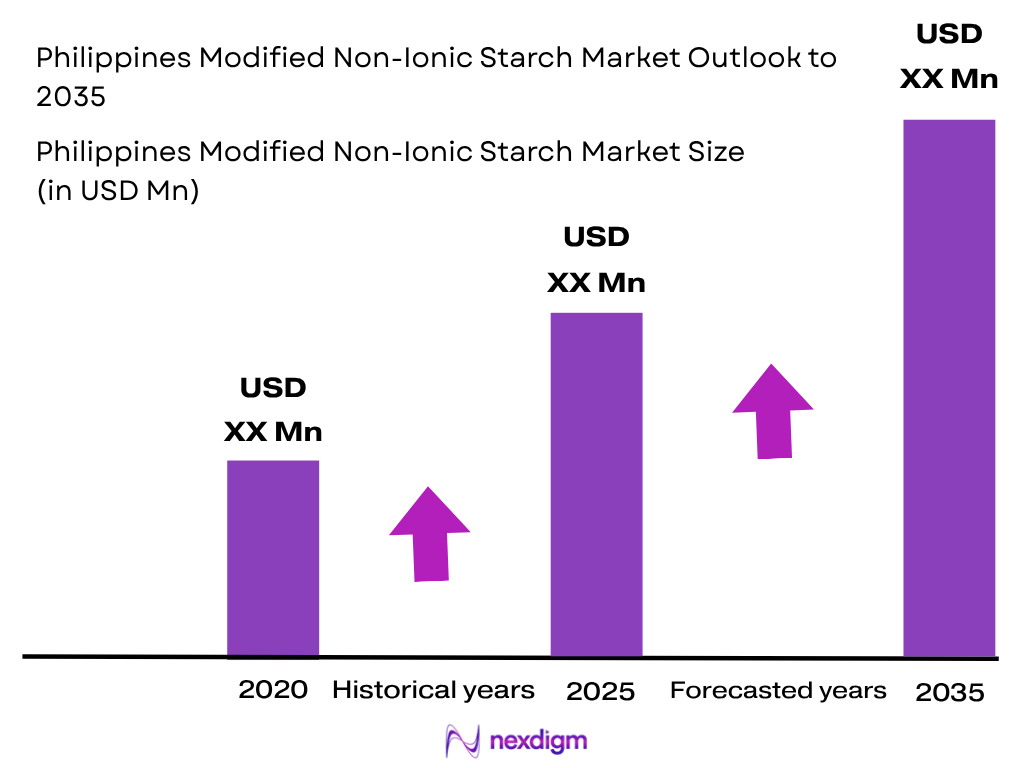
The Philippines Modified Non-Ionic Starch Market is valued at USD ~ million in 2024, supported by increasing consumption of processed foods, bakery products, convenience meals, and pharmaceutical formulations. Modified starches are widely used as stabilizers, thickeners, binders, and texture enhancers across food and industrial applications. The market is influenced by the country’s expanding food manufacturing sector and dependence on imported specialty ingredients due to limited domestic modification capabilities. Modified starches enhance resistance to heat, freezing, acidity, and processing conditions, making them suitable for diverse manufacturing applications.
The Philippines Modified Non-Ionic Starch Market is primarily supported by supply networks from Thailand, China, Indonesia, and other Southeast Asian starch-producing countries due to their established cassava, tapioca, and corn starch industries. Domestic demand is concentrated around Metro Manila, Calabarzon, and Central Luzon, where major food processing, beverage, pharmaceutical, and industrial manufacturing facilities are located. The country’s growing processed food industry and expanding ingredient import ecosystem support adoption of specialized modified starch solutions.
Market Segmentation
By Source Type
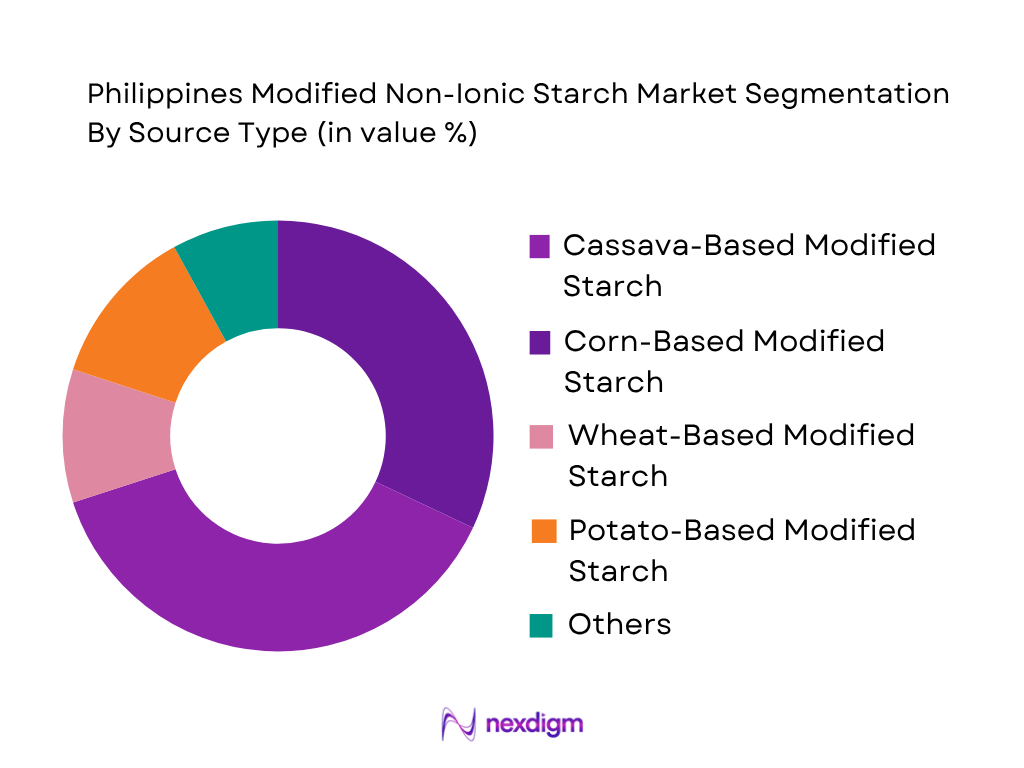
The Philippines Modified Non-Ionic Starch Market is segmented by source type into corn starch, cassava/tapioca starch, potato starch, wheat starch, and other specialty starch sources. Corn-based modified starch dominates the Philippines Modified Non-Ionic Starch Market due to its broad availability, established global supply chain, and extensive use in processed foods, sauces, beverages, and pharmaceutical applications. Corn starch provides consistent functional characteristics, including viscosity control and binding performance, making it suitable for large-scale food manufacturing. Cassava/tapioca-based modified starch also represents a significant segment due to Southeast Asia’s strong cassava production ecosystem and preference for clean texture properties. The Philippines has a long-standing agricultural relationship with cassava cultivation, supporting opportunities for locally sourced starch solutions. However, specialty modified starch requirements continue to rely on international suppliers offering advanced modification technologies.
By Application
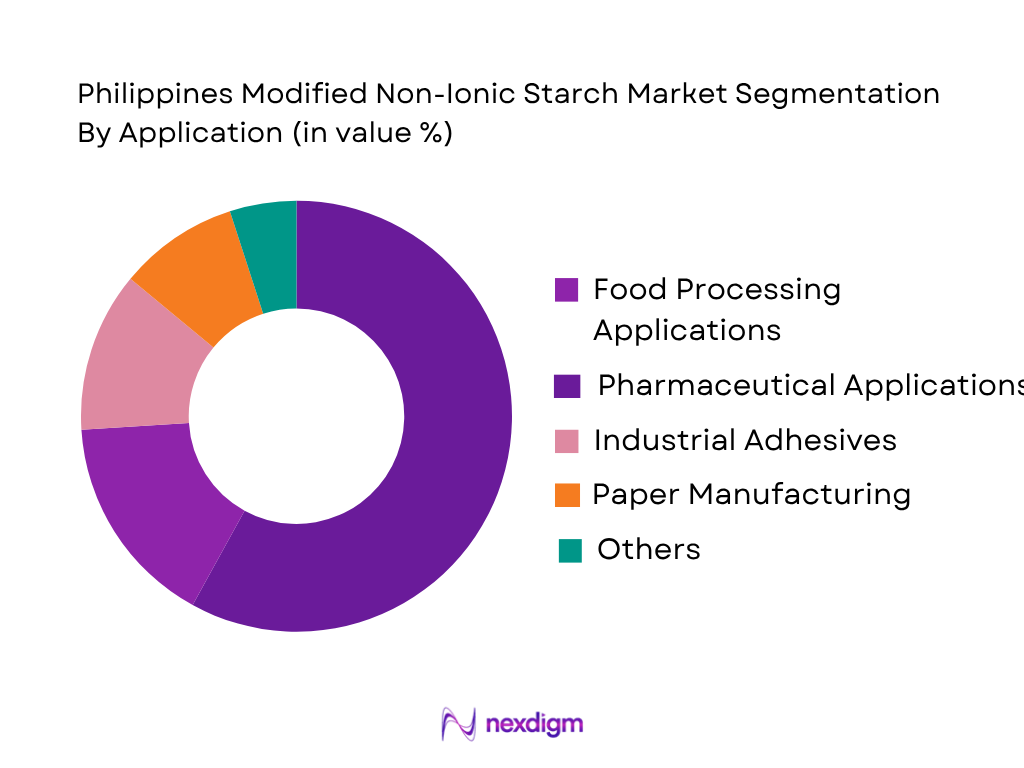
The Philippines Modified Non-Ionic Starch Market is segmented by application into food and beverages, pharmaceuticals, industrial adhesives, paper and packaging, and other industrial applications. Food and beverage applications dominate the Philippines Modified Non-Ionic Starch Market due to increasing demand for processed foods, instant products, bakery items, sauces, and convenience meals. Modified starches are extensively used to improve texture, stability, and shelf-life performance in food formulations. The growth of ready-to-eat food consumption and expanding domestic food manufacturing activities support adoption among manufacturers. Pharmaceutical applications represent another important segment because modified starches are used as excipients for binding and disintegration functions in drug formulations. Industrial applications including adhesives and paper processing contribute additional demand due to starch-based functional properties.
Competitive Landscape
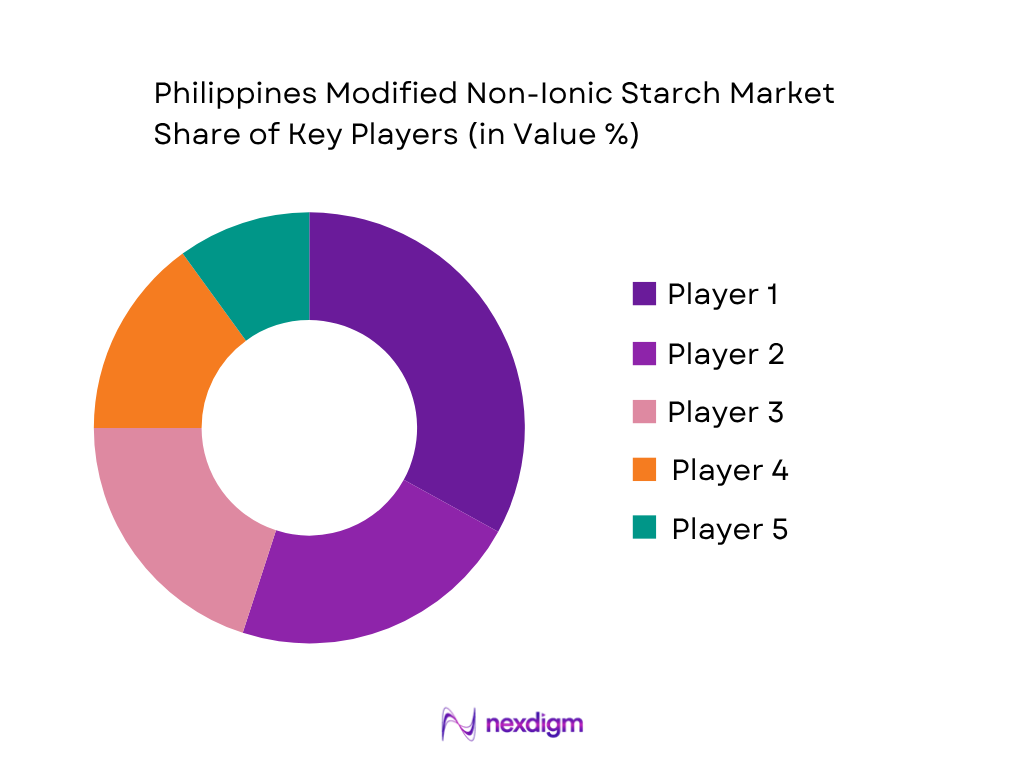
The Philippines Modified Non-Ionic Starch Market is characterized by strong participation from multinational ingredient manufacturers, regional starch producers, and local food ingredient distributors. The market structure is largely influenced by imported specialty starch solutions due to limited domestic advanced modification capacity. Companies compete through product functionality, application expertise, sourcing capabilities, technical support, and regulatory compliance. The Philippines market has active participation from global starch suppliers such as Ingredion, Cargill, Tate & Lyle, and Roquette, while local distributors support access to food manufacturers across major industrial clusters.
| Company | Establishment Year | Headquarters | Modified Starch Portfolio | Source Material Expertise | Major Application Areas | Philippines Market Presence | Technical & Innovation Capability |
| Ingredion Incorporated | 1906 | Westchester, Illinois, USA | ~ | ~ | ~ | ~ | ~ |
| Cargill Incorporated | 1865 | Minneapolis, Minnesota, USA | ~ | ~ | ~ | ~ | ~ |
| Archer Daniels Midland Company (ADM) | 1902 | Chicago, Illinois, USA | ~ | ~ | ~ | ~ | ~ |
| Tate & Lyle PLC | 1921 | London, United Kingdom | ~ | ~ | ~ | ~ | ~ |
| Roquette | 1933 | Lestrem, France | ~ | ~ | ~ | ~ | ~ |
Philippines Modified Non-Ionic Starch Market Analysis
Growth Drivers
Expansion of Food Processing Industry
The Philippines Modified Non-Ionic Starch Market is supported by the expansion of the country’s food processing ecosystem, where modified starch is increasingly used for improving texture, stability, viscosity, and shelf life in processed foods. The Philippine Statistics Authority reported that the manufacturing sector contributed PHP 4.5 trillion to the country’s gross domestic product in 2024, reflecting continued industrial activity that supports food ingredient consumption. The Department of Trade and Industry identified food manufacturing as one of the largest manufacturing subsectors, with processed food products including meat, dairy, bakery, beverages, and convenience foods driving ingredient demand. The country recorded merchandise imports of agricultural and food-related products exceeding USD 15 billion in 2024, highlighting strong dependence on processed food inputs and ingredient supply chains. Modified starch applications are expanding among noodle manufacturers, sauce producers, frozen food processors, and ready-to-eat meal producers due to their ability to maintain product quality during storage and distribution. Rising urban consumption, expansion of modern retail formats, and increasing production of packaged foods are encouraging manufacturers to adopt functional starch solutions.
Growth of Instant Food Manufacturing
The Philippines Modified Non-Ionic Starch Market benefits from the increasing production of instant and convenience food products, particularly instant noodles, ready meals, snack foods, and processed mixes that require starch-based functional properties. The Philippine Statistics Authority recorded that the country’s population exceeded 115 million people in 2024, creating a large consumer base for affordable and convenient food products. The Department of Agriculture reported continued expansion of food commodity processing activities, supported by investments in food manufacturing infrastructure and agricultural value-chain development. Instant food manufacturers use modified starch to improve rehydration characteristics, consistency, mouthfeel, and resistance to processing conditions. The Philippines imported more than 3.5 million metric tons of corn-related products in 2024, reflecting the importance of starch-based raw materials in food production systems. Growth in convenience food consumption is also supported by increasing urbanization, with the World Bank reporting that more than 49 million Filipinos lived in urban areas in recent years. This demographic shift increases demand for packaged meals, instant products, and processed foods where modified starch functions as a key formulation ingredient.
Market Challenges
High Dependence on Imported Modified Starch Products
The Philippines Modified Non-Ionic Starch Market faces challenges due to limited domestic production of advanced modified starch solutions and dependence on imported specialty ingredients. The country’s starch industry has significant exposure to international supply chains because domestic cassava, corn, and other agricultural resources are primarily used for conventional starch production rather than advanced modification processes. The Philippine Statistics Authority reported that the country produced approximately 8 million metric tons of corn in 2024, but domestic production remains focused mainly on livestock feed applications, limiting availability for specialty starch processing. The World Bank highlighted the Philippines’ continued dependence on imported agricultural commodities, with food and agricultural imports remaining a significant component of merchandise trade. Imported modified starch products require international logistics, foreign exchange management, and compliance with food safety requirements, increasing operational complexity for manufacturers. Food processors using modified starch must also manage supplier qualification, technical documentation, and formulation adjustments when imported materials experience availability changes. Limited local modification facilities create challenges for smaller food manufacturers seeking customized starch solutions for bakery, beverage, pharmaceutical, and industrial applications.
Cassava and Corn Feedstock Supply Fluctuations
The Philippines Modified Non-Ionic Starch Market is affected by fluctuations in agricultural feedstock availability, particularly cassava and corn, which are important raw materials for starch production. The Philippine Statistics Authority recorded corn production of around 8 million metric tons in 2024, while cassava production remained concentrated in selected agricultural regions including Mindanao and parts of Luzon. Climate variability, changing agricultural productivity, and competing demand from animal feed and food applications influence the availability of starch-producing crops. The Department of Agriculture reported that agricultural production continues to face risks from weather disruptions, including typhoons and changing rainfall patterns affecting crop yields. The World Bank identified climate resilience and agricultural productivity as major considerations for developing countries dependent on farming-based industries. For modified starch manufacturers, inconsistent availability of cassava and corn feedstock can affect procurement planning, production scheduling, and supply reliability. Additionally, processors require consistent raw material quality to achieve specific functional characteristics such as viscosity control, stability, and thermal resistance. These supply constraints increase the importance of diversified sourcing strategies and improved agricultural value-chain coordination.
Market Opportunities
Clean Label Modified Starch Development
The Philippines Modified Non-Ionic Starch Market has opportunities through the development of clean-label and naturally derived starch solutions as food manufacturers respond to changing consumer preferences. Demand for simplified ingredient lists is increasing across bakery, dairy, beverage, and processed food categories, encouraging manufacturers to explore starch solutions derived from renewable agricultural sources. The Philippine Statistics Authority reported that household final consumption expenditure exceeded PHP 10 trillion in 2024, indicating strong consumer spending activity across food categories. The Department of Trade and Industry continues to promote food manufacturing innovation and value-added processing, creating opportunities for ingredient suppliers offering advanced functional solutions. Clean-label modified starch products can support manufacturers seeking improved texture, stability, and processing performance while maintaining consumer acceptance. Plant-based ingredient adoption is also supported by the Philippines’ agricultural structure, where crops such as cassava and corn provide available starch feedstocks. Companies developing naturally sourced, minimally processed, and application-specific starch ingredients can address requirements from food manufacturers producing bakery products, sauces, beverages, and convenience foods.
Cassava-Based Specialty Starch Innovation
The Philippines Modified Non-Ionic Starch Market presents opportunities through cassava-based specialty starch development due to the availability of cassava cultivation and increasing interest in locally sourced agricultural ingredients. The Philippine Statistics Authority recorded cassava production at more than 2 million metric tons annually in recent agricultural reporting periods, with major production areas located in Mindanao. Cassava starch provides functional advantages including neutral flavor, high viscosity, and suitability for food and industrial applications. The Department of Agriculture has emphasized agricultural diversification and value-added processing to improve farmer income and strengthen domestic supply chains. Specialty cassava starch applications are expanding in gluten-free foods, bakery products, sauces, beverages, and adhesive formulations. The Philippines’ growing food export sector also creates opportunities for locally processed ingredients that meet international quality standards. Sustainable starch processing technologies using renewable agricultural resources can support manufacturers seeking alternatives to imported specialty ingredients. Investment in cassava-based modification facilities, processing technology, and farmer-linked supply networks can strengthen domestic capability while supporting future demand from food, pharmaceutical, and industrial users.
Future Outlook
The Philippines Modified Non-Ionic Starch Market is expected to experience continued expansion due to increasing processed food manufacturing, rising demand for functional ingredients, and growth in pharmaceutical applications. The country’s growing food processing sector, urban consumption patterns, and increasing adoption of convenience foods will support demand for texture-enhancing and stabilizing ingredients. Food ingredient supply chains remain highly dependent on international suppliers, creating opportunities for companies offering reliable sourcing and customized solutions.
Future growth will be influenced by clean-label ingredient development, plant-based food innovation, pharmaceutical excipient applications, and specialty starch formulations. Manufacturers focusing on sustainable processing, improved functionality, and application-specific solutions are expected to address evolving requirements from food and industrial users.
Major Players
- Ingredion Incorporated
- Cargill Incorporated
- Archer Daniels Midland Company
- Tate & Lyle PLC
- Roquette
- Kerry Group
- Beneo GmbH
- Avebe
- Tereos
- Emsland Group
- Thai Wah Public Company Limited
- Lamsan Inc.
- Daesang Corporation
- Versa Group Philippines Corporation
- Asia Modified Starch Co., Ltd.
Key Target Audience
- Food processing companies
- Bakery and confectionery manufacturers
- Beverage manufacturers
- Pharmaceutical manufacturers and excipient buyers
- Industrial adhesive manufacturers
- Paper and packaging manufacturers
- Investments and venture capitalist firms (Food technology investors, ingredient innovation funds)
- Government and regulatory bodies (Philippine Food and Drug Administration, Department of Agriculture Philippines)
Research Methodology
Step 1: Identification of Key Variables
The initial phase involves developing a comprehensive ecosystem map of the Philippines Modified Non-Ionic Starch Market, including starch suppliers, importers, distributors, food manufacturers, pharmaceutical companies, and industrial users. Secondary research is conducted to identify supply chain structures, application segments, regulatory factors, and market dynamics.
Step 2: Market Analysis and Construction
This phase involves analyzing historical market trends through supply-side and demand-side assessment. The study evaluates modified starch consumption across food processing, pharmaceutical, and industrial applications while assessing import dependency, supplier networks, and end-user adoption patterns.
Step 3: Hypothesis Validation and Expert Consultation
Market assumptions are validated through discussions with industry participants, including ingredient suppliers, distributors, food manufacturers, and pharmaceutical companies. These consultations provide insights into product requirements, procurement behavior, technology adoption, and future application opportunities.
Step 4: Research Synthesis and Final Output
The final stage integrates primary and secondary research findings through data validation and triangulation. Information from manufacturers, distributors, and end users is analyzed to provide a comprehensive assessment of the Philippines Modified Non-Ionic Starch Market.

- Executive Summary
- Research Methodology (Market Definitions and Assumptions, Modified Non-Ionic Starch Classification Framework, Market Sizing Approach, Top-Down Analysis, Bottom-Up Analysis, Demand-Side Assessment, Supply-Side Assessment, Primary Industry Interviews, Import-Export Data Analysis, Industry Stakeholder Mapping, Data Triangulation, Forecasting Framework, Market Limitations and Future Conclusions)

- Definition and Scope of Modified Non-Ionic Starch Market
- Market Evolution and Industry Development Timeline
- Philippines Modified Non-Ionic Starch Value Chain Analysis
- Supply Chain Analysis
- Philippines Modified Non-Ionic Starch Ecosystem Analysis

- Growth Drivers (Expansion of Food Processing Industry, Growth of Instant Food Manufacturing, Increasing Demand for Functional Food Ingredients, Rising Bakery and Confectionery Production, Growth of Pharmaceutical Manufacturing, Increasing Convenience Food Consumption, Rising Demand for Texture Enhancement Solutions, Expansion of Plant-Based Food Products, Growth of Specialty Ingredient Applications)
- Market Challenges (High Dependence on Imported Modified Starch Products, Limited Domestic Modification Capacity, Cassava and Corn Feedstock Supply Fluctuations, Import Logistics Dependency, Regulatory Compliance Requirements, Competition from Hydrocolloids and Alternative Ingredients, Limited Advanced Processing Technology, Supply Chain Vulnerabilities)
- Market Opportunities (Clean Label Modified Starch Development, Cassava-Based Specialty Starch Innovation, Plant-Based Food Applications, Pharmaceutical Excipient Expansion, Gluten-Free Product Development, Sustainable Starch Processing Technologies, Functional Beverage Applications, Export-Oriented Ingredient Production, Specialty Industrial Adhesive Applications)
- Market Trends (Clean Label Ingredient Adoption, Plant-Based Food Formulation Growth, Demand for Texture Optimization, Functional Food Innovation, Convenience Food Expansion, Specialty Starch Customization, Sustainable Ingredient Processing)
- Government Regulations (Philippine Food and Drug Administration Food Ingredient Regulations, Food Safety Standards, Import Registration Requirements, Labeling Compliance Standards, Pharmaceutical Excipient Regulations, Industrial Chemical Safety Standards)
- SWOT Analysis
- Porter’s Five Forces Analysis
- PESTLE Analysis

- By Market Value (2020-2025)
- By Consumption Volume (2020-2025)
- By Import Dependency Analysis (2020-2025)
- By Average Selling Price Analysis (2020-2025)
- By Domestic Production and Import Supply Analysis (2020-2025)
- By Application Revenue Contribution (2020-2025)

- By Source Type (in value %)
Corn-Based Modified Starch
Cassava/Tapioca-Based Modified Starch
Potato-Based Modified Starch
Wheat-Based Modified Starch
Other Specialty Starch Sources - By Modification Technology Type (in value %)
Chemically Modified Starch
Physically Modified Starch
Enzymatically Modified Starch
Cross-Linked Modified Starch
Pregelatinized Modified Starch - By Application (in value %)
Bakery Products
Confectionery Products
Processed Meat Products
Sauces and Dressings
Instant Noodles and Convenience Foods
Dairy and Frozen Food Products
Functional Food Products - Pharmaceutical Applications (in value %)
Tablet Binding Agents
Drug Delivery Formulations
Capsule Fillers
Nutraceutical Applications - Industrial Applications (in value %)
Paper Manufacturing
Textile Processing
Adhesive Manufacturing
Packaging Applications - By End-User Industry (in value %)
Food Processing Companies
Beverage Manufacturers
Bakery and Confectionery Manufacturers
Pharmaceutical Manufacturers
Industrial Adhesive Producers
Paper and Packaging Companies

- Market Share Analysis of Major Players (By Product Category, Application Segment, Distribution Channel, Import Presence)
- Cross Comparison Parameters (Product Portfolio Breadth, Modified Starch Technology Capability, Source Material Diversity, Food Application Expertise, Pharmaceutical Grade Certification, Regional Supply Network Strength, Custom Formulation Capability, Sustainability Initiatives)
- SWOT Analysis of Major Players
- Detailed Profiles of Major Companies
Ingredion Incorporated
Cargill Incorporated
Archer Daniels Midland Company
Tate & Lyle PLC
Roquette
Kerry Group
Tereos
Avebe
Emsland Group
Thai Wah Public Company Limited
Asia Fructose Co., Ltd.
San Miguel Foods
Universal Robina Corporation
D&L Industries Inc.

- Food Manufacturing Consumption Assessment
- Pharmaceutical Industry Demand Analysis
- Industrial Application Assessment
- Consumer Food Product Trends Influencing Modified Starch Demand
- Product Attribute Preference Analysis

- By Market Value (2026-2035)
- By Consumption Volume (2026-2035)
- By Import Dependency Analysis (2026-2035)
- By Average Selling Price Analysis (2026-2035)
- By Domestic Production and Import Supply Analysis (2026-2035)
- By Application Revenue Contribution (2026-2035)


 Request a Sample
 Ask for Customization
 Get a Quote
 Enquire Now