

 Download PDF
 Download PDF
Market Overview
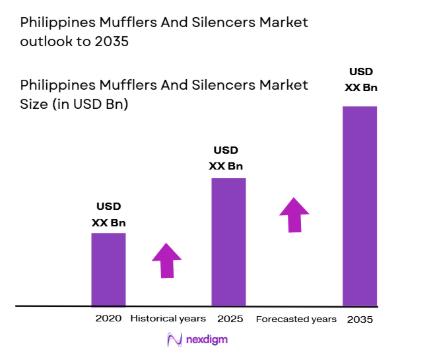
The Philippines Mufflers And Silencers market is valued at approximately USD ~ billion based on a recent historical assessment, supported by automotive industry data and trade statistics. Growth is primarily driven by rising vehicle ownership, expansion of urban mobility solutions, and increasing replacement demand in the aftermarket segment. The steady expansion of logistics and delivery fleets has further contributed to demand for durable exhaust systems and noise control components across passenger and commercial vehicles.
Metro Manila, Cebu, and Davao emerge as dominant urban centers due to higher vehicle density, industrial activity, and established automotive service ecosystems. These regions benefit from strong distribution networks, proximity to assembly plants, and higher consumer spending on vehicle maintenance. Additionally, import-dependent supply chains and clustering of automotive workshops enhance availability and accessibility of mufflers and silencers, reinforcing regional demand concentration across major economic corridors.
Market Segmentation
By Product Type:
Philippines Mufflers And Silencers market is segmented by product type into absorptive mufflers, reactive mufflers, combination mufflers, performance silencers, and electronic active exhaust systems. Recently, combination mufflers have a dominant market share due to their balanced performance in noise reduction and exhaust flow optimization. Their adaptability across both passenger and commercial vehicles, along with cost efficiency and durability, makes them widely preferred by OEMs and aftermarket consumers. Increasing regulatory focus on emission and noise compliance further strengthens their demand across urban automotive segments.

By Platform Type:
Philippines Mufflers And Silencers market is segmented by platform type into passenger vehicles, light commercial vehicles, heavy commercial vehicles, two wheelers, and off-road equipment. Recently, passenger vehicles have a dominant market share due to increasing urbanization, rising disposable incomes, and growing demand for private mobility. The high volume of passenger cars and frequent maintenance cycles in dense urban areas contribute to sustained demand for replacement mufflers and silencers, supported by expanding dealership and aftermarket networks.

Competitive Landscape
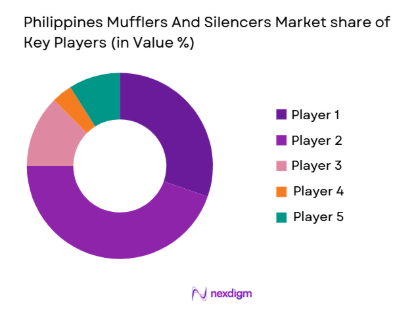
The Philippines Mufflers And Silencers market exhibits a moderately fragmented competitive structure with the presence of both global manufacturers and regional suppliers. International players leverage advanced technologies and OEM partnerships, while local manufacturers compete through cost efficiency and customization capabilities. The market shows gradual consolidation as global suppliers expand their regional footprint through partnerships and localized production strategies, enhancing competitive intensity and technological adoption.
| Company Name | Establishment Year | Headquarters | Technology Focus | Market Reach | Key Products | Revenue (USD) | Manufacturing Capability |
| Tenneco Inc | 1940 | USA | ~ | ~ | ~ | ~ | ~ |
| Faurecia | 1997 | France | ~ | ~ | ~ | ~ | ~ |
| Eberspächer | 1865 | Germany | ~ | ~ | ~ | ~ | ~ |
| Futaba Industrial | 1945 | Japan | ~ | ~ | ~ | ~ | ~ |
| Bosal Group | 1923 | Belgium | ~ | ~ | ~ | ~ | ~ |
Philippines Mufflers And Silencers Market Analysis
Growth Drivers
Rising Vehicle Ownership and Urban Mobility Expansion:
rapid increase in vehicle ownership across urban and semi-urban regions is significantly contributing to the growth of the Philippines Mufflers And Silencers market. The expansion of middle-income households has resulted in higher purchasing power, enabling more consumers to invest in personal vehicles for daily transportation needs. Urban congestion and inadequate public transportation infrastructure further accelerate dependence on private mobility solutions. This growing vehicle base directly translates into increased demand for exhaust systems, including mufflers and silencers, for both OEM installations and aftermarket replacements. Additionally, the surge in ride-hailing services and delivery platforms has amplified vehicle usage intensity, leading to faster wear and tear of exhaust components. As vehicles operate for longer durations under varying road conditions, maintenance cycles shorten, increasing replacement demand. Government initiatives supporting automotive industry growth and infrastructure development also play a role in boosting vehicle adoption. The continuous expansion of road networks enhances accessibility, encouraging vehicle purchases in emerging regions. Furthermore, the integration of advanced exhaust technologies to meet environmental standards increases the value of muffler systems. Collectively, these factors establish a strong foundation for sustained market growth.
Expansion of Automotive Aftermarket and Replacement Demand:
The Philippines Mufflers And Silencers market is experiencing robust growth due to the expanding automotive aftermarket ecosystem. A significant portion of vehicles in operation falls within age brackets requiring frequent maintenance and component replacement, including exhaust systems. The availability of independent workshops and local repair shops enhances accessibility to aftermarket products, making replacements more convenient for consumers. Cost sensitivity among vehicle owners further drives demand for aftermarket mufflers, which are often more affordable than OEM alternatives. Additionally, increasing awareness of vehicle performance and fuel efficiency encourages timely replacement of worn-out silencers. Fleet operators, including logistics and transport services, prioritize operational efficiency and compliance with noise regulations, further boosting demand. The proliferation of online automotive parts platforms also supports wider distribution and availability of mufflers across regions. Technological advancements in manufacturing enable production of durable and corrosion-resistant exhaust components, extending product lifecycle and improving performance. Moreover, regulatory enforcement regarding vehicle emissions and noise pollution necessitates regular maintenance of exhaust systems. This combination of factors significantly strengthens aftermarket demand, making it a critical driver of market expansion.
Market Challenges
Volatility in Raw Material Prices and Supply Chain Constraints:
The Philippines Mufflers And Silencers market faces considerable challenges due to fluctuations in raw material prices, particularly steel, aluminum, and specialized alloys used in exhaust manufacturing. These price variations are influenced by global supply-demand dynamics, geopolitical factors, and currency fluctuations, making cost management increasingly complex for manufacturers. Rising input costs directly impact production expenses, leading to pricing pressures across both OEM and aftermarket segments. Smaller manufacturers often struggle to absorb these cost increases, affecting their competitiveness in the market. Additionally, supply chain disruptions, including delays in material procurement and transportation bottlenecks, hinder consistent production cycles. Import dependency for certain high-grade materials further exacerbates supply vulnerabilities. These challenges also affect inventory planning and lead times, creating inefficiencies in distribution networks. Manufacturers are compelled to explore alternative sourcing strategies and cost optimization measures to mitigate risks. However, such adjustments often require significant capital investment and operational restructuring. The combined effect of price volatility and supply uncertainties poses a persistent challenge to market stability.
Presence of Unorganized Local Manufacturers and Pricing Pressures:
widespread presence of unorganized and small-scale local manufacturers in the Philippines Mufflers And Silencers market creates intense pricing competition. These players often operate with lower production costs due to minimal regulatory compliance and use of less standardized materials. As a result, they offer products at significantly lower prices, attracting cost-conscious consumers in the aftermarket segment. This situation puts pressure on established manufacturers to maintain competitive pricing while ensuring product quality and compliance. The lack of standardization in locally produced mufflers also leads to inconsistencies in performance and durability, affecting overall market perception. Additionally, informal distribution channels make it difficult to regulate product quality and enforce compliance with emission and noise standards. Organized players face challenges in differentiating their products purely on quality and technological innovation. Efforts to educate consumers about long-term benefits of high-quality exhaust systems remain limited in impact. This fragmented competitive landscape reduces profit margins and hinders investments in advanced technologies. Consequently, maintaining a balance between affordability and quality becomes a critical challenge for market participants.
Opportunities
Adoption of Advanced Exhaust Technologies and Smart Systems:
The increasing integration of advanced exhaust technologies presents significant growth opportunities in the Philippines Mufflers And Silencers market. Innovations such as active exhaust systems, electronic valve control, and noise optimization technologies are gaining traction among automotive manufacturers and performance enthusiasts. These technologies enable dynamic control of exhaust sound and performance, enhancing driving experience while ensuring regulatory compliance. The growing demand for premium vehicles and performance upgrades supports the adoption of such advanced systems. Additionally, technological advancements in materials, including lightweight alloys and corrosion-resistant coatings, improve durability and efficiency of mufflers. Manufacturers investing in research and development can capitalize on these emerging trends to differentiate their offerings. The rise of electric and hybrid vehicles also opens opportunities for specialized noise management solutions tailored to new propulsion systems. Furthermore, increasing awareness of environmental sustainability drives demand for eco-friendly exhaust solutions. Strategic collaborations with OEMs and technology providers can accelerate innovation and market penetration. This evolving technological landscape provides a strong avenue for long-term market growth.
Expansion into Regional Export Markets and ASEAN Integration:
The Philippines Mufflers And Silencers market has significant potential to expand through regional export opportunities within the ASEAN automotive ecosystem. Trade agreements and economic integration initiatives facilitate cross-border trade, enabling manufacturers to access larger markets beyond domestic demand. The growing automotive production in neighboring countries creates demand for cost-effective and high-quality exhaust components. Local manufacturers can leverage competitive labor costs and strategic geographic positioning to enhance export competitiveness. Additionally, government initiatives promoting manufacturing and export-oriented industries support this expansion. Investments in production capabilities and quality certifications can help manufacturers meet international standards, improving their acceptance in global markets. The development of logistics infrastructure further strengthens export efficiency and reduces transit times. Collaboration with international OEMs and tier suppliers can also enhance technological capabilities and market access. As regional demand for automotive components continues to rise, the Philippines is well-positioned to become a key supplier within the ASEAN supply chain. This expansion opportunity can significantly contribute to revenue diversification and market growth.
Future Outlook
The Philippines Mufflers And Silencers market is expected to witness steady growth driven by rising vehicle ownership and expanding aftermarket demand. Technological advancements in exhaust systems, including lightweight materials and smart exhaust solutions, will shape product innovation. Increasing regulatory focus on emissions and noise control will further drive adoption of high-performance mufflers. Growth in logistics and urban mobility will sustain replacement demand. Regional trade opportunities will enhance market expansion potential.
Major Players
- Bosal Philippines Inc
- Tenneco Automotive Philippines
- Faurecia Clean Mobility Philippines
- Eberspächer Philippines Inc
- Yutaka Manufacturing Philippines Inc
- Futaba Industrial Philippines Inc
- Sejong Industrial Philippines Inc
- Sango Philippines Manufacturing Corp
- HJS Emission Technology Asia
- MagnaFlow Exhaust Products
- Flowmaster Inc
- Walker Exhaust Systems
- AP Exhaust Technologies
- Cherry Bomb Exhaust
- Borla Performance Industries
Key Target Audience
- Automotive OEM manufacturers
- Automotive aftermarket distributors
- Fleet operators and logistics companies
- Automotive component suppliers
- Performance vehicle tuning companies
- E-commerce automotive platforms
- Investments and venture capitalist firms
- Government and regulatory bodies
Research Methodology
Step 1: Identification of Key Variables
Primary variables such as vehicle parc, replacement cycles, and exhaust system demand were identified. Secondary variables including regulatory norms and supply chain factors were also analyzed to establish market dynamics.
Step 2: Market Analysis and Construction
Comprehensive data triangulation using industry databases, trade statistics, and automotive production figures was conducted. Market sizing models were built using both top-down and bottom-up approaches for accuracy.
Step 3: Hypothesis Validation and Expert Consultation
Findings were validated through consultations with industry experts, manufacturers, and distributors. Assumptions were refined based on real-world insights and sector-specific knowledge.
Step 4: Research Synthesis and Final Output
All validated data points were synthesized into structured insights. Final outputs were prepared with a focus on accuracy, consistency, and actionable intelligence for stakeholders.

- Executive Summary
- Research Methodology (Definitions, Scope, Industry Assumptions, Market Sizing Approach, Primary & Secondary Research Framework, Data Collection & Verification Protocol, Analytic Models & Forecast Methodology, Limitations & Research Validity Checks)

- Market Definition and Scope
- Value Chain & Stakeholder Ecosystem
- Regulatory / Certification Landscape
- Sector Dynamics Affecting Demand
- Strategic Initiatives & Infrastructure Growth

- Growth Drivers
Rising vehicle parc and increasing automotive ownership across urban regions
Growth in two wheeler and light commercial vehicle demand for urban mobility
Expansion of automotive aftermarket and replacement cycles
Increasing enforcement of emission and noise regulations
Growth in logistics and last mile delivery fleet operations - Market Challenges
Fluctuations in raw material prices such as steel and alloys
Presence of unorganized local manufacturers affecting pricing standards
Limited adoption of advanced exhaust technologies in entry level vehicles
Regulatory compliance challenges for small scale manufacturers
Supply chain disruptions impacting component availability - Market Opportunities
Growing demand for performance exhaust systems among automotive enthusiasts
Expansion of electric hybrid compatible noise control systems
Increasing exports potential to Southeast Asian automotive markets - Trends
Shift toward lightweight and corrosion resistant exhaust materials
Rising popularity of customized and performance exhaust upgrades
Integration of smart and active exhaust valve technologies
Growth of eco friendly and low emission exhaust solutions
Increasing digitalization in aftermarket sales channels - Government Regulations & Defense Policy
Implementation of stricter vehicular emission norms
Noise pollution control regulations in urban centers
Import regulations and quality certification standards - SWOT Analysis
- Stakeholder and Ecosystem Analysis
- Porter’s Five Forces Analysis
- Competition Intensity and Ecosystem Mapping

- By Market Value, 2020-2025
- By Installed Units, 2020-2025
- By Average System Price, 2020-2025
- By System Complexity Tier, 2020-2025

- By System Type (In Value%)
Absorptive Mufflers
Reactive Mufflers
Combination Mufflers
Performance Silencers
Electronic Active Exhaust Systems - By Platform Type (In Value%)
Passenger Vehicles
Light Commercial Vehicles
Heavy Commercial Vehicles
Two Wheelers
Off Road and Construction Equipment - By Fitment Type (In Value%)
OEM Fitment
Aftermarket Replacement
Retrofit Systems
Performance Upgrades
Custom Fabrication Installations - By EndUser Segment (In Value%)
Automotive OEMs
Fleet Operators
Individual Vehicle Owners
Automotive Service Workshops
Performance and Tuning Enthusiasts - By Procurement Channel (In Value%)
Direct OEM Supply Contracts
Authorized Dealership Networks
Independent Distributors
Online Automotive Platforms
Local Fabrication and Repair Shops - By Material / Technology (in Value %)
Stainless Steel Systems
Aluminized Steel Systems
Titanium Based Exhaust Systems
Ceramic Coated Exhaust Systems
Smart Active Valve Exhaust Technology

- Market structure and competitive positioning
- Market share snapshot of major players
- CrossComparison Parameters (Product Portfolio Breadth, Pricing Strategy, Distribution Network Strength, OEM Partnerships, Aftermarket Presence, Material Innovation Capability, Manufacturing Capacity, Regional Reach, Brand Recognition, Compliance Standards)
- SWOT Analysis of Key Players
- Pricing & Procurement Analysis
- Key Players
Bosal Philippines Inc
Tenneco Automotive Philippines
Faurecia Clean Mobility Philippines
Eberspächer Philippines Inc
Yutaka Manufacturing Philippines Inc
Futaba Industrial Philippines Inc
Sejong Industrial Philippines Inc
Sango Philippines Manufacturing Corp
HJS Emission Technology Asia
MagnaFlow Exhaust Products
Flowmaster Inc
Walker Exhaust Systems
AP Exhaust Technologies
Cherry Bomb Exhaust
Borla Performance Industries

- Increasing preference for cost effective aftermarket replacements among private vehicle owners
- Fleet operators focusing on durability and lifecycle cost optimization
- OEMs emphasizing compliance with emission and noise standards
- Rising interest in performance upgrades among younger consumer segments

- Forecast Market Value, 2026-2035
- Forecast Installed Units, 2026-2035
- Price Forecast by System Tier, 2026-2035
- Future Demand by Platform, 2026-2035


 Request a Sample
 Ask for Customization
 Get a Quote
 Enquire Now