

 Download PDF
Market Overview
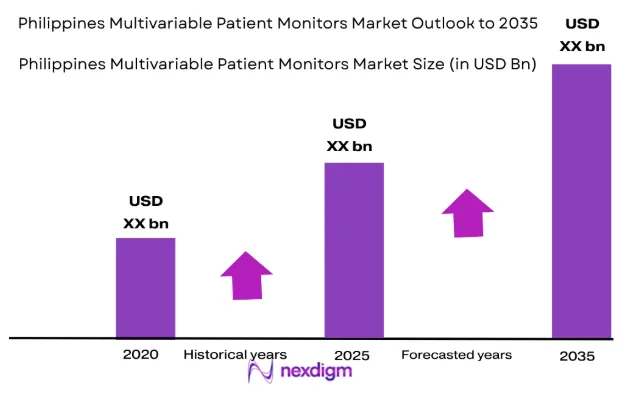
The Philippines multivariable patient monitors market is experiencing significant growth, valued at approximately USD ~ million in 2025. This growth is driven by the increasing demand for advanced patient monitoring technologies in hospitals and healthcare facilities across the nation. Factors such as rising healthcare expenditures, aging populations, and growing incidences of chronic diseases are contributing to this market expansion. Technological advancements in non-invasive monitoring devices and improvements in wireless communication systems further fuel market adoption, enhancing the reach of multivariable patient monitors in medical care.
The Philippines’ key urban areas, particularly Metro Manila, Cebu, and Davao, are the leading centers for the multivariable patient monitors market. The dominance of these cities is attributed to their advanced healthcare infrastructure, availability of large hospitals, and concentration of medical professionals. Metro Manila, in particular, is home to the largest hospitals with the highest demand for critical care technologies, making it a prime market for patient monitoring systems. Moreover, government initiatives aimed at healthcare improvement contribute to the rapid growth of these regions in the healthcare sector.
Market Segmentation
By Product Type
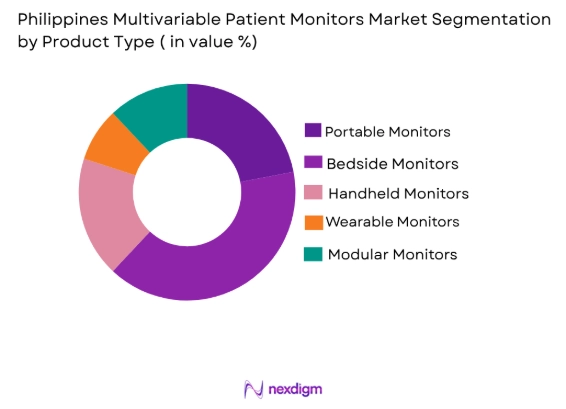
The Philippines multivariable patient monitors market is segmented by product type into portable monitors, bedside monitors, handheld monitors, wearable monitors, and modular monitors. Recently, bedside monitors have seen a dominant market share due to factors such as increased demand in hospitals where patients need continuous monitoring. Bedside monitors offer real-time data and advanced diagnostic capabilities, which makes them preferred by healthcare professionals in intensive care units (ICUs) and emergency rooms. Their robust design and reliability in critical care settings further contribute to their widespread use in the market.
By Platform Type
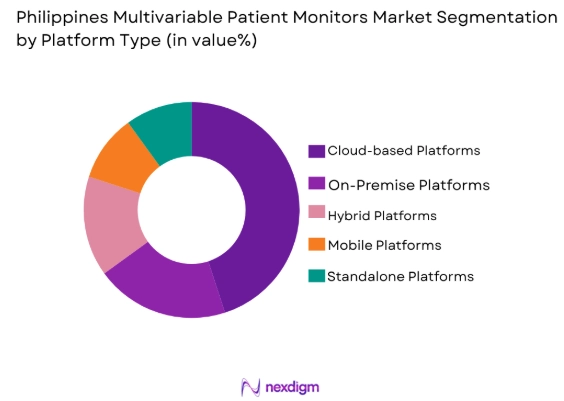
The market is also segmented by platform type into cloud-based platforms, on-premise platforms, hybrid platforms, mobile platforms, and standalone platforms. Among these, cloud-based platforms have captured a significant portion of the market. This is due to their advantages in terms of data accessibility, storage, and integration with other healthcare technologies. Cloud-based platforms allow seamless data sharing between healthcare providers, which is essential for improving patient care. The flexibility of cloud systems also supports remote monitoring and telemedicine, further driving adoption in the market.
Competitive Landscape
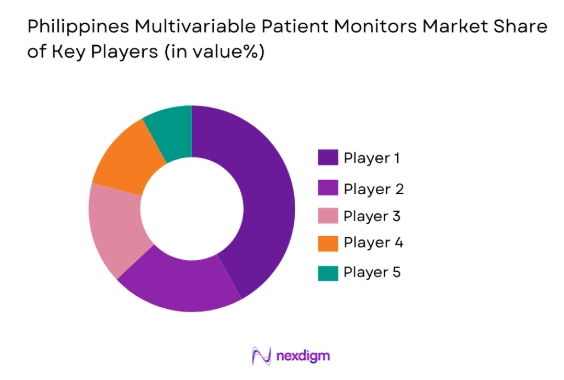
The Philippines multivariable patient monitors market is characterized by intense competition, with leading players such as Philips Healthcare, GE Healthcare, and Mindray Medical International dominating the market. The market is undergoing consolidation, with smaller players increasingly joining forces or being acquired by larger firms to enhance technological capabilities and expand market reach. Major players are continuously innovating, focusing on integrating advanced features like AI and cloud computing to maintain their market position and address the evolving needs of healthcare providers.
| Company Name | Establishment Year | Headquarters | Technology Focus | Market Reach | Key Products | Revenue (USD) | Additional Market-Specific Parameter |
| Philips Healthcare | 1891 | Amsterdam, Netherlands | ~ | ~ | ~ | ~ | ~ |
| GE Healthcare | 1892 | Chicago, USA | ~ | ~ | ~ | ~ | ~ |
| Mindray Medical | 1991 | Shenzhen, China | ~ | ~ | ~ | ~ | ~ |
| Drägerwerk AG | 1889 | Lübeck, Germany | ~ | ~ | ~ | ~ | ~ |
| Siemens Healthineers | 1847 | Erlangen, Germany |
Philippines Multivariable Patient Monitors Market Analysis
Growth Drivers
Increasing Healthcare Infrastructure Investments
Increasing healthcare infrastructure investments are significantly driving the demand for multivariable patient monitors in the Philippines. The government’s ongoing push to modernize healthcare facilities, particularly in urban areas, is improving the availability and accessibility of advanced medical equipment. The establishment of new hospitals, the expansion of existing ones, and the overall development of healthcare infrastructure in key regions such as Metro Manila, Cebu, and Davao are directly contributing to market growth. As healthcare providers seek to enhance their service delivery capabilities, there is an increasing demand for reliable, efficient, and advanced patient monitoring systems, especially in critical care environments such as intensive care units (ICUs). This growth driver is further supported by substantial government investments in healthcare modernization, as well as public-private partnerships that encourage infrastructure expansion. These strategic initiatives are boosting demand for technologically advanced patient monitoring devices, which are essential for enhancing patient care and ensuring accurate real-time monitoring, thereby optimizing patient outcomes.
Growing Prevalence of Chronic Diseases and Aging Population
The growing prevalence of chronic diseases and the aging population in the Philippines are key factors accelerating market growth for multivariable patient monitors. As the elderly population continues to rise, the need for continuous monitoring devices is intensifying, especially among patients with conditions such as heart disease, diabetes, hypertension, and respiratory disorders. In addition, the Philippines has seen an increase in lifestyle-related diseases, further fueling the demand for monitoring solutions. Chronic conditions often require long-term management and continuous care, which necessitates the adoption of efficient and reliable patient monitoring systems in both hospital and home settings. This demographic shift is pushing healthcare providers to adopt more advanced monitoring technologies to manage the growing patient pool, particularly those with complex health conditions. Furthermore, healthcare systems are focusing on preventive care, encouraging the use of real-time monitoring solutions to catch potential health issues early. This growing trend is significantly contributing to the increasing adoption of multivariable patient monitors across the country, improving patient outcomes and enhancing the overall quality of care.
Market Challenges
High Cost of Advanced Patient Monitors
The high cost of advanced patient monitors presents a significant barrier to the growth of the Philippines market. Although these systems offer substantial benefits, such as improved patient care and real-time data monitoring, the initial investment required for their acquisition remains a major challenge. For smaller hospitals and healthcare centers, the financial burden associated with purchasing these high-tech devices is often too prohibitive. The costs extend beyond the initial purchase price, as installation, maintenance, staff training, and integration into existing hospital infrastructure further add to the expense. This financial challenge is especially impactful in rural areas where healthcare budgets are more limited and medical resources are constrained. Consequently, smaller and less-funded healthcare facilities may delay upgrading their monitoring systems, resulting in lower adoption rates of multivariable patient monitors across the country. This high cost not only limits access to cutting-edge technologies but also prevents the widespread deployment of these systems in hospitals and clinics that could greatly benefit from their capabilities.
Regulatory and Certification Barriers
Regulatory and certification barriers pose a significant challenge in the Philippines multivariable patient monitors market. Medical device regulation in the country is stringent, requiring all devices to be certified by the Philippine Food and Drug Administration (FDA) before they can be marketed and sold. However, the approval process for new products can be slow and cumbersome, with the regulatory landscape being complex and often subject to frequent changes. These frequent regulatory updates and differing standards across regions can delay the time it takes for manufacturers to bring new products to market. Additionally, obtaining the necessary certifications and adhering to these evolving requirements can increase the overall costs of developing and distributing patient monitoring technologies. For manufacturers, this results in longer product development timelines and reduced market accessibility, especially for companies looking to introduce innovative monitoring solutions. These regulatory challenges can hinder the adoption of new, advanced monitoring technologies and slow down the pace at which healthcare providers can benefit from the latest advancements in patient monitoring.
Opportunities
Expansion of Telemedicine Services
The expansion of telemedicine services presents a major growth opportunity for the multivariable patient monitors market in the Philippines. As the country’s healthcare system increasingly adapts to the digital age, telemedicine has emerged as a viable solution to address gaps in healthcare accessibility, especially in rural areas. The ability to remotely monitor patients’ vital signs and provide consultations without the need for in-person visits has gained significant traction, making healthcare more accessible to underserved populations. Multivariable patient monitors that can integrate with telemedicine platforms provide healthcare providers with the ability to track patients’ health remotely, enabling more effective and continuous care. This integration allows for real-time monitoring of critical health parameters, helping physicians make informed decisions even when they are not physically present with the patient. With telemedicine gaining widespread acceptance in both urban and rural areas, manufacturers have a unique opportunity to develop multivariable patient monitoring systems that cater to this growing need. As telemedicine continues to grow in popularity, it is expected to further drive the demand for patient monitoring solutions that are compatible with telehealth systems, creating a promising growth trajectory for the market.
Innovations in Wearable Monitoring Solutions
Innovations in wearable monitoring solutions are creating new opportunities for growth in the Philippines multivariable patient monitors market. With advancements in technology, wearable devices that track vital signs such as heart rate, blood pressure, oxygen levels, and body temperature have become increasingly popular, especially among patients who seek more convenient ways to monitor their health at home. These devices empower patients to take charge of their own health management by providing them with real-time data and alerts for early detection of potential health issues. Furthermore, wearable devices allow healthcare professionals to access patient data remotely, facilitating better communication and timely intervention when necessary. As the technology behind wearable monitoring devices continues to improve, these systems are becoming more accurate, compact, and comfortable for long-term use. This is driving the adoption of wearable multivariable patient monitors, as they offer a more personalized, non-invasive, and cost-effective alternative to traditional monitoring methods. As more patients and healthcare providers embrace wearable solutions, the demand for advanced wearable patient monitoring systems is expected to rise, contributing to market growth and expanding the range of available monitoring options.
Future Outlook
The future of the Philippines multivariable patient monitors market looks promising, with steady growth expected over the next five years. Technological advancements, including AI integration and real-time data analytics, will drive product innovation and enhance monitoring capabilities. In addition, increasing regulatory support and government initiatives aimed at improving healthcare infrastructure will foster market growth. Demand for remote monitoring solutions will rise due to the expanding telemedicine sector and a greater focus on chronic disease management. Hospitals, healthcare centers, and home healthcare services are expected to be the key drivers of this demand.
Major Players
- Philips Healthcare
- GE Healthcare
- Mindray Medical International Limited
- Nihon Kohden Corporation
- Drägerwerk AG & Co. KGaA
- Siemens Healthineers
- Fujifilm Holdings Corporation
- Toshiba Medical Systems Corporation
- Samsung Medison
- Carestream Health, Inc.
- Masimo Corporation
- Schiller AG
- Spacelabs Healthcare
- Welch Allyn (Hill-Rom)
- Honeywell Life Care Solutions
Key Target Audience
- Investments and venture capitalist firms
- Government and regulatory bodies
- Healthcare providers and hospitals
- Medical device distributors
- Healthcare technology companies
- Patient monitoring system manufacturers
- Insurance companies
Research Methodology
Step 1: Identification of Key Variables
This step involves defining the key parameters that affect market trends and performance. These include technological trends, regulatory factors, and demographic shifts.
Step 2: Market Analysis and Construction
The market analysis phase gathers both qualitative and quantitative data on demand, supply, and pricing trends.
Step 3: Hypothesis Validation and Expert Consultation
Expert opinions and stakeholder consultations are conducted to validate initial hypotheses and refine market forecasts.
Step 4: Research Synthesis and Final Output
The final output is synthesized from the analysis, hypothesis validation, and expert input, leading to a comprehensive report.

- Executive Summary
- Research Methodology (Definitions, Scope, Industry Assumptions, Market Sizing Approach, Primary & Secondary Research Framework, Data Collection & Verification Protocol, Analytic Models & Forecast Methodology, Limitations & Research Validity Checks)

- Market Definition and Scope
- Value Chain & Stakeholder Ecosystem
- Regulatory / Certification Landscape
- Sector Dynamics Affecting Demand
- Strategic Initiatives & Infrastructure Growth

- Growth Drivers
Rising Healthcare Infrastructure Investments
Increase in Chronic Diseases & Elderly Population
Technological Advancements in Monitoring Devices - Market Challenges
High Cost of Advanced Patient Monitors
Regulatory and Certification Barriers
Limited Awareness in Rural Areas - Market Opportunities
Expanding Telemedicine Services
Growing Home Healthcare Market
Innovations in Wearable Monitoring Solutions - Trends
Integration of Artificial Intelligence in Patient Monitoring
Rise in Remote Patient Monitoring Systems - Government Regulations
- SWOT Analysis
- Porter’s Five Forces

- By Market Value, 2020-2025
- By Installed Units, 2020-2025
- By Average System Price, 2020-2025
- By System Complexity Tier, 2020-2025

- By System Type (In Value%)
Portable Monitors
Bedside Monitors
Handheld Monitors
Wearable Monitors
Modular Monitors - By Platform Type (In Value%)
Cloud-based Platforms
On-premise Platforms
Hybrid Platforms
Mobile Platforms
Standalone Platforms - By Fitment Type (In Value%)
Fixed Fitment
Portable Fitment
Modular Fitment
Wearable Fitment - By End User Segment (In Value%)
Hospitals
Home Care
Ambulatory Surgical Centers

- Market Share Analysis
- Cross Comparison Parameters (Price, System Complexity, Platform Type, End-User Segment, Geographic Penetration, Innovation, Regulatory Compliance)
- SWOT Analysis of Key Competitors
- Pricing & Procurement Analysis
- Key Players
Philips Healthcare
GE Healthcare
Mindray Medical International Limited
Nihon Kohden Corporation
Drägerwerk AG & Co. KGaA
Siemens Healthineers
Fujifilm Holdings Corporation
Toshiba Medical Systems Corporation
Samsung Medison Co., Ltd.
Carestream Health, Inc.
Masimo Corporation
Schiller AG
Spacelabs Healthcare
Welch Allyn (Hill-Rom)
Honeywell Life Care Solutions

- Hospitals
- Home Care Services
- Ambulatory Surgical Centers

- Forecast Market Value, 2026-2035
- Forecast Installed Units, 2026-2035
- Price Forecast by System Tier, 2026-2035
- Future Demand by Platform, 2026-2035


 Request a Sample
 Ask for Customization
 Get a Quote
 Enquire Now