
 Download PDF
Market Overview
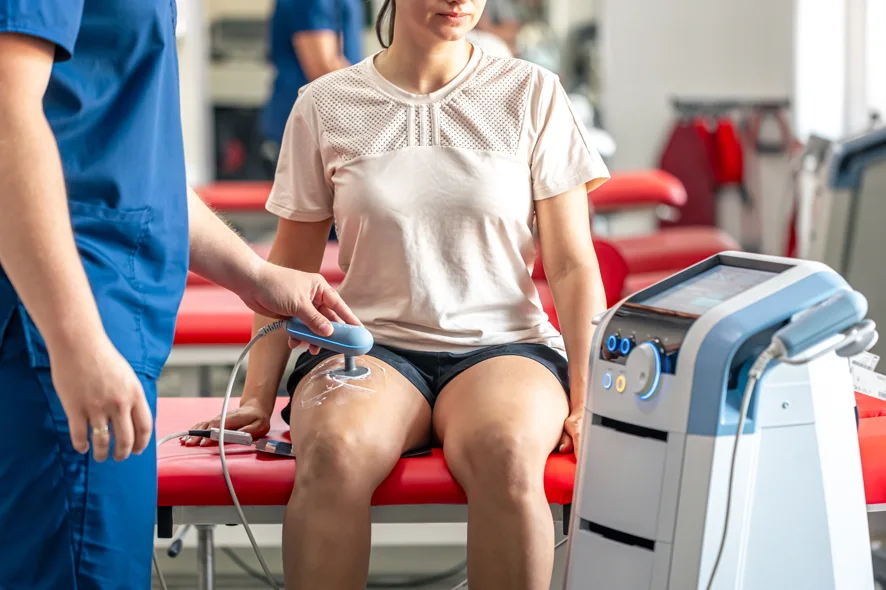
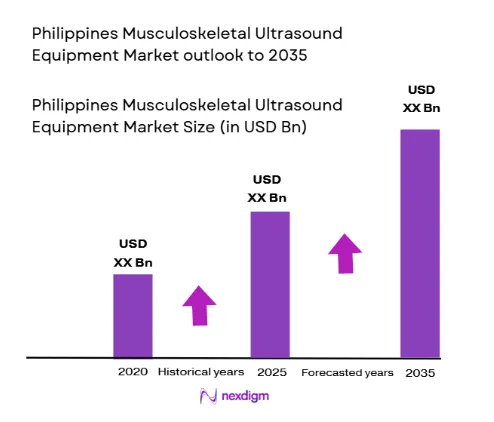
The Philippines musculoskeletal ultrasound equipment market is projected to reach a market size of approximately USD ~ billion, driven by increased demand for non-invasive diagnostic imaging technologies in healthcare facilities. The market is primarily fueled by the growing number of musculoskeletal disorders, advancements in ultrasound technologies, and an increased focus on cost-effective healthcare solutions. Ultrasound technology has gained significant traction due to its non-radiative nature and affordability compared to other imaging modalities, such as MRI and CT scans. These factors are driving market growth, particularly in hospitals and clinics, which require efficient, fast, and reliable diagnostic tools for musculoskeletal conditions.
The Philippines is a key player in the Southeast Asian musculoskeletal ultrasound equipment market. Major cities like Metro Manila, Cebu, and Davao are at the forefront due to their well-established healthcare infrastructure and presence of medical centers and hospitals. These urban areas are often the first to adopt advanced diagnostic technologies, including musculoskeletal ultrasound systems. Moreover, Metro Manila leads as a medical hub, with many healthcare providers integrating these technologies to meet the rising demand for orthopedic and sports-related diagnostic procedures. With increasing government investments and a push towards better healthcare services in rural areas, other provinces are also witnessing growth in ultrasound adoption.
Market Segmentation
By Product Type:
The musculoskeletal ultrasound equipment market is segmented by product type into portable ultrasound machines, handheld ultrasound systems, digital ultrasound machines, wireless ultrasound platforms, and hybrid ultrasound devices. Among these, portable ultrasound machines dominate the market due to their flexibility, mobility, and ease of use in diverse healthcare settings. The demand for portable systems has grown significantly, especially in ambulatory surgical centers, clinics, and emergency rooms. These devices are compact, lightweight, and offer efficient diagnostic capabilities, making them ideal for on-site and point-of-care applications. Additionally, their relatively lower cost compared to traditional systems has increased their appeal to healthcare providers seeking budget-friendly solutions for musculoskeletal imaging.

By End-User:
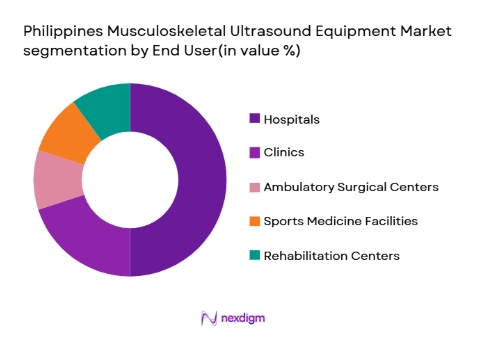
The market is segmented by end-user into hospitals, clinics, ambulatory surgical centers, sports medicine facilities, and rehabilitation centers. Hospitals dominate this segment as the primary users of musculoskeletal ultrasound equipment. This is due to the extensive usage of ultrasound for diagnosing a wide range of musculoskeletal conditions such as fractures, ligament tears, and arthritis. Hospitals require high-quality, versatile ultrasound machines capable of performing various imaging procedures. Additionally, the increasing number of orthopedic and sports medicine departments within hospitals drives the demand for these diagnostic devices. Hospitals also benefit from the economies of scale, allowing them to invest in advanced ultrasound technology.
Competitive Landscape
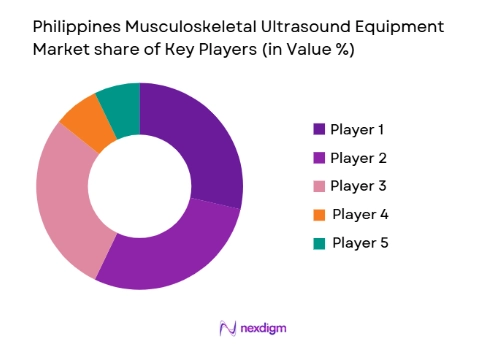
The competitive landscape of the musculoskeletal ultrasound equipment market is characterized by a mix of well-established players and innovative companies offering advanced technologies. Major companies are actively focusing on product innovation, strategic partnerships, and acquisitions to expand their market presence and strengthen their technological offerings. Consolidation in the market is also evident as players strive to expand their product portfolios and geographic reach. Key players are focusing on enhancing the portability, ease of use, and affordability of their products to cater to the growing demand for point-of-care diagnostic solutions. This is a highly competitive market where technological differentiation and customer support are critical factors for success.
| Company Name | Establishment Year | Headquarters | Technology Focus | Market Reach | Key Products | Revenue | Additional Parameter |
| Philips Healthcare | 1891 | Amsterdam, NL | ~ | ~ | ~ | ~ | ~ |
| GE Healthcare | 1892 | Chicago, USA | ~ | ~ | ~ | ~ | ~ |
| Siemens Healthineers | 1847 | Erlangen, DE | ~ | ~ | ~ | ~ | ~ |
| Mindray Medical | 1991 | Shenzhen, CN | ~ | ~ | ~ | ~ | ~ |
| Canon Medical Systems | 1937 | Tokyo, JP | ~ | ~ | ~ | ~ | ~ |
Philippines Musculoskeletal Ultrasound Equipment Market Analysis
Growth Drivers
Increasing Demand for Non-Invasive Diagnostic Tools:
The growing preference for non-invasive diagnostic tools is a significant driver for the musculoskeletal ultrasound equipment market. Ultrasound is non-radiative, cost-effective, and less time-consuming compared to alternatives like MRI and CT scans. As a result, it has gained popularity in various healthcare settings, especially for diagnosing musculoskeletal disorders, such as arthritis, fractures, and soft tissue injuries. This shift towards non-invasive diagnostic procedures has led to an increased demand for ultrasound devices, particularly in outpatient clinics and ambulatory surgical centers. In addition, the growing focus on patient safety and comfort further accelerates the adoption of ultrasound equipment, particularly in the musculoskeletal imaging segment. Hospitals and diagnostic centers are increasingly investing in ultrasound machines due to their cost-effectiveness, ease of use, and ability to provide rapid, real-time results. This trend is expected to continue as healthcare providers seek to minimize the costs of high-end diagnostic imaging while ensuring high-quality patient care.
Technological Advancements in Ultrasound Systems:
Continuous technological advancements in ultrasound systems have significantly enhanced the capabilities of musculoskeletal ultrasound equipment. The integration of artificial intelligence (AI) and cloud-based platforms in ultrasound systems is improving diagnostic accuracy, efficiency, and ease of use. AI-powered ultrasound devices are becoming increasingly popular as they can assist in interpreting images, reducing the time required for diagnosis, and minimizing human error. Furthermore, advancements in 3D and 4D ultrasound imaging are enabling healthcare professionals to assess musculoskeletal conditions with greater precision. These innovations are expanding the application of musculoskeletal ultrasound systems, not only in traditional settings such as hospitals and clinics but also in emerging sectors like sports medicine and remote diagnostics. The growing need for more advanced diagnostic capabilities in musculoskeletal imaging is pushing manufacturers to develop more sophisticated ultrasound technologies, which is expected to fuel market growth.
Market Challenges
High Initial Investment Costs:
One of the primary challenges in the musculoskeletal ultrasound equipment market is the high initial cost associated with purchasing advanced ultrasound systems. While the long-term benefits of ultrasound equipment, such as its non-invasive nature and lower operational costs, are clear, the initial price tag can be prohibitive for smaller healthcare providers, particularly in emerging markets. Many smaller clinics and hospitals face financial constraints that prevent them from acquiring high-quality ultrasound machines. Additionally, while ultrasound systems are more affordable than some alternatives like MRI and CT scans, the added costs of necessary training for staff, maintenance, and software updates can further increase the total cost of ownership. This challenge is especially significant in rural areas where healthcare budgets are often limited, slowing the adoption of ultrasound equipment. Addressing this challenge requires manufacturers to explore ways to reduce the cost of ultrasound machines while maintaining high-quality performance and functionality.
Limited Access to Advanced Technology in Rural Areas:
Another challenge is the limited access to advanced ultrasound technology in rural and remote regions. Although urban centers like Metro Manila are well-equipped with the latest medical technologies, healthcare infrastructure in rural areas often lags behind. This is due to a combination of factors, including a lack of investment in healthcare facilities, inadequate transportation and logistics networks, and a shortage of skilled professionals. As a result, rural healthcare providers often rely on older or less sophisticated ultrasound equipment, limiting their ability to diagnose and treat musculoskeletal conditions effectively. This disparity in access to advanced healthcare technologies poses a significant barrier to the overall market growth in the Philippines. Overcoming this challenge requires a concerted effort from both the government and private sector to improve healthcare infrastructure and provide better access to modern diagnostic tools.
Opportunities
Growth in Sports Medicine and Rehabilitation Centers:
The growing popularity of sports and physical fitness in the Philippines presents significant opportunities for musculoskeletal ultrasound equipment. With an increasing number of athletes and fitness enthusiasts seeking medical attention for musculoskeletal injuries, sports medicine and rehabilitation centers are expanding rapidly. These centers require advanced diagnostic tools to assess injuries like ligament tears, muscle strains, and fractures, making ultrasound equipment an essential part of their operations. The rising demand for sports medicine services and the need for efficient, non-invasive diagnostic tools in rehabilitation centers provide a fertile ground for growth in the musculoskeletal ultrasound equipment market. As more people engage in recreational and professional sports, the need for precise diagnostics and treatment of musculoskeletal injuries will continue to rise, creating long-term opportunities for ultrasound equipment providers.
Government Initiatives and Healthcare Investments:
The Philippine government is making significant investments in healthcare infrastructure, which is expected to support the growth of the musculoskeletal ultrasound equipment market. As part of the country’s healthcare modernization efforts, there has been a push to improve the accessibility and quality of medical services in rural areas. This includes providing healthcare centers and hospitals with more advanced diagnostic tools, including ultrasound systems. The government’s focus on improving public health facilities and expanding access to healthcare services presents a substantial opportunity for manufacturers of ultrasound equipment to tap into new markets. Additionally, regulatory support aimed at ensuring the safety and effectiveness of medical devices further strengthens the prospects of ultrasound systems in the healthcare sector. These government initiatives are expected to drive the adoption of musculoskeletal ultrasound equipment in both urban and rural areas.
Future Outlook
The musculoskeletal ultrasound equipment market in the Philippines is expected to experience steady growth over the next few years. Technological advancements in ultrasound systems, such as AI integration and cloud-based platforms, will enhance diagnostic accuracy and expand the applicability of these devices. Regulatory support from the government will also encourage greater adoption of ultrasound systems across healthcare sectors. Additionally, the rising demand for non-invasive diagnostic procedures, particularly in rural and underserved areas, will drive market growth. As healthcare providers look for cost-effective and efficient ways to diagnose musculoskeletal conditions, ultrasound equipment will continue to play a vital role in the healthcare ecosystem.
Major Players
- Philips Healthcare
- GE Healthcare
- Siemens Healthineers
- Mindray Medical
- Canon Medical Systems
- Fujifilm Holdings
- Esaote
- Hitachi Healthcare
- Alpinion Medical Systems
- Carestream Health
- Analogic Corporation
- Chison Medical
- Lumedx Corporation
- Samsung Medison
- Toshiba Medical Systems
Key Target Audience
- Investments and venture capitalist firms
- Government and regulatory bodies
- Healthcare providers (hospitals, clinics, etc.)
- Sports medicine facilities
- Rehabilitation centers
- Medical equipment distributors
- Orthopedic professionals and specialists
- Diagnostic centers
Research Methodology
Step 1: Identification of Key Variables
Identification of critical market factors that influence demand, supply, and pricing within the musculoskeletal ultrasound equipment market.
Step 2: Market Analysis and Construction
In-depth analysis of market segmentation, competition, and regional trends within the musculoskeletal ultrasound equipment market.
Step 3: Hypothesis Validation and Expert Consultation
Validation of assumptions through primary and secondary research, including consultations with key market players and experts.
Step 4: Research Synthesis and Final Output
Synthesis of findings into a comprehensive market report, including forecasts, recommendations, and insights on future trends.

- Executive Summary
- Research Methodology (Definitions, Scope, Industry Assumptions, Market Sizing Approach, Primary & Secondary Research Framework, Data Collection & Verification Protocol, Analytic Models & Forecast Methodology, Limitations & Research Validity Checks)

- Market Definition and Scope
- Value Chain & Stakeholder Ecosystem
- Regulatory / Certification Landscape
- Sector Dynamics Affecting Demand
- Strategic Initiatives & Infrastructure Growth

- Growth Drivers
Increasing Prevalence of Musculoskeletal Disorders
Rising Adoption of Point-of-Care Ultrasound
Technological Advancements in Ultrasound Imaging
Government Initiatives for Healthcare Modernization
Growing Healthcare Expenditure in the Philippines - Market Challenges
High Initial Investment Costs
Limited Access to Advanced Ultrasound Technology in Rural Areas
Regulatory Hurdles in Medical Device Approvals
Lack of Skilled Professionals for Advanced Imaging Techniques
Competition from Alternative Diagnostic Methods - Market Opportunities
Growing Demand for Handheld Ultrasound Devices in Rural Areas
Expansion of Sports Medicine and Rehabilitation Centers
Rising Focus on Preventive Healthcare and Diagnostics - Trends
Increase in AI Integration for Musculoskeletal Imaging
Shift Towards Portable and Compact Ultrasound Devices
Adoption of Cloud-Based Ultrasound Platforms
Demand for Real-Time Imaging in Sports Medicine
Rising Utilization of Ultrasound for Non-Invasive Procedures - Government Regulations & Defense Policy
Strict Regulatory Requirements for Medical Equipment Certification
Government Support for Healthcare Infrastructure in the Philippines
Evolving Policies to Support Telemedicine and Remote Diagnostics - SWOT Analysis
- Stakeholder and Ecosystem Analysis
- Porter’s Five Forces Analysis
- Competition Intensity and Ecosystem Mapping

- By Market Value, 2020-2025
- By Installed Units, 2020-2025
- By Average System Price, 2020-2025
- By System Complexity Tier, 2020-2025

- By System Type (In Value%)
Portable Ultrasound Machines
Tabletop Ultrasound Machines
Wireless Ultrasound Systems
High-Frequency Ultrasound Systems
Handheld Ultrasound Devices - By Platform Type (In Value%)
Analog Ultrasound Systems
Digital Ultrasound Systems
Hybrid Ultrasound Systems
Cloud-based Ultrasound Platforms
AI-Powered Ultrasound Platforms - By Fitment Type (In Value%)
Floor-Mounted Ultrasound Machines
Wall-Mounted Ultrasound Systems
Handheld Ultrasound Units
Mobile Ultrasound Devices
Compact Ultrasound Machines - By EndUser Segment (In Value%)
Hospitals
Clinics
Ambulatory Surgical Centers
Sports Medicine Facilities
Rehabilitation Centers - By Procurement Channel (In Value%)
Direct Sales
Distributors
Online Platforms
Government Procurement
Private Purchases - By Material / Technology (in Value%)
Piezoelectric Materials
Phased Array Technology
High-Resolution Imaging Technology
Color Doppler Ultrasound Technology
3D/4D Imaging Technology

- Market structure and competitive positioning
- Market share snapshot of major players
- CrossComparison Parameters (Market Share, Growth Rate, Revenue, Product Offering, Innovation, Regional Presence, Customer Satisfaction, Technology Adoption, Distribution Channel, Competitive Advantage)
- SWOT Analysis of Key Players
- Pricing & Procurement Analysis
- Key Players
Philippine Medical Equipment Corporation
Philips Healthcare
GE Healthcare
Siemens Healthineers
Mindray Medical International Limited
Fujifilm Holdings Corporation
Canon Medical Systems Corporation
Samsung Medison
Esaote S.p.A
Alpinion Medical Systems Co., Ltd.
Hitachi Healthcare
Carestream Health
Analogic Corporation
Chison Medical Technologies Co. Ltd.
Lumedx Corporation

- Rising Demand from Sports Medicine Facilities for Diagnostics
- Increasing Use of Ultrasound in Rehabilitation Centers
- Growing Adoption by Ambulatory Surgical Centers for Point-of-Care
- Expansion of Ultrasound Applications in Primary Healthcare Settings

- Forecast Market Value, 2026-2035
- Forecast Installed Units, 2026-2035
- Price Forecast by System Tier, 2026-2035
- Future Demand by Platform, 2026-2035


 Request a Sample
 Ask for Customization
 Get a Quote
 Enquire Now