

 Download PDF
Market Overview
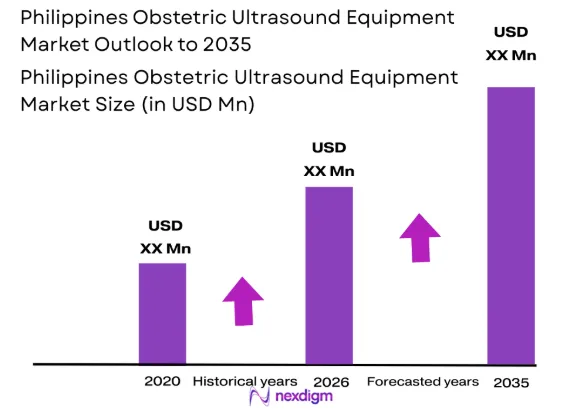
The Philippines Obstetric Ultrasound Equipment market is driven by growing healthcare investments and technological advancements, with a market size of approximately USD ~ million. This growth is fueled by the increasing demand for high-quality prenatal care, the expansion of healthcare infrastructure, and the shift towards advanced diagnostic equipment. With a robust increase in demand for non-invasive imaging technologies, the market is expected to experience continued growth driven by innovations such as portable ultrasound devices and AI-driven imaging systems.
Key cities, such as Metro Manila, Cebu, and Davao, dominate the Philippines Obstetric Ultrasound Equipment market due to their advanced healthcare infrastructure, high population density, and accessibility to modern healthcare services. Metro Manila, being the capital region, hosts numerous hospitals and healthcare facilities offering state-of-the-art ultrasound services, contributing to the region’s dominance. The expansion of healthcare facilities in urban areas also drives the adoption of advanced ultrasound technology, helping meet the growing demand for maternal care.
Market Segmentation
By System Type
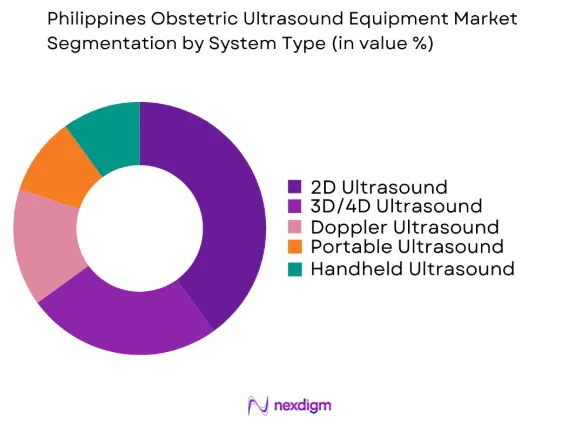
The Philippines Obstetric Ultrasound Equipment market is segmented by system type into 2D, 3D/4D, Doppler, portable, and handheld ultrasound systems. Recently, 2D ultrasound systems have dominated the market due to their affordability, widespread use in routine pregnancy checkups, and established market presence. The increasing affordability of 2D systems and their widespread availability in hospitals and clinics contribute significantly to their market dominance.
By Platform Type
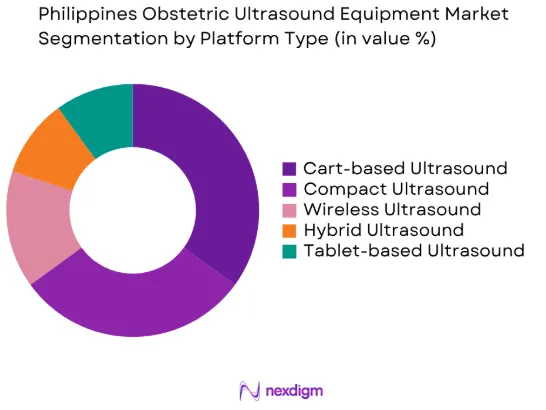
The Philippines Obstetric Ultrasound Equipment market is segmented by platform type into cart-based, compact, wireless, hybrid, and tablet-based ultrasound systems. Cart-based ultrasound systems have a significant market share as they offer advanced features and high image quality, making them a preferred choice for hospitals and larger healthcare facilities. Their established presence in obstetrics and gynecology departments further drives their dominance in the Philippines.
Competitive Landscape
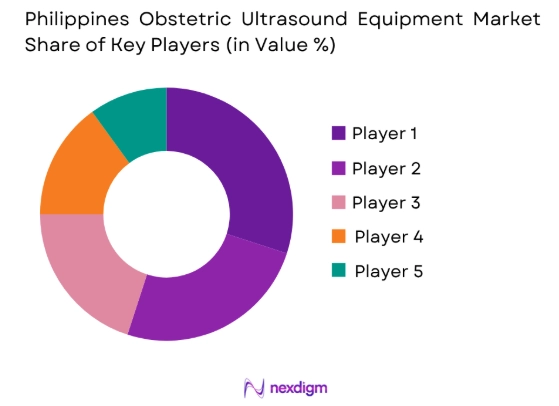
The competitive landscape of the Philippines Obstetric Ultrasound Equipment market is marked by the presence of both global and local players who influence market trends through product innovation, technological advancements, and strategic partnerships. Leading companies like Philips Healthcare, GE Healthcare, and Siemens Healthineers dominate the market by offering diverse ultrasound systems and penetrating the healthcare sector in urban areas. The market has seen consolidation through acquisitions, allowing larger companies to expand their technological offerings and strengthen their presence in the region.
| Company Name | Establishment Year | Headquarters | Technology Focus | Market Reach | Key Products | Revenue | Product Innovation |
| Philips Healthcare | 1891 | Netherlands | ~ | ~ | ~ | ~ | ~ |
| GE Healthcare | 1892 | USA | ~ | ~ | ~ | ~ | ~ |
| Siemens Healthineers | 1847 | Germany | ~ | ~ | ~ | ~ | ~ |
| Mindray Medical | 1991 | China | ~ | ~ | ~ | ~ | ~ |
| Canon Medical Systems | 1937 | Japan | ~ | ~ | ~ | ~ | ~ |
Philippines Obstetric Ultrasound Equipment Market Analysis
Growth Drivers
Technological Advancements in Imaging Quality
The Philippines Obstetric Ultrasound Equipment market has been significantly driven by technological advancements that have improved imaging quality, making it more reliable and precise for prenatal care. As demand for higher-quality imaging increases, technological innovations like 3D/4D imaging and Doppler ultrasound have emerged as key contributors to market growth. These advancements provide clearer visuals for early detection of fetal abnormalities, helping healthcare professionals make more informed decisions, which directly impacts the adoption of modern ultrasound equipment. Additionally, the increasing use of AI in ultrasound devices has enhanced diagnostic capabilities, allowing for more accurate assessments and enabling remote monitoring. These factors are contributing to a steady rise in the demand for high-performance ultrasound systems in the Philippines.
Expansion of Healthcare Infrastructure
Another key growth driver for the Philippines Obstetric Ultrasound Equipment market is the expansion of healthcare infrastructure. Government initiatives to improve healthcare access, especially in rural areas, have led to the establishment of new hospitals and clinics. These healthcare facilities are increasingly adopting advanced diagnostic technologies, including ultrasound systems, to meet the growing demand for maternal and prenatal care. Furthermore, private sector investment in healthcare infrastructure has also contributed to the growth of the market, as these facilities seek to provide state-of-the-art services to attract more patients. The increase in government-funded programs and public healthcare initiatives has also fueled the adoption of ultrasound equipment in public health centers, creating a favorable environment for market growth.
Market Challenges
High Equipment Costs and Affordability Issues
A significant challenge for the Philippines Obstetric Ultrasound Equipment market is the high upfront cost of purchasing and maintaining ultrasound devices. Many healthcare providers, particularly in rural areas, struggle with financial limitations that hinder their ability to adopt advanced technologies. This issue is exacerbated by the lack of adequate government subsidies or financial support programs to facilitate access to high-quality imaging equipment. While more affordable models exist, they often lack the advanced features and imaging quality needed for effective maternal care, making affordability a major obstacle. These financial constraints limit the widespread adoption of advanced ultrasound systems, slowing overall market growth.
Limited Access to Advanced Technology in Rural Areas
Despite the increasing adoption of ultrasound equipment in urban centers, rural areas of the Philippines face significant challenges in accessing advanced technology. Healthcare facilities in these regions often lack the necessary infrastructure and financial resources to invest in high-end ultrasound systems, limiting the availability of quality prenatal care. This disparity in access has led to unequal distribution of ultrasound technology, slowing market growth. While mobile ultrasound units offer a potential solution, their availability is still limited, particularly in remote areas. The lack of adequate healthcare infrastructure and financial support in rural regions remains a major barrier, hindering broader adoption and overall growth of ultrasound technology in the Philippines.
Opportunities
Expansion of Telemedicine and Remote Ultrasound Services
The growing adoption of telemedicine and remote healthcare services offers a major opportunity for the Philippines Obstetric Ultrasound Equipment market. With the rising demand for remote prenatal care, particularly in rural areas, telemedicine platforms that enable remote ultrasound exams are becoming more popular. This has fueled the development of portable and wireless ultrasound systems, allowing healthcare providers to perform remote consultations and share diagnostic images with specialists. Remote prenatal scans increase accessibility to care, enhance patient convenience, and improve diagnostic accuracy. As these technologies continue to gain traction, their ability to expand access to quality care is expected to drive market growth in the coming years.
Government Initiatives to Improve Maternal Health
Government initiatives focused on improving maternal health and reducing mortality rates present a significant opportunity for the Philippines Obstetric Ultrasound Equipment market. These programs aim to enhance access to quality prenatal care, especially in underserved regions. Increased government funding for healthcare infrastructure, including ultrasound technology, is driving demand for advanced diagnostic equipment in public health centers and clinics. The government’s commitment to maternal health will foster market growth and create opportunities for ultrasound providers to collaborate with public health programs. This partnership will help expand market reach and further promote the adoption of ultrasound technologies across the country, particularly in rural and remote areas.
Future Outlook
The future outlook for the Philippines Obstetric Ultrasound Equipment market is optimistic, with anticipated growth driven by technological advancements, increasing government initiatives for maternal health, and the expansion of healthcare infrastructure. Over the next few years, there is expected to be an increase in demand for portable and wireless ultrasound systems, as well as the integration of artificial intelligence in diagnostic processes. Additionally, the rise in telemedicine adoption is likely to drive demand for remote ultrasound services, providing new growth opportunities for the market.
Major Players
- Philips Healthcare
- GE Healthcare
- Siemens Healthineers
- Mindray Medical
- Canon Medical Systems
- Samsung Medison
- Fujifilm Sonosite
- Esaote S.p.A.
- Analogic Corporation
- Alpinion Medical Systems
- Chison Medical Imaging Co.
- Shenzhen Mindray Bio-Medical Electronics Co.
- Hitachi Healthcare
- Toshiba Medical Systems
- United Imaging Healthcare
Key Target Audience
- Investments and venture capitalist firms
- Government and regulatory bodies
- Healthcare providers
- Hospitals and diagnostic centers
- Medical equipment distributors
- Maternal health organizations
- Health technology developers
- Private healthcare companies
Research Methodology
Step 1: Identification of Key Variables
The first step involves identifying key variables that affect the Philippines Obstetric Ultrasound Equipment market, including technological trends, healthcare infrastructure, and government policies.
Step 2: Market Analysis and Construction
This step involves gathering market data through secondary and primary research, followed by constructing market models to assess demand, pricing trends, and competitive dynamics.
Step 3: Hypothesis Validation and Expert Consultation
At this stage, hypotheses formed from the analysis are validated through consultations with industry experts and key stakeholders in the healthcare sector to ensure accuracy.
Step 4: Research Synthesis and Final Output
The final step synthesizes all collected data and insights into a comprehensive report, which provides actionable market insights, forecasts, and recommendations.

- Executive Summary
- Research Methodology (Definitions, Scope, Industry Assumptions, Market Sizing Approach, Primary & Secondary Research Framework, Data Collection & Verification Protocol, Analytic Models & Forecast Methodology, Limitations & Research Validity Checks)

- Market Definition and Scope
- Value Chain & Stakeholder Ecosystem
- Regulatory / Certification Landscape
- Sector Dynamics Affecting Demand
- Strategic Initiatives & Infrastructure Growth

- Growth Drivers
Technological Advancements in Imaging Quality
Increasing Healthcare Infrastructure Investment
Rising Awareness and Demand for Prenatal Care - Market Challenges
High Equipment Costs and Affordability Issues
Limited Access to Advanced Technology in Rural Areas
Regulatory Barriers and Certification Challenges - Market Opportunities
Expansion of Telemedicine and Remote Ultrasound
Growing Demand in Emerging Markets
Government Initiatives to Support Maternal Health - Trends
Integration of Artificial Intelligence in Ultrasound
Adoption of Portable and Handheld Devices
Shift towards Non-invasive Imaging Methods - Government Regulations
- SWOT Analysis of Key Competitors
- Porter’s Five Forces

- By Market Value, 2020-2025
- By Installed Units, 2020-2025
- By Average System Price, 2020-2025
- By System Complexity Tier, 2020-2025

- By System Type (In Value%)
2D Ultrasound
3D/4D Ultrasound
Doppler Ultrasound
Portable Ultrasound
Handheld Ultrasound - By Platform Type (In Value%)
Cart-based Ultrasound
Compact Ultrasound
Wireless Ultrasound
Hybrid Ultrasound
Tablet-based Ultrasound - By Fitment Type (In Value%)
Ceiling Mounted Ultrasound
Trolley Mounted Ultrasound
Handheld Ultrasound
Wall Mounted Ultrasound
Portable Ultrasound - By End User Segment (In Value%)
Hospitals
Diagnostic Centers
Maternity Clinics
Private Clinics
Research Institutions - By Procurement Channel (In Value%)
Direct Sales
Distributors
Online Retail
Hospital Purchasing
Government Procurement

- Market Share Analysis
- Cross Comparison Parameters (Price, Technology, Application Range, Region, Customer Support, Installation & Training, Warranty & Service, Device Portability, Software Integration)
- SWOT Analysis of Key Competitors
- Pricing & Procurement Analysis
- Key Players
Philips Healthcare
GE Healthcare
Siemens Healthineers
Canon Medical Systems
Samsung Medison
Fujifilm Sonosite
Mindray Medical International
Toshiba Medical Systems
Hitachi Healthcare
Esaote S.p.A.
Analogic Corporation
Alpinion Medical Systems
Chison Medical Imaging Co.
Shenzhen Mindray Bio-Medical Electronics Co.
Wuhan Guide Sensmart Tech

- Increased Usage in Rural Healthcare Centers
- Adoption by Private Maternity Clinics
- Growth in Public Sector Maternal Health Programs
- Integration into Research for Fetal Development Studies

- Forecast Market Value, 2026-2035
- Forecast Installed Units, 2026-2035
- Price Forecast by System Tier, 2026-2035
- Future Demand by Platform, 2026-2035


 Request a Sample
 Ask for Customization
 Get a Quote
 Enquire Now