
 Download PDF
 Download PDF
Market Overview
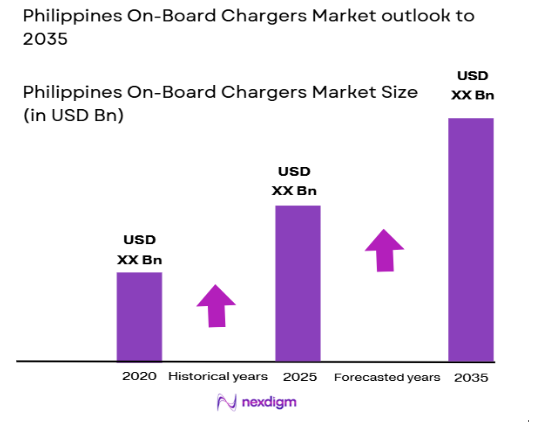
The Philippines On-Board Chargers market reached approximately USD ~ billion based on a recent historical assessment, driven by accelerating electric vehicle adoption, supportive government incentives, and expanding urban mobility electrification initiatives. Increasing demand for efficient onboard charging systems has been fueled by rising fuel costs, improved battery technologies, and growing awareness of sustainable transportation. Automotive manufacturers are integrating advanced power electronics and smart charging capabilities, further enhancing product demand and strengthening the overall market ecosystem across multiple vehicle categories.
Metro Manila, Cebu, and Davao emerge as dominant regions due to higher urbanization, concentrated vehicle ownership, and stronger charging infrastructure development. These areas benefit from government-backed electrification programs and private investments in mobility solutions, encouraging faster adoption of electric vehicles and related components. Additionally, proximity to industrial hubs and logistics centers enhances demand for commercial electric fleets, while higher disposable income levels and urban commuting patterns support increased penetration of onboard charging technologies.
Market Segmentation
By Product Type
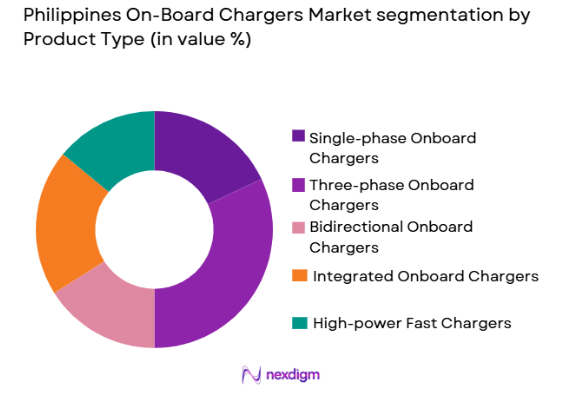
Philippines On-Board Chargers market is segmented by product type into single-phase onboard chargers, three-phase onboard chargers, bidirectional onboard chargers, integrated onboard chargers, and high-power fast onboard chargers. Recently, three-phase onboard chargers has a dominant market share due to factors such as higher efficiency, faster charging capability, compatibility with commercial vehicles, and increasing deployment in fleet electrification projects. Their ability to handle higher power loads and reduce charging time makes them more suitable for urban transport systems and logistics applications where operational efficiency is critical.
By Vehicle Type
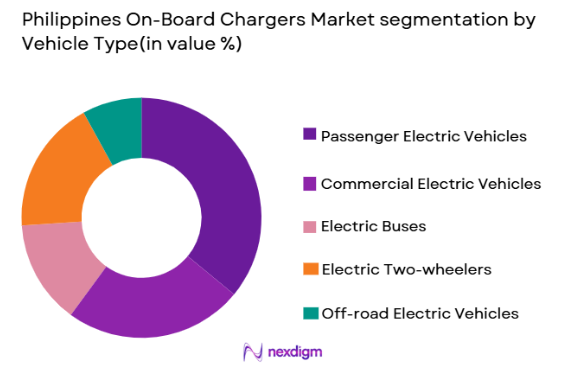
Philippines On-Board Chargers market is segmented by vehicle type into passenger electric vehicles, commercial electric vehicles, electric buses, electric two-wheelers, and off-road electric vehicles. Recently, passenger electric vehicles has a dominant market share due to factors such as rising consumer adoption, increasing urban commuting needs, and availability of government incentives for private EV purchases. Expanding dealership networks, growing awareness about sustainability, and improvements in charging infrastructure have further strengthened demand within this segment, making it the leading contributor to onboard charger consumption.
Competitive Landscape
The Philippines On-Board Chargers market exhibits moderate consolidation with a mix of global electronics manufacturers and regional automotive component suppliers competing for market presence. Large multinational firms dominate through advanced technology portfolios, while local distributors and assemblers strengthen supply chain accessibility. Strategic partnerships, localization of production, and investment in semiconductor technologies influence competitive positioning and enable companies to expand their reach across passenger and commercial vehicle segments.
| Company Name | Establishment Year | Headquarters | Technology Focus | Market Reach | Key Products | Revenue (USD Billion) | Charging Efficiency Range |
| Delta Electronics | 1971 | Taiwan | Power electronics | Global | Onboard chargers | 13.2 | 92–96% |
| Bosch | 1886 | Germany | Automotive systems | Global | EV charging modules | 88.4 | 90–95% |
| Denso | 1949 | Japan | Automotive electronics | Global | Integrated chargers | 48.5 | 91–96% |
| ABB | 1988 | Switzerland | Electrification solutions | Global | EV charging systems | 32.0 | 93–97% |
| Siemens | 1847 | Germany | Smart infrastructure | Global | Charging technologies | 77.8 | 92–96% |
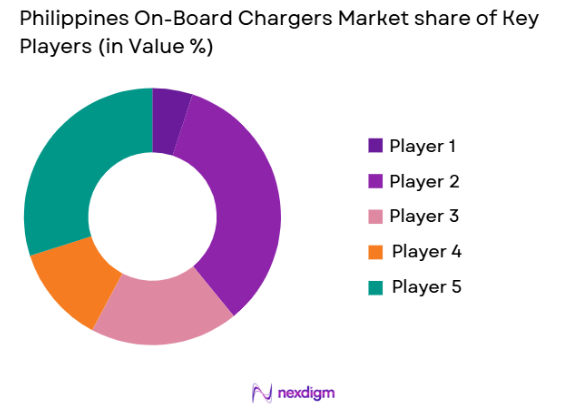
Philippines On-Board Chargers Market Analysis
Growth Drivers
Electric Vehicle Adoption Accelerated by Policy Support and Urban Mobility Needs
The rapid increase in electric vehicle adoption across urban centers is significantly driving demand for onboard chargers in the Philippines market. Government initiatives promoting cleaner transportation and reduced emissions are encouraging both consumers and fleet operators to transition toward electric mobility solutions. Incentive programs, tax benefits, and infrastructure investments are further supporting the growth of electric vehicles and associated components. Urban congestion and rising fuel costs are also influencing consumers to opt for more cost-efficient and environmentally friendly alternatives. Automakers are responding by expanding their electric vehicle portfolios and integrating advanced onboard charging systems. Increasing awareness regarding environmental sustainability is strengthening consumer acceptance and accelerating adoption rates. Additionally, improvements in battery performance and charging efficiency are enhancing user experience and reducing range anxiety. These factors collectively create a favorable environment for the expansion of onboard charger technologies across various vehicle segments.
Advancements in Power Electronics and Charging Efficiency Technologies
Continuous technological advancements in power electronics are playing a crucial role in the development of more efficient and compact onboard chargers. The adoption of silicon carbide and gallium nitride technologies has significantly improved energy conversion efficiency and reduced heat generation. These innovations allow for faster charging times and better integration within vehicle architectures, making them more attractive for manufacturers and consumers alike. Increased investment in research and development is enabling companies to introduce high-performance solutions tailored to evolving market needs. Integration of smart charging features and vehicle-to-grid capabilities is further enhancing the functionality of onboard chargers. Automakers are focusing on reducing system size and weight while maintaining performance, contributing to overall vehicle efficiency. Additionally, advancements in thermal management systems are addressing challenges related to operating conditions in tropical climates. These developments are expected to sustain long-term growth and innovation within the market.
Market Challenges
High Cost of Advanced Onboard Charging Systems and Limited Affordability
The relatively high cost of advanced onboard chargers remains a significant barrier to widespread adoption in the Philippines market. Incorporation of cutting-edge semiconductor technologies and integrated systems increases production costs, which are often passed on to consumers. This pricing challenge limits accessibility, particularly among price-sensitive buyers and small fleet operators. Additionally, the cost of electric vehicles itself remains higher compared to conventional alternatives, further restricting demand for onboard charging components. Limited availability of financing options for EV purchases also affects market penetration. Manufacturers are attempting to address cost concerns through economies of scale and localized production, but progress remains gradual. Import dependency on key electronic components adds to overall expenses and supply chain complexities. These factors collectively constrain market expansion and slow the transition toward electric mobility solutions in certain segments.
Infrastructure Limitations and Standardization Issues in Charging Ecosystems
The development of charging infrastructure in the Philippines faces challenges related to uneven distribution and lack of standardization. Many regions still lack sufficient public charging stations, limiting the usability of electric vehicles and reducing demand for onboard chargers. Differences in charging standards and compatibility issues between vehicles and infrastructure create additional barriers for consumers and operators. Urban areas have seen more rapid infrastructure deployment, but rural and semi-urban regions remain underserved. Coordination between government bodies, private investors, and manufacturers is essential to establish a cohesive charging ecosystem. Delays in infrastructure expansion can hinder consumer confidence and slow market growth. Additionally, maintenance and operational challenges associated with charging networks further complicate adoption. Addressing these issues is critical for ensuring long-term sustainability and scalability of the onboard chargers market.
Opportunities
Expansion of Commercial Electric Fleets and Logistics Electrification
The growing electrification of commercial fleets presents a significant opportunity for the Philippines onboard chargers market. Logistics companies and delivery service providers are increasingly adopting electric vehicles to reduce operational costs and comply with environmental regulations. This transition creates a steady demand for high-capacity onboard chargers capable of supporting intensive usage patterns. Government initiatives encouraging green transportation in urban logistics further strengthen this opportunity. Fleet operators are prioritizing efficiency and reliability, driving demand for advanced charging technologies. Integration of fleet management systems with smart charging solutions enhances operational performance and reduces downtime. Additionally, partnerships between vehicle manufacturers and charging technology providers are facilitating faster deployment of solutions. As e-commerce continues to expand, the need for efficient delivery systems will further accelerate electrification and support market growth.
Development of Local Manufacturing and Semiconductor Ecosystems
The establishment of local manufacturing capabilities for onboard chargers and related components offers substantial growth potential for the market. Reducing reliance on imported technologies can lower production costs and improve supply chain resilience. Government support for industrial development and investment incentives can encourage companies to set up manufacturing facilities within the country. Localization also enables customization of products to suit regional requirements and environmental conditions. Collaboration between domestic firms and international technology providers can facilitate knowledge transfer and innovation. The development of a local semiconductor ecosystem is particularly important for ensuring consistent availability of critical components. Increased domestic production can enhance competitiveness and attract further investments in the electric mobility sector. This opportunity is expected to contribute significantly to the long-term sustainability of the market.
Future Outlook
The Philippines On-Board Chargers market is expected to experience steady expansion driven by rising electric vehicle penetration, continuous advancements in charging technologies, and supportive policy frameworks. Increasing investment in infrastructure and localization efforts will further strengthen market growth. Technological integration such as smart charging and bidirectional energy flow is likely to gain traction. Demand from commercial fleets and urban mobility solutions will remain strong. Overall, the market is positioned for sustained development over the coming years.
Major Players
- Delta Electronics Philippines
- Bosch Philippines
- Denso Philippines
- ABB Philippines
- Siemens Philippines
- Schneider Electric Philippines
- Panasonic Automotive Systems
- Mitsubishi Electric Philippines
- Valeo Philippines
- Infineon Technologies
- STMicroelectronics
- Texas Instruments
- Eaton Corporation
- Lear Corporation
- Magna International
Key Target Audience
- Automotive OEM manufacturers
- Electric vehicle component suppliers
- Fleet operators and logistics companies
- Government and regulatory bodies
- Investments and venture capitalist firms
- Charging infrastructure developers
- Semiconductor manufacturers
- Automotive dealerships
Research Methodology
Step 1: Identification of Key Variables
The process begins with identifying critical variables influencing the Philippines On-Board Chargers market, including technology adoption, infrastructure growth, and regulatory support. Both demand-side and supply-side factors are evaluated to ensure comprehensive coverage of market dynamics.
Step 2: Market Analysis and Construction
Data is collected from industry reports, company disclosures, and government publications to construct a detailed market model. Segmentation and value chain analysis are conducted to understand structural and competitive dynamics.
Step 3: Hypothesis Validation and Expert Consultation
Initial findings are validated through consultations with industry experts, manufacturers, and stakeholders. Feedback is incorporated to refine assumptions and improve the accuracy of market insights.
Step 4: Research Synthesis and Final Output
All validated data is synthesized into a structured report, ensuring consistency and clarity. The final output integrates qualitative and quantitative analysis to provide actionable insights for stakeholders.

- Executive Summary
- Research Methodology (Definitions, Scope, Industry Assumptions, Market Sizing Approach, Primary & Secondary Research Framework, Data Collection & Verification Protocol, Analytic Models & Forecast Methodology, Limitations & Research Validity Checks)

- Market Definition and Scope
- Value Chain & Stakeholder Ecosystem
- Regulatory / Certification Landscape
- Sector Dynamics Affecting Demand
- Strategic Initiatives & Infrastructure Growth

- Growth Drivers
Increasing electric vehicle adoption supported by government incentives
Expansion of urban charging infrastructure across major cities
Technological advancements in high-efficiency power electronics
Rising fuel costs encouraging shift toward electric mobility
Integration of smart grid and vehicle-to-grid capabilities - Market Challenges
High initial cost of advanced on-board charger systems
Limited availability of high-capacity charging infrastructure
Thermal management and durability issues in tropical climates
Supply chain dependency on imported semiconductor components
Lack of standardized charging protocols across platforms - Market Opportunities
Growth in bidirectional charging and energy storage integration
Expansion of electric commercial fleets in logistics sector
Development of localized manufacturing for power electronics - Trends
Shift toward silicon carbide and gallium nitride technologies
Increasing adoption of integrated charger and inverter systems
Emergence of smart and connected charging solutions
Focus on lightweight and compact charger designs
Rising demand for high-power fast charging capabilities - Government Regulations & Defense Policy
Implementation of electric vehicle incentive programs
Standards for charging infrastructure interoperability
Import regulations and tariffs on electronic components - SWOT Analysis
- Stakeholder and Ecosystem Analysis
- Porter’s Five Forces Analysis
- Competition Intensity and Ecosystem Mapping

- By Market Value, 2020-2025
- By Installed Units, 2020-2025
- By Average System Price, 2020-2025
- By System Complexity Tier, 2020-2025

- By System Type (In Value%)
Single-phase On-board Chargers
Three-phase On-board Chargers
Bidirectional On-board Chargers
Integrated On-board Chargers with DC-DC Conversion
High-power Fast Charging On-board Units - By Platform Type (In Value%)
Passenger Electric Vehicles
Commercial Electric Vehicles
Electric Two-wheelers
Electric Buses
Off-road Electric Vehicles - By Fitment Type (In Value%)
OEM Installed Chargers
Aftermarket Installed Chargers
Modular Integrated Chargers
Retrofitted Charging Systems
Embedded Power Electronics Systems - By End User Segment (In Value%)
Private Vehicle Owners
Fleet Operators
Public Transportation Authorities
Logistics and Delivery Companies
Government and Municipal Agencies - By Procurement Channel (In Value%)
Direct OEM Procurement
Government Tenders and Contracts
Authorized Dealer Networks
Third-party Component Suppliers
Online B2B Procurement Platforms - By Material / Technology (in Value %)
Silicon-based Power Electronics
Silicon Carbide Technology
Gallium Nitride Technology
Advanced Thermal Management Materials
Integrated Smart Charging Controllers

- Market structure and competitive positioning
- Market share snapshot of major players
- Cross Comparison Parameters (Power Output Capacity, Efficiency Levels, Thermal Management, Integration Capability, Cost Structure, Technology Type, Vehicle Compatibility, Charging Speed, Durability Standards, Smart Connectivity Features)
- SWOT Analysis of Key Players
- Pricing & Procurement Analysis
- Key Players
Delta Electronics Philippines
Bosch Philippines Automotive Systems
Denso Philippines Corporation
ABB Electrification Philippines
Siemens Mobility Philippines
Schneider Electric Philippines
Panasonic Automotive Systems Philippines
Mitsubishi Electric Philippines
Valeo Philippines Inc
Infineon Technologies Philippines
STMicroelectronics Asia Pacific
Texas Instruments Philippines
Eaton Electric Philippines
Lear Corporation Philippines
Magna Electronics Philippines

- Fleet operators increasingly investing in efficient charging systems to reduce downtime
- Private users showing preference for faster and compact onboard charging solutions
- Public transport authorities prioritizing reliable high-capacity charging systems
- Logistics companies adopting scalable charging infrastructure for fleet expansion

- Forecast Market Value, 2026-2035
- Forecast Installed Units, 2026-2035
- Price Forecast by System Tier, 2026-2035
- Future Demand by Platform, 2026-2035


 Request a Sample
 Ask for Customization
 Get a Quote
 Enquire Now