

 Download PDF
 Download PDF
Market Overview
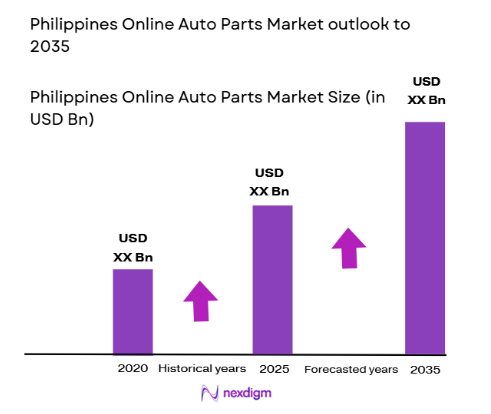
The Philippines online auto parts market is valued at approximately USD ~ billion based on a recent historical assessment. This market growth is primarily driven by the increasing adoption of e-commerce platforms, with consumers seeking affordable and convenient auto parts online. Additionally, the automotive sector’s expansion, including the increasing number of vehicles in the country, plays a significant role in fueling demand for online auto parts. The rise in mobile commerce further contributes to the online sales growth, providing customers with easy access to a wide range of products.
Metro Manila leads the demand for online auto parts in the Philippines due to its high vehicle ownership, well-developed infrastructure, and robust online consumer base. Other urban centers such as Cebu and Davao also contribute significantly to the market, as these regions experience growing economic activity, higher disposable income, and increasing car ownership. The shift towards more modern vehicles, along with the increasing use of e-commerce platforms, is fueling demand across the country, particularly in major cities where digital infrastructure is strong.
Market Segmentation
By Product Type:
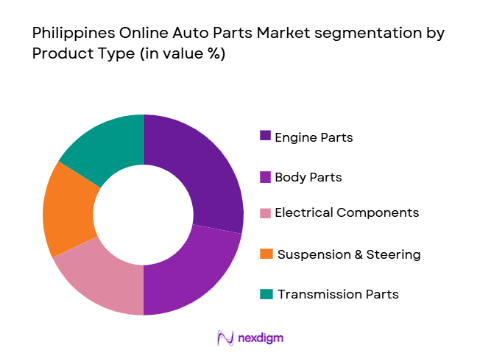
The Philippines Online Auto Parts market is segmented by product type into engine parts, body parts, electrical components, suspension & steering parts, and transmission parts. Recently, engine parts have dominated the market share due to the growing demand for vehicle maintenance and the widespread use of engine components for replacement and repair. This segment is driven by the increasing number of vehicles requiring regular maintenance and engine-related part replacements. The significant presence of e-commerce platforms that offer competitive pricing for engine components, along with the growing consumer preference for DIY repairs, also contribute to this dominance.
By Platform Type:
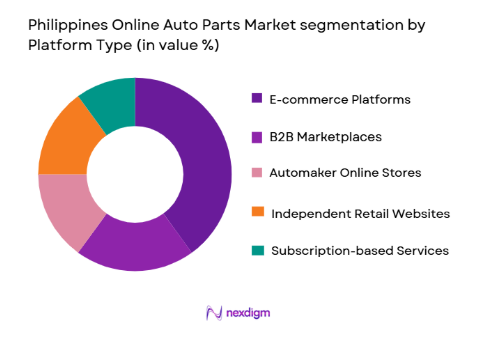
The Philippines Online Auto Parts market is segmented by platform type into e-commerce platforms, B2B marketplaces, automaker online stores, independent retail websites, and subscription-based services. E-commerce platforms, such as Lazada and Shopee, dominate the market due to their large user bases, seamless payment systems, and expansive distribution networks. These platforms offer convenience, fast delivery, and a wide variety of auto parts, which makes them the preferred choice for consumers seeking online auto parts. Their extensive reach, strong promotional efforts, and brand recognition further solidify their leading position in the market.
Competitive Landscape
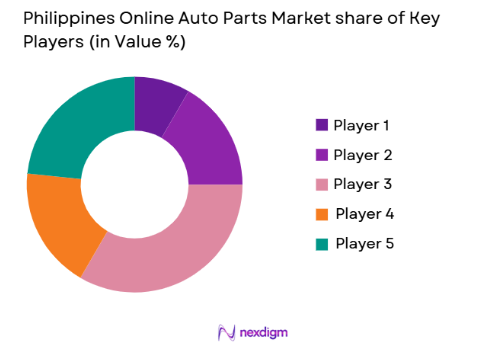
The Philippines online auto parts market is highly competitive, with major players dominating the e-commerce platforms and online marketplace segments. The market sees a considerable degree of consolidation as leading players expand their offerings through partnerships and acquisitions. Large e-commerce platforms such as Lazada, Shopee, and Amazon continue to drive growth in the market, leveraging their established customer base and operational efficiencies. These players influence market trends by setting the benchmark for pricing, service quality, and delivery times, prompting smaller players to adopt similar practices to remain competitive.
| Company Name | Establishment Year | Headquarters | Technology Focus | Market Reach | Key Products | Revenue (USD billion) | Additional Parameter |
| Lazada | 2012 | Philippines | ~ | ~ | ~ | ~ | ~ |
| Shopee | 2009 | Singapore | ~ | ~ | ~ | ~ | ~ |
| Amazon | 1994 | USA | ~ | ~ | ~ | ~ | ~ |
| Alibaba | 1999 | China | ~ | ~ | ~ | ~ | ~ |
| AutoZone | 1979 | USA | ~ | ~ | ~ | ~ | ~ |
Philippines Online Auto Parts Market Analysis
Growth Drivers
Increasing Vehicle Ownership:
The growing vehicle ownership in the Philippines is a significant driver of the online auto parts market. As more individuals purchase vehicles, there is an increasing need for maintenance and replacement parts. The rising number of vehicles on the road leads to a higher demand for aftermarket auto parts, fueling the market’s growth. As car owners look for cost-effective solutions, they are increasingly turning to online platforms to source parts, which offer convenience and competitive pricing. E-commerce platforms provide customers with easy access to a broad range of parts from the comfort of their homes, making it a popular choice for many. The increase in disposable income among Filipinos also allows more people to afford regular vehicle maintenance, further boosting the demand for auto parts. With more vehicles on the road, both new and used, the need for replacement and performance-enhancing parts increases, contributing to the market’s overall growth.
Digital Transformation and E-commerce Adoption:
The digital transformation of the automotive sector has played a key role in the Philippines’ online auto parts market. The rise of e-commerce platforms like Shopee and Lazada has made it easier for consumers to purchase auto parts from their smartphones or computers. The growing number of internet users and the shift towards mobile commerce further accelerate this trend. E-commerce offers a convenient and cost-effective way for consumers to browse, compare, and buy auto parts without leaving their homes. Additionally, the increasing trust in online payment systems and secure transactions has contributed to the growing acceptance of purchasing auto parts online. As more consumers become comfortable with digital shopping experiences, the online auto parts market continues to expand. The proliferation of social media and online advertisements has also increased awareness and encouraged more consumers to buy automotive products online.
Market Challenges
Counterfeit Parts:
One of the major challenges in the Philippines online auto parts market is the prevalence of counterfeit auto parts. Fake or substandard parts can compromise vehicle safety and performance, posing a significant risk to consumers. The sale of counterfeit parts through e-commerce platforms is a concern for both buyers and legitimate sellers. These parts often have lower quality and can cause more damage to vehicles, leading to expensive repairs and potential safety hazards. While e-commerce platforms have implemented measures to combat counterfeit products, such as product verification processes and certification requirements, the issue remains widespread. This challenge affects consumer confidence in online auto parts shopping, as many buyers are unsure of the authenticity of the products they purchase. Stricter regulations, better enforcement, and more transparency from online sellers are necessary to address this issue.
Supply Chain and Logistics Issues:
The logistics and supply chain system in the Philippines is still developing, and this creates challenges for the online auto parts market. Delays in the delivery of auto parts, especially from international sellers, can cause frustration for customers and lead to lower customer satisfaction. The country’s geographical layout, with thousands of islands, poses logistical challenges for e-commerce platforms to ensure timely deliveries across the archipelago. Additionally, road infrastructure limitations and traffic congestion can further delay the movement of goods. As the market continues to grow, logistics providers and e-commerce platforms must invest in more robust supply chain solutions to meet the growing demand for auto parts. The lack of efficient last-mile delivery solutions in certain regions also hampers the overall market efficiency, making it essential for players to collaborate with local distributors and enhance their delivery network to ensure faster fulfillment.
Opportunities
Rising Demand for Electric Vehicle Parts:
The growing interest in electric vehicles (EVs) presents a significant opportunity for the online auto parts market in the Philippines. As the automotive industry shifts towards sustainability, the demand for EV parts, such as charging stations, batteries, and specialized components, is expected to increase. Consumers are actively seeking EV parts for both new and existing electric vehicles, driving demand for specialized auto parts. E-commerce platforms are well-positioned to capitalize on this trend by offering a wide range of EV parts and accessories. With government support for the electric vehicle sector, including tax incentives and subsidies for EV buyers, the online auto parts market has a unique opportunity to expand into this emerging segment. As more consumers adopt electric vehicles, there will be a growing need for specialized parts, creating new revenue streams for online auto parts retailers.
Expansion of Mobile Auto Parts Solutions:
The rise of mobile applications dedicated to auto parts sales and services provides a substantial opportunity for growth in the Philippines online auto parts market. Mobile auto parts apps allow users to easily browse, compare, and purchase auto parts from their smartphones, adding a layer of convenience for busy consumers. These apps often include features such as direct customer support, real-time tracking of orders, and loyalty rewards, which enhance the overall customer experience. The popularity of mobile applications continues to rise in the Philippines, making it an ideal time for auto parts businesses to invest in mobile platforms. Additionally, the growing penetration of smartphones in the country allows auto parts sellers to reach a wider audience, particularly in remote areas where traditional e-commerce websites may not be as accessible. Mobile auto parts apps could transform how consumers purchase and service their vehicles, presenting a strong growth opportunity for players in the market.
Future Outlook
The future of the Philippines online auto parts market is promising, driven by continued digitalization and the rise in vehicle ownership. E-commerce platforms will continue to expand their reach, improving logistics and product offerings to meet the growing demand. Advances in digital technologies, such as AI-driven recommendations and smart inventory management, will enhance the customer experience and streamline operations for online sellers. Additionally, the increasing adoption of electric vehicles and the demand for sustainable auto parts will shape the future of the market, creating new opportunities for players to innovate and diversify their offerings. Regulatory support for the automotive and e-commerce industries will further fuel market growth, ensuring a favorable environment for expansion.
Major Players
- Lazada
- Shopee
- Amazon
- Alibaba
- AutoZone
- eBay Motors
- Walmart
- NAPA Auto Parts
- RockAuto
- Advance Auto Parts
- O’Reilly Automotive
- Mighty Auto Parts
- Pep Boys
- CarParts.com
- Auto-PartsWarehouse
Key Target Audience
- E-commerce platforms
- Auto repair shops
- Fleet operators
- Car dealerships
- Vehicle manufacturers
- Logistics companies
- Online auto parts retailers
- Automotive suppliers
Research Methodology
Step 1: Identification of Key Variables
This step involves identifying the key factors that influence the online auto parts market, such as product types, consumer preferences, and market trends.
Step 2: Market Analysis and Construction
Market data is analyzed and segmented by region, product type, platform type, and other relevant factors to build a comprehensive market overview.
Step 3: Hypothesis Validation and Expert Consultation
Hypotheses are validated through expert consultations and primary research with industry professionals, ensuring the accuracy of assumptions made during the analysis phase.
Step 4: Research Synthesis and Final Output
Data and insights gathered from research are synthesized into a final report, providing a detailed overview of the market with actionable recommendations and analysis.

- Executive Summary
- Research Methodology (Definitions, Scope, Industry Assumptions, Market Sizing Approach, Primary & Secondary Research Framework, Data Collection & Verification Protocol, Analytic Models & Forecast Methodology, Limitations & Research Validity Checks)

- Market Definition and Scope
- Value Chain & Stakeholder Ecosystem
- Regulatory / Certification Landscape
- Sector Dynamics Affecting Demand
- Strategic Initiatives & Infrastructure Growth

- Growth Drivers
Increasing automotive ownership
Rapid adoption of online shopping
Growth in e-commerce logistics
Demand for aftermarket vehicle customization
Technological advancements in parts manufacturing - Market Challenges
Counterfeit products in the market
Lack of consumer awareness on product quality
Logistics and delivery delays
Regulatory hurdles for online transactions
Rising costs of raw materials - Market Opportunities
Expansion of mobile app-based auto parts services
Increasing demand for eco-friendly auto parts
Strategic partnerships between online platforms and auto manufacturers - Trends
Growth in DIY (Do It Yourself) car repairs
Integration of AI for personalized part recommendations
Rise in automotive subscription services
Shift towards electric vehicle parts
Demand for high-performance aftermarket parts - Government Regulations & Defense Policy
Regulations on e-commerce platforms for auto parts
Import/export laws related to auto components
Incentives for electric vehicle parts manufacturing - SWOT Analysis
- Stakeholder and Ecosystem Analysis
- Porter’s Five Forces Analysis
- Competition Intensity and Ecosystem Mapping

- By Market Value, 2020-2025
- By Installed Units, 2020-2025
- By Average System Price, 2020-2025
- By System Complexity Tier, 2020-2025

- By System Type (In Value%)
Engine Parts
Body Parts
Electrical Components
Suspension & Steering Parts
Transmission Parts - By Platform Type (In Value%)
E-commerce Platforms
B2B Marketplaces
Automaker Online Stores
Independent Retail Websites
Subscription-based Services - By Fitment Type (In Value%)
OEM Parts
Aftermarket Parts
Used Parts
Re-manufactured Parts
Custom Parts - By EndUser Segment (In Value%)
Individual Consumers
Auto Repair Shops
Car Dealerships
Fleet Operators
Automotive Manufacturers - By Procurement Channel (In Value%)
Direct Procurement
Third-party Distributors
Online Marketplaces
Mobile App-Based Services
Dealership Networks - By Material / Technology (in Value%)
Metal Components
Plastic Components
Rubber Parts
Electronic Components
Composite Materials

- Market structure and competitive positioning
- Market share snapshot of major players
- CrossComparison Parameters (Product Availability, Delivery Speed, Customer Service, Price Competitiveness, E-commerce Platform Integration, Warranty Options, Return Policy, Brand Reputation, Online Reviews, Market Reach)
- SWOT Analysis of Key Players
- Pricing & Procurement Analysis
- Key Players
CarParts.com
AutoZone
Advance Auto Parts
RockAuto
O’Reilly Automotive
Mighty Auto Parts
NAPA Auto Parts
Amazon
eBay Motors
Alibaba
Walmart
Sears Auto
Pep Boys
Carrefour
JD.com

- Individual consumers’ increasing preference for online purchases
- Auto repair shops’ shift to e-commerce
- Growing role of fleet operators in online auto parts buying
- Car dealerships’ embrace of digital platforms for parts procurement

- Forecast Market Value, 2026-2035
- Forecast Installed Units, 2026-2035
- Price Forecast by System Tier, 2026-2035
- Future Demand by Platform, 2026-2035


 Request a Sample
 Ask for Customization
 Get a Quote
 Enquire Now