

 Download PDF
Market Overview
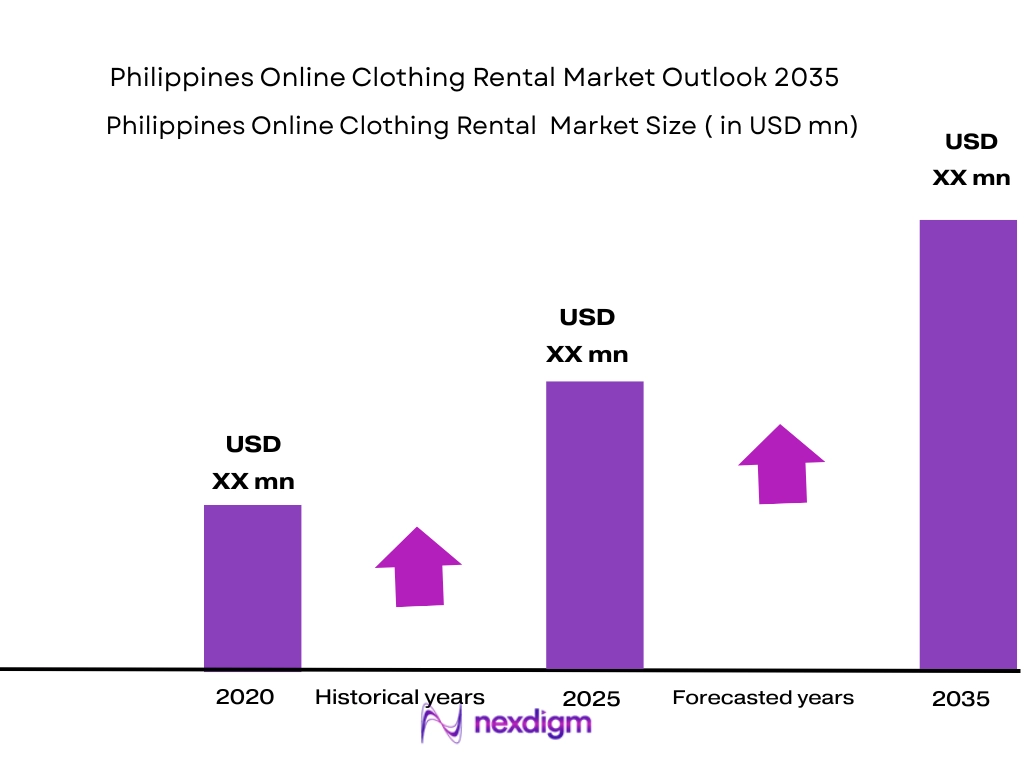
The Philippines Online Clothing Rental market is valued at USD ~ million, based on a five-year historical analysis. The market has seen rapid growth driven by increasing awareness of sustainable fashion, higher disposable incomes, and the rise of social media influence on fashion trends. Consumers are increasingly preferring rental services for formal events, parties, and occasional wear, which reduces wardrobe costs while providing access to premium and designer clothing without ownership.
Metro Manila, Cebu, and Davao dominate the online clothing rental market due to their high urban population density, greater disposable income, and extensive internet penetration. These cities have well-developed logistics and delivery networks, making rental services convenient and accessible. Additionally, the presence of young, fashion-conscious consumers who actively follow online trends contributes to the dominance of these regions. Retailers and rental platforms target these metropolitan areas to maximize reach and operational efficiency.
Market Segmentation
By Product Category Type
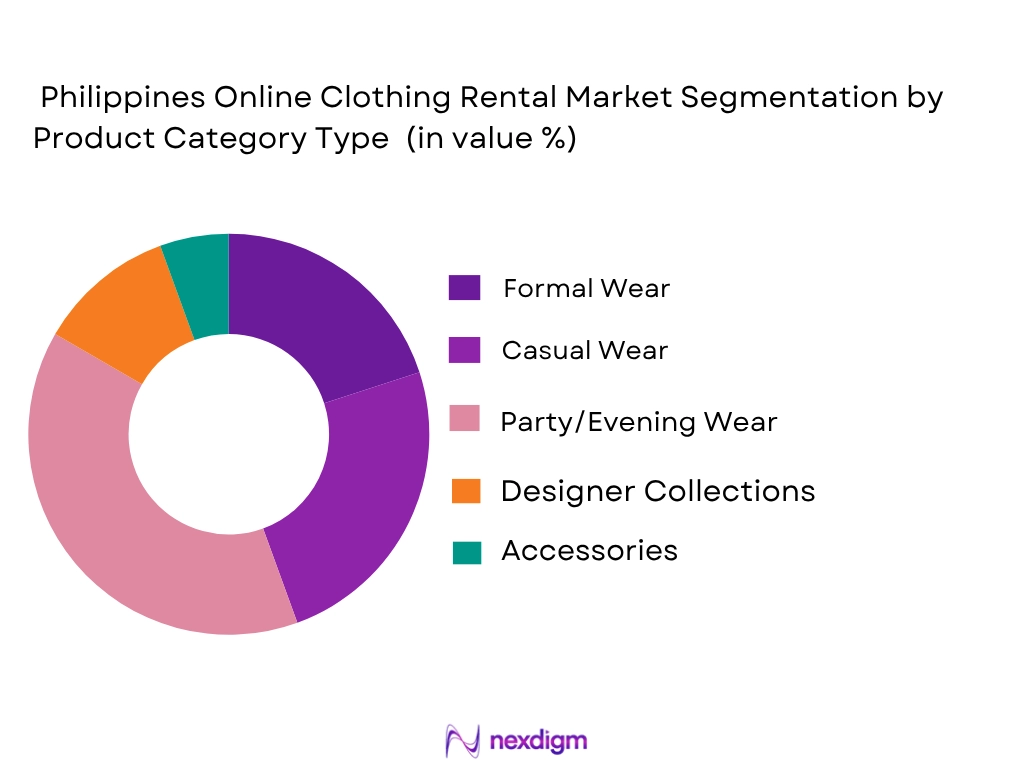
The Philippines Online Clothing Rental market is segmented by product type into formal wear, casual wear, party/evening wear, designer collections, and accessories. Party and evening wear currently dominate the market due to high demand for event-specific clothing. Consumers prefer renting luxury and designer outfits for weddings, corporate events, and celebrations, rather than purchasing expensive garments. Brands offering curated designer collections, combined with convenient delivery and return services, have further reinforced the dominance of this segment in the market.
By Clothing Type
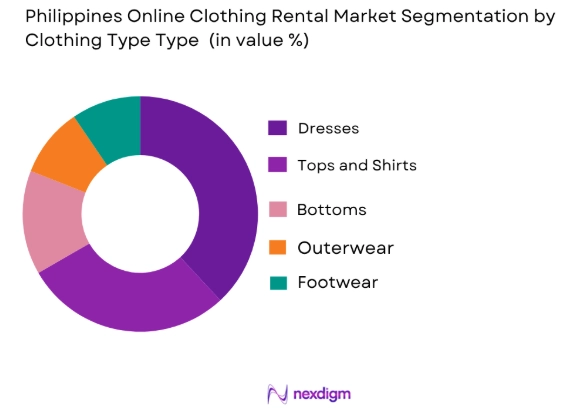
Segmentation by clothing type includes dresses, tops and shirts, bottoms, outerwear, and footwear. Dresses dominate this segment as they are versatile and in high demand for social events, formal functions, and casual gatherings. Consumers often prefer renting dresses due to the cost-effectiveness and the ability to try multiple styles. Online platforms providing detailed size guides, virtual try-on, and style recommendations further enhance consumer confidence and contribute to the segment’s dominance in the rental market.
Competitive Landscape
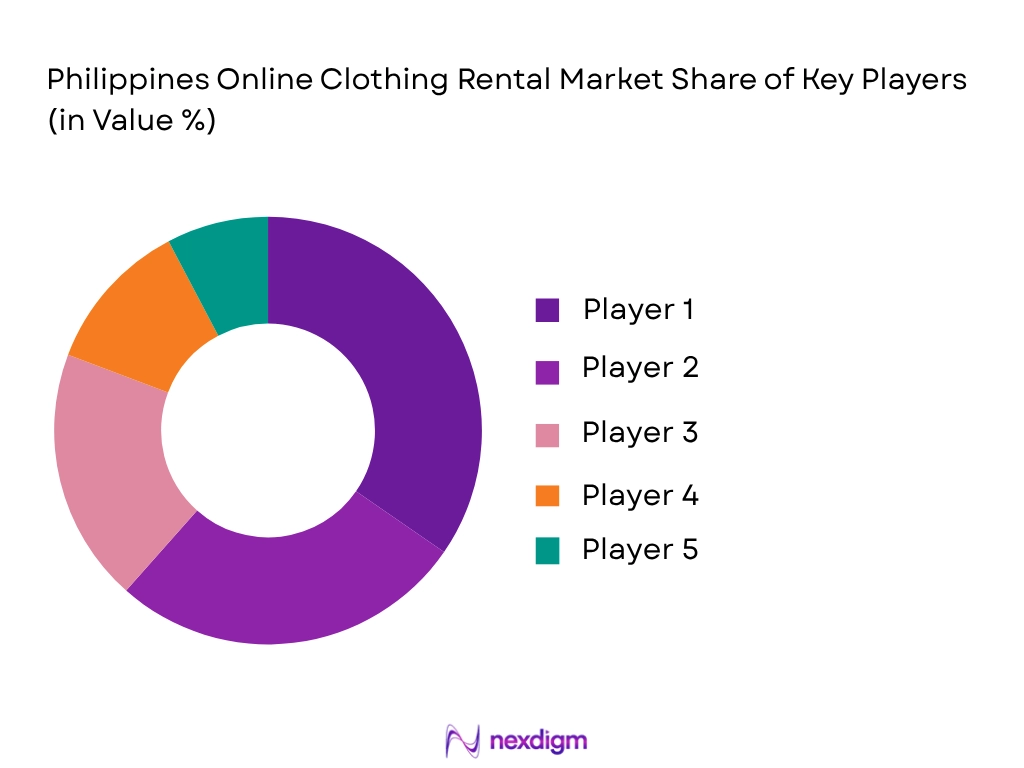
The Philippines Online Clothing Rental market is dominated by a few key players such as Style Theory, Rent-A-Closet, and ThredUp Philippines. This consolidation underscores the influence of established companies that benefit from strong brand recognition, strategic partnerships with local designers, and optimized logistics networks. These players offer subscription-based models, premium collections, and digital app platforms that improve user experience and market penetration.
| Company | Year Established | Headquarters | Revenue (USD mn) | Distribution Network | Number of Customers | Product Range | Logistics Capability | Technology Adoption |
| Style Theory | 2016 | Manila, Philippines | ~ | ~ | ~ | ~ | ~ | ~ |
| Rent-A-Closet | 2018 | Manila, Philippines | ~ | ~ | ~ | ~ | ~ | ~ |
| Closet Space | 2017 | Cebu, Philippines | ~ | ~ | ~ | ~ | ~ | ~ |
| ThredUp Philippines | 2015 | Manila, Philippines | ~ | ~ | ~ | ~ | ~ | ~ |
| LuxeCloset | 2019 | Davao, Philippines | ~ | ~ | ~ | ~ | ~ | ~ |
Philippines Online Clothing Rental Market Analysis
Growth Drivers
Rising Awareness of Sustainable Fashion
The Philippines Online Clothing Rental market is significantly driven by rising awareness of sustainable fashion. Consumers are increasingly preferring renting outfits instead of purchasing new clothing to reduce environmental impact. Campaigns promoting eco-friendly and circular fashion practices encourage adoption of rental models for occasional, formal, and designer wear. With widespread smartphone adoption and improved internet connectivity, consumers can browse, rent, and return clothing conveniently. Platforms offering seamless app interfaces, real-time availability updates, and flexible subscription plans have further strengthened market adoption, ensuring consistent engagement from urban and digitally active audiences.
Increased Internet and Mobile Penetration
Social media influencer culture and increased internet penetration are key drivers of the market. Influencers showcasing premium and designer outfits motivate consumers to try rental services instead of buying expensive clothing. Urban consumers benefit from convenience and cost savings, renting luxury or designer collections for events without ownership. Event-specific demand, such as weddings, corporate functions, and parties, enhances growth. Online platforms offering flexible delivery, returns, and styling recommendations further increase adoption. This combination of digital accessibility and social media influence ensures high engagement with rental platforms, particularly among young, trend-conscious consumers.
Market Challenges
Concerns Over Hygiene and Cleanliness
Concerns about hygiene and cleanliness remain significant challenges for the Philippines Online Clothing Rental market. Consumers hesitate to rent due to fears of poor maintenance, contamination, or insufficient cleaning. This is particularly relevant for formal and designer collections, where perceived cleanliness affects purchase decisions. Platforms must invest in professional cleaning, quality inspections, and transparent communication to maintain trust. In addition, logistical and last-mile delivery issues in congested cities and remote areas can impact reliability. Efficient delivery, real-time tracking, and prompt returns are crucial to maintaining customer satisfaction and ensuring repeat usage.
High Competition Among Local Startups
High competition among local startups presents another challenge. Numerous new entrants offering niche collections, lower pricing, or app-based services create market fragmentation, making customer retention difficult. Limited awareness among older demographics restricts market expansion beyond tech-savvy urban populations. Seasonal demand fluctuations, such as lower activity during non-event periods, further strain inventory management and revenue stability. Platforms must develop targeted marketing strategies, diversify product offerings, and implement flexible subscription or loyalty programs to address these challenges and sustain growth in the competitive market.
Opportunities
Expansion of Eco-Friendly and Sustainable Fashion Rentals
Expansion of eco-friendly and sustainable fashion rentals offers significant opportunities. As consumer interest in circular fashion grows, platforms can introduce collections using sustainable materials, recycled fabrics, and environmentally responsible cleaning processes. This appeals to environmentally conscious consumers and differentiates services in a competitive market. Integration of AI for personalized recommendations enables tailored outfit suggestions, style guidance, and size recommendations, enhancing user experience and increasing rental frequency. Combining sustainability initiatives with technology-driven personalization allows rental platforms to attract new demographics while fostering long-term growth in urban and high-income segments.
Integration of AI and Virtual Try-On Technologies
Collaborations with local designers present opportunities for differentiation and market expansion. Platforms can offer exclusive collections for consumers seeking unique and premium fashion experiences, strengthening brand positioning and promoting local talent. Growth of virtual try-on technologies allows consumers to visualize outfits before renting, reducing returns and dissatisfaction. Subscription-based rental models provide predictable revenue streams, convenience, and curated fashion experiences. Together, these innovations create a robust growth environment for rental platforms, meeting evolving consumer expectations and expanding adoption across diverse urban markets in the Philippines.
Future Outlook
Over the next five years, the Philippines Online Clothing Rental market is expected to exhibit substantial growth driven by rising demand for sustainable fashion, increasing urbanization, and the expansion of digital platforms enabling convenient rentals. Consumer preference for premium and designer clothing on a rental basis, coupled with innovative technology integration such as AI-powered styling and virtual fitting rooms, will continue to fuel market expansion. Strategic partnerships with local designers and subscription models will further enhance adoption among urban consumers.
Major Players
- Style Theory
- Rent-A-Closet
- Closet Space
- ThredUp Philippines
- LuxeCloset
- MyWardrobePH
- Havenly Closet
- Glamour Rental
- Rewearable
- OutfitShare
- Closet Collective
- WardrobeHub
- EventWearPH
- DressShare
- ClosetCulture
Key Target Audience
- Individual Fashion-Conscious Consumers
- Event Planners
- Corporate Clients
- Luxury Brand Enthusiasts
- Wedding and Party Service Providers
- Investments and Venture Capitalist Firms
- Government and Regulatory Bodies
- Online Marketplace Operators
Research Methodology
Step 1: Identification of Key Variables
The initial phase involves constructing an ecosystem map encompassing all major stakeholders within the Philippines Online Clothing Rental Market. This step is underpinned by extensive desk research, utilizing secondary databases to gather comprehensive industry-level information and to identify variables influencing market growth.
Step 2: Market Analysis and Construction
Historical data relating to market penetration, revenue generation, and subscription trends are compiled and analyzed. This step evaluates the adoption of rental services, customer preferences, and demand patterns to estimate market potential accurately.
Step 3: Hypothesis Validation and Expert Consultation
Market hypotheses are developed and validated through interviews with industry experts, including platform operators, designers, and logistics partners. Insights from these consultations help refine data, identify emerging trends, and understand operational challenges.
Step 4: Research Synthesis and Final Output
The final phase integrates primary and secondary data to generate a validated market size, growth projections, and segment-level insights. Engagement with multiple rental platforms ensures accuracy, providing a holistic view of market dynamics and future opportunities.

- Executive Summary
- Research Methodology (Market Definitions and Assumptions, Abbreviations, Market Sizing Approach, Consolidated Research Approach, Understanding Market Potential Through In-Depth Industry Interviews, Primary Research Approach, Limitations and Future Conclusions)

- Definition and Scope
- Market Dynamics Overview
- Market Genesis and Evolution
- Key Players and Market Timeline
- Business Cycle and Trends
- Supply Chain and Value Chain Analysis

- Growth Drivers
Rising Awareness of Sustainable Fashion
Increased Internet and Mobile Penetration
Growth of Social Media Influencer Culture
Convenience and Cost Savings Compared to Ownership
Demand for Occasional and Event-Specific Outfits - Market Challenges
Concerns Over Hygiene and Cleanliness
Logistical and Last-Mile Delivery Issues
High Competition Among Local Startups
Limited Awareness Among Older Demographics
Seasonal Demand Fluctuations - Opportunities
Expansion of Eco-Friendly and Sustainable Fashion Rentals
Integration of AI for Personalized Recommendations
Collaborations with Local Designers
Growth of Virtual Try-On Technologies
Subscription-Based Rental Models - Trends
Shift Toward Sustainable and Circular Fashion
Personalized Styling and Fit Services
Emergence of Luxury and Designer Rental Segments
Mobile App-First Rental Experiences
Integration of Data Analytics for Inventory Optimization - Government Regulations
Import and Textile Regulations
Health and Safety Standards for Garments
Environmental Regulations (Recycling and Waste Management)
Consumer Protection and Rental Agreement Standards
Taxation and Duties on Imported Clothing - SWOT Analysis
- Porter’s Five Forces

- By Value, 2020–2025
- By Volume, 2020–2025
- By Average Rental Price, 2020–2025

- By Product Category Type (In Value %)
Formal Wear
Casual Wear
Party/Evening Wear
Designer Collections
Accessories - By Clothing Type (In Value %)
Dresses
Tops and Shirts
Bottoms
Outerwear
Footwear - By Material Type (In Value %)
Cotton
Synthetic Fabrics
Silk and Satin
Blends and Mixed Materials - By Usage Type (In Value %)
Special Occasions
Everyday/Workwear
Events and Parties - By End User (In Value %)
Individual Consumers
Fashion Enthusiasts
Corporate Clients
Event Planners

- Market Share of Major Players by Value/Volume
- Market Share of Major Players by Product Type
- Market Share of Major Players by Clothing Type
- Cross Comparison Parameters (Company Overview, Business Strategies, Recent Developments, Strengths, Weaknesses, Organizational Structure, Revenues, Revenues by Product Type, Distribution Channels, Partner Networks, Logistics Capabilities, Unique Value Offerings)
- SWOT Analysis of Major Players
- Pricing Analysis Based on Product Categories for Major Players
- Detailed Profiles of Major Companies
Style Theory
Rent-A-Closet
Closet Space
ThredUp Philippines
LuxeCloset
MyWardrobePH
Havenly Closet
Glamour Rental
Rewearable
OutfitShare

- Market Demand and Utilization
- Purchasing Power and Budget Allocations
- Regulatory and Compliance Requirements
- Needs, Desires, and Pain Point Analysis
- Decision-Making Process

- By Value, 2026–2035
- By Volume, 2026–2035
- By Average Rental Price, 2026–2035


 Request a Sample
 Ask for Customization
 Get a Quote
 Enquire Now