
 Download PDF
Market Overview
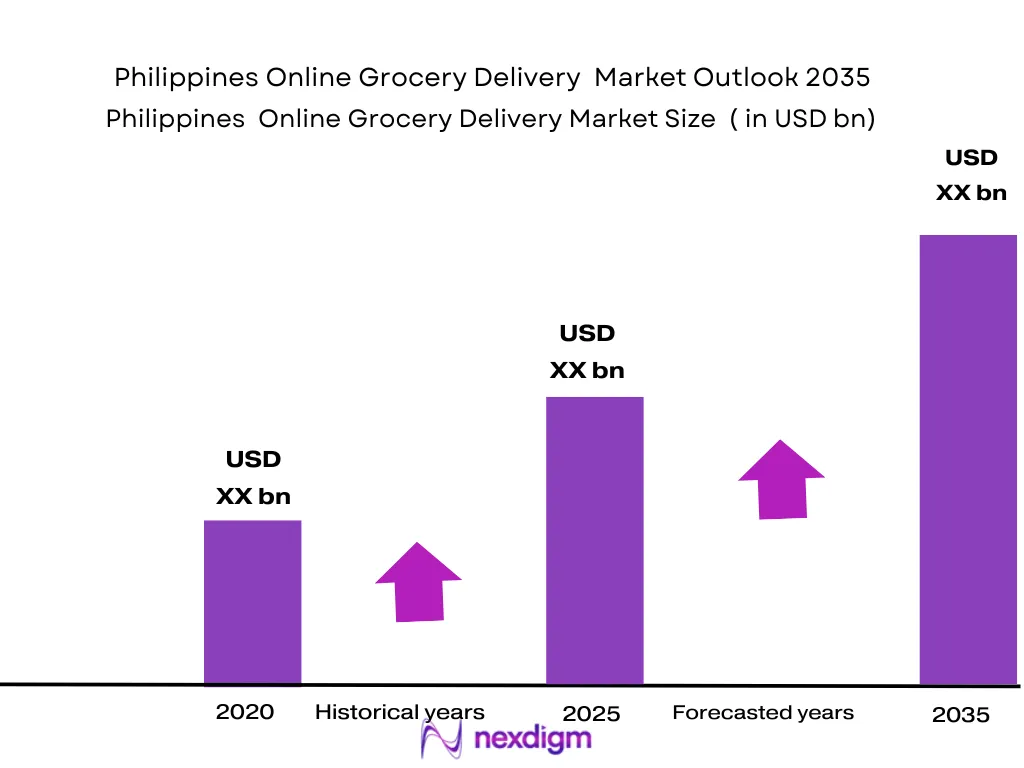
The Philippines Online Grocery Delivery Market is valued at approximately USD ~ billion. This valuation stems from an accelerated shift towards digital grocery shopping, with the expansion of internet access and mobile penetration. The market is driven by growing consumer preference for convenience, increased disposable income, and rising demand for contactless shopping post-pandemic. Furthermore, the COVID-19 pandemic played a key role in pushing more customers towards online platforms, setting a strong foundation for continued growth.
Metro Manila dominates the Philippines online grocery delivery market due to its dense urban population and higher internet penetration. The region’s preference for online shopping, driven by convenience, has led to an increase in demand for delivery services. Cities like Quezon City, Makati, and Taguig are key players in the market as they house large urban populations, a higher concentration of working professionals, and tech-savvy consumers, contributing to a significant demand for online grocery platforms.
Market Segmentation
By Service Type
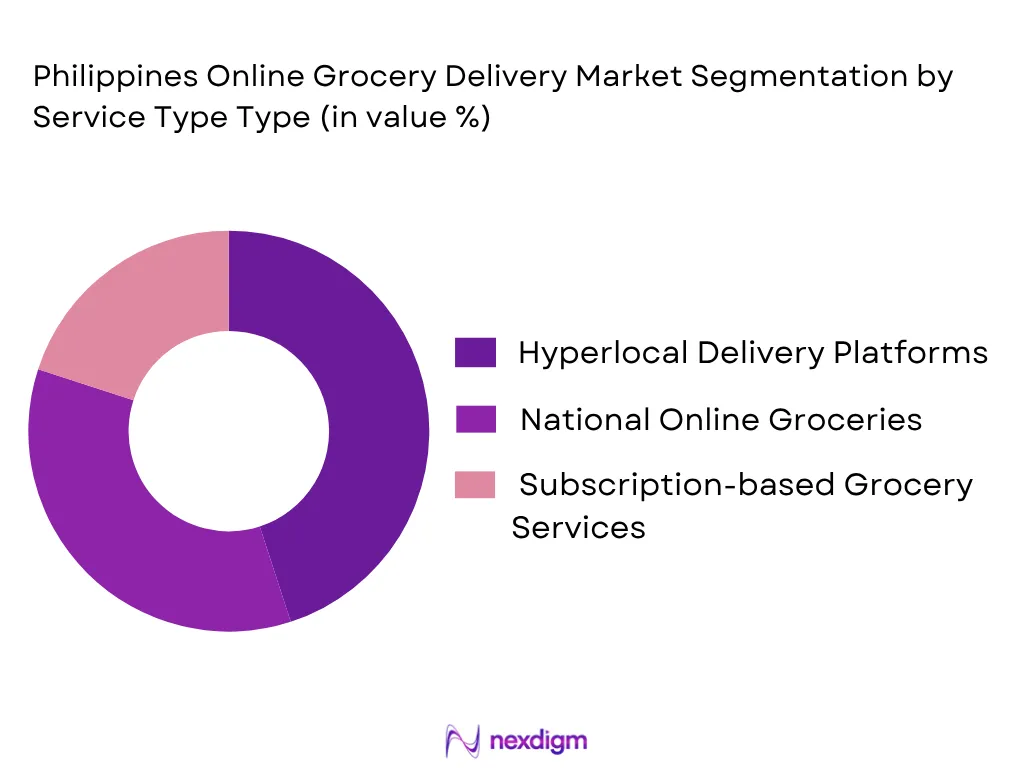
The Philippines Online Grocery Delivery Market is segmented by service type into hyperlocal delivery platforms, national online grocery services, and subscription-based models. Among these, hyperlocal delivery platforms dominate the market due to their ability to provide faster and more convenient service within a specific geographic area. Platforms like MetroMart and GrabMart have established a solid presence by offering quick deliveries, local product availability, and a seamless user experience, meeting the demands of busy urban consumers who seek instant access to groceries and other essentials. This ability to deliver within hours, often using local stores, has created a strong consumer base and ensures consistent growth in the hyperlocal segment.
By Product Category
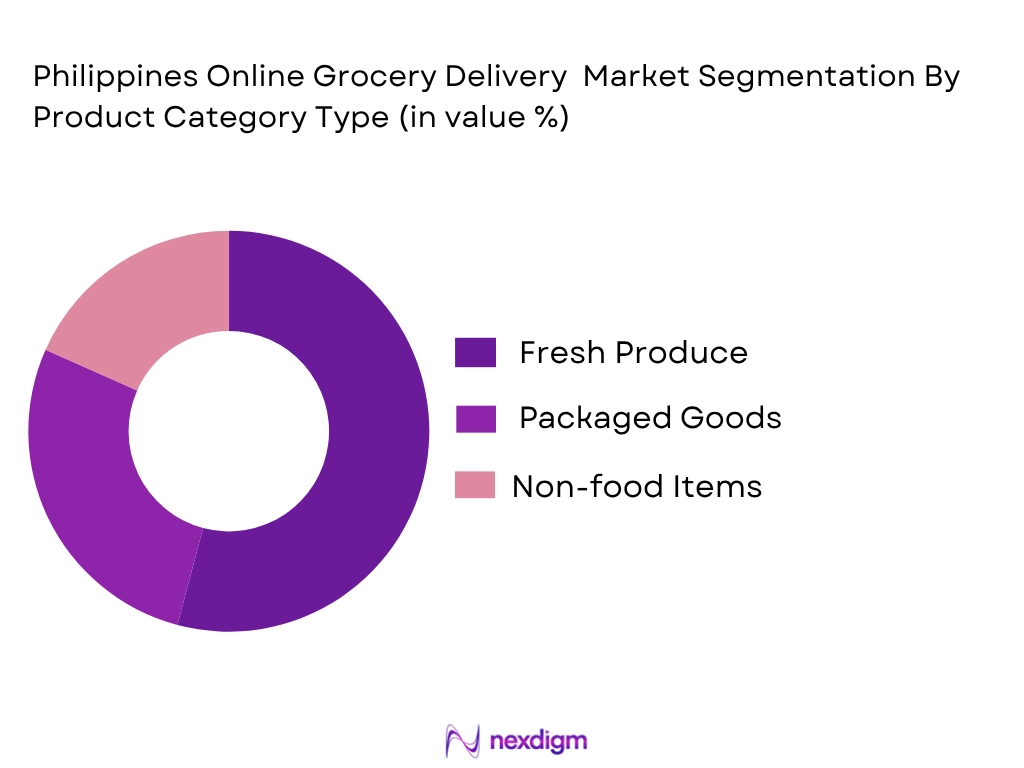
In terms of product categories, fresh produce leads the Philippines online grocery delivery market, primarily driven by consumer demand for organic and healthy food options. Fresh fruits, vegetables, and organic items are increasingly purchased online, as consumers prioritize health and wellness, a trend exacerbated by the pandemic. The availability of fresh groceries on platforms like Lazada and Shopee has led to a surge in online purchases. The ease of access to fresh items and the growing popularity of healthier eating have made this segment a key revenue generator in the market.
Competitive Landscape
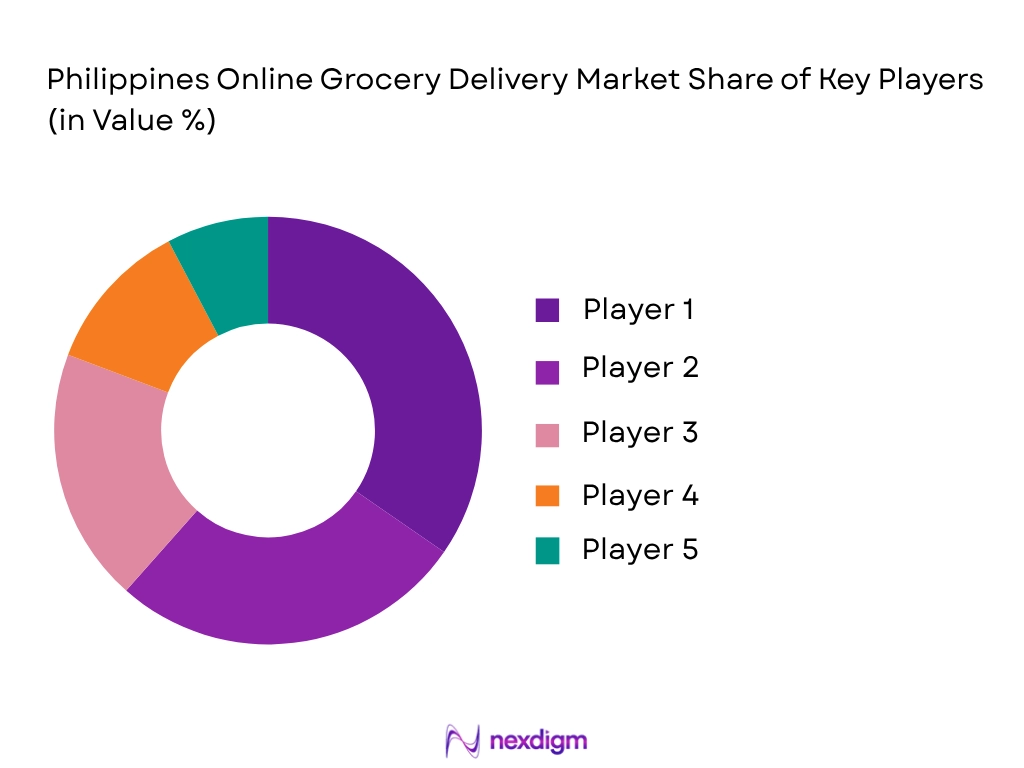
The Philippines Online Grocery Delivery Market is dominated by a mix of local and international players, with significant competition emerging between platforms like MetroMart, GrabMart, and Lazada Express. The presence of well-established local brands like Puregold and Robinsons Supermarket also strengthens the competitive dynamics. These companies compete on the basis of delivery speed, product variety, and ease of use. The market is characterized by intense competition as players continually seek to enhance user experience through features such as subscription services, tailored offers, and rapid delivery times. The consolidation of services by these major players is expected to shape the competitive landscape for years to come.
| Company Name | Establishment Year | Headquarters | Service Portfolio | Geographic Reach | Revenue Mix | Technology Adoption | Customer Satisfaction |
| MetroMart | 2016 | Makati, Philippines | ~ | ~ | ~ | ~ | ~ |
| GrabMart | 2012 | Singapore | ~ | ~ | ~ | ~ | ~ |
| Lazada Express | 2012 | Manila, Philippines | ~ | ~ | ~ | ~ | ~ |
| Puregold Online | 1998 | Manila, Philippines | ~ | ~ | ~ | ~ | ~ |
| Robinsons Supermarket | 1972 | Quezon City, Philippines | ~ | ~ | ~ | ~ | ~ |
Philippines Online Grocery Delivery Market Analysis
Growth Drivers
Increasing Digital Penetration and Smartphone Usage
The rapid growth in digital penetration and smartphone usage in the Philippines has significantly contributed to the expansion of the online grocery delivery market. As mobile phone usage continues to increase, more consumers are shifting to mobile-based platforms for their shopping needs. With over 70 million internet users in the country, a large portion of the population now has access to online shopping, including groceries. This shift is fueled by better mobile network infrastructure, user-friendly apps, and the growing familiarity of consumers with e-commerce platforms. The increasing reliance on smartphones has made it easier for consumers to order groceries online, especially in urban areas where busy lifestyles demand convenience.
Rising Urbanization and Changing Lifestyles
Urbanization in the Philippines has rapidly transformed the lifestyle of its population, creating a larger consumer base for online grocery services. With cities like Metro Manila experiencing rapid population growth, there is a clear demand for convenience and time-saving solutions. Busy urban dwellers prefer ordering groceries online to save time and effort. This shift is driven by the need to adapt to fast-paced lives, where work and family commitments limit time for traditional grocery shopping. Additionally, urban residents have better access to internet services, making it easier for them to engage with online grocery platforms. The growing number of working professionals in cities further supports this trend.
Challenges
Logistics and Supply Chain Constraints
Logistics and supply chain management are significant challenges in the Philippines online grocery delivery market. The country’s geographical layout, consisting of over 7,000 islands, complicates delivery operations, especially in remote areas. Ensuring timely and cost-effective delivery across both urban and rural locations remains a logistical challenge. Additionally, the limited infrastructure in some areas, coupled with traffic congestion in urban centers, adds complexity to supply chain operations. For online grocery businesses to succeed, they must invest in efficient logistics systems, improve delivery networks, and address the challenges posed by the country’s infrastructure limitations to ensure a seamless customer experience.
High Operational Costs
Operational costs are another key challenge facing the Philippines online grocery delivery market. The cost of maintaining an efficient delivery fleet, managing inventory, and ensuring the quality of goods are high expenses for online grocery platforms. Additionally, marketing and acquiring new customers in a highly competitive market further increase operational expenses. For smaller players, this can be a significant hurdle, as they may lack the financial resources to build a sustainable business model. As consumer demand for fast, reliable service continues to grow, businesses will need to streamline operations and improve cost efficiency to stay competitive without sacrificing service quality.
Market Opportunities
Expansion into Rural Areas
The online grocery delivery market in the Philippines is heavily concentrated in urban areas, but there is significant opportunity for growth in rural regions. As internet infrastructure improves and smartphone penetration increases in less-developed areas, there is a growing potential for online grocery services to reach rural consumers. Expansion into these areas would require localized delivery systems, partnerships with regional vendors, and customization of services to cater to local preferences. Companies that focus on addressing logistical challenges and building trust with rural consumers can tap into this underserved market. As e-commerce adoption rises across the country, rural areas will become an increasingly important growth frontier for online grocery services.
Partnerships with Local Farmers and Producers
A major opportunity in the Philippines online grocery delivery market is the development of partnerships with local farmers and producers. Collaborating with these local sources can offer consumers access to fresher and more affordable products, which is a growing demand in the market. By sourcing directly from farms, grocery platforms can differentiate themselves by providing organic and locally produced goods, which are becoming more popular due to rising health and wellness trends. Additionally, such partnerships can reduce supply chain costs, improve the sustainability of delivery services, and support the local economy. Establishing strong relationships with regional producers will position companies to offer a competitive edge in the growing market.
Future Outlook
Over the next few years, the Philippines Online Grocery Delivery Market is expected to continue its upward trajectory, driven by the increasing digitalization of the retail sector and rising demand for convenience. The adoption of mobile apps and digital platforms is expected to enhance consumer shopping experiences, while the continued growth in internet penetration and mobile usage will further accelerate market expansion. Key factors such as improving delivery infrastructure, rising consumer preference for fresh products, and better consumer awareness of online shopping options will foster the market’s future growth. As companies diversify their offerings and enhance customer satisfaction, the market is poised for robust development through 2030.
Major Players
- MetroMart
- GrabMart
- Lazada Express
- Puregold Online
- Robinsons Supermarket
- S&R Membership Shopping
- ShopeeFood
- The Green Grocer
- FreshDirect
- GCash
- Super8 Grocery Warehouse
- ALDI Philippines
- Waltermart
- Family Mart
- 7-Eleven
Key Target Audience
- Retailers
- E-commerce Platforms
- Investments and Venture Capitalist Firms
- Government and Regulatory Bodies
- Supermarket Chains
- Logistics and Delivery Service Providers
- Technology Solution Providers
- Consumers with Higher Disposable Incomes
Research Methodology
Step 1: Identification of Key Variables
This initial phase involves mapping out key variables that drive the Philippines Online Grocery Delivery Market. Using secondary research, we define factors influencing growth such as consumer trends, internet penetration, and grocery shopping behavior. The goal is to establish a comprehensive understanding of the market ecosystem, which includes understanding the influence of demographic shifts and urbanization.
Step 2: Market Analysis and Construction
In this phase, we analyze historical data to gain insights into market penetration, consumer behavior, and financial performance of major players. This includes studying key growth factors such as mobile shopping trends, logistical improvements, and the rise in demand for organic products. We utilize both primary and secondary research sources for this phase.
Step 3: Hypothesis Validation and Expert Consultation
Industry experts, including key executives and business owners, will be consulted through interviews to validate market assumptions. This step involves refining data based on practical insights from industry leaders and market specialists. The expert consultation will focus on operational efficiency, consumer trends, and technological integration.
Step 4: Research Synthesis and Final Output
The final output synthesizes findings from various research phases to deliver actionable insights on market segmentation, competitive landscape, and growth drivers. This phase includes in-depth interaction with market players and stakeholders to ensure data accuracy and market relevance.

- Executive Summary
- Research Methodology (Market Definitions and Assumptions, Abbreviations and Acronyms, Market Sizing Approach, Primary Research Framework, Consolidated Research Approach, Market Forecasting Techniques, Limitations of Study and Future Conclusions)

- Definition and Service Scope
- Market Genesis and Evolution of Online Grocery Models
- Macro Consumer Trends and Digital Shopping Behavior
- Integration of Online Grocery with Other Delivery Services
- Impact of Economic Factors on Online Grocery Demand

- Growth Drivers
Increasing Digital Penetration and Smartphone Usage
Rising Urbanization and Changing Lifestyles
Growing Preferences for Convenience and Time-Saving
Impact of COVID-19 on Online Shopping Habits
Rising Demand for Health and Wellness Products - Challenges
Logistics and Supply Chain Constraints
High Operational Costs
Competition from Traditional Retailers and Local Markets
Consumer Concerns Over Product Quality and Freshness - Market Opportunities
Expansion into Rural Areas
Partnerships with Local Farmers and Producers
AI and Personalization in Grocery Shopping
Integration with E-commerce Platforms and Retail Giants - Market Trends
Shift Toward Fresh and Organic Produce Online
Increased Focus on Hyperlocal Delivery and Quick Service
Subscription-based and Membership Models
Integration with Smart Appliances and IoT for Grocery Management
Flexible Payment and Delivery Options - Government and Regulatory Environment
E-commerce and Online Delivery Regulations
Food Safety and Hygiene Standards
Data Privacy and Consumer Protection Laws - SWOT Analysis
- Stakeholder Ecosystem Mapping
- Porter’s Five Forces Analysis
- Service Delivery Cost Structure Dynamics

- By Revenue, 2020-2025
- By Order Volume, 2020-2025
- By Delivery Area, 2020-2025
- By Average Revenue Per User, 2020-2025
- By Digital Engagement Index, 2020-2025

- By Service Category (In Value %)
Hyperlocal Delivery Platforms
National Online Groceries
Subscription-based Grocery Services
- By Product Category (In Value %)
Fresh Produce
Packaged Goods
Non-food Items - By Consumer Segment (In Value %)
Millennials
Gen X
Baby Boomers
Rural Consumers
Urban Consumers - By Order Type (In Value %)
Regular Orders
One-time Orders
Subscription Orders
Bulk Orders
Express Delivery Orders - By Distribution Channel (In Value %)
Direct Orders through Online Platforms
Third-party Delivery Aggregators
Mobile App-based Orders
Partnerships with Supermarkets and Retail Chains - By Geography (In Value %)
Metro Manila
Luzon
Visayas
Mindanao

- Market Share Analysis
- Cross Comparison Parameters (Company Overview, Business Strategies & Growth Models, Service Portfolio Breadth, Geographic Footprint, Revenue Mix by Service Category, Membership Economics, Pricing Models and SKU Mapping, Delivery Timeliness and Efficiency Metrics, Brand Equity Index, Partnerships & Alliances, Technology Adoption and Innovation, Workforce Base & Customer Service)
- SWOT Analysis of Major Competitors
- Pricing Benchmarking Across Service Formats
- Detailed Profiles of Key Market Players
Profiles of Key Competitors
Lazada Express
MetroMart
GrabMart
Puregold
Shopee
The Green Grocer
Honestbee (if applicable)
Robinsons Supermarket
S&R Membership Shoppin

- Market Demand by Consumer Segment
- Service Consumption Patterns
- Order Frequency and Order Size Analytics
- Price Sensitivity and Willingness to Pay
- Decision Drivers and Pain Points

- By Revenue, 2026-2035
- By Order Volume, 2026-2035
- By Delivery Area, 2026-2035
- By Average Revenue Per User, 2026-2035
- By Digital Engagement Index, 2026-2035


 Request a Sample
 Ask for Customization
 Get a Quote
 Enquire Now