

 Download PDF
Market Overview
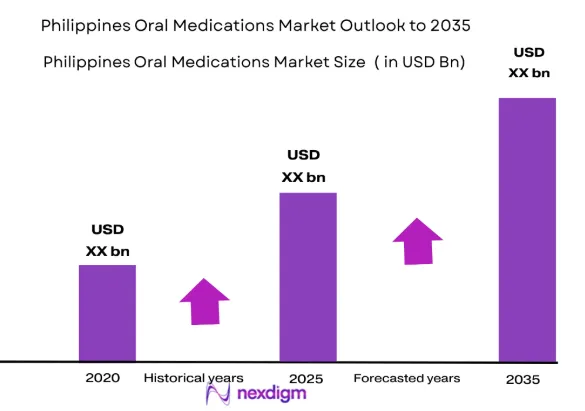
The Philippines Oral Medications market has demonstrated robust growth driven by increasing demand for both prescription and over-the-counter pharmaceutical products. The market is valued at approximately USD ~ billion based on a recent historical assessment. Factors contributing to this growth include advancements in drug formulation technologies, the rising prevalence of chronic and lifestyle-related diseases, and a growing population seeking accessible and affordable treatment solutions. Furthermore, government-led initiatives under the Universal Health Care Act and the expanding reach of community pharmacies have played a significant role in broadening market access.
The market’s strength is concentrated in Metro Manila and rapidly urbanizing regions such as Cebu, Davao, and Central Luzon, where access to modern healthcare facilities and retail pharmacy networks is most developed. These regions benefit from a high concentration of hospitals, licensed drugstores, and growing e-pharmacy platforms, providing residents with convenient access to a comprehensive range of oral medications. The Philippines’ regulatory environment, anchored by the Food and Drug Administration (FDA) Philippines, along with the government’s push for generic drug adoption under the Generics Act, further supports the widespread availability and affordability of oral medications across the archipelago.
Market Segmentation
By Drug Type
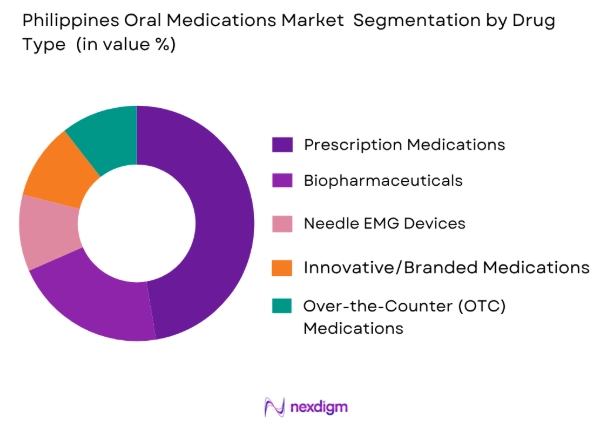
The Philippines Oral Medications market is segmented by drug type into prescription medications, over-the-counter (OTC) medications, generic medications, innovative/branded medications, and biopharmaceuticals. Currently, generic medications hold a dominant market share due to government mandates promoting affordability, strong policy support from the Department of Health (DOH), and widespread consumer acceptance. The Generics Act of 1988 and subsequent Universal Health Care legislation have significantly accelerated the adoption of quality-assured generic oral drugs across both public and private health sectors, making them the cornerstone of medication procurement by hospitals, clinics, and retail pharmacies throughout the country.
By Platform Type
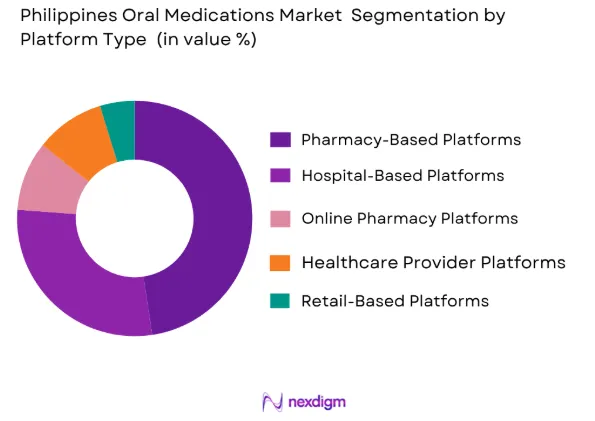
The Philippines Oral Medications market is segmented by platform type into pharmacy-based platforms, hospital-based platforms, online pharmacy platforms, healthcare provider platforms, and retail-based platforms. Pharmacy-based platforms currently dominate the market due to their widespread presence across both urban and rural communities, established consumer trust, and efficient inventory management capabilities. Traditional brick-and-mortar pharmacies such as Mercury Drug, Rose Pharmacy, and Generika remain the primary access points for oral medications nationwide. However, online pharmacy platforms are experiencing accelerated growth, fueled by increased internet penetration, the rise of health-tech startups, and evolving consumer preferences for convenient digital healthcare solutions.
Competitive Landscape
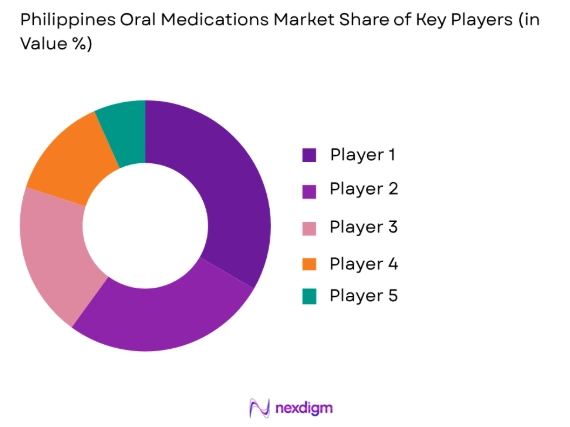
The competitive landscape of the Philippines Oral Medications market is highly dynamic, with consolidation occurring through strategic partnerships, licensing agreements, and an increasing presence of multinational pharmaceutical companies. Major players in the market are focusing on expanding their product portfolios, investing in local manufacturing capacities, and enhancing distribution networks to cater to the rising demand for affordable and innovative oral medications. These companies sustain their market positions by investing in research and development, pursuing regulatory compliance with FDA Philippines standards, and offering product lines that serve both the branded and generic segments of the market.
| Company Name | Establishment Year | Headquarters | Technology Focus | Market Reach | Key Products | Revenue (USD) | Key Technology |
| Alcon | 1945 | Geneva, Switzerland | ~ | ~ | ~ | ~ | ~ |
| Johnson & Johnson Vision | 1886 | New Jersey, USA | ~ | ~ | ~ | ~ | ~ |
| Ziemer Ophthalmic Systems | 2003 | Switzerland | ~ | ~ | ~ | ~ | ~ |
| Carl Zeiss Meditec | 1846 | Oberkochen, Germany | ~ | ~ | ~ | ~ | ~ |
| Bausch + Lomb | 1853 | New Jersey, USA | ~ | ~ | ~ | ~ | ~ |
Philippines Oral Medications Market Analysis
Growth Drivers
Increasing Healthcare Access
The Philippines has seen significant strides in improving healthcare access, primarily driven by the implementation of the Universal Health Care Act, which guarantees coverage for all Filipinos under the PhilHealth system. In 2024, the Philippine government expanded health insurance coverage to nearly 93% of the population, providing financial relief and facilitating easier access to essential healthcare services, including oral medications. With this broadening coverage, Filipinos now face fewer financial barriers to seeking medical treatment and acquiring medications, thus contributing to higher utilization of oral drug therapies for both acute and chronic conditions. This growth in access directly supports the demand for oral medications nationwide.
Government Initiatives for Affordable Medication
The Philippine government has made notable efforts to ensure the affordability of medicines, primarily through the implementation of policies like the National Drug Policy and the expanded use of the PhilHealth drug benefit packages. These initiatives, which directly cover the cost of essential oral medications, have increased the affordability and availability of drugs for the general public. In 2022, the government’s budget allocation for the Department of Health (DOH) reached USD 7.3 billion, further enabling public health programs that support subsidized and discounted medications. This supports higher medication access for Filipinos, enhancing demand in the oral medications market.
Challenges
Price Sensitivity of Consumers
Price sensitivity remains a significant barrier in the Philippines’ oral medications market. Despite improvements in healthcare access, many Filipino consumers continue to face affordability challenges, especially in rural areas where income levels are lower. The average monthly income of Filipino households is estimated at USD 500, and healthcare costs often represent a significant financial burden. This price sensitivity affects the purchasing behavior of consumers, making them hesitant to spend on medications, even essential ones. The Philippine government’s ongoing efforts to reduce drug prices, such as the imposition of price ceilings on certain medicines, are crucial in addressing this challenge.
Regulatory Barriers in Drug Approvals
Regulatory hurdles remain one of the challenges faced by pharmaceutical companies seeking to introduce new oral medications to the Philippine market. The country’s Food and Drug Administration (FDA) requires comprehensive documentation and lengthy approval processes for new drug registrations, which can delay market entry and affect product availability. As of 2024, the Philippines’ FDA has been working to streamline drug approval processes, but these regulatory barriers still result in significant delays, which can affect the overall competitiveness and availability of new medications. These delays are particularly concerning in the rapidly evolving pharmaceutical sector.
Opportunities
Growth in E-commerce for Medication
The rise of e-commerce in the Philippines presents a significant opportunity for the oral medications market. In 2023, the Philippines had over 76 million internet users, with a growing number of consumers turning to online platforms to purchase medicines. Major e-commerce platforms like Lazada and Shopee have seen a rise in the sale of healthcare products, including oral medications. Online pharmacies have become a convenient way for consumers, especially in rural areas, to access essential medications. This shift toward digital health solutions is expected to continue, driving increased sales and distribution of oral drugs through e-commerce channels.
Increase in Preventive Healthcare
Preventive healthcare is gaining momentum in the Philippines, with increasing emphasis on early detection, lifestyle changes, and wellness programs. The Department of Health has been rolling out national campaigns aimed at reducing the burden of preventable diseases, including diabetes, hypertension, and obesity. This trend towards preventive care is driving the demand for preventive oral medications, such as those used for managing cholesterol, blood pressure, and blood sugar. As of 2024, the government and private sector are increasing investments in preventive health infrastructure, supporting an upsurge in consumer interest for medications aimed at preventing chronic diseases before they become severe
Future Outlook
The Philippines Oral Medications market is expected to experience strong and sustained growth through 2035, driven by continuous demographic expansion, increasing chronic disease burden, and progressive implementation of the Universal Health Care Act. Innovations in drug delivery systems, including extended-release oral formulations, fixed-dose combination tablets, and patient-friendly dispersible preparations, are expected to improve treatment adherence and generate premium market segments. Additionally, expanding access to healthcare services through rural health infrastructure investments and the proliferation of e-pharmacy platforms will drive market growth into previously underserved regions. Supportive regulatory reforms by FDA Philippines and rising awareness of preventive healthcare will contribute to the growing acceptance and utilization of both prescription and OTC oral medications, ensuring that the market remains robust and dynamic through the forecast horizon.
Key Players
- Unilab Inc.
- Pharmaceutical Products Development Co. Inc.
- GlaxoSmithKline Philippines
- AbbVie Inc.
- Pfizer Philippines
- Novartis Philippines
- Sanofi Philippines
- Merck Group Philippines
- Roche Philippines
- AstraZeneca Philippines
- Johnson & Johnson Philippines
- Bayer Philippines
- Lilly Philippines
- Eli Lilly and Company Philippines
- Biocare Manufacturing, Inc.
Key Target Audience
- Investments and venture capitalist firms
- Government and regulatory bodies
- Hospital procurement departments
- Private healthcare facilities
- Retail and online pharmacy chains
- Pharmaceutical manufacturers and distributors
- Health insurance companies (PhilHealth and private)
- Medical associations and professional bodies
Research Methodology
Step 1: Identification of Key Variables
Identification of the key variables influencing market dynamics, such as pharmaceutical policy trends, consumer behavior patterns, competitive landscape, and distribution channel evolution.
Step 2: Market Analysis and Construction
Analysis of market data, historical pharmaceutical sales trends, and key market segments to construct an accurate and comprehensive market model for the Philippines oral medications sector.
Step 3: Hypothesis Validation and Expert Consultation
Validation of market hypotheses with the assistance of industry experts, pharmacists, healthcare professionals, and key stakeholders, ensuring the accuracy and reliability of market forecasts and segmentation analyses.
Step 4: Research Synthesis and Final Output
Synthesis of all gathered primary and secondary data and expert insights to create a comprehensive, actionable final market outlook report for stakeholders across the Philippines pharmaceutical value chain.

- Executive Summary
- Research Methodology (Definitions, Scope, Industry Assumptions, Market Sizing Approach, Primary & Secondary Research Framework, Data Collection & Verification Protocol, Analytic Models & Forecast Methodology, Limitations & Research Validity Checks)

- Market Definition and Scope
- Value Chain & Stakeholder Ecosystem
- Regulatory / Certification Landscape
- Sector Dynamics Affecting Demand
- Strategic Initiatives & Infrastructure Growth

- Growth Drivers
Increasing Healthcare Access
Rising Prevalence of Chronic Diseases
Government Initiatives for Affordable Medication - Market Challenges
Price Sensitivity of Consumers
Regulatory Barriers in Drug Approvals
Counterfeit Medication Risks - Market Opportunities
Growth in E-commerce for Medication
Increase in Preventive Healthcare
Expansion of Generic Drug Availability - Trends
Shift Towards Preventive Medications
Rise of Digital Health Solutions
Preference for Self-Medication Among Consumers - Government Regulations
- SWOT Analysis of Key Competitors
- Porter’s Five Forces

- By Market Value, 2020-2025
- By Sales Volume, 2020-2025
- By Average Drug Price, 2020-2025
- By Drug Category Tier, 2020-2025

- By Drug Type (In Value%)
Prescription Medications
Over-the-Counter (OTC) Medications
Generic Medications
Innovative/Branded Medications
Biopharmaceuticals - By Platform Type (In Value%)
Pharmacy-Based Platforms
Hospital-Based Platforms
Online Pharmacy Platforms
Healthcare Provider Platforms
Retail-Based Platforms - By Dosage Form (In Value%)
Tablets and Capsules
Syrups and Oral Liquids
Effervescent and Dispersible Formulation
Lozenges and Chewables
Sachets and Powders - By End-User Segment (In Value%)
Hospitals
Retail Pharmacies
Online Pharmacies
Clinics & Outpatient Centers
Government Health Programs - By Procurement Channel (In Value%)
Direct Procurement
Wholesale Distribution
Retail Distribution
Online Distribution
Government Tenders

- Market Share Analysis
- Cross-Comparison Parameters (Market Share, Growth Rate, Regulatory Compliance, Distribution Network, Consumer Reach, Pricing Strategy, Product Innovation and Differentiation, Marketing and Advertising Reach, Partnerships and Collaborations, Customer Loyalty, Brand Recognition, Sales Channel Efficiency, Manufacturing Capabilities, Competitive Advantage, Supply Chain Resilience)
- SWOT Analysis of Key Competitors
- Pricing & Procurement Analysis
- Key Players
Unilab Inc.
Pharmaceutical Products Development Co. Inc.
GlaxoSmithKline Philippines
AbbVie Inc.
Pfizer Philippines
Novartis Philippines
Sanofi Philippines
Merck Group Philippines
Roche Philippines
AstraZeneca Philippines
Johnson & Johnson Philippines
Bayer Philippines
Lilly Philippines
Eli Lilly and Company Philippines
Biocare Manufacturing, Inc.

- Hospitals’ Role in Medication Consumption
- Retail Pharmacy Growth
- Online Pharmacy Adoption
- Impact of Government Programs on Market Reach

- By Market Value, 2026-2035
- By Sales Volume, 2026-2035
- By Average Drug Price, 2026-2035
- By Drug Category Tier, 2026-2035


 Request a Sample
 Ask for Customization
 Get a Quote
 Enquire Now