
 Download PDF
Market Overview
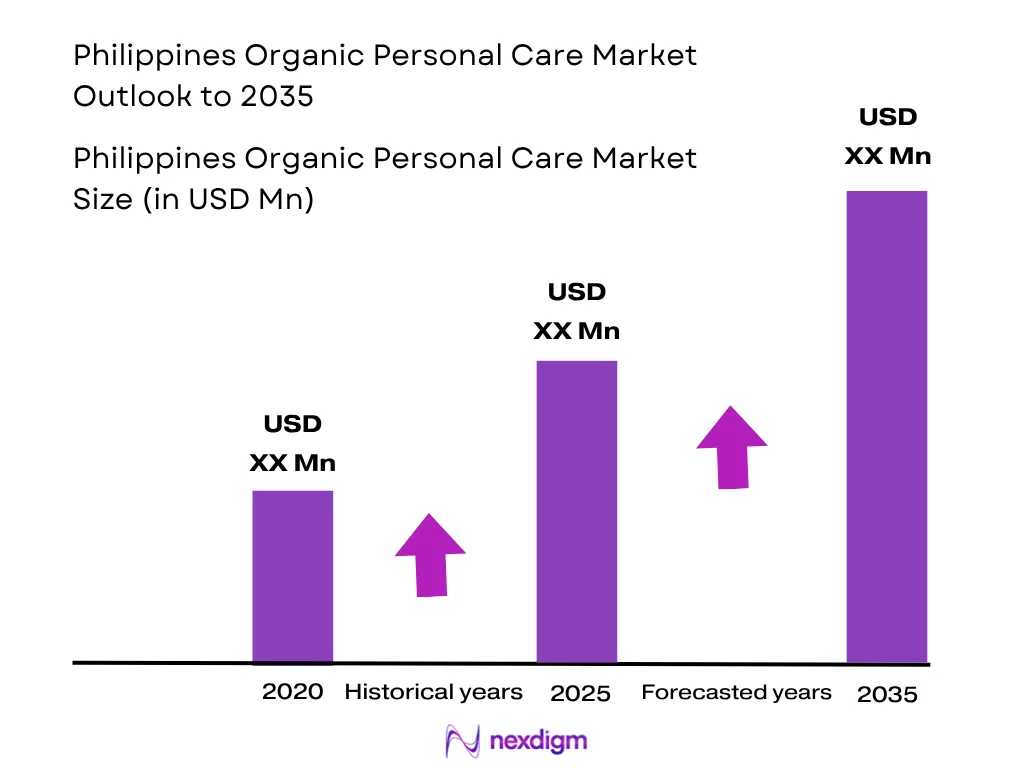
The Philippines organic personal care market is valued at approximately USD ~ million. This growth is primarily driven by the rising health and wellness consciousness among consumers, with a particular focus on organic and natural ingredients in beauty products. The increasing popularity of clean beauty trends, where consumers seek transparency and sustainability in their personal care products, is a major driver. Moreover, the surge in e-commerce has facilitated access to organic personal care products, making them more accessible to a broader consumer base. The market’s expansion is also supported by various government initiatives that promote sustainable and eco-friendly products.
Metro Manila dominates the Philippine organic personal care market due to its urbanization, high population density, and well-established retail networks, both physical and online. Additionally, cities like Cebu and Davao are emerging as significant markets owing to improved retail access, increased consumer awareness, and a growing middle-class population. These regions have benefited from the expanding beauty trends and the rising demand for organic products. Regional players and multinational companies, including those with strong e-commerce platforms, are strategically increasing their presence in these cities.
Market Segmentation
By Product Category
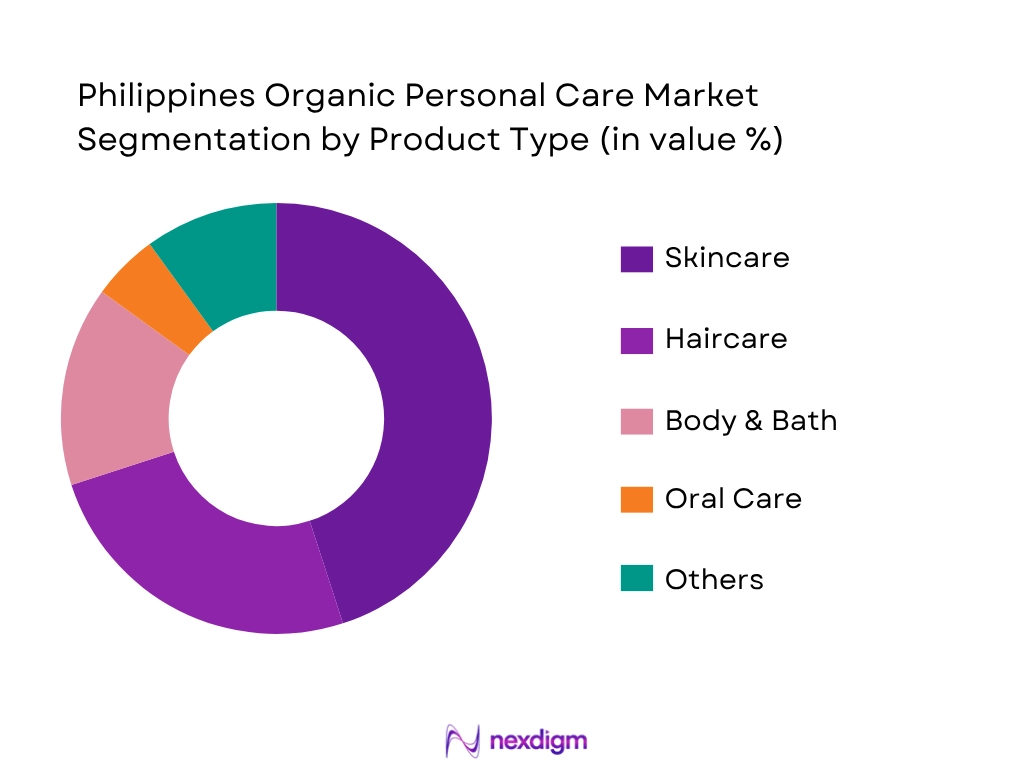
The Philippines organic personal care market is segmented by product category into skincare, haircare, body & bath, oral care, men’s grooming, baby care, and others. Skincare is the dominant segment in the market, driven by increasing awareness of the benefits of natural, paraben-free, and cruelty-free products. Within skincare, facial products like creams, serums, and masks have seen the highest demand. The skincare segment is favored by women consumers who are actively seeking products that promise healthier skin without harsh chemicals. This focus on clean beauty and the increasing adoption of organic ingredients are propelling the skincare category’s dominance.
By Consumer Group
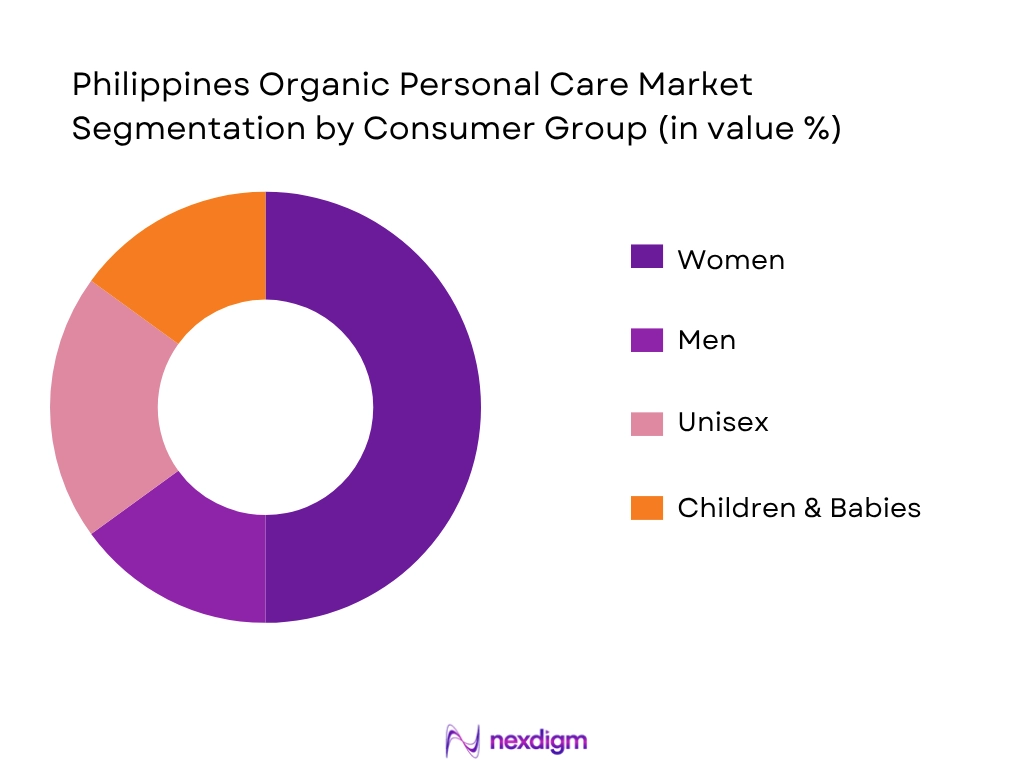
The market is also segmented by consumer group into women, men, unisex (gender-neutral), and children & babies. Women hold the largest market share due to their strong inclination toward skincare products. However, the unisex and children’s segments are growing rapidly as more parents seek safe, natural products for their children, and men are increasingly becoming aware of the benefits of organic grooming products. This demographic shift is leading to a rise in demand for gender-neutral products, as well as a greater focus on skincare in men’s grooming.
Competitive Landscape
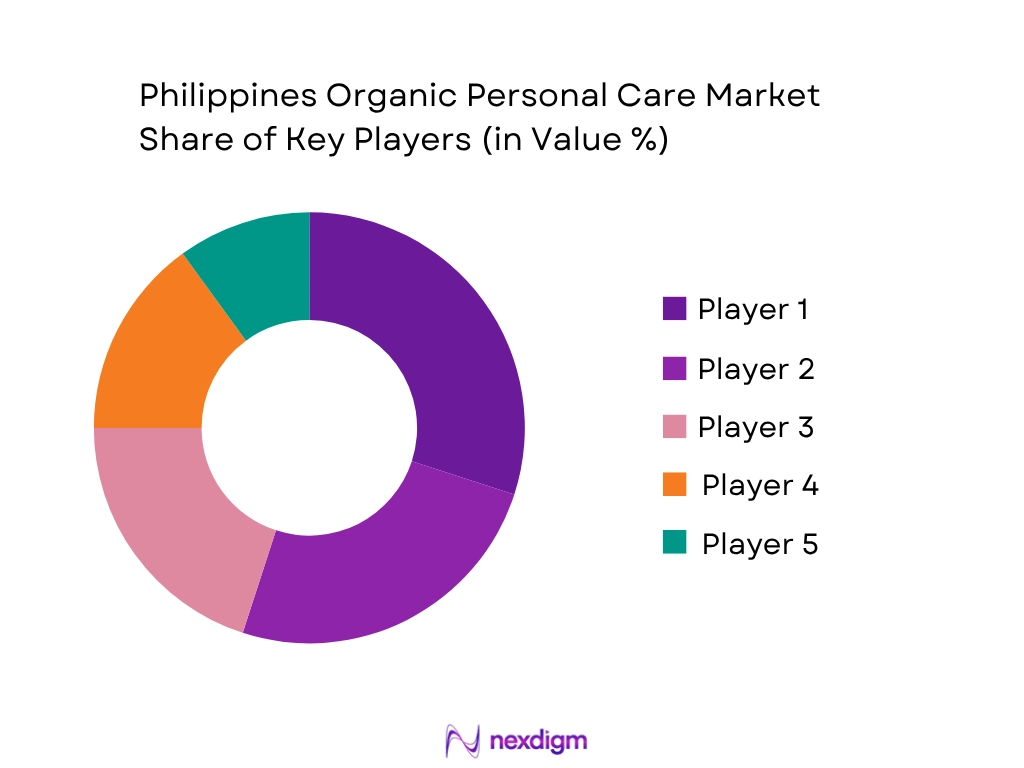
The Philippines organic personal care market is highly competitive, with several players driving the growth. Local brands like Human Nature and Zenutrients dominate the market alongside international brands such as The Body Shop and Lush. These brands compete through diverse product offerings, strong brand identities focused on sustainability, and their extensive distribution channels, including online and physical retail stores. Despite the high level of competition, no single player holds a dominant share, leaving room for niche brands to thrive.
| Company Name | Establishment Year | Headquarters | Product Categories | Certification & Quality | Distribution Channels | Market Positioning | Pricing Strategy |
| Human Nature | 2008 | Philippines | ~ | ~ | ~ | ~ | ~ |
| Zenutrients | 2009 | Philippines | ~ | ~ | ~ | ~ | ~ |
| The Body Shop | 1976 | UK | ~ | ~ | ~ | ~ | ~ |
| Lush | 1995 | UK | ~ | ~ | ~ | ~ | ~ |
| Snoe Beauty | 2010 | Philippines | ~ | ~ | ~ | ~ | ~ |
Philippines Organic Personal Care Market Analysis
Growth Drivers
Rising Health and Environmental Awareness
The increasing awareness about health and environmental issues is a key driver in the Philippines organic personal care market. In 2024, the Philippines faces a growing focus on sustainable and health-conscious living, with consumers more inclined to opt for products free from harmful chemicals. The Philippine government has implemented programs that promote eco-friendly living, encouraging citizens to adopt environmentally responsible habits. The rising health-conscious trend is further reflected in the steady growth of organic and clean products. The Philippine Department of Environment and Natural Resources (DENR) has set ambitious targets to reduce waste, supporting eco-friendly consumption behaviors across industries, including personal care products. Additionally, global health concerns such as the COVID-19 pandemic have increased demand for hygiene-focused, organic personal care solutions, with growing preference for paraben-free, sulfate-free, and cruelty-free products. According to data from the World Health Organization (WHO), health-focused behaviors and rising environmental consciousness have led to a notable increase in demand for natural products among Filipino consumers.
Rapid E-Commerce Adoption
E-commerce has become a major factor driving the organic personal care market in the Philippines. With internet penetration in the country reaching over 74% of the population in 2024, e-commerce platforms such as Lazada and Shopee have played a pivotal role in increasing the availability of organic personal care products. Online retail sales in the Philippines grew by 30% year-on-year in 2023, with online sales of organic products seeing significant growth. The Philippines’ digital economy is expanding, with the Philippines Digital Economy Report predicting that e-commerce will contribute significantly to the nation’s GDP growth. This adoption of online shopping has been further accelerated by the post-pandemic shift in consumer behavior, where people increasingly prefer shopping from home. Furthermore, e-commerce enables brands to reach a broader customer base, even in rural areas, where access to physical retail stores is limited. The Philippine government has also supported this transition, with initiatives such as the National E-Commerce Strategy (NECS) that fosters the growth of e-commerce, digital retail, and online businesses.
Market Challenges
High Ingredients Cost
The Philippines organic personal care market faces the challenge of high ingredient costs, particularly for organic raw materials. For instance, ingredients like coconut oil, aloe vera, and calamansi, which are widely used in organic personal care products, are sourced locally but still carry a high price due to the lack of large-scale production and the complexities of organic certification. According to the Philippine Statistics Authority (PSA), the cost of organic coconut products has seen an upward trend due to limited supply, as the organic farming sector still faces issues such as land conversion and soil degradation. The prices for organic ingredients are further influenced by global commodity trends, where the cost of organic ingredients like shea butter and essential oils has risen due to the increased demand from the global market. This high cost directly impacts the pricing strategies of local brands and the affordability of organic products for the average consumer, especially in the face of competition from cheaper synthetic alternatives.
Consumer Skepticism About Efficacy
While organic personal care products have gained popularity in the Philippines, there remains skepticism about their efficacy among certain consumer groups. Many Filipino consumers are still skeptical about the effectiveness of organic personal care products, particularly skincare and haircare solutions, compared to established chemical-based alternatives. According to the Consumer Protection Group (CPG) of the Department of Trade and Industry (DTI), while consumer interest in organic products is growing, some remain unconvinced by the claims of organic brands. This skepticism is often due to a lack of knowledge or trust in organic certifications, and concerns over the performance of natural ingredients. Additionally, there is a perception that organic products may be less effective or slower in delivering results, especially when it comes to hair and skincare treatments. Despite the increasing number of certified organic products entering the market, trust issues surrounding product efficacy are a challenge for brand penetration, especially when dealing with a price-sensitive consumer base that is used to more affordable, readily available chemical-based products.
Opportunities
Export Potential to ASEAN
The Philippines’ organic personal care market holds significant export potential within the ASEAN region. In 2024, the Philippines has a well-established reputation as a source of high-quality, organic raw materials like coconut oil, calamansi, and aloe vera, which are increasingly in demand in international markets, particularly in ASEAN countries. The Philippines’ trade agreements with ASEAN nations under the ASEAN Economic Community (AEC) framework allow for smoother export processes and reduced tariffs, opening doors for local organic brands to penetrate neighboring markets such as Indonesia, Thailand, and Vietnam. ASEAN countries have seen a rising demand for organic and natural products, driven by a growing middle class that is increasingly conscious of health and sustainability. The Philippines can capitalize on this growing trend by positioning its organic personal care products as premium offerings, emphasizing local and eco-friendly ingredients. The Philippine government, through the Department of Trade and Industry (DTI), has been actively supporting the export of organic products by facilitating trade missions and partnerships across the region, further bolstering the potential for growth in ASEAN markets.
Niche Product Development
There is a growing opportunity for niche product development in the Philippine organic personal care market, as consumer preferences shift toward more specialized and tailored offerings. In 2024, consumers in the Philippines are increasingly looking for personalized products that cater to specific skin or hair concerns, including sensitive skin, acne treatment, anti-aging, and halal-certified products. The rise of gender-neutral and unisex personal care items has also created a market segment that was previously underserved. This shift in consumer behavior is reflected in the growing interest in clean beauty products that promise transparency in ingredients and production methods. Brands focusing on these niche markets, such as organic makeup and men’s grooming products, are finding success in meeting the demand for more tailored, effective solutions. The demand for vegan, cruelty-free, and halal-certified products is also on the rise, particularly among young urban consumers. Brands that focus on meeting these specialized needs, supported by the government’s backing for halal certification and sustainable packaging, have a clear opportunity to thrive in this evolving landscape.
Future Outlook
Over the next decade, the Philippines organic personal care market is expected to witness steady growth. The increasing consumer demand for natural, eco-friendly products combined with advancements in sustainable production methods is expected to fuel market expansion. With the rising middle class, more urban areas gaining access to retail and e-commerce platforms, and an increased focus on wellness, the market for organic personal care products is set to continue its upward trajectory. Additionally, the growing awareness of the environmental impact of synthetic chemicals in personal care products further supports the transition toward organic alternatives.
Major Players
- Human Nature
- Zenutrients
- The Body Shop
- Lush
- Snoe Beauty
- VMV Hypoallergenics
- Pili Ani Inc.
- Ellana Mineral Cosmetics
- Be Organic Bath & Body
- Belo Essentials
- Ever Bilena
- Herbalife Nutrition
- Organique (OrganiKa Industries)
- So Earth Naturally
- Happy Skin Cosmetics
Key Target Audience
- Investments and Venture Capitalist Firms
- Government and Regulatory Bodies (e.g., Department of Health, Department of Environment and Natural Resources)
- Retail Chains & Distributors
- Private Label Manufacturers
- E-commerce Platforms (e.g., Lazada, Shopee)
- Organic Certification Agencies (e.g., Organic Certification Center of the Philippines)
- Sustainability Consultants
- Multinational Consumer Goods Corporations
Research Methodology
Step 1: Identification of Key Variables
In this phase, the research identifies the major variables influencing the Philippines organic personal care market. This involves collecting data from industry reports, government publications, and interviews with stakeholders to map out the ecosystem and pinpoint factors such as consumer behavior, regulatory frameworks, and market dynamics.
Step 2: Market Analysis and Construction
Historical data is gathered to evaluate the market’s growth trends. This includes analyzing consumer preferences, market size by product categories, and assessing distribution channels. Market share estimations are derived using both top-down and bottom-up approaches to ensure comprehensive data collection.
Step 3: Hypothesis Validation and Expert Consultation
To validate hypotheses and refine market predictions, the research team conducts consultations with industry experts, including manufacturers, brand managers, and regulatory bodies. Their insights provide real-world context to the gathered data and help verify accuracy.
Step 4: Research Synthesis and Final Output
The final step synthesizes the research findings, focusing on market projections, emerging trends, and future growth opportunities. Insights are consolidated into a comprehensive report, incorporating detailed profiles of key players and competitive dynamics in the market.

- Executive Summary
- Research Methodology (Market Definitions and Boundary Conditions, Secondary Research Architecture, Research Framework, Top-to-Bottom Market Sizing Approach, Bottom-to-Top Market Sizing Approach, Forecasting Framework, Data Triangulation and Reconciliation, Limitations & Assumptions)

- Definition and Scope
- Market Genesis and Evolution of the segment
- Major Developments
- Value Chain and Supply Chain Analysis
- Business Cycle & Industry Lifecycle
- Government Initiatives & Regulations

- Growth Drivers (Rising health and environmental awareness, rapid e-commerce adoption, expanding middle class and female workforce, digital marketing, Urbanization and beauty trendsetters)
- Market Challenges (High ingredients cost, supply chain, consumer skepticism about efficacy, competition from synthetic/cheaper alternatives)
- Opportunities (Export potential to ASEAN, Niche product development, men’s grooming, baby care, partnerships with wellness spas and hotels, expansion of DTC e‑commerce. Trends (Clean and Green Beauty, Local Botanical Ingredients, Sustainability, Digital/Retail Shift)
- Regulations & Standards (FDA guidelines, Philippine national organic standards (DA-BFAR), Halal certification like PNS 2161:2021)
- SWOT Analysis (Market Strengths, Weaknesses, Opportunities, Threats)
- Stakeholder Ecosystem: Overview of suppliers, manufacturers, distributors and certification bodies: OCCP, PAB)
- Porter’s Five Forces: Analysis of competitive rivalry, threat of new entrants, supplier power, buyer power, threat of substitutes)
- Competitive Ecosystem (Market Concentration, Niche vs Multinational Share)

- By Value (2020-2025)
- By Volume (2020-2025)
- By Average Price (2020-2025)

- By Product Category (In Value %)
Skincare
Hair Care
Body & Bath
Oral Care
Men’s Grooming
Baby Care - By Consumer Group (In Value %)
Women
Men
Unisex
Children & Babies - By Distribution Channel (In Value %)
Supermarkets/Hypermarkets
Drugstores/Pharmacies
Online Retail
Direct Selling
Specialty/Natural stores
Convenience Stores - By Region (In Value %)
Metro Manila (NCR)
Luzon provinces (Central and North Luzon)
Visayas
Mindanao - By Packaging Type (In Value %)
Bottles
Bars
Tubes/Jars
Sachets/Pouches
Refill Packs/Concentrates - By Price Tier (In Value %)
Economy (mass market)
Mid-Range
Premium
Ultra-Premium

- Market Share of Major Players (by Value/Volume, by key category)
- Cross-Comparison Parameters (Product Portfolio, Certification & Quality, Distribution Channels, Brand Positioning, Pricing Strategy, Digital & Retail Footprint, Sustainability Initiatives, Innovation & R&D)
- SWOT of Major Players (Individual strengths/weaknesses of key companies)
- SKU Pricing and Pack Architecture Analysis (price per ml, promo depth, assortment ladder, size normalization)
- Detailed Profiles of Major Companies
Human Nature
Zenutrients (Vu Allure)
VMV Hypoallergenics
Snoe Beauty
Pili Ani Inc.
Ellana Mineral Cosmetics
Be Organic Bath & Body
Belo Essentials
Ever Bilena
The Body Shop Philippines
LUSH Philippines
Happy Skin Cosmetics
Herbalife Nutrition
Organique
So Earth Naturally

- Buyer Cohort Profiling (age, income, household type, condition-led needs, wellness orientation)
- Consumer Purchasing Behavior (Online vs Offline Adoption, Brand Loyalty)
- Needs, Preferences & Pain Points (Ingredient Safety Concerns, Label Trust)
Decision-Making Journey (Influence of KOLs/Media, Social Engagement, awareness source, trial trigger, review influence, conversion friction, repurchase trigger) - Budget & Spending Patterns (Average Spend per Consumer, Premiumization Trend)
- Retailer and Practitioner Influence (buyer gatekeeping, shelf standards, dermatologist/esthetician/pediatric endorsement)

- By Value (2026-2035)
- By Volume (2026-2035)
- By Average Price (2026-2035)


 Request a Sample
 Ask for Customization
 Get a Quote
 Enquire Now