

 Download PDF
Market Overview
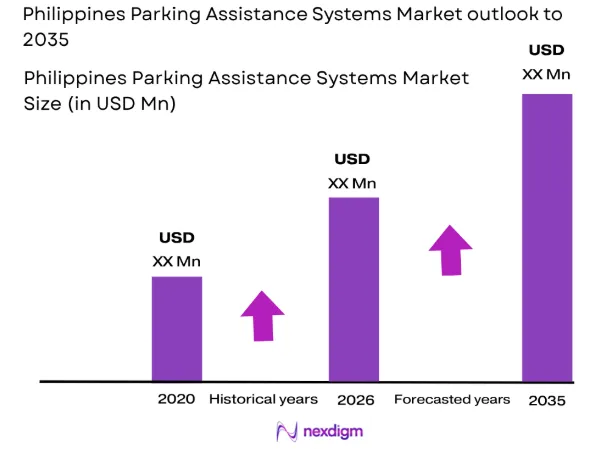
Based on a recent historical assessment, the Philippines Parking Assistance Systems Market has experienced steady growth driven by the increasing demand for smarter and more efficient parking solutions. The market is expected to reach a size of USD ~ million in 2025. This growth is fueled by rapid urbanization, the rise of vehicle ownership, and government efforts to improve infrastructure. With a significant push towards digital transformation in the transportation sector, the adoption of advanced parking systems has become a key priority for municipalities and businesses across the Philippines.
Metro Manila and other major urban areas are the dominant regions in the Philippines’ parking assistance systems market due to their high population density and traffic congestion issues. These cities have seen a surge in demand for modern parking management solutions that optimize available space. The market’s growth is also propelled by urban development projects and infrastructure improvements, which make parking solutions crucial in managing city traffic. Local governments and private developers are investing heavily in such technologies to address the ongoing challenges of urban mobility and parking efficiency.
Market Segmentation
By Product Type
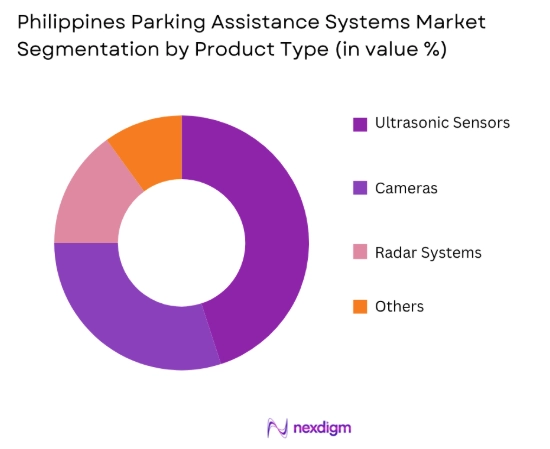
The Philippines parking assistance systems market is segmented by product type into ultrasonic sensors, cameras, radar systems, and others. Recently, ultrasonic sensors have dominated the market share, driven by their wide application in vehicles of varying sizes, affordability, and ease of integration. The demand for these sensors is primarily due to their efficiency in providing real-time proximity detection and cost-effectiveness, making them a popular choice for both high-end and mass-market vehicles. Moreover, the adoption of these systems is boosted by their scalability in both urban and suburban settings, where parking spaces are limited and the need for efficient vehicle parking management systems is growing.
By Application
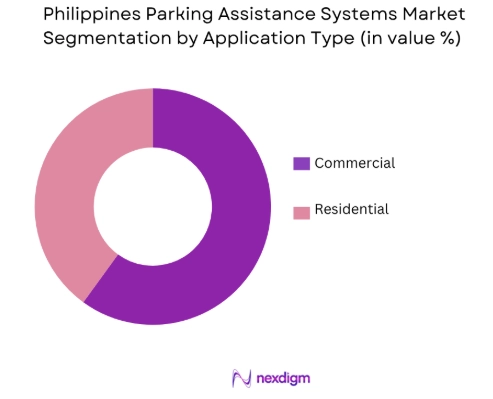
The market is also segmented by application into commercial and residential applications. In recent trends, the commercial sector has captured a dominant share of the market due to the increasing need for efficient parking solutions in malls, office buildings, and public spaces. The growing emphasis on urban mobility, the expansion of shopping complexes, and high population density in urban areas are major drivers for this shift. As businesses focus on improving customer experience and optimizing space usage, the commercial application continues to lead the market in terms of both investment and adoption of parking assistance systems.
Competitive Landscape
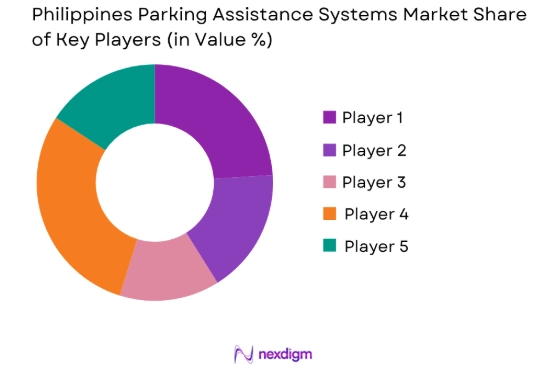
The Philippines parking assistance systems market is characterized by a competitive landscape where both local and international players are striving for a strong foothold. The presence of global technology providers with a focus on innovations in sensors and smart technologies, combined with local entities’ expertise in understanding regional infrastructure needs, is fostering intense competition. Major players are actively involved in partnerships, collaborations, and mergers to enhance their market positions and meet the increasing demand for efficient parking solutions. Market consolidation is also evident, with larger firms acquiring smaller ones to strengthen their product portfolios and expand market reach.
| Company Name | Establishment Year | Headquarters | Technology Focus | Market Reach | Key Products | Revenue | Additional Parameter |
| Bosch | 1886 | Germany | ~ | ~ | ~ | ~ | ~ |
| Valeo | 1923 | France | ~ | ~ | ~ | ~ | ~ |
| Continental | 1871 | Germany | ~ | ~ | ~ | ~ | ~ |
| DENSO | 1949 | Japan | ~ | ~ | ~ | ~ | ~ |
| Sensata Technologies | 2006 | USA | ~ | ~ | ~ | ~ | ~ |
Philippines Parking Assistance Systems Market Analysis
Growth Drivers
Urbanization and Infrastructure Development
The rapid pace of urbanization in the Philippines has contributed significantly to the growth of the parking assistance systems market. As cities expand, there is a heightened need for efficient transportation management, including parking solutions. Urban centers like Metro Manila have faced persistent challenges with traffic congestion and parking space limitations. The increased demand for advanced parking systems, such as sensors and cameras, arises as a solution to these problems. The Philippine government is focusing on modernizing infrastructure to support these technological advancements, including the integration of smart city concepts. This demand is further compounded by the increasing vehicle ownership rate in urban regions, prompting both public and private sectors to prioritize efficient parking solutions to accommodate growing populations. As a result, these developments have acted as a key growth driver, pushing the market for parking assistance systems forward.
Integration with Smart City Initiatives
The ongoing development of smart cities across the Philippines has also bolstered the parking assistance systems market. The government has recognized the need to incorporate technology into urban planning and infrastructure, and parking solutions are no exception. With the integration of IoT (Internet of Things), AI, and sensor technologies, the Philippines is rapidly adopting these innovations into public infrastructure projects, which includes smart parking solutions. Cities such as Quezon City and Makati are leading the way in implementing such technologies, making parking more convenient and efficient for drivers while optimizing space utilization. As the government pushes for more smart city initiatives and the private sector follows suit by incorporating these systems into new developments, the market for parking assistance solutions is expected to thrive. Additionally, as part of the initiative, there is significant investment in infrastructure, such as the expansion of roads, commercial spaces, and public transportation hubs, all of which require intelligent parking systems.
Market Challenges
High Initial Investment Costs
One of the significant challenges faced by the Philippines parking assistance systems market is the high initial investment required to implement advanced parking technologies. While the adoption of parking assistance systems offers long-term benefits such as space optimization, improved convenience, and better vehicle safety, the upfront costs can be a barrier for both private and commercial entities. Many businesses and local government units are reluctant to make such investments, especially in the face of uncertain returns. Additionally, the costs associated with maintaining and upgrading these systems further complicate the decision-making process. This financial burden may slow down the widespread adoption of parking assistance systems, particularly in smaller cities or less economically developed areas where budgets are constrained. Overcoming this challenge requires collaboration between government bodies, private investors, and technology providers to create affordable solutions that encourage broader implementation.
Limited Awareness and Acceptance of Technology
Despite the growing demand for parking assistance systems, limited awareness and acceptance of such technologies pose challenges to their adoption in the Philippines. Many consumers, especially in suburban and rural areas, remain unfamiliar with the benefits and features of advanced parking assistance systems, resulting in hesitancy to adopt the technology. This issue is compounded by a lack of education on the long-term value these systems provide, such as reducing vehicle damage, saving time, and enhancing overall safety. Furthermore, local businesses may not fully understand the advantages of investing in such systems, leading to a slower uptake. Public perception and misconceptions about the complexity and costs associated with parking solutions hinder faster acceptance. Therefore, overcoming these awareness barriers will be crucial to realizing the full market potential of parking assistance systems in the country.
Opportunities
Government Initiatives for Smart Cities and Infrastructure
The Philippine government has made significant strides toward transforming urban spaces into smart cities, which presents a promising opportunity for parking assistance systems. As part of these efforts, the government has introduced various policies to modernize urban infrastructure, including the development of smart traffic management solutions. These initiatives create a fertile ground for the widespread adoption of parking assistance technologies. Government-funded projects, such as the expansion of public transportation networks and the construction of multi-level parking facilities, are increasingly integrating advanced parking solutions. This trend is expected to continue, with an increasing number of smart city projects incorporating intelligent parking systems into their frameworks. The expansion of such government-led initiatives provides a substantial growth opportunity for businesses offering parking technologies, as these systems become integral to the vision of smart and sustainable cities.
Increasing Focus on Electric Vehicles (EVs)
The growing popularity of electric vehicles (EVs) in the Philippines presents another opportunity for the parking assistance systems market. As more EVs are introduced, the demand for efficient, user-friendly parking solutions, particularly those that cater to charging stations and EV-specific parking spaces, is rising. This shift is prompting businesses to innovate and develop solutions that integrate both parking and charging infrastructure, ensuring EV owners have convenient access to charging points. As the government continues to support the adoption of EVs through incentives and infrastructure development, the need for parking solutions that cater to these vehicles will continue to grow. This trend represents a significant opportunity for parking assistance system providers to expand their market presence and offer tailored solutions to meet the needs of EV owners in the Philippines.
Future Outlook
The parking assistance systems market in the Philippines is expected to experience steady growth over the next five years, driven by increasing urbanization, smart city initiatives, and the adoption of electric vehicles. Technological advancements, such as the integration of IoT, AI, and sensor technologies, will continue to enhance the efficiency and functionality of parking systems, providing better solutions for both private and commercial users. Additionally, government regulations and support for infrastructure projects will play a significant role in shaping the future of the market, creating a conducive environment for innovation and widespread adoption. With rising demand from both urban and suburban areas, the Philippines parking assistance systems market is poised for long-term growth and transformation.
Major Players
- Bosch
- Valeo
- Continental
- DENSO
- Sensata Technologies
- ZF Friedrichshafen AG
- Hyundai Mobis
- Delphi Technologies
- Panasonic Corporation
- Parkopedia
- ParkMobile
- Aisin Seiki
- Hitachi Automotive Systems
- Mobius Motors
- Mitsubishi Electric
Key Target Audience
- Investments and venture capitalist firms
- Government and regulatory bodies
- Commercial vehicle fleet operators
- Car manufacturers and OEMs
- Property developers and construction firms
- Public transportation authorities
- Retail and shopping mall developers
Research Methodology
Step 1: Identification of Key Variables
In this step, the key market drivers, barriers, and opportunities are identified through market research and analysis.
Step 2: Market Analysis and Construction
Data is collected on the parking assistance systems market, including historical trends, technological advancements, and demand forecasts.
Step 3: Hypothesis Validation and Expert Consultation
Expert consultations are conducted to validate the market assumptions and hypotheses, ensuring accuracy in data interpretation.
Step 4: Research Synthesis and Final Output
The gathered data is synthesized to produce a comprehensive market report, providing a clear overview of the parking assistance systems market in the Philippines.

- Executive Summary
- Research Methodology (Definitions, Scope, Industry Assumptions, Market Sizing Approach, Primary & Secondary Research Framework, Data Collection & Verification Protocol, Analytic Models & Forecast Methodology, Limitations & Research Validity Checks)

- Market Definition and Scope
- Value Chain & Stakeholder Ecosystem
- Regulatory / Certification Landscape
- Sector Dynamics Affecting Demand

- Growth Drivers
Increasing Demand for Advanced Driver Assistance Systems
Rising Vehicle Safety Regulations
Technological Advancements in Parking Technologies - Market Challenges
High Cost of Parking Assistance Systems
Limited Consumer Awareness in Emerging Markets
Integration Challenges with Legacy Vehicle Systems - Market Opportunities
Expansion in Electric and Autonomous Vehicle Segments
Partnerships with Automotive OEMs
Increasing Demand for Premium Vehicle Features - Trends
Integration of AI in Parking Assistance Systems
Shift Towards Sensor Fusion Technologies - Government Regulations
- SWOT Analysis
- Porter’s Five Forces

- By Market Value, 2020-2025
- By Installed Units, 2020-2025
- By Average System Price, 2020-2025
- By System Complexity Tier, 2020-2025

- By System Type (In Value%)
Ultrasonic-based Parking Assistance
Radar-based Parking Assistance
Camera-based Parking Assistance
Sensor Fusion-based Parking Assistance
LiDAR-based Parking Assistance - By Platform Type (In Value%)
Passenger Vehicles
Commercial Vehicles
Electric Vehicles
Luxury Vehicles - By Fitment Type (In Value%)
OEM Fitment
Aftermarket Fitment
Integrated Systems
Modular Systems - By End User Segment (In Value%)
Private Vehicle Owners
Fleet Operators
Ride-hailing Service Providers

- Market Share Analysis
- Cross Comparison Parameters (System Type, Platform Type, Procurement Channel, End User Segment, Fitment Type, Sensor Technology, System Accuracy)
- SWOT Analysis of Key Competitors
- Pricing & Procurement Analysis
- Key Players
Bosch
Continental AG
Denso Corporation
ZF Friedrichshafen
Valeo
Aptiv
Magna International
Hyundai Mobis
Autoliv
Mobileye
Hitachi Astemo
Nidec Corporation
Hella GmbH
Texas Instruments
Infineon Technologies

- Rising Adoption Among Private Vehicle Owners
- Fleet Operators Prioritizing Safety Technologies
- Growth in Ride-hailing and Mobility Services
- Increasing Demand for Premium Automotive Features

- Forecast Market Value, 2026-2035
- Forecast Installed Units, 2026-2035
- Price Forecast by System Tier, 2026-2035
- Future Demand by Platform, 2026-2035


 Request a Sample
 Ask for Customization
 Get a Quote
 Enquire Now