

 Download PDF
 Download PDF
Market Overview
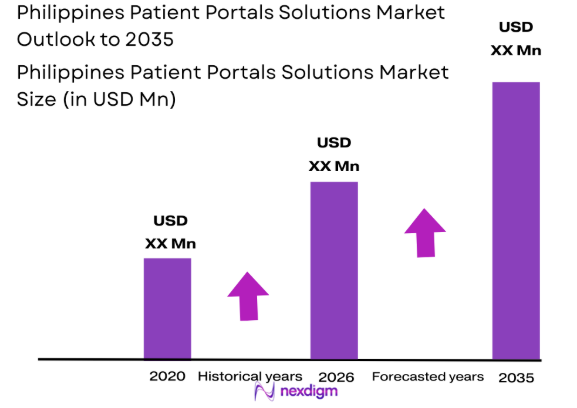
The Philippines Patient Portals Solutions market is valued at approximately USD ~ million, driven by the increasing adoption of digital health solutions and telemedicine. This growth is influenced by the rising demand for efficient healthcare management systems and patient-centric platforms. Hospitals, healthcare providers, and patients alike are increasingly integrating patient portals to streamline processes, improve patient engagement, and enhance healthcare delivery. Technological advancements and government initiatives supporting digital health are expected to further accelerate market growth.
In the Philippines, Metro Manila and Cebu are dominant in the patient portals market, mainly due to their advanced healthcare infrastructure and high urbanization rates. These areas have seen rapid integration of digital health tools in healthcare facilities, aided by government regulations promoting electronic health systems. Additionally, other provinces are gradually adopting patient portal solutions, driven by increasing demand for remote healthcare services and improvements in internet accessibility, leading to a more inclusive healthcare system.
Market Segmentation
By System Type
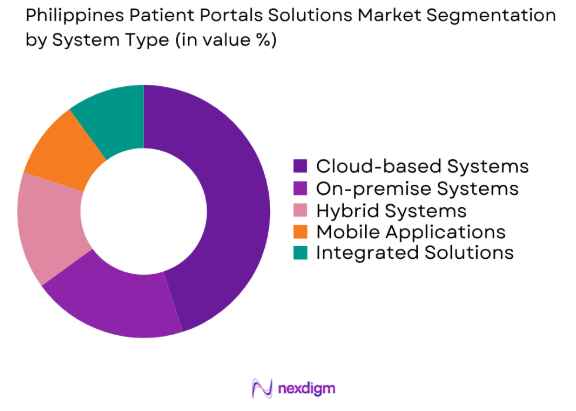
The Philippines Patient Portals Solutions market is segmented by system type into cloud-based systems, on-premise systems, hybrid systems, mobile applications, and integrated solutions. Recently, cloud-based systems have dominated the market due to their scalability, ease of implementation, and reduced infrastructure costs. Cloud-based solutions offer healthcare providers the flexibility to access patient data remotely, reducing the need for on-site hardware and enhancing patient experience. This has made cloud-based systems the preferred choice for hospitals and clinics.
By Platform Type
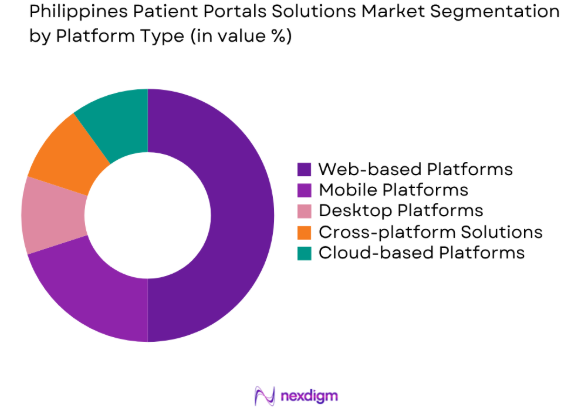
The Philippines Patient Portals Solutions market is also segmented by platform type into web-based platforms, mobile platforms, desktop platforms, cross-platform solutions, and cloud-based platforms. Web-based platforms are currently leading the market as they offer seamless access from any device with internet connectivity, ensuring healthcare professionals and patients can engage with the portal regardless of location. The ease of access and minimal system requirements contribute to the widespread adoption of web-based platforms.
Competitive Landscape
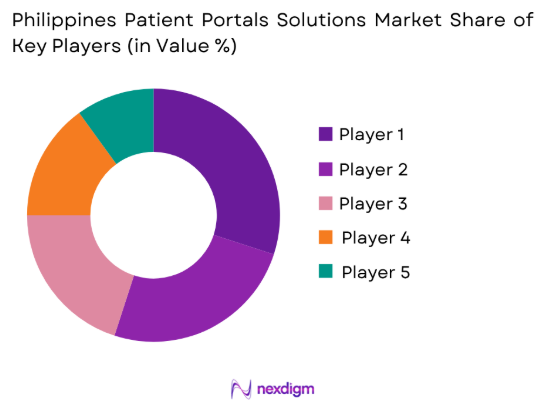
The Philippines Patient Portals Solutions market is characterized by a competitive landscape with several established players and emerging startups. Major players in the market are leveraging technological advancements and government initiatives to expand their presence. Market consolidation is occurring as larger firms acquire smaller tech providers to enhance their service offerings. The market is highly competitive, with companies continuously innovating and improving their platforms to cater to the needs of healthcare providers and patients.
| Company Name | Establishment Year | Headquarters | Technology Focus | Market Reach | Key Products | Revenue (USD) | Additional Parameter |
| Philips Healthcare | 1891 | Netherlands | ~ | ~ | ~ | ~ | ~ |
| Cerner Corporation | 1979 | USA | ~ | ~ | ~ | ~ | ~ |
| Medtronic | 1949 | USA | ~ | ~ | ~ | ~ | ~ |
| IBM Watson Health | 2015 | USA | ~ | ~ | ~ | ~ | ~ |
| GE Healthcare | 1892 | USA | ~ | ~ | ~ | ~ | ~ |
Philippines Patient Portals Solutions Market Analysis
Growth Drivers
Increased Healthcare Digitization
The growth of the Philippines Patient Portals Solutions market is driven by the increasing shift towards digital healthcare. As more healthcare providers adopt technology, patient portals have become crucial for enhancing patient engagement and care coordination. The rising demand for digital health records, telemedicine, and the integration of healthcare systems are key factors fueling this market. With hospitals and clinics moving towards paperless workflows, the adoption of patient portals is expected to grow, offering real-time access to patient data, reducing wait times, and improving healthcare outcomes. The continued push for more efficient healthcare management systems is expected to further accelerate the integration of patient portals across the healthcare sector.
Government Initiatives and Support
The Philippine government’s focus on healthcare reforms and digital transformation has significantly boosted the patient portals market. Initiatives like the Health Information Systems Strategic Plan (HISSP) are supporting digital health adoption nationwide. The establishment of electronic health records and the promotion of telemedicine are expected to drive the widespread use of patient portals across both public and private healthcare sectors. Additionally, the government’s investments in healthcare infrastructure and improving connectivity, especially in rural areas, are poised to accelerate market growth. These efforts are likely to enhance access to digital health services, bringing more patients into the fold and expanding the adoption of patient portals across the country.
Market Challenges
Data Privacy and Security Concerns
A major challenge in the Philippines Patient Portals Solutions market is ensuring the privacy and security of patient data. As the volume of sensitive health information stored and transmitted digitally increases, cybersecurity risks have become a significant concern. Despite existing government regulations, healthcare providers, especially in smaller clinics and rural areas, face difficulties implementing strong security measures due to limited resources. The absence of robust security frameworks may deter both healthcare providers and patients from fully adopting digital health solutions, potentially slowing market growth. Strengthening data security protocols is essential to overcome this challenge and ensure widespread trust and adoption of patient portals across the healthcare sector.
Limited Internet Connectivity in Remote Areas
In rural areas of the Philippines, limited internet connectivity poses a major barrier to the widespread adoption of patient portals. While urban centers like Metro Manila benefit from reliable, high-speed internet, many remote regions still lack the necessary infrastructure for stable connections. This disparity in connectivity hinders the ability of rural populations to access digital health solutions, including patient portals. Without improved internet infrastructure, the full potential of patient portals remains untapped, as patients and healthcare providers in these areas cannot fully leverage the benefits of digital healthcare tools. Addressing the connectivity gap is essential for expanding the reach and effectiveness of patient portals and ensuring more inclusive access to healthcare services across the country.
Opportunities
Expansion of Telemedicine Integration
The rising adoption of telemedicine presents a significant opportunity for the Philippines Patient Portals Solutions market. As demand for remote healthcare services grows, integrating telemedicine features into patient portals can improve patient care by enabling virtual consultations and real-time health monitoring. The COVID-19 pandemic has accelerated the shift toward telemedicine, and this trend is expected to continue. This creates a strong opportunity for patient portal providers to enhance their offerings, making healthcare more accessible and efficient. By incorporating telemedicine capabilities, providers can expand their reach and tap into a broader patient base, further driving the growth of the patient portals market in the Philippines.
Healthcare Startup Ecosystem
The growth of healthcare startups in the Philippines offers a valuable opportunity for patient portal providers to collaborate and innovate. Many emerging companies are creating novel digital health solutions, such as patient engagement platforms and remote monitoring tools, that can be integrated into existing patient portals. By partnering with these startups, established companies can expand their product offerings, gain a competitive advantage, and drive further adoption of patient portals. This burgeoning startup ecosystem is expected to stimulate innovation in the market, fostering the development of new technologies and services. Additionally, these partnerships provide new revenue streams for patient portal providers, accelerating the growth of the market and enhancing the overall healthcare experience in the Philippines.
Future Outlook
The Philippines Patient Portals Solutions market is expected to experience significant growth in the next five years, driven by increased digital health adoption, government support, and technological advancements. Key factors such as the integration of artificial intelligence, enhanced cybersecurity measures, and the expansion of telemedicine will play a crucial role in shaping the market. Moreover, improvements in healthcare infrastructure and internet connectivity in remote regions will contribute to greater accessibility and inclusivity, expanding the reach of patient portals across the country.
Major Players
Step 1: Identification of Key Variables
The first step in the research methodology involves identifying key variables influencing the Philippines Patient Portals Solutions market, such as technology adoption, regulatory factors, and market demand.
Step 2: Market Analysis and Construction
In this phase, we analyze the data gathered to construct a comprehensive understanding of the market landscape, including segmentation, key drivers, challenges, and opportunities.
Step 3: Hypothesis Validation and Expert Consultation
We validate the hypotheses formed in the earlier stages by consulting with industry experts and healthcare professionals, ensuring that the findings are aligned with real-world trends and insights.
Step 4: Research Synthesis and Final Output
The final step involves synthesizing all the research findings into a structured report, providing actionable insights and forecasts for stakeholders in the Philippines Patient Portals Solutions market.

- Executive Summary
- Research Methodology (Definitions, Scope, Industry Assumptions, Market Sizing Approach, Primary & Secondary Research Framework, Data Collection & Verification Protocol, Analytic Models & Forecast Methodology, Limitations & Research Validity Checks)

- Market Definition and Scope
- Value Chain & Stakeholder Ecosystem
- Regulatory / Certification Landscape
- Sector Dynamics Affecting Demand
- Strategic Initiatives & Infrastructure Growth

- Growth Drivers
Increasing Healthcare Digitization
Government Initiatives & Support
Rising Adoption of Telemedicine - Market Challenges
Data Privacy & Security Concerns
Limited Internet Connectivity in Remote Areas
High Implementation Costs - Market Opportunities
Growth of Healthcare Startups & Innovations
Expansion of Health Insurance Integration
Rising Demand for Mobile Health Solutions - Trends
Integration of Artificial Intelligence (AI)
Rising Use of Mobile Health Platforms
Growing Focus on Data Interoperability - Government Regulations
- Swot Analysis
- Porter’s Five Forces

- By Market Value, 2020-2025
- By Installed Units, 2020-2025
- By Average System Price, 2020-2025
- By System Complexity Tier, 2020-2025

- By System Type (In Value%)
Cloud-based Systems
On-premise Systems
Hybrid Systems
Mobile Applications
Integrated Solutions - By Platform Type (In Value%)
Web-based Platforms
Mobile Platforms
Desktop Platforms
Cross-platform Solutions
Cloud-based Platforms - By Fitment Type (In Value%)
Software-only Solutions
Hardware + Software Solutions
Cloud-based Fitments
On-premise Fitments
Hybrid Fitments - By End User Segment (In Value%)
Hospitals & Healthcare Providers
Individual Patients
Healthcare IT Providers
Government Healthcare Bodies
Insurance Providers - By Procurement Channel (In Value%)
Direct Procurement from Vendors
Healthcare Distributors
Online Marketplaces
Third-party Resellers
Government Procurement

- Market Share Analysis
- Cross Comparison Parameters (System Type, Platform Type, Fitment Type, End User Segment, Procurement Channel, Data Security Features, Integration Capability, Regulatory Compliance, Market Penetration, User Adoption Rate)
- SWOT Analysis of Key Competitors
- Pricing & Procurement Analysis
- Key Players
Philips Healthcare
Cerner Corporation
Allscripts Healthcare Solutions
Medtronic
IBM Watson Health
GE Healthcare
Oracle Health Sciences
Siemens Healthineers
Accenture
Fujifilm Healthcare
Optum
HealthTech Solutions
eHealth Systems
MyChart
Mediportal Solutions

- Patients seeking personalized healthcare
- Healthcare providers looking for efficient management tools
- Insurance companies requiring integrated data systems
- Government agencies enforcing healthcare policies

- Forecast Market Value, 2026-2035
- Forecast Installed Units, 2026-2035
- Price Forecast by System Tier, 2026-2035
- Future Demand by Platform, 2026-2035


 Request a Sample
 Ask for Customization
 Get a Quote
 Enquire Now