
 Download PDF
Market Overview
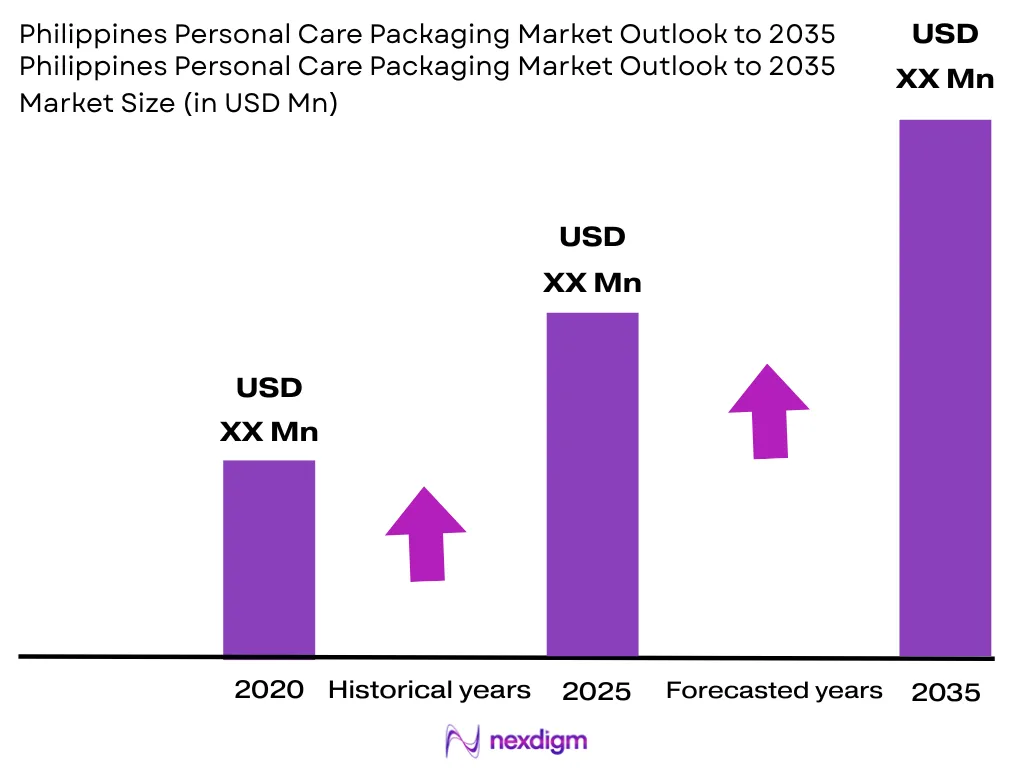
The Philippines Personal Care Packaging Market was valued at USD ~ Million in 2024 and is anticipated to expand at a CAGR of ~ % during 2026–2035. The market is primarily driven by rising consumption of skincare, haircare, and hygiene products, growth of affordable sachet-based packaging formats, and continued premiumization of personal care products. According to IMARC Group, the broader Philippines packaging market was valued at USD 75.19 billion in 2024 and is projected to reach USD 109.17 billion by 2033, with cosmetics, personal care, and household care identified as a distinct end-use vertical. According to IMARC Group, the Philippines beauty and personal care market itself reached USD 6.7 billion in 2025 and is projected to grow to USD 11.1 billion by 2034, sustaining consistent demand for functional and affordable packaging across skincare, haircare, bath and shower, and personal hygiene applications.
Market Segmentation
By Material
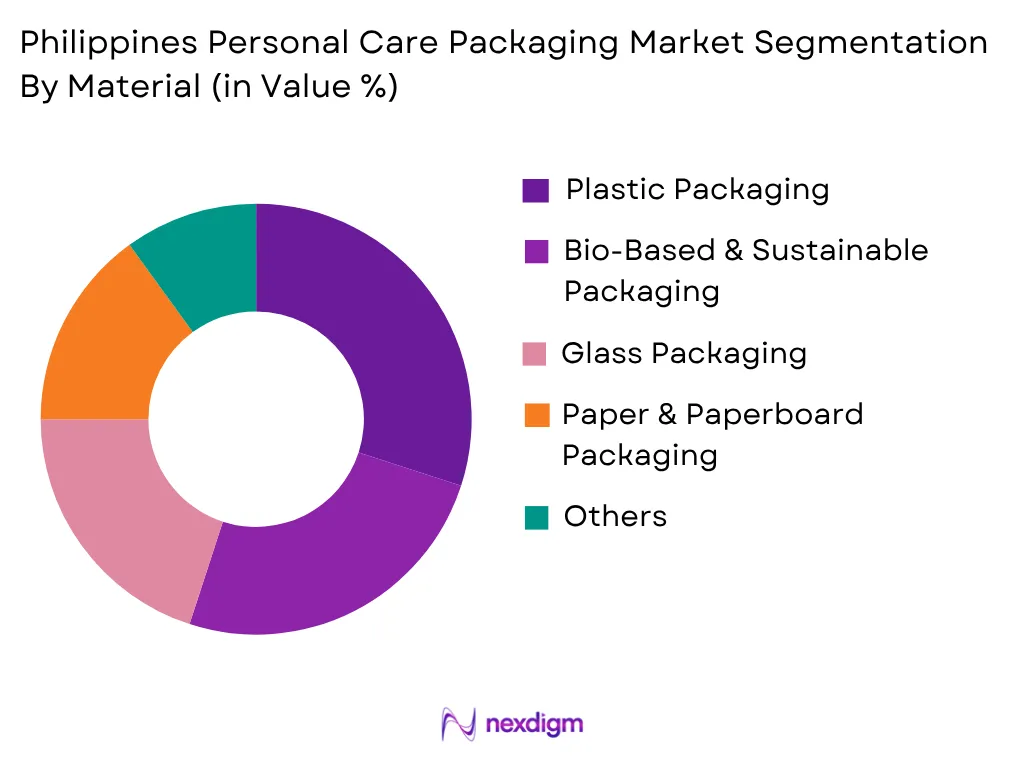
Among these, Plastic Packaging holds the largest share of the Philippines Personal Care Packaging Market, supported by widespread use of PET, HDPE, and PP bottles, tubes, and sachets across skincare, haircare, and hygiene applications. Domestic manufacturers such as Bestpak Packaging Solutions Inc. and Netpak Phils., Inc., both of which serve the Philippine cosmetics and personal care community with plastic bottles, jars, tubes, and closures, continue to expand their product ranges to meet growing demand. At the same time, Bio-Based & Sustainable Packaging is gaining momentum as Philippine personal care brands increasingly focus on sustainable and recyclable packaging materials, according to Mobility Foresights, reshaping packaging strategies across the industry. Regulatory pressure on plastic usage is encouraging adoption of paper-based, biodegradable, and refillable packaging solutions, with corporate sustainability commitments from global beauty brands accelerating the replacement of virgin plastic with recycled resins, paper composites, and reusable container systems.
By Application
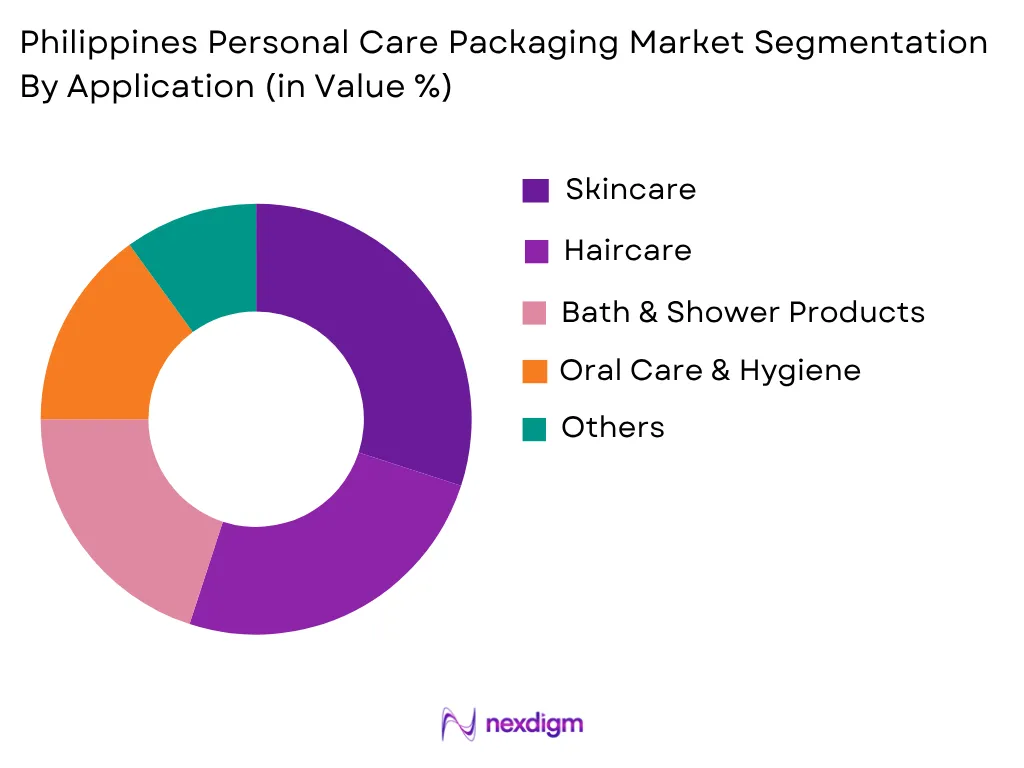
The Skincare segment holds the largest share, reflecting the rapid growth of the Philippines skincare category and rising consumer focus on whitening, hydration, and protective formulations suited to the country’s tropical climate. In July 2024, APHROZONE Philippines, a prominent skincare brand, expanded its presence through a partnership with its Korean parent company, while Dr. Jart+, a well-known Korean skincare label, introduced its skincare product range exclusively through Watsons and LOOK At Me outlets as well as online channels, according to IMARC Group. Meanwhile, Haircare packaging remains significant given the Philippines’ distinctive sachet economy, where single-serve shampoo and conditioner sachets remain the preferred affordable format for mass-market consumers. Total beauty and personal care packaging unit volumes in the Philippines are expected to register a 3 percent CAGR over the forecast period, according to Euromonitor, with growth concentrated in specific pack types and sizes that align with evolving consumer preferences and brand strategies.
Competitive Landscape
The Philippines Personal Care Packaging Market is moderately fragmented, featuring a mix of international giants and strong local players who differentiate themselves through innovation, sustainability, and diverse product portfolios, according to IMARC Group. Bestpak Packaging Solutions Inc., which evolved from a one-product company in 1956 into a multi-product packaging business with manufacturing facilities across three Philippine locations, positions itself as the leading supplier of choice for many of the country’s beauty brands. Netpak Phils., Inc., serving the Philippine cosmetics community since 2006, offers an extensive range including airless bottles and foaming pump bottles tailored for personal care applications. Key multinational players including Amcor, Tetra Pak, and Crown Holdings compete alongside domestic converters such as Unlipack Packaging Philippines, Filpet Incorporated, and Tesco Multisales Inc., with the Philippines emerging as a significant player in Asia’s beauty industry, driven partly by local brands such as i’mma beauty, which are gaining international recognition.
| Company | Established | Headquarters | Primary Product Portfolio | Rigid Packaging Portfolio | Manufacturing Presence | Major End-Use Industries | Key Strategic Focus | Certifications & Compliance |
| Bestpak Packaging Solutions Inc. | 1956 | ~ | ~ | ~ | ~ | ~ | ~ | ~ |
| Netpak Phils., Inc. | 1992 | ~ | ~ | ~ | ~ | ~ | ~ | ~ |
| Unlipack Packaging Philippines | 1980 | ~ | ~ | ~ | ~ | ~ | ~ | ~ |
| Filpet Incorporated | 1994 | ~ | ~ | ~ | ~ | ~ | ~ | ~ |
| Tesco Multisales Inc. | 1992 | ~ | ~ | ~ | ~ | ~ | ~ | ~ |
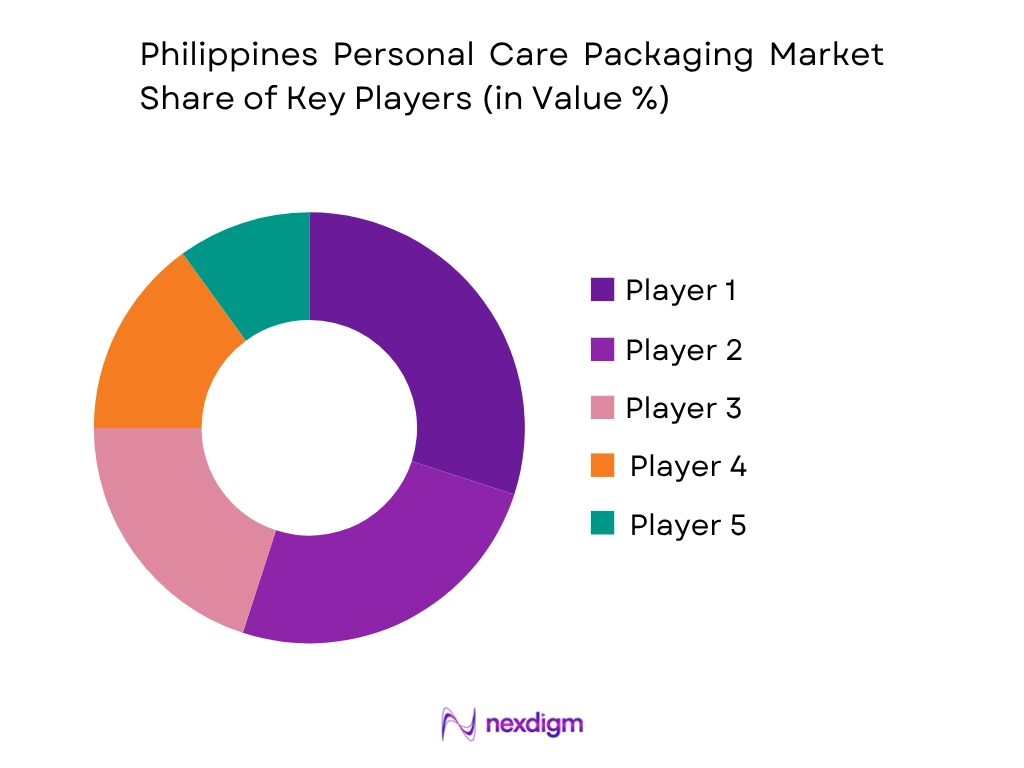
Philippines Personal Care Packaging Market Analysis
Growth Drivers
Rising Skincare and Haircare Consumption
The Philippines personal care packaging market is experiencing sustained growth due to rising consumption of skincare, haircare, and hygiene products. According to IMARC Group, the Philippines beauty and personal care market reached USD 6.7 billion in 2025 and is projected to grow to USD 11.1 billion by 2034, at a CAGR of 5.70 percent. Local and international brands are responding to consumer demand by creating skincare, haircare, and cosmetics that use natural extracts, essential oils, and organic materials, with individuals increasingly trusting brands that promote sustainability and transparency. Chanel Beauty opened its inaugural Philippine boutique in Greenbelt 5 in October 2024, showcasing fragrance, makeup, and skincare products, illustrating the continued expansion of both premium and mass-market personal care brands across the Philippine market and the corresponding packaging demand this growth generates.
Growth of Sachet Economy and E-Commerce Distribution
The steady growth of affordable sachet-based packaging formats and expansion of e-commerce distribution channels remain major drivers for personal care packaging consumption in the Philippines. Increasing disposable incomes and urbanization in key cities lead to higher demand for packaged personal care products, pushing the market forward across Luzon, Visayas, and Mindanao, according to IMARC Group. The packaging market in Mindanao is also expanding as urbanization pushes demand for packaged consumer goods and e-commerce packaging, with sustainable packaging solutions gaining traction among the region’s eco-conscious consumers. Growth of e-commerce and direct-to-consumer channels continues to influence packaging durability and design requirements, according to Mobility Foresights, as innovative dispensing systems and user-friendly packaging formats gain strong traction among Filipino consumers.
Market Challenges
Environmental Concerns Regarding Sachet and Plastic Waste
Despite steady demand growth, the Philippines personal care packaging market faces significant challenges from environmental concerns regarding sachet and single-use plastic waste. Despite efforts toward sustainability, plastic remains a dominant material in personal care packaging in the Philippines, with disposal and recycling challenges creating significant environmental concerns, consistent with broader cosmetic packaging industry trends identified by Mobility Foresights. Governments and consumers are increasingly pressuring companies to move away from single-use plastics, yet transitioning to sustainable alternatives is often expensive and technically challenging, particularly for the affordable sachet formats that remain central to mass-market personal care distribution across the Philippines’ price-sensitive consumer base.
Complex Regulatory Compliance and Import Dependency
The Philippines’ regulatory framework for personal care packaging presents a significant compliance challenge for manufacturers, with products subject to the Philippine Food and Drug Administration’s product notification system under Republic Act No. 9711, ASEAN Cosmetic Directive harmonization standards, and the country’s Extended Producer Responsibility Act, Republic Act No. 11898, which mandates obligated enterprises to collect and divert plastic packaging waste. High-end packaging investments also pose risks if consumer demand slows, according to Mobility Foresights, requiring brands to balance luxury appeal with cost-effectiveness to remain competitive. The Philippines’ continued reliance on imported specialty resins and packaging components further exposes domestic converters to currency and supply chain volatility affecting overall packaging cost structures.
Market Opportunities
Rising Investment in Refillable and Sustainable Packaging
The Philippines’ growing sustainability focus and corporate ESG commitments create significant opportunities for investment in refillable and sustainable personal care packaging solutions. Companies in the Philippines are replacing virgin plastic with recycled resins, paper composites, and reusable container systems, according to Mobility Foresights, with demand increasing for low-carbon, lightweight, and easily recyclable packaging formats across skincare, haircare, and personal hygiene products. Innovation in barrier coatings and sustainable dispensing systems is improving performance while maintaining environmental benefits, with the market expected to move toward mainstream adoption of refillable and circular packaging systems as beauty brands set measurable sustainability and packaging reduction targets tied to ESG reporting frameworks.
Expansion of Local Brand Manufacturing and Regional Export
The Philippines’ growing recognition as a significant player in Asia’s beauty industry creates substantial long-term opportunities for personal care packaging manufacturers. Local brands such as i’mma beauty are gaining international recognition, according to Euromonitor, reflecting the Philippines’ emergence as a notable beauty and personal care manufacturing base within Southeast Asia. Collaborations between packaging manufacturers and personal care brands continue to drive material and design innovation, according to Mobility Foresights, creating opportunities for domestic converters to expand production capacity serving both growing local demand and potential export markets across the broader ASEAN region as regional beauty brands increasingly seek compliant, cost-competitive packaging partners.
Future Outlook
The Philippines Personal Care Packaging Market is expected to witness sustained expansion over the forecast period, supported by continued growth in skincare, haircare, and hygiene product consumption, expanding e-commerce and direct-to-consumer distribution channels, and increasing consumer and regulatory pressure to adopt recyclable and refillable packaging materials. Continued investment in sustainable materials, innovative dispensing systems, and domestic manufacturing capacity will further accelerate innovation across the industry. The market is also likely to benefit from the Philippines’ growing recognition as a significant beauty and personal care market in Southeast Asia, enabling greater investment in advanced, sustainable, and aesthetically differentiated packaging technologies.
Major Players
- Bestpak Packaging Solutions Inc.
- Netpak Phils., Inc.
- Unlipack Packaging Philippines
- Filpet Incorporated
- Tesco Multisales Inc.
- ECPack General Merchandise
- Amcor plc
- Tetra Pak International
- Crown Holdings Inc.
- AptarGroup, Inc.
- Albea Group
- HCP Packaging
- Quadpack Industries
- Berry Global Inc.
- Gerresheimer AG
Key Target Audience
- Personal Care Packaging Manufacturers
- Beauty and Personal Care Companies
- Contract Manufacturing Organizations
- Retail and Modern Trade Chains
- E-Commerce and Social Commerce Beauty Brands
- Investment and Venture Capitalist Firms
- Government and Regulatory Bodies (Philippine Food and Drug Administration (FDA), Department of Environment and Natural Resources (DENR), Department of Trade and Industry (DTI))
- Packaging Material Suppliers and Industrial Raw Material Distributors
Research Methodology
Step 1: Identification of Key Variables
The research process begins with identifying the complete ecosystem of the Philippines Personal Care Packaging Market, including raw material and resin suppliers, packaging converters and manufacturers, personal care companies, contract manufacturing organizations, distributors, and regulatory authorities. Extensive secondary research is conducted using company annual reports, government publications, trade associations, customs statistics, industry journals, and proprietary databases to determine the variables influencing market demand, pricing, production, consumption, and technological developments.
Step 2: Market Analysis and Construction
Historical market information is collected and analyzed to estimate market size, production volumes, import-export activity, application-wise demand, and pricing trends. A combination of top-down and bottom-up approaches is used to estimate market revenues and validate segment-level performance. Consumption patterns across skincare, haircare, bath and shower, and personal hygiene are evaluated to establish an accurate representation of the industry.
Step 3: Hypothesis Validation and Expert Consultation
The preliminary findings are validated through Computer-Assisted Telephone Interviews (CATIs) and structured discussions with personal care packaging manufacturers, procurement managers, converters, formulation scientists, regulatory experts, and senior executives operating within the Philippine beauty and personal care industry. These interviews help verify market assumptions, competitive developments, technology adoption trends, pricing dynamics, and future investment opportunities while refining the overall market estimates.
Step 4: Research Synthesis and Final Output
The final stage integrates insights obtained from primary interviews with quantitative information collected through secondary sources. Data triangulation techniques are applied to reconcile differences between supply-side and demand-side estimates, ensuring robust market forecasting. The report is then reviewed through multiple quality assurance checkpoints to deliver a comprehensive analysis covering market size, segmentation, competitive landscape, future outlook, and strategic recommendations for industry stakeholders.

- Executive Summary
- Research Methodology (Market Definitions and Assumptions, Abbreviations, Market Sizing Approach, Top-Down Analysis, Bottom-Up Analysis, Demand-Side Assessment, Supply-Side Assessment, Primary Industry Interviews, Secondary Research Validation, Data Triangulation, Forecasting Framework, Limitations and Future Conclusions)

- Definition and Scope
- Market Evolution and Industry Genesis
- Timeline of Major Industry Developments
- Personal Care Packaging Industry Value Chain Analysis
- Supply Chain Analysis

- Growth Drivers (Rising Consumption of Skincare, Haircare and Hygiene Products, Growth of Sachet-Based Affordable Packaging Formats, Premiumization of Personal Care Products, Expansion of E-Commerce and Direct-to-Consumer Channels, Rising Sustainability Awareness Among Consumers, Increasing Urbanization Across Luzon, Visayas and Mindanao)
- Market Challenges (Environmental Concerns Regarding Sachet and Single-Use Plastic Waste, High Cost of Premium and Sustainable Packaging, Complex Regulatory Compliance Requirements, Volatility in Imported Resin and Glass Prices, Fragmented Domestic Packaging Industry Structure, Competition from Low-Cost Regional Imports)
- Market Opportunities (Investment in Refillable and Biodegradable Packaging, Growth in Recycled-Content and Paper Composite Materials, Expansion of Domestic Manufacturing Capacity, Innovation in Dispensing Systems and User-Friendly Formats, Export-Oriented Packaging Manufacturing for Southeast Asia, Corporate ESG-Driven Packaging Redesign)
- Market Trends (Shift Toward Sustainable and Recyclable Materials, Rising Adoption of Refillable Container Systems, Growth in Innovative Dispensing and User-Friendly Packaging, Brand Differentiation Through Packaging Aesthetics, Collaborations Between Manufacturers and Personal Care Brands, Industry Consolidation Through Investment)
- Government Regulations (Philippine Food and Drug Administration (FDA) Cosmetic and Personal Care Product Notification Requirements, Republic Act No. 9711 (FDA Act of 2009), Extended Producer Responsibility Act (Republic Act No. 11898), ASEAN Cosmetic Directive Harmonization Standards, Department of Environment and Natural Resources (DENR) Plastic Waste Requirements, Import Compliance and Labelling Requirements)
- Import and Export Analysis (Trade Volume, Major Import Sources, Export Destinations, HS Code Analysis, Trade Balance)
- Raw Material Availability Analysis (Plastic Resins, Glass, Aluminium, Paperboard, Bio-Based and Biodegradable Materials)
- Technology Landscape (Refillable and Reusable Packaging Systems, Recycled Content Processing, Custom Injection Moulding, Digital Printing and Decoration, Smart Packaging with QR Codes)
- Sustainability Assessment (Recyclability and Post-Consumer Recycled Content, Biodegradable Material Adoption, Carbon Footprint Reduction, Refillable Packaging Initiatives, Circular Economy Integration)
- PESTLE Analysis
- SWOT Analysis
- Porter’s Five Forces Analysis
- Stakeholder Ecosystem
- Competition Ecosystem

- By Market Value (2020-2025)
- By Volume Consumption (2020-2025)
- By Average Selling Price (2020-2025)

- By Material (In Value %)
Plastic Packaging
Glass Packaging
Metal Packaging
Paper & Paperboard Packaging
Bio-Based & Sustainable Packaging - By Product Type (In Value %)
Bottles & Jars
Tubes
Sachets & Pouches
Caps, Closures & Pumps
Dispensers & Sprayers - By Application (In Value %)
Skincare
Haircare
Bath & Shower Products
Oral Care & Hygiene
Deodorants & Personal Hygiene - By End Use (In Value %)
Personal Care Manufacturers
Contract Manufacturing Organizations
Retail & Modern Trade
E-Commerce & Social Commerce - By Region (In Value %)
Metro Manila (NCR)
Luzon
Visayas
Mindanao

- Market Share of Major Players (By Value, Volume, Material Type, Application Industry, Product Category)
- Cross Comparison Parameters (Material Portfolio Breadth, Sustainable Packaging Portfolio, Aesthetic Design Capability, Application Technical Support Capability, Manufacturing Capacity, Regulatory Compliance & Certifications, Personal Care Customer Base, Innovation & New Product Launch Frequency)
- SWOT Analysis of Major Players
- Pricing Analysis by Product Category and SKU
- Production Capacity Analysis
- Manufacturing Footprint Analysis
- Distribution Network Analysis
- Innovation Benchmarking
- Detailed Profiles of Major Companies
Bestpak Packaging Solutions Inc.
Netpak Phils., Inc.
Unlipack Packaging Philippines
Filpet Incorporated
Tesco Multisales Inc.
ECPack General Merchandise
Amcor plc
Tetra Pak International
Crown Holdings Inc.
AptarGroup, Inc.
Albea Group
HCP Packaging
Quadpack Industries
Berry Global Inc.
Gerresheimer AG

- Consumption Pattern Analysis (Industrial Usage, Batch Size, Product Category Penetration, Seasonal Demand, Reformulation Activity)
- Purchasing Criteria (Barrier Performance, Affordability, Cost Efficiency, Recyclability, Regulatory Compliance, Brand Differentiation)
- Procurement and Supplier Selection Analysis
- Sustainable Packaging Adoption Assessment
- Premium vs Mass Packaging Demand
- Product Attribute Preference Analysis (Aesthetic Design, Dispensing Functionality, Recyclability, Tamper-Evidence, Print Quality, Shelf Appeal)
- Consumer Sustainability and Affordability Influence on Packaging Design
- Pain Point Analysis
- Decision-Making Process

- By Market Value (2026-2035)
- By Volume Consumption (2026-2035)
- By Average Selling Price (2026-2035)


 Request a Sample
 Ask for Customization
 Get a Quote
 Enquire Now