
 Download PDF
Market Overview
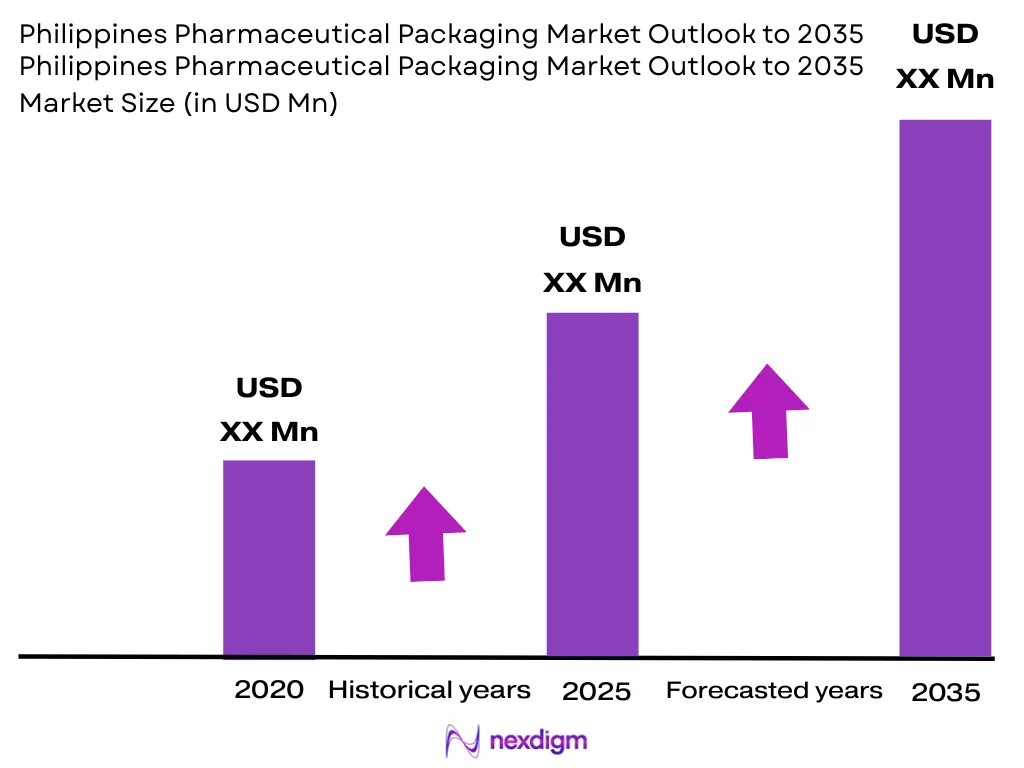
The Philippines Pharmaceutical Packaging Market was valued at approximately USD ~ Million in 2025 and is projected to reach approximately USD ~ Million by 2030, reflecting a compound annual growth rate of approximately 4.48% during the forecast period. According to the Philippine Pharmaceutical Manufacturers Association (PPMA), packaging material accounts for nearly 30% of a medicine’s total cost, while the country’s pharmaceutical industry is projected to grow at an average rate of 8% to 11% annually in the coming years. The Food and Drug Administration (FDA) Philippines has fast-tracked drug approval timelines to as little as 45 days, prompting local manufacturers to reformulate labels and invest in compliant blister, bottle, and pouch solutions to keep pace with accelerated product launches. The market is further shaped by the Department of Health’s generic-label mandate requiring serialization-ready packaging, alongside growing interest from foreign contract manufacturers, exemplified by five India-based pharmaceutical firms that scouted Philippine manufacturing sites in August 2024 to capture PEZA ecozone fiscal incentives.
Market Segmentation
By Material
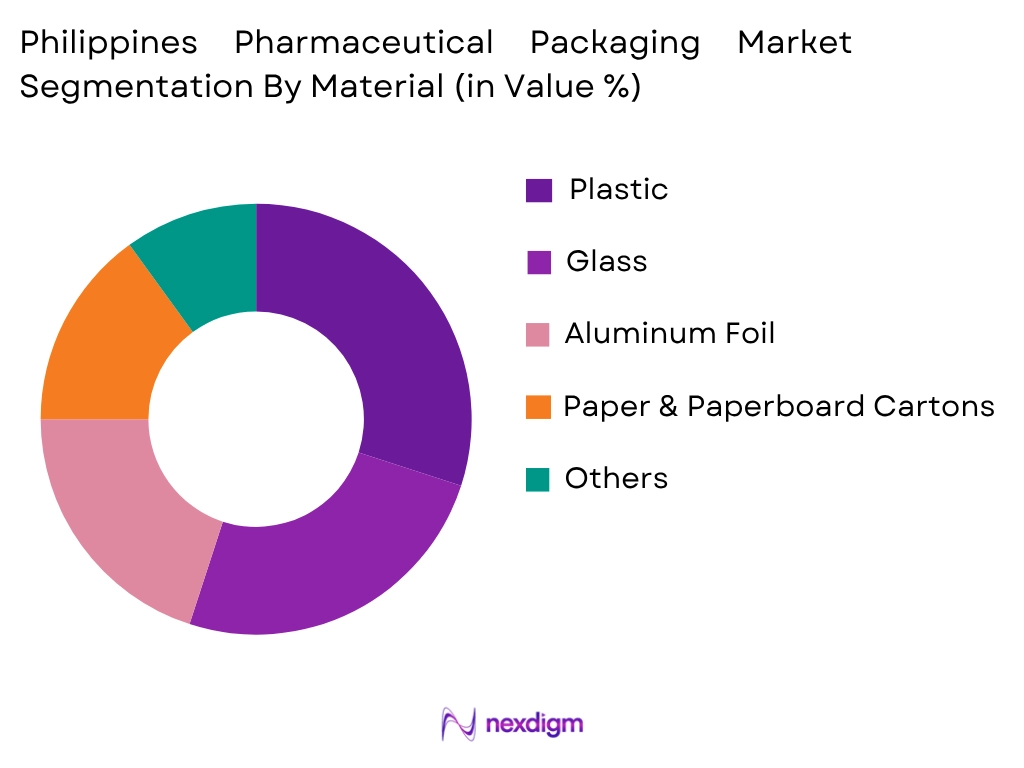
Plastic materials led the Philippines Pharmaceutical Packaging Market with approximately 40.32% revenue share in 2024, reflecting their cost-effectiveness, versatility, and compatibility with the country’s growing base of blister and bottle packaging lines serving generic drug manufacturers. Composites and bio-based alternative materials are forecast to expand at approximately 6.21% CAGR through 2030, the fastest growth rate among all material categories, as manufacturers increasingly respond to sustainability commitments from multinational packaging suppliers such as Berry Global, which has reported a 65% increase in renewable energy usage and a 10% increase in recycled plastics usage across its operations. Glass packaging retains a critical role for injectable and vaccine applications, supported by specialized local glass converters including Anglo Watsons Glass and Arcya Glass Corporation alongside global primary packaging suppliers such as Gerresheimer, Schott, and SGD Pharma. Aluminum foil and paperboard cartons continue to serve essential blister lidding and secondary packaging functions, increasingly required to carry DOH-mandated generic labeling and serialization codes.
By Product Type
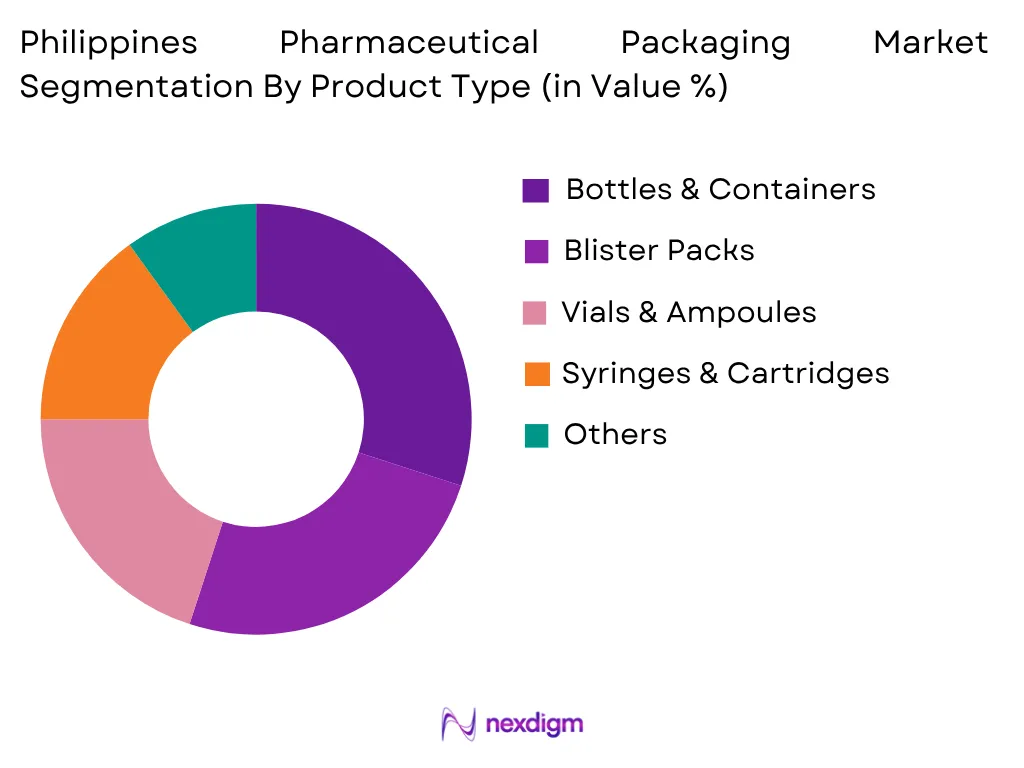
Bottles & Containers represented the largest product-type segment in the Philippines Pharmaceutical Packaging Market with approximately 21.56% share in 2024, reflecting their widespread use across the country’s oral liquid and solid dose generic drug segment, which continues to expand as the generic-drug spending pool is projected to reach USD 3.8 billion by 2028. Pouches & Bags are poised to grow at approximately 5.54% CAGR through 2030, among the fastest-growing product formats, driven by rising demand for glucose drip and intravenous solution packaging suited to the country’s aging population and growing chronic disease burden. Blister Packs maintain a substantial share supporting the country’s large base of branded and unbranded generic oral solid dosage manufacturers, while Syringes & Cartridges represent a growing segment as injectable and vaccine manufacturing capacity continues to expand following the Board of Investments’ active promotion of the Philippines as a regional pharmaceutical manufacturing hub.
Competitive Landscape
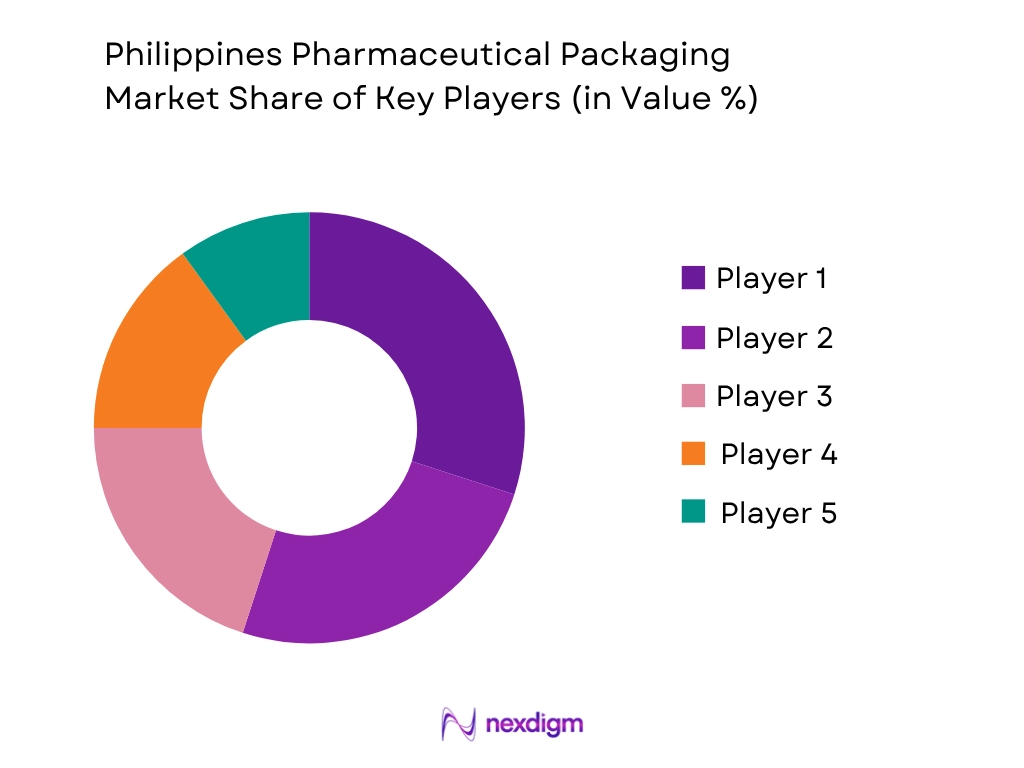
The Philippines Pharmaceutical Packaging Market features a mix of domestic converters and multinational packaging specialists serving the country’s fragmented base of pharmaceutical manufacturers, which the market is characterized by a moderate number of large pharmaceutical companies alongside a larger number of smaller pharmaceutical and generic drug manufacturers. San Miguel Yamamura Packaging Corporation, formed through a joint venture between San Miguel Corporation and Japan’s Yamamura Glass, maintains a broad domestic footprint spanning glass and plastic pharmaceutical packaging formats. Amcor Flexibles Philippines Corp. and Berry Global Inc. maintain significant multinational presence, with Berry Global specifically highlighting sustainability-linked manufacturing investments as a competitive differentiator. Specialized local converters including Merfel Plastic Manufacturing, Versa Group Philippines, and Swiss Pac Philippines compete for share among smaller domestic pharmaceutical manufacturers, while global primary packaging leaders Gerresheimer, Schott, and SGD Pharma serve the country’s growing sterile injectable and vaccine packaging requirements. Packaging converters that pre-qualify materials under Good Manufacturing Practice guidelines are increasingly winning early supplier status with foreign green-field entrants, cementing volume commitments across 2025-2028 contract cycles.
| Company | Establishment Year | Headquarters | Primary Product Portfolio | Pharmaceutical Packaging Portfolio
|
Manufacturing Presence | Major End-Use Industries | Key Strategic Focus | Certifications & Compliance |
| San Miguel Yamamura Packaging Corporation | 1998 | ~ | ~ | ~ | ~ | ~ | ~ | ~ |
| Amcor Flexibles Philippines Corp. | 1860 | ~ | ~ | ~ | ~ | ~ | ~ | ~ |
| Gerresheimer AG | 1864 | ~ | ~ | ~ | ~ | ~ | ~ | ~ |
| Schott AG | 1884 | ~ | ~ | ~ | ~ | ~ | ~ | ~ |
| SGD Pharma | 1996 | ~ | ~ | ~ | ~ | ~ | ~ | ~ |
Philippines Pharmaceutical Packaging Market Analysis
Growth Drivers
FDA Fast-Tracked Approvals and Generic Drug Manufacturing Growth
The Philippines pharmaceutical packaging market is experiencing sustained growth driven by the Food and Drug Administration’s fast-tracked approval process, which has cut drug registration timelines to as little as 45 days, prompting local manufacturers to reformulate labels and invest in compliant blister, bottle, and pouch solutions to keep pace with accelerated product launch cycles. The generic-drug spending pool is projected to reach USD 3.8 billion by 2028, with every new molecule requiring serialization-ready packaging that meets the Department of Health’s generic-label mandate. According to the Philippine Pharmaceutical Manufacturers Association, the country’s pharmaceutical industry is projected to grow at an average rate of 8% to 11% annually, substantially outpacing the broader regional average, driven by rising income levels, a growing young population, and increasing preference for affordable branded and unbranded generic medicines. As pharmaceutical corporations continue prioritizing generic drug production given its lower manufacturing costs and consistently high sales volumes, demand for compliant oral drug packaging, including bottles, blister packs, and pouches, continues to expand correspondingly across the country’s fragmented manufacturing base.
PEZA Ecozone Investment and Foreign CMO Entry
Growing foreign direct investment interest in the Philippines as a pharmaceutical contract manufacturing base continues to drive packaging demand, exemplified by five India-based pharmaceutical firms that scouted Philippine manufacturing sites in August 2024 specifically to capture fiscal incentives available within Philippine Economic Zone Authority (PEZA) industrial parks. The Board of Investments has actively promoted the Philippines as a regional manufacturing hub for pharmaceutical products, exemplified by its January 2022 approval of a PHP 24 million project by Lloyd Laboratories to manufacture COVID-19 therapeutics domestically. Implementation of the Universal Health Care Act continues to expand government procurement volumes and healthcare access, with the Philippine Pharmaceutical Manufacturers Association noting that before UHC implementation, only nearly one-third of the Philippine population had access to appropriate medicines. Packaging converters that pre-qualify materials under Good Manufacturing Practice guidelines are increasingly well positioned to win early supplier status with foreign green-field entrants, securing volume commitments across multi-year contract cycles as this foreign investment trend continues to accelerate.
Market Challenges
Cold Chain Infrastructure Gaps and Supply Chain Vulnerabilities
The Philippines Pharmaceutical Packaging Market continues to face structural challenges from cold chain infrastructure gaps that temper the market’s long-term growth trajectory, particularly for injectable and vaccine products requiring consistent temperature-controlled logistics across the country’s geographically dispersed archipelago. The Philippines’ island geography and uneven distribution infrastructure outside major urban centers, particularly beyond Metro Manila, Calabarzon, and Central Luzon, where pharmaceutical manufacturing remains concentrated, create persistent logistics challenges for temperature-sensitive packaging formats. Supply chain vulnerabilities affecting imported raw materials, including specialty glass and high-barrier polymer films not widely produced domestically, continue to expose local converters and pharmaceutical manufacturers to global commodity price volatility and extended lead times. These infrastructure and supply chain constraints particularly affect smaller pharmaceutical and generic drug manufacturers, which constitute the larger share of the country’s fragmented manufacturing base, limiting their ability to invest in the specialized cold-chain-compatible packaging increasingly required for the country’s expanding vaccine and injectable therapy programs.
Import Dependency for Specialty Glass and High-Barrier Materials
The Philippines Pharmaceutical Packaging Market remains substantially dependent on imported specialty materials, as domestic production capacity for pharma-grade glass, high-barrier polymer films, and specialized elastomer closures remains limited relative to established regional and global suppliers. Trade data indicate that India held a leading 15.7% import share of pharmaceutical products into the Philippines in a recent reporting year, followed by Germany at 13.4% and the United States at 11.5%, reflecting the country’s broader reliance on imported pharmaceutical products and, by extension, the specialized packaging components these formulations require. Packaging material costs represent nearly 30% of a medicine’s total cost according to the Philippine Pharmaceutical Manufacturers Association, creating persistent pressure on manufacturers to balance material quality against cost efficiency, particularly for the country’s high-volume, price-sensitive generic drug segment. This import dependency for specialty glass and high-barrier films exposes local converters and pharmaceutical manufacturers to currency fluctuations and global supply chain disruptions even as domestic generic drug production continues to expand rapidly.
Market Opportunities
Growth in Serialization and Anti-Counterfeiting Packaging
The Department of Health’s generic-label mandate, reinforced by FDA Advisory 2025-06, requiring serialization-ready packaging for newly registered molecules, creates substantial opportunity for packaging converters investing in advanced coding, traceability, and anti-counterfeiting technology. As the generic-drug spending pool continues expanding toward a projected USD 3.8 billion by 2028, every new molecule entering the market requires packaging capable of meeting these serialization requirements, creating sustained demand for compliant blister, bottle, and carton solutions. Packaging converters that have already invested in Good Manufacturing Practice pre-qualification and serialization-compliant production lines are increasingly well positioned to capture early supplier status with both domestic generic manufacturers and foreign green-field entrants establishing Philippine manufacturing operations. As FDA fast-tracked approval timelines continue to compress product launch cycles to as little as 45 days, converters capable of rapidly scaling compliant, serialization-ready packaging production are well positioned to capture disproportionate share of this accelerating market.
CMO and Contract Packaging Expansion via PEZA Incentives
Growing interest from foreign pharmaceutical companies in establishing Philippine manufacturing operations, exemplified by the five India-based firms that scouted local sites in August 2024, creates substantial opportunity for contract manufacturing organizations and packaging converters positioned within PEZA-designated economic zones. The organization of global industry events such as ProPak Philippines continues to improve local pharmaceutical producers’ access to advanced packaging machinery and processing technology, supporting the broader industry’s capacity to meet rising quality and compliance expectations from both domestic regulators and foreign investors. As global CMOs increasingly evaluate the Philippines alongside other Southeast Asian manufacturing destinations, packaging converters that can demonstrate GMP pre-qualification, serialization readiness, and PEZA-compliant fiscal structuring are well positioned to secure volume commitments across multi-year contract cycles extending through 2028. This convergence of foreign investment interest, fiscal incentives, and improving technology access creates a favorable structural environment for packaging suppliers seeking to expand their Philippine manufacturing footprint.
Future Outlook
The Philippines Pharmaceutical Packaging Market is expected to witness steady expansion over the forecast period, supported by continued FDA regulatory streamlining, robust generic drug manufacturing growth projected at 8% to 11% annually, and growing foreign direct investment interest in PEZA-designated pharmaceutical manufacturing zones. Continued investment in serialization-ready packaging, sustainable and recycled materials, and cold-chain-compatible formats will further shape competitive positioning across the industry as the Department of Health’s generic-label mandate and Universal Health Care Act implementation continue to expand demand. The market is also likely to benefit from the Philippines’ growing role as a regional contract manufacturing destination, supported by improving access to advanced packaging technology through events such as ProPak Philippines and continued Board of Investments promotion of the country’s pharmaceutical manufacturing capabilities.
Major Players
- San Miguel Yamamura Packaging Corporation
- Amcor Flexibles Philippines Corp.
- Gerresheimer AG
- Schott AG
- SGD Pharma
- Berry Global Inc.
- Merfel Plastic Manufacturing Inc.
- Versa Group Philippines Corporation
- Swiss Pac Philippines
- Anglo Watsons Glass Inc.
- Arcya Glass Corporation
- Bestpak Packaging Solutions, Inc.
- Netpak Phils., Inc.
- Constantia Flexibles
- CCL Industries
Key Target Audience
- Pharmaceutical Packaging Manufacturers
- Pharmaceutical & Generic Drug Manufacturers
- Contract Manufacturing Organizations (CMOs)
- Hospitals & Drugstore Chains
- Export-Oriented Pharmaceutical Manufacturers
- Investment and Venture Capitalist Firms
- Government and Regulatory Bodies (Food and Drug Administration (FDA) Philippines, Department of Health (DOH), Philippine Economic Zone Authority (PEZA))
- Raw Material Suppliers and Primary Packaging Component Manufacturers
Research Methodology
Step 1: Identification of Key Variables
The research process begins with identifying the complete ecosystem of the Philippines Pharmaceutical Packaging Market, including raw material suppliers, primary and secondary packaging converters, pharmaceutical manufacturers, contract packaging providers, and regulatory authorities. Extensive secondary research is conducted using company annual reports, government publications, trade associations, customs statistics, industry journals, and proprietary databases to determine the variables influencing market demand, pricing, production, consumption, and technological developments.
Step 2: Market Analysis and Construction
Historical market information is collected and analyzed to estimate market size, production volumes, import-export activity, application-wise demand, and pricing trends. A combination of top-down and bottom-up approaches is used to estimate market revenues and validate segment-level performance. Consumption patterns across generics, injectables, OTC, and packaging formats are evaluated to establish an accurate representation of the industry.
Step 3: Hypothesis Validation and Expert Consultation
The preliminary findings are validated through Computer-Assisted Telephone Interviews (CATIs) and structured discussions with pharmaceutical packaging suppliers, procurement managers, regulatory affairs specialists, packaging engineers, and senior executives operating within the Philippine pharmaceutical industry. These interviews help verify market assumptions, competitive developments, technology adoption trends, pricing dynamics, and future investment opportunities while refining the overall market estimates.
Step 4: Research Synthesis and Final Output
The final stage integrates insights obtained from primary interviews with quantitative information collected through secondary sources. Data triangulation techniques are applied to reconcile differences between supply-side and demand-side estimates, ensuring robust market forecasting. The report is then reviewed through multiple quality assurance checkpoints to deliver a comprehensive analysis covering market size, segmentation, competitive landscape, future outlook, and strategic recommendations for industry stakeholders.

- Executive Summary
- Research Methodology (Market Definitions and Assumptions, Abbreviations, Market Sizing Approach, Top-Down Analysis, Bottom-Up Analysis, Demand-Side Assessment, Supply-Side Assessment, Primary Industry Interviews, Secondary Research Validation, Data Triangulation, Forecasting Framework, Limitations and Future Conclusions)

- Definition and Scope
- Market Evolution and Industry Genesis
- Timeline of Major Industry Developments
- Pharmaceutical Packaging Industry Value Chain Analysis
- Supply Chain Analysis

- Growth Drivers (FDA Fast-Tracked Approval Process, Growth in Generic Drug Manufacturing, PEZA Ecozone Investment Incentives, Foreign CMO Entry & Site Scouting, Universal Health Care Act Implementation, Rising Chronic Disease Prevalence)
- Market Challenges (Cold Chain Infrastructure Gaps, Import Dependency for Specialty Glass & Films, Supply Chain Vulnerabilities, Packaging Cost Pressure on Generic Margins, Fragmented Small-Manufacturer Base, Regulatory Documentation Complexity)
- Market Opportunities (Growth in Serialization & Anti-Counterfeiting Packaging, CMO & Contract Packaging Expansion via PEZA, Sustainable & Recycled Material Adoption, Patient-Friendly Format Innovation, Government Procurement Reform Participation, Regional Export Growth to ASEAN Markets)
- Market Trends (Growth in Compliant Blister & Bottle Solutions, Rising Pouch & Bag Format Adoption, Sustainable Material Substitution, Tamper-Evident Feature Standardization, CMO-Driven Manufacturing Model Growth, ProPak Philippines Technology Adoption)
- Government Regulations (Food and Drug Administration (FDA) Philippines Requirements, FDA Advisory 2025-06 Compliance, Department of Health Generic-Label Mandate, Universal Health Care Act Provisions, PEZA Fiscal Incentive Compliance, Good Manufacturing Practice (GMP) Pre-Qualification)
- Import and Export Analysis (Trade Volume, Major Import Sources, Export Destinations, HS Code Analysis, Trade Balance)
- Raw Material Availability Analysis (Imported Pharma-Grade Glass, Imported Polymer Resins, Aluminum Foil Stock, Pharma-Grade Paperboard, Bio-Based & Compostable Feedstocks)
- Technology Landscape (Blister Forming & Sealing Technologies, Serialization & Traceability Platforms, Sterile Fill-Finish Technologies, Tamper-Evident Sealing Systems, Advanced Processing Machinery from ProPak Exhibitors)
- Sustainability Assessment (Recycled Plastic Content Adoption, Renewable Energy Manufacturing Integration, Compostable & Reusable Packaging Development, Reduced Carton Material Usage, Circular Economy Partnerships)
- PESTLE Analysis
- SWOT Analysis
- Porter’s Five Forces Analysis
- Stakeholder Ecosystem
- Competition Ecosystem

- By Market Value (2020-2025)
- By Volume Consumption (2020-2025)
- By Average Selling Price (2020-2025)

- By Material (In Value %)
Plastic (Blister Films & Bottles)
Glass (Vials & Ampoules)
Aluminum Foil
Paper & Paperboard Cartons
Composites & Bio-Based Materials - By Product Type (In Value %)
Bottles & Containers
Blister Packs
Vials & Ampoules
Syringes & Cartridges
Pouches & Bags
Cartons & Labels
Closures & Caps - By Drug Type (In Value %)
Branded Generics
Unbranded Generics
Originator (Branded) Drugs
Injectables & Vaccines
OTC & Consumer Health Products
Specialty & Chronic Disease Therapies - By End User (In Value %)
Pharmaceutical Manufacturers
Contract Manufacturing Organizations (CMOs)
Hospitals & Drugstores
Export-Oriented Manufacturers
Government Procurement Programs
Clinical Research Organizations - By Region (In Value %)
Metro Manila (National Capital Region)
Calabarzon
Central Luzon
Cebu & Central Visayas
Davao & Mindanao

- Market Share of Major Players (By Value, Volume, Material Type, Drug Type, Product Category)
- Cross Comparison Parameters (Product Portfolio Breadth, GMP Pre-Qualification Status, Serialization Capability, Application Technical Support, Manufacturing Capacity, Regulatory Compliance & Certifications, CMO Customer Base, Innovation & New Product Launch Frequency)
- SWOT Analysis of Major Players
- Pricing Analysis by Product Category and Format
- Production Capacity Analysis
- Manufacturing Footprint Analysis
- Distribution Network Analysis
- Innovation Benchmarking
- Detailed Profiles of Major Companies
San Miguel Yamamura Packaging Corporation
Amcor Flexibles Philippines Corp.
Gerresheimer AG
Schott AG
SGD Pharma
Berry Global Inc.
Merfel Plastic Manufacturing Inc.
Versa Group Philippines Corporation
Swiss Pac Philippines
Anglo Watsons Glass Inc.
Arcya Glass Corporation
Bestpak Packaging Solutions, Inc.
Netpak Phils., Inc.
Constantia Flexibles
CCL Industries

- Consumption Pattern Analysis (Industrial Usage, Batch Size, Product Category Penetration, Seasonal Demand, Reformulation Activity)
- Purchasing Criteria (Regulatory Compliance, Cost Efficiency, Serialization Readiness, Barrier Performance, Tamper-Evidence, GMP Pre-Qualification Status)
- Procurement and Supplier Selection Analysis
- Recycled-Content Adoption Assessment
- Branded vs Generic Packaging Demand
- Product Attribute Preference Analysis (Moisture Barrier Performance, Tamper-Evidence, Child-Resistant Design, Print & Label Clarity, Recyclability, Cost per Unit)
- Regulatory Compliance Influence on Packaging Investment
- Pain Point Analysis
- Decision-Making Process

- By Market Value (2026-2035)
- By Volume Consumption (2026-2035)
- By Average Selling Price (2026-2035)


 Request a Sample
 Ask for Customization
 Get a Quote
 Enquire Now