
 Download PDF
Market Overview
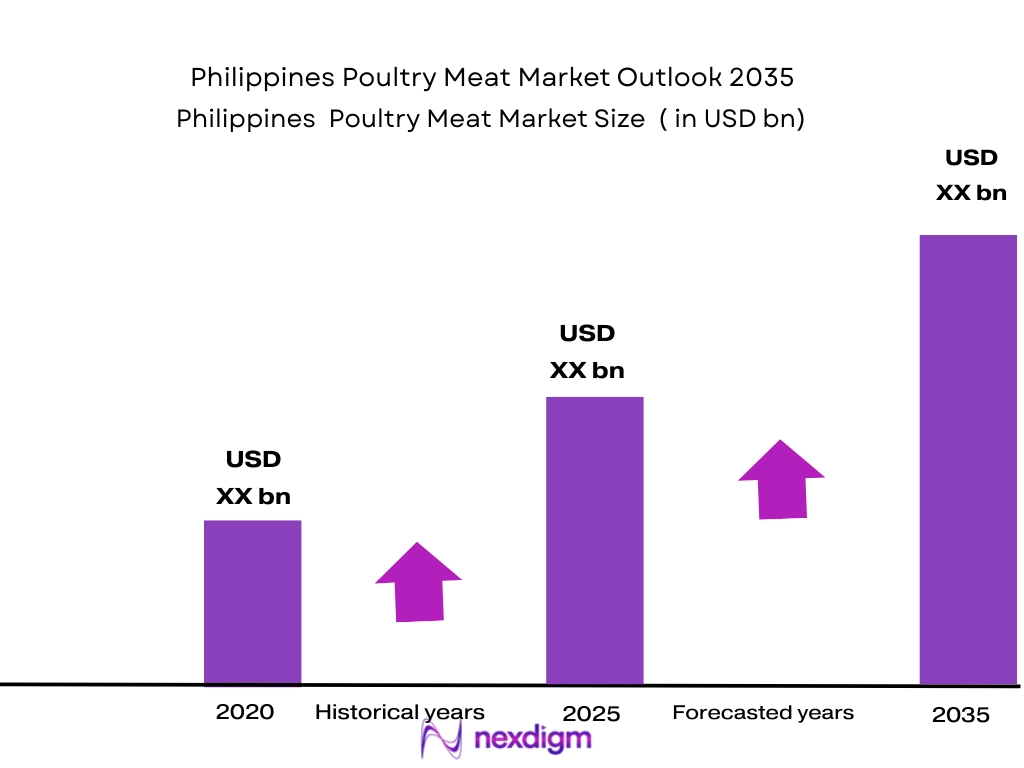
The Philippines poultry meat market is valued at USD ~ billion, based on a five-year historical analysis of domestic consumption, production, imports, and retail pricing. The market is driven by poultry’s position as the country’s most affordable animal protein, supported by chicken meat production of around 1.57 million metric tons and total chicken meat consumption of nearly 1.92 million metric tons. Domestic output growth has been supported by commercial broiler expansion, lower feed-cost pressure, and steady household demand. The market is expected to record a CAGR of around 2.6% during 2024–2030.
The market is concentrated around Luzon, Metro Manila, CALABARZON, Central Luzon, Cebu, Davao, and Cagayan de Oro, as these areas combine large consumer bases, dense foodservice networks, and strong logistics access. Metro Manila drives modern retail and quick-service restaurant demand, while Central Luzon and CALABARZON remain important poultry production and processing hubs. Cebu and Davao support Visayas and Mindanao distribution due to urbanization, cold-chain investments, and proximity to regional wholesale channels.
Market Segmentation
By Product Type
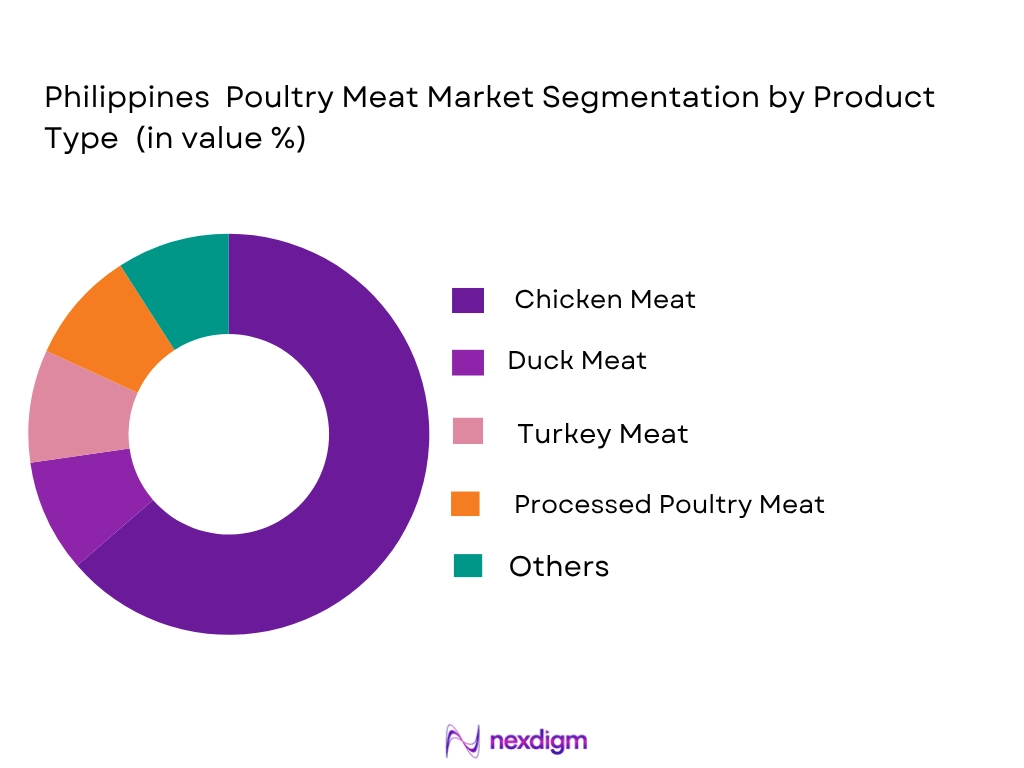
The Philippines poultry meat market is segmented by product type into chicken meat, duck meat, turkey meat, processed poultry meat, and others. Chicken meat holds the dominant market share due to its affordability, wide household acceptance, and strong integration across wet markets, supermarkets, quick-service restaurants, and institutional buyers. Broiler chicken is the preferred protein for everyday meals because it is cheaper than pork and beef, easier to prepare, and widely available in fresh and frozen formats. Domestic commercial farms and integrators have also scaled chicken output more effectively than other poultry categories, ensuring consistent supply. Processed poultry meat is gaining traction through nuggets, marinated chicken, sausages, and ready-to-cook products, but it remains smaller than raw chicken because many Filipino consumers still prefer fresh cuts from wet markets and neighborhood meat retailers.
By Distribution Channel
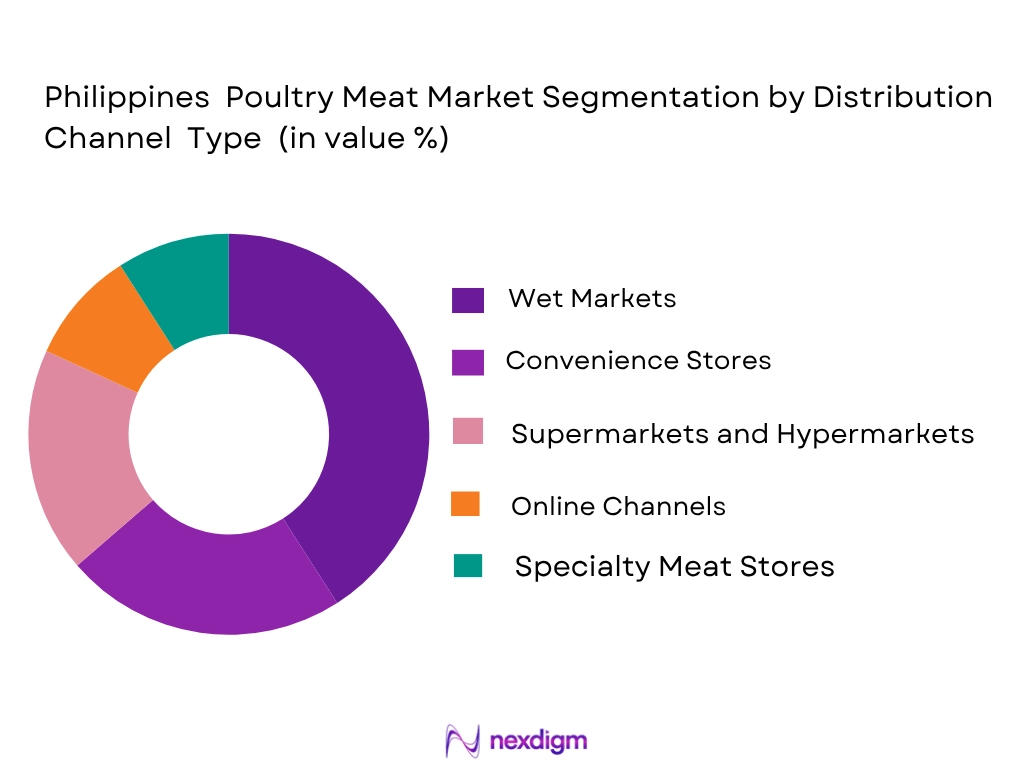
The Philippines poultry meat market is segmented by distribution channel into wet markets, supermarkets and hypermarkets, convenience stores, online channels, specialty meat stores, and direct sales and foodservice supply. Wet markets dominate the market because they remain the preferred purchase point for fresh chicken among Filipino households, especially outside premium urban districts. Consumers continue to rely on wet markets for daily or frequent purchases, flexible quantities, perceived freshness, and lower prices compared with packaged retail formats. Supermarkets and hypermarkets are growing in Metro Manila, Cebu, Davao, and other urban centers due to demand for chilled, frozen, branded, and hygienically packed poultry. Direct foodservice supply is also significant because chicken is a core input for quick-service restaurants, hotels, catering operators, and institutional kitchens. Online channels remain smaller but are expanding through grocery apps and meat-delivery platforms.
Competitive Landscape
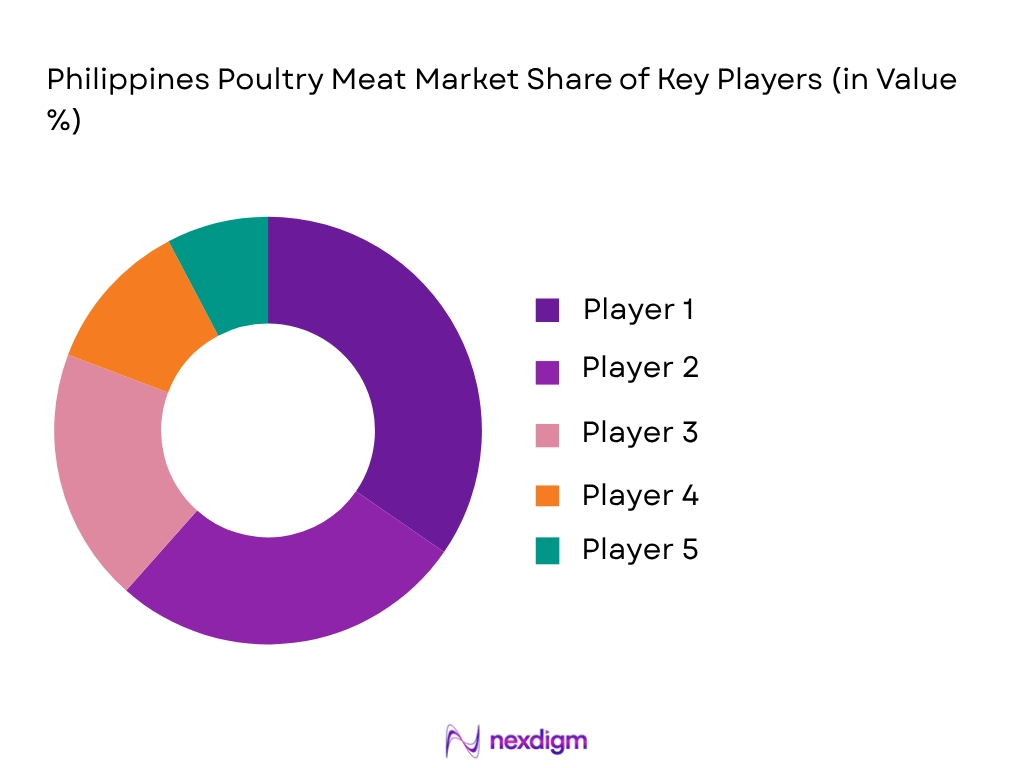
The Philippines poultry meat market is moderately consolidated, led by integrated poultry producers, branded meat processors, and feed-to-farm supply chain operators. Large players such as San Miguel Foods, Bounty Fresh, Cargill Philippines, Vitarich, and Foster Foods benefit from breeding, feed, processing, cold-chain, and retail distribution capabilities. Competition is shaped by price, supply reliability, disease management, product freshness, food safety, and the ability to serve both household and foodservice demand.
| Company | Establishment Year | Headquarters | Core Poultry Category | Distribution Strength | Processing Capability | Foodservice Presence | Retail Brand Strength | Strategic Positioning |
| San Miguel Foods | 1956 | Pasig City, Philippines | ~ | ~ | ~ | ~ | ~ | ~ |
| Bounty Fresh Food Inc. | 1986 | Quezon City, Philippines | ~ | ~ | ~ | ~ | ~ | ~ |
| Cargill Philippines | 1948 | Taguig City, Philippines | ~ | ~ | ~ | ~ | ~ | ~ |
| Vitarich Corporation | 1950 | Bulacan, Philippines | ~ | ~ | ~ | ~ | ~ | ~ |
| Foster Foods Inc. | 1990s | Philippines | ~ | ~ | ~ | ~ | ~ | ~ |
Philippines Poultry Meat Market Analysis
Growth Drivers
Rising Consumption of Poultry Meat as an Affordable Protein Source
Poultry meat consumption in the Philippines is increasing because chicken is one of the most affordable and widely accepted animal protein sources. It is commonly used in household meals, restaurants, quick-service chains, street food, and institutional catering. Compared with beef and pork, chicken is often seen as more affordable, easier to cook, and suitable for many local dishes. Rising food prices have also encouraged consumers to choose cost-effective protein options that still provide nutrition and taste. As population growth, urban lifestyles, and changing meal habits continue to influence food demand, poultry meat remains a practical choice for Filipino consumers. This supports steady demand across fresh, frozen, and processed poultry products.
Rising Demand for Processed and Ready-to-Cook Poultry Products
Demand for processed and ready-to-cook poultry products is growing in the Philippines as consumers seek convenience, longer shelf life, and faster meal preparation. Products such as marinated chicken, nuggets, sausages, patties, frozen chicken portions, and ready-to-cook meal packs are becoming more popular among urban households and working consumers. Quick-service restaurants and foodservice operators also use processed poultry because it supports consistent taste, portion control, and faster kitchen operations. Modern retail stores, supermarkets, convenience stores, and online delivery platforms are improving access to these products. This trend allows poultry companies to expand beyond raw chicken sales and develop higher-margin product lines. As convenience becomes more important, value-added poultry products will remain a key growth driver.
Market Challenges
Disease Outbreaks and Biosecurity Risks
Disease outbreaks are a major challenge for the Philippines poultry meat market. Poultry farms can be affected by avian influenza, Newcastle disease, and other infections that reduce flock health, productivity, and supply stability. Outbreaks may lead to bird mortality, culling, movement restrictions, higher veterinary expenses, and temporary supply shortages. Strong biosecurity measures are necessary, including sanitation, vaccination, farm access control, disease monitoring, and worker training. However, maintaining these systems can be costly, especially for small and medium poultry farmers. Disease risks can also weaken consumer confidence and increase pressure on regulators and producers. Therefore, effective disease control and biosecurity investment remain critical for stable poultry market growth.
Fluctuation in Feed Prices
Feed price fluctuation is a significant challenge for poultry producers in the Philippines. Feed ingredients such as corn and soybean meal make up a large share of poultry production costs. Changes in global commodity prices, local crop supply, import costs, fuel prices, and exchange rates can directly affect producer margins. When feed prices rise, poultry companies may need to increase chicken prices, but price-sensitive consumers may reduce purchases or shift to cheaper alternatives. Smaller producers are especially vulnerable because they have limited purchasing power and less ability to absorb cost increases. Feed cost volatility also makes production planning difficult. As a result, managing feed supply and price risk remains a key industry challenge.
Opportunities
Rising Demand for Processed and Value-Added Poultry Products
Rising demand for processed and value-added poultry products creates a strong opportunity in the Philippines poultry meat market. Urban consumers are increasingly looking for convenient products that are easy to cook, hygienically packed, and suitable for quick meals. Items such as breaded chicken, nuggets, sausages, marinated cuts, frozen portions, and ready-to-cook meal kits can attract households, students, working professionals, and foodservice buyers. These products also offer longer shelf life and better portion control compared with loose fresh meat. Poultry companies can use this trend to build stronger brands, improve margins, and reduce dependence on basic raw chicken sales. Growth in supermarkets, convenience stores, and e-commerce platforms further supports this opportunity.
Growth in Food Service and Quick Service Restaurant Channels
The expansion of foodservice and quick-service restaurant channels offers strong growth potential for poultry meat suppliers in the Philippines. Chicken-based meals are highly popular across fast-food chains, casual dining restaurants, cafés, delivery kitchens, and catering businesses. Poultry is widely used because it is versatile, affordable, and suitable for fried, grilled, roasted, and processed menu items. As consumers increasingly eat outside the home or order food through delivery apps, restaurants require consistent poultry supply, standardized cuts, and processed ingredients. This creates opportunities for producers to develop long-term supply contracts with foodservice operators. Growing demand from restaurant chains can support higher sales volumes and encourage investment in processing and cold chain capacity.
Future Outlook
The Philippines poultry meat market is expected to expand steadily over the next five years, supported by rising protein consumption, continued substitution from pork to chicken, and growth in foodservice demand. Commercial broiler producers are likely to invest further in feed efficiency, biosecurity, processing, and cold-chain systems. Urban households will increase demand for branded, chilled, frozen, marinated, and ready-to-cook chicken products, while wet markets will continue to account for a large share of fresh poultry sales.
Major Players
- San Miguel Foods
- Bounty Fresh Food Inc.
- Cargill Philippines
- Foster Foods Inc.
- Vitarich Corporation
- Magnolia Chicken
- Monterey Foods Corporation
- Jollibee Foods Corporation
- Tyson Foods Philippines
- Charoen Pokphand Foods Philippines
- Universal Robina Corporation
- Purefoods-Hormel Company Inc.
- Robina Farms
- Pilmico Foods Corporation
- General Milling Corporation
Key Target Audience
- Poultry meat producers and integrators
- Broiler farming companies
- Meat processors and value-added poultry manufacturers
- Supermarkets, hypermarkets, and modern grocery chains
- Quick-service restaurant chains and foodservice operators
- Cold-chain logistics and warehousing companies
- Investments and venture capitalist firms
- Government and regulatory bodies
Research Methodology
Step 1: Identification of Key Variables
The initial phase involves constructing an ecosystem map covering poultry farms, broiler integrators, feed suppliers, processors, importers, distributors, wet markets, modern retailers, and foodservice buyers. This step is supported by secondary research and proprietary databases to identify the core variables influencing poultry meat demand, pricing, production, and consumption.
Step 2: Market Analysis and Construction
In this phase, historical data is compiled and analyzed for production, imports, retail demand, wholesale distribution, and foodservice utilization. The analysis evaluates domestic chicken output, market availability, pricing movement, and channel-level demand to estimate the value and volume structure of the Philippines poultry meat market.
Step 3: Hypothesis Validation and Expert Consultation
Market hypotheses are validated through structured consultations with poultry producers, feed suppliers, meat processors, distributors, retailers, and foodservice procurement professionals. These discussions provide operational insights on production cycles, margins, disease risk, retail movement, and demand patterns across major regions.
Step 4: Research Synthesis and Final Output
The final phase integrates secondary findings, industry interviews, market modeling, and cross-checks with production and trade indicators. The output is refined to reflect market size, segmentation, competitive landscape, growth drivers, challenges, and future outlook for the Philippines poultry meat market.

- Executive Summary
- Research Methodology (Market Definitions and Assumptions, Abbreviations, Market Sizing Approach, Consolidated Research Approach, Understanding Market Potential Through In-Depth Industry Interviews, Primary Research Approach, Limitations and Future Conclusions)

- Definition and Scope
- Market Dynamics Overview
- Market Genesis
- Major Players and Market Timeline
- Business Cycle and Trends
- Supply Chain and Value Chain Analysis

- Growth Drivers
Rising Consumption of Poultry Meat as an Affordable Protein Source
Increasing Population and Urbanization
Growing Demand from Quick Service Restaurants and Food Service Chains
Expansion of Modern Retail and Cold Chain Infrastructure
Rising Demand for Processed and Ready-to-Cook Poultry Products - Market Challenges
Disease Outbreaks and Biosecurity Risks
Fluctuation in Feed Prices
High Competition and Price Sensitivity
Cold Chain and Logistics Constraints
Regulatory Compliance and Food Safety Requirements - Opportunities
Rising Demand for Processed and Value-Added Poultry Products
Expansion of Online Meat Delivery Platforms
Growth in Food Service and Quick Service Restaurant Channels
Increasing Demand for Halal-Certified Poultry Meat
Investment in Poultry Farming, Processing, and Cold Chain Infrastructure - Key Trends
Shift Toward Branded and Packaged Poultry Meat
Rising Preference for Fresh and Chilled Poultry Products
Growing Popularity of Ready-to-Cook and Marinated Poultry Products
Increasing Focus on Food Safety and Traceability
Expansion of Poultry Product Lines by Leading Players - Government Regulations
- SWOT Analysis
- Porter’s Five Forces

- By Value, 2020–2025
- By Volume, 2020–2025
- By Average Price, 2020–2025

- By Product Type (In Value %)
Chicken Meat
Duck Meat
Turkey Meat
Processed Poultry Meat
Others - By Form (In Value %)
Fresh Poultry Meat
Frozen Poultry Meat
Chilled Poultry Meat
Processed Poultry Meat - By Processing Type (In Value %)
Raw Poultry Meat
Marinated Poultry Meat
Ready-to-Cook Poultry Meat
Ready-to-Eat Poultry Meat - By Application (In Value %)
Household Consumption
Food Service and Restaurants
Hotels and Catering
Food Processing Industry
Institutional Consumption - By Distribution Channel (In Value %)
Wet Markets
Supermarkets and Hypermarkets
Convenience Stores
Online Channels
Specialty Meat Stores - By Region (In Value %)
National Capital Region
Luzon
Visayas
Mindanao
Rest of Philippines

- Market Share of Major Players by Value/Volume
- Market Share of Major Players by Product Type
- Cross Comparison Parameters (Company Overview, Business Strategies, Recent Developments, Strength, Weakness, Organizational Structure, Revenues, Revenues by Product Type, Number of Touchpoints Distribution Channels, Number of Dealers and Distributors, Margins, Production Plant, Capacity, Unique Value Offering and Others)
- SWOT Analysis of Major Players
- Pricing Analysis Based on Product Categories for Major Players
- Detailed Profiles of Major Companies
San Miguel Foods
Bounty Fresh Food Inc.
Cargill Philippines
Foster Foods Inc.
Vitarich Corporation
Magnolia Chicken
Monterey Foods Corporation
Jollibee Foods Corporation
Tyson Foods Philippines
Charoen Pokphand Foods Philippines
Universal Robina Corporation
Purefoods-Hormel Company Inc.
Robina Farms
Pilmico Foods Corporation
General Milling Corporation

- Market Demand and Utilization
- Purchasing Power and Budget Allocations
- Regulatory and Compliance Requirements
- Needs, Desires, and Pain Point Analysis
- Decision-Making Process

- By Value, 2026–2035
- By Volume, 2026–2035
- By Average Price, 2026–2035


 Request a Sample
 Ask for Customization
 Get a Quote
 Enquire Now