

 Download PDF
 Download PDF
Market Overview
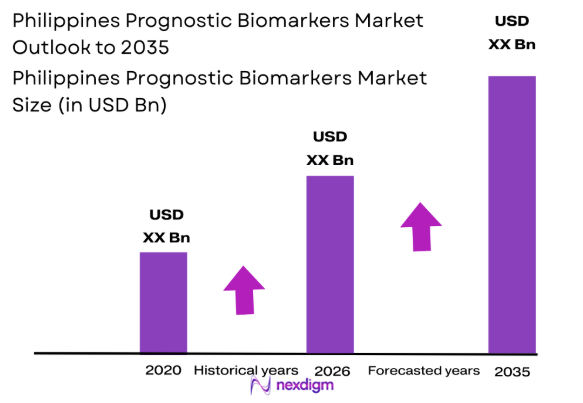
The Philippines Prognostic Biomarkers market is set for substantial growth, driven by increasing demand for early disease detection, particularly in oncology, cardiology, and infectious diseases. The market is supported by the advancement of diagnostic technologies, such as next-generation sequencing (NGS) and liquid biopsy platforms, which offer more accurate and non-invasive diagnostic options. Based on a recent historical assessment, the market size for prognostic biomarkers is projected to reach USD ~ billion, bolstered by government initiatives aimed at improving healthcare access and research capabilities.
The dominant cities of Metro Manila and Quezon City are central to the market’s growth due to their developed healthcare infrastructure, including numerous research institutions, diagnostic centers, and hospitals. These urban areas serve as hubs for both the adoption and innovation of new diagnostic technologies. The ongoing focus on expanding healthcare access to rural regions also contributes to growing demand for diagnostic tools, with initiatives aimed at bridging the gap between urban and rural healthcare availability.
Market Segmentation
By Product Type
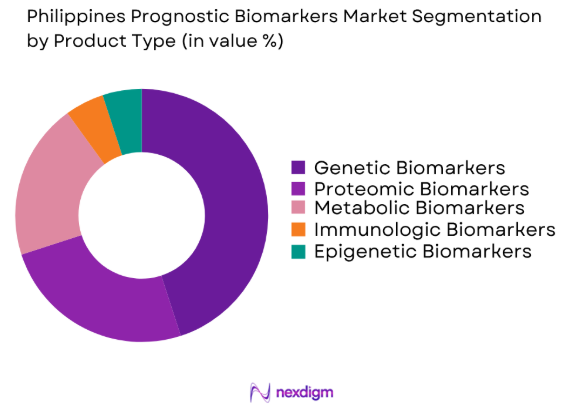
The Philippines prognostic biomarkers market is segmented by product type into genetic biomarkers, proteomic biomarkers, and metabolic biomarkers. Recently, genetic biomarkers have shown dominant market share due to the rising prevalence of genetically influenced diseases such as cancer, diabetes, and cardiovascular diseases. Advancements in genetic testing and sequencing technologies, such as next-generation sequencing (NGS), have played a major role in boosting the demand for genetic biomarkers. The shift towards personalized medicine, which utilizes genetic data to tailor treatments, has further propelled this segment, making it a key contributor to the market’s growth.
By Platform Type
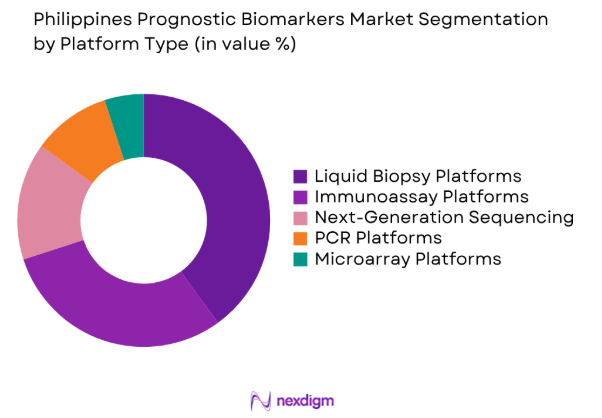
The Philippines Prognostic Biomarkers market is segmented by platform type into liquid biopsy platforms, immunoassay platforms, next-generation sequencing (NGS) platforms, PCR platforms, and microarray platforms. Liquid biopsy platforms have dominated the market due to their non-invasive nature, which is particularly beneficial for early cancer detection and monitoring. These platforms allow the detection of biomarkers from blood samples, reducing the need for invasive procedures such as tissue biopsies. With the increasing demand for early detection and monitoring of chronic diseases like cancer, liquid biopsy platforms are expected to continue their dominance in the market.
Competitive Landscape
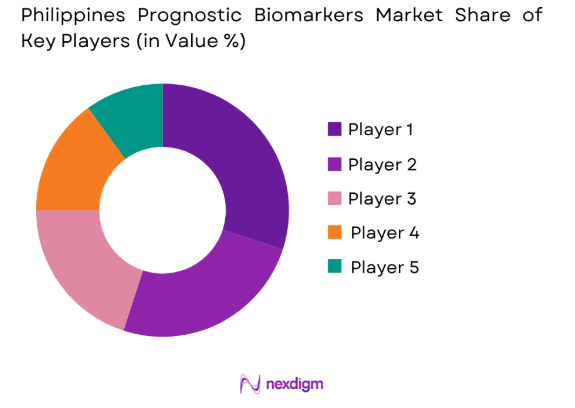
The competitive landscape in the Philippines prognostic biomarkers market is characterized by the presence of both local and international players. Major global diagnostic companies are expanding their presence in the country by establishing partnerships with local healthcare providers, research institutions, and government bodies. This competitive environment encourages innovation and the development of advanced diagnostic tools. As the market grows, the influence of key players like Roche Diagnostics, Thermo Fisher Scientific, and Abbott Laboratories is expected to drive further advancements in biomarker testing technologies.
| Company Name | Establishment Year | Headquarters | Technology Focus | Market Reach | Key Products | Revenue (USD) | Additional Parameter |
| Roche Diagnostics | 1896 | Basel, Switzerland | ~ | ~ | ~ | ~ | ~ |
| Thermo Fisher Scientific | 1956 | Waltham, MA, USA | ~ | ~ | ~ | ~ | ~ |
| Abbott Laboratories | 1888 | Abbott Park, USA | ~ | ~ | ~ | ~ | ~ |
| Illumina | 1998 | San Diego, CA, USA | ~ | ~ | ~ | ~ | ~ |
| Qiagen | 1984 | Hilden, Germany | ~ | ~ | ~ | ~ | ~ |
Philippines Prognostic Biomarkers Market Analysis
Growth Drivers
Technological Advancements in Biomarker Discovery
The growth of the Philippines prognostic biomarkers market is driven by advancements in biomarker discovery technologies, such as next-generation sequencing (NGS) and liquid biopsy. These innovations have enhanced the sensitivity and accuracy of biomarker testing, enabling early detection of diseases like cancer, diabetes, and cardiovascular conditions, which improves treatment outcomes. The rise of personalized medicine, which uses genetic and molecular data to tailor treatments, further fuels the demand for biomarkers. As the healthcare system adopts precision medicine, the use of biomarkers, particularly in oncology and cardiology, will expand, supporting the continued growth of the market and driving significant improvements in patient care.
Rising Healthcare Awareness and Demand for Early Detection
Another significant growth driver is the rising awareness of healthcare in the Philippines and the increasing demand for early disease detection. As healthcare education improves, individuals are more likely to seek early medical intervention, particularly for chronic diseases that require timely diagnosis for effective treatment. This trend has been further encouraged by the Philippine government’s focus on improving public health and access to medical services, including advanced diagnostic tools. Biomarkers play a crucial role in early detection, especially for cancer and heart diseases, which are becoming more prevalent in the country. The growing demand for non-invasive, accurate, and affordable diagnostic solutions will continue to fuel the market’s expansion.
Market Challenges
High Cost of Diagnostic Tests
One of the primary challenges facing the Philippines prognostic biomarkers market is the high cost of diagnostic tests. Advanced testing technologies, such as next-generation sequencing (NGS) and liquid biopsy platforms, are expensive due to the need for sophisticated equipment, reagents, and skilled professionals. This high cost makes it difficult for healthcare providers, especially in rural or less-developed regions, to afford these tests, limiting access for a significant portion of the population. The affordability issue is compounded by the economic disparity across different regions in the Philippines. To address this challenge, the industry must focus on making diagnostic tools more accessible, with an emphasis on reducing costs through technological advancements, economies of scale, and government support for healthcare accessibility.
Regulatory and Ethical Concerns
The Philippines prognostic biomarkers market is also challenged by regulatory and ethical issues related to genetic testing. As genetic testing involves sensitive patient data, there are concerns about data privacy, informed consent, and the ethical use of genetic information. The regulatory framework for biomarker testing is still evolving, and companies must navigate complex approval processes to introduce new diagnostic tools to the market. Additionally, ethical concerns about genetic testing, particularly in relation to patient privacy and the potential misuse of genetic data, need to be addressed. Streamlining the regulatory process and establishing clear guidelines for the ethical use of genetic information will be essential for the growth of the market.
Opportunities
Expansion of Personalized Medicine
The growing shift toward personalized medicine offers significant opportunities for the Philippines prognostic biomarkers market. Personalized medicine tailors treatments to the specific genetic makeup of individuals, improving the effectiveness of therapies and minimizing side effects. As the demand for more targeted and individualized treatments increases, the need for biomarkers that can guide these treatments will grow. The Philippines, with its developing healthcare infrastructure and rising adoption of technology, is well-positioned to capitalize on this trend. The expansion of personalized medicine in oncology, cardiology, and rare diseases will create a growing market for prognostic biomarkers, driving further research and development in this area. Companies that can deliver advanced biomarker solutions for personalized medicine will gain a competitive edge in the market.
Strategic Partnerships and Collaborations
Strategic collaborations between diagnostic companies, research institutions, and pharmaceutical firms present significant growth opportunities in the Philippines prognostic biomarkers market. These partnerships can foster the development of new biomarker-based diagnostics and create synergies that drive innovation. Collaborations can also facilitate the sharing of resources, including funding, expertise, and access to new markets. Pharmaceutical companies, in particular, can benefit from incorporating biomarkers into drug development and personalized treatment programs, improving the precision and efficacy of therapies. As the healthcare sector continues to evolve, these partnerships will be critical to the expansion of the prognostic biomarkers market, helping to accelerate the commercialization of new biomarker tests.
Future Outlook
The future outlook for the Philippines prognostic biomarkers market is promising, driven by continuous technological advancements, a focus on personalized medicine, and increasing healthcare awareness. The growing adoption of non-invasive diagnostic tools, such as liquid biopsy platforms, will lead to more accessible and efficient early disease detection. The Philippine government’s commitment to improving healthcare infrastructure and support for precision medicine will provide a conducive environment for the growth of biomarker testing. Additionally, advances in genomics and data analytics are expected to improve the accuracy and affordability of biomarker testing, making it more accessible to a wider population. Over the next five years, the market is expected to expand rapidly, driven by these trends and the continued integration of advanced diagnostic technologies in clinical practice.
Major Players
- Roche Diagnostics
- ThermoFisher Scientific
- Abbott Laboratories
- Illumina
- Qiagen
- Siemens Healthineers
- Bio-Rad Laboratories
- Hologic
- PerkinElmer
- Agilent Technologies
- Sysmex Corporation
- BioMérieux
- GE Healthcare
- ThermoFisher Scientific
- Mindray Medical
Key Target Audience
- Investments and venture capitalist firms
- Government and regulatory bodies
- Pharmaceutical companies
- Biotechnology firms
- Diagnostic laboratories
- Healthcare providers
- Research institutions
- Contract Research Organizations (CROs)
Research Methodology
Step 1: Identification of Key Variables
We identify and define the key market variables, such as market size, growth drivers, and challenges, to shape the study’s framework.
Step 2: Market Analysis and Construction
We conduct a detailed analysis of market segments and sub-segments, along with an evaluation of key trends, market share, and competitive dynamics.
Step 3: Hypothesis Validation and Expert Consultation
Market hypotheses are validated through interviews with industry experts and consultations with stakeholders across the value chain.
Step 4: Research Synthesis and Final Output
We synthesize all research findings to develop a comprehensive market report, ensuring validity and accuracy through cross-referencing and validation.

- Executive Summary
- Research Methodology (Definitions, Scope, Industry Assumptions, Market Sizing Approach, Primary & Secondary Research Framework, Data Collection & Verification Protocol, Analytic Models & Forecast Methodology, Limitations & Research Validity Checks)

- Market Definition and Scope
- Value Chain & Stakeholder Ecosystem
- Regulatory / Certification Landscape
- Sector Dynamics Affecting Demand
- Strategic Initiatives & Infrastructure Growth

- Growth Drivers
Rising Incidence of Chronic Diseases
Advancements in Biomarker Discovery Technology
Growing Government Support for Healthcare Innovation - Market Challenges
High Cost of Diagnostic Tests
Regulatory and Ethical Concerns
Lack of Healthcare Infrastructure in Rural Areas - Market Opportunities
Expansion of Personalized Medicine
Partnerships between Biotech Firms and Healthcare Providers
Development of Affordable Diagnostic Solutions - Trends
Increasing Adoption of Liquid Biopsy
Integration of Artificial Intelligence in Biomarker Analysis
Growth in Mobile Health Monitoring Systems - Government Regulations
- SWOT Analysis of Key Competitors
- Porter’s Five Forces

- By Market Value, 2020-2025
- By Installed Units, 2020-2025
- By Average System Price, 2020-2025
- By System Complexity Tier, 2020-2025

- By System Type (In Value%)
Genetic Biomarkers
Proteomic Biomarkers
Metabolomic Biomarkers
Immunologic Biomarkers
Epigenetic Biomarkers - By Platform Type (In Value%)
Liquid Biopsy Platforms
Immunoassay Platforms
Next-Generation Sequencing (NGS) Platforms
PCR Platforms
Microarray Platforms - By Fitment Type (In Value%)
Laboratory-Based Solutions
Point-of-Care Solutions
Home Care Solutions
Mobile Health Applications
Wearable Devices - By End User Segment (In Value%)
Healthcare Providers
Pharmaceutical and Biotech Companies
Research Institutes
Contract Research Organizations (CROs)
Diagnostic Laboratories - By Procurement Channel (In Value%)
Direct Procurement
Healthcare Supply Chains
Online Platforms
Government Procurement Programs
Private Sector Procurement

- Market Share Analysis
- Cross Comparison Parameters (Genetic Biomarkers, Proteomic Biomarkers, Immunoassay Platforms, Next-Generation Sequencing, Market Reach)
- SWOT Analysis of Key Competitors
- Pricing & Procurement Analysis
- Key Players
Roche Diagnostics
Thermo Fisher Scientific
Abbott Laboratories
Illumina
Siemens Healthineers
GE Healthcare
Qiagen
Bio-Rad Laboratories
Merck Group
Agilent Technologies
Sysmex Corporation
Hologic
PerkinElmer
Asuragen
LabCorp

- Increasing Demand from Hospitals and Clinics
- Role of Research Institutes in Advancing Biomarker Applications
- Growth of Diagnostic Laboratories
- Rising Investments from Pharmaceutical Companies

- Forecast Market Value, 2026-2035
- Forecast Installed Units, 2026-2035
- Price Forecast by System Tier, 2026-2035
- Future Demand by Platform, 2026-2035


 Request a Sample
 Ask for Customization
 Get a Quote
 Enquire Now