

 Download PDF
 Download PDF
Market Overview
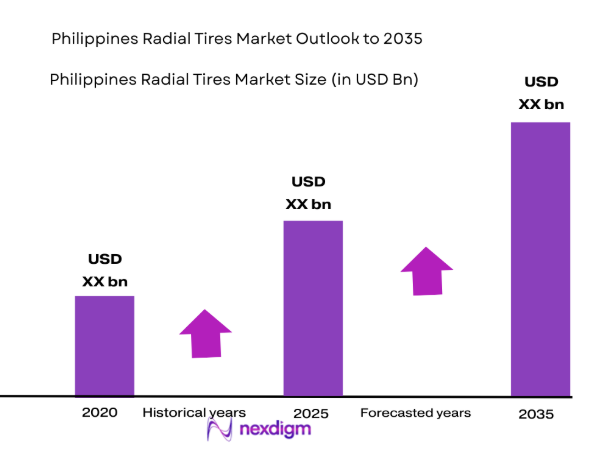
The Philippines radial tire market is driven by the increasing vehicle production and demand for enhanced performance tires. Based on a recent historical assessment, the market size is valued in billions ~ USD, with growing demand from both the passenger and commercial vehicle sectors. The market is primarily propelled by the expanding automotive industry, which requires durable, high-performance tires that can withstand varying road conditions. The continuous development of infrastructure, including road networks and urbanization, further supports the rising demand for tires.
The Philippines dominates the radial tire market due to its strategic location within Southeast Asia and a growing automotive sector. Major cities such as Metro Manila, Cebu, and Davao are key drivers of market growth due to their significant vehicle populations and infrastructure developments. The demand for tires is further boosted by the rapid urbanization and the increasing preference for high-quality, long-lasting tires in both passenger vehicles and commercial fleets. Additionally, local manufacturers and international brands contribute to the competitive landscape, ensuring tire availability across various segments.
Market Segmentation
By Product Type
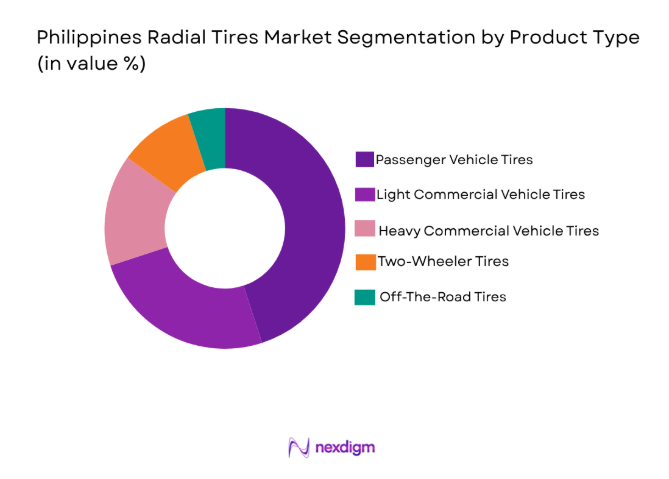
The Philippines radial tire market is segmented by product type into passenger vehicle tires, light commercial vehicle tires, heavy commercial vehicle tires, two-wheeler tires, and off-the-road tires. The passenger vehicle tire sub-segment holds a dominant market share due to the continuous increase in passenger vehicle production, demand for fuel efficiency, and overall vehicle longevity. The increasing preference for high-performance tires for daily commuters and the rising disposable income of the middle class have been key contributors to this growth. As the demand for better traction, durability, and fuel efficiency continues to rise, passenger vehicle radial tires maintain their position as the leading product in the market.
By Platform Type
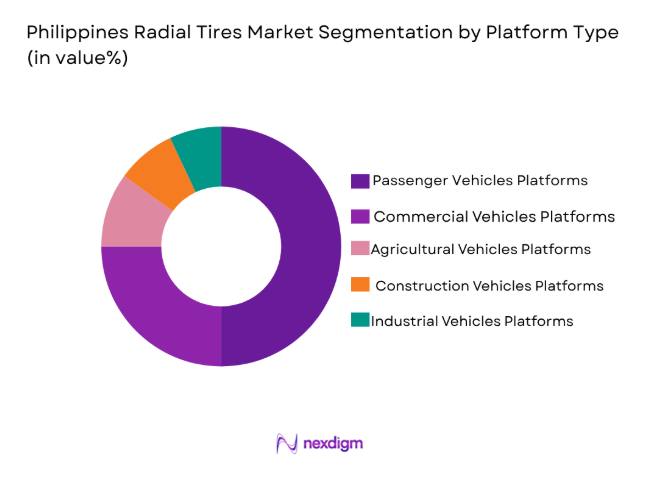
The market is segmented by platform type into passenger vehicle platforms, commercial vehicle platforms, agricultural vehicle platforms, construction vehicle platforms, and industrial vehicle platforms. Among these, passenger vehicle platforms lead the market share, driven by the increasing adoption of radial tires in modern vehicles, which require better fuel efficiency and longer tire lifespan. The growing preference for tires that enhance driving performance and safety features on passenger cars continues to drive this trend. The commercial and agricultural vehicle segments are also gaining traction, but the passenger vehicle platform remains the dominant driver for radial tire demand in the country.
Competitive Landscape
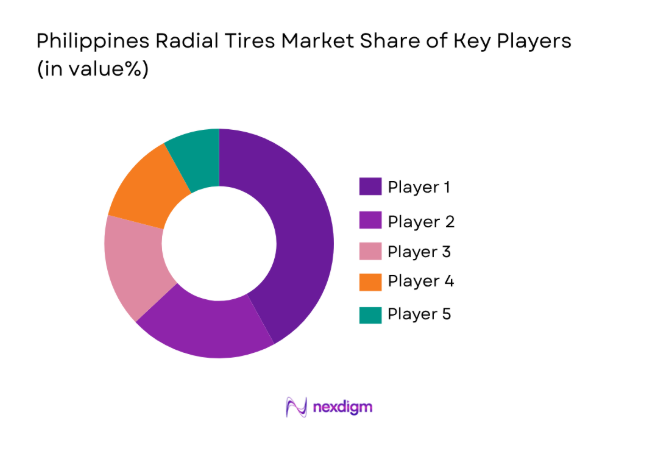
The Philippines radial tire market has a highly competitive landscape, with several global and local players vying for market dominance. Consolidation is evident with international companies forming strategic alliances or partnerships with local distributors to expand their reach. Major players are focused on product innovation, especially in terms of tire durability, performance, and fuel efficiency. The influence of prominent global tire manufacturers has led to increased competition, contributing to market growth and pushing companies to continuously innovate. Local players are gaining traction by focusing on price-sensitive segments while offering high-quality products.
| Company Name | Establishment Year | Headquarters | Technology Focus | Market Reach | Key Products | Revenue | Market-Specific Parameter |
| Bridgestone | 1931 | Japan | ~ | ~ | ~ | ~ | ~ |
| Michelin | 1889 | France | ~ | ~ | ~ | ~ | ~ |
| Goodyear | 1898 | USA | ~ | ~ | ~ | ~ | ~ |
| Continental | 1871 | Germany | ~ | ~ | ~ | ~ | ~ |
| Pirelli | 1872 | Italy | ~ | ~ | ~ | ~ | ~ |
Philippines Radial Tires Market Analysis
Growth Drivers
Increasing Vehicle Production
The growth of the Philippines radial tire market is significantly influenced by the rise in vehicle production, especially passenger cars and light commercial vehicles. This increase is driven by the expanding middle class and greater disposable income, leading to higher vehicle sales. The Filipino automotive industry is seeing consistent growth, with more consumers opting for vehicles due to improved financial stability and affordability of financing options. Additionally, increased availability of vehicle models tailored to the needs of Filipino consumers further fuels the demand. The ongoing improvement in the automotive industry, with a focus on more fuel-efficient and high-performance tires, is pushing the demand for radial tires. As vehicle manufacturers incorporate advanced technology and focus on durability, tires are also evolving to meet these needs. Manufacturers are focusing on offering superior products that cater to these demands, ensuring enhanced safety, longer tire life, and improved fuel efficiency, which directly contributes to market expansion. A surge in demand for vehicles with longer lifespans and lower operating costs encourages consumers to opt for radial tires. The Philippines also has a growing automotive aftermarket, where replacement and upgrade demand for radial tires is increasing as consumers become more conscious about quality, performance, and tire longevity. With the automotive sector evolving, tire manufacturers continue to innovate, offering products that meet specific consumer demands, including better handling, traction, and weather resistance.
Infrastructure Development
The continuous development of infrastructure in the Philippines has also been a major driver of radial tire demand. As urbanization progresses and road networks improve, the demand for durable and reliable tires increases. With a growing population and more vehicles on the road, cities like Metro Manila, Cebu, and Davao are experiencing an expansion in infrastructure projects. The development of new expressways, urban roads, and highways to support transportation networks directly impacts tire consumption, as these areas require high-performance tires suited for modern roads. Moreover, these infrastructure projects ensure the safer and smoother travel of vehicles, contributing to higher demand for tires with superior durability and performance. These advancements lead to the expansion of commercial transportation networks, as better connectivity between cities enhances logistics and transportation. With more businesses relying on transportation for goods and services, the commercial vehicle market sees significant growth, pushing demand for radial tires. Furthermore, growing cities like Metro Manila and Davao see increased vehicle usage, making tire replacement and upgrading a necessity, thereby driving the demand for high-performance radial tires. Enhanced infrastructure also reduces road wear and tear, ensuring that tires last longer and require fewer replacements. As cities and towns continue to grow, so does the need for high-quality tires that can sustain various road conditions and carry heavier vehicle loads.
Market Challenges
Raw Material Price Volatility
One of the key challenges in the Philippines radial tire market is the volatility in raw material prices, especially for rubber, a critical component in tire manufacturing. The fluctuation in natural rubber prices, driven by factors such as weather conditions, geopolitical events, and global supply chain issues, significantly affects production costs. Prices of rubber are often impacted by shifts in global supply and demand, making the cost of production unpredictable. In addition, the prices of other essential materials used in tire manufacturing, such as steel, oil-based products, and chemical additives, also fluctuate, further impacting overall tire prices. This volatility in raw material costs creates an unstable market environment for tire manufacturers, making it difficult to maintain profit margins while offering competitive prices. As a result, tire manufacturers are forced to adjust their pricing strategies to absorb higher costs, which often leads to price hikes for consumers. The inability to stabilize raw material prices presents a significant challenge to maintaining affordable product pricing while ensuring quality. Tire manufacturers must navigate these challenges while continuing to meet the growing demand for durable, high-performance tires. The industry’s vulnerability to changes in raw material costs could also potentially lead to supply shortages or delays, further complicating the market dynamics.
Competition from Importers
Another challenge facing the Philippine radial tire market is the increasing competition from imported tires, particularly those from China and other Southeast Asian countries. These imported tires often come at lower prices, making them more appealing to cost-conscious consumers, especially in the aftermarket segment. While these products provide affordable options for budget-conscious customers, there is a concern about their quality compared to locally produced or high-end international brand tires. Some imported tires may not meet the same durability standards as premium local and international brands, which could lead to reduced consumer confidence in such products. Many imported tires are positioned as budget-friendly alternatives, but some lack the technological innovations seen in premium offerings, such as better fuel efficiency, longer lifespan, and enhanced road safety. As these lower-priced imported tires flood the market, local tire manufacturers face difficulties maintaining competitive pricing without compromising quality. The influx of inexpensive tires could potentially erode market share from established brands that prioritize quality and performance. Additionally, regulatory challenges related to the import of subpar products may affect consumer perception of imported tires and lead to calls for stricter standards, further complicating the competitive landscape. Balancing quality and price remains a challenge for local manufacturers who need to remain competitive in both the local and regional markets, particularly as the tire import segment grows.
Opportunities
Growth in Electric Vehicle Adoption
As the electric vehicle (EV) market in the Philippines expands, the demand for specialized radial tires designed for EVs presents a unique growth opportunity. The EV market is gaining momentum due to the increasing popularity of electric cars and government incentives for sustainable transport solutions. Electric vehicles, which are typically heavier than traditional vehicles and have distinct handling requirements due to their electric drivetrains, require specialized tires. EVs need tires that can handle the specific weight, performance, and safety needs associated with electric drivetrains, such as enhanced grip, low rolling resistance, and improved durability to optimize energy consumption. The shift towards EVs will drive the need for high-quality radial tires that offer low rolling resistance, improved fuel efficiency, and durability. Tire manufacturers will be required to innovate in tire technology to cater to the specific needs of EVs, including tires that improve vehicle efficiency and reduce energy consumption. This trend presents an opportunity for tire manufacturers to create more eco-friendly options, such as tires made from sustainable or recycled materials. Tire manufacturers who develop specialized solutions for EVs stand to benefit from a growing market segment that is expected to continue expanding rapidly in the coming years. In particular, the continued growth of EVs in both the passenger and commercial sectors creates significant potential for tire suppliers to tap into this emerging niche.
Demand for Sustainable and Eco-Friendly Tires
The growing environmental awareness among consumers in the Philippines presents an opportunity for the tire industry to introduce sustainable, eco-friendly radial tires. The tire market in the Philippines is seeing a shift toward products that not only offer enhanced performance but also minimize environmental impact. Tires made from recycled materials, with lower carbon footprints, and enhanced fuel efficiency are becoming more popular as consumers and businesses seek to reduce their environmental impact. Consumers are becoming more conscious of the environmental footprint of their purchasing decisions, driving demand for eco-friendly alternatives. Manufacturers who embrace sustainability and offer environmentally friendly alternatives stand to capture a significant market share in the coming years, aligning with global trends toward sustainability. Moreover, the growing popularity of eco-friendly tires is being further supported by government policies promoting green technologies and practices. The demand for tires with improved fuel efficiency, reduced carbon emissions, and longer lifespans is expected to rise, encouraging manufacturers to invest in eco-friendly tire solutions. Companies that innovate and offer sustainable tire options will not only gain favor among environmentally conscious consumers but also gain a competitive edge in the marketplace as the demand for green technologies continues to rise globally. By offering eco-friendly solutions, tire manufacturers can help contribute to the broader environmental sustainability movement while addressing consumer needs for more responsible products.
Future Outlook
The Philippines radial tire market is expected to witness steady growth over the next five years. This growth will be driven by the continuous expansion of the automotive sector, increasing urbanization, and improvements in infrastructure. The demand for more efficient, high-performance tires will continue to rise, especially with the growing trend toward electric vehicles. Technological advancements in tire manufacturing will also drive innovation, providing further opportunities for market growth. The government’s support for sustainable transportation will further bolster market development.
Major Players
- Bridgestone
- Michelin
- Goodyear
- Continental
- Pirelli
- Yokohama
- Hankook
- Sumitomo Rubber Industries
- Apollo Tires
- Cooper Tire & Rubber Company
- Toyo Tires
- Kumho Tire
- Maxxis
- BKT Tires
- Cheng Shin Rubber
Key Target Audience
- Investments and venture capitalist firms
- Government and regulatory bodies
- Vehicle manufacturers
- Commercial vehicle fleet operators
- Automotive aftermarket distributors
- Electric vehicle manufacturers
- Logistics and transportation
Research Methodology
Step 1: Identification of Key Variables
This step involves defining the key market variables and parameters, such as product types, growth drivers, challenges, and trends, which are crucial for market analysis.
Step 2: Market Analysis and Construction
In this step, data from primary and secondary research sources is analyzed, and market segmentation and dynamics are constructed to provide a comprehensive understanding of the market.
Step 3: Hypothesis Validation and Expert Consultation
The market hypothesis is tested by consulting with industry experts, including manufacturers, distributors, and analysts, to ensure the accuracy of findings.
Step 4: Research Synthesis and Final Output
The final research output is synthesized, and the market analysis is compiled into a detailed report that covers all key aspects of the market, including segmentation, competitive landscape, growth drivers, and challenges.

- Executive Summary
- Research Methodology (Definitions, Scope, Industry Assumptions, Market Sizing Approach, Primary & Secondary Research Framework, Data Collection & Verification Protocol, Analytic Models & Forecast Methodology, Limitations & Research Validity Checks)

- Market Definition and Scope
- Value Chain & Stakeholder Ecosystem
- Regulatory / Certification Landscape
- Sector Dynamics Affecting Demand
- Strategic Initiatives & Infrastructure Growth

- Growth Drivers
Increasing Vehicle Production in the Philippines
Growing Infrastructure and Construction Activities
Rising Demand for Fuel-Efficient Tires
Surge in E-commerce and Logistics Sector - Market Challenges
High Raw Material Costs
Competition from Chinese Tire Manufacturers
Fluctuating Oil Prices Affecting Production
Lack of Advanced Tire Recycling Infrastructure - Market Opportunities
Growing Demand for Green Tires
Adoption of Smart Tires in Commercial Fleets
Potential for Export to Neighboring ASEAN Markets - Trends
Shift Toward Sustainable Tire Materials
Technological Advancements in Radial Tire Performance - Government Regulations
Tire Safety and Durability Standards
Environmental Regulations on Tire Disposal
Import/Export Tariffs on Tire Products - SWOT Analysis
- Porter’s Five Forces

- By Market Value, 2020-2025
- By Installed Units, 2020-2025
- By Average System Price, 2020-2025
- By System Complexity Tier, 2020-2025

- By System Type (In Value%)
Passenger Vehicle Radial Tires
Light Commercial Vehicle Radial Tires
Heavy Commercial Vehicle Radial Tires
Two-Wheeler Radial Tires
Off-The-Road Radial Tires - By Platform Type (In Value%)
Passenger Vehicle Platforms
Commercial Vehicle Platforms
Agricultural Vehicle Platforms
Construction Vehicle Platforms
Industrial Vehicle Platforms - By Fitment Type (In Value%)
Original Equipment Manufacturer (OEM)
Aftermarket
Replacement
Retrofit - By End User Segment (In Value%)
Vehicle Manufacturers
Fleet Operators
Aftermarket Distributors

- Market Share Analysis
- Cross Comparison Parameters (System Type, Platform Type, Fitment Type, End User Segment, Pricing Strategy, Distribution Channels, Regional Reach)
- SWOT Analysis of Key Competitors
- Pricing & Procurement Analysis
- Key Players
Bridgestone Corporation
Michelin
Goodyear
Continental
Sumitomo Rubber Industries
Yokohama Tire Corporation
Pirelli & C. S.p.A.
Hankook Tire & Technology Co.
Toyo Tire Corporation
Kumho Tire
Maxxis International
BKT Tires
Cheng Shin Rubber Industry Co., Ltd.
Linglong Tire
Nexen Tire Corporation

- Growing Adoption of Radial Tires by OEMs
- Rise of Electric Vehicle (EV) Adoption
- Development of Eco-Friendly Tire Products
- Changing Consumer Preferences for Performance Tires

- Forecast Market Value, 2026-2035
- Forecast Installed Units, 2026-2035
- Price Forecast by System Tier, 2026-2035
- Future Demand by Platform, 2026-2035


 Request a Sample
 Ask for Customization
 Get a Quote
 Enquire Now