

 Download PDF
 Download PDF
Market Overview
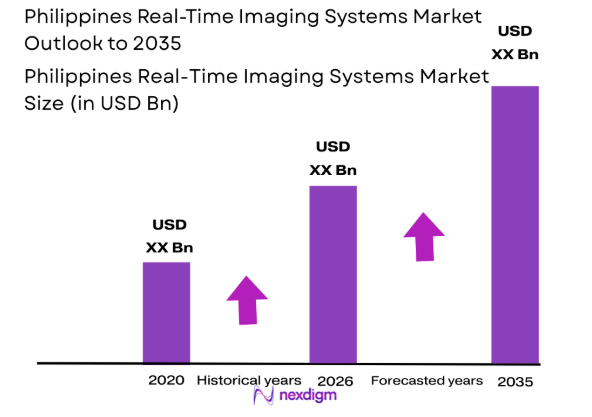
The Philippines real-time imaging systems market is experiencing significant growth, driven by advances in imaging technologies and increasing healthcare investments. The market size is projected to reach approximately USD ~ billion. Factors contributing to this growth include the rising demand for accurate diagnostic tools, expanding healthcare infrastructure, and government initiatives aimed at improving healthcare services. These systems are critical in improving patient care, providing more precise diagnoses, and enabling real-time decision-making in medical environments.
The Philippines market is dominated by major metropolitan areas such as Metro Manila, Cebu, and Davao, where healthcare infrastructure is rapidly expanding. These cities benefit from a high concentration of healthcare facilities, advanced diagnostic centers, and access to cutting-edge technology. Additionally, government support for healthcare modernization and foreign investments has led to the growth of both private and public healthcare facilities in these regions. The presence of a highly skilled workforce also contributes to the demand for real-time imaging systems.
Market Segmentation
By Product Type
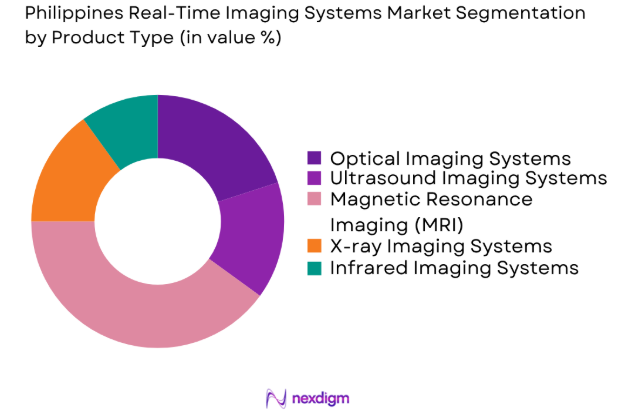
The Philippines real-time imaging systems market is segmented by product type into optical imaging, ultrasound imaging, magnetic resonance imaging (MRI), X-ray imaging, and infrared imaging systems. Recently, MRI systems have dominated the market share due to their non-invasive diagnostic capabilities, providing high-quality images essential for accurate diagnostics in various medical fields. The widespread adoption of MRI systems is driven by improvements in image resolution, reduced scanning times, and advancements in MRI technology. This makes MRI systems highly preferred for diagnostic imaging in hospitals and clinics.
By Platform Type
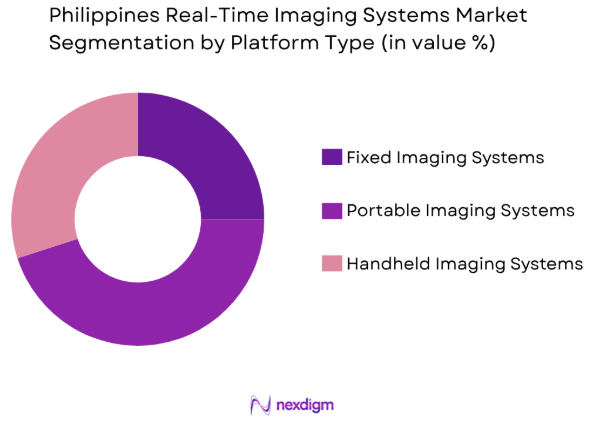
The Philippines Real-Time Imaging Systems market is segmented by platform type into fixed imaging systems, portable imaging systems, and handheld imaging systems. Portable imaging systems have recently gained significant traction due to their versatility and ease of use, particularly in remote and rural areas of the Philippines. These systems are increasingly utilized in emergency medical services, mobile diagnostic units, and primary healthcare centers, where compactness and mobility are critical. The portability aspect combined with advanced imaging capabilities has positioned this segment as a leader in the market.
Competitive Landscape
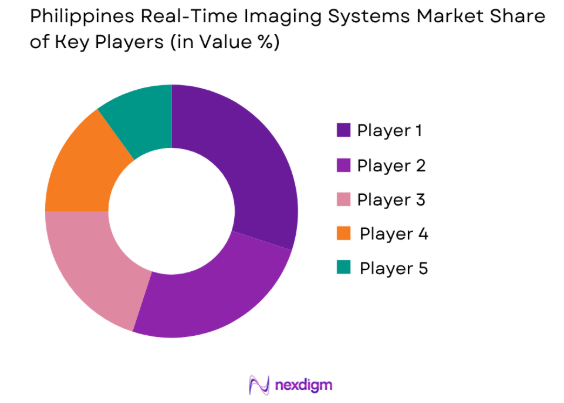
The competitive landscape of the Philippines real-time imaging systems market is dynamic, characterized by the presence of global and local players. Major companies are focusing on technological innovations, expanding their product portfolios, and enhancing their market presence through strategic partnerships and acquisitions. The market is seeing a trend toward consolidation, with larger companies absorbing smaller players to increase their share and diversify their offerings. As a result, the competition is intensifying, with leading players driving market growth by investing heavily in research and development.
| Company Name | Establishment Year | Headquarters | Technology Focus | Market Reach | Key Products | Revenue (USD) |
| Philips Healthcare | 1891 | Netherlands | ~ | ~ | ~ | ~ |
| GE Healthcare | 1892 | USA | ~ | ~ | ~ | ~ |
| Siemens Healthineers | 1847 | Germany | ~ | ~ | ~ | ~ |
| Canon Medical Systems | 1933 | Japan | ~ | ~ | ~ | ~ |
| Fujifilm Healthcare | 1934 | Japan | ~ | ~ | ~ | ~ |
Philippines real-time imaging systems market Analysis
Growth Drivers
Rising healthcare investments
The expansion of healthcare infrastructure in the Philippines is a significant driver for the real-time imaging systems market. The government’s ongoing healthcare reforms, coupled with increased investments from both private and public sectors, have resulted in the modernization of healthcare facilities across the country. These developments create a favorable environment for the adoption of advanced diagnostic tools such as real-time imaging systems. The increasing demand for accurate and efficient diagnostic tools further fuels the market’s growth. Furthermore, as healthcare spending continues to grow, hospitals and clinics are more inclined to invest in state-of-the-art imaging systems to improve patient care and operational efficiency. These trends are expected to contribute significantly to the market’s expansion in the coming years.
Technological advancements in imaging systems
The continuous evolution of imaging technologies plays a crucial role in the growth of the real-time imaging systems market. Innovations such as portable MRI units, high-definition ultrasound machines, and advanced X-ray technologies are transforming the medical imaging landscape. The integration of artificial intelligence (AI) and machine learning (ML) algorithms into imaging devices is also boosting diagnostic accuracy and efficiency, further driving demand. These advancements not only improve image quality and processing times but also reduce operational costs for healthcare providers. As technological developments continue, the market will likely see further enhancements in imaging capabilities, making it a key growth driver for the real-time imaging systems sector.
Market Challenges
High cost of equipment
One of the primary challenges facing the real-time imaging systems market in the Philippines is the high cost of advanced diagnostic equipment. High-quality imaging systems, such as MRI machines and high-end ultrasound systems, require significant capital investment. Many healthcare providers, particularly in rural areas, struggle with the high initial acquisition costs, making it difficult to adopt cutting-edge imaging technologies. While financing options are available, the cost of maintenance and operational expenses also remains a concern. These factors pose a significant barrier to the widespread adoption of real-time imaging systems across all healthcare facilities in the country. Despite the government’s efforts to modernize the healthcare sector, the cost of equipment remains one of the most substantial challenges in the market.
Regulatory challenges and compliance
Regulatory barriers and complex compliance requirements are additional challenges hindering the growth of the real-time imaging systems market in the Philippines. The approval process for medical devices and imaging systems can be lengthy and complex, often requiring compliance with both local and international standards. These regulations can delay the time to market for new products, creating uncertainty for companies trying to launch innovative technologies. Additionally, navigating the regulatory landscape in the Philippines can be challenging for foreign companies, which may face obstacles in obtaining the necessary certifications. While regulatory frameworks are crucial for ensuring patient safety, the time and resources needed for compliance can slow the adoption of new imaging technologies.
Opportunities
Growing adoption in non-medical industries
One significant opportunity for the real-time imaging systems market in the Philippines lies in the increasing adoption of imaging technology in non-medical industries. Sectors such as manufacturing, construction, and logistics are leveraging imaging systems for quality control, asset management, and operational efficiency. With the growing demand for precision and accuracy in industrial processes, companies in these sectors are turning to advanced imaging technologies to enhance their capabilities. Real-time imaging systems are being utilized for equipment inspections, safety monitoring, and predictive maintenance. This trend is expected to create new opportunities for the real-time imaging systems market as these sectors continue to adopt advanced imaging solutions.
Expansion of telemedicine and remote diagnostics
The ongoing shift towards telemedicine and remote healthcare solutions presents a unique opportunity for the real-time imaging systems market. With the rise of digital healthcare platforms, patients in remote areas of the Philippines can access medical consultations and diagnostic services through telemedicine. This demand for remote diagnostics is driving the need for portable and handheld imaging systems that can be easily used in non-traditional settings such as homes, mobile clinics, and remote diagnostic units. As the adoption of telemedicine increases, so does the demand for real-time imaging systems capable of delivering high-quality diagnostic images remotely. This presents a substantial growth opportunity for the market.
Future Outlook
The future outlook for the real-time imaging systems market in the Philippines is promising, with continued growth expected in the coming years. Technological advancements, such as the integration of AI and machine learning into imaging systems, will drive improvements in diagnostic accuracy and efficiency. The market will also benefit from ongoing government support for healthcare infrastructure and the rising demand for mobile and portable imaging solutions. Additionally, the expansion of telemedicine and the growing adoption of imaging systems in non-medical industries will provide new avenues for market growth, further boosting the overall market potential.
Step 1: Identification of Key Variables
We identify critical factors such as market size, growth drivers, challenges, and technological advancements that impact the real-time imaging systems market.
Step 2: Market Analysis and Construction
Comprehensive market analysis is performed, leveraging primary and secondary data sources to build accurate market models and forecasts.
Step 3: Hypothesis Validation and Expert Consultation
Market hypotheses are validated by consulting with industry experts, stakeholders, and market leaders to ensure the accuracy of assumptions.
Step 4: Research Synthesis and Final Output
Data is synthesized to create a detailed and actionable report, providing a holistic view of the market and its future trends.

- Executive Summary
- Research Methodology (Definitions, Scope, Industry Assumptions, Market Sizing Approach, Primary & Secondary Research Framework, Data Collection & Verification Protocol, Analytic Models & Forecast Methodology, Limitations & Research Validity Checks)

- Market Definition and Scope
- Value Chain & Stakeholder Ecosystem
- Regulatory / Certification Landscape
- Sector Dynamics Affecting Demand
- Strategic Initiatives & Infrastructure Growth

- Growth Drivers
Rising Healthcare Investments
Technological Advancements in Imaging Systems
Increasing Demand for Accurate Diagnostic Tools - Market Challenges
High Initial Investment Costs
Regulatory Barriers and Compliance Issues
Shortage of Skilled Technicians and Professionals - Market Opportunities
Expansion of Healthcare Infrastructure
Growing Adoption in Non-Medical Industries
Rising Demand for Advanced Diagnostic and Monitoring Systems - Trends
Integration of Artificial Intelligence in Imaging Systems
Development of Portable and Compact Imaging Solutions
Rise in Preventive Healthcare and Diagnostics - Government Regulations
- SWOT Analysis of Key Competitors
- Porter’s Five Forces

- By Market Value, 2020-2025
- By Installed Units, 2020-2025
- By Average System Price, 2020-2025
- By System Complexity Tier, 2020-2025

- By System Type (In Value%)
Optical Imaging Systems
Infrared Imaging Systems
Ultrasound Imaging Systems
X-ray Imaging Systems
Magnetic Resonance Imaging (MRI) Systems - By Platform Type (In Value%)
Fixed Imaging Systems
Portable Imaging Systems
Handheld Imaging Systems
Stationary Imaging Systems
Wearable Imaging Systems - By Fitment Type (In Value%)
Standalone Systems
Integrated Systems
Modular Systems
Customized Systems
Embedded Systems - By End User Segment (In Value%)
Healthcare Providers (Hospitals and Clinics)
Diagnostic Centers
Research and Academic Institutions
Government & Military Applications
Industrial and Manufacturing Facilities - By Procurement Channel (In Value%)
Direct Sales
Distributors & Dealers
Online Marketplaces
Government Tenders
Third-Party Procurement Agencies

- Market Share Analysis
- Cross Comparison Parameters (System Type, Platform Type, Fitment Type, End-User Segment, Procurement Channel)
- SWOT Analysis of Key Competitors
- Pricing & Procurement Analysis
- Key Players
Philips Healthcare
GE Healthcare
Siemens Healthineers
Canon Medical Systems
Fujifilm Healthcare
Samsung Medison
Toshiba Medical Systems
Hitachi Medical Corporation
Mindray Medical International
Shimadzu Corporation
Hologic
Esaote
Carestream Health
Agfa HealthCare
Accuray Incorporated

- Healthcare Providers (Hospitals and Clinics)
- Diagnostic Centers
- Research and Academic Institutions
- Industrial and Manufacturing Facilities

- Forecast Market Value, 2026-2035
- Forecast Installed Units, 2026-2035
- Price Forecast by System Tier, 2026-2035
- Future Demand by Platform, 2026-2035


 Request a Sample
 Ask for Customization
 Get a Quote
 Enquire Now